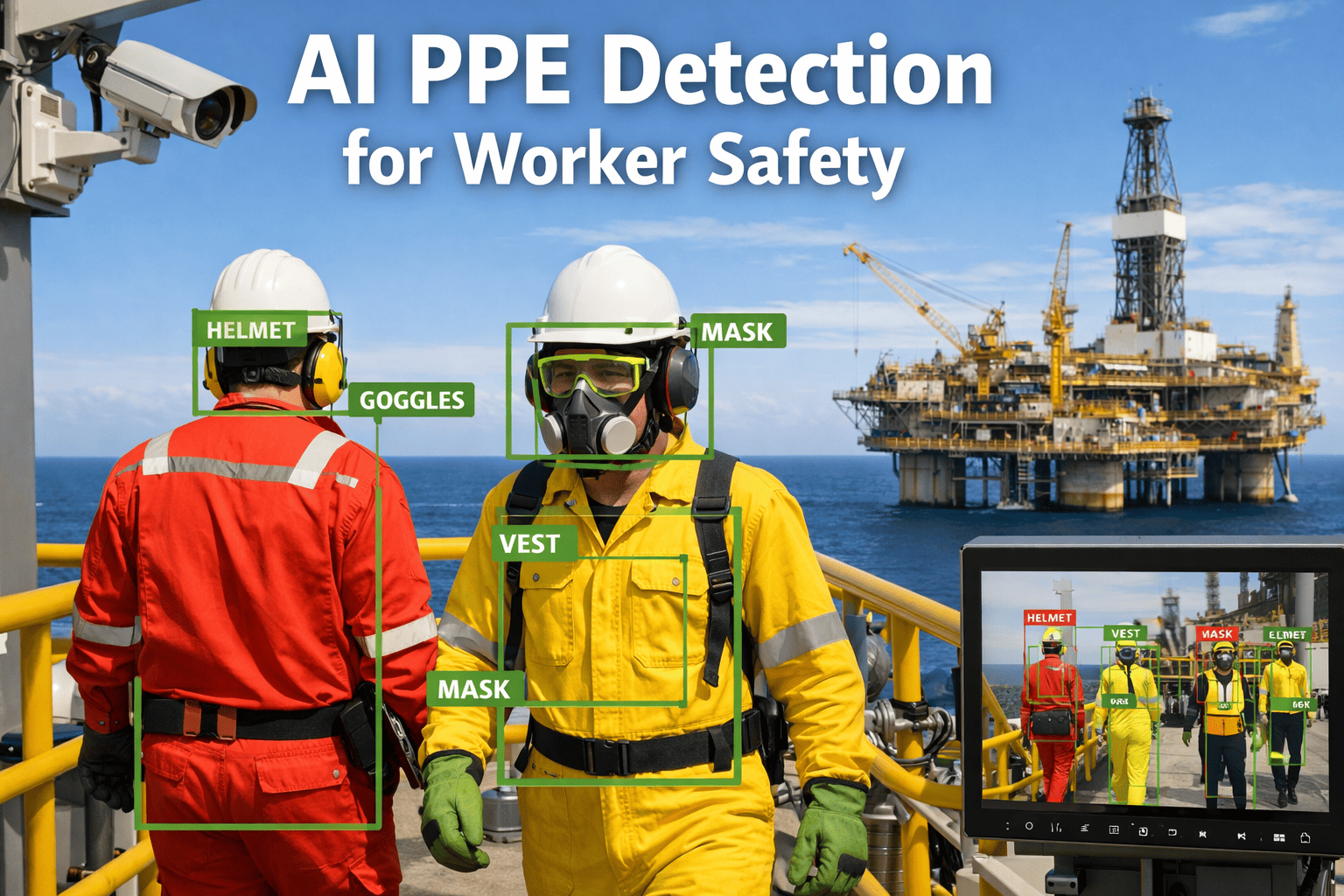
AI-powered training simulations are fundamentally reshaping how oil and gas companies prepare their workforce for high-stakes operational environments — from deepwater drilling platforms and LNG terminals to refinery process units and pipeline control rooms. Traditional classroom instruction and periodic field drills have long struggled to replicate the complexity and pressure of real-world production scenarios, leaving critical skill gaps that only become visible during actual emergencies. In 2025, forward-looking operators are closing this gap by deploying AI-driven simulation environments that adapt in real time to each worker's performance, accurately predicting competency decay and recommending targeted interventions before a skills gap becomes a safety incident. Workforce and training leads who Book a Demo with iFactory are discovering how AI simulation platforms can cut onboarding time by 40% while measurably improving emergency response accuracy across field and control room roles.
Close the Skills Gap Before It Becomes a Safety Incident
iFactory's AI simulation platform delivers adaptive scenario training, real-time competency scoring, and predictive skills analytics — purpose-built for upstream, midstream, and downstream oil and gas operations teams.
Why Traditional Oil & Gas Training Is No Longer Sufficient
The oil and gas industry faces a compounding workforce challenge: an aging technical workforce carrying decades of tacit operational knowledge is retiring at the same pace that new production environments are growing more complex. Deepwater automation, AI-assisted SCADA systems, and carbon capture integrations demand competencies that 20-year-old training curricula were never designed to address. At the same time, high-consequence operations — blowout containment, process safety management, emergency shutdown procedures — leave no room for on-the-job learning. Operators exploring how to bridge this gap often begin by scheduling time to Book a Demo and evaluate how AI simulation maps against their current competency framework.
iFactory's AI training platform addresses this gap by replicating real plant and field environments in high-fidelity simulations — where workers experience equipment failures, process upsets, and emergency scenarios without any operational risk. The platform's AI engine adapts scenario difficulty based on each worker's demonstrated performance, ensuring that every training hour targets the actual skill boundaries of the individual, not a generalized course standard.
Tacit Knowledge Loss
30–40% of the oil and gas workforce will reach retirement age by 2028. AI simulations capture and encode expert procedural knowledge before it walks out the door, making it available to every new operator.
Emergency Scenario Exposure
Most workers encounter a major process upset only once or twice in a career. AI simulations expose trainees to hundreds of realistic emergency scenarios before their first shift on a live unit.
Competency Decay Detection
Skills deteriorate between refresher cycles. iFactory's AI continuously tracks each worker's competency scores and predicts when specific skills are decaying — triggering targeted micro-training before gaps become critical.
New Technology Adoption
AI-integrated control systems and digital twin platforms require new operator competencies. Simulation training ensures workers are proficient on new systems before go-live, preventing costly operational errors during commissioning.
What iFactory's AI Training Simulation Platform Delivers
Effective AI training simulation for oil and gas is not a single product — it is an integrated platform that combines immersive scenario environments, real-time performance analytics, and predictive workforce intelligence. iFactory's platform is structured around three core modules that work together to create a continuous, measurable competency development cycle. Training managers building these programs frequently Book a Demo to align platform capabilities with their existing competency assurance frameworks.
Module 1 — Adaptive Scenario Simulation Engine
iFactory's simulation engine creates high-fidelity digital replicas of actual facility environments — specific process units, control room interfaces, and field equipment layouts. Scenarios are not scripted; the AI dynamically alters process conditions, equipment failure modes, and environmental factors based on the trainee's real-time decisions, ensuring that experienced workers face progressively complex challenges while newer operators build foundational skills at an appropriate pace.
Module 2 — Real-Time Competency Scoring & Analytics
Every trainee action within the simulation — response time to alarms, procedure step accuracy, deviation from safe operating limits — is captured and scored by the AI against role-specific competency benchmarks. Training managers receive live dashboards showing individual and team competency levels across all critical task areas, replacing subjective supervisor assessments with objective, data-driven performance evidence.
Module 3 — Predictive Workforce Intelligence
Beyond individual session scores, iFactory's AI analyzes longitudinal competency data across the entire workforce to identify organizational skill gaps before they create operational exposure. It predicts which roles are most at risk for competency decay, which training scenarios have the highest impact on real-world performance, and where targeted investment in simulation hours will produce the greatest safety and productivity return.
High-Impact Simulation Scenarios for Oil & Gas Operations
iFactory's scenario library covers the full spectrum of oil and gas operational environments — from upstream wellsite operations to downstream refinery process units. Each scenario is built from actual incident data, HAZOP findings, and regulatory near-miss reports to ensure maximum real-world relevance. Workforce development teams looking to align simulation content with their Process Safety Management competency requirements often Book a Demo to review the scenario library against their specific operational context.
| Scenario Category | Operational Environment | Key Competencies Assessed | Regulatory Alignment |
|---|---|---|---|
| Process Upset Response | Refinery / Gas Plant | Alarm management, ESD activation, team coordination | OSHA PSM, API RP 754 |
| Wellsite Blowout Prevention | Upstream Drilling | BOP operation, well control procedures, kill sheet execution | BSEE Well Control Rule |
| Pipeline Leak Detection & Isolation | Midstream Transmission | SCADA alarm response, isolation valve sequencing, notification protocols | PHMSA 192/195, TSA Directives |
| Hazardous Material Release | Downstream Processing | Emergency evacuation, LOTO verification, fire team coordination | OSHA 29 CFR 1910.120 |
| Control Room Abnormal Situation | All Segments | Alarm prioritization, console operator decision-making, shift handover | ISA-18.2, API RP 1167 |
Deploying AI Training Simulations Across Your Oil & Gas Workforce
A successful AI training simulation deployment follows a structured sequence that aligns platform capabilities with existing competency assurance programs and workforce development priorities. iFactory's deployment model is designed to deliver measurable training outcomes within the first 60 days, with full workforce analytics visibility operational by the end of the first quarter.
Competency Baseline & Scenario Mapping
For: Training Managers & HSE Teams
- Role-specific competency gap assessment
- Critical task inventory and HAZOP review
- Scenario library alignment to facility SOPs
- Platform configuration and LMS integration
Pilot Deployment & Calibration
For: Reliability & Operations Teams
- High-priority role pilot group training
- AI competency scoring calibration
- Emergency scenario exposure sessions
- First-cycle performance analytics review
Full Workforce Rollout & Analytics
For: Operations Leadership
- Enterprise-wide simulation program activation
- Predictive competency decay monitoring
- Integration with PSM competency assurance
- Workforce readiness KPI dashboard go-live
Measurable Outcomes From AI Simulation Training Programs
Oil and gas facilities deploying iFactory's AI training simulation platform report consistent, measurable improvements across safety performance, operational readiness, and training efficiency KPIs. The results below reflect 90-day post-deployment outcomes measured across iFactory-supported upstream and downstream sites.
"Our biggest challenge was translating 35 years of process operator expertise into something transferable before half our senior team retired. iFactory's AI simulation platform did what no classroom program could — it put our new operators inside realistic process upset scenarios and scored their decisions against what our best people would actually do. Within six months, our new hire competency scores were tracking within 8% of our senior operators on emergency response benchmarks. That gap used to take three years to close."
AI Training Simulations Are Now a Workforce Safety Imperative
The oil and gas industry's workforce readiness challenge will not be solved by more hours in the classroom. It requires simulation environments that replicate the full complexity of real operations — the alarm cascades, the equipment failures, the time pressure, and the team dynamics — with AI-driven analytics that translate each training session into objective, actionable competency intelligence. iFactory's platform delivers exactly this: an adaptive simulation engine, real-time scoring, and predictive workforce analytics that together create a continuous competency assurance program aligned to OSHA PSM, API RP 754, and BSEE Well Control requirements. Operations, HSE, and workforce development leaders ready to replace static training programs with AI-driven simulation are encouraged to Book a Demo with iFactory and receive a workforce readiness gap assessment tailored to their facility and role profile.
AI Training Simulations for Oil & Gas — Frequently Asked Questions
How does AI make training simulations more effective than standard e-learning?
AI adapts scenario difficulty in real time based on each worker's demonstrated performance — ensuring training always targets the actual skill boundary of the individual, not a one-size-fits-all course standard.
Can iFactory's platform simulate facility-specific equipment and process configurations?
Yes — iFactory builds high-fidelity digital replicas of actual facility environments, including specific control room interfaces, process unit layouts, and equipment failure modes drawn from your SOPs and HAZOP records.
How does the platform support OSHA Process Safety Management competency requirements?
The platform generates objective, time-stamped competency records for every training session, providing auditable evidence that employees have demonstrated task-specific proficiency aligned to PSM mechanical integrity and operating procedure requirements.
What is the typical deployment timeline for a mid-size refinery or upstream site?
A phased deployment — from competency baseline assessment through full workforce rollout — typically spans 14–16 weeks, with measurable training outcomes visible within the first 60 days of the pilot phase.
Can the platform integrate with existing Learning Management Systems (LMS)?
Yes — iFactory connects to standard LMS platforms via SCORM and xAPI protocols, feeding simulation competency scores directly into existing training records without replacing the incumbent HR or training infrastructure.
Build a Simulation-Ready Oil & Gas Workforce With AI
iFactory's AI training platform delivers facility-specific simulation environments, real-time competency scoring, and predictive workforce intelligence — built for oil and gas operators who cannot accept skill gaps in high-consequence roles.