For every new entrant under 25 in the energy workforce, roughly 2.4 experienced workers are heading toward retirement. Card reading has traditionally lived in the heads of pumpers who learned it over a decade, not in a manual anyone can hand a new hire. When that generation retires, the skill leaves with them. This guide closes that gap: what a card is telling a technician, what to do next, and when to call engineering. iFactory's team can walk your crew through applying this against your fleet's live cards.
Teach a New Technician to Read a Card the Way a 20-Year Pumper Does
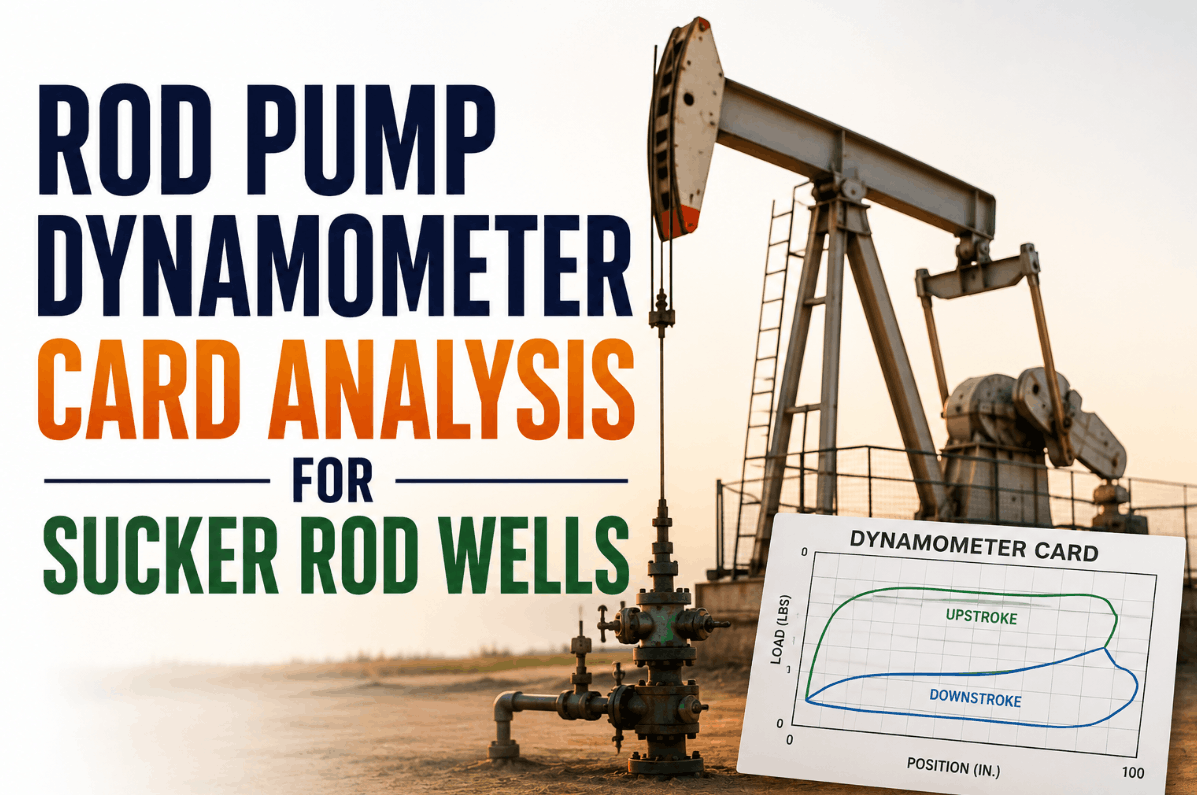
A dynamometer card is a load-versus-position plot that encodes the entire mechanical and fluid state of a sucker rod well in one shape. This guide trains field personnel to read AI-classified card interpretations, act on them correctly, and know exactly when a shape means "handle it on site" versus "get engineering on the phone."
Why This Skill Is Disappearing Faster Than It's Being Replaced
Card reading has always been taught the slow way: a new hire rides along with an experienced pumper, looks at cards on real wells for a year or two, and gradually builds the pattern recognition that lets them glance at a shape and know what's wrong. That apprenticeship model works when there are enough experienced hands to go around and enough time for it to happen. Neither is true anymore. Specialized technical field roles are now taking 85 to 120 days to fill in many regions, up from 65 to 85 days just a few years earlier, and in the tightest markets there are more than three open oilfield service postings for every qualified applicant. A training bottleneck that used to be an inconvenience is quickly becoming an operational risk.
The Baseline: What a Healthy Card Looks Like
Before a technician can recognize a problem, they need the reference shape burned into memory. A normal rod pump dynamometer card traces a recognizable parallelogram. Load climbs on the upstroke as the rod string picks up the fluid column, holds steady near maximum through the middle of the stroke, then drops cleanly on the downstroke as the fluid transfers into the tubing above the pump. Every failure signature in this guide is a specific, learnable deviation from that one baseline shape. Once a technician has that parallelogram memorized, every other card becomes a comparison exercise rather than a guessing game.
See How AI-Classified Cards Turn Into a Training Tool, Not Just an Alert
iFactory pairs every classified card with the plain-language reasoning behind it, so your technicians learn the pattern every time they read an alert, not just the first year on the job.
The Six Signatures Every Field Technician Needs to Recognize on Sight
These six failure modes account for the overwhelming majority of dynamometer card diagnoses a field technician will encounter. Each has a distinct shape, a distinct cause, and a distinct correct response. Memorizing these six is the single highest-leverage thing a new technician can do in their first month on rod pump wells.
Want your team to see these six signatures on your own fleet's actual cards instead of a training slide? Book a walkthrough and we'll pull live examples from wells like yours.
The Two Signatures Technicians Confuse Most Often
Fluid pound and gas interference cause the most misdiagnosis among newer technicians because both come from an incompletely filled pump barrel, and both show up in roughly the same region of the card. The entire difference lives in the shape of the transition on the downstroke, and it is worth drilling until it becomes automatic.
What to Do With Every Classification: A Decision Framework
A card classification is only useful if the technician knows what action follows it. This is the core of what separates a trained reader from someone who can name a shape but doesn't know what to do next.
Manual Reading vs. AI-Assisted Reading: What Changes for the New Technician
AI classification does not remove the need for a technician who understands what they're looking at. It changes what that technician is expected to know on day one versus what they build over years, and it gives every reading a second opinion the moment it's generated rather than only when a senior engineer happens to be available.
| Aspect | Manual-Only Training | AI-Assisted Training |
|---|---|---|
| Time to independent competence | 12-24 months of shadowing | Weeks, with AI confirming each read |
| Confidence on rare signatures | Low until they've personally seen one | Classified and explained the first time it appears |
| Consistency across the team | Varies by who trained whom | Every technician sees the same classification logic |
| Combined-fault cards | Frequently misread by newer staff | Multi-feature model resolves overlapping signatures |
| Knowledge loss on retirement | Walks out the door with the senior pumper | Encoded in the training library, persists across turnover |
Building a Training Program Around AI-Classified Cards
The most effective field training programs treat every AI classification as a teaching moment, not just an alert to act on. When a new technician sees a fluid pound alert, the goal isn't just to trigger the correct response, it's to have them look at the actual card shape, read the reasoning the model attached to it, and start building the same pattern recognition a 20-year pumper carries. Over a few months of doing this consistently, the technician stops needing the AI to tell them what they're looking at and starts using it to confirm what they already suspect, which is exactly the transition point where training has actually worked.
This also solves a problem that pure classroom or slide-deck training cannot: volume and variety. A new technician working a 30-well patch might see two or three genuinely distinct failure signatures in a normal month. A fleet-wide AI system processing every stroke across every well in an operation exposes that same technician to dozens of real, varied cards in the same window, each with the classification and reasoning attached. That difference in exposure is what used to take years to accumulate through apprenticeship alone.
There is also a retention benefit that shows up months after the initial training period ends. Technicians who learn card reading purely by shadowing tend to lose confidence quickly if they go a few weeks without seeing a particular signature, because the pattern was never fully internalized in the first place. Technicians who trained alongside a continuous AI classification system keep seeing the full range of signatures on a rolling basis, which reinforces the pattern recognition long after the formal onboarding period is over. The skill stays sharp because the exposure never really stops.
What Senior Pumpers Bring That AI Alone Cannot
None of this is an argument for removing experienced judgment from the loop. A veteran pumper brings context an AI classification model does not have access to: the specific well's history of workovers, whether a particular controller has a known quirk that produces odd readings, the sound the pumping unit makes when something is actually wrong versus when it's just an old gearbox being loud. The right way to think about AI-assisted training is that it compresses the time it takes a new technician to build the pattern-recognition half of that expertise, while the well-specific and equipment-specific judgment still needs to be built through time on site, ideally alongside someone who already has it. Pairing a newer technician with a senior pumper for the first several months, with AI classification running underneath both of them as a shared reference point, tends to produce faster and more durable competence than either approach alone.
It also changes what the senior pumper's time gets spent on. Instead of walking a new hire through the same handful of routine signatures over and over, the experienced hand can focus on the genuinely hard judgment calls: combined faults, ambiguous cards, and well-specific quirks that no training library fully captures. That reallocation of a scarce, senior person's attention toward the cases that actually need it is, in practice, one of the more underrated benefits of pairing AI classification with a structured training program.
Frequently Asked Questions
Get Your Field Crew Reading Cards Like a Veteran, Faster
See how iFactory pairs AI-classified dynamometer cards with plain-language reasoning your technicians can learn from on every single alert.