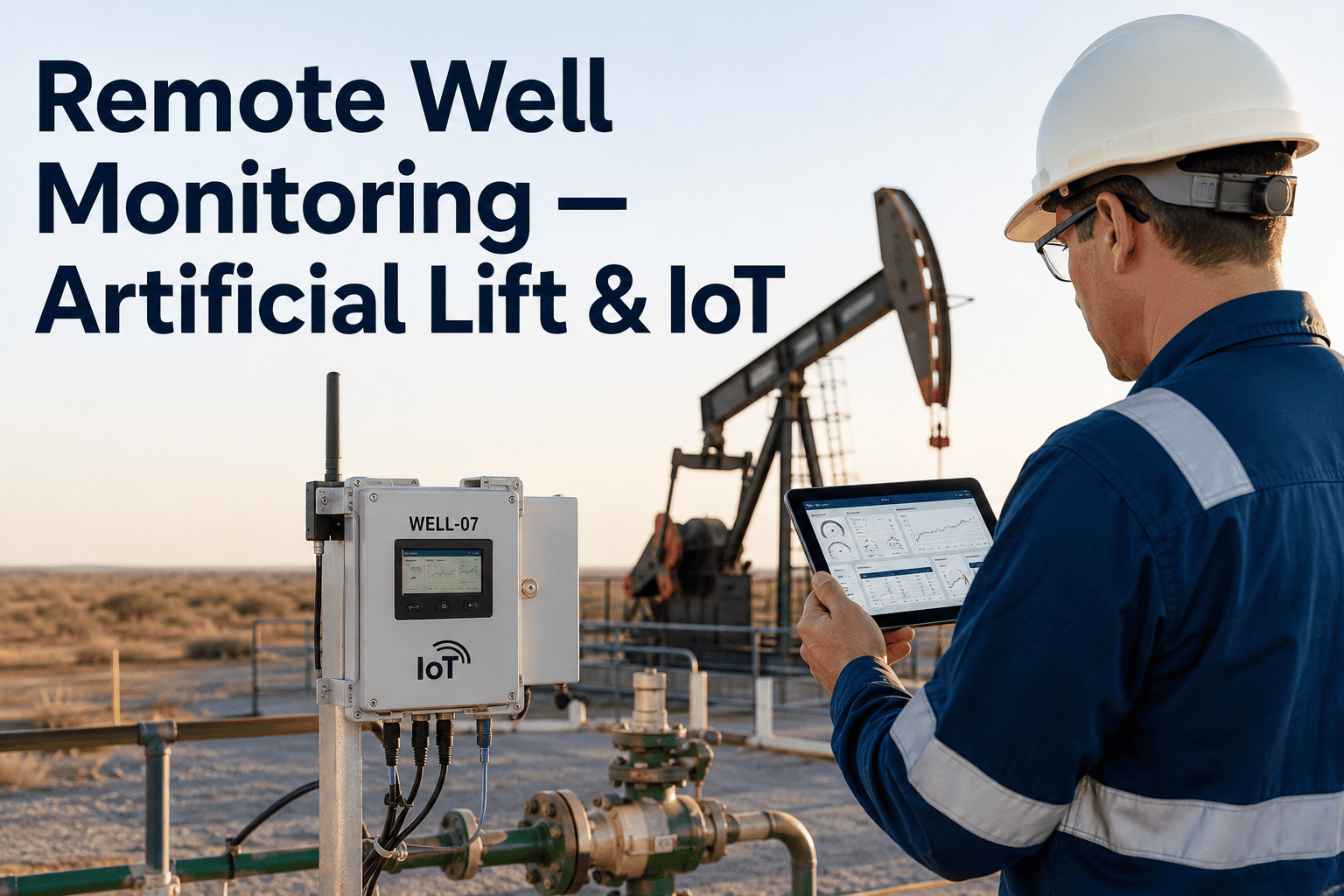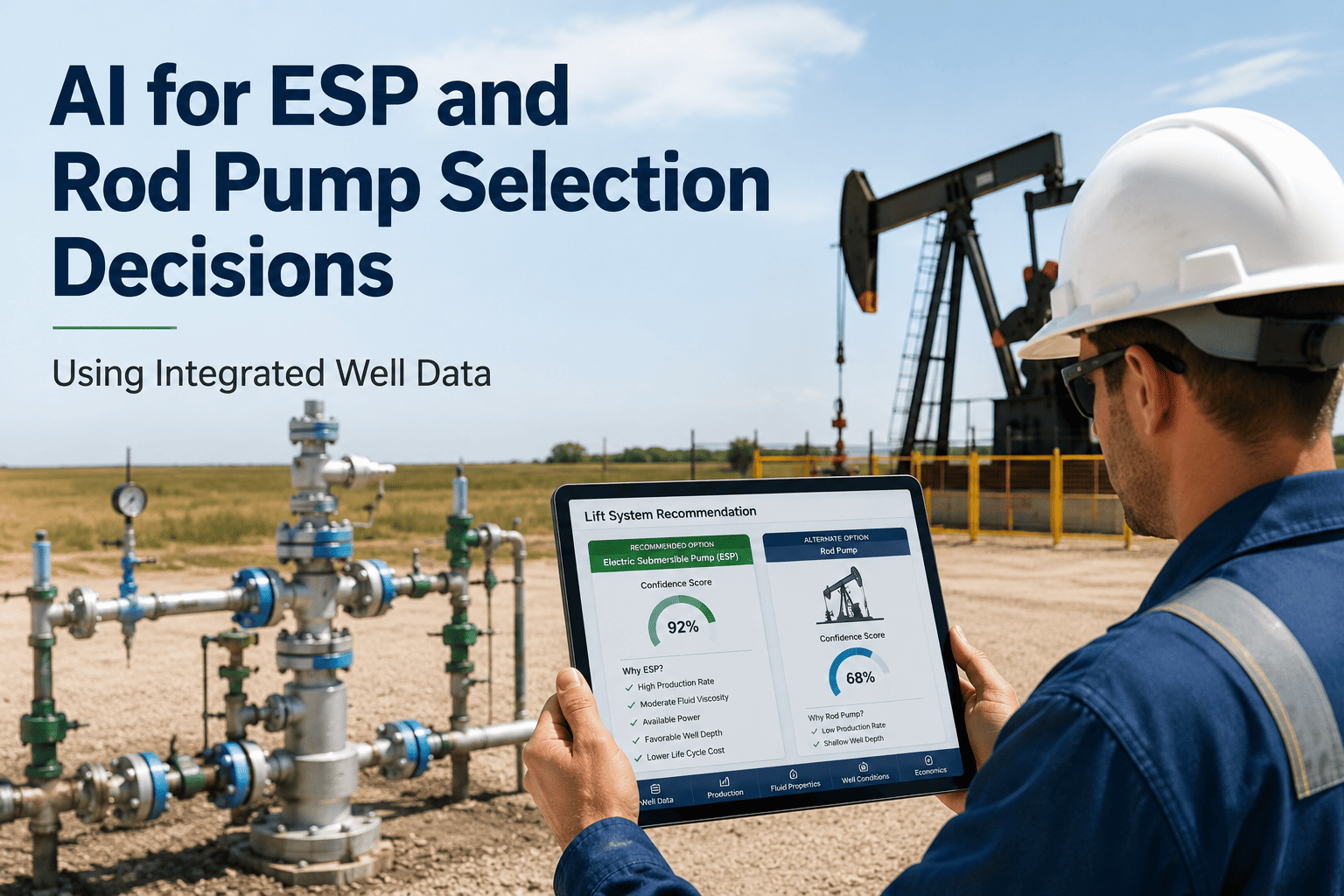
An operator picks ESP for a well that would have run for years on a rod pump, or sizes a rod pump for a well that quietly needed ESP volume the moment water cut climbed. Neither choice looks wrong on the day it is made. Reservoir pressure, fluid PVT, wellbore geometry, and production targets all live in different files, different software, and different engineers' heads, so the selection ends up built on whichever two or three variables were easiest to pull together in time for the AFE. iFactory's AI reads reservoir pressure, fluid properties, wellbore geometry, and production targets from integrated data sources at once and recommends the lift type and sizing that actually fits the well, not the one that fit the deadline — book a lift-selection assessment to see it run on your own well file.
One Wrong Lift Decision Costs More Than the Workover Bill
AI cross-references reservoir pressure, fluid properties, wellbore geometry, and production targets the moment a well is completed, so the artificial lift type and sizing decision is made on the full data picture instead of a partial one.
Why Lift Selection Carries So Much Financial Weight
Artificial lift is not a minor completion decision. It is a multi-decade cost and revenue commitment that most fields make once and rarely revisit, even as the well conditions that justified the original choice keep changing underneath it. The numbers below explain why so many operators are moving lift selection from a one-time engineering judgment call into a continuously monitored data process.
of U.S. shale production, including the Permian, runs on ESP and rod lift systems combined
typical ESP mean time between failures in harsh downhole environments
installed cost range for a single ESP system, before ongoing maintenance and pull costs
first-year production decline typical of unconventional wells, which can flip the ideal lift method mid-life
The Four Data Sets a Correct Lift Decision Actually Needs
Selection tools have existed for decades, but most run on whatever inputs are already typed into a spreadsheet. iFactory's AI pulls directly from the source systems so the recommendation reflects current well conditions, not last quarter's estimate.
Reservoir pressure and drive
Current bottomhole pressure, decline trend, and drive mechanism set the energy the well has left to lift fluid, and how fast that energy is falling away.
Fluid properties
Water cut, gas-oil ratio, viscosity, and sand or solids content determine which lift mechanisms can physically handle what is coming up the tubing.
Wellbore geometry
True vertical depth, deviation profile, casing and tubing size, and dogleg severity constrain which equipment can physically be run and survive down there.
Production targets
Desired flow rate, expected decline curve, and planned well life decide whether the well needs high-volume capacity now or economical run life over years.
ESP or Rod Pump: Where the Two Systems Actually Diverge
On paper, ESP and rod pump economics land close enough that the decision often comes down to vendor availability and service history rather than well physics. AI closes that gap by scoring the well against both systems on every input at once.
- Strongest at shallow to moderate depth with consistent, low-to-moderate volume
- Lower installed cost, simpler surface footprint, widely stocked parts
- Struggles as depth increases — rod weight and stretch cut into efficiency
- Handles sand and solids better than most ESP configurations
- Still runs on roughly 59% of North American and 71% of global artificial lift wells
- Strongest at high volume across a wide range of depths
- Small surface footprint, useful where surface space or noise is constrained
- Sensitive to free gas, high GOR, and solids without proper gas handling design
- Higher upfront capital, but can lower opex per barrel at true high-rate wells
- Run life commonly cited in the 3 to 6 month range on aggressive unconventional wells
What a Mismatched Lift Decision Actually Costs
The bill for a wrong lift call rarely shows up as a single line item. It shows up as repeat workovers, deferred barrels, and a well that keeps getting flagged in the production meeting without anyone tracing it back to the original sizing decision.
See the Recommendation Engine Run on a Real Well File
Bring one well's reservoir, fluid, wellbore, and target data and watch iFactory's AI produce a ranked lift recommendation with the reasoning behind it, live on a call.
How the AI Reaches a Lift Recommendation
The engine does not screen down to a shortlist and stop, the way older matrix and decision-tree tools do. It scores every viable method against the well's full data set and ranks them with the reasoning attached.
Pull the well's live data set
Reservoir pressure, PVT report, deviation survey, casing and tubing schedule, and the production target pull directly from source systems instead of a manually built spreadsheet.
Screen against method envelopes
Each candidate lift method — ESP, rod pump, gas lift, PCP — is checked against its known depth, rate, GOR, and solids-handling envelope for this specific wellbore geometry.
Model run life and rate over the decline curve
Because unconventional wells can decline 40 to 80% in year one, the model projects how each method performs not just at first flow but across the expected production curve.
Rank by lifecycle economics
Capital cost, expected run life, workover frequency, and power draw combine into a lifecycle cost comparison across every viable method, not just the two most familiar ones.
Flag the re-evaluation trigger
The recommendation ships with the specific data thresholds — a water cut level, a GOR shift, a rate decline — that should trigger a re-look before the well drifts out of its current lift method's range.
From Disconnected Data to a Live Recommendation Engine
Most fields already have the four data sets the model needs, just spread across reservoir, production, and drilling systems that were never designed to talk to each other. Onboarding is mostly a connection exercise, not a data-collection exercise.
Source system mapping
iFactory identifies where reservoir pressure, PVT, wellbore geometry, and production target data already live across your existing software and confirms the connection method for each.
Method envelope calibration
Depth, rate, GOR, and solids-handling envelopes for each lift method are calibrated against your field's actual equipment specs and historical run-life data rather than generic industry defaults.
Parallel run against known wells
The model runs against a set of wells where the lift decision and outcome are already known, so engineers can validate its reasoning before trusting it on a new completion.
Live recommendations and monitoring
New completions and existing wells both receive live recommendations, and every well is continuously checked against its re-evaluation thresholds from that point forward.
Signals the AI Watches That a Spreadsheet Misses
Most lift selection reviews happen once, at completion, and then never again unless something fails. The AI keeps comparing live production data against the assumptions the original recommendation was built on.
Rising gas-oil ratio
A GOR climbing past the design envelope for an installed ESP is one of the clearest early indicators of an approaching gas interference failure.
Water cut trend
Increasing water cut changes fluid density and viscosity enough to shift which lift method delivers the target rate most efficiently.
Sand and solids loading
Rising solids content accelerates wear on both rod strings and ESP internals differently, and changes which method holds up longer at that specific loading.
Production rate versus design point
A rate that has fallen well below the equipment's design point often means the well is now oversized for its lift system and paying for capacity it no longer uses.
Pump intake pressure drift
A steadily falling pump intake pressure signals the lift system is working harder to reach the same fluid level, an early precursor to reduced run life.
Repeat failure pattern
Two or more failures of the same component on the same well is treated as a lift-type mismatch signal, not just a run of bad luck with equipment.
Manual Selection Process Versus AI-Driven Selection
The manual process is not careless, it is simply bound by how much a person can hold in view at once and how often anyone has time to redo the exercise once the well is already producing. The gap between the two approaches widens with every month a well runs without a fresh look at its lift assumptions.
A Well That Was Never Wrong on Day One
A newly completed well in an unconventional play was sized for a rod pump at a modest early rate, matching the field's default practice for wells in that pad. The recommendation was reasonable for the data available at completion. Over the following eight months, water cut climbed steadily and the well's productivity index held higher than the initial decline model assumed, pushing the achievable rate past what the installed rod pump could lift. Because no one was watching the gap between design point and actual potential, the well produced well below capacity for months before an engineer flagged it during a routine rate review. A lift-type reassessment at month three, triggered automatically on the rate and water-cut trend, would have caught the mismatch before it cost that many barrels.
What Changes When Lift Selection Runs on Full Data
Operators running AI-informed lift selection and continuous re-evaluation report the shift concentrated in three areas: fewer early failures, less deferred production, and fewer surprise lift-type conversions.
Frequently Asked Questions
Does the AI replace the reservoir and production engineers who currently make this call?
No, it changes what they are looking at when they make it. The engineer still owns the final decision and the field context that a model cannot see, such as local vendor relationships or rig availability. What the AI removes is the manual work of pulling reservoir pressure, fluid properties, wellbore geometry, and production targets together from separate systems and screening every viable lift method by hand. The recommendation arrives with the underlying reasoning attached, so the engineer is reviewing a ranked, data-backed option set instead of building one from scratch under a completion deadline. Talk to support about how the recommendation output is structured for engineering review.
Can this be used on wells that already have a lift system installed, not just new completions?
Yes, and existing wells are often where the tool finds the most value. A well's ideal lift method can shift months or years after completion as water cut rises, GOR changes, or the productivity index moves away from the original decline assumption. The AI continuously compares live production trends against the thresholds that originally justified the installed lift type, and flags a well for re-evaluation before it drifts far enough out of range to fail or underproduce. This is particularly relevant on unconventional wells, where first-year decline can run 40 to 80% and quickly outdate an early lift decision.
Which artificial lift methods does the recommendation engine actually evaluate?
The engine screens electric submersible pumps, sucker rod pumps, gas lift, and progressive cavity pumps against each well's specific envelope, since each method has a different depth, rate, gas-handling, and solids-handling range. Rather than narrowing to whichever two methods are most familiar on a given field, it ranks every method that is technically viable for that wellbore and fluid profile, then applies lifecycle economics on top to separate close calls. Book a demo to see the method screening applied to a well from your own field.
How does the system account for the fact that unconventional wells decline so fast?
Instead of scoring a lift method only against the well's conditions at first flow, the model projects each candidate method's performance across the expected decline curve for that well type. A method that looks ideal at the initial high rate can become the wrong choice within a year as GOR rises and rate falls, which is exactly the pattern behind many premature ESP conversions in unconventional plays. The recommendation includes the specific rate, water-cut, or GOR threshold at which the well should be reassessed, so the next review is scheduled by data rather than by chance.
What data sources does iFactory need connected to generate a recommendation?
At minimum, the engine needs a reservoir pressure and decline estimate, a current fluid PVT report or analog, a wellbore deviation and casing/tubing schedule, and a stated production target or type curve. These typically already exist across reservoir, production, and drilling systems separately, and the integration work is scoped during onboarding rather than requiring a new data entry process from the field. Wells with sparser data still receive a recommendation, flagged with the confidence level and the specific inputs that would tighten it. Reach out to support to review what your current systems already provide.
Put Your Well Data Through the Recommendation Engine
Bring reservoir, fluid, wellbore, and target data from one well and see a ranked artificial lift recommendation with the reasoning behind it, live on a 30-minute call.