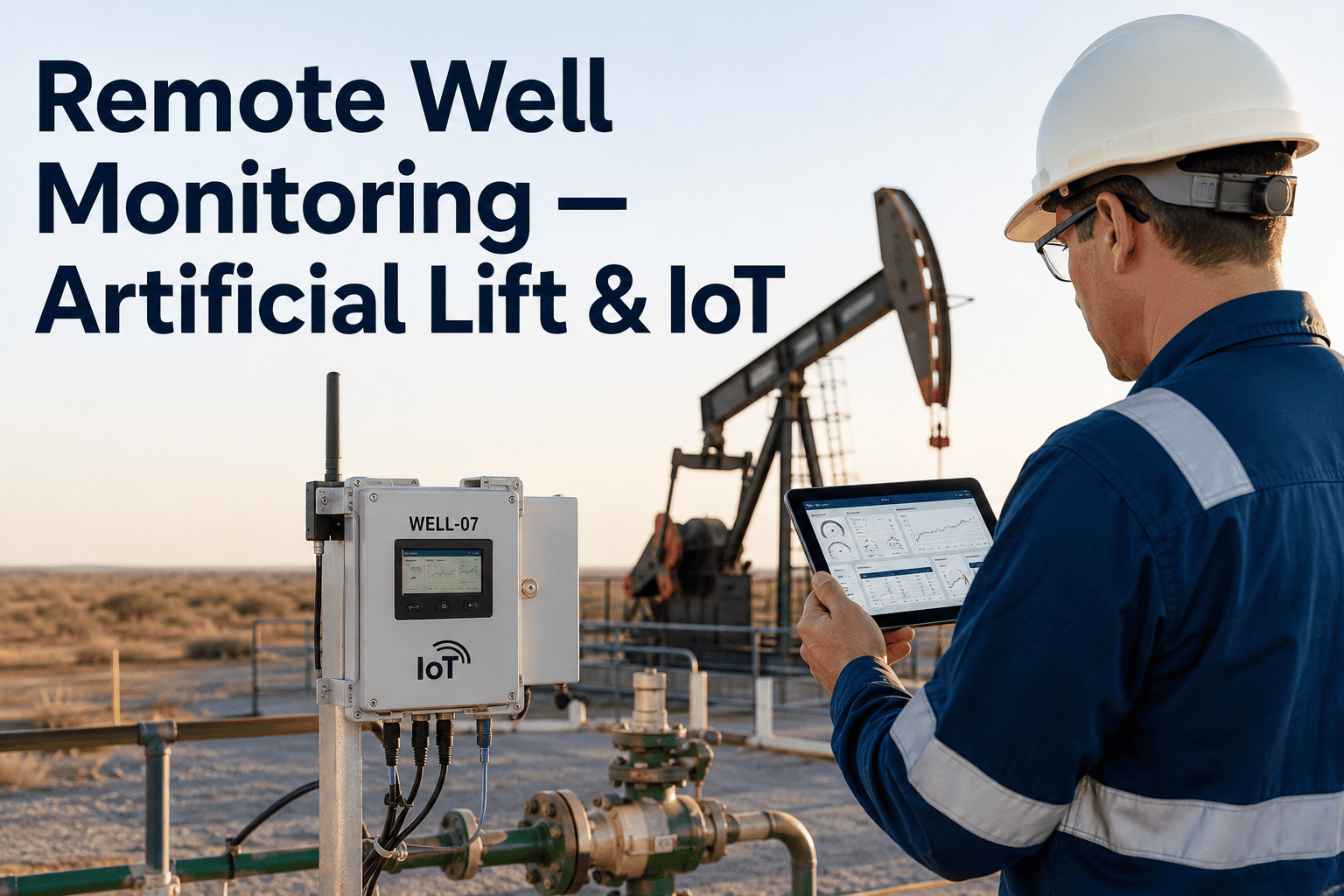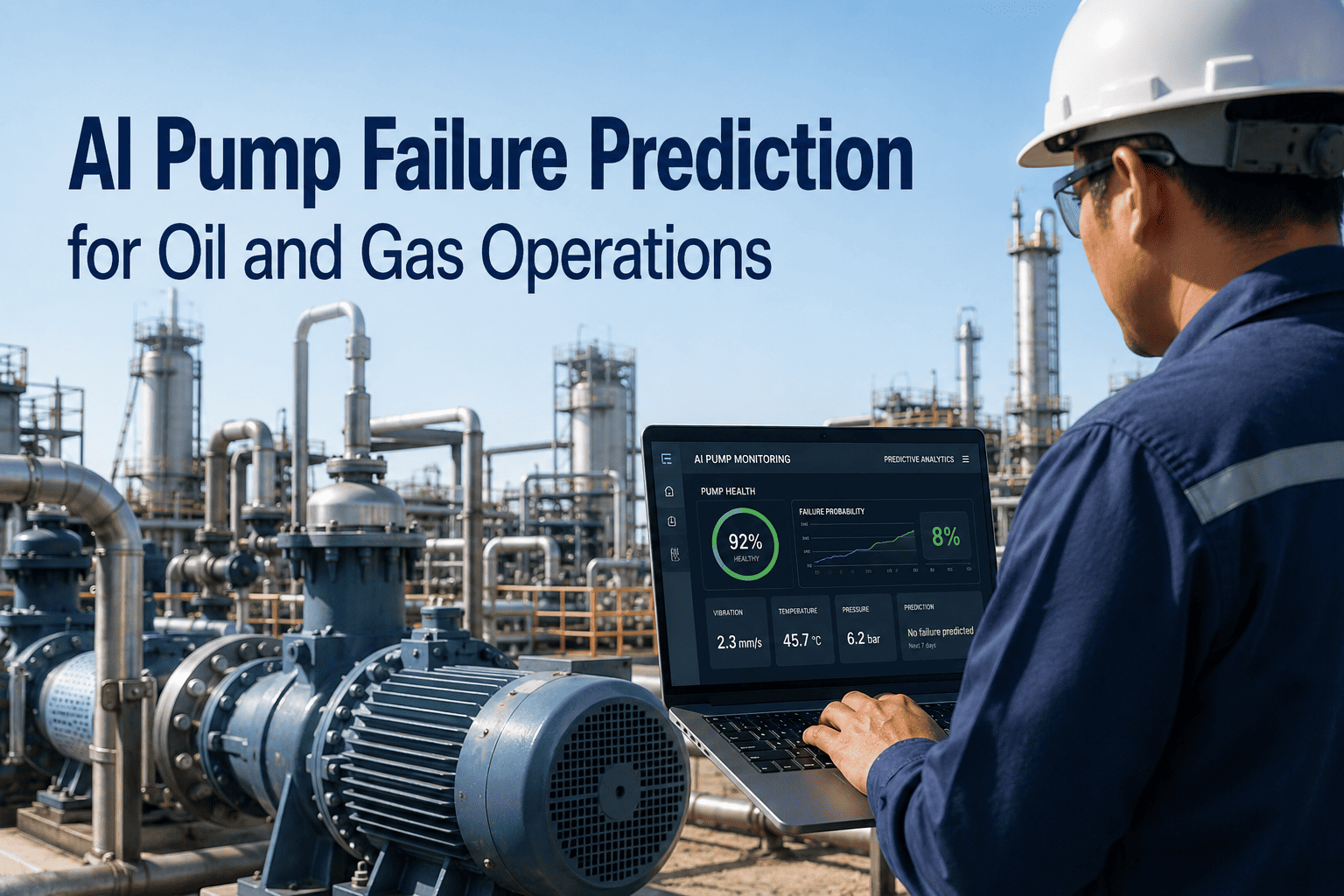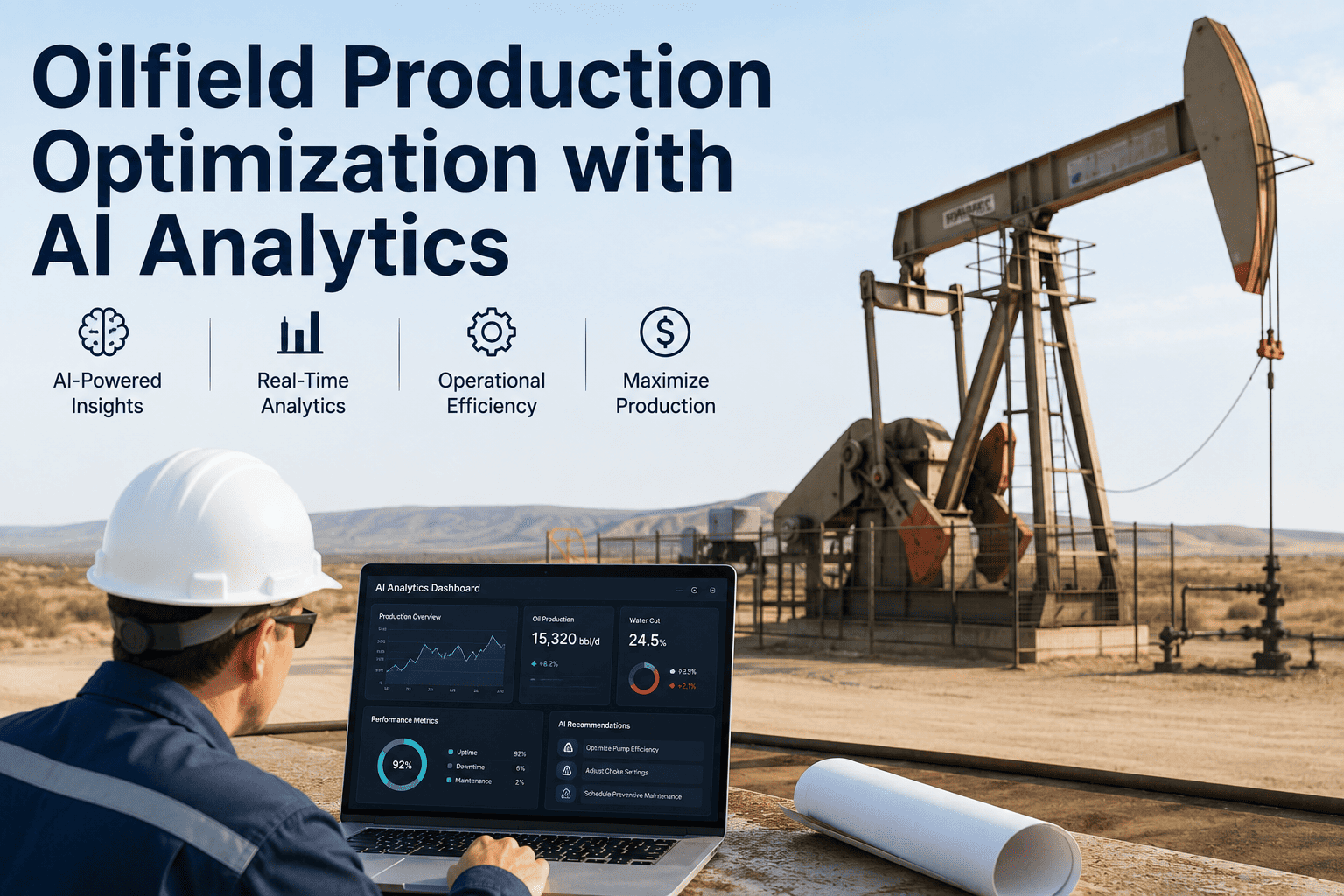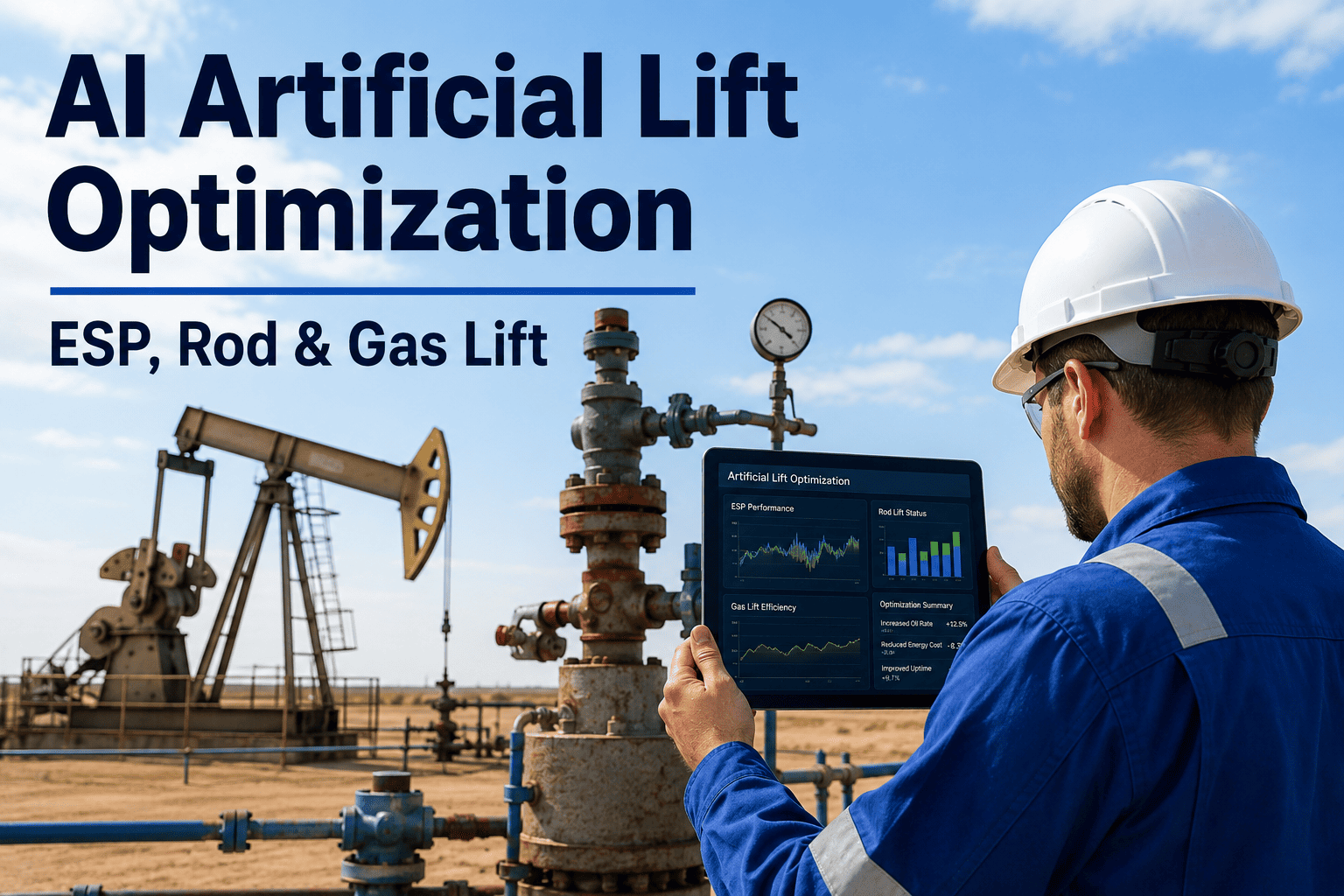
Most operators run more than one type of artificial lift across a mature field, and each one fails for a different reason: ESPs degrade from scale, gas, and thermal stress, rod pumps wear from excessive cycling, and gas lift wells lose efficiency the moment injection rates drift from optimal. Treating all three with the same generic monitoring threshold misses the early warning signs specific to each system, which is why so many failures still get caught only after production has already dropped. AI models trained separately on ESP, rod pump, and gas lift behavior patterns can catch these signals weeks earlier and recommend the operating adjustment before a workover becomes necessary. Production teams managing a mixed-lift field can book a demo to see how this applies across their specific lift portfolio.
One AI Platform for Every Artificial Lift System in Your Field
iFactory monitors ESPs, rod pumps, and gas lift wells with lift-specific models that catch failure signatures early and recommend the setpoint changes that keep every well producing at its optimum.
Artificial Lift Failures Concentrate on Your Best-Producing Wells
In fields running multiple lift types, roughly 80 percent of production commonly comes from just 20 percent of the artificially lifted wells, which means a failure on one of those top producers costs far more than an average well outage. ESP operation and maintenance alone represents close to 43 percent of a typical field's total artificial-lift expenditure, making early failure detection one of the highest-leverage places to apply AI in upstream production. Engineering time is usually the real constraint here, since a production engineer responsible for dozens of wells across multiple lift types cannot give every well the same level of attention every day, so the highest-value wells often only get reviewed as often as the lowest-value ones. Teams that have not yet mapped which wells carry this concentration risk can book a demo to see where it shows up in their own portfolio.
How AI Optimization Differs by Lift Type
A single generic anomaly-detection model applied across every lift type tends to produce either too many false alarms or too few genuine early warnings, because the failure physics of an ESP, a rod pump, and a gas lift well are fundamentally different. iFactory builds a dedicated model family for each lift type so the signal that matters gets surfaced without drowning production engineers in noise.
Electric Submersible Pumps
Motor current, vibration, intake pressure, and temperature trends are modeled together to catch early signs of downthrust, gas interference, and scale buildup, with physics-based failure models layered on top of the AI signal to reduce false alarms and extend run life before a workover is needed.
Sucker Rod Pumps
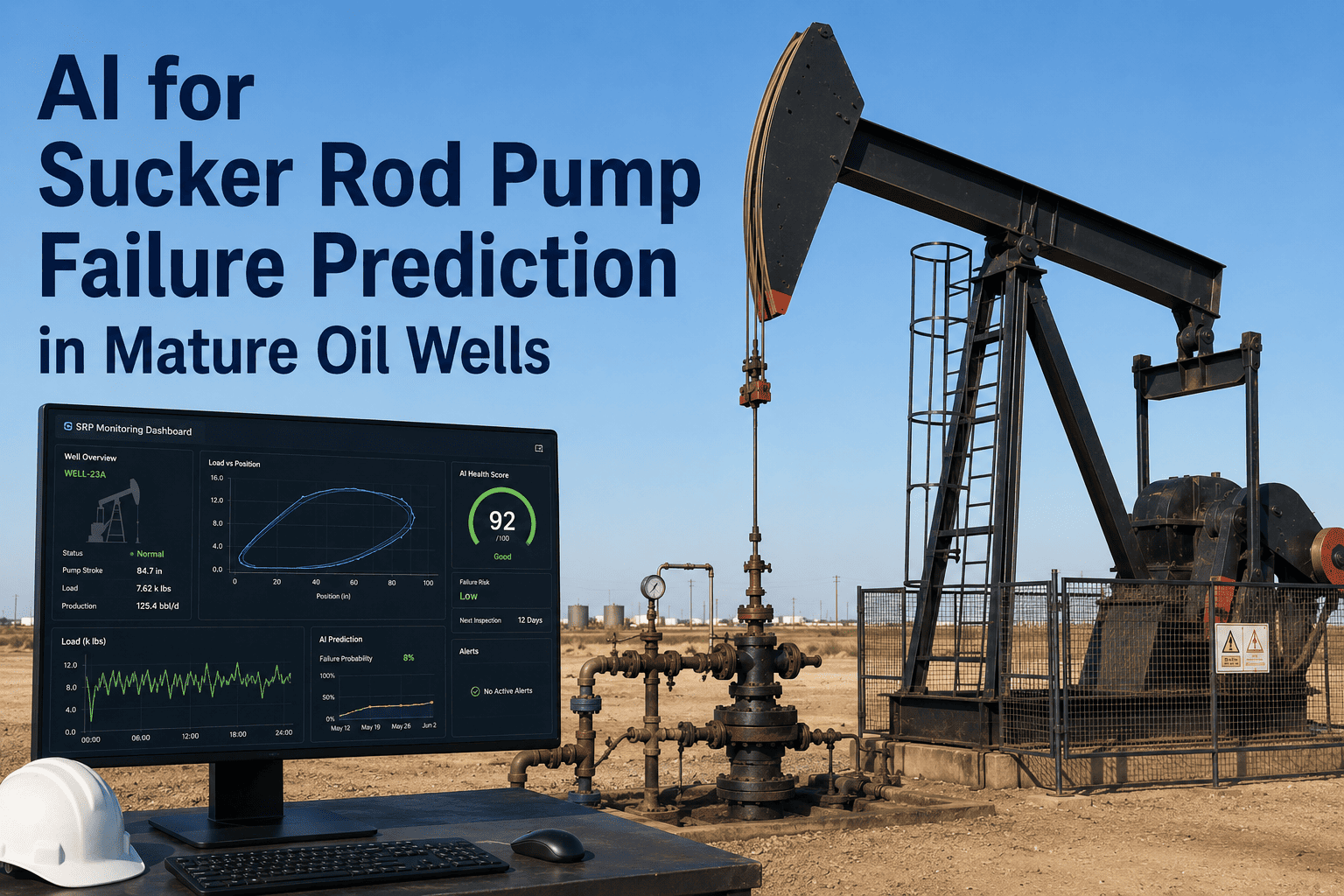
Dynamometer card shape and pump fillage are analyzed continuously to detect gas locking, fluid pound, and excessive cycling, with variable frequency drive speed automatically adjusted to hold optimal fillage and cut the number of daily shutdowns.
Gas Lift Systems
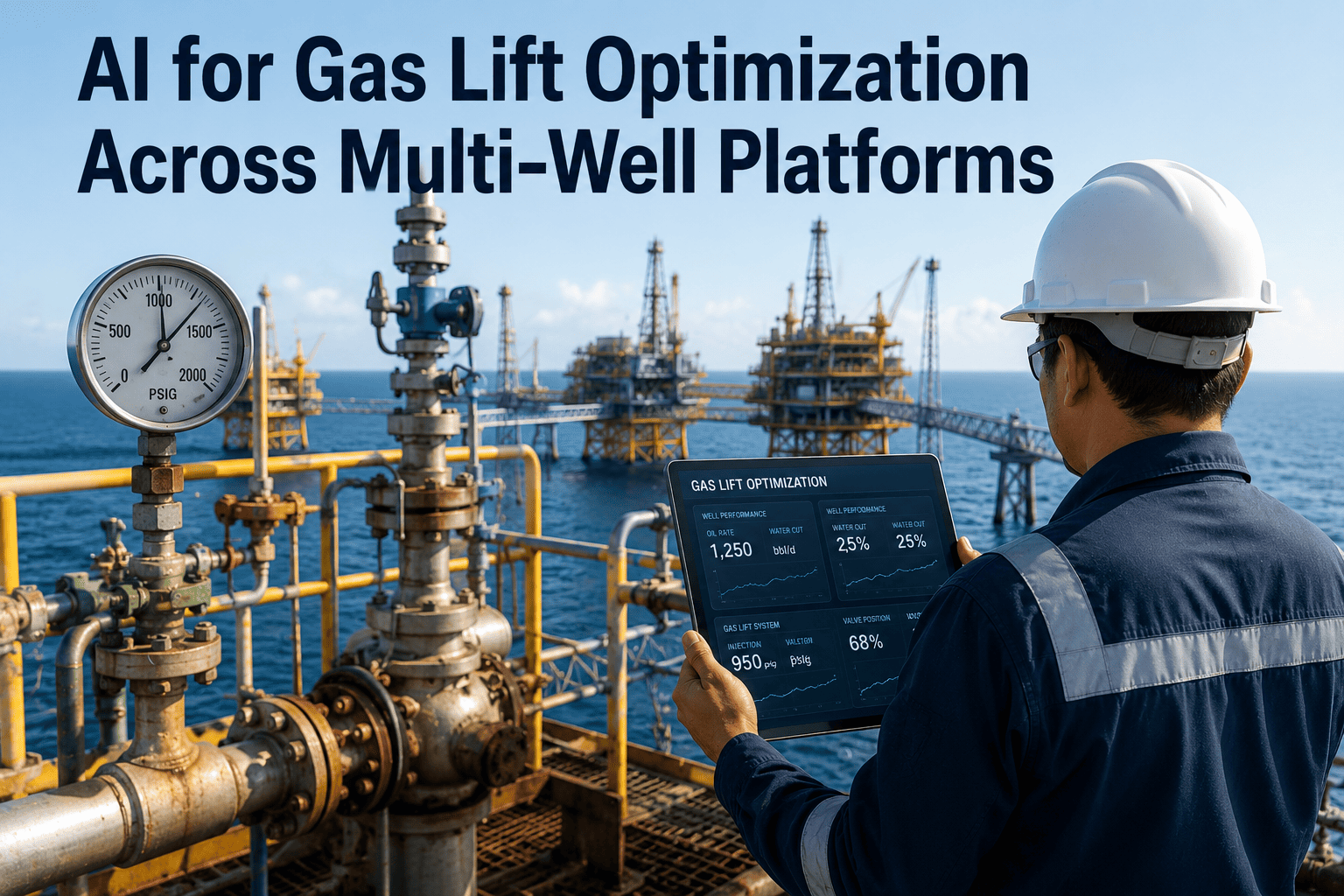
Injection rate, casing pressure, and produced fluid response are modeled together so setpoints adapt as slugging and unloading conditions change, replacing static simulation-based rate tables that cannot keep pace with rapidly shifting well conditions.
Results Reported Across AI-Optimized Artificial Lift Deployments
See Where Your Highest-Producing Wells Are at Risk Today
iFactory reviews your ESP, rod pump, and gas lift well data to flag which wells carry the earliest signs of degradation before they show up as a production loss.
Manual Well Review vs. AI-Driven Lift Surveillance
Production engineers responsible for dozens or hundreds of lift wells cannot manually review every dynamometer card, ESP trend, and gas lift chart on a daily basis, which is exactly the gap continuous AI surveillance is built to close. The table below reflects how the same core surveillance tasks change in both frequency and quality once an AI layer sits underneath the existing SCADA and well test infrastructure.
| Surveillance Task | Manual Review | AI-Driven Surveillance (iFactory) | Outcome |
|---|---|---|---|
| Well Review Frequency | Weekly or when a problem is reported | Continuous, every production cycle | Issues caught weeks earlier |
| ESP Failure Detection | Threshold alarms after the fact | Physics-based AI models predicting remaining useful life | Fewer unplanned workovers |
| Rod Pump Cycling | Reviewed during periodic well tests | VFD speed adjusted automatically for optimal fillage | Up to 83% fewer daily shutdowns |
| Gas Lift Rate Setting | Static rate table from simulation | Continuously re-optimized closed-loop injection control | Higher, more stable gas rates |
| Engineer Time Allocation | Spent triaging alarms across the portfolio | Focused on the highest-value flagged wells only | More time for optimization work |
What Field Teams Report After Deployment
We manage over sixty wells with a single operator in a remote field, and manual dynamometer reviews and ESP trend checks were simply not keeping pace with the number of wells we had. Once the lift-specific models were running continuously, gas locking and fillage issues on the rod pump side got caught before they turned into a shutdown, and we finally had visibility into which ESP wells were trending toward a failure instead of finding out after the pump was already down.
What to Have Ready Before an Artificial Lift AI Deployment
The fastest deployments start with an inventory of what surveillance data is already being collected rather than a plan to install new instrumentation everywhere at once. For ESPs, that typically means motor current, intake pressure, and vibration data from existing downhole gauges or variable speed drive controllers. For rod pumps, dynamometer card history and stroke or SPM settings from the existing pump-off controller are usually sufficient to begin. For gas lift wells, casing and tubing pressure along with injection rate history from the surface control system cover most of what the model needs.
iFactory typically pilots on the highest-value wells in a field first, since that is where early detection has the largest financial impact and where results are easiest to validate against a known operating history. A pilot group of 15 to 25 wells across the relevant lift types is usually enough to demonstrate value before expanding to the full portfolio. Operators wanting to scope a pilot on their own well list can book a demo to review data readiness first.
AI Artificial Lift Optimization — Frequently Asked Questions
Can one platform really monitor ESPs, rod pumps, and gas lift wells together?
Yes, though the underlying models are lift-specific rather than one generic algorithm applied to every well type. ESP models focus on motor current, vibration, and thermal signatures, rod pump models focus on dynamometer card shape and fillage, and gas lift models focus on injection rate and casing pressure response, all surfaced through a single surveillance dashboard.
How early can AI models detect an ESP failure before it happens?
Physics-based hybrid AI models have demonstrated the ability to detect conditions like sand influx, downthrust, and broken shaft indicators well before a full failure occurs, often providing enough lead time to schedule a workover proactively rather than respond to an unplanned outage. Operators can book a demo to review detection lead times on comparable wells.
Does this require new sensors or hardware on existing wells?
In most cases, no new hardware is required since the models are built to work with the SCADA, dynamometer, and downhole gauge data operators are already collecting. Where instrumentation gaps exist, iFactory identifies the minimum sensor additions needed rather than requiring a full retrofit before deployment can begin.
How much production improvement should we realistically expect?
Reported outcomes vary by lift type and starting condition, but real-time ESP monitoring programs have delivered production increases in the range of 15 percent alongside meaningful maintenance cost reductions, while rod pump optimization programs have cut downtime by up to 30 percent. Actual results depend on how degraded current operations are before optimization begins.
Does the system automatically change well settings or just recommend changes?
Both modes are supported. Some operators prefer closed-loop control for gas lift injection rates and VFD speed adjustments once trust in the model is established, while others start with advisory recommendations reviewed by a production engineer before any setpoint is changed in the field. Teams wanting to discuss which mode fits their risk tolerance can talk to our engineer.
Bring Continuous AI Surveillance to Every Lift Type in Your Field
iFactory connects ESP, rod pump, and gas lift data into lift-specific models that catch failure signatures early and keep every well producing at its optimum.