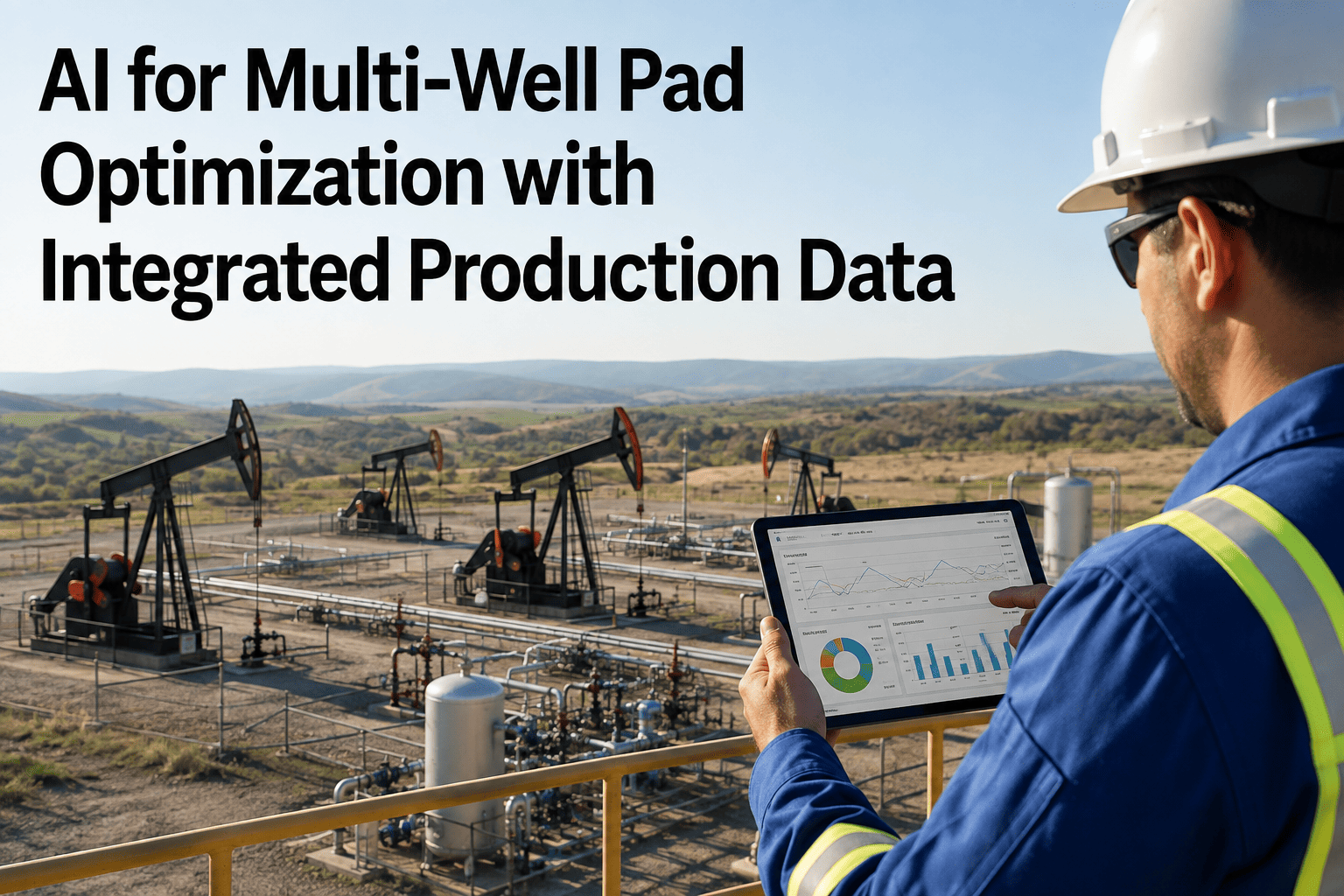
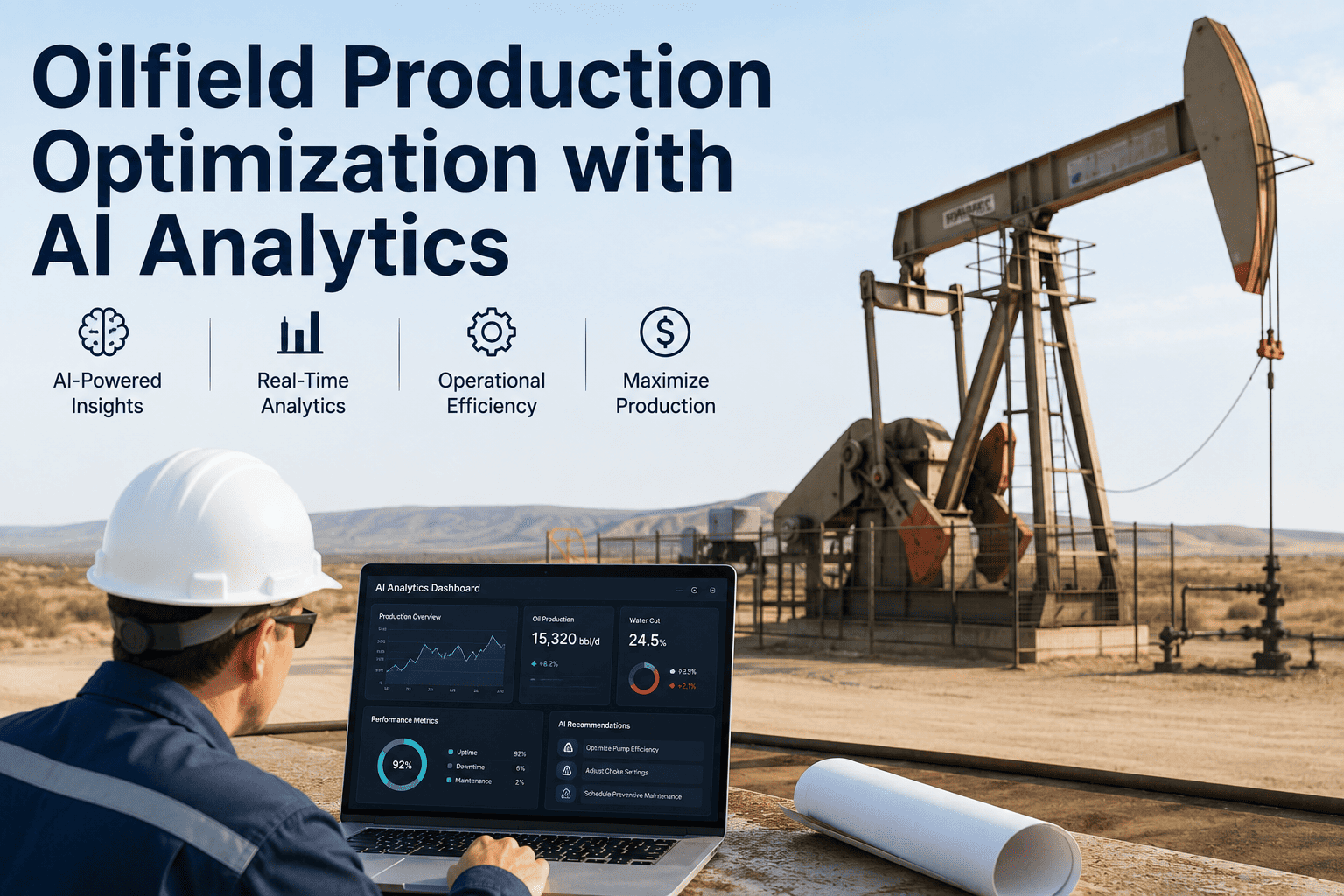
A single well pad rarely operates as sixteen independent wells that happen to share a fence line — it operates as one shared hydraulic and mechanical system, where every artificial lift adjustment, chemical injection rate, and separator setpoint on one well changes the operating envelope of every other well tied into the same gathering line and battery. Most production optimization software still treats each well as an isolated tag list, tuning gas lift injection or rod pump speed against that well's own pressure and flow data while ignoring the fact that the separator downstream is shared, the chemical injection skid is shared, and the compression capacity everyone is fighting for is shared too. See how iFactory's pad-level optimization models coordinate every well against shared constraints in real time instead of optimizing each well in isolation.
Upstream Intelligence · Multi-Well Pad AI
Stop Optimizing Wells One at a Time When They Share the Same Pad
AI that balances artificial lift energy, chemical injection, and separator capacity across an entire 8–16 well pad simultaneously, using integrated real-time production data instead of well-by-well guesswork.
8–16Wells typically sharing one pad's gathering and separation system
30–60sHow fast a change on one well can shift backpressure on its neighbors
1Shared separator most pads depend on regardless of well count
The Coordination Gap
Why Well-by-Well Optimization Quietly Fights Itself
Production engineers rarely lack tools for optimizing an individual well — gas lift injection curves, rod pump stroke and speed tuning, and plunger lift cycle timing are all well understood on a single-well basis. What most pads lack is a system that recognizes those individual optimizations are happening inside a shared hydraulic envelope, where the separator has a fixed liquid and gas handling capacity, the chemical injection skid has a fixed pump capacity split across every wellhead it feeds, and the gathering line backpressure any one well sees depends heavily on what every other well on the pad is flowing at that moment. Tune one high-rate well aggressively and it can push separator liquid loading high enough that every other well on the pad starts seeing elevated backpressure, quietly eroding the gains the well-by-well tuning was supposed to capture.
01
Shared Separator Capacity
A separator sized for the pad's blended average production can be pushed into carryover or liquid slugging when two or three wells peak at the same time, degrading gas quality and liquid measurement accuracy for every well on the battery, not just the ones causing the surge.
02
Fixed Chemical Injection Capacity
A single chemical injection skid feeding corrosion inhibitor or scale inhibitor across sixteen wellheads has to allocate a finite pump capacity, so increasing dosage on a problem well without a pad-level view can silently starve dosage on a well several hundred feet away.
03
Gathering Line Backpressure Interaction
Wells tied into the same low-pressure gathering line push against a shared backpressure that rises and falls with total pad throughput, meaning a flush production event on one well changes the effective lift performance of every artificial lift well on the same line.
04
Compression and Gas Lift Supply Limits
Gas lift wells on the same pad frequently draw from a shared high-pressure gas supply header, so an injection rate increase to chase incremental barrels on one well can reduce available lift gas pressure for others operating closer to their unloading valve setpoint.
Where the Gains Actually Come From
Well-Level Tuning vs. Pad-Level Coordination
The difference between tuning wells individually and coordinating them as a pad shows up most clearly in how much of the pad's theoretical production capacity actually reaches the sales meter. The comparison below reflects the pattern seen across pads once shared-constraint coordination replaces isolated, well-by-well setpoint changes.
Well-by-well tuning, no shared-constraint visibility
~58% of theoretical pad capacity realized
Well-by-well tuning, manual daily separator checks
~71% of theoretical pad capacity realized
AI-coordinated pad-level optimization
~92% of theoretical pad capacity realized
The gap between the first and third bars is not primarily a lift-technology gap — most pads already have adequate artificial lift equipment installed. It is a coordination gap, where the difference comes from an optimization layer that sees the separator, the chemical skid, and the gathering header as shared constraints every well is competing for, rather than treating each wellhead as though it operates in isolation from the sixteen others tied into the same infrastructure.
How Pad-Level Coordination Works
Four Data Streams, One Coordinated Decision
Coordinating a pad requires pulling together data that typically lives in separate systems — artificial lift controllers, chemical injection skid PLCs, separator instrumentation, and gathering line pressure transmitters — and evaluating them together before any single setpoint changes. The sequence below is how that integration plays out in practice.
1
Pull Real-Time Data From Every Well on the Pad
Gas lift injection rates and casing pressure, rod pump stroke/speed and card data, plunger cycle timing, separator liquid level and gas rate, and chemical injection pump status are collected together rather than reviewed well-by-well or system-by-system.
2
Model the Pad's Shared Constraints
Separator liquid and gas handling limits, chemical skid total pump capacity, and gathering line backpressure curves are modeled as shared resources every well on the pad is drawing against simultaneously, not as fixed background conditions.
3
Evaluate Setpoint Changes Against the Whole Pad
Before a gas lift injection increase or chemical dosage change is applied, the model checks its downstream effect on separator loading and gathering pressure for every other well sharing that infrastructure, not just the well being adjusted.
4
Recommend or Apply Coordinated Setpoints
The output is a set of setpoints across the pad, not a single well's tuning recommendation — balancing which wells get incremental lift gas, chemical dosage, and separator priority based on the pad's total production objective.
Shared Constraints Reference
The Four Resources Every Well on a Pad Competes For
Each constraint below behaves differently and needs a different kind of real-time visibility to coordinate well, which is why a pad-level optimization layer has to integrate several distinct data types rather than relying on a single production metric.
| Shared Resource | Typical Constraint | Risk if Ignored | Coordination Approach |
|---|
| Separator Capacity | Fixed liquid and gas handling rate | Carryover, slugging, bad measurement | Balance peak flow timing across wells |
| Chemical Injection Skid | Fixed total pump throughput | Under-dosed wells, corrosion/scale risk | Dynamic allocation by real-time need |
| Gathering Line Backpressure | Pressure rises with total pad flow | Reduced lift efficiency pad-wide | Stagger high-rate well production |
| Lift Gas / Compression Supply | Fixed high-pressure gas availability | Unstable gas lift, valve chatter | Prioritize gas to highest-return wells |
See the Pad, Not Just the Well
Coordinate Every Well on the Pad Against the Same Shared Constraints
iFactory integrates artificial lift, chemical injection, and separator data across the entire pad so setpoint decisions account for what every well is drawing on, not just the one being adjusted.
Why This Data Stays Fragmented
The Systems Were Never Built to Talk to Each Other
Artificial lift controllers, chemical injection PLCs, and separator instrumentation are typically purchased from different vendors, installed at different points in the pad's operating life, and configured by different service companies, each optimized for its own local control loop rather than pad-wide visibility. A gas lift controller is tuned to hold a casing pressure setpoint; it has no reason to know what the separator's current liquid level looks like. A chemical injection skid is tuned to hold a dosage rate; it has no visibility into which wellhead is currently seeing the highest corrosion risk relative to the others sharing its pump. Each system does its individual job correctly, which is exactly why the coordination gap between them is so easy to miss during a routine review — nothing is malfunctioning, the systems are simply not talking to each other, and the production loss shows up as a diffuse efficiency gap rather than a specific fault anyone would investigate.
Closing that gap does not require replacing the individual control systems already installed on the pad. It requires an integration layer that reads from all of them continuously, translates their outputs into a shared model of the pad's real-time constraint picture, and feeds coordinated setpoint recommendations back — which is a fundamentally different problem than tuning any single system in isolation, and one most pad-level SCADA historians were never designed to solve on their own.
What Changes Operationally
What Pad-Level Coordination Looks Like in Daily Operations
Fewer Separator Upsets
Peak flow events across wells are staggered rather than allowed to stack, keeping the separator inside its rated liquid and gas handling envelope more consistently through the shift.
More Even Chemical Protection
Corrosion and scale inhibitor dosage shifts dynamically toward whichever wellhead shows the highest real-time risk indicators, instead of running a fixed split that under-protects the wells that need it most.
Higher Realized Pad Throughput
Total barrels reaching the sales meter increase because production engineers are no longer leaving capacity on the table to avoid destabilizing neighboring wells during peak events.
Earlier Warning of Emerging Conflicts
A well trending toward a separator or chemical capacity conflict is flagged before the conflict actually degrades production, giving engineers a window to intervene proactively rather than reactively.
Getting Started
What a Pad Needs Before Coordinated Optimization Can Run
Data Access
Real-time or near-real-time read access to artificial lift controllers, separator instrumentation, and chemical injection skid data across every well on the pad, integrated into a single view rather than reviewed system by system.
Constraint Mapping
A documented picture of the pad's actual shared infrastructure — which wells share which separator, chemical skid, and gathering line — since coordination logic depends on knowing exactly which wells compete for which resource.
Baseline Production History
Recent production and setpoint history for each well, giving the optimization model a realistic starting envelope for what normal and peak flow actually look like on that specific pad.
Operator Alignment
Field operators and production engineers aligned on how coordinated recommendations will be reviewed and applied, since the shift from well-by-well tuning to pad-level coordination changes the daily workflow, not just the software.
Common Questions
Frequently Asked Questions
Does pad-level optimization replace the individual artificial lift controllers already installed on each well?
No — the individual gas lift, rod pump, or plunger lift controllers continue running their local control loops exactly as before. Pad-level coordination sits above those controllers as an integration and decision layer, adjusting the setpoints those controllers work toward based on what the whole pad's shared constraints look like in real time, rather than replacing the underlying lift hardware or control logic.
Book a demo to see how this layers onto your existing lift infrastructure.
How many wells need to share infrastructure before pad-level coordination becomes worthwhile?
Pads with as few as four to six wells sharing a separator and chemical injection skid already show measurable coordination gaps, though the effect becomes more pronounced as well count climbs toward the eight-to-sixteen-well range typical of modern multi-well pad development, where peak-flow overlap between wells becomes increasingly likely on any given day.
What happens when two high-rate wells on the same pad naturally peak at the same time?
Without coordination, both wells push toward the separator and gathering line simultaneously, often triggering elevated backpressure or liquid carryover that degrades performance for every well on the battery. A coordinated system recognizes the emerging overlap ahead of time and can stagger setpoint changes, chemical dosage timing, or lift gas allocation to smooth the combined impact before it becomes a measurable upset.
Does this require new hardware or instrumentation on the pad?
In most cases, no — pads already instrumented with standard artificial lift controllers, separator level and pressure transmitters, and chemical injection skid monitoring have the data needed. The gap is almost always integration rather than instrumentation, meaning the existing data simply needs to be pulled together and evaluated jointly instead of remaining siloed in separate systems.
Talk to support about what your current pad instrumentation can already support.
Can pad-level optimization run in an advisory mode before allowing automated setpoint changes?
Yes — most operations start with the system generating coordinated setpoint recommendations for production engineers to review and apply manually, building confidence in how the model weighs shared constraints before moving toward more automated setpoint adjustment on wells where the operator is comfortable with a lower level of manual review.
Your Pad Is Already One System
Optimize It Like One, Not Like Sixteen Separate Wells
iFactory integrates artificial lift, chemical injection, and separator data across your entire pad to coordinate setpoint decisions against the shared constraints every well is actually competing for.