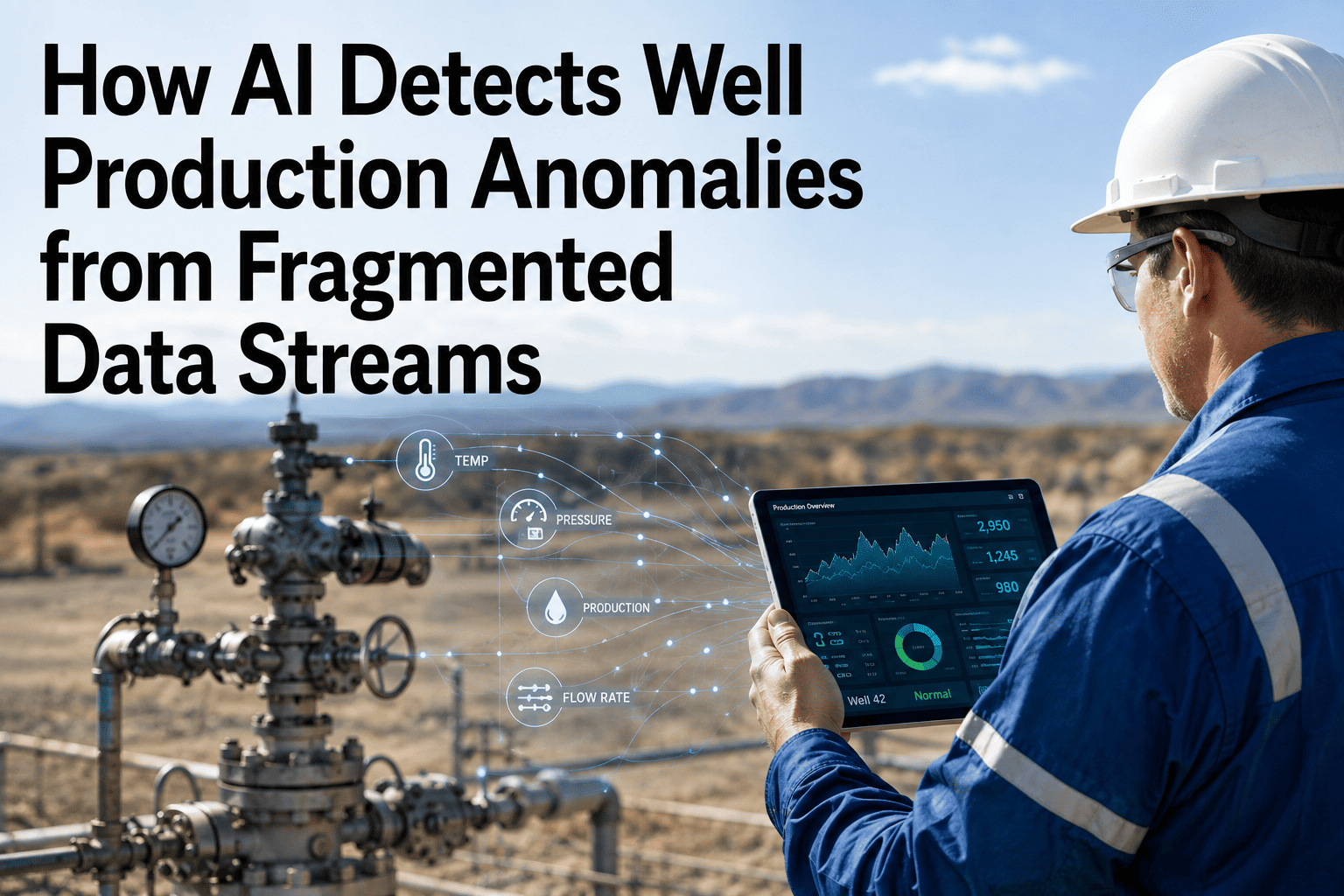
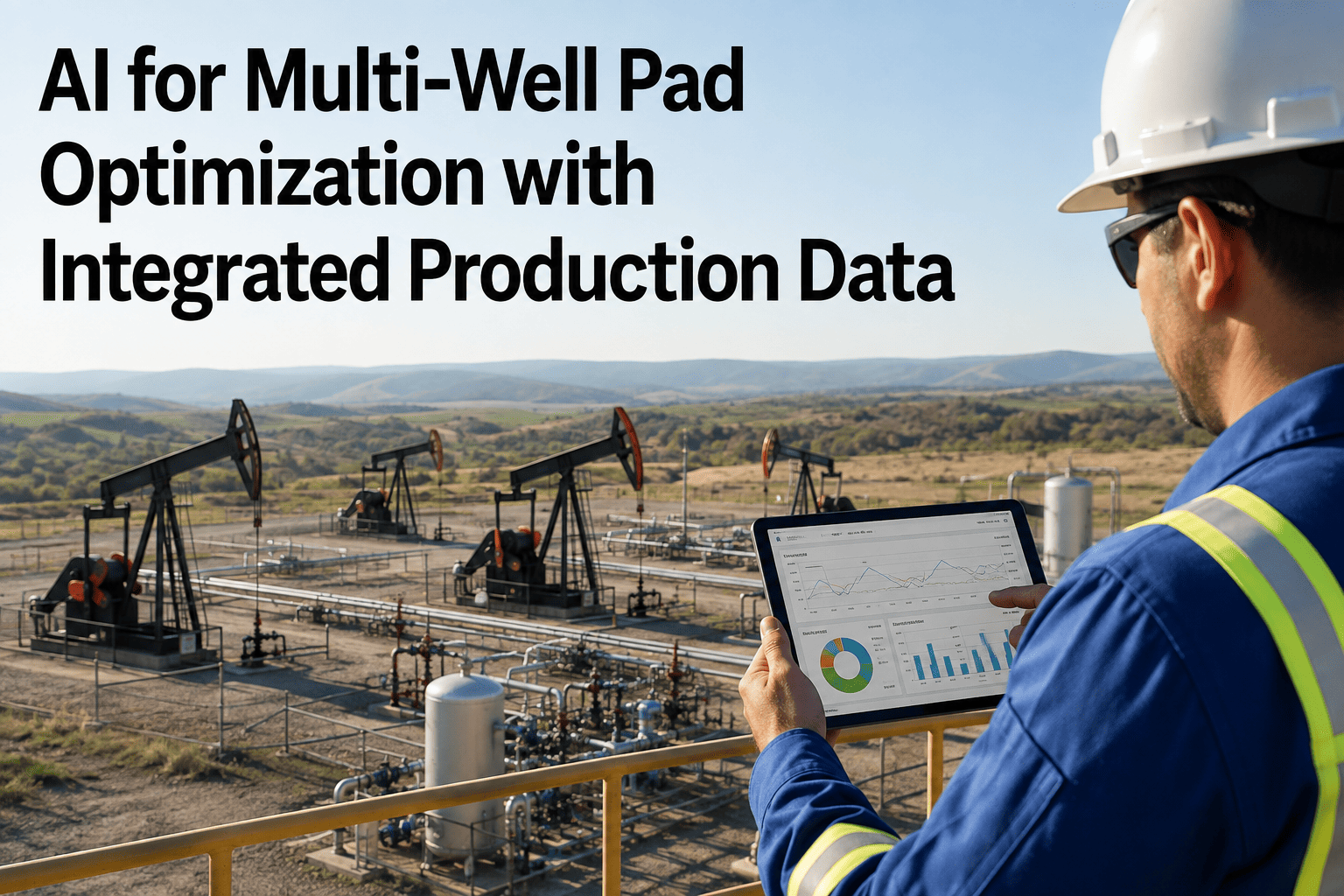
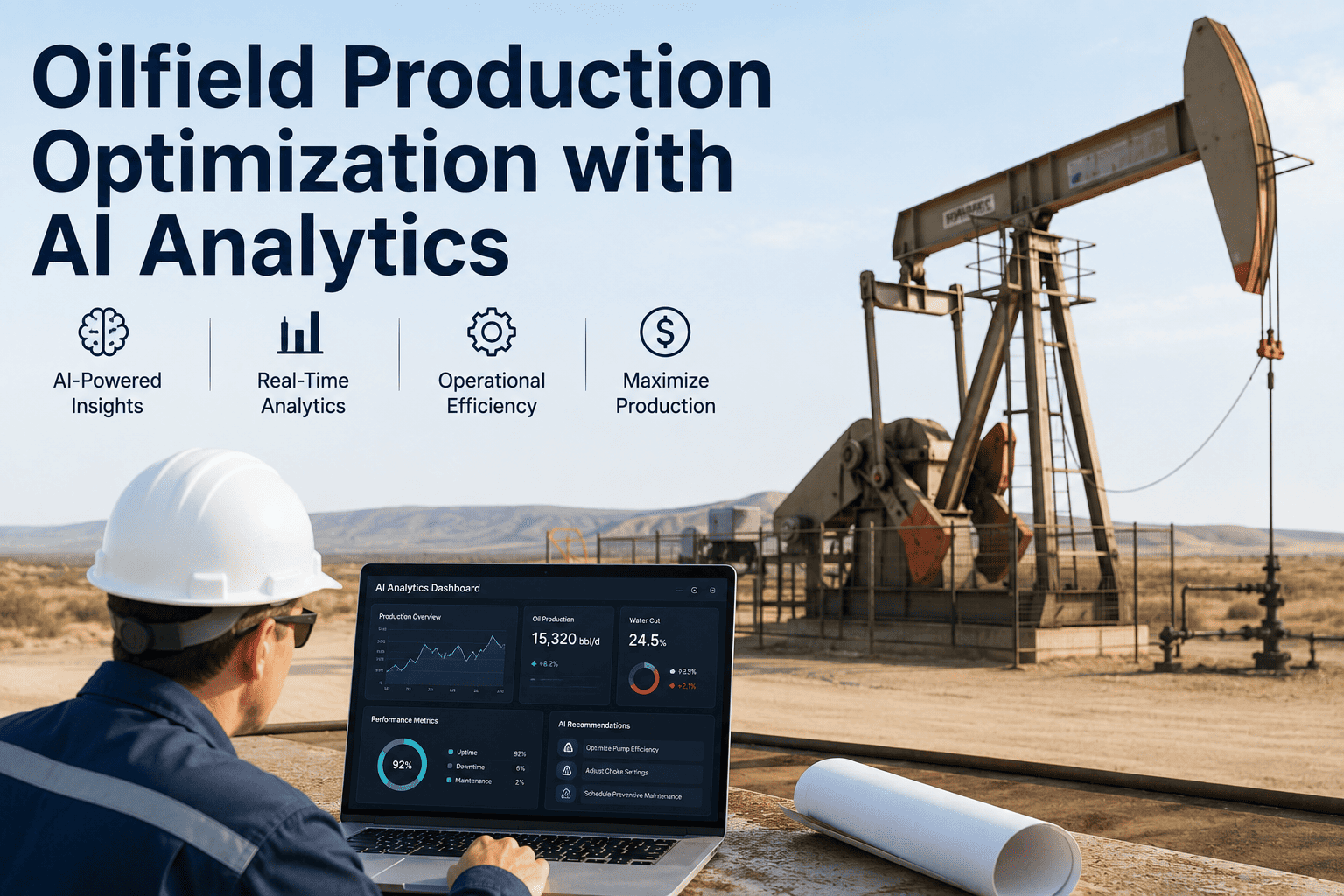
At field-level scale, unifying data from a handful of wells is a manageable integration project. At five hundred wells and beyond, it becomes an entirely different engineering problem, because the number of SCADA remote terminal units, rod pump controllers, ESP panels, separator instruments, and manual test records multiplies faster than any team can reconcile by hand. Operators running enterprise-scale portfolios need a decision layer built for that volume from the start, not a dashboard stretched past what it was designed to handle, and you can book a demo to see the architecture running against a portfolio your size.
One AI Data Platform, Every Well Across Your Field, No Matter the Scale
Data from SCADA, rod pump controllers, ESP panels, separator instruments, and manual well tests unified across five hundred or more wells into a single AI decision layer built for enterprise scale from day one.
The Integration Problem That Only Shows Up Past a Few Hundred Wells
A spreadsheet-and-dashboard approach that works reasonably well for fifty wells collapses well before five hundred, not because the underlying data sources change, but because the number of naming inconsistencies, protocol variants, and edge-case data gaps grows in a way that manual reconciliation simply cannot keep pace with. Enterprise-scale operators need a platform architected for that volume, not a small-field tool that has been patched to handle more wells than it was built for.
What an Enterprise Upstream Platform Actually Has to Ingest
An architecture built for five hundred wells has to account for the full range of data sources present across a mature, multi-vintage field, where newer pads run modern SCADA and older wells still rely on manual gauging and paper-based test records.
SCADA Systems
Real-time flow, pressure, and choke position data streamed continuously from field RTUs, typically the highest-frequency and most complete data source in the portfolio.
Rod Pump Controllers
Dynamometer card data, stroke rate, and fillage readings from artificial lift controllers, often from multiple vendors with differing data formats across field vintages.
ESP Panels
Motor amperage, vibration, intake pressure, and temperature data from electrical submersible pump variable speed drives and surface panels.
Separator Instruments
Multiphase and test separator readings that establish oil, gas, and water split at the facility level, used to validate and calibrate well-level allocation.
Manual Well Tests
Periodic hand-recorded test data for wells not on continuous telemetry, still a material share of most mature portfolios and often the hardest source to digitize.
How Five Source Systems Become One Decision Layer
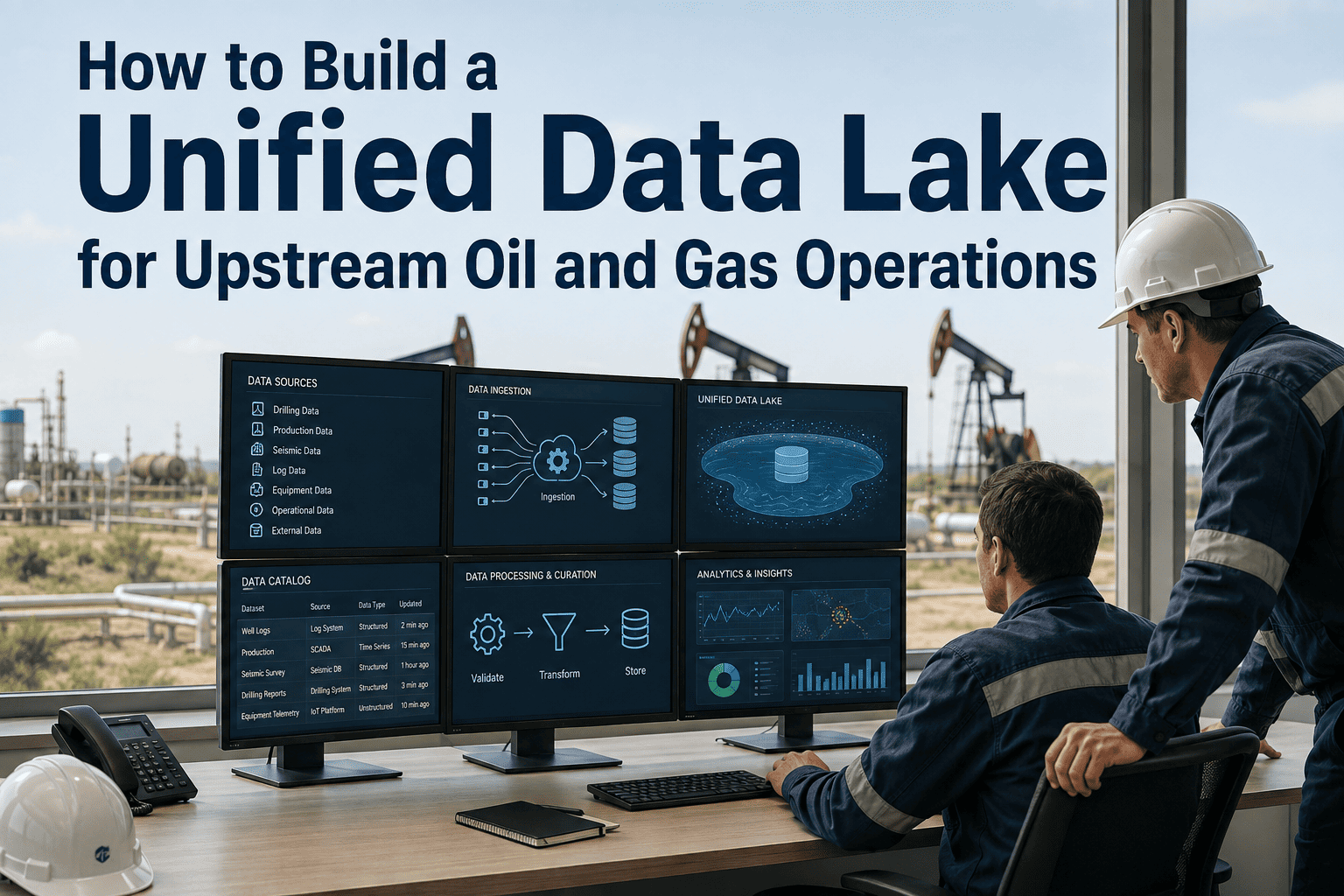
The architecture is built in three layers, each solving a distinct problem that a single-pass integration attempt typically fails to address at scale.
| Layer | Function | What It Solves |
|---|---|---|
| Ingestion Layer | Protocol-level connection to every source system | Vendor and protocol fragmentation |
| Unification Layer | Well-ID matching, unit normalization, gap handling | Naming mismatches and data quality gaps |
| Decision Layer | AI scoring, ranking, and portfolio-wide prioritization | Engineer time spent hunting instead of acting |
Your Field Already Generates the Data — It Just Is Not Unified Yet
iFactory's platform is built to ingest and reconcile five hundred or more wells across SCADA, rod pump, ESP, separator, and manual test data without a multi-month manual reconciliation project. Book a demo and see the architecture applied to your portfolio.
Rolling Out Across a 500-Well Portfolio Without Stalling Production
Enterprise deployments succeed when they are phased around field structure rather than attempted as a single all-at-once cutover, which is why the rollout below groups wells by pad and vintage instead of by data source alone.
Inventory Source Systems by Pad and Vintage
Every SCADA RTU, controller vendor, and instrumentation type is catalogued by pad, since field vintage strongly predicts which systems and data quality issues will appear together.
Connect High-Volume, Highest-Value Pads First
Initial connection prioritizes pads with the highest production volume and most complete telemetry, delivering measurable value before the long tail of manual-test wells is addressed.
Resolve Naming and Unit Mismatches Systematically
A standardized well-ID and unit mapping process is applied across pads rather than resolved ad hoc, preventing the same mismatch from being fixed multiple times independently.
Extend to Manual-Test and Legacy Wells
Lower-instrumented wells are brought in last, with the AI accounting for reduced data frequency so they remain fairly represented in portfolio-wide scoring.
Activate Portfolio-Wide Ranking and Reporting
Once the majority of wells are connected, portfolio-wide ranking, exception reporting, and dollar-impact scoring go live for the full engineering and operations team.
The Economics of Unifying Data at 500-Well Scale
The business case for enterprise-scale data unification strengthens as well count grows, because the cost of fragmentation compounds while the marginal cost of adding another well to an already-unified platform stays comparatively flat. A production engineer manually reconciling data across six vendor systems for fifty wells is inefficient but survivable. The same engineer attempting the equivalent process across five hundred wells simply cannot keep pace, and the operational cost of that gap shows up as delayed problem detection, missed optimization opportunities, and engineering time spent on data assembly instead of analysis.
Enterprise operators that unify their portfolio typically see the largest returns not from any single well, but from the aggregate effect of catching underperformance days or weeks earlier across hundreds of wells simultaneously, along with reduced headcount pressure on production engineering teams stretched thin by manual reconciliation work.
Data Ownership and Access Considerations for Enterprise Deployments
Unifying data across five hundred or more wells inevitably touches multiple internal teams and often multiple business units, which makes data governance a design consideration from the start rather than an afterthought addressed once the platform is already live.
Role-Based Access Control
Different teams, from field operations to executive reporting, need different views into the same unified dataset, requiring access controls defined at the well, pad, and field level.
Data Ownership Alignment
Clear ownership of source-system data quality needs to remain with the teams closest to each system, even as the unified platform becomes the primary consumption point.
Audit and Change Tracking
Enterprise deployments benefit from tracking when and how normalization rules or well mappings change, since a silent schema change can affect scoring across the entire portfolio at once.
Planning for Field Growth Without Rebuilding the Architecture
Enterprise upstream portfolios rarely stay static, whether through organic drilling programs, acquisitions, or divestitures, and a platform architecture built only for the current well count tends to require costly rework the first time the portfolio changes meaningfully. Designing the ingestion and unification layers to be source-agnostic from the start, rather than hard-coded to the specific vendor systems present at initial deployment, is what allows a newly acquired field with an entirely different SCADA vendor to be onboarded as a connector addition rather than an architecture redesign.
This matters most at the decision layer, where AI scoring models trained on one field's baseline behavior need a defined process for extending to a newly added field with different reservoir characteristics and operating norms, rather than applying the same fixed thresholds across fields that were never comparable to begin with.
Common Questions From Enterprise Upstream Teams
Bring Your Entire Well Portfolio Into One Decision Layer
See how iFactory's enterprise architecture unifies SCADA, rod pump, ESP, separator, and manual test data across a portfolio your size.