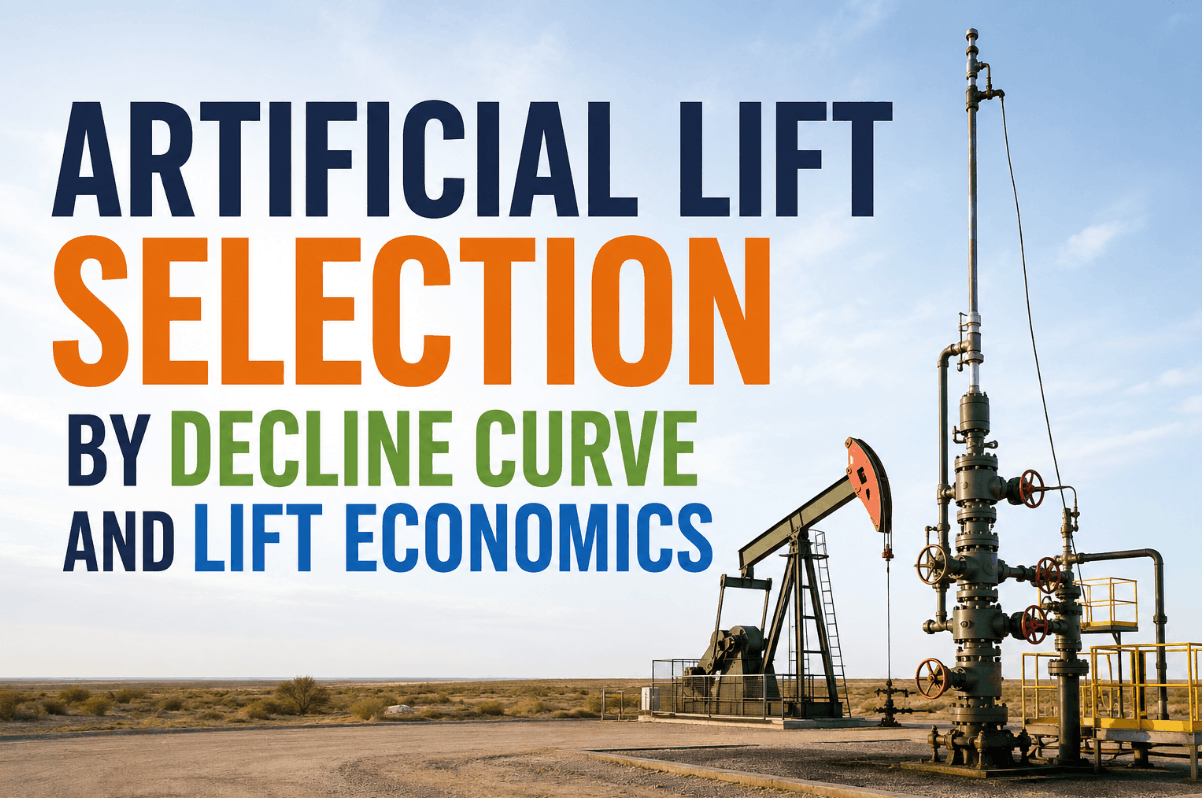
Every artificial lift decision is really an economics decision wearing engineering clothes. The mechanical question — ESP, gas lift, rod pump, PCP, or jet pump — gets all the attention in vendor meetings, but it's the wrong question to start with. The right starting point is the production decline curve: what rate is this well actually capable of delivering today, where is that rate heading over the next 12–36 months, and what does each lift method cost to install, run, and eventually replace against that declining backdrop. Operators who select lift method first and back into the economics consistently end up with stranded capital — an ESP sized for flush production sitting in a well that declined past its efficient operating range within 18 months, or a rod pump fighting gas interference because nobody modeled the GOR trend before installation. iFactory AI's artificial lift economics platform connects decline curve forecasting directly to lift method screening, so the selection reflects where production is going, not just where it is now. Operators using decline-integrated lift screening report 22% fewer premature lift conversions and meaningfully tighter alignment between installed lift capacity and actual well deliverability. Book a Demo to see the screening run against your own decline data.
Why Lift Selection Fails When It Ignores the Decline Curve
The most common artificial lift mistake is not picking the wrong method in absolute terms — it's picking the right method for the wrong point on the production timeline. An ESP sized for an unconstrained flush rate of 800 BOPD is an excellent choice on day one and a poor choice 24 months later when the well has declined to 220 BOPD and the pump is now operating well below its efficient curve, cycling on thermal protection, and burning electricity disproportionate to barrels lifted. A rod pump installed on a well with a rising gas-oil ratio looks fine on the initial design card and then fights gas interference and pump fillage problems within a year as GOR climbs. Selection criteria built on initial production tests without a forward decline forecast are selection criteria built on data that expires. Book a Demo to see how a forward decline forecast changes the selection outcome.
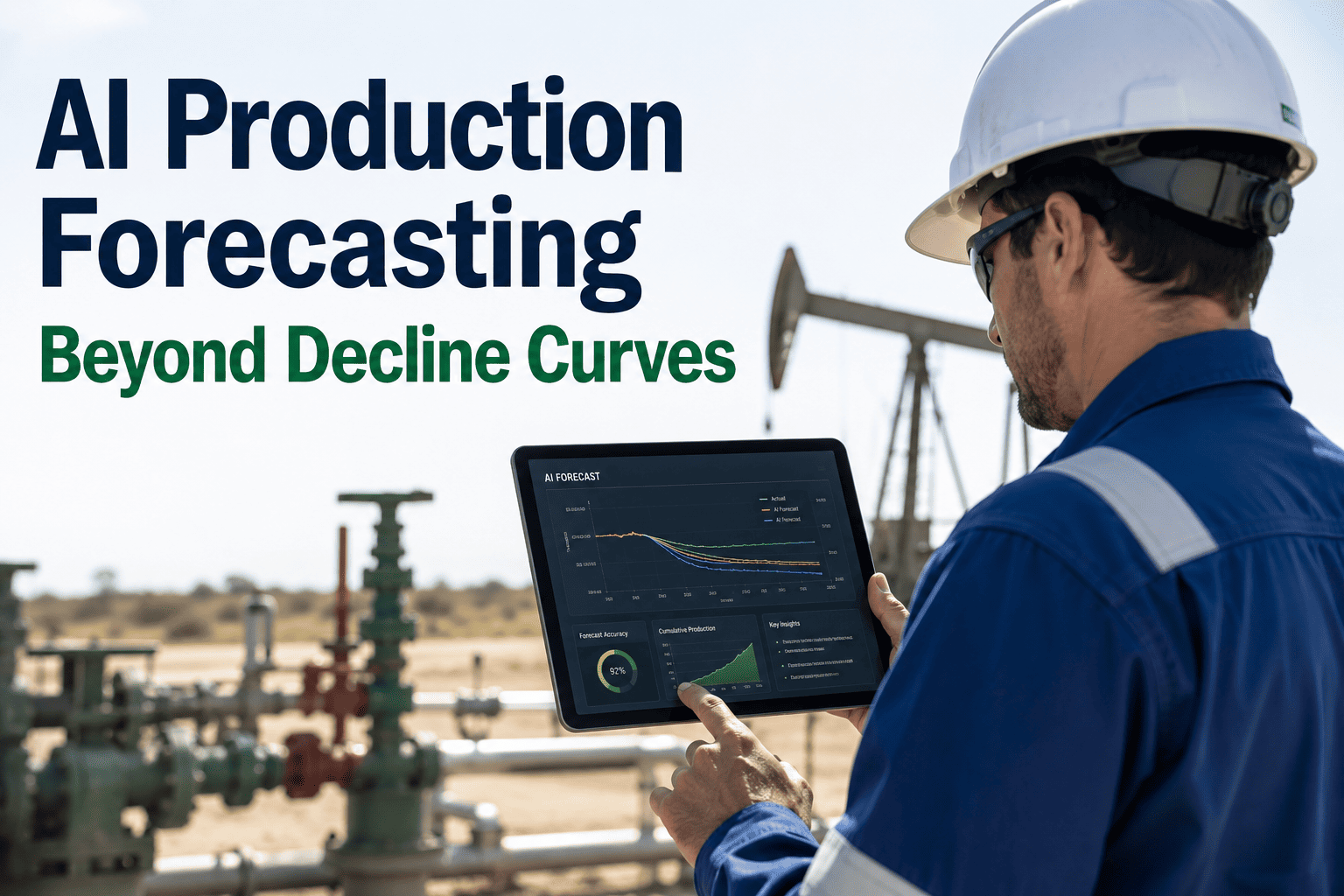
Decline curve analysis exists precisely to prevent this. Hyperbolic and exponential decline models extend a well's historical production trend into a defensible forecast of rate, GOR, and water cut over the planning horizon — the same forward view that lift economics requires to size equipment correctly the first time. Book a Demo to see how decline-integrated lift screening works for your field.
Five Artificial Lift Methods, Screened Against the Same Well
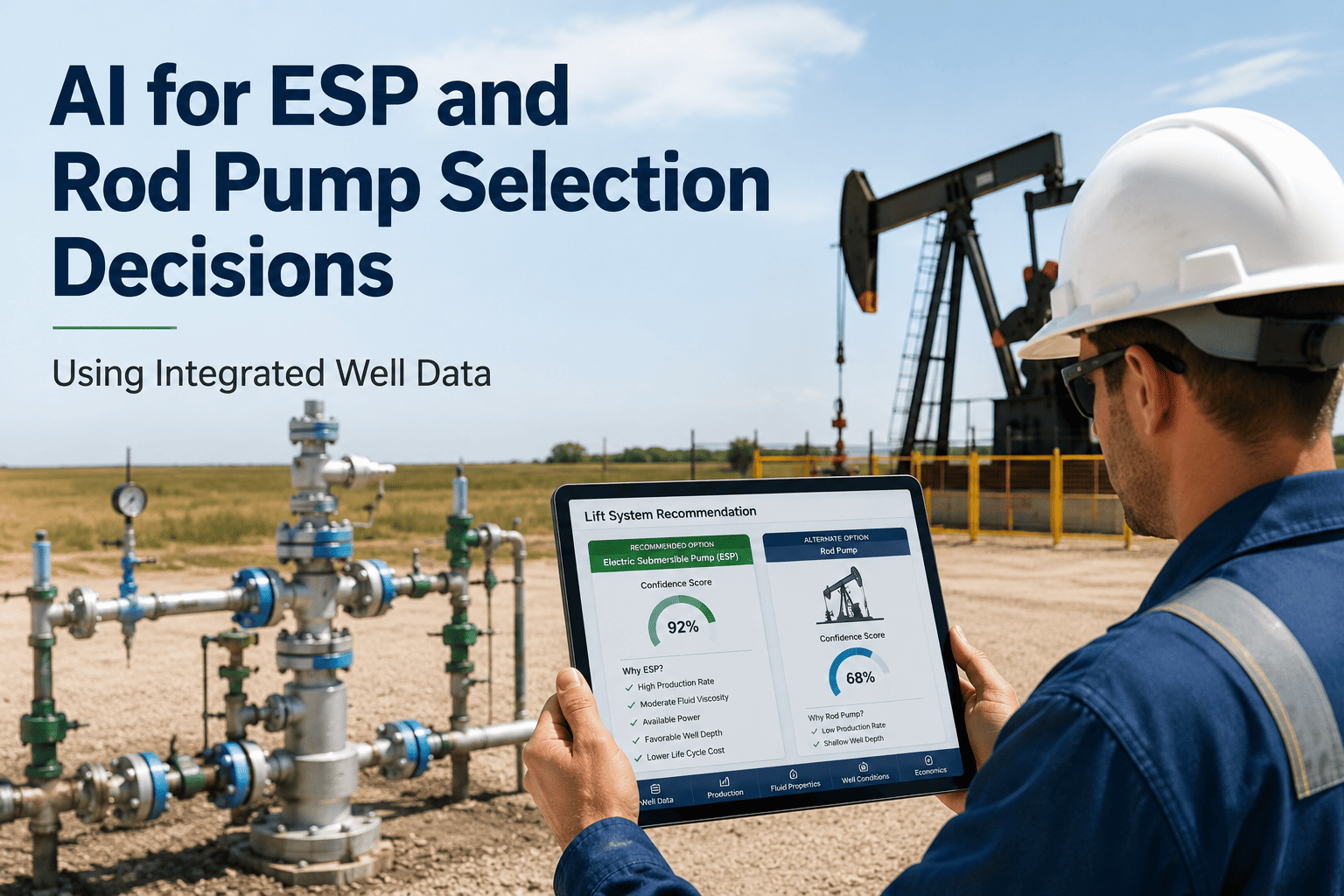
There is no universally superior lift method — only methods that fit a given combination of depth, rate, fluid properties, and reservoir pressure better or worse than the alternatives. iFactory's screening logic evaluates all five primary methods against the same inflow performance relationship and decline forecast so operators are comparing fitted alternatives, not isolated spec sheets.
Electric Submersible Pump (ESP)
ESPs deliver the highest volume capacity of any lift method and are the standard choice for high-rate wells with adequate power access. The trade-off is a narrower efficient operating range — an ESP sized for flush production loses efficiency as the well declines, and frequent restarts or gas interference accelerate cable and motor wear.
Gas Lift
Gas lift injects compressed gas into the production string to lighten the fluid column, and it scales gracefully across a wide range of rates and depths as long as compression capacity and gas supply are available. It is the natural fit for wells with elevated gas-oil ratio that would otherwise fight gas interference on a pump-based method.
Rod Pump (Sucker Rod Pumping)
Rod pumping is the most widely deployed lift method in the U.S. land industry, valued for low capital cost, mechanical simplicity, and a long field service history. It performs best on lower-rate wells with moderate depth and is constrained by rod weight, stretch, and load limits as depth or rate increases.
Progressive Cavity Pump (PCP)
PCPs handle viscous fluids and moderate sand or solids loading more effectively than most reciprocating or centrifugal alternatives, making them a frequent choice for heavy oil and sandy production where rod pumps or ESPs face accelerated wear. Rate capacity is generally lower than ESP or gas lift.
Hydraulic Jet Pump
Jet pumps have no moving downhole parts, which makes them well suited to deep, high-temperature, or deviated wells where mechanical pump reliability would otherwise be a concern. They require a continuous high-pressure power fluid supply and are typically less efficient than ESP or gas lift at comparable rates.
From Decline Forecast to Lift Decision: How the Screening Actually Runs
A defensible lift selection starts with the same inputs every reservoir engineer already trusts — production history, IPR, and a fitted decline model — and carries those inputs through to a side-by-side economic comparison instead of stopping at a qualitative method recommendation.
Comparing the Five Methods Against the Decline Horizon
The table below summarizes how each method's typical fit, OPEX driver, and decline tolerance compare side by side — the same comparison structure iFactory's screening output generates for an individual well, applied here at a general reference level.
| Lift Method | Typical Rate Range | Depth Tolerance | Decline Tolerance | Dominant OPEX Driver |
|---|---|---|---|---|
| ESP | High volume | Moderate to high, cable-limited | Low — narrows as rate falls | Power consumption, workover on pull |
| Gas Lift | Wide range | Wide, injection-pressure limited | High — surface-adjustable | Compression cost |
| Rod Pump | Low to moderate | Shallow to moderate, rod-load limited | Moderate — adjustable within unit rating | Rod and tubing wear, workover frequency |
| PCP | Low to moderate | Shallow to moderate | Moderate — sensitive to rising GOR | Stator and rotor replacement |
| Jet Pump | Moderate to high | Minimal restriction, deep and deviated | High — throttled at surface | Power fluid pumping cost |
Operators reviewing this comparison alongside an actual decline forecast for the well in question consistently find that the method with the lowest install cost is not the method with the lowest cost per barrel over the full decline horizon. Book a Demo to get the full economic comparison run against your well data.
Expert Review: Why Lift Selection Without a Decline Forecast Is Selection Without an End Date
I have sat through more lift selection meetings than I can count where the decision came down to a single production test and a vendor proposal. Nobody asked the obvious follow-up question: what does this well look like in two years? A lift method is not a permanent fixture — it is a piece of equipment matched to a rate window, and every well's rate window moves. The operators who get the most out of their lift investment are the ones who treat the decline curve as the primary input, not an afterthought run after the equipment is already on order. When you size an ESP, a rod pump, or a jet pump against where the well is going rather than where it tested last week, you avoid the two most expensive outcomes in artificial lift: pulling equipment that was oversized from day one, and discovering a conversion is overdue only after efficiency has already been bleeding out of the well for months. The economics are not subtle once you lay them out — the cost of getting the forecast wrong always shows up as either stranded capital or deferred production, and both are avoidable with the same data most operators already have sitting in their decline analysis.
Conclusion: Size the Lift Method to the Curve, Not the Snapshot
Artificial lift selection done well is forward-looking by design. The decline curve tells you where the well's rate, gas-oil ratio, and water cut are headed; the IPR tells you what's achievable at each point along that path; and the lift economics tell you which of the five primary methods — ESP, gas lift, rod pump, PCP, or jet pump — delivers the lowest fully loaded cost across that forecasted range rather than just at the moment of installation. Skipping the decline forecast step doesn't make the decline go away — it just means the well, not the engineering team, decides when the lift method stops working.
iFactory AI's lift economics platform brings decline curve forecasting, IPR modeling, and five-method screening into a single workflow, producing a documented recommendation and a flagged conversion trigger before the well's production trend forces the decision under worse conditions. The result is a lift selection that holds up not just on day one, but across the planning horizon it was actually built for.
Frequently Asked Questions
It shifts the comparison from a single production snapshot to a forecasted rate range, so the chosen method is evaluated against where the well is heading over the next several years, not just its current test rate.
There is no universal answer — rod pumps typically have the lowest capital cost, gas lift offers the most flexibility as rates decline, and the lowest-cost method depends on the well's specific decline profile and fluid properties.
A minimum of 18 to 24 months of consistent post-workover production data is generally needed to fit a decline curve with enough confidence to support a lift economics decision.
A declining rate pushing the current lift method below its efficient operating range — such as an ESP cycling on thermal protection or a rod pump showing pump fillage problems as gas-oil ratio rises.
Yes — the decline forecast and IPR profile are method-independent inputs, which is what allows ESP, gas lift, rod pump, PCP, and jet pump to be screened against the same forecasted rate range for a true apples-to-apples comparison.