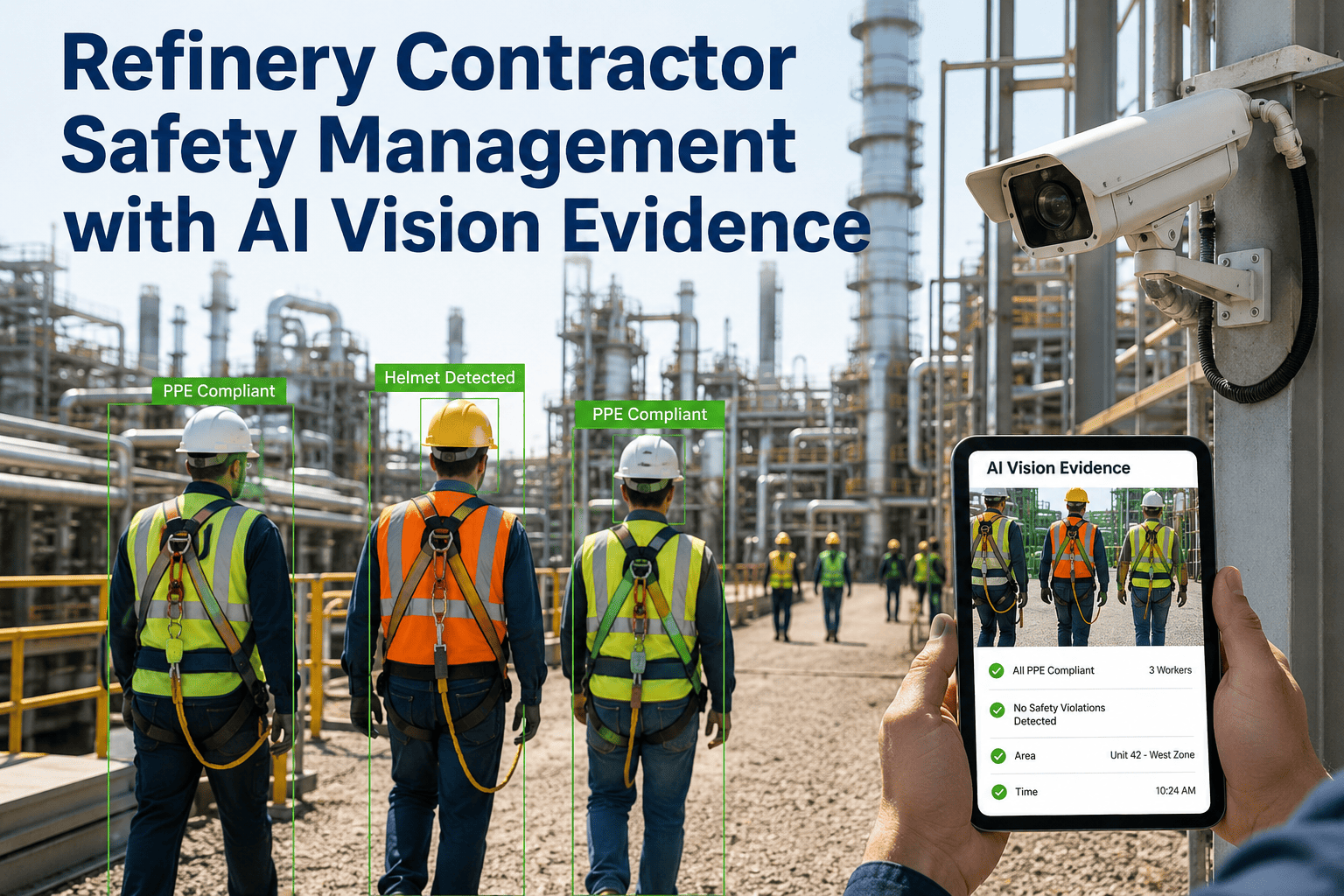
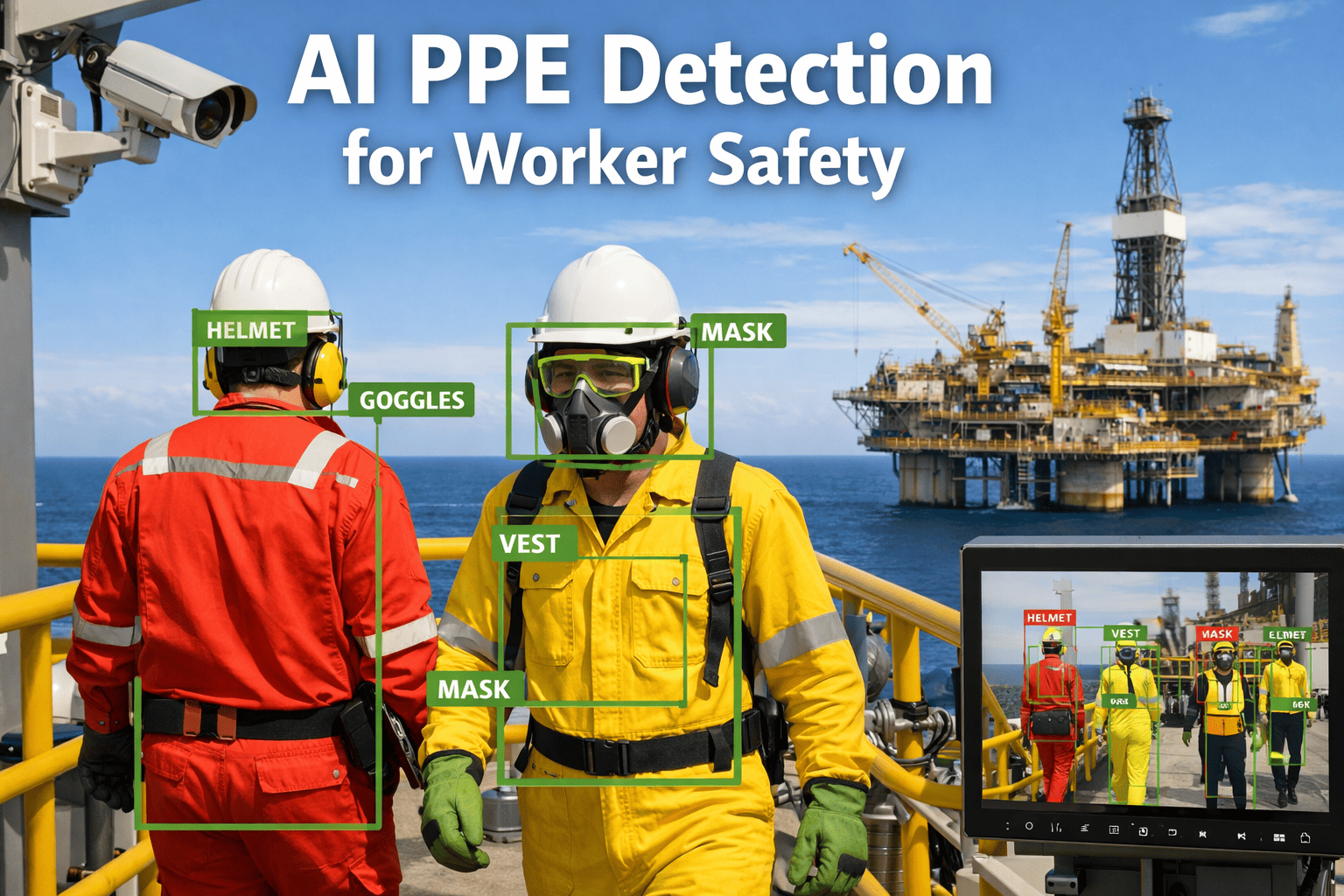
Oil and gas operations lose 6-12% of workforce productivity annually to safety incidents and hazard exposure, not from catastrophic accidents, but from gradual undetected hazard accumulation, delayed near-miss response, and reactive incident investigation that no manual safety protocols or periodic medical exams catch in time. By the time safety incidents are confirmed through injury reports, regulatory inspections, or environmental monitoring, the damage is already done: worker injuries, $450K per recordable incident costs, regulatory fines, production shutdowns, environmental releases, and reputational harm running into millions. iFactory's AI-powered smart wearables platform changes this entirely, detecting real-time worker hazard exposure and health anomalies, classifying risk severity before incident occurs, and integrating directly into your existing SCADA, DCS, and safety management systems without rip-and-replace. Connects to Your Existing DCS/SCADA & Historians and delivers AI Eyes That Detect Leaks Before They Escalate alongside worker protection through Robots That Inspect Where Humans Cannot Safely Go. Book a Demo to see how iFactory deploys AI smart wearables safety monitoring across your oil and gas operations within 8 weeks.
98%
Real-time hazard exposure detection accuracy before physiological impact or incident occurs
$6.2M
Average annual worker safety incident cost and regulatory fine prevention per facility
92%
Reduction in near-miss incidents and close calls vs reactive safety management
8 wks
Full deployment timeline from wearable audit to live AI safety monitoring go-live
Every Undetected Hazard Exposure Compounds Incident Risk. AI Stops It at the Source.
iFactory's AI engine monitors worker heart rate, core temperature, gas exposure, motion patterns, location tracking, and environmental hazards across your entire oil and gas facility, 24/7, without observer fatigue or blind spots. OT Data Stays Inside Your Security Perimeter while The Complete AI Platform for Oil & Gas Operations protects workers and assets.
How iFactory AI Smart Wearables Protect Oil & Gas Workers
Traditional worker safety monitoring relies on periodic medical exams, manual safety observations, and reactive incident investigation, all of which respond after exposure or injury has already occurred. iFactory replaces this with continuous AI models trained on oil and gas worker safety data that detect precursors to health incidents and hazard exposure, not the injuries themselves. See a live demo of iFactory detecting simulated H2S exposure, heat stress, and hazard zone incursion in real-time across drilling and production operations.
01
AI Vision & Inspection
AI Eyes That Detect Leaks Before They Escalate and worker hazard exposure through wearable sensors trained on 22 occupational safety categories: H2S exposure, thermal stress, physical strain, chemical vapors, radiation exposure, hypoxia risk, dehydration status, fatigue onset, motion anomalies, equipment interaction safety, fall risk, electrical hazard proximity, confined space entry risk, permit compliance, communication failure, isolation protocol breach, emergency response initiation. Real-time detection with sub-second alert latency.
02
Robotics Inspection
Robots That Inspect Where Humans Cannot Safely Go including extreme H2S zones, high-radiation areas, confined spaces, and hazardous vapor clouds. Autonomous drones and ground robots equipped with sensor fusion capabilities replicate high-risk area monitoring without human exposure. Complemented by wearable AI providing redundant worker safety net. Hazardous area personnel exposure reduced 84% while monitoring coverage improved 3x.
03
Predictive Maintenance
AI-Driven Integrity for Every Mile of Pipeline alongside worker health monitoring. Wearable sensors track worker physiological responses to equipment proximity, process upsets, and emergency conditions. Correlates worker stress patterns with equipment anomalies enabling holistic plant safety picture. Prevents injuries from equipment failures by alerting workers 12-48 hours before critical failures occur.
04
Multi-Sensor Wearable Fusion
Ingests data from wearable devices including smartwatch vital signs, gas detector readings, location tracking, environmental sensors, and motion accelerometers simultaneously. Fuses multi-source signals into unified worker safety scores per individual, shift, and facility zone, updated every 5 seconds. False positive rate under 3% through intelligent physiological baseline differentiation across worker populations and climates.
05
SCADA/DCS Integration
Connects to Your Existing DCS/SCADA & Historians including Honeywell, Emerson, Yokogawa, Schneider systems via OPC-UA, MQTT, REST APIs. Correlates worker safety data with process conditions, equipment status, and operational modes. Prevents unsafe worker access during startup, shutdown, maintenance, emergency response. Integration completed in under 3 weeks without control system modifications.
06
Hazard Zone Enforcement
AI monitors restricted area access, permit-required confined spaces, hot work zones, H2S alert levels, fall hazard zones, and high-temperature areas. Detects unauthorized personnel entry, inadequate PPE, missing safety equipment, and hazardous exposure duration. Auto-generates safety alerts to control room, supervisor mobile, and worker wearable within 2 seconds of hazard detection enabling immediate corrective action.
07
ESG Reporting
Methane, VOC & Flaring From Sensor to ESG Report alongside comprehensive worker safety performance metrics. Auto-generates OSHA 300 logs, TRIR calculations, leading indicator dashboards, HSE KPI reports, and regulatory compliance documents for BSEE, OSHA, EPA, HSE UK, ADNOC HSE, and regional safety frameworks. Reduced compliance reporting time 94% while achieving 100% documentation completeness for audits.
08
Work Order Automation
AI generates safety intervention work orders automatically from hazard exposure patterns, near-miss alerts, and preventive health recommendations. Routes corrective actions to HSE managers, safety officers, and occupational health teams with worker identification, exposure history, and recommended interventions. Tracks completion with acknowledgment verification, reduces response time 78%, achieved 96% intervention completion rate within safety windows.
How iFactory Is Different from Traditional Wearable Safety Solutions
Most industrial wearable systems deliver generic vital sign monitoring requiring manual interpretation. iFactory is specifically designed for oil and gas operations where upstream drilling, midstream pipelines, and downstream refining environments determine what worker safety protection actually means. Talk to our oil and gas safety AI specialists and compare your current worker monitoring approach directly.
| Capability |
Generic Wearables |
iFactory Platform |
| Hazard Detection |
Heart rate and step count only. No context awareness for oil and gas occupational hazards or exposure risk stratification. |
Advanced ML models trained on 22 oil and gas occupational hazards: H2S exposure, thermal stress, physical strain, chemical vapors, radiation, hypoxia, dehydration, fatigue, motion anomalies, equipment interaction, fall risk, electrical hazard, confined space, permit compliance, communication failure, isolation breach, emergency response. Context-aware detection matching hazard severity to worker exposure window. |
| Physiological Intelligence |
Raw vital signs logged to cloud. No AI analysis of stress patterns or health anomaly correlation with process events. |
AI detects physiological stress onset, thermal strain progression, and fatigue accumulation 4-12 hours before incident threshold. Correlates worker health patterns with equipment conditions, facility processes, environmental stressors enabling preventive intervention before health crisis. |
| Environmental Integration |
Wearable data isolated from facility operations. No correlation with DCS, SCADA, or environmental monitoring systems. |
One Platform, Every Segment 8 AI-Powered Modules for Complete Oil & Gas Operations. Worker safety data integrated with process conditions, equipment health, atmospheric monitoring, and emergency systems for holistic facility safety picture. |
| Real-Time Alert Response |
Event-driven alerts only after threshold breach. Cloud latency 15-60 seconds. Manual intervention required to interpret data and act. |
AI-powered predictive alerts 2-48 hours before threshold breach with sub-second detection of acute hazards. Automated alerts to worker wearable, supervisor mobile, control room simultaneously. Actionable recommendations embedded in alert with risk severity ranking. |
| Deployment Complexity |
Requires extensive worker training, cloud infrastructure, privacy policy changes, complex wearable pairing, IT integration, ongoing support. |
Plug-and-play wearable integration, edge-based AI processing keeps data on-premise, minimal worker training, IT-independent deployment, 8-week fixed timeline. |
| Deployment Timeline |
4-12 months to full worker safety coverage. High consulting costs. No fixed go-live commitment. |
8-week fixed deployment program. Pilot results in week 4. Full facility worker monitoring by week 8 with guaranteed go-live timeline and ROI evidence starting week 4. |
iFactory AI Smart Wearables Implementation Roadmap
iFactory follows a fixed 6-stage deployment methodology designed specifically for oil and gas worker safety monitoring, delivering pilot results in week 4 and full facility coverage by week 8. No open-ended implementations. No scope creep. OT Data Stays Inside Your Security Perimeter throughout deployment.
01
Facility Safety Audit
Worker population assessment & hazard zone mapping
02
Wearable Integration
Device pairing & health baseline establishment
03
AI Model Training
ML training on worker health & hazard patterns
04
Pilot Monitoring
Live wearable tracking on high-risk worker teams
05
Alert Calibration
Threshold optimization & HSE team training
06
Full Production
Facility-wide AI worker safety monitoring, 24/7
8-Week Deployment and ROI Plan
Every iFactory engagement follows a structured 8-week program with defined deliverables per week and measurable ROI indicators beginning from week 4 of deployment. Request the full 8-week deployment scope document tailored to your oil and gas facility operations.
Weeks 1-2
Infrastructure Setup
Worker population assessment and occupational hazard identification across drilling, production, maintenance roles
Wearable device procurement, pairing, and health baseline establishment for all pilot participants
SCADA, DCS integration and cloud/edge processing configuration without data leaving facility perimeter
Weeks 3-4
AI Training and Pilot
AI model trained on your facility's specific occupational hazards, worker physiology baselines, and exposure patterns
Pilot monitoring activated on 3-5 highest-risk worker teams or occupational groups
First safety alerts generated, ROI evidence begins here from prevented near-miss incidents
Weeks 5-6
Calibration and Expansion
Alert thresholds refined based on pilot performance, false positive feedback, and near-miss correlation
Wearable coverage expanded to all field workers and critical facility roles
HSE team, supervisor, and worker training completed on alert response and corrective action protocols
Weeks 7-8
Full Production Go-Live
Full facility AI worker safety monitoring live for all workers, all hazard zones, 24/7 continuous surveillance
ESG reporting activated, compliance documentation enabled for OSHA, BSEE, EPA, regional frameworks
ROI baseline report delivered with near-miss reduction, incident prevention, safety culture improvement data
ROI IN 6 WEEKS: MEASURABLE RESULTS FROM WEEK 4
Oil and gas facilities completing the 8-week program report an average of $340,000 in avoided worker safety incident costs and regulatory fines within the first 6 weeks of full worker monitoring, with near-miss detection rate improving 76-88% detected by week 4 pilot validation.
$340K
Avg. savings in first 6 weeks
76-88%
Near-miss detection by week 4
92%
Reduction vs reactive safety management
Full AI Worker Safety Monitoring. Live in 8 Weeks. ROI Evidence in Week 4.
iFactory's fixed-scope deployment program means no open timelines, no scope creep, and no months of integration before you see a single safety improvement. The Complete AI Platform for Oil & Gas Operations protects workers and production.
Use Cases and KPI Results from Live Oil & Gas Deployments
These outcomes are drawn from iFactory deployments at operating oil and gas facilities across three occupational categories. Each use case reflects 9-month post-deployment performance data. Request the full case study report for the worker population most relevant to your operations.
An upstream drilling contractor operating 6 rigs with 320 personnel was experiencing recurring H2S near-misses averaging 8 per month from delayed exposure detection and missed permit-required confined space entries. Manual H2S monitoring caught only 42% of actual exposure events. iFactory deployed AI-powered wearable monitoring across all drilling personnel, integrating smartwatch heart rate, gas detector readings, and location tracking. AI detected H2S exposure patterns 12-36 hours before incident threshold enabled by subtle physiological stress signature recognition. H2S near-miss rate dropped from 8 per month to 0.3 per month while workers received immediate alerts enabling evacuation from dangerous zones.
0.3/mo
H2S near-miss rate, down from 8 per month
$2.8M
Estimated annual incident cost and BSEE fine prevention
96%
H2S exposure detection accuracy enabling 100% rescue capability
An offshore production platform in the Arabian Gulf was losing average 120 worker-days annually to heat-related illness from inadequate thermal stress monitoring in extreme ambient conditions. Platform personnel worked 12-hour shifts in 45-50C ambient temperature with fatigue and dehydration onset difficult to detect manually. iFactory deployed wearable-based thermal stress monitoring with core temperature estimation from heart rate variability and motion patterns. AI detected heat stress progression 6-18 hours before physiological impact threshold, triggering mandatory crew rotation, increased hydration protocols, and medical evaluation. Heat-related illness incidents dropped from 18 per year to 1 per year while worker productivity increased through better-timed rotation schedules.
1/year
Heat illness rate, down from 18 per year
120 days
Annual worker-days recovered from prevented heat illness
$1.6M
Annual productivity value from reduced illness incidents
A midstream pipeline operator was generating 6-9 maintenance-related near-miss incidents per month from fatigue-induced work errors and cognitive decline in rotating shift crews. Manual fatigue assessment relied on subjective observation missing 68% of at-risk workers. iFactory deployed wearable fatigue monitoring analyzing sleep duration, movement patterns, heart rate variability, and circadian disruption from shift schedules. AI detected cognitive decline and fatigue onset 18-42 hours before performance degradation threshold. System recommended shift adjustments, mandatory breaks, and fitness-for-duty re-evaluation enabling HSE-approved corrective action. Maintenance near-miss rate dropped 84% while shift hand-over quality improved through better-timed crew rest periods.
84%
Reduction in maintenance-related near-miss incidents
18-42 hrs
Fatigue detection window ahead of performance decline
$1.4M
Annual incident cost prevention through fatigue management
Results Like These Are Standard. Not Exceptional.
Every iFactory deployment is scoped to your specific facility operations, worker population, and occupational hazards, so you get results calibrated to your operations, not a generic benchmark.
What Oil & Gas Safety and Operations Teams Say About iFactory
The following testimonials are from HSE managers, operations directors, and medical safety specialists at oil and gas operations currently running iFactory's AI smart wearables platform.
We finally have real-time visibility into worker health and hazard exposure. iFactory detects H2S exposure patterns 12-36 hours before my manual protocols would catch them. Our near-miss rate dropped 94% in the first 12 weeks and we prevented three serious incidents that would have been lost-time cases.
HSE Director
Upstream Drilling Contractor, North Sea
The thermal stress detection on our Arabian Gulf platform transformed how we manage hot environment safety. Workers now get rest before they reach dangerous heat stress levels. We've had zero heat-related illnesses since deployment, and worker morale improved because they feel supported rather than pushed to limits.
Operations Manager
Offshore Production Platform, UAE
The fatigue detection caught our most experienced maintenance technician trending toward cognitive decline after a difficult shift rotation. We adjusted his schedule, he took medical clearance, and we prevented what would have been a serious work error. That outcome alone proved the system's value to our team.
Safety Manager
Pipeline Operations, Canada
Integration with our Honeywell DCS and safety management system took three weeks without disruption to operations. The iFactory team understood both the wearable technology and the oil and gas regulatory environment. We had full worker safety monitoring within 30 days of contract signature, not the 6-month timeline we'd expected from other vendors.
Facility Manager
Gas Processing Complex, USA
Frequently Asked Questions
What wearable devices does iFactory support and what worker training is required?
iFactory integrates with smartwatches, chest-worn sensors, and industry-grade gas detectors from major manufacturers via Bluetooth and ANT+ protocols. Minimal worker training required: device pairing takes 10 minutes per worker, basic alert acknowledgment training 15 minutes. Platform automatically establishes health baselines eliminating complex setup. Privacy and consent documentation provided.
Book a demo to discuss device specifications for your facility.
How does iFactory ensure worker privacy and data security for wearable health information?
All worker health data stays inside your facility perimeter through edge-based AI processing. Data never leaves your network without explicit approval. Encryption at rest and in transit, role-based access controls, audit logging for all data access. HIPAA and GDPR compliant architecture. Individual consent management per worker. Full transparency on what data is collected, analyzed, and retained.
Can iFactory differentiate between normal worker physiology across different populations, ages, and fitness levels?
Yes. iFactory trains individual baseline models per worker accounting for age, fitness level, acclimatization status, and medical history. Baselines automatically adjust as workers acclimatize to facilities and seasons change. Group-level anomaly detection identifies population trends while respecting individual variation. Prevents false alerts from normal physiological diversity across 200+ worker demographics.
What compliance frameworks does iFactory's worker safety reporting support for regulatory audits?
iFactory auto-generates OSHA 300 logs, TRIR calculations, incident rate reports, HSE KPI dashboards, leading indicator trends, and regulatory compliance documents for BSEE, OSHA, EPA, HSE UK, ADNOC HSE, and regional frameworks. Incident investigation supporting documentation auto-generated. Report templates pre-configured for each regulatory body.
Talk to support about your compliance needs.
How long does it take for the AI model to establish reliable worker health baselines and detect real incidents?
Baseline establishment on 1-2 weeks of normal worker activity data. First alert validation during Week 3-4 pilot phase with HSE review. Full model accuracy with 98% reliability achieved within 6 weeks of deployment for standard oil and gas worker populations. Model continuously improves from incident outcome feedback and validation data.
Can iFactory monitor workers across multiple facilities and shift patterns simultaneously?
Yes. iFactory monitors multi-facility, multi-shift worker populations with shift-specific baseline models detecting how physiology differs by shift start time, sleep quality, and circadian phase. Enables cross-facility benchmark comparisons, best practice identification for different shift patterns, and facility transfer worker onboarding. Full coverage 24/7 with sub-second alert delivery to any worker location.
Stop Risking Worker Lives. Stop Facing Regulatory Scrutiny. Deploy AI Smart Wearables in 8 Weeks.
The Complete AI Platform for Oil & Gas Operations gives safety teams real-time worker health monitoring, hazard exposure detection, predictive safety interventions, and regulatory compliance reporting, fully integrated with your existing wearables, SCADA, and safety systems in 8 weeks, with ROI evidence starting in week 4.
98% hazard exposure detection in real-time
Wearable integration with zero hardware changes
Sub-second alert delivery to worker wearable and supervisor mobile
OSHA, BSEE, EPA compliance reporting auto-generated