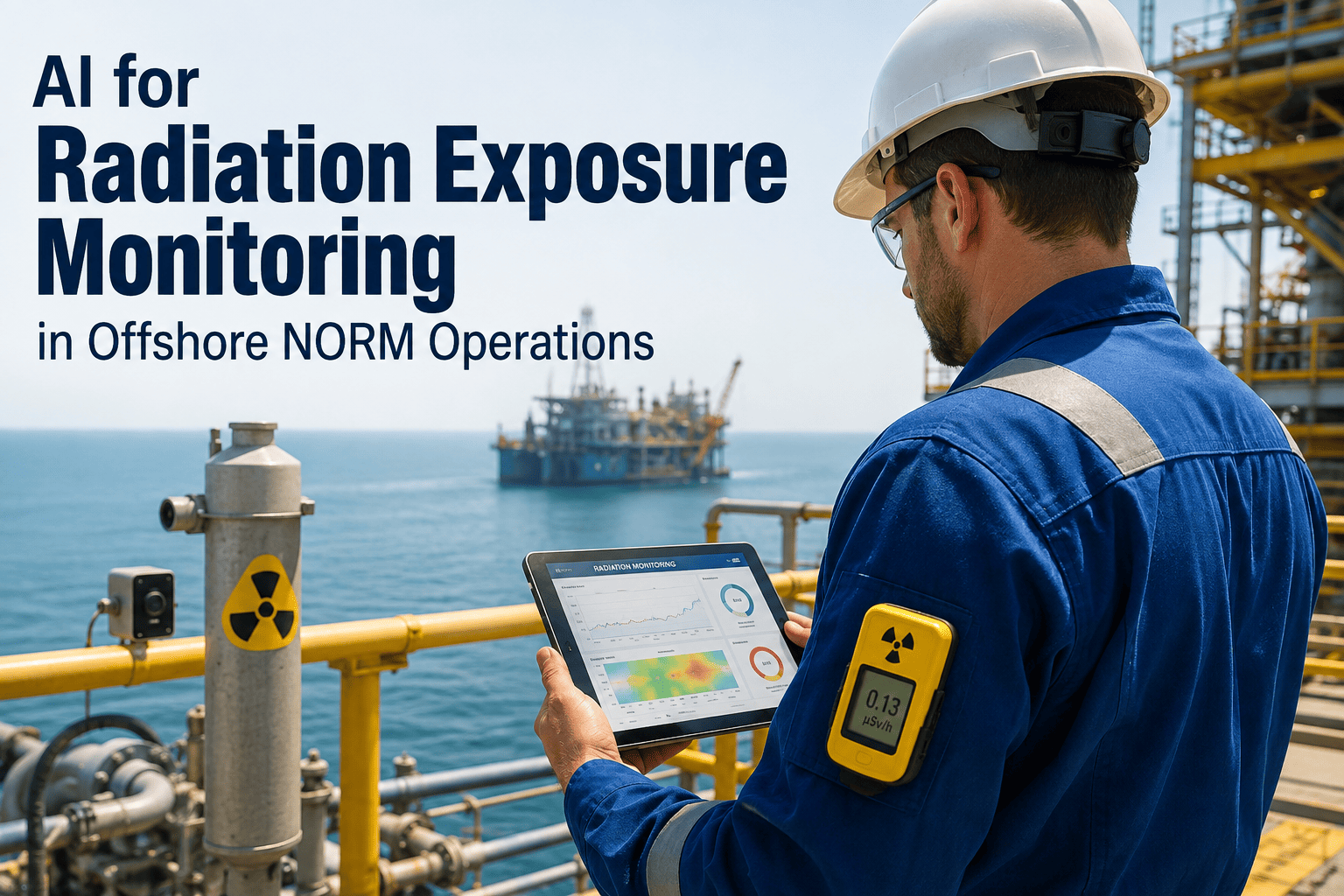
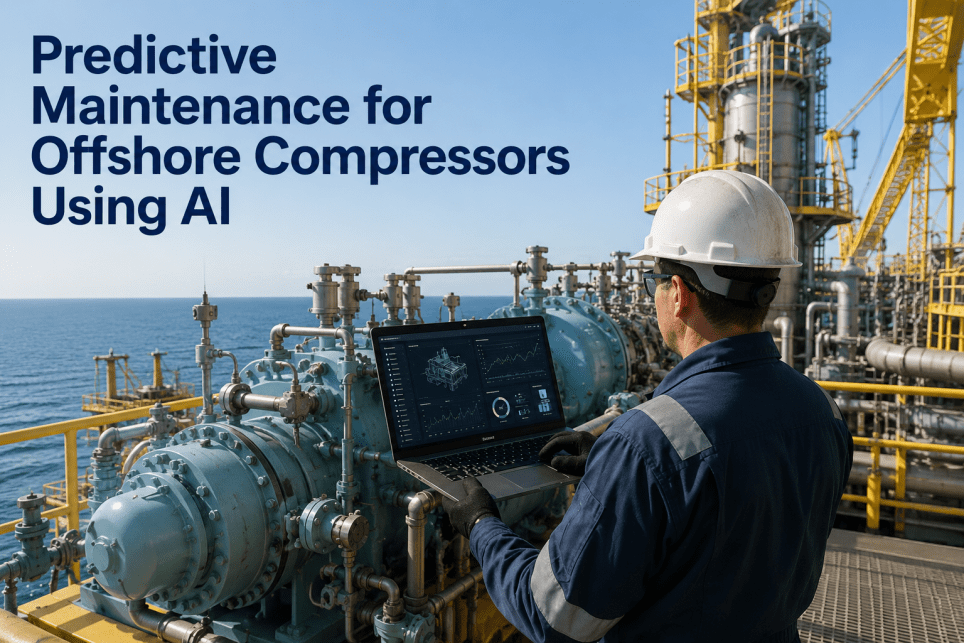
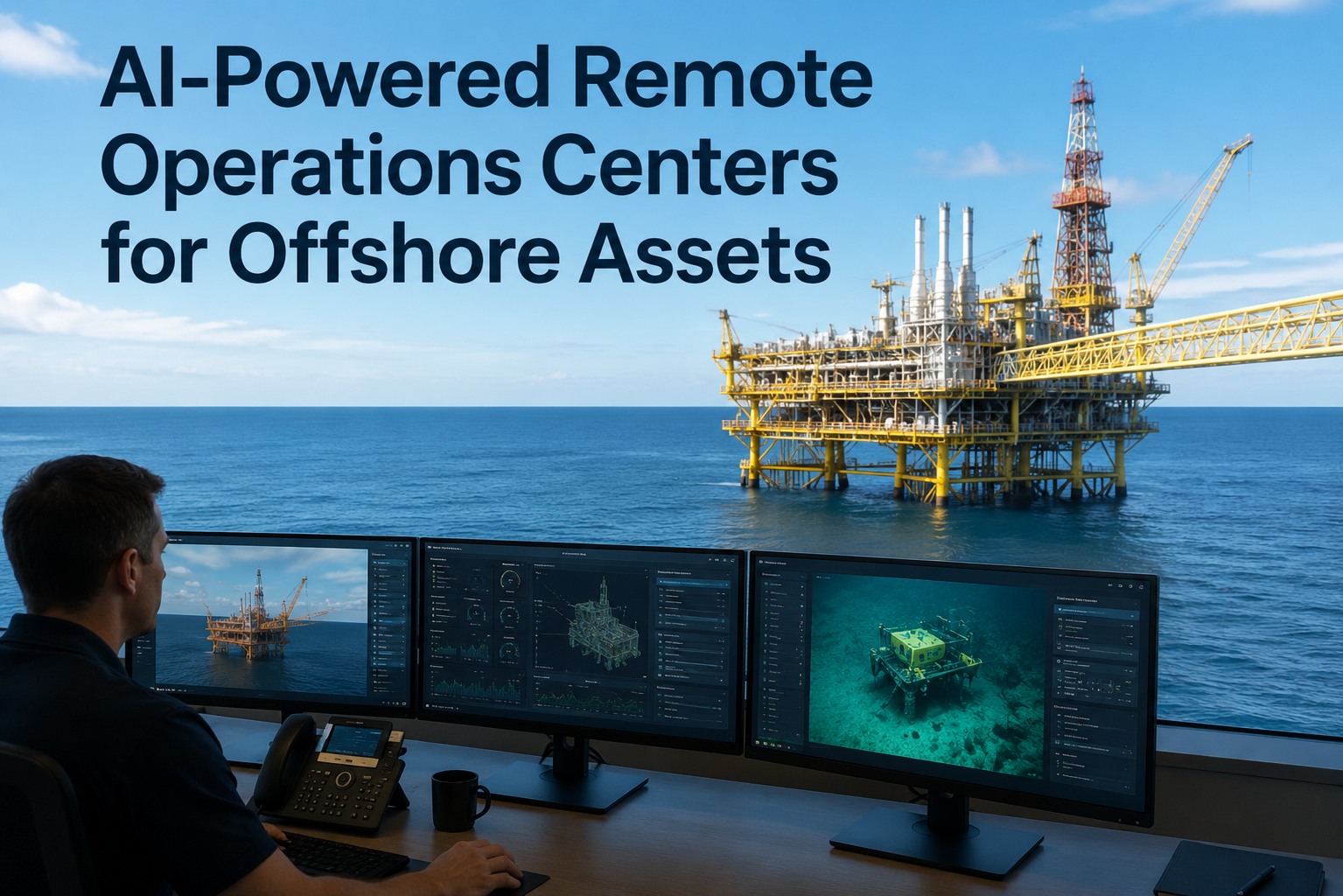
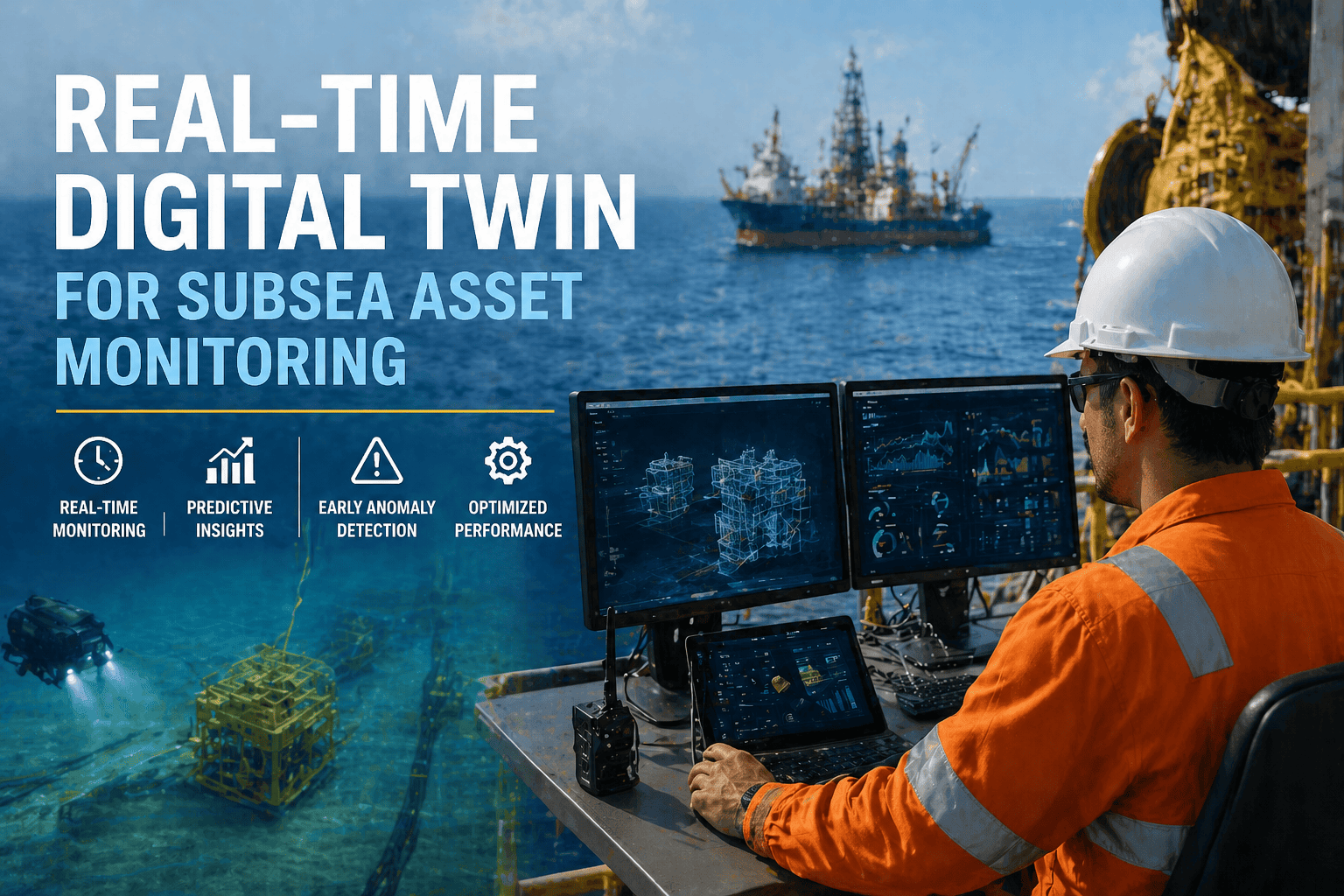
Offshore energy infrastructure sits at the intersection of extreme value and extreme risk. A single unplanned shutdown on an FPSO can cost operators $500,000 or more per day in lost production alone — before factoring in repair mobilization, helicopter logistics, and regulatory exposure. Meanwhile, deepwater assets are aging, inspection windows are shrinking and workforce headcount on platforms is under permanent pressure. Smart offshore asset management powered by AI and robotics is no longer a pilot-program curiosity — it is the operational architecture that separates the operators running at 94% uptime from those managing crisis after crisis at 78%. This guide breaks down exactly what the transformation looks like, what it costs, and what it delivers for U.S. offshore operators in 2026.
Smart Offshore Asset Management
With AI and Robotics
FPSO · Subsea · Fixed Platform · Deepwater · AUV Inspection · Digital Twin · Predictive O&M
The Offshore Data Problem That AI Finally Solves
Offshore platforms generate staggering volumes of operational data — a mid-size fixed platform with 4,000 sensor points produces over 3 million data records per day through its DCS and SCADA infrastructure. The problem is not data scarcity. It is that traditional operations teams built for a world of alarm management and scheduled maintenance rounds have no mechanism to extract actionable intelligence from that volume in real time.
Corrosion progresses invisibly between annual inspection windows. Rotating equipment develops bearing wear signatures weeks before audible failure. Subsea umbilicals degrade under dynamic loading in ways that static integrity models cannot predict. In each case, the data exists — current clamp readings, vibration frequency shifts, hydraulic pressure deviations — but without AI-powered pattern recognition layered on top, operations centers respond to failures rather than preventing them.
AI-driven offshore asset management closes this gap by operating on full sensor streams continuously, comparing real-time behavior against physics-informed baselines, and surfacing developing anomalies days or weeks before they become production events. The result: operators who can genuinely run planned, predictive maintenance programs rather than perpetual reactive firefighting.
If your team is still scheduling maintenance on calendar intervals and responding to high-high alarms, book a demo to see how AI predictive monitoring changes that equation for offshore assets specifically.
Core Pillars of Smart Offshore Asset Management
Effective AI-driven offshore programs are not single-point solutions. They are integrated capability stacks that address the full asset lifecycle — from real-time condition monitoring through inspection execution, structural integrity management, and compliance reporting. Here are the four pillars that define market-leading implementations in 2026.
AI Predictive Condition Monitoring
Physics-informed ML models run continuously against full DCS/SCADA sensor streams — vibration, temperature, pressure, flow, electrical draw — to detect developing equipment anomalies before they produce process deviations. Critical rotating equipment (gas turbines, compressors, pumps, generators) receives individual asset-level health scoring with remaining useful life estimates updated every scan cycle. Operators see a ranked list of developing risks, not a wall of undifferentiated alarms.
Autonomous & AI-Guided Inspection
AUV and ROV inspection programs guided by AI mission planning replace fixed-schedule diver surveys with on-condition inspection triggered by monitoring system anomaly flags. Computer vision models trained on thousands of offshore defect images classify corrosion grade, coating damage, weld integrity, and marine growth accumulation from inspection video in real time — generating structured defect reports without manual review bottlenecks. Drone-based topside inspection extends the same capability to deck structures, flare stacks, and risers.
Digital Twin Structural Integrity
High-fidelity digital twins integrating real-time metocean data (wave height, current, temperature), structural sensor readings (strain gauges, accelerometers, tilt sensors), and hull/jacket geometry models produce continuous fatigue accumulation estimates and remaining life calculations. AI updates finite element stress states at each sensor reading cycle — providing structural integrity engineers with a live picture of cumulative damage that static annual inspection models fundamentally cannot provide. Critical threshold alerts trigger automatic flagging to integrity engineers before safety limits are approached.
Compliance & Safety Automation
BSEE inspection records, SEMS program documentation, pressure safety valve test logs, and lifting equipment certification tracking are managed through AI-structured document workflows with automated expiry alerting. ML models cross-reference maintenance execution records against regulatory requirements to flag compliance gaps before audit cycles. Automated generation of inspection report packages reduces compliance team workload by up to 65% while creating defensible audit trails that withstand BSEE scrutiny.
Want to understand which of these four pillars will deliver the fastest ROI on your specific asset mix? Schedule a 30-minute ROI assessment with our offshore analytics specialists and get a site-specific roadmap.
Implementation Workflow: From SCADA to AI Intelligence
The most common mistake in offshore AI deployments is rushing to the analytics layer before the data infrastructure is ready to support it. Plants that deliver the highest early returns follow a disciplined six-phase implementation sequence that prioritizes data quality and operator adoption alongside algorithm deployment.
Data Infrastructure Audit
2–4 weeksMap all DCS/SCADA historian tags, identify calibration drift and quality flags, assess communication protocol coverage (Modbus TCP, OPC-UA, HART, Foundation Fieldbus), and quantify data gaps in critical monitoring zones. Most offshore facilities discover 15–30% of priority tags have quality issues at this stage — resolving these before model training is the single highest-ROI action in any deployment.
Secure Data Pipeline & Historian Integration
3–6 weeksEstablish encrypted data pipelines from platform historians (OSIsoft PI, Aveva InTouch, Yokogawa Exaquantum) to the AI analytics platform via VSAT, fiber, or onshore relay. Configure edge computing nodes on platforms where round-trip latency to cloud infrastructure is unacceptable for real-time fault response. Implement timestamp normalization and cross-system data alignment for multi-asset portfolio deployments.
Physics-Informed Model Training
4–8 weeksTrain physics-constrained ML models on 12–24 months of historical SCADA data, validated against known failure events in the maintenance history. Establish normal operating envelopes per equipment class across all load regimes. Calibrate alert thresholds to achieve fault detection sensitivity above 95% while minimizing false positives — the primary driver of operator alert fatigue and platform adoption resistance.
CMMS Integration & Work Order Automation
2–3 weeksConnect analytics platform outputs to CMMS work order generation — automatically creating condition-triggered maintenance tasks with pre-populated equipment history, required spare parts, safety procedure references, and permit-to-work requirements. Define escalation paths from automated notification to offshore supervisor dispatch, with risk-ranked priority scores driving scheduling decisions.
Role-Based Dashboard Deployment & Training
3–4 weeksDeploy differentiated dashboards for control room operators (real-time anomaly feeds), platform maintenance supervisors (condition-based task queues), onshore asset managers (fleet health ranking and KPI trends), and integrity engineers (structural fatigue and inspection scheduling). Operator training on alert interpretation and false-positive feedback loops is the most underinvested phase in most deployments — and the biggest predictor of sustained ROI achievement.
Continuous Model Improvement & KPI Tracking
Ongoing — quarterly cyclesImplement structured feedback loops where confirmed faults refine model accuracy and false positives recalibrate thresholds. Schedule quarterly model retraining to incorporate new equipment operating modes, seasonal metocean changes, and evolving asset degradation patterns. Track core KPIs — availability factor, MTBF, cost per production hour — against pre-deployment baselines to quantify and communicate ROI to asset owners.
See the Full Implementation Roadmap for Your Offshore Assets
iFactory's offshore AI platform supports FPSO, fixed platform, jackup, and subsea asset types — with pre-built integrations for major DCS and historian systems common in U.S. Gulf of Mexico operations.
Robotics in Offshore Inspection: AUV, ROV, and Drone Applications
The most visible change in offshore asset management over the past three years is not software — it is the systematic replacement of manned inspection with autonomous and semi-autonomous robotic systems guided by AI mission planning. The economics are compellingly clear: mobilizing a dive support vessel for a subsea structural inspection costs $150,000–$400,000 per campaign. An AUV inspection of the same structure, triggered on-condition by the monitoring platform, costs a fraction of that and produces structured digital outputs that require no manual video review.
For operators who haven't yet integrated AI-guided inspection programs, book a consultation to see how iFactory connects AUV/ROV/drone data directly into your asset management and integrity workflows.
Offshore AI Analytics: Real Performance Benchmarks
The figures below are drawn from independent BSEE filings, Wood Mackenzie offshore O&M research, and operator-disclosed performance data from U.S. Gulf of Mexico portfolios operating AI-driven asset management platforms as of 2025–2026. ROI varies by asset class, sensor coverage, and baseline O&M maturity.
FPSO-Specific AI Use Cases
FPSOs represent the highest-value and highest-complexity offshore asset class for AI deployment. The combination of topside processing equipment, storage and offloading systems, hull structural monitoring, and subsea tie-in management creates a monitoring scope that no traditional operations team can manage with adequate coverage manually. Key AI applications specific to FPSO operations include the following.
Wondering how many of these capabilities your FPSO currently has covered — and which gaps represent the highest risk exposure? Book a capabilities gap assessment with our FPSO specialists to get a scored baseline against market-leading operations.
Expert Review: What the Industry Data Shows
The clearest pattern in cross-operator performance data is that the availability gap between top-quartile and bottom-quartile offshore operators has widened significantly over the past four years — and AI adoption is the primary explanatory variable. Top-quartile operators are achieving 94–96% production availability on aging Gulf of Mexico infrastructure. Bottom-quartile operators on comparable assets average 78–82%. The difference is not asset age or water depth — it is whether condition monitoring and predictive maintenance are genuinely embedded in day-to-day operations or confined to a pilot project that never scaled.
A second persistent finding: the offshore operators with the worst AI ROI outcomes are almost never running poor algorithms. They are running adequate algorithms on inadequate data infrastructure. Sensor calibration drift, historian tag quality flags, and SCADA-to-cloud latency issues that seem manageable in traditional operations become catastrophic when AI models depend on data integrity for anomaly detection accuracy. The operators who invest three to four weeks in a rigorous data quality audit before model deployment consistently outperform those who rush to the analytics layer by 30–40% on 12-month availability improvement metrics.
On the robotics side, the economics of autonomous inspection have shifted decisively in the past 24 months. AUV unit economics have dropped to the point where on-condition deployment triggered by monitoring-system anomaly flags is now cheaper per inspection event than fixed-schedule dive support vessel campaigns at most inspection frequencies. Operators who have not yet integrated AI-triggered inspection workflows into their integrity programs are carrying both higher structural risk and avoidable inspection costs simultaneously.
Frequently Asked Questions
Conclusion
Smart offshore asset management powered by AI and robotics is not a technology experiment — it is the operational architecture that separates the top-quartile operators from the rest of the GoM fleet. The combination of continuous AI condition monitoring, on-condition autonomous inspection, real-time digital twin structural integrity, and automated compliance reporting addresses the four greatest cost drivers in offshore O&M simultaneously: unplanned production downtime, inspection mobilization expense, reactive maintenance inefficiency, and regulatory compliance burden.
The operators who move earliest on data infrastructure quality and integrated AI deployment hold structural cost and compliance advantages that compound over the remaining productive life of their assets. The platforms that wait — relying on fixed-schedule maintenance, manual inspection campaigns, and spreadsheet-based compliance tracking — are carrying both avoidable production risk and avoidable O&M cost that will only become harder to close as the technology gap widens. In 2026, the question is not whether to adopt AI-driven offshore asset management. It is whether your data infrastructure is ready to support it today, and how quickly you can close the gaps.
Ready to Transform Your Offshore Asset Operations?
From FPSO condition monitoring to AUV-integrated inspection management and BSEE compliance automation, iFactory's AI platform gives your offshore operations the intelligence to reduce costs, maximize uptime, and stay ahead of regulatory requirements.