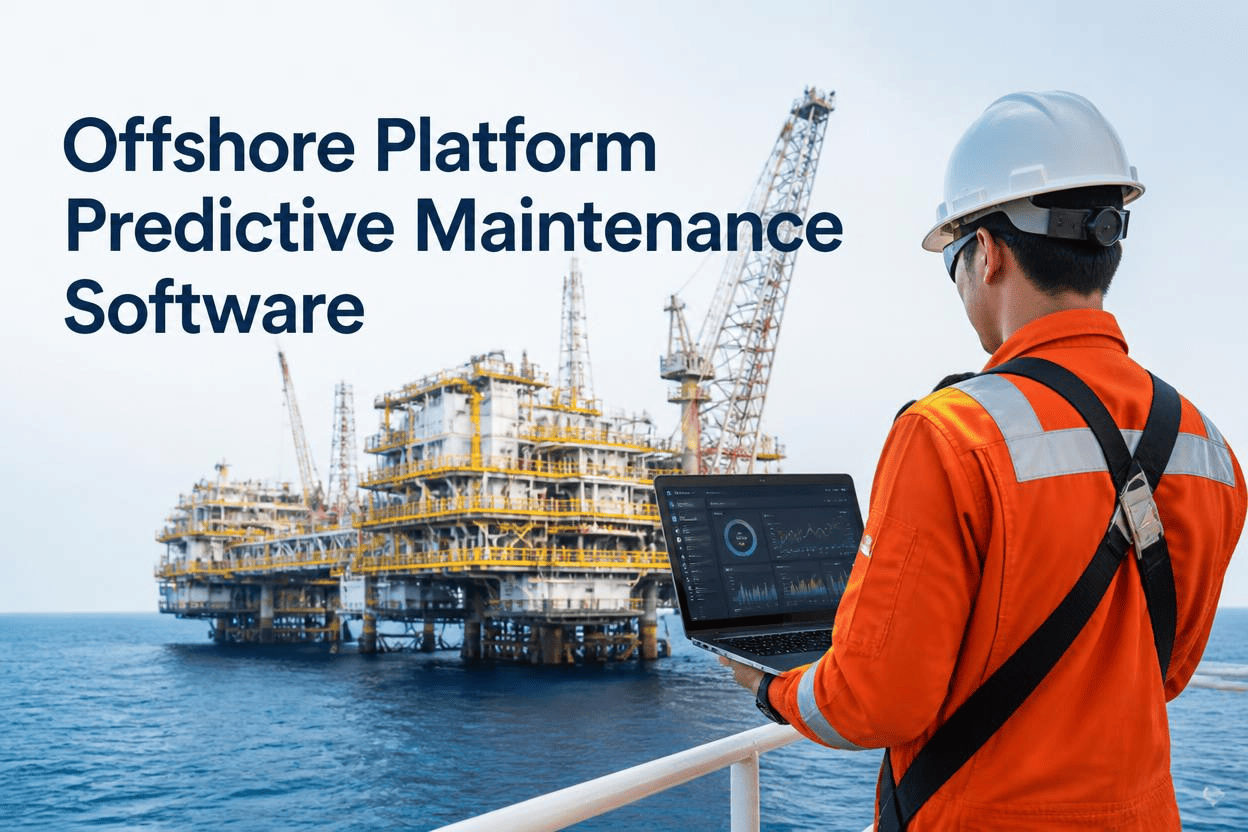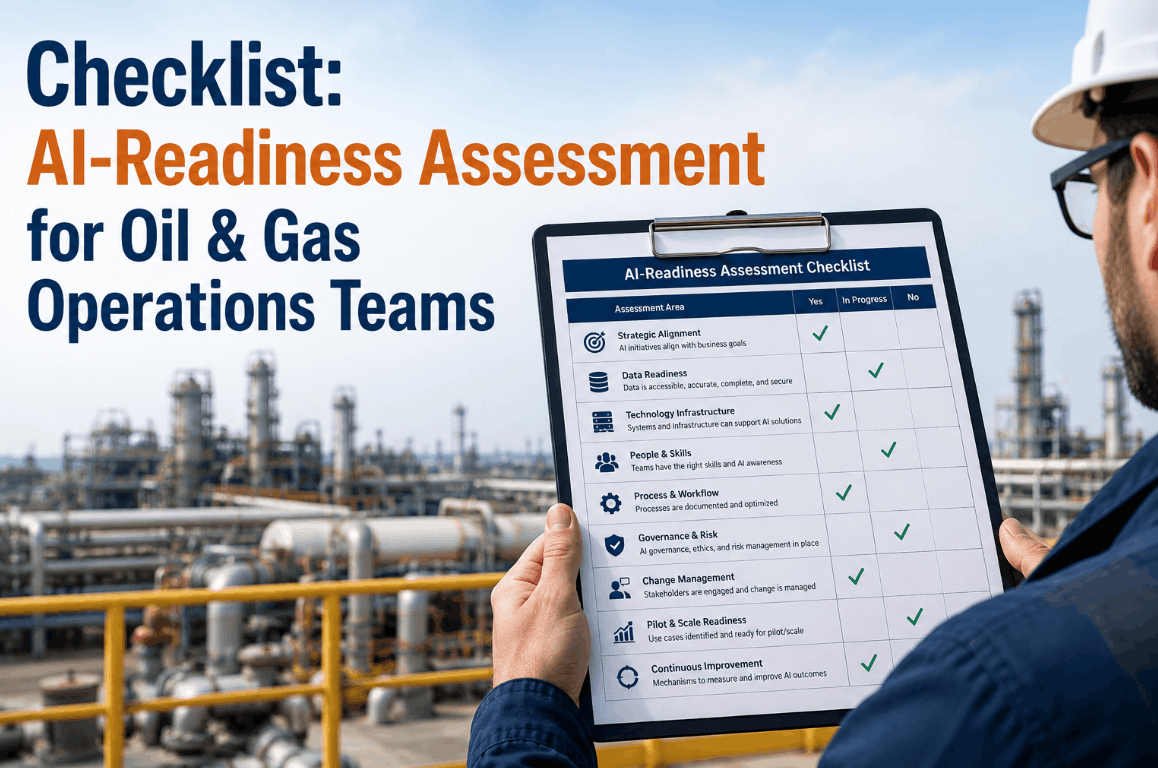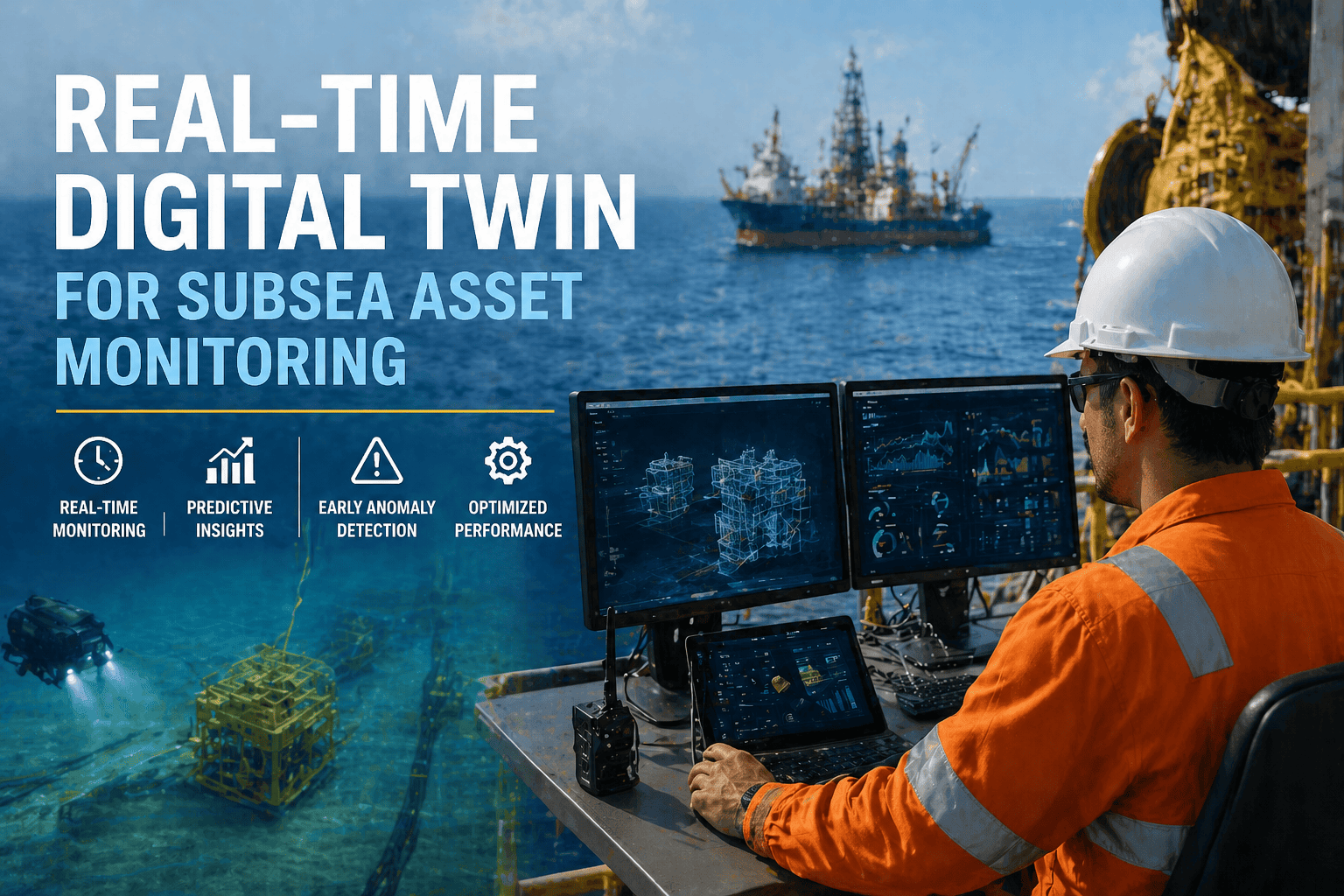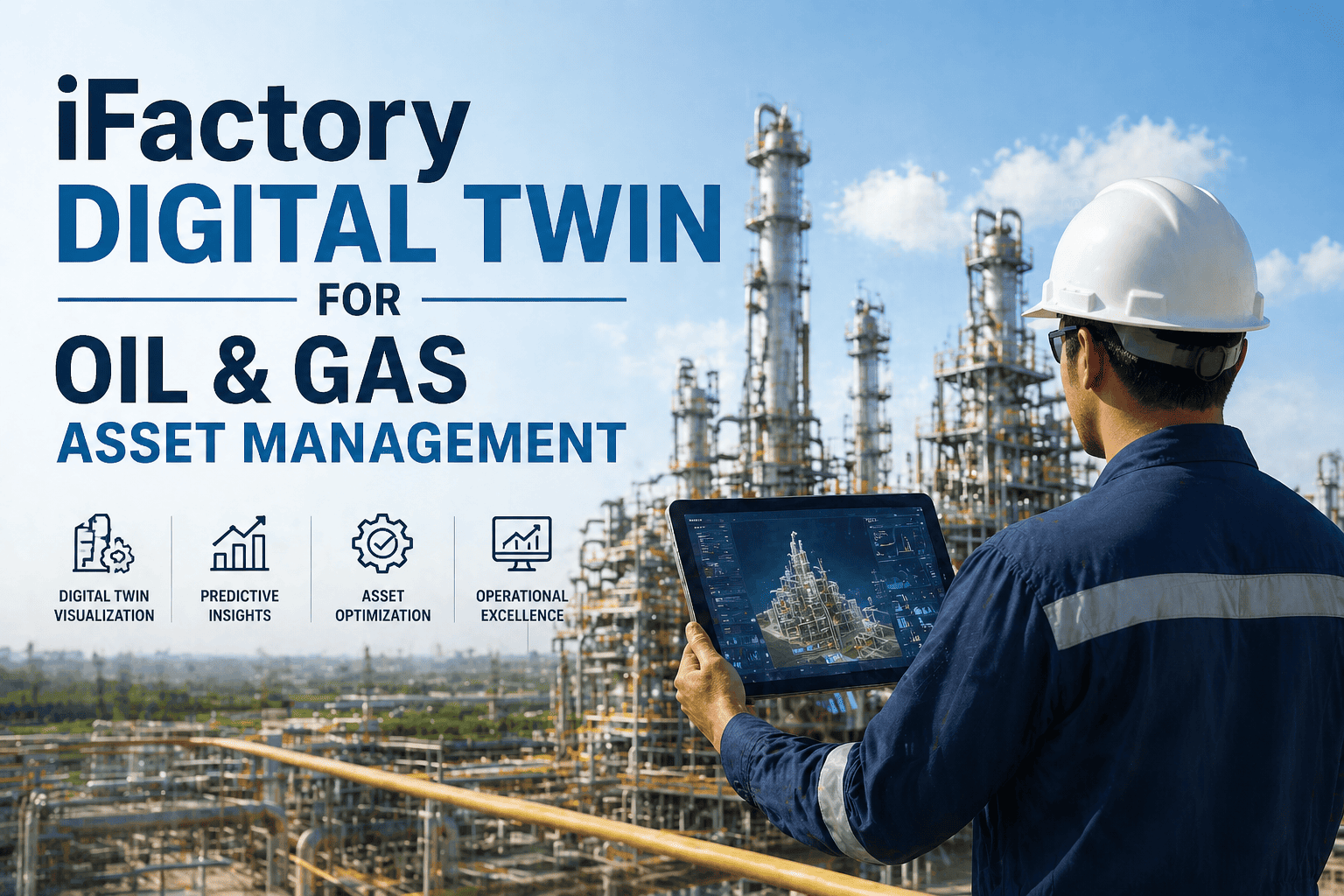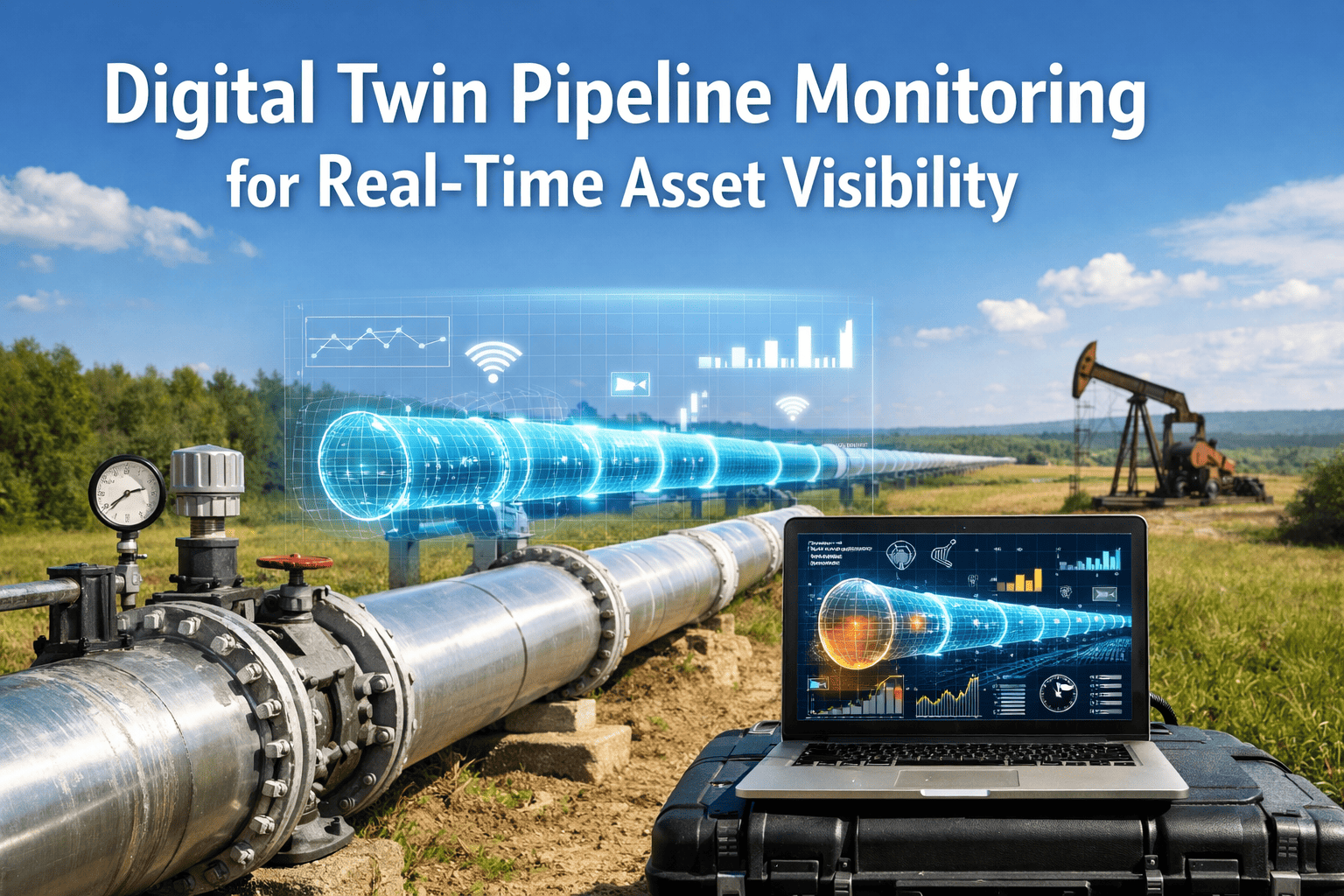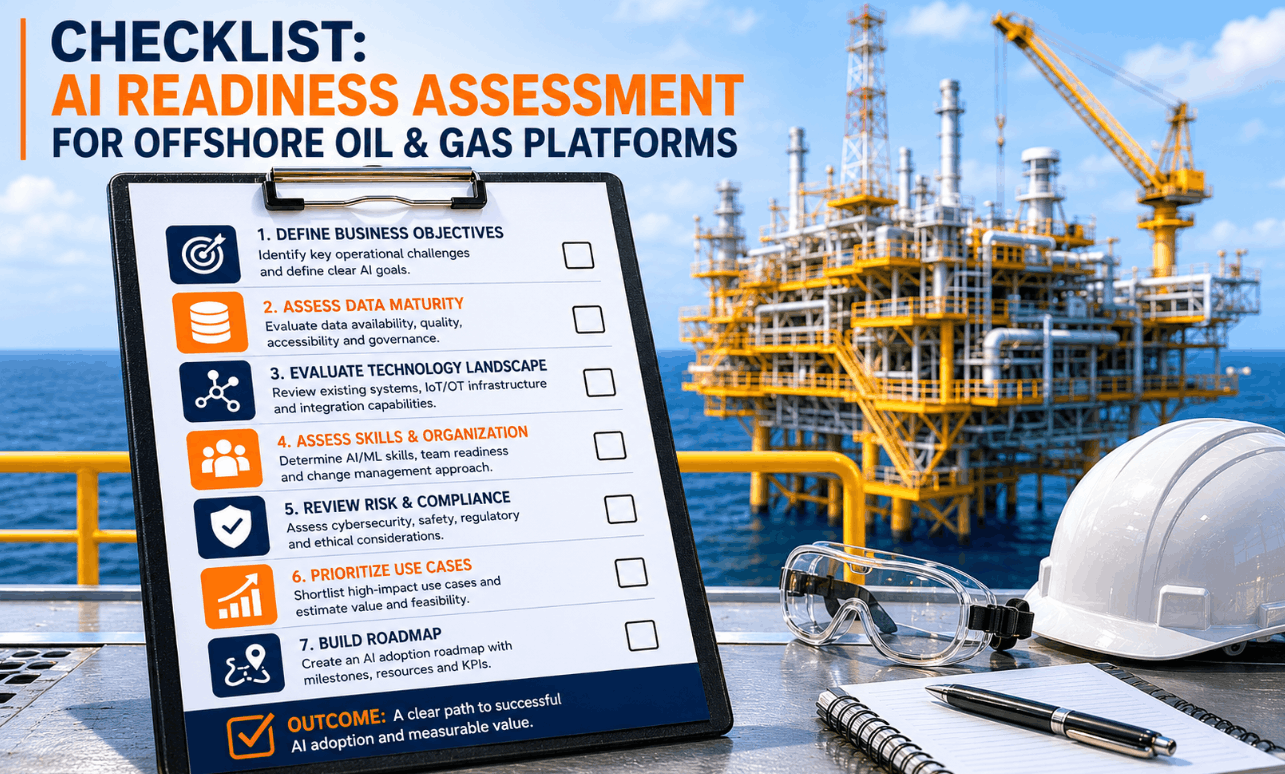
Offshore oil and gas platforms operate in some of the most demanding environments on earth — remote locations, extreme weather, subsea complexity, and safety-critical systems that leave no room for error. AI is rapidly transforming how operators manage platform health, predict equipment failures, automate inspections, and maintain continuous production without putting personnel at risk. For operators evaluating where to begin, this checklist provides a structured AI readiness assessment for offshore platforms — covering data infrastructure, safety systems, predictive maintenance, subsea operations, and compliance requirements. Book a Demo to see how iFactory's AI platform delivers real-time intelligence across FPSO vessels, fixed platforms, and deepwater assets.
Why AI Readiness Matters for Offshore Platforms
Offshore Environments Demand Predictive, Not Reactive, Operations
On a deepwater platform or FPSO vessel, a single unplanned compressor or riser failure can trigger a production shutdown worth millions per day — and mobilizing repair crews offshore adds days of delay. AI-driven predictive maintenance changes this calculus fundamentally, identifying anomalies weeks before failure so operators can plan interventions during scheduled maintenance windows rather than emergency responses. Deploying Book a Demo with iFactory shows how continuous vibration and thermal monitoring transforms your platform from reactive to predictive.
Remote Operations and Personnel Reduction Require AI-Grade Visibility
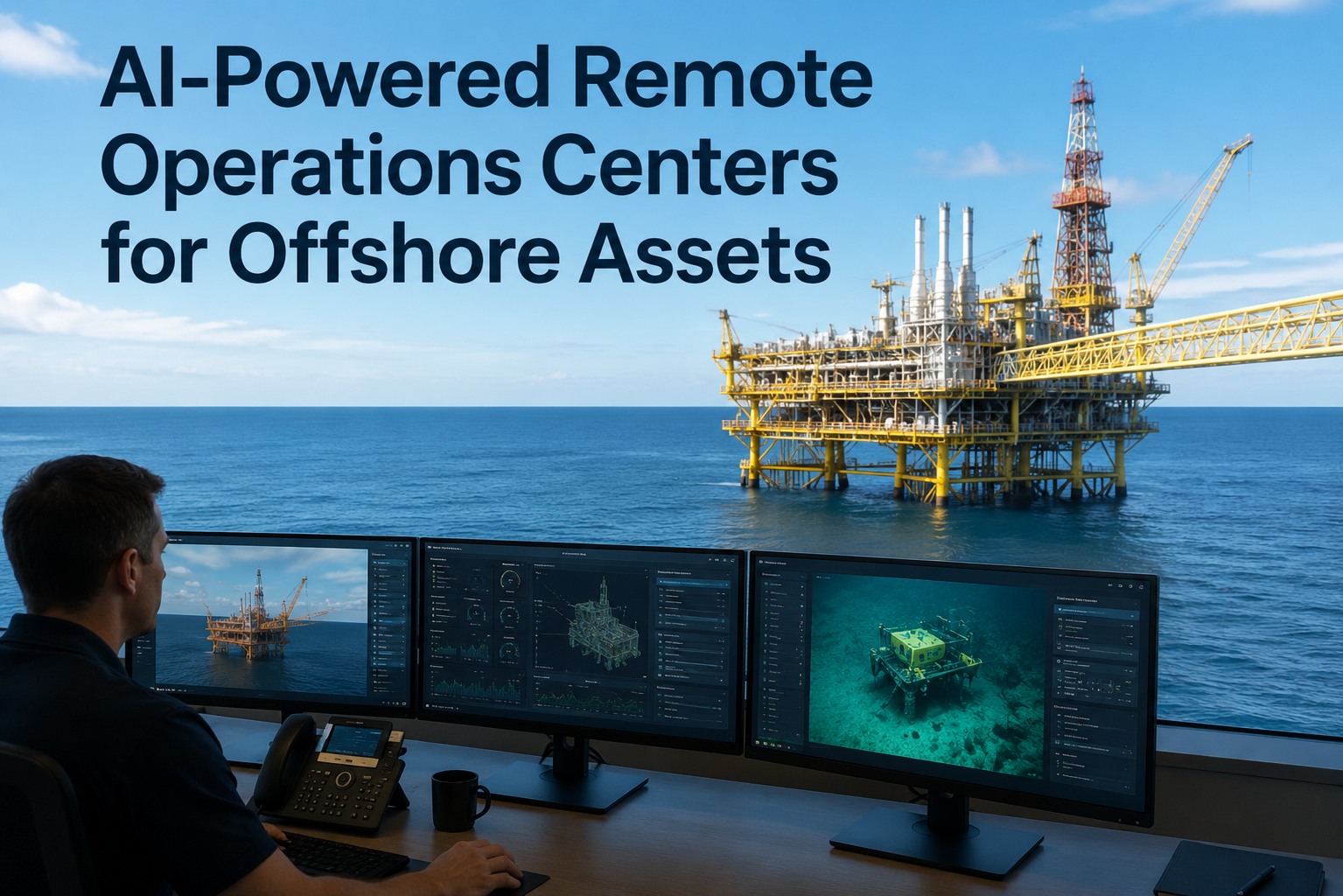
Industry pressure to reduce offshore headcount without compromising safety or throughput is intensifying. AI asset monitoring — covering topsides equipment, subsea infrastructure, and process systems — provides the real-time visibility that makes lean remote operations feasible. Without it, reduced crew counts simply mean more blind spots, not greater efficiency.
AI Readiness Checklist: Offshore Oil & Gas Platforms
AI vs. Traditional Monitoring: Offshore Platform Comparison
| Capability | Traditional / Manual | AI-Powered (iFactory) |
|---|---|---|
| Equipment Failure Detection | Operator-initiated on alarm; reactive shutdowns | AI vibration + thermal analysis with 3–6 week failure lead time |
| Subsea Inspection | Scheduled ROV/diver surveys at fixed intervals | AUV + AI computer vision with risk-based dynamic scheduling |
| Process Upset Response | Alarm-triggered; operator reaction after the event | Predictive early warning 15–30 minutes before upset condition |
| Production Optimization | Periodic engineer-driven well parameter adjustments | Continuous AI well performance models with auto-optimized settings |
| Leak and Gas Detection | Fixed detector threshold alarms; manual investigation | AI anomaly models with sub-1% sensitivity and automated alerting |
| Regulatory Documentation | Manual record assembly before BSEE audits | Auto-generated, timestamped compliance dossiers on demand |
| Offshore Logistics Planning | Experience-based scheduling by logistics coordinator | AI optimization of crew, supply, and maintenance mobilization windows |
AI Implementation Pathway: 5 Phases for Offshore Operators
Platform Asset Inventory and Data Source Audit
Map every sensor, SCADA endpoint, historian tag, and subsea telemetry feed across the platform. Identify gaps — unmanned wellheads, subsea trees with no real-time telemetry, and rotating equipment without vibration sensors — and prioritize IIoT retrofits before model training begins.
Edge and Connectivity Architecture Setup
Deploy on-platform edge AI nodes for safety-critical real-time functions. Establish secure OT/IT data flows with properly segmented DMZ controls. Validate satellite bandwidth for cloud analytics workloads and configure data compression for high-frequency sensor streams.
Baseline Model Training and Threshold Validation
Train predictive maintenance, process monitoring, and leak detection models on 90+ days of historical operational data. Validate anomaly detection sensitivity and false-positive rates against known historical events before any live advisory deployment.
Advisory Mode Pilot on Highest-Value Assets
Launch AI monitoring in read-only advisory mode on your highest-consequence assets — gas compression train, primary separation, or a critical riser. Run parallel with existing systems for 30–60 days to build crew confidence and refine alert logic before enterprise deployment.
Platform-Wide Rollout and Continuous Model Optimization
Expand AI coverage to all platform systems, integrate with onshore ROC dashboards, and connect to CMMS and ERP systems. Establish a model governance process for retraining as reservoir conditions, equipment age, and operating parameters evolve. Book a Demo to see iFactory's offshore rollout methodology in detail.
What Offshore Operations Engineers Say About AI Implementation
Based on iFactory deployments across offshore operators, the most consistent barrier to AI readiness is not technology access — it is the fragmented state of sensor infrastructure on older fixed platforms and FPSOs that were not designed with digital integration in mind. Facilities attempting to deploy AI without first resolving historian tag inconsistencies, poorly calibrated flow meters, or subsea instrumentation gaps will find model accuracy degraded within the first operational quarter.
The second most frequent challenge is cultural: control room and deck operators on offshore platforms operate under extreme safety accountability and are appropriately skeptical of AI recommendations that diverge from trained procedure. Deployments that enforce a structured advisory mode period — where AI outputs are visible but not operationally binding — see significantly faster acceptance curves and fewer rollback events than those that move straight to automation.
Core Benefits of AI on Offshore Oil & Gas Platforms
Real-Time Topsides and Subsea Visibility
Replace shift-based manual checks with continuous AI-generated asset dashboards covering equipment health, process parameters, and subsea integrity — accessible to platform crew and onshore operations teams simultaneously.
Predictive Maintenance on Critical Rotating Equipment
AI vibration and thermal analysis identifies compressor, turbine, and pump degradation weeks ahead of failure — converting costly offshore emergency shutdowns into planned maintenance windows that protect production targets.
Automated Subsea Inspection and AUV Integration
AI computer vision processing of AUV and ROV inspection data replaces manual video review, detecting corrosion, structural anomalies, and marine growth with higher consistency and at a fraction of the cost of manned inspection programs.
BSEE and Regulatory Compliance Readiness
Digital, timestamped records of equipment inspections, safety system tests, and well control activities generate audit-ready compliance dossiers that paper-based systems cannot produce on demand — reducing audit preparation time from weeks to hours.
Production Optimization Across Well Portfolio
AI well performance models continuously optimize lift parameters, injection rates, and choke settings — improving production without additional drilling by extracting more value from existing wells and facilities infrastructure.
Scalable Digital Twin Foundation
Each AI deployment builds toward a fully instrumented offshore digital twin — an always-current virtual model of the platform supporting decommissioning planning, expansion analysis, and emergency scenario simulation without physical verification.
Conclusion: Building AI-Ready Offshore Operations
AI readiness for offshore oil and gas platforms is not a single technology decision — it is a structured organizational journey that begins with data infrastructure, builds through predictive model deployment, and matures into a fully integrated digital twin operation. The platforms that move through this journey deliberately, addressing sensor gaps and crew change management in parallel with technology deployment, will establish durable production reliability and safety performance advantages over those still operating on manual monitoring cycles.
iFactory's AI platform is purpose-built for the complexity and safety requirements of offshore operations — integrating with existing SCADA, historian, and CMMS systems while delivering the predictive intelligence that aging legacy infrastructure cannot provide. Whether you are assessing readiness on a single FPSO or planning AI deployment across an entire deepwater field, iFactory provides the domain expertise, offshore-grade architecture, and structured deployment methodology to ensure measurable operational results from day one.