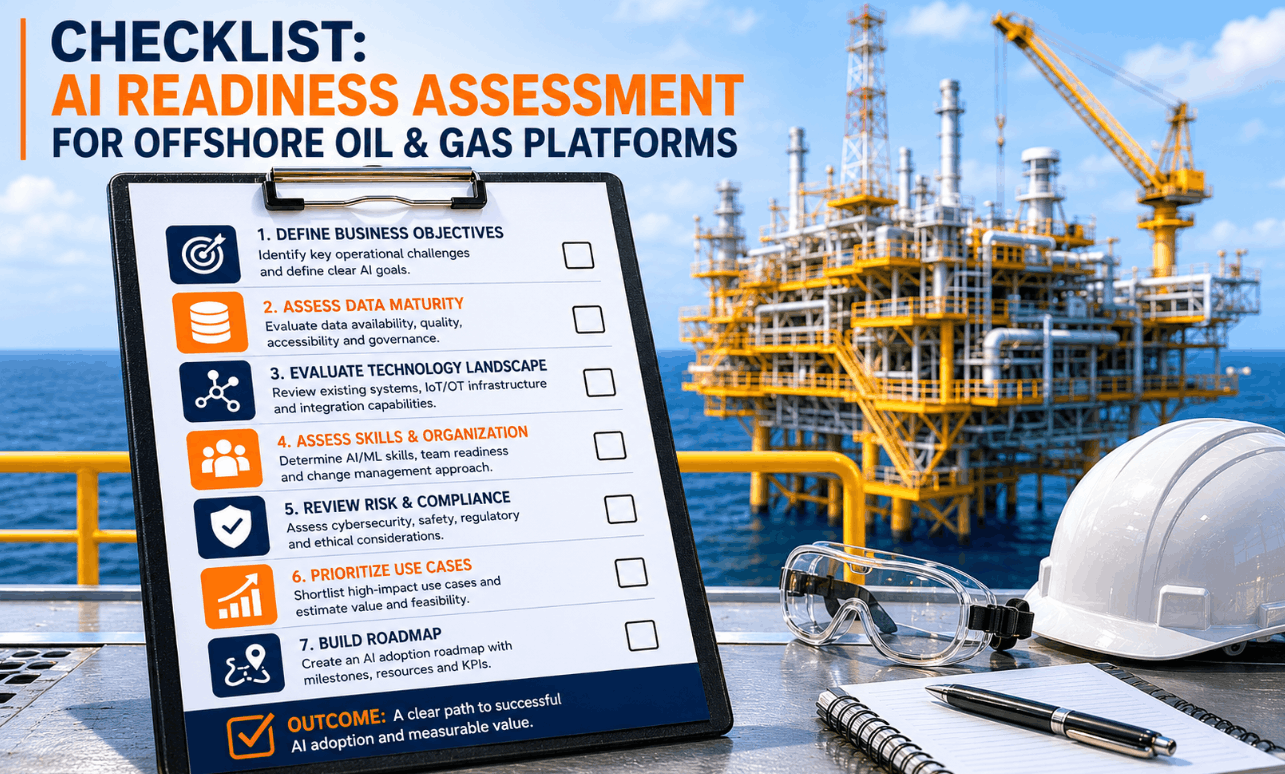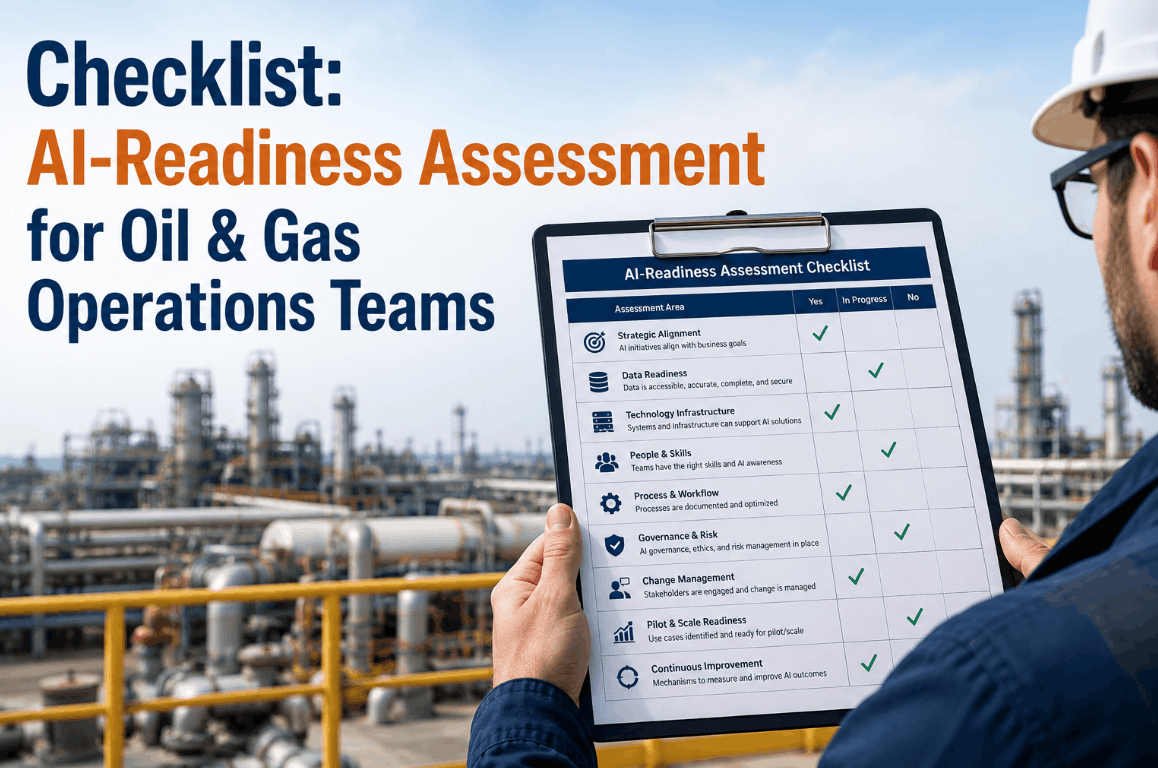
Oil and gas operations teams across upstream, midstream, and downstream environments are under mounting pressure to integrate AI — yet the gap between a leadership mandate to "implement AI" and an operations team genuinely prepared to use it safely and effectively is wide. This AI readiness checklist gives operations managers, reliability leads, HSE supervisors, and training coordinators a structured, phase-by-phase self-assessment to identify exactly where their team stands before any AI platform deployment begins. Teams that complete this assessment before procurement consistently reach operational value faster and with fewer implementation setbacks than those who begin with technology selection. Operations teams ready to benchmark their AI readiness against real-world deployment requirements can Book a Demo with iFactory AI for a guided facility-specific gap review.
Why AI Readiness Determines Deployment Outcomes in Oil & Gas
Unprepared Teams Undermine Technically Sound Platforms
The most common reason AI deployments underdeliver in oil and gas is not platform failure — it is workforce unpreparedness. When field operators, reliability engineers, and HSE supervisors lack the foundational AI literacy to interpret model outputs, act on alerts, or trust system recommendations, even accurate predictive tools get ignored. Book a Demo to see how iFactory AI structures team readiness assessment before platform onboarding begins.
Data and Process Gaps Create Compounding Implementation Risk
AI systems in oil and gas depend on clean asset data, connected sensor infrastructure, and defined decision workflows. Teams that assess and close these gaps before deployment avoid the cycle of low-confidence AI outputs, manual overrides, and eroding ROI that characterizes stalled programs across the industry.
Expert Perspective: What Readiness Assessment Reveals That Vendor Demos Don't
Every AI vendor demo looks compelling. The readiness assessment is where the real picture emerges. We consistently find that facilities with the strongest AI enthusiasm have the weakest data foundations — incomplete asset registers, five years of maintenance history sitting in paper work orders, and sensor coverage that stops at the process boundary. The teams that treat the readiness checklist as a procurement prerequisite rather than an implementation afterthought are the ones producing measurable uptime and safety outcomes within the first year. The teams that skip it are still arguing about alert thresholds at month eighteen.
Conclusion: Readiness Is the ROI Decision That Happens Before Procurement
AI readiness in oil and gas operations is not a technology question — it is an organizational, data, and process discipline question. The six assessment phases in this checklist reflect what separates oil and gas teams that extract transformative value from AI platforms within 12 months from those still troubleshooting integration problems at month 18. Data infrastructure and workforce skill gaps are the two most consistent early predictors of deployment outcome — and both are fully addressable before any platform contract is signed. Operations teams that complete this assessment, close the identified gaps, and deploy with a phased go-live plan generate better AI outcomes than well-funded deployments that skip the readiness step entirely. Teams ready to take their readiness assessment further with a facility-specific gap analysis are encouraged to Book a Demo with iFactory AI before any deployment commitment is made.





-rollout.png)