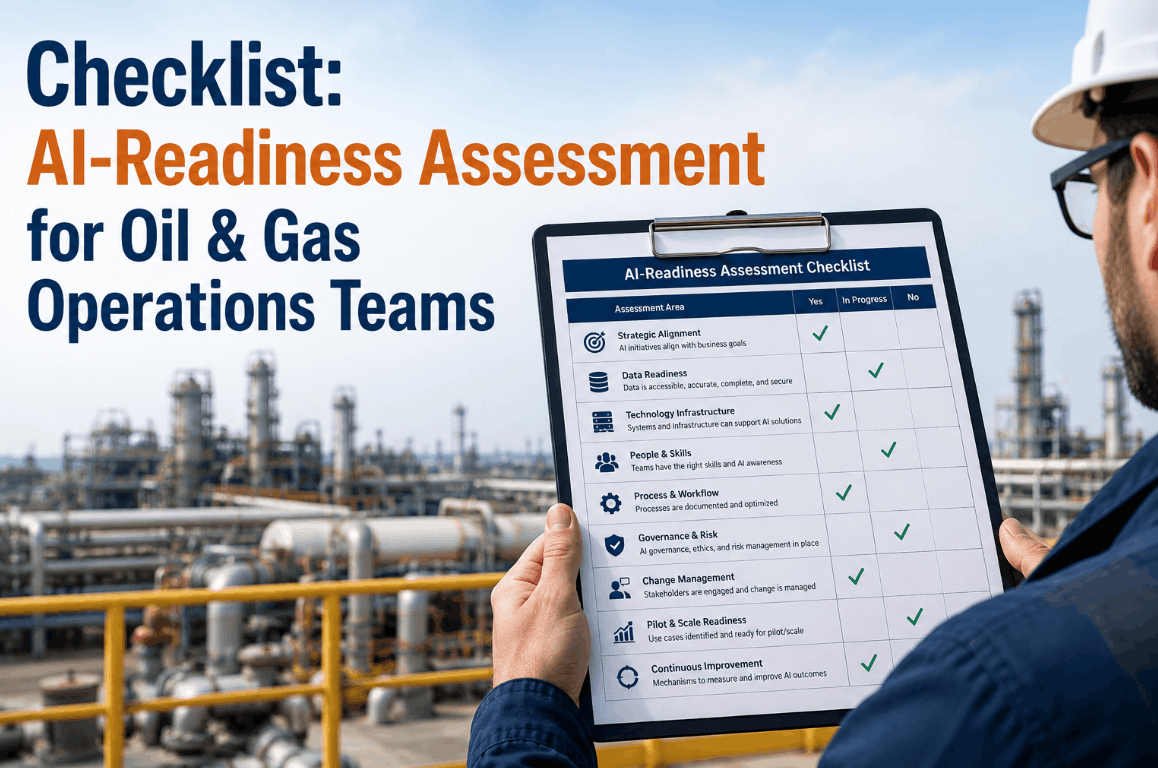
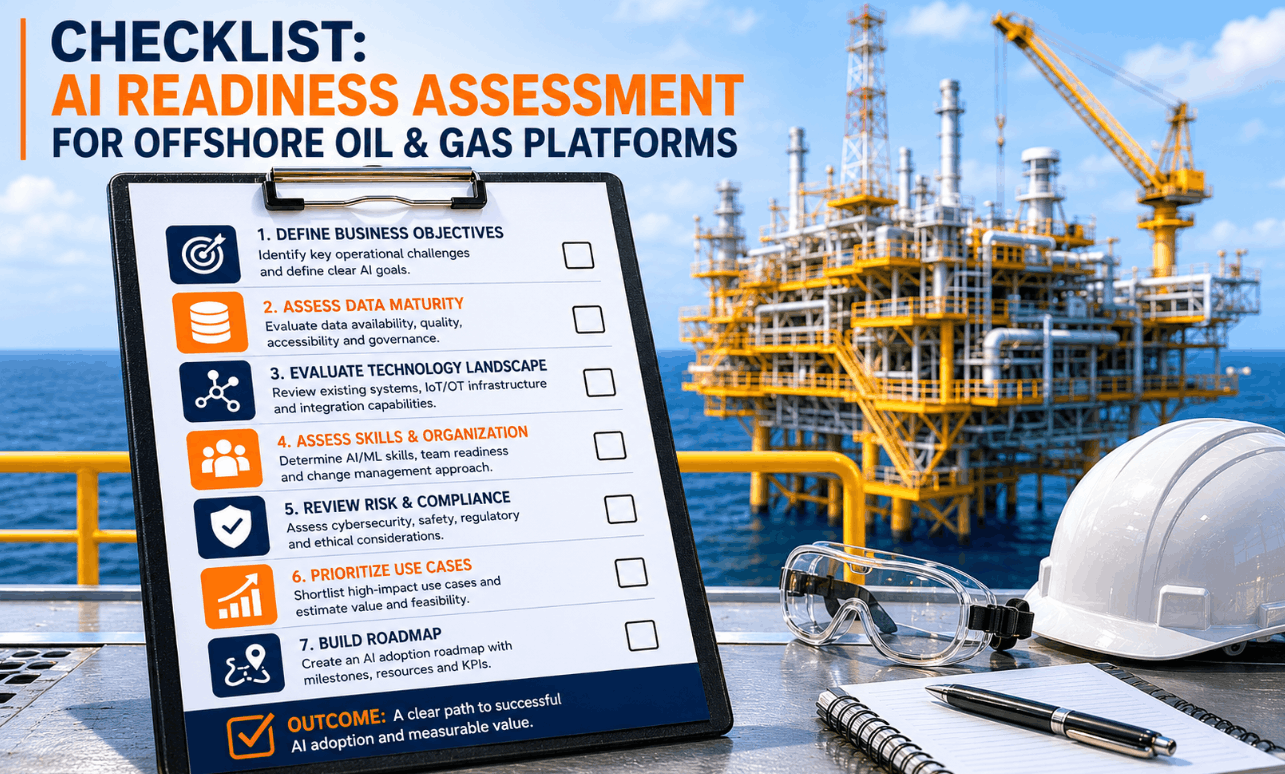
For U.S. oil and gas operators, digital transformation readiness is no longer optional — it is the threshold separating facilities that scale AI-driven reliability from those trapped in spreadsheet-dependent workflows and fragmented OT/IT architectures. This checklist provides upstream, midstream, and downstream engineering and IT leaders with a validated sequence to assess data governance maturity, cloud AI infrastructure gaps, MLOps pipelines, and legacy ERP integration readiness. Operators who Book a Demo with iFactory receive a facility-specific digital transformation readiness score and a phased remediation roadmap before any platform commitment.
Why a Structured Digital Transformation Readiness Checklist Defines Your AI Success
Data Silos and Governance Gaps Kill AI Model Accuracy Before Deployment
Digital transformation in oil and gas fails when process historians, ERP systems, and CMMS databases remain disconnected. Facilities that skip structured data lineage mapping and centralized metadata governance consistently experience model drift, failed API handshakes, and regulatory audit findings. A Book a Demo reveals how iFactory automates cross-system data harmonization before any AI workload runs.
MLOps and Cloud Infrastructure Readiness Determines Scalability
Deploying AI models without mature MLOps pipelines — version control, continuous retraining, model monitoring — creates unsustainable technical debt. Cloud migration strategies that ignore OT network constraints and data residency requirements lead to latency bottlenecks and cybersecurity exposure. The checklist ensures your cloud AI architecture aligns with actual operational constraints.
Proven 4-Phase Digital Transformation Roadmap for Oil & Gas
Assessment & Inventory
Audit existing data sources, governance maturity, and cloud readiness. Generate a prioritized gap list against this checklist.
Data Harmonization
Build a unified asset data model, establish data lineage, and deploy automated quality monitoring across historian, ERP, and CMMS.
MLOps Pipeline Deployment
Set up version-controlled training pipelines, model registry, and drift detection with audit‑grade documentation.
Continuous Value Realization
Operationalize feedback loops, optimize cloud costs, and expand AI models to additional asset classes and sites.
Expert Perspective: What Separates Digital Transformation Leaders from Laggards
The operators that successfully scale AI across multiple assets are not the ones with the largest cloud budgets — they are the ones that invested first in data governance and MLOps fundamentals. We see facilities spending millions on AI platforms while skipping data lineage and version control; they end up unable to reproduce a single model prediction for an auditor. The difference between a stalled pilot and enterprise-wide transformation is almost always the rigor applied to Phases 1 and 3 of this checklist. Start there, and the rest becomes repeatable.
Conclusion: Execute Your Digital Transformation Rollout With Confidence
Digital transformation readiness in oil and gas is not about deploying the trendiest AI platform — it is about systematically validating data governance, cloud infrastructure, MLOps maturity, security compliance, legacy system interoperability, and workforce adoption before writing a single line of production inference code. The six readiness dimensions and four-phase roadmap outlined above reflect the implementation sequence that consistently delivers measurable uptime improvements, regulatory confidence, and cloud cost predictability. Reliability engineers, IT leaders, and operations executives ready to benchmark their current state against this extended checklist are encouraged to Book a Demo with iFactory and receive a facility-specific digital transformation readiness score and gap assessment before any deployment commitment is made. iFactory's platform delivers unified asset data models, automated MLOps pipelines, legacy protocol abstraction, and turnkey ERP/CMMS integration — built for oil and gas operators who demand AI that works as reliably as their rotating equipment.