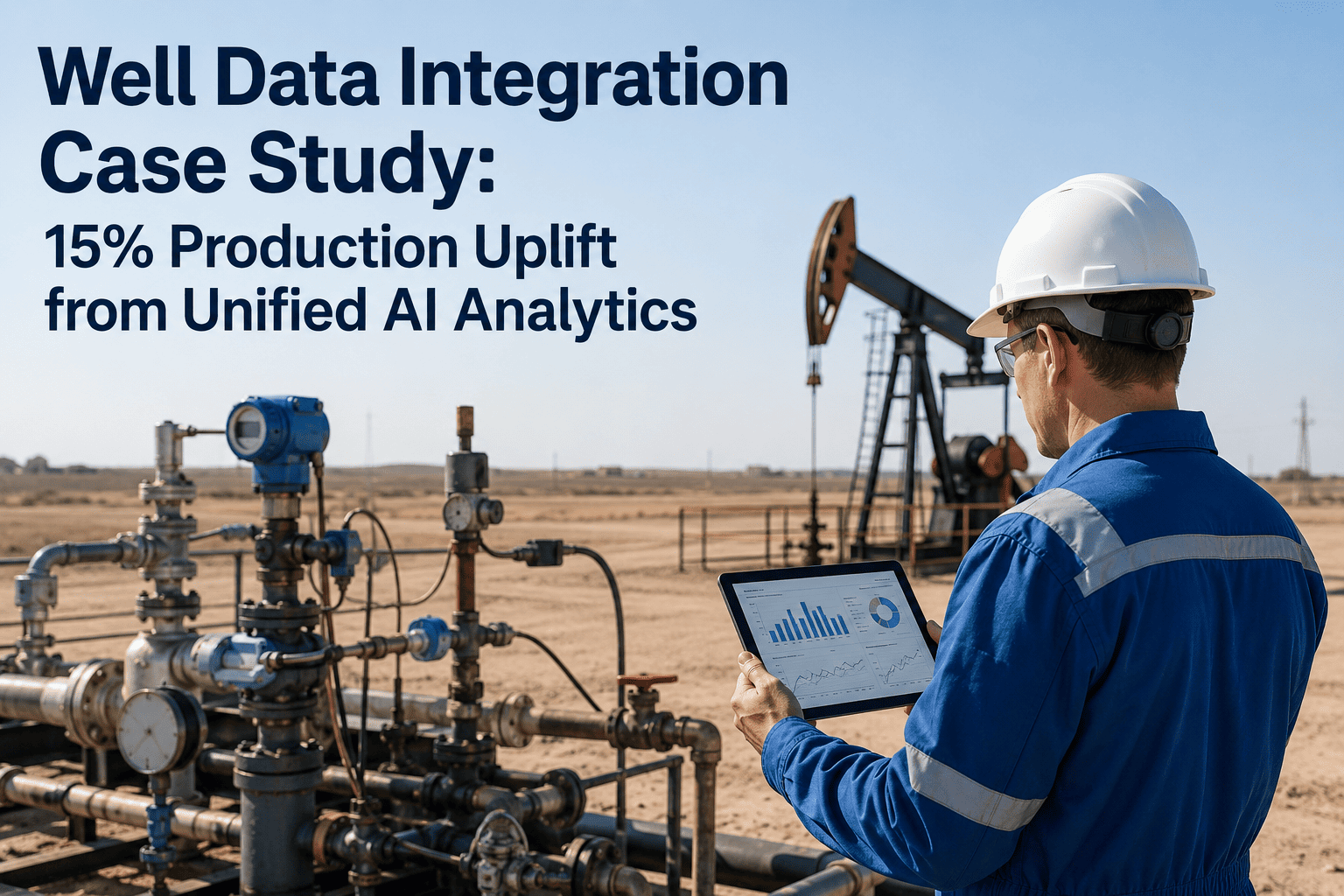
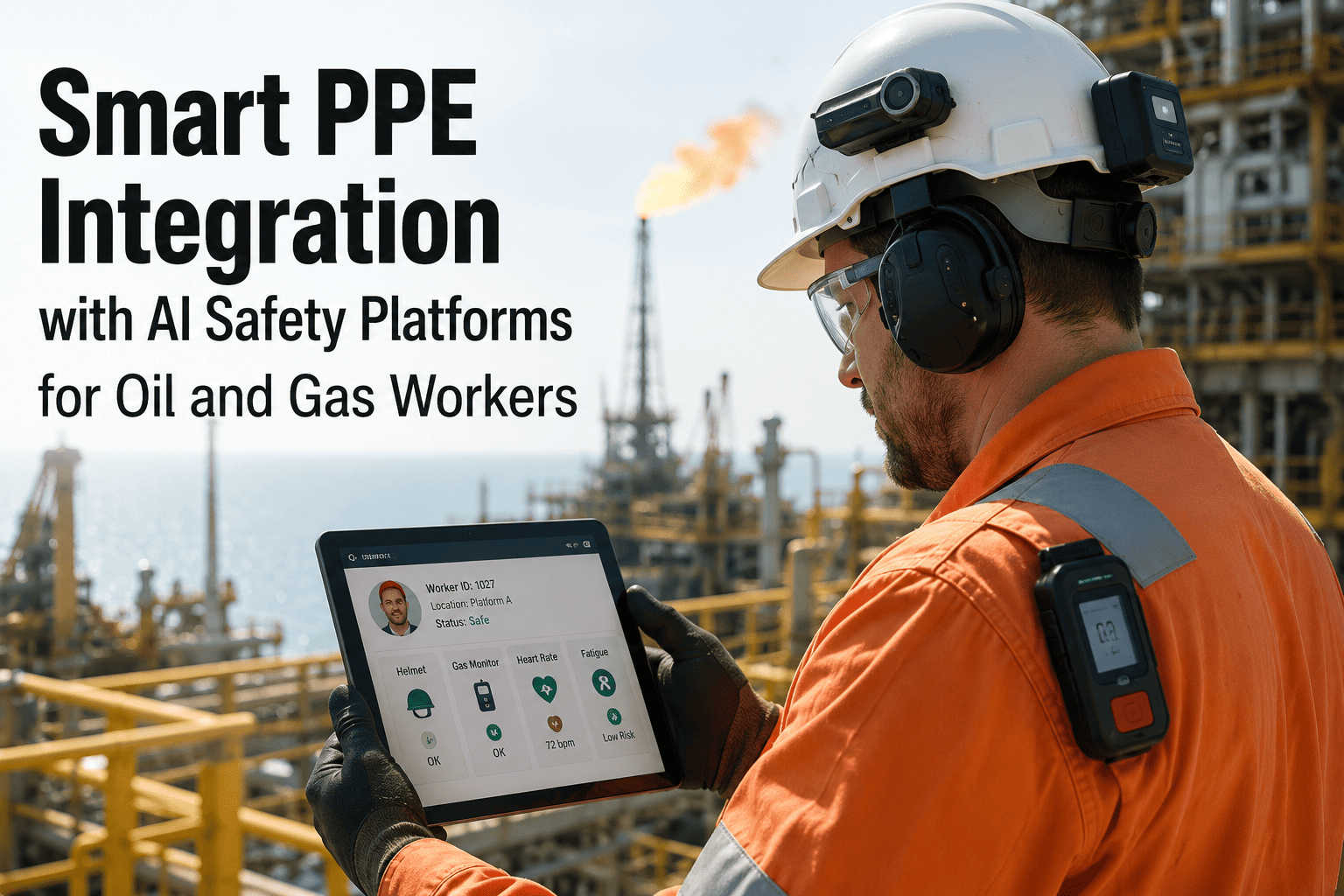
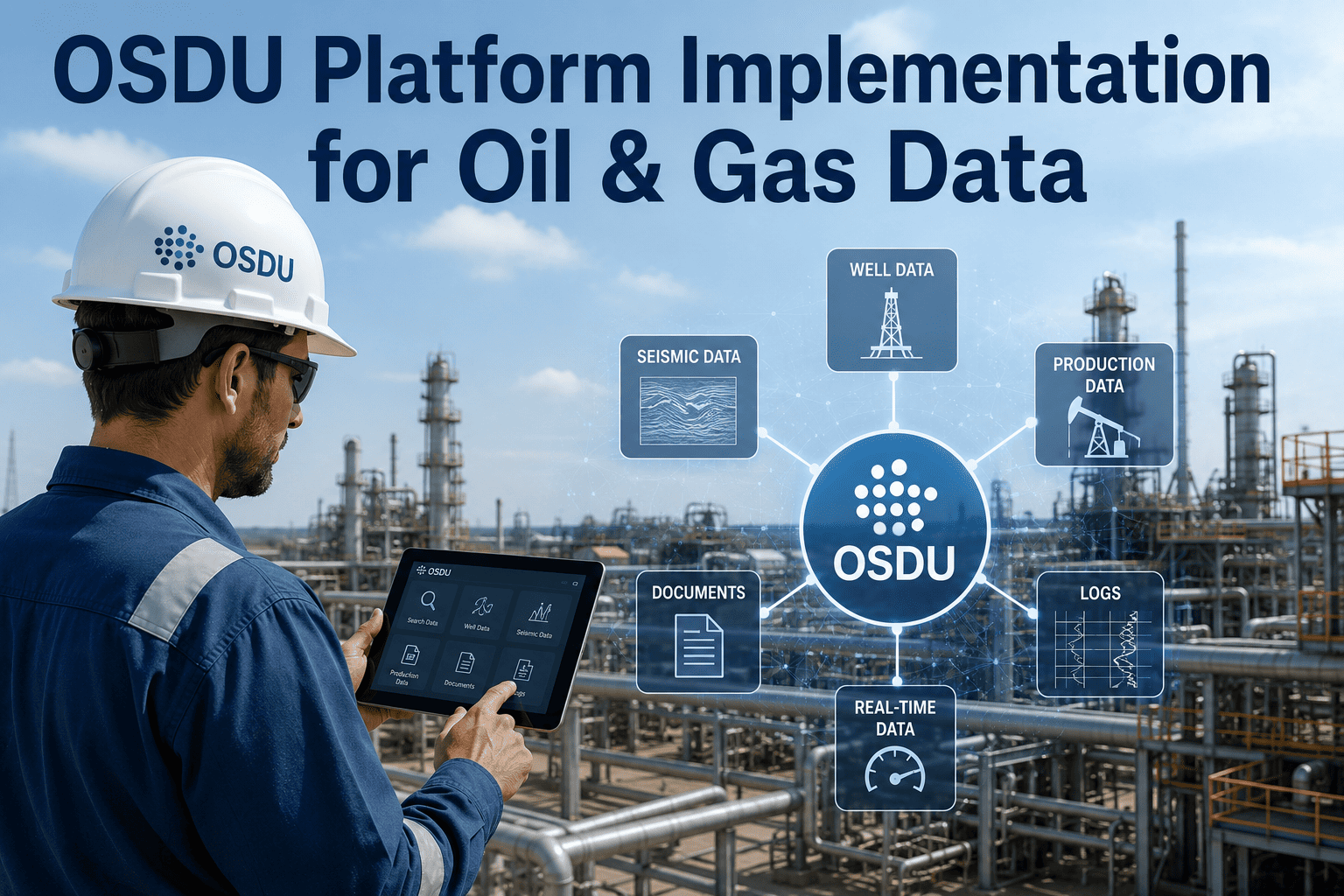
The oil and gas industry is at the sharpest inflection point in its history. Compressed margins, accelerating energy transition pressures, aging field infrastructure, and an entirely new generation of AI-capable competitors are forcing U.S. operators to confront a question that no longer has a comfortable middle ground: how fast, and in what sequence, do you digitize an industry built on physical assets, legacy control systems, and decades of siloed data? The answer is not a technology selection exercise — it is a structured transformation roadmap that connects digital investment to measurable operational and financial outcomes. In 2025, the operators pulling ahead are not those with the most pilot programs. They are the ones who have moved from proof of concept to production-scale deployment across their SCADA, ERP, MES, and IoT layers — and wired those systems into an AI intelligence fabric that actually changes daily decisions. This article maps the practical path to get there. Book a Demo to see how iFactory AI accelerates oil and gas digital transformation from data integration to production-scale AI deployment.
Why Most Oil & Gas Digital Transformation Programs Stall — and What the Leaders Do Differently
The most instructive data point in oil and gas digital transformation is not the success rate — it is the failure rate. Industry analysis consistently shows that roughly 70% of digital initiatives in oil and gas fail to scale beyond the pilot stage, wasting hundreds of billions of dollars in aggregate. The reasons are predictable: technology investments made before data foundations are in place, AI models deployed on top of fragmented, inconsistent operational data, and digital programs that run parallel to — rather than integrated with — the operational systems that engineers and operators actually use every day.
The operators achieving real-scale results share a common pattern. ExxonMobil's transformation began with consolidating 12 separate ERP systems onto a single cloud-based SAP S/4HANA platform — harmonizing data as the prerequisite for AI deployment, not as an afterthought. BP improved upstream plant reliability to nearly 97% in 2025 by deploying AI on a unified data layer rather than isolated point solutions. Equinor committed $1.2 billion specifically to digitalize upstream, downstream, and renewable assets with integrated analytics as the core architecture. The common thread: data integration precedes AI. Systems integration precedes automation. Foundations before features.
The Four Technology Layers of an Oil & Gas Digital Transformation Stack
A coherent digital transformation program in oil and gas is not a single technology initiative — it is an architecture built in layers, each providing the data foundation for the layer above it. Understanding this stack clarifies the sequencing decisions that determine whether a digital program scales or stalls. iFactory AI is designed to integrate across all four layers through certified industrial connectors, enabling operators to accelerate deployment without rebuilding existing infrastructure. Book a Demo to see the full integration architecture for oil and gas operations.
The 2025 Digital Transformation Roadmap: Phase-by-Phase for U.S. Oil & Gas Operators
A successful digital transformation program in oil and gas follows a phased architecture that aligns investment sequencing with risk management and value delivery. The roadmap below reflects current best practice across upstream, midstream, and downstream deployments — and maps directly to the integration and AI capabilities that iFactory AI delivers at each stage.
Establish the unified data layer that every subsequent AI deployment depends on. Connect SCADA, DCS, MES, and ERP systems through standardized protocols — OPC UA for control systems, REST APIs and IDoc interfaces for ERP, MQTT for IoT edge devices. Implement secure IT/OT network segmentation following IEC 62443 architecture. Deploy a cloud or hybrid data historian that normalizes operational data from all sources into a consistent asset model.
Deploy AI models on the unified data layer to generate the operational intelligence that replaces reactive decision-making. Predictive maintenance models trained on SCADA and vibration data provide 4–8 weeks of advance warning on equipment failures. Production optimization algorithms analyze well performance, compressor efficiency, and separator conditions to identify throughput improvements. Real-time KPI dashboards give production engineers and operations managers a single view of asset health across the field.
Activate closed-loop workflows where AI recommendations automatically trigger operational actions — work orders, setpoint adjustments, production schedule updates — without manual intervention at every step. Deploy generative AI for regulatory reporting automation, compliance documentation, and knowledge management. Implement digital twin models for reservoir simulation, facility optimization, and what-if scenario planning. Scale successful AI models from pilot assets to full field or facility deployment.
Evaluating your organization's digital transformation readiness and want a structured assessment of your current data integration maturity? Book a Demo with iFactory AI's industrial architects and get a live walkthrough of the integration and AI deployment roadmap for oil and gas operations.
Priority Digital Use Cases by Oil & Gas Segment in 2025
Digital transformation investments are most effective when aligned to the specific operational challenges and value drivers of each segment. The table below maps the highest-priority use cases across upstream, midstream, and downstream operations — along with the digital technology categories and typical performance improvements observed in production deployments.
| Segment | Priority Use Case | Technology Category | Typical Performance Gain |
|---|---|---|---|
| Upstream | Predictive well failure detection and ESP optimization | AI/ML on SCADA + IoT sensor streams | 30–40% reduction in unplanned failures |
| Upstream | Reservoir simulation and drilling optimization | Digital twin + seismic AI models | 15–25% improvement in well yield |
| Midstream | Pipeline integrity monitoring and leak detection | IoT sensors + anomaly detection AI | 95%+ regulatory compliance rate |
| Midstream | Compressor station efficiency and predictive maintenance | SCADA analytics + OPC UA integration | 22% energy efficiency improvement |
| Downstream | Refinery process optimization and fuel blending | Model-predictive control + gen AI | 3–8% throughput increase |
| Downstream | Regulatory compliance reporting automation | Gen AI + ERP/SCADA data integration | 85% report preparation time savings |
| All Segments | ERP and supply chain digital integration | SAP S/4HANA cloud migration + AI | 68% faster procurement & inventory response |
The Cybersecurity Imperative: Why IT/OT Security Must Be Designed Into Digital Transformation
Oil and gas digital transformation expands the attack surface significantly. As SCADA systems, pipeline controllers, wellhead sensors, and corporate ERP platforms become interconnected, the historically air-gapped OT environment is exposed to the same threat landscape as enterprise IT — and the consequences of a breach in an oil and gas OT environment are not just financial. They are operational and safety-critical. The data is unambiguous: 94% of the world's top oil and gas companies have experienced at least one data breach as of 2025. In this environment, cybersecurity is not a compliance checkbox — it is a foundational requirement of any digital architecture. Book a Demo to review iFactory AI's IEC 62443-aligned security architecture for oil and gas IT/OT integration.
OT networks must be physically and logically isolated from corporate IT through DMZ architectures and unidirectional security gateways. Production control systems should never be directly accessible from general enterprise networks.
All device-to-system and system-to-system communications should be authenticated via certificate-based identity, not shared credentials. OPC UA connections between SCADA and integration platforms require mutual TLS certificate validation.
Anomalous network behavior in OT environments requires continuous detection, not periodic scanning. AI-powered OT network monitoring identifies unusual communication patterns between field devices and integration platforms that indicate active threats.
Every data access event, configuration change, and AI-generated recommendation must be logged in a tamper-proof audit trail. This documentation satisfies regulatory requirements and provides forensic evidence in the event of an incident investigation.
Expert Review: What Digital Transformation Leaders in Oil & Gas Are Prioritizing in 2025
Reviewed by industrial AI architects and digital strategy executives with deployment experience across upstream, midstream, and downstream operations in North America. The following observations are drawn from active digital transformation programs across the U.S. energy sector in 2025.
"We spent 18 months running AI pilots on fragmented data before we admitted the problem was not the AI — it was that our SCADA historian, ERP, and production accounting system had never been connected at the field level. Once we deployed an OPC UA integration layer and built a unified asset model, the same AI models that had delivered marginal results in pilot started delivering 35% reductions in unplanned well downtime. Data integration was the only variable that changed."
"The regulatory reporting automation component of our digital program paid for the entire first phase of deployment by itself. Our compliance team was spending nine weeks per year assembling the EPA Subpart W annual report manually from SCADA exports, LIMS data, and production accounting. After deploying gen AI with live data integration, the same report takes four days and the error rate dropped to zero. That single use case justified the entire platform investment to our CFO."
Conclusion
Digital transformation in oil and gas in 2025 is no longer a strategic option — it is an operational necessity for any operator competing on cost, reliability, and sustainability performance. The gap between digital leaders and digital laggards in the sector is now measurable in production uptime percentages, cost per barrel, and regulatory compliance rates. The operators pulling ahead have not adopted the most advanced technology — they have built the most complete data integration foundations and deployed AI on top of contextualized, unified operational data.
The roadmap is clear: start with IT/OT data integration and cybersecurity architecture, deploy predictive analytics and operational visibility on the unified data layer, then activate closed-loop automation and generative AI capabilities as the digital program matures. iFactory AI is designed to accelerate this journey through certified industrial connectors, OPC UA and MQTT integration, SAP and Oracle ERP adapters, and AI models purpose-built for energy-sector workflows. The 30–70% EBIT uplift that BCG projects for full AI adoption in oil and gas is achievable — but only for operators who treat data integration as the foundation, not the final step.
Ready to assess your organization's current digital transformation maturity and build a phased roadmap? Book a Demo with iFactory AI and get a live walkthrough of the integration architecture and AI deployment roadmap for oil and gas operations.