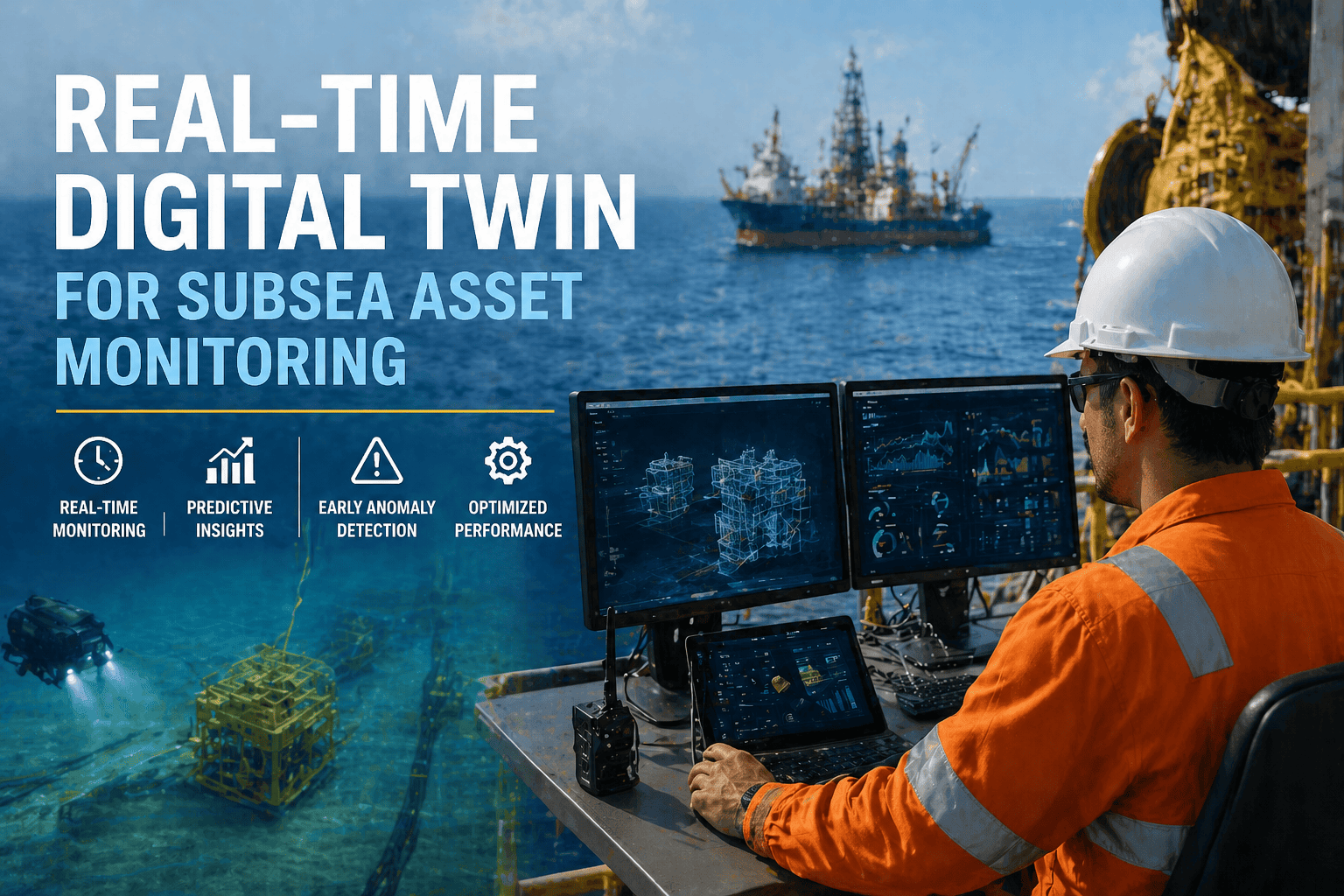
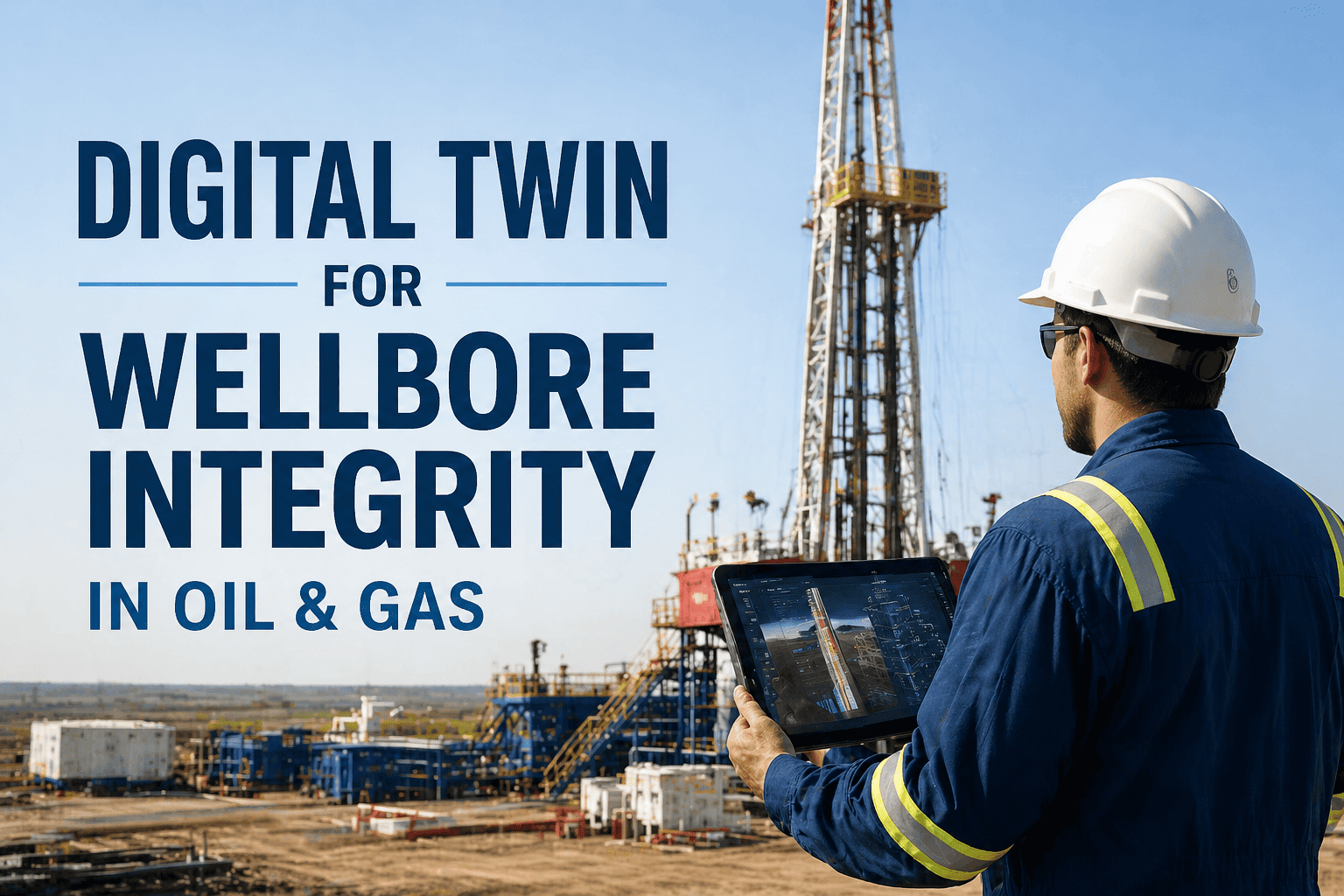
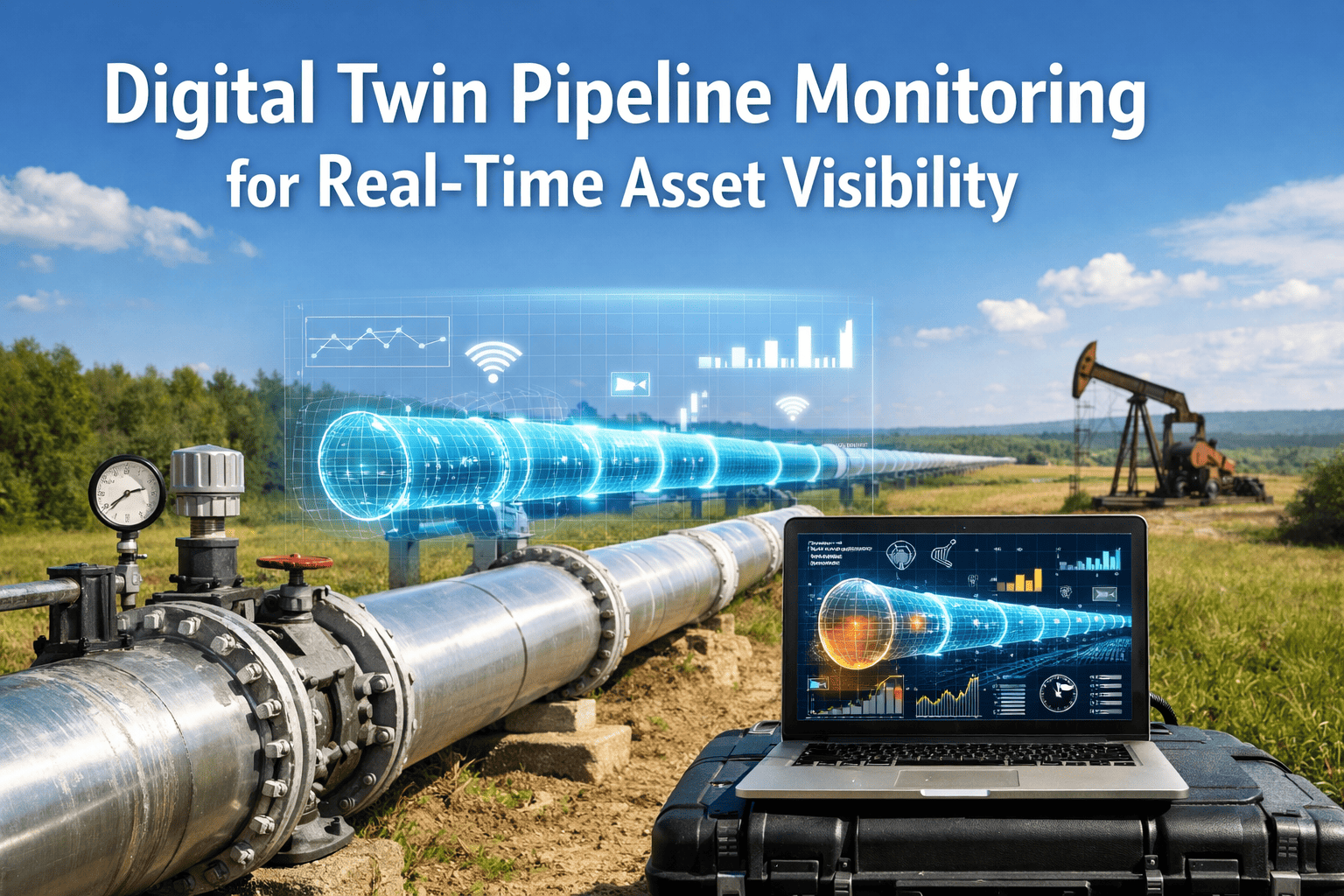
AI-powered digital asset management is reshaping how oil and gas operators monitor equipment health, schedule maintenance, and protect asset integrity across upstream, midstream, and downstream operations. From offshore platforms and pipeline networks to refinery process units, the convergence of AI, IoT sensor data, and predictive analytics is enabling a new generation of asset performance management that moves well beyond traditional CMMS workflows. Plants and operators that book a demo with iFactory are discovering how AI-integrated asset management transforms reactive maintenance cultures into proactive, data-driven reliability programs — with measurable impact on uptime, safety, and total cost of ownership.
Transform Asset Integrity With Predictive AI Analytics
iFactory's AI platform delivers real-time equipment health monitoring, risk-based inspection scheduling, and lifecycle analytics — purpose-built for oil and gas operators demanding measurable uptime and full regulatory compliance.
Why Digital Asset Management AI Is Critical for Oil & Gas Operations
Oil and gas assets operate under extreme conditions — high pressure, high temperature, corrosive process media, and remote deployment — that make asset failure consequences uniquely severe. Unplanned downtime in a single refinery unit can cost $500,000 to $1 million per day. A pipeline integrity failure can trigger environmental liability, regulatory shutdown, and reputational damage that exceeds the equipment replacement cost by orders of magnitude. Traditional asset management systems — paper-based inspection logs, fixed-interval CMMS work orders, and manual condition assessments — were designed for a world where data was scarce and computing was expensive. That world no longer exists. AI asset management in oil and gas integrates sensor streaming, machine learning failure models, and digital twin simulation to deliver continuous, dynamic asset health intelligence that no inspection team can replicate at scale. Operators who book a demo with iFactory consistently identify high-consequence equipment degradation pathways that their existing systems had completely missed.
Unplanned Downtime
Unexpected equipment failure in critical process units triggers emergency repair cycles that cost 3–5× planned maintenance — plus production revenue losses that dwarf repair expenses.
Integrity Failure Risk
Corrosion under insulation, pressure vessel wall thinning, and fatigue cracking progress silently between fixed inspection intervals — creating latent failure risk invisible to calendar-based programs.
Regulatory Compliance Gaps
API 580/581 risk-based inspection, OSHA PSM, and EPA RMP compliance demands documented, traceable asset inspection records that manual systems routinely fail to maintain at audit-ready standards.
Lifecycle Cost Overruns
Over-maintenance of low-risk assets and under-maintenance of high-consequence equipment both drive unnecessary capital expenditure — a resource allocation failure that AI-driven risk scoring eliminates.
AI Oil & Gas Asset Management: 2025 Implementation Roadmap
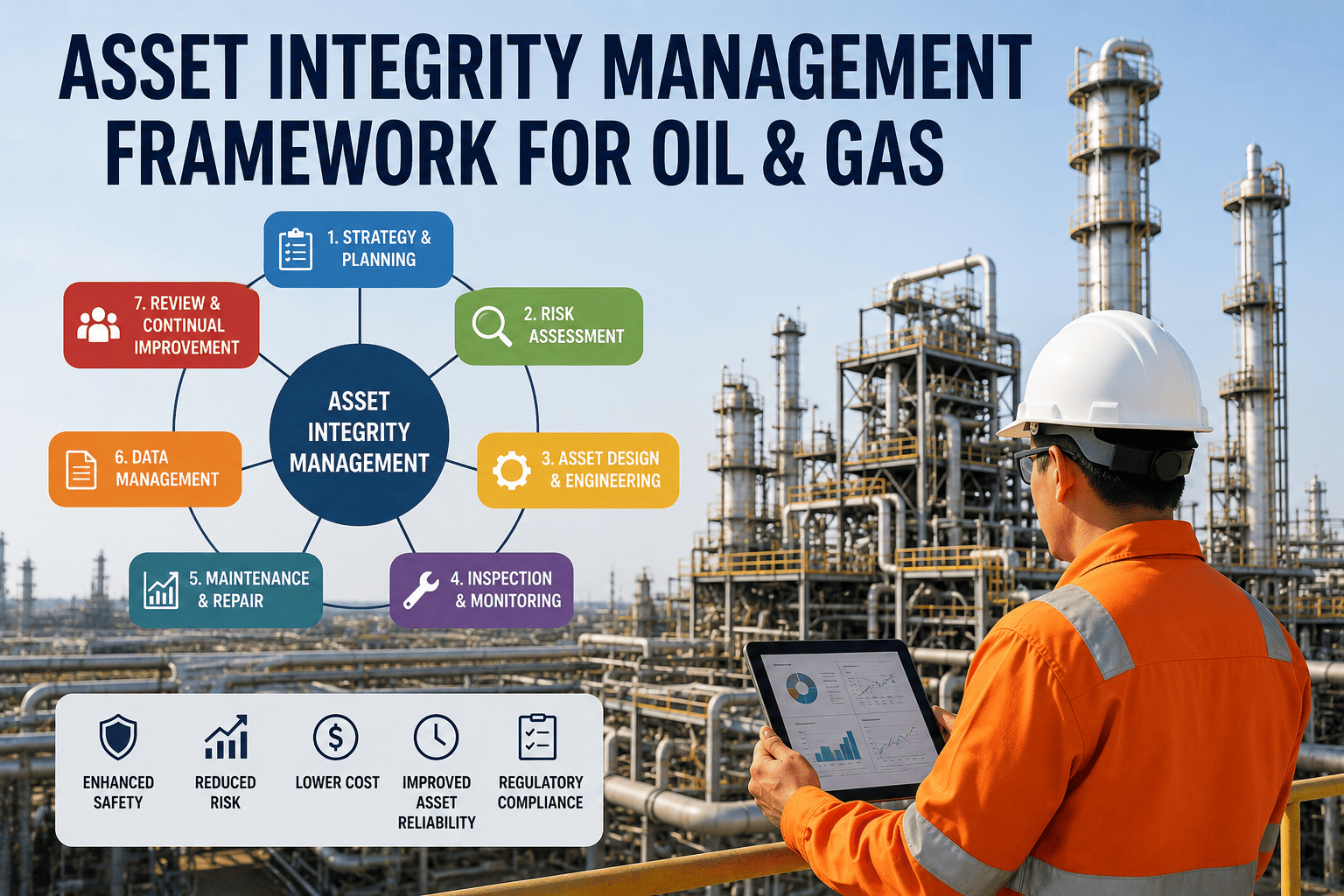
Implementing AI-driven digital asset management in oil and gas is not a single-step software deployment — it is a phased capability build that layers data infrastructure, model development, and organizational workflow integration over 6–18 months. The following roadmap reflects the implementation sequence that delivers earliest value with lowest organizational disruption, based on real-world deployments across upstream, midstream, and downstream environments.
Asset Data Foundation & Sensor Integration
Consolidate existing asset registers, P&ID data, inspection history, and maintenance records into a unified asset data layer. Establish IoT sensor connectivity from vibration monitors, process transmitters, corrosion probes, and ultrasonic thickness gauges via standard industrial protocols (OPC-UA, Modbus, MQTT). Data quality validation and asset hierarchy mapping are completed in this phase — the foundation all AI models depend on.
Predictive Failure Modeling & Risk Scoring
Deploy machine learning models trained on historical failure data, process operating conditions, and equipment design parameters to generate continuous equipment health scores. Risk-based inspection (RBI) models per API 580/581 are calibrated to facility-specific failure mechanisms — corrosion under insulation, high-temperature hydrogen attack, fatigue, and erosion — producing dynamic inspection interval recommendations that respond to actual operating conditions rather than fixed calendar schedules.
CMMS AI Integration & Work Order Automation
Integrate AI-generated maintenance recommendations directly into existing CMMS platforms (SAP PM, IBM Maximo, Infor EAM) via API connections — eliminating manual transcription between predictive analytics and maintenance execution. Automated work order generation triggered by health score thresholds, anomaly detection alerts, and RBI interval calculations ensures that maintenance actions are taken when the asset needs them, not when the scheduler remembers to check.
Digital Twin Deployment & Fitness-for-Service Analytics
Construct digital twin models of critical equipment — pressure vessels, rotating machinery, heat exchangers, and pipeline segments — that simulate degradation pathways under current operating conditions. Fitness-for-service (FFS) assessments per API 579 are automated using real-time inspection data inputs, generating remaining useful life (RUL) projections that feed capital planning and turnaround scheduling decisions. This phase transforms the digital asset management program from reactive maintenance optimization to full lifecycle intelligence.
Enterprise-Wide Asset Performance Optimization
Scale AI asset management analytics across all facilities and asset classes — integrating production data, cost accounting, and regulatory compliance tracking into a unified asset performance management (APM) platform. Portfolio-level risk visualization, benchmarking across facilities, and capital allocation optimization based on risk-adjusted ROI complete the transformation from individual asset monitoring to enterprise-wide asset performance intelligence.
Core AI Capabilities Driving Asset Integrity in Oil & Gas
Effective digital asset management AI in oil and gas is not a single algorithm — it is an integrated stack of specialized analytical capabilities, each targeting a distinct failure mode or asset management workflow. Understanding the core capability layers is essential for evaluating vendor solutions and scoping implementation requirements. Operators exploring AI asset integrity programs who book a demo with iFactory get a detailed capability mapping against their current asset management gaps before any implementation commitment.
Anomaly Detection & Early Warning
Real-TimeMachine learning models trained on normal operating baselines detect subtle deviations in vibration signatures, process temperatures, pressure differentials, and flow rates that precede equipment failures by days to weeks — providing early warning windows that fixed-threshold alarms completely miss at normal operating variability.
Risk-Based Inspection Optimization
API 580/581AI-driven RBI models compute probability of failure (PoF) and consequence of failure (CoF) continuously — recalculating inspection intervals when operating conditions change, damage mechanism activity increases, or new inspection data is entered. This replaces static RBI assessments that become outdated the moment operating conditions deviate from assumptions.
Corrosion & Degradation Modeling
PredictivePhysics-informed AI models correlate process chemistry, temperature, flow velocity, and material properties to generate asset-specific corrosion rate predictions — enabling automated minimum remaining thickness calculations and retirement date projections that are updated with every new ultrasonic inspection data point entered into the system.
Rotating Equipment Health Monitoring
ContinuousCentrifugal pumps, reciprocating and centrifugal compressors, and turbines are the highest-consequence rotating assets in oil and gas facilities. AI health monitoring combines vibration spectrum analysis, process performance trending, and lube oil condition data to detect bearing wear, impeller degradation, seal deterioration, and efficiency loss before they escalate to failure events.
Traditional vs. AI-Driven Asset Management: Performance Comparison
The operational and financial gap between traditional asset management approaches and AI-driven programs widens as asset complexity and operating severity increase. The following comparison reflects documented performance differences across oil and gas facilities that have completed AI asset management implementations.
| Performance Dimension | Traditional Approach | AI-Driven Approach | Performance Gain |
|---|---|---|---|
| Failure Detection Lead Time | 0–3 days (alarm-based) | 3–8 weeks (predictive) | 5–10× earlier detection |
| Inspection Resource Utilization | Fixed calendar; all assets equal priority | Risk-ranked; highest risk assets prioritized | 30–50% inspection cost reduction |
| Unplanned Downtime Frequency | Baseline: 1 event per 8–12 months | 60–80% reduction after 12 months | Up to 80% fewer unplanned stops |
| CMMS Work Order Quality | Manual entry; incomplete failure history | Auto-generated; full sensor context attached | 100% traceability per work order |
| RBI Compliance Documentation | Point-in-time reports; manually maintained | Continuously updated; audit-ready digital records | Zero manual compliance gaps |
| Turnaround Scope Definition | Conservative; over-scoped to avoid surprises | Data-validated; right-sized to actual asset condition | 15–25% turnaround cost reduction |
Asset Lifecycle Intelligence: From Acquisition to Retirement
Digital asset management AI in oil and gas is most powerful when deployed across the full equipment lifecycle — not just during the operating phase. AI models that incorporate design data, manufacturing records, and installation history from asset commissioning can establish more accurate failure probability baselines and detect anomalies earlier in the operating period. End-of-life analytics that project remaining useful life under different operating scenarios enable capital planning decisions that avoid both premature retirement of serviceable assets and delayed replacement of equipment approaching fitness-for-service limits. Engineering teams building lifecycle AI programs regularly choose to book a demo to map iFactory's lifecycle analytics against their existing capital planning workflows.
Design & Commissioning Data Ingestion
Material certificates, weld inspection records, hydrostatic test data, and manufacturer performance curves are ingested at commissioning — establishing an asset-specific baseline that all future AI models reference.
Operating Phase Health Monitoring
Continuous sensor data, periodic inspection results, and maintenance event records feed AI health models that track degradation trajectories against expected design life curves.
Turnaround & Overhaul Optimization
AI-generated turnaround scope recommendations based on actual asset condition data eliminate the conservative overscoping that inflates planned shutdown costs by 20–30% in traditional programs.
Remaining Useful Life & Capital Planning
FFS-based RUL projections under multiple operating scenarios give asset managers a data-validated decision window for replacement investment — eliminating both premature retirement and run-to-failure surprises.
Expert Perspective: AI Asset Management ROI in Oil & Gas
The economics of AI asset management in oil and gas are asymmetric in a compelling way. A single avoided unplanned shutdown event typically recovers the entire annual cost of an AI platform deployment. When you layer in the inspection cost reductions from risk-based prioritization, the turnaround scope optimization, and the regulatory compliance documentation — the ROI calculation becomes difficult to argue against for any facility running more than 500 tagged assets.
Conclusion: Building a Future-Ready Asset Management Program
Digital asset management AI is not an incremental improvement to existing oil and gas maintenance programs — it is a fundamental capability shift that enables equipment health intelligence at a scale and speed no human inspection team can match. The implementation roadmap outlined here reflects a proven sequence that delivers early value through anomaly detection and CMMS integration, then builds toward full lifecycle intelligence through digital twin and FFS automation. Oil and gas operators that invest in AI asset management today are building a data infrastructure and model library that compounds in value with every operating cycle — generating increasingly accurate failure predictions as historical data accumulates, and increasingly precise capital planning as RUL projections are validated against actual asset performance. The competitive and safety gap between AI-enabled facilities and those still relying on fixed-interval calendar maintenance will only widen as operating margins tighten and regulatory scrutiny of asset integrity management intensifies. Reliability professionals ready to evaluate AI asset management for their facilities are encouraged to book a demo with iFactory and see how the platform maps to their specific asset portfolio and operating environment.
Ready to Modernize Your Oil & Gas Asset Management Program?
iFactory's AI platform delivers real-time equipment health scoring, API 580/581-aligned RBI optimization, and CMMS-integrated predictive work orders — built for oil and gas reliability engineers who demand measurable uptime and zero compliance gaps.
Digital Asset Management AI Oil & Gas — Frequently Asked Questions
What is digital asset management AI in oil and gas?
It is the application of machine learning, IoT sensor integration, and predictive analytics to continuously monitor equipment health, optimize inspection scheduling, and prevent failures across oil and gas assets — replacing fixed-interval maintenance with condition-based intelligence.
How does AI asset management integrate with existing CMMS systems like SAP PM or IBM Maximo?
AI platforms like iFactory connect via standard APIs to existing CMMS systems, automatically generating work orders from health score thresholds and anomaly alerts without replacing the CMMS infrastructure maintenance teams already operate within.
What sensors are required to implement AI asset management in an oil and gas facility?
Most facilities already have the core infrastructure — vibration transmitters, process temperature and pressure sensors, and flow meters; iFactory maps existing sensor coverage against AI model requirements and recommends targeted additions only where critical gaps exist.
Does AI asset management support API 580/581 risk-based inspection compliance?
Yes — iFactory's RBI models are built on API 580/581 methodology, generating continuously updated probability of failure and consequence of failure assessments that produce audit-ready inspection interval documentation aligned with recognized and generally accepted good engineering practices (RAGAGEP).
How long does it take to see ROI from an AI digital asset management implementation?
Most oil and gas facilities realize initial ROI within 6–12 months through avoided unplanned downtime events and inspection resource optimization, with full program ROI typically documented within 12–18 months as predictive model accuracy improves with accumulated operating data.
-rollout.png)