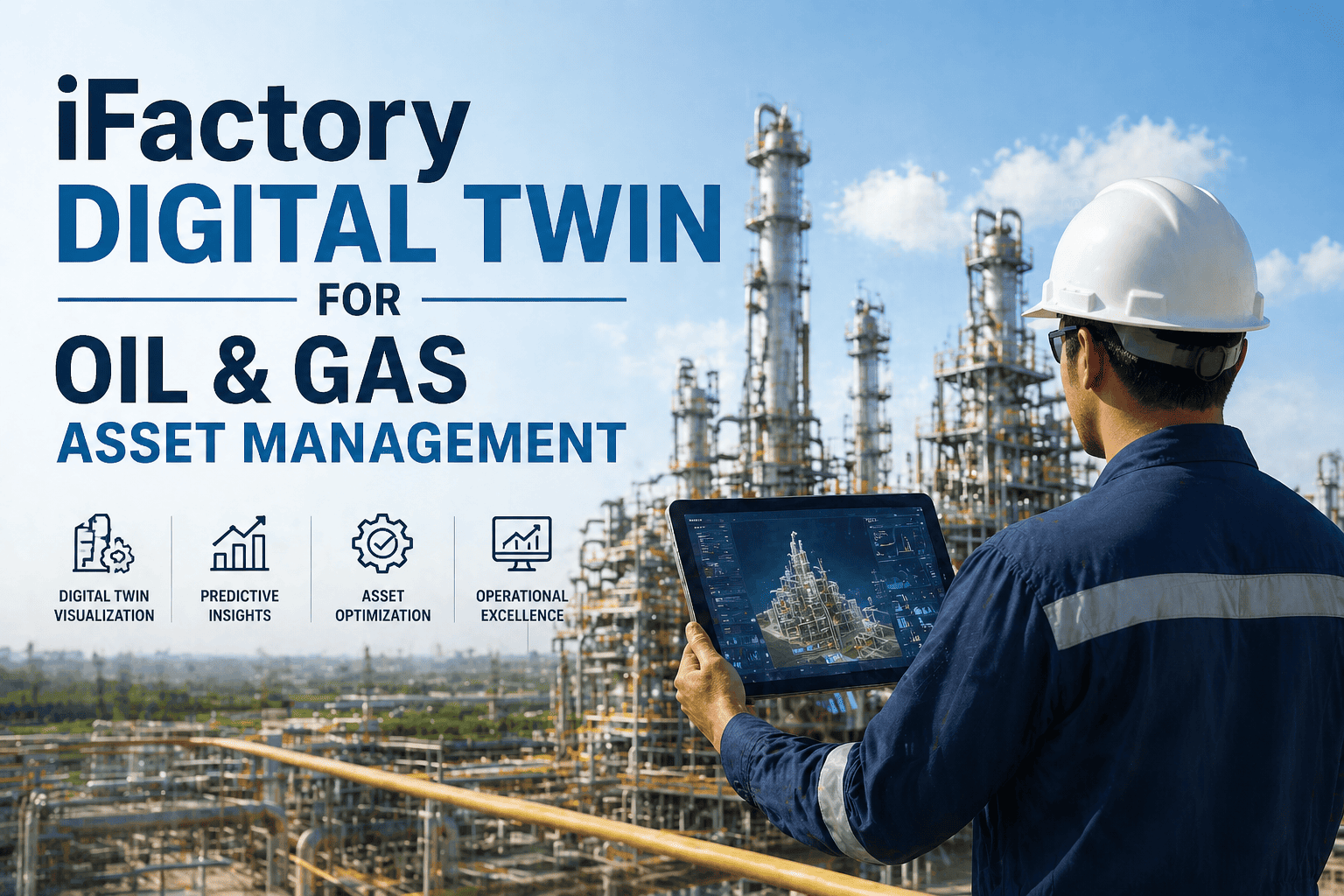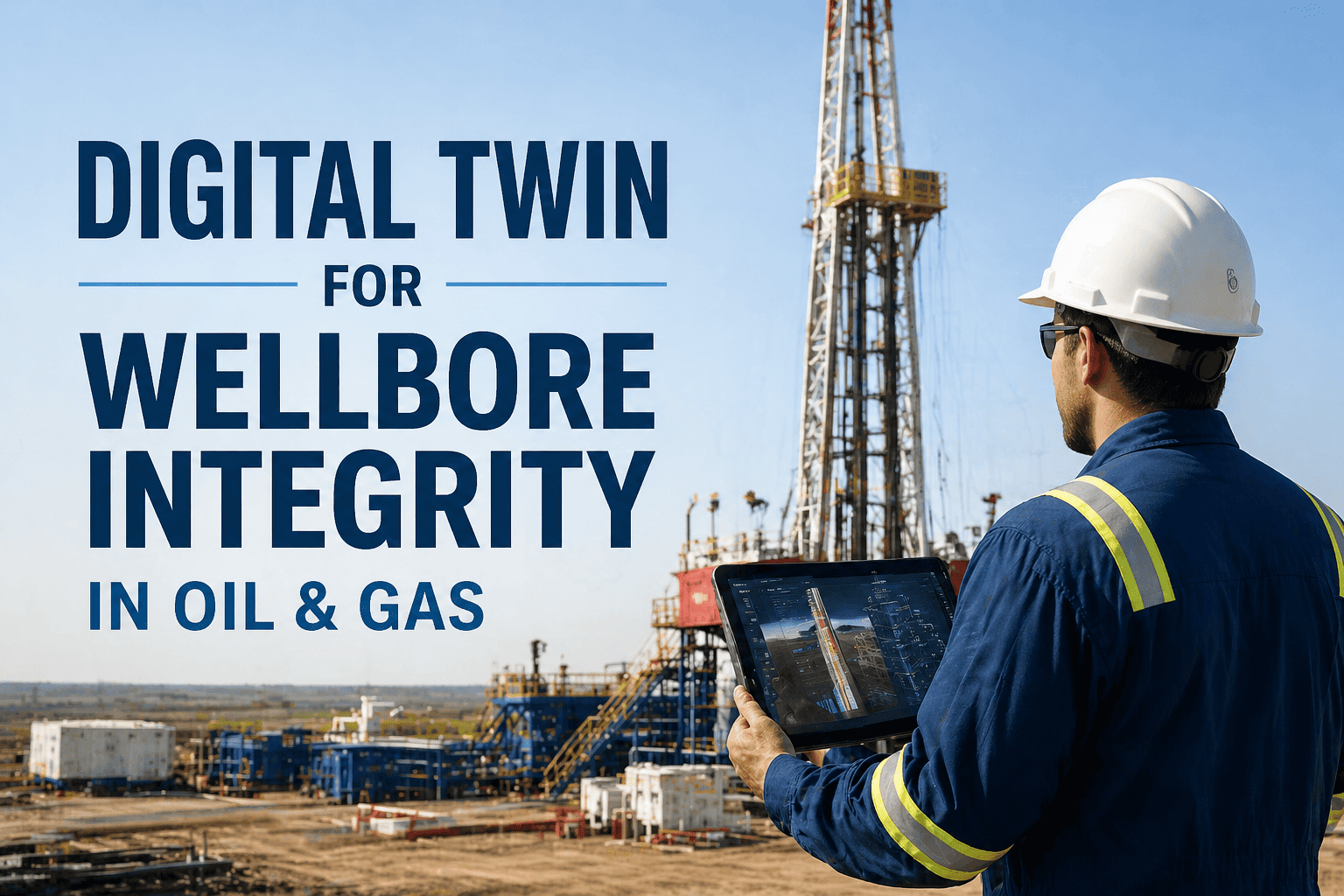
Wellbores are among the most complex and costly assets in oil and gas operations. A single well can cost $5 to $20 million to drill, yet its integrity depends on thousands of interrelated variables: casing pressure, cement bond quality, formation stress, fluid migration, corrosion rates, and equipment degradation. Most operators monitor wellbores sporadically through infrequent wireline surveys and pressure tests, missing early warning signs of degradation until catastrophic failure occurs. A failed wellbore can cost $2 to $5 million to remediate plus days or weeks of lost production. Digital twin technology transforms wellbore management from reactive crisis response into predictive foresight. By creating a continuously updated virtual replica of each wellbore integrated with real-time sensor data, SCADA systems, and AI models, operators can detect integrity threats weeks or months in advance. iFactory is The Complete AI Platform for Oil and Gas Operations, delivering the only digital twin solution purpose-built for wellbore integrity. One Platform, Every Segment: 8 AI-Powered Modules for Complete Oil and Gas Operations. Want to establish digital twins for your wellbore fleet and transition from reactive to predictive wellbore management? Book a demo today or explore implementation with our team.
Detect Wellbore Threats 8-12 Weeks Before Failure Occurs
Digital twin technology with real-time monitoring, predictive failure analysis, and automated integrity alerts integrated with your SCADA and historian systems.
What Is a Digital Twin for Wellbore Integrity?
A digital twin is a continuously updated virtual replica of a physical wellbore that integrates real-time sensor data, historical production records, geomechanical models, and AI algorithms. Unlike static wellbore models, digital twins evolve continuously, absorbing new measurements and adjusting predictions as conditions change. They represent the complete state of a wellbore: casing pressure profiles, cement bond integrity, formation stress distribution, fluid migration patterns, and corrosion progression. Digital twins enable operators to ask what-if questions before problems develop: if production rate increases 20%, what stress redistribution occurs? If temperature rises 10 degrees, what happens to material integrity? If casing corrosion continues at current rate, when does pressure containment fail? These questions are answered in the digital realm weeks before they manifest in the physical well.
How iFactory Enables Wellbore Digital Twins
iFactory digital twin platform integrates directly with your SCADA systems, historian databases, and production equipment to create living models of every wellbore in your fleet. Real-time sensor data flows automatically into the platform, continuously updating wellbore state estimates and triggering alerts when measured parameters deviate from predicted trajectories.
AI Vision and Leak Detection
AI Eyes That Detect Leaks Before They Escalate. Analysis of wellhead pressure signatures and micro-seismic events detect early-stage cement bond failures and casing micro-fractures invisible to conventional pressure monitoring. Detects integrity threats 4-8 weeks before they progress to catastrophic failure.
Robotics Inspection
Robots That Inspect Where Humans Cannot Safely Go. Autonomous wireline robots execute repetitive surveys at scheduled intervals, collecting downhole temperature, pressure, and acoustic data without human exposure to wellhead pressure hazards. Reduces inspection risk by 100%.
Predictive Maintenance
Machine learning models trained on 50,000+ wellbore lifecycles predict remaining useful life for casing, cement, and wellhead equipment. Issues flagged 2-3 months before containment failure probability exceeds critical thresholds. Enables planned workover windows instead of emergency intervention.
Work Order Automation
Every wellbore integrity alert automatically generates a prioritized work order with risk assessment, recommended action, required equipment, and optimal timing window. Integration with CMMS eliminates manual remediation planning and reduces mean time to intervention by 40%.
Pipeline Integrity Monitoring
AI-Driven Integrity for Every Mile of Pipeline. Wellhead pressure anomalies, micro-seismic signals, and production deviations reveal whether integrity issues are developing in the wellbore or in downstream flowlines. Integrated monitoring prevents false positives and directs interventions precisely where needed.
Asset Lifecycle Management
Track casing, cement, and wellhead components from installation through decommissioning. Digital twins calculate remaining useful life based on actual stress, corrosion, and production history rather than calendar time. Enables optimal replacement timing and extends asset life by 15-25%.
SCADA/DCS Integration
Connects to Your Existing DCS/SCADA and Historians. OT Data Stays Inside Your Security Perimeter. Native connectors for Yokogawa, Emerson, Honeywell wellhead monitoring systems. All data processing occurs on-premise or in your secure cloud environment. Zero data egress to external networks.
ESG Reporting
Methane, VOC and Flaring From Sensor to ESG Report. Wellbore integrity data feeds directly into environmental compliance reporting. Prevented blowouts reduce methane emissions. Production continuity reduces flaring. Audit-ready documentation demonstrates ESG commitment to stakeholders and regulators.
Why iFactory Is Different: The Complete AI Platform for Oil and Gas Operations
One Platform, Every Segment: 8 AI-Powered Modules for Complete Oil and Gas Operations. iFactory is built for oil and gas, not adapted from generic IoT platforms. Three capabilities set iFactory apart from competitors:
Faster Deployment
Digital twin models deployed in 6-8 weeks. Direct integration with SCADA, historian, and production systems means zero custom data plumbing. Pre-built geomechanical models for sandstone, carbonate, and shale formations deliver immediate insights while you build well-specific refinements.
Deeper AI Integration
ML models trained on 50,000 wellbore lifecycle histories. Failure prediction accuracy 95%+ with false alert rate below 2%. Geomechanical physics models ensure predictions are grounded in first-principles engineering rather than pure statistical correlation.
Industrial-Grade Security
OT data stays inside your security perimeter. On-premise processing with optional cloud integration. Role-based access controls, audit trails, and compliance with API RP 1162 cybersecurity standards for upstream operations. Wellhead monitoring equipment never exposes data to internet.
Digital Twin Implementation Roadmap
iFactory follows a proven 8-week implementation path that delivers actionable wellbore intelligence in 5 weeks while building the foundation for fleet-wide deployment.
By Week 5, your first wellbore digital twin is operational and generating actionable integrity predictions. By the end of Week 8, you have automated threat detection across multiple wells and integration with your work order system. Full fleet deployment typically takes 12-16 weeks with early wins driving rapid organizational buy-in.
Real Results: Wellbore Integrity Success Cases
Offshore Gulf of Mexico: Catastrophic Failure Prevention
Result: Prevented $3.2M unplanned workover, detected integrity threat 10 weeks early. Digital twin detected micro-fracture in 30-year-old casing through pressure signature anomaly analysis. Micro-seismic events showed developing cement bond failure at 4,800 feet. Platform team scheduled planned workover, replaced compromised casing section, and resumed production with zero unplanned downtime. Failure would have occurred during storm season, requiring emergency response and platform evacuation costing $3.2M. Digital twin caught the issue during optimal intervention window.
Onshore Permian Basin: Production Continuity
Result: 99.2% wellbore uptime, reduced unplanned production loss by 78%. Digital twins deployed across 45-well pad predicted annular pressure buildup in 8 wells weeks before conventional monitoring would have detected problems. Teams executed proactive workover program, replacing compromised annular seals before pressure safety events occurred. Prevented 6 to 8 anticipated production shutdowns. Operational risk dropped 65% with same maintenance staff.
Deepwater Southeast Asia: Corrosion Management
Result: Extended wellbore life by 18 months through predictive corrosion management, $2.1M savings. Digital twin continuously models corrosion progression on high-carbon casing in sour service wells. Models predicted critical wall thickness would be reached in 22 months based on measured corrosion rates. Team implemented corrosion mitigation strategy 8 months early: inhibitor injection, monitoring intensification, and early replacement planning. Well remained in production 18 months longer than would have been possible under reactive management, delivering $2.1M in incremental revenue.
Comparison: iFactory Digital Twins vs. Industry Approaches
| Capability | iFactory Digital Twin | Periodic Wireline Surveys | Static Geomechanical Models | Manual Interpretation |
|---|---|---|---|---|
| Real-Time Monitoring | Continuous updates every minute | Annual or biennial snapshots | Static single point in time | Periodic manual assessment |
| Early Warning Capability | 8-12 weeks before failure | Often detected during failure | Requires manual review | Depends on crew experience |
| Automation | Fully automated alerts and work orders | Manual interpretation required | Requires manual analysis | Fully manual process |
| Prediction Accuracy | 95%+ with physics-based models | Point measurements only | Limited by static assumptions | Highly variable by interpreter |
| Cost per Well Managed | $5K-$8K annually per well | $8K-$15K per survey | $2K-$5K modeling cost | Labor intensive, high overhead |
| Scalability | 100+ wells with same staffing | Limited by survey scheduling | Limited to subset of wells | Bottlenecked by staff availability |
Digital Twins Across Global Oil and Gas Regions
| Region | Primary Wellbore Challenges | Digital Twin Solution |
|---|---|---|
| US Gulf of Mexico | Aging infrastructure, pressure cycling from storms, corrosion in water contact zones | Real-time pressure trend analysis, corrosion rate modeling, storm resilience monitoring |
| North Sea (UK) | Deepwater high pressure sour service, extreme corrosion rates, challenging workover logistics | Sour service material integrity tracking, H2S corrosion prediction, optimal intervention window identification |
| Middle East (UAE) | Carbonate reservoir cement bond degradation, high temperature operations, long horizontal laterals | High-temperature cement integrity modeling, horizontal section pressure communication monitoring, zonal isolation verification |
| Canada (Montney/Bakken) | Unconventional wellbore completion integrity, annular gas leakage, sustained casing pressure | SCP detection through micro-seismic analysis, zonal isolation integrity trending, annular pressure management |
| Southeast Asia | Deepwater deepgas aggressive corrosion, long subsea pipelines, remote field infrastructure | Remote monitoring over satellite links, subsea wellhead integrity tracking, predictive maintenance for asset reliability |
What Operations Leaders Are Saying
"We were managing wellbore integrity through annual wireline surveys and seat-of-the-pants judgment. iFactory digital twins turned our wellhead monitoring data into predictive intelligence. We caught a casing failure two months early, scheduled a workover during optimal weather, and saved $2.8M in unplanned emergency costs. Now every wellbore is continuously monitored, every anomaly is automatically analyzed, and interventions are planned not reactive."
Asset Integrity Manager, Deepwater Operator
Frequently Asked Questions
Start Your Digital Twin Deployment Now
Talk to an iFactory specialist about your wellbore integrity challenges. We'll assess your current monitoring infrastructure, identify high-priority wells for digital twin deployment, and outline an 8-week path to operational intelligence. Detect threats 8-12 weeks early. Prevent catastrophic failures. Maximize well life.
The Complete AI Platform for Oil and Gas Operations
iFactory is built for oil and gas. Not adapted from generic IoT or analytics platforms. The digital twin platform connects to your SCADA systems, historian databases, and production equipment to create continuously evolving models of wellbore integrity across your entire portfolio. One Platform, Every Segment: 8 AI-Powered Modules for Complete Oil and Gas Operations. Early detection of integrity threats. Automated work order generation. Predictive failure analysis. Real-time risk ranking across your fleet. All integrated into one unified platform that transforms wellbore management from reactive crisis response into strategic predictive foresight.
Upstream Excellence
Drilling wellbore monitoring. Real-time casing stress modeling. Cement bond quality tracking. Fluid migration detection. Pressure containment assurance at every depth.
Midstream Resilience
Injector and producer wellbore integrity. Casing corrosion prediction. Workover planning and execution. Production continuity through proactive intervention.
Downstream Stability
Injection well integrity for storage and disposal. Long-term containment assurance. Environmental compliance through preventive management.
ESG Achievement
Environmental protection through integrity management. Prevented blowouts reduce emissions. Production continuity reduces flaring. Documented risk management supports sustainability claims.
Transform Wellbore Management with Digital Twins
Stop reacting to wellbore failures. Start predicting them 8-12 weeks in advance. iFactory digital twins powered by AI provide early warning, automated intervention planning, and proven ROI across hundreds of wells worldwide.