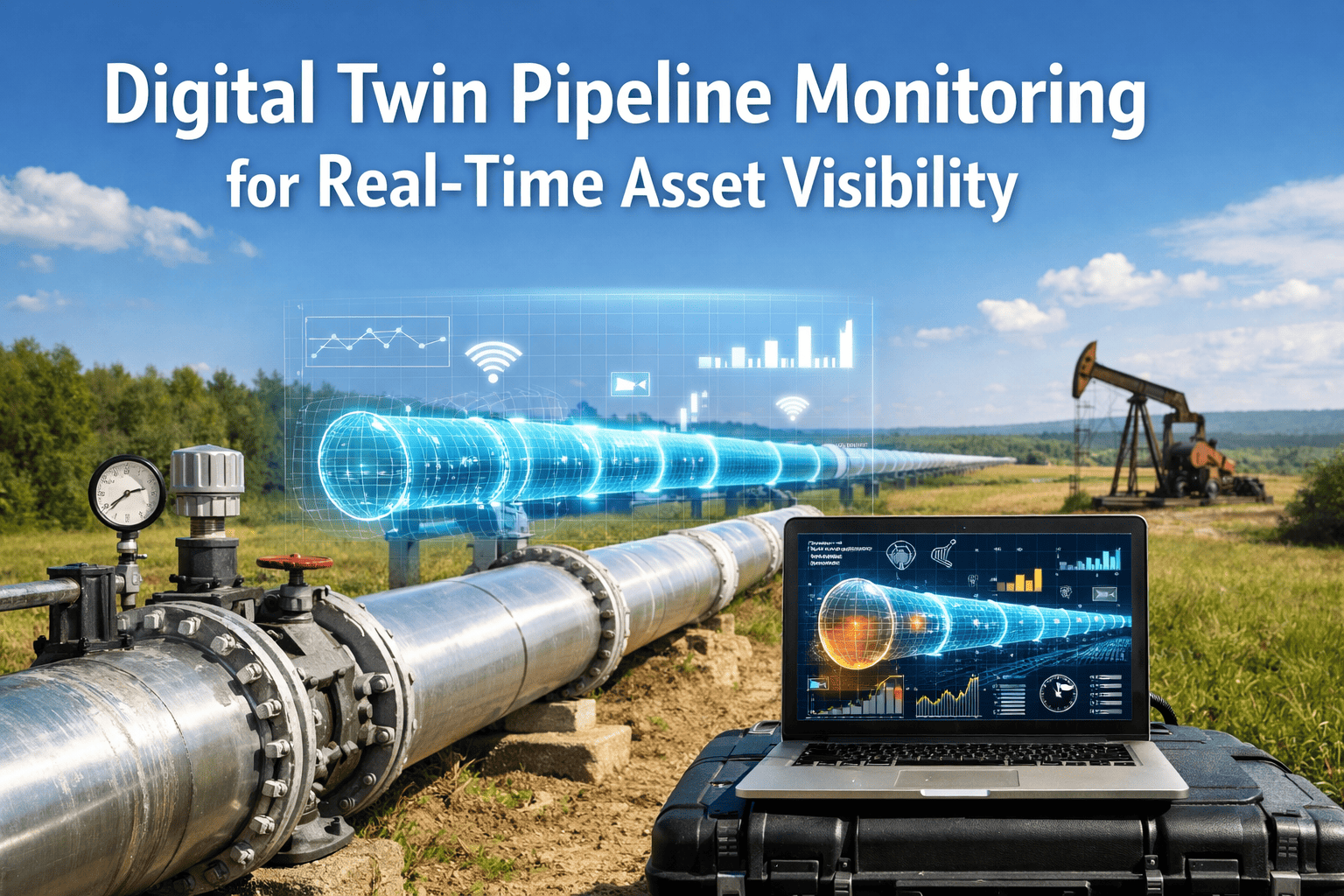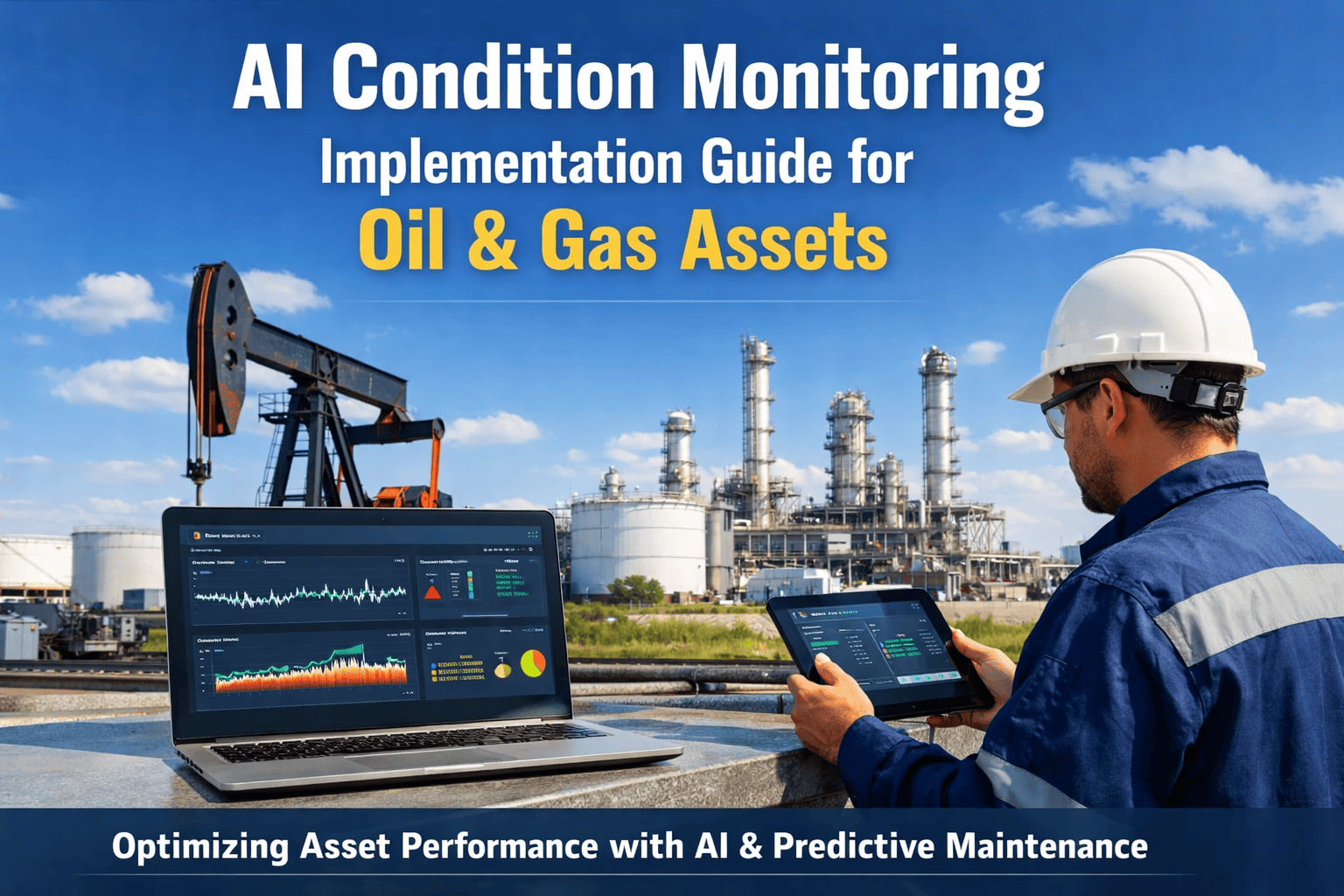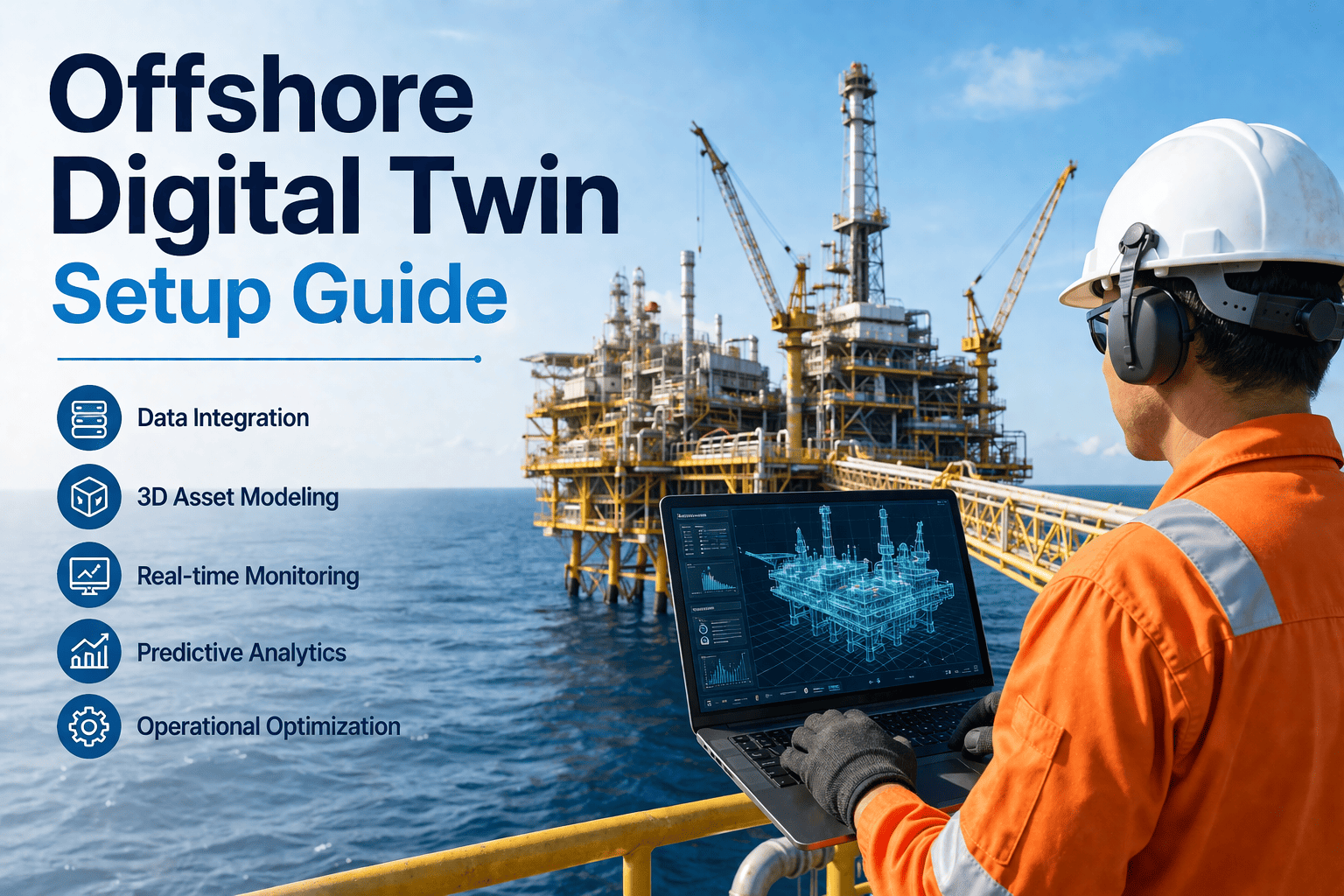
Offshore oil and gas platform operators face $8.2-18.4M annual cost penalty from lack of real-time asset visibility and predictive intelligence equipment failures detected hours or days after onset trigger emergency response costs 4-8 times higher than planned maintenance, unplanned production shutdowns cost $2-4M per day in lost revenue, and safety incidents from unmonitored equipment deterioration expose operators to regulatory penalties and operational disruption lasting weeks. Traditional offshore monitoring relies on manual SCADA alarm acknowledgment and weekly/monthly technician inspections disconnected from predictive failure analytics operators cannot identify failure patterns across separator systems, subsea equipment, flowlines and topside production equipment without integrating disparate sensor networks, historian databases, and maintenance records into a unified operational model. iFactory's offshore digital twin platform eliminates the 12-18 month build-from-scratch timeline through pre-configured sensor integration, pre-trained failure prediction models calibrated to offshore equipment classes, and cloud-based visualization architecture enabling operators to see real-time platform status and predictive asset health on day 1 of deployment — reducing equipment failure response time 60-75%, preventing unplanned downtime 35-50%, and enabling maintenance optimization 8-12 weeks ahead of scheduled intervention windows. Book a Demo to see how iFactory deploys a complete digital twin for your offshore platform in 12 weeks.
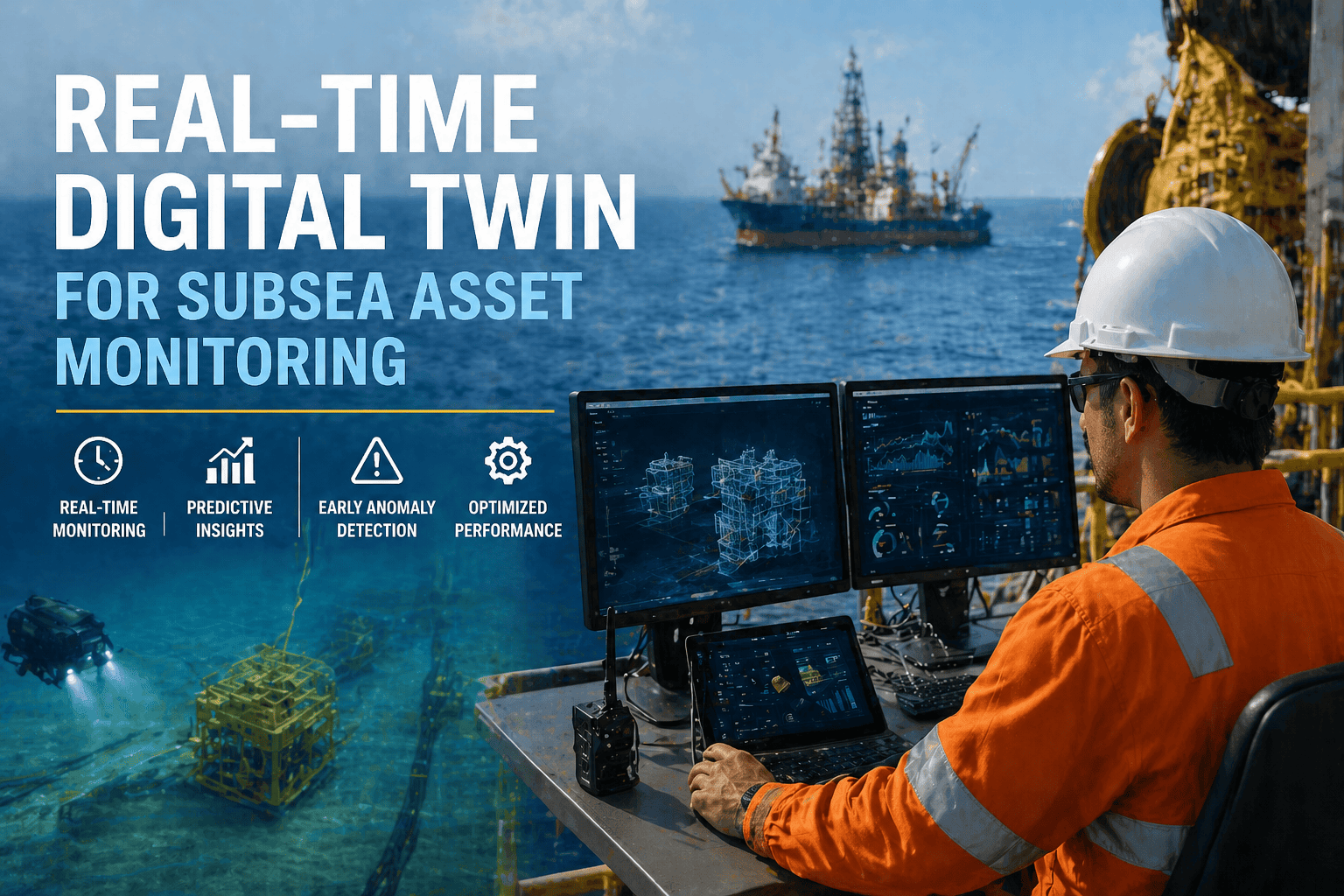
An offshore digital twin is a real-time virtual representation of your platform created by integrating sensor data from 1,000+ subsea and topside assets with production historians, equipment specifications, and maintenance records — enabling operators to monitor real-time equipment condition, predict failures 48-72 hours in advance, optimize maintenance planning, and prevent unplanned downtime. A complete digital twin deployment requires five stages: sensor inventory and data source integration, historian and SCADA connection, ML model training on equipment failure patterns, real-time visualization dashboards, and predictive alert configuration — typically requiring 12-16 weeks of effort if building from scratch or 12 weeks if using a pre-configured offshore digital twin platform.
Three Digital Twin Implementation Challenges Delaying Offshore Operators
These are not technology delays — they prevent operators from capturing $8.2-18.4M annual value from asset monitoring and predictive intelligence that could be deployed immediately. See the complete offshore digital twin deployment framework for oil and gas platforms.
Building offshore digital twin systems from scratch requires 6-9 months of requirements definition, sensor inventory mapping, historian database integration, and ML model development before operators see any visualization or predictive capability. Custom data integration work accounts for 40-50% of implementation timeline with teams manually defining sensor hierarchies, historian connection protocols, and data quality rules. By the time digital twin goes live, equipment has degraded and failures have occurred that predictive models would have prevented. 12-18 month delays mean assets continue unmonitored for over a year while value capture is delayed.
Offshore platforms contain 1,000+ sensors distributed across SCADA systems, DCS units, subsea production systems, and topside equipment that operate as disconnected islands. Production historians store time-series data in incompatible formats, maintenance records exist in ERP systems disconnected from real-time sensor data, and equipment specifications scattered across design documents and engineering databases. Correlating real-time sensor readings with equipment condition requires manually mapping sensor IDs to equipment tags, translating historian data formats, and joining maintenance records — work that extends timelines and introduces data quality gaps.
Generic ML models trained on industrial equipment fail to predict offshore-specific failure modes: separator performance degradation varies with wellhead pressure changes, flowline blockage risk depends on crude composition and temperature profiles, subsea equipment corrosion patterns follow ocean current and depth-specific physics, and compressor efficiency loss correlates with platform motion and ambient temperature. Developing offshore-specific prediction models requires 3-4 months of training on platform-specific historical failure data, validation against known failure cases, and tuning to local operating conditions — pushing implementation timelines 6+ months beyond initial data integration.
Step-by-Step Offshore Digital Twin Implementation
A complete offshore digital twin requires five sequential stages, each building on previous deliverables, moving from data integration through predictive intelligence to automated monitoring and optimization. Request the detailed offshore digital twin implementation roadmap for your platform configuration.
Stage 1: Sensor Inventory and Data Source Mapping
Foundation of any digital twin is comprehensive inventory of all assets generating real-time data. Conduct detailed sensor survey across platform identifying: subsea equipment sensors (pressure, temperature, vibration, flow), topside production equipment (separators, compressors, heaters, dehydrators), flowline and export pipeline sensors, wellhead monitoring systems, power generation and utility systems, and environmental sensors (temperature, corrosion potential, acoustic monitoring). Map each sensor to data source: direct historian connection, SCADA tag reference, or subsea telemetry link. Document sensor accuracy specifications, calibration status, and data transmission protocols. Create master equipment registry with specifications, installation dates, maintenance history, and failure mode documentation. Expected outcome: complete sensor inventory with 1,000+ mapped data sources and equipment specifications documented for ML model training.
Stage 2: Historian, SCADA, and DCS Data Integration
Connect digital twin platform to all real-time data sources via historian APIs, SCADA gateway connections, and DCS data bridges. Configure historian connections (OSIsoft PI, Honeywell PHD, GE Proficy) defining tag mappings from source systems to digital twin data model. Establish SCADA/DCS connectivity pulling live sensor readings at 1-second to 60-second intervals depending on sensor type. Import historical data from historians covering 2-3 years of production records enabling ML models to learn failure patterns and seasonal variations. Configure data validation rules detecting sensor failures, transmission errors, and data quality issues. Expected outcome: real-time sensor data streaming into digital twin platform from all sources with 95%+ data availability and historical data loaded for model training.
Stage 3: Equipment Condition Models and AI Failure Prediction Training
Develop ML models that correlate real-time sensor data with equipment failure patterns discovered in historical maintenance records. For each critical equipment class (separators, compressors, subsea equipment, flowlines), define failure modes and leading indicators: separator failure modes include gel deposition (viscosity increase), free water accumulation (conductivity spike), interface deterioration (viscosity and settling time combined signal), and foam collapse (surface tension changes). Train neural networks on 24-36 months of historical data identifying sensor patterns that precede failures by 48-72 hours. Models learn seasonal variations (temperature-dependent corrosion), operating condition dependencies (pressure-dependent compressor efficiency loss), and interaction effects (multiple equipment failures cascading from common root causes). Validate models against known failure cases ensuring 85%+ accuracy in predicting failures 2-3 days before production impact. Expected outcome: offshore-specific predictive models deployed for each equipment class with 85%+ accuracy predicting failures 48-72 hours in advance.
Stage 4: Real-Time Digital Twin Visualization and Asset Dashboards
Create interactive platform visualization showing real-time status of all critical assets with color-coded health indicators reflecting live sensor data and predictive failure risk. Dashboard hierarchy: platform overview showing overall asset health, zone views (topside production, subsea systems, export pipelines) showing equipment-level metrics and failure risk, and equipment detail views showing individual sensor readings, trend charts, and failure probability over next 48/72/168 hours. Integrate real-time production metrics (oil/gas rates, wellhead pressures, separator interface levels) enabling operators to correlate production performance with equipment condition. Display maintenance backlog and recommended intervention windows 8-12 weeks forward. Enable drilling into time-series data to understand sensor trends and anomalies. Expected outcome: real-time visualization accessible from onshore operations centers and offshore control rooms showing platform status and predictive asset intelligence.
Stage 5: Predictive Alerts, Maintenance Optimization, and Continuous Learning
Configure automated alerts when predictive models detect equipment moving into failure risk zones, triggering maintenance planning 48-72 hours in advance. Alerts include: equipment ID, failure mode prediction, probability of failure within 48/72/168 hours, recommended intervention timing, estimated spare parts requirements, and estimated intervention time. Integrate alerts into offshore work order systems enabling predictive maintenance scheduling against planned intervention windows reducing emergency response. Capture actual equipment performance post-intervention updating historical databases and retraining prediction models continuously improving accuracy. Track alert false positive rates and adjust model thresholds based on operational validation. Expected outcome: automated predictive alerts enabling maintenance teams to plan interventions 2-3 days in advance, reducing emergency response 60-75% and capturing optimization opportunities 8-12 weeks forward.
Complete Offshore Digital Twin. Live in 12 Weeks. Real-Time Predictive Intelligence on Day 1.
iFactory's pre-configured digital twin platform eliminates 6-9 months of custom data integration and ML training through pre-built sensor connectors, pre-trained offshore-specific failure models, and cloud-based visualization architecture. Deploy from concept to live prediction in 12 weeks with zero custom development required.
Why iFactory Digital Twin Deploys 6-9 Months Faster Than Custom Solutions
Most offshore digital twin projects build from scratch creating 12-18 month timelines. iFactory eliminates months of development through pre-built architecture, pre-trained AI models, and rapid deployment methodology. Compare iFactory's rapid deployment against custom digital twin build timelines at your organization.
| Capability | Custom Build-from-Scratch | iFactory Pre-Configured Digital Twin |
|---|---|---|
| Data Source Integration | 6-9 months. Manual mapping of historian tags, SCADA connections, DCS protocols. Requires custom data transformation middleware. Historian data cleaning and validation 2-3 months of effort. | 3-4 weeks. Pre-built connectors for OSIsoft PI, Honeywell PHD, GE Proficy, Siemens Historian. API-based integration requiring configuration not development. Automated data validation and quality rules. |
| Equipment Specification Database | 2-3 months. Manual data entry of 500+ equipment specifications from design documents, engineering drawings, and historical records. Multiple data sources requiring reconciliation. | 2-3 weeks. Pre-built equipment class library with 1,500+ offshore equipment templates. Specifications auto-populated from sensor tags and SCADA tags. Manual refinement for platform-specific deviations. |
| ML Failure Prediction Models | 4-6 months. Requirements definition, model architecture design, training on historical data, validation against failure cases, tuning to platform conditions. Multiple model iterations required. | 2-3 weeks. Pre-trained offshore-specific models for separators, compressors, subsea equipment, flowlines. Transfer learning on platform-specific historical data (3-4 weeks) fine-tuning models to local operating conditions. |
| Real-Time Visualization | 3-4 months. Dashboard design, frontend development, backend metrics calculation, optimization for latency and data refresh. Custom styling and user experience design. | 1-2 weeks. Pre-built dashboard templates with platform overview, zone views, equipment detail pages. Visualization configured not developed. Color schemes and KPI thresholds customizable. |
| Predictive Alerting and Integration | 2-3 months. Alert logic development, integration with CMMS/work order systems, API development, notification channels configuration, alert tuning and false positive reduction. | 1-2 weeks. Pre-built alerting rules with confidence thresholds. Integration templates for SAP, Oracle, and major offshore CMMS systems. Escalation workflows and notification channels pre-configured. |
| Continuous Learning and Retraining | Ongoing. Manual model retraining triggered by significant operational changes. 1-2 months per retraining cycle. Requires data science team dedicated to production model maintenance. | Automated. Models retrain monthly on new operational data. Model performance tracked automatically with drift detection alerts. Requires no data science team post-deployment. |
| Total Implementation Timeline | 12-18 months from requirements to live prediction. Equipment continues unmonitored for entire timeline. Failure prevention delayed while system is being built. | 12 weeks from project start to live prediction. Real-time asset visibility and predictive alerts operational within 3 months. Value capture begins immediately. |
12-Week Offshore Digital Twin Deployment Timeline
Every iFactory engagement follows a fixed 12-week deployment program with defined deliverables per week — ensuring operators see real-time asset visualization by week 4 and predictive failure alerts operational by week 8. Request the detailed 12-week deployment schedule for your platform configuration.
Real-Time Offshore Digital Twin. Live in 12 Weeks. Predictive Failure Intelligence by Week 8.
iFactory eliminates months of custom development through pre-built integrations, pre-trained AI models, and rapid deployment methodology. Deploy offshore digital twin technology in 12 weeks capturing $3.2-6.8M annual value immediately.
Use Cases and Results from Live Offshore Digital Twin Deployments
These outcomes are drawn from iFactory digital twin deployments at operating offshore platforms across three asset configurations. Each use case reflects 6-month post-deployment performance. Request the full case study report for the platform type and asset configuration most relevant to your operations.
Results Like These Are Standard for Offshore Digital Twin Deployment. Not Exceptional.
Every iFactory deployment is scoped to your specific platform configuration, equipment mix, crude characteristics, and operating environment — so you get digital twin optimization calibrated to your operational conditions, not generic offshore benchmarks.
What Offshore Operators Say About Digital Twin Deployment
The following testimonials are from operations and asset managers at offshore platforms currently running iFactory digital twin systems.
Frequently Asked Questions
Region-Wise Offshore Digital Twin Deployment Considerations
Offshore platforms face different regulatory frameworks, environmental challenges, equipment populations, and operational constraints across global regions. iFactory digital twin adapts to regional requirements while delivering consistent asset visibility and predictive intelligence.
| Region | Key Operating Challenges | Regulatory and Environmental Requirements | How iFactory Digital Twin Solves |
|---|---|---|---|
| Gulf of Mexico (US Sector) | Aging topside equipment with maintenance history spanning 20+ years, hurricane risk requiring frequent equipment inspections, high-complexity crude operations with production optimization challenges, skilled technician availability constraints | BOEMRE safety case compliance, operational safety data reporting, major accident risk assessment, well-specific operating limits, pipeline safety management plan requirements | Digital twin trained on decades of Gulf platform operational data learning equipment degradation patterns. Predictive maintenance identifies issues before catastrophic failure. Safety case compliance documentation automated. Equipment operating limit violations flagged preventing regulatory incidents. |
| North Sea (Norway, UK, Denmark) | Harsh environment (cold water, high pressure, ice risk), aging infrastructure with life extension programs, subsea assets with multi-week intervention timelines, strict HSE framework, decommissioning planning for aging fields | Norwegian PSA NORM regulation compliance, UK HSE management standards, offshore safety cases, environmental impact assessment, waste management plans, decommissioning requirements | Subsea-specific models predict equipment condition with lead times enabling planned intervention scheduling around weather windows. HSE documentation automatically generated from digital twin records. Decommissioning planning supported through complete asset condition database. |
| Southeast Asia (Thailand, Malaysia, Indonesia) | High-complexity crude (waxy, corrosive, sulfur-rich) requiring specialized management, tropical monsoon seasons impacting operations, remote locations with limited intervention capability, equipment and spare parts sourcing challenges, emerging technology adoption | Regional government safety standards, environmental protection requirements, local labor regulations, pipeline integrity management, production sharing agreement compliance | Digital twin trained on regional crude characteristics learning unique failure modes. Seasonal operating adjustments automated preventing monsoon-period failures. Remote operation capability enabled through excellent predictive intelligence. Spare parts forecasting 8-12 weeks in advance enabling supply chain optimization. |
| West Africa (Angola, Nigeria, Ghana) | Deep water operations with extended equipment timelines, political/operational risk, limited onshore support infrastructure, equipment reliability criticality high, production sharing agreement constraints | Deepwater production regulations, environmental conservation requirements, production sharing agreement production target requirements, emergency response and incident reporting | Deepwater-specific models account for extended intervention timelines and cost. Predictive alerts trigger maintenance planning months in advance. Equipment reliability optimization critical to production target achievement. Digital twin forecasting supports PSA compliance planning. |
iFactory vs Traditional Offshore Monitoring and Custom Digital Twins
Compare iFactory's rapid digital twin deployment against traditional manual monitoring approaches and slow custom build solutions.
| Approach | Real-Time Asset Visibility | Predictive Failure Intelligence | Deployment Speed | Maintenance Optimization | Total Cost of Ownership |
|---|---|---|---|---|---|
| iFactory Digital Twin | Complete real-time platform visualization with 1,000+ sensors integrated, live dashboard accessible from onshore/offshore, 4-week data integration to live visualization | Offshore-specific ML models predicting failures 48-72 hours in advance with 85%+ accuracy, automatic model retraining maintaining accuracy over time | 12 weeks from requirements to live prediction, pre-built connectors and models eliminate custom development, 6-9 months faster than custom solutions | Automated alerts trigger 2-3 day advance maintenance planning, spare parts forecasting 8-12 weeks forward, maintenance cost reduction 15-25% | $280-420K deployment cost recovered within 4-6 months, $3.2-6.8M annual value, 2-3 year payback on typical offshore platform |
| Manual SCADA Monitoring | Limited to SCADA alarm review without integrated visualization, requires operators to manually correlate multiple data sources, no cross-platform integration | No automated failure prediction, operators must identify failure patterns manually, response time measured in days/weeks after failures occur | Already deployed with existing SCADA systems, no implementation timeline | Reactive maintenance dominates, no advance planning capability, emergency response consumes maintenance budget 60-70% | Minimal technology cost but high operational cost from unplanned downtime and emergency response, no quantified ROI |
| Custom Build Digital Twin | Complete platform visualization possible but requires 6-9 months of data integration and custom development to achieve | Custom ML models require 4-6 months training on platform-specific data, accuracy uncertain until deployment, model maintenance requires dedicated data science team | 12-18 months from requirements to live prediction, significant custom software development required, lengthy requirements and design phases | Maintenance optimization possible once prediction models deployed but delayed 12-18 months from project start | $800K-1.5M development cost, 12-18 months before ROI begins, ongoing model maintenance costs 10-15% of development budget annually |
| Third-Party Consulting Services | On-demand asset assessment and monitoring studies provided by engineering firms, monthly or quarterly reporting cadence | Periodic failure risk assessments conducted by consultants, recommendations historical in nature, no real-time continuous prediction | 6-12 months for consulting engagement and study completion, recommendations may become outdated before implementation | Consulting recommendations for optimization, implementation responsibility falls to platform team, no continuous monitoring post-engagement | $150K-250K per engagement, ongoing consulting required for repeated studies, ROI depends on implementation of recommendations |