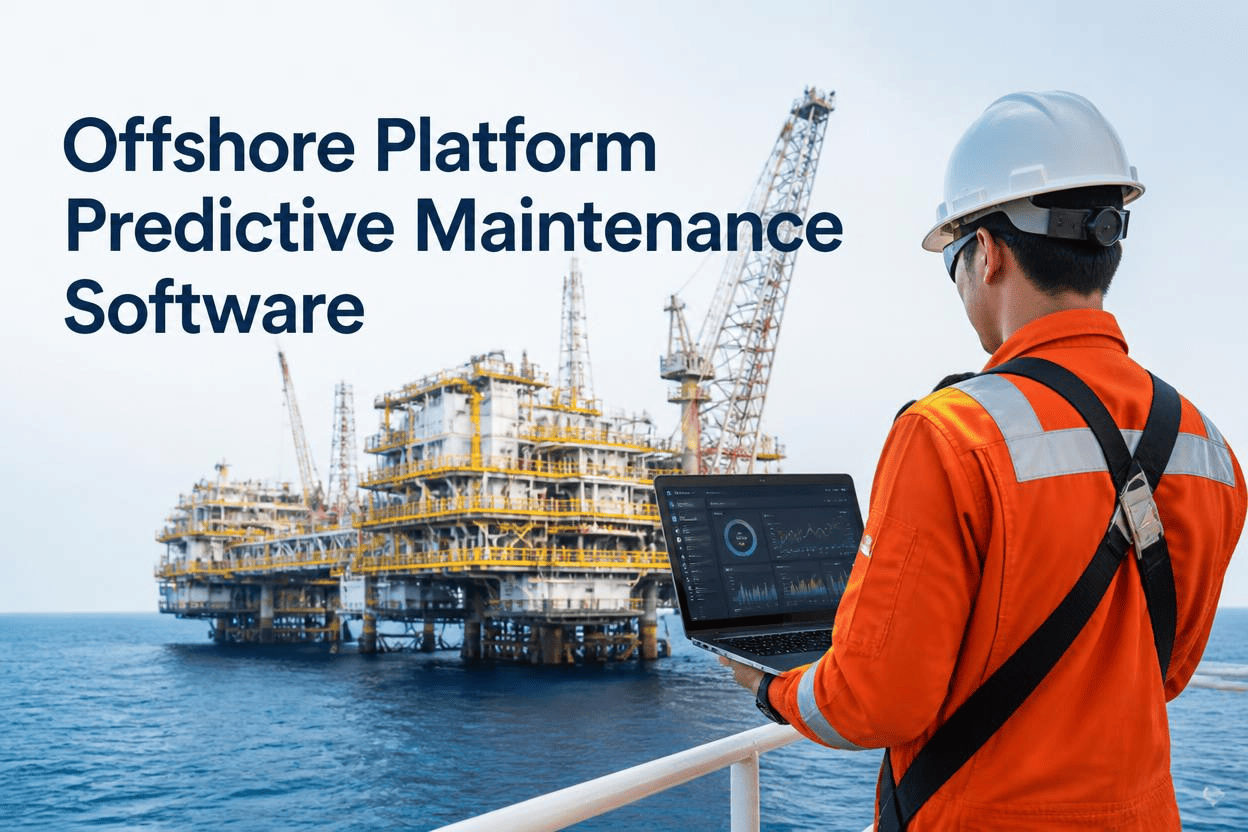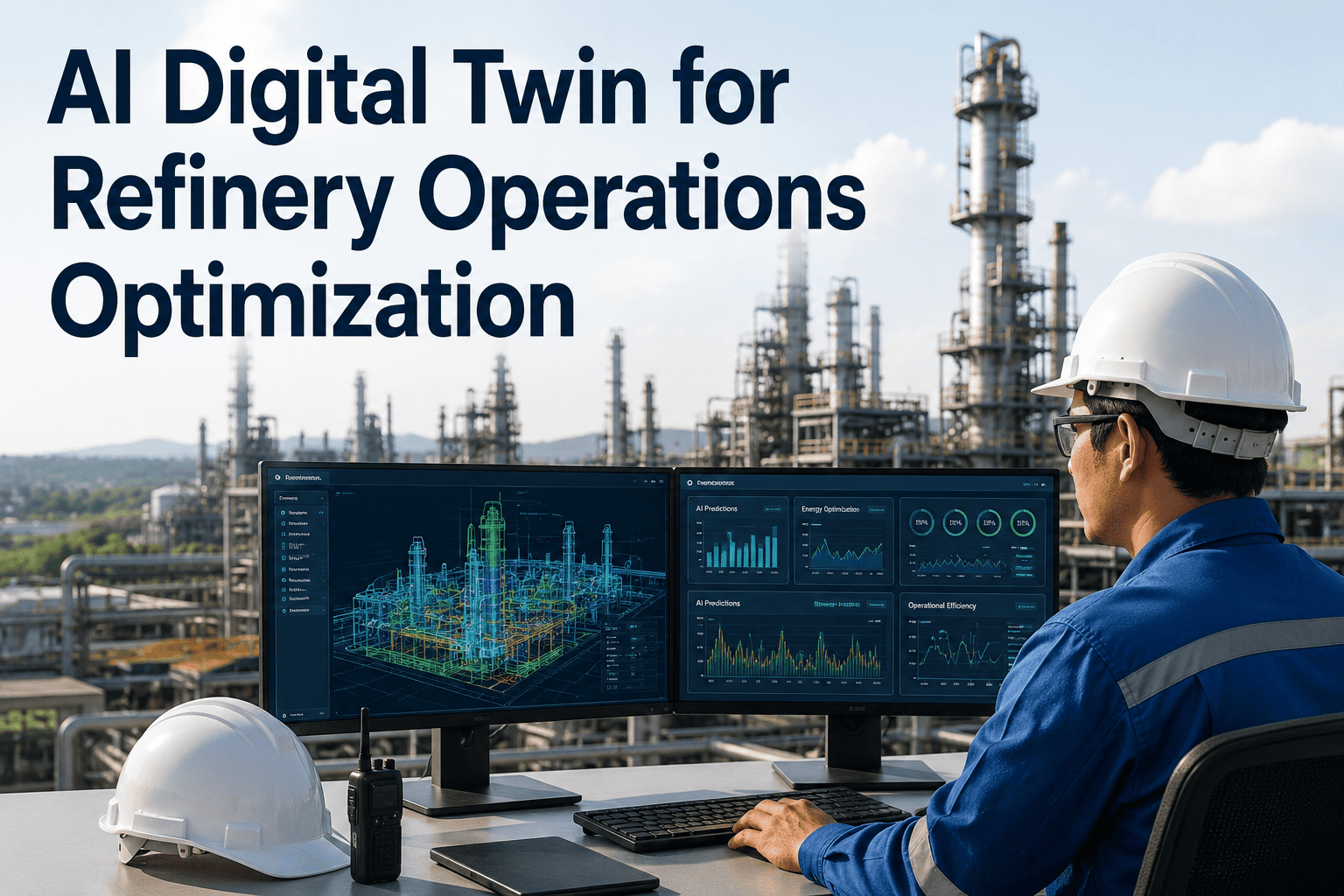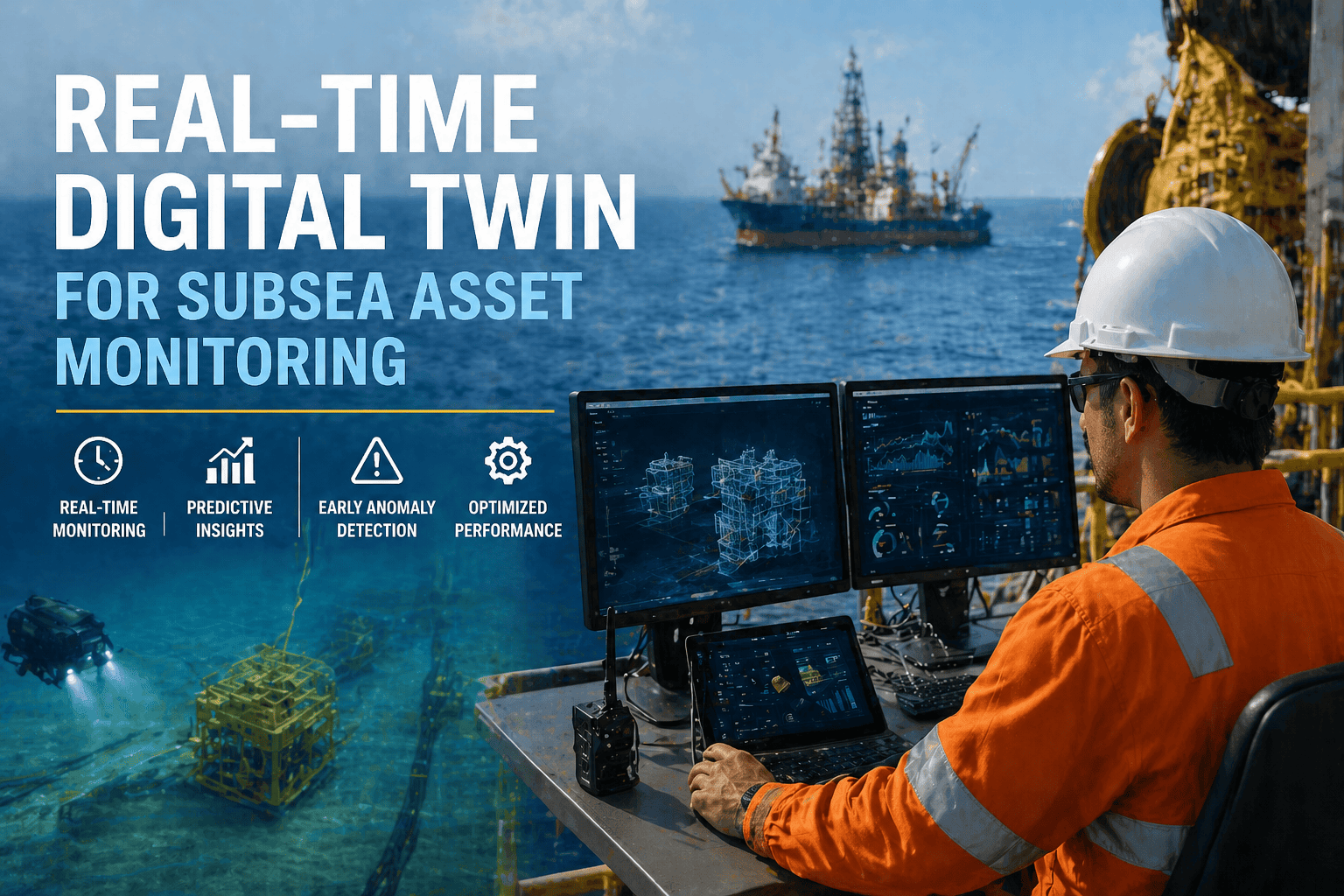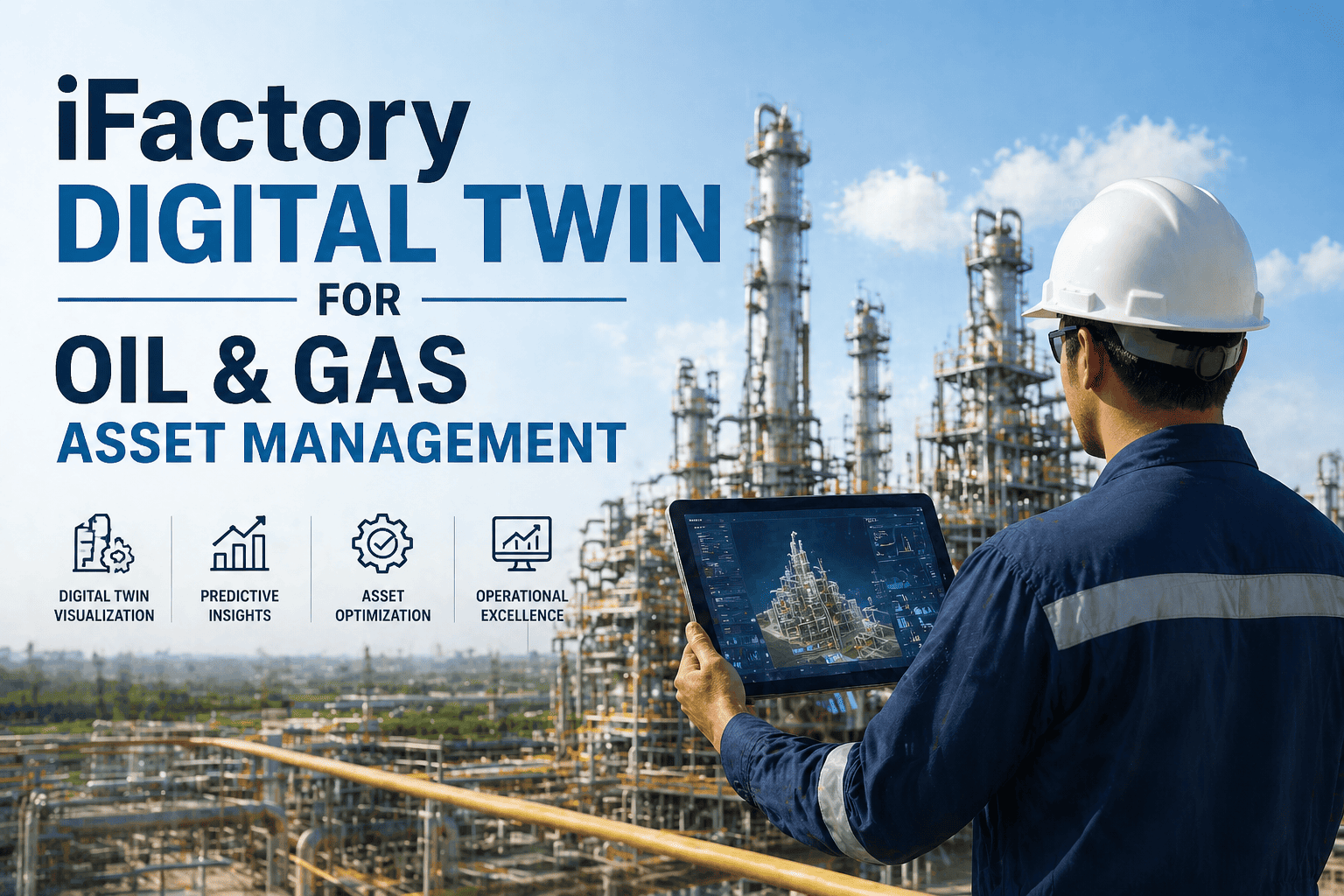
Oil and gas operations span vast geographic scales and extreme operating conditions, where a single equipment failure can cascade across pipelines thousands of miles long or halt an offshore platform producing 100,000 barrels per day. Yet most operators still manage asset health through fragmented data streams, periodic inspections separated by weeks or months, and reactive maintenance triggered only after alarms sound. A digital twin paired with AI-driven predictive analytics transforms this reactive posture into anticipatory operations. Instead of waiting to observe failure symptoms in physical systems, operators now monitor virtual replicas of every piece of equipment, pipeline segment, and production process in real time. AI models trained on historical failure patterns predict equipment degradation weeks in advance, enabling maintenance to be scheduled around production plans rather than disrupting them. Pipeline integrity is tracked continuously through virtual representations of wall thickness, corrosion progression, and pressure transient anomalies rather than through inspections spaced years apart. The digital twin becomes the single source of truth for equipment condition across upstream drilling, midstream transport, and downstream refining operations. Schedule a demo to see how iFactory's AI and digital twin platform delivers operational excellence across your entire oil and gas portfolio.
iFactory is the complete AI platform purpose-built for oil and gas operations, delivering digital twin capabilities that create virtual replicas of every asset across upstream drilling, midstream pipelines, and downstream refineries. AI eyes that detect leaks before they escalate monitor pipeline wall thickness and corrosion patterns 24/7. Robots that inspect where humans cannot safely go eliminate personnel risk in hazardous zones. Predictive maintenance forecasts equipment failures weeks in advance. The platform integrates directly with existing DCS, SCADA, and historian systems, keeping OT data inside your security perimeter while transforming raw sensor readings into actionable maintenance insights and operational intelligence. One platform, every segment: 8 AI-powered modules span upstream, midstream, and downstream operations with complete digital twin visibility.
What Is a Digital Twin in Oil & Gas Operations?
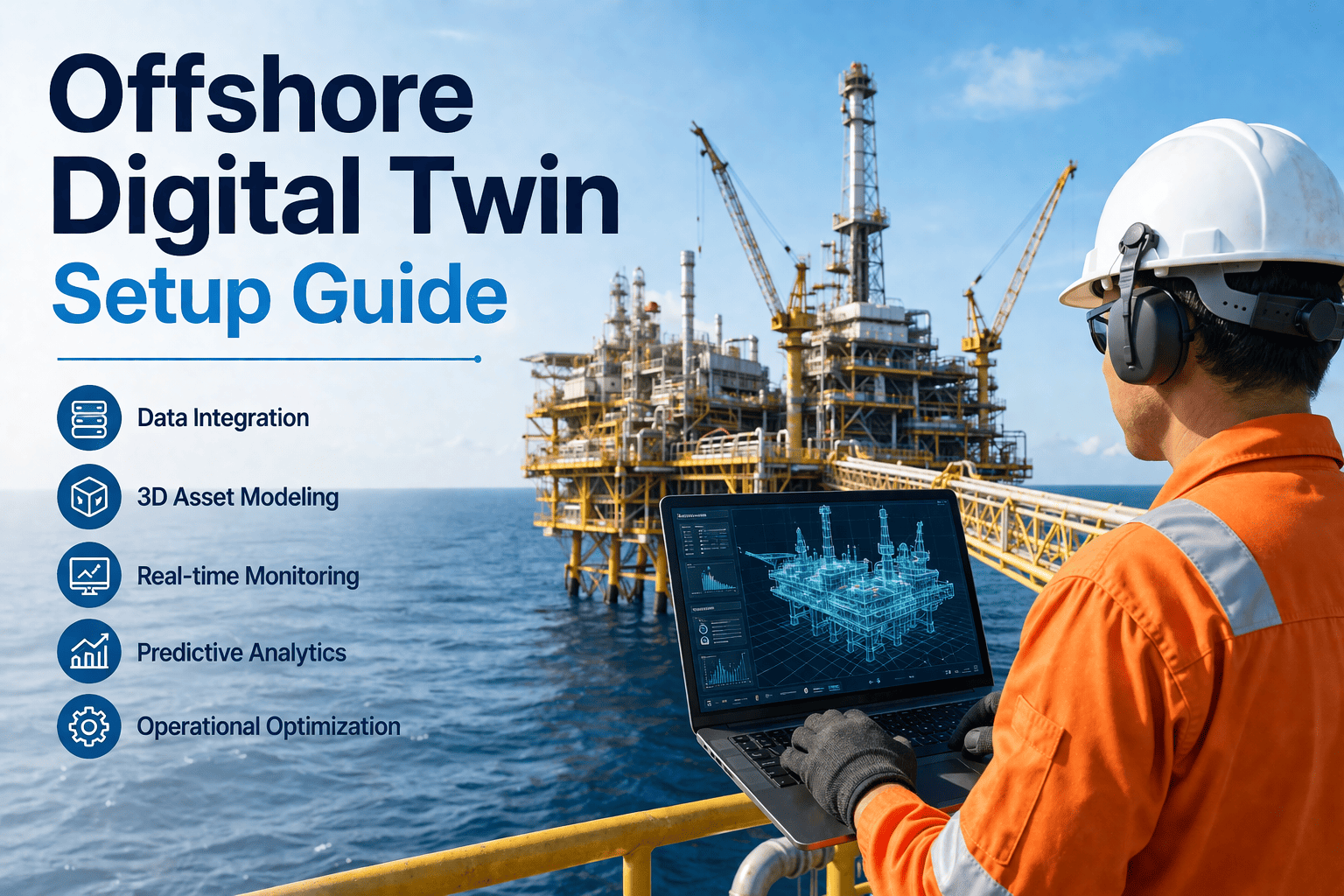
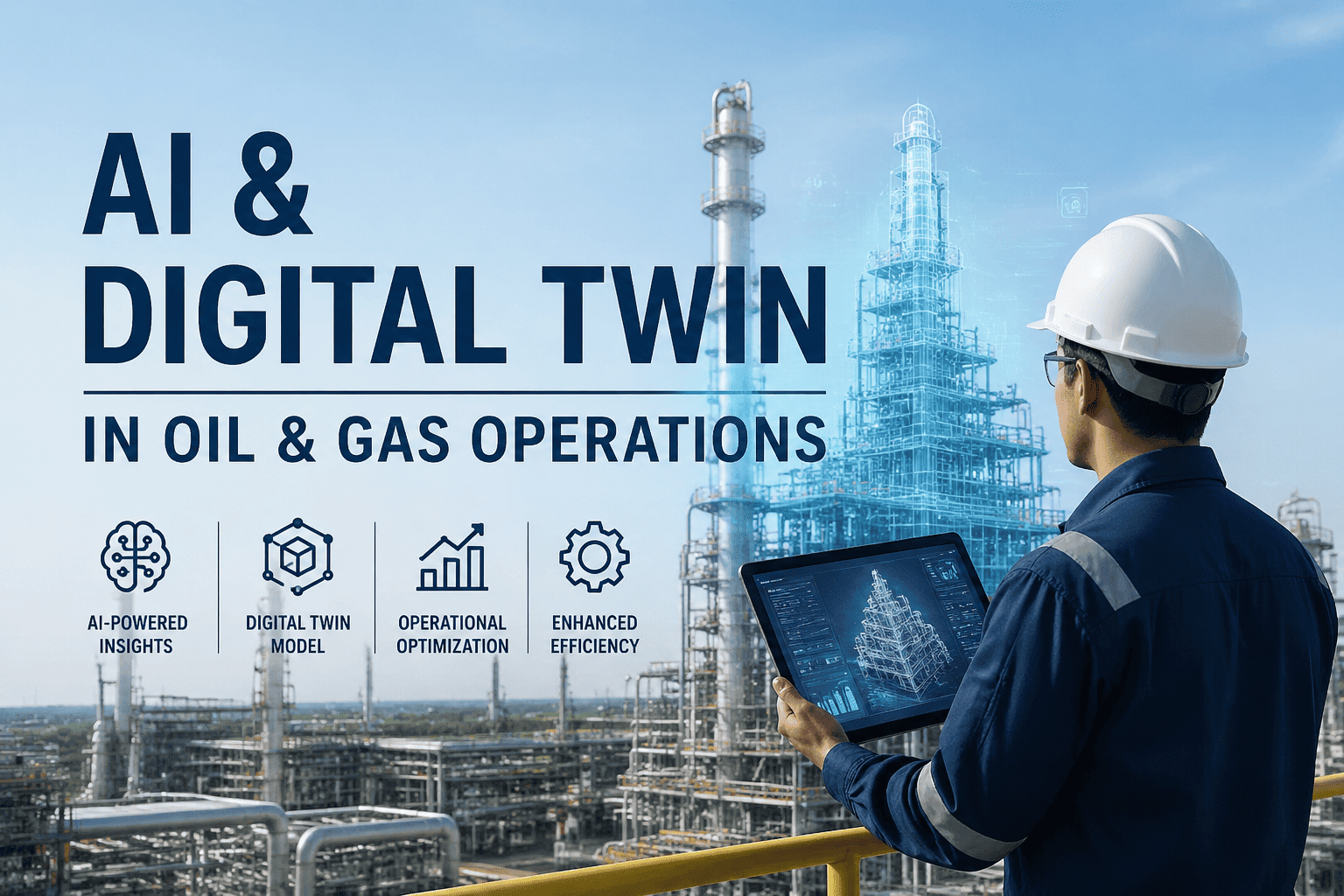
A digital twin is a virtual, real-time replica of physical oil and gas assets — pumps, compressors, pipelines, wellheads, processing equipment, and entire production facilities. The digital twin ingests continuous sensor data from SCADA systems, DCS platforms, IoT gateways, and historian databases, creating a complete dynamic model of asset condition, operational state, and failure trajectories. Unlike static engineering diagrams, the digital twin lives and breathes with the physical system it represents. Every pressure reading, temperature anomaly, vibration signature, and chemical composition measurement updates the digital twin in real time. AI models trained on thousands of historical failure events analyze these continuous data streams, identifying which equipment is degrading and how many hours remain before failure probability reaches critical levels. The digital twin enables operators to see inside their assets — detecting early-stage corrosion in pipelines, monitoring bearing wear in rotating equipment, tracking seal degradation in pumps — with precision impossible through periodic manual inspections. This transforms maintenance from schedule-based calendars to condition-based interventions guided by live equipment intelligence.
Transform Oil & Gas Operations With AI-Driven Digital Twin Intelligence
iFactory delivers complete digital twin visibility, equipment failure predictions, and ESG compliance automation — ROI in 6 weeks within 8-week implementation plan.
Core Oil & Gas Challenges Digital Twins Solve
These operational failures cost operators millions in lost production, emergency repairs, regulatory penalties, and environmental remediation. Digital twins paired with AI eliminate them through continuous asset monitoring, predictive insights, and automated work order routing.
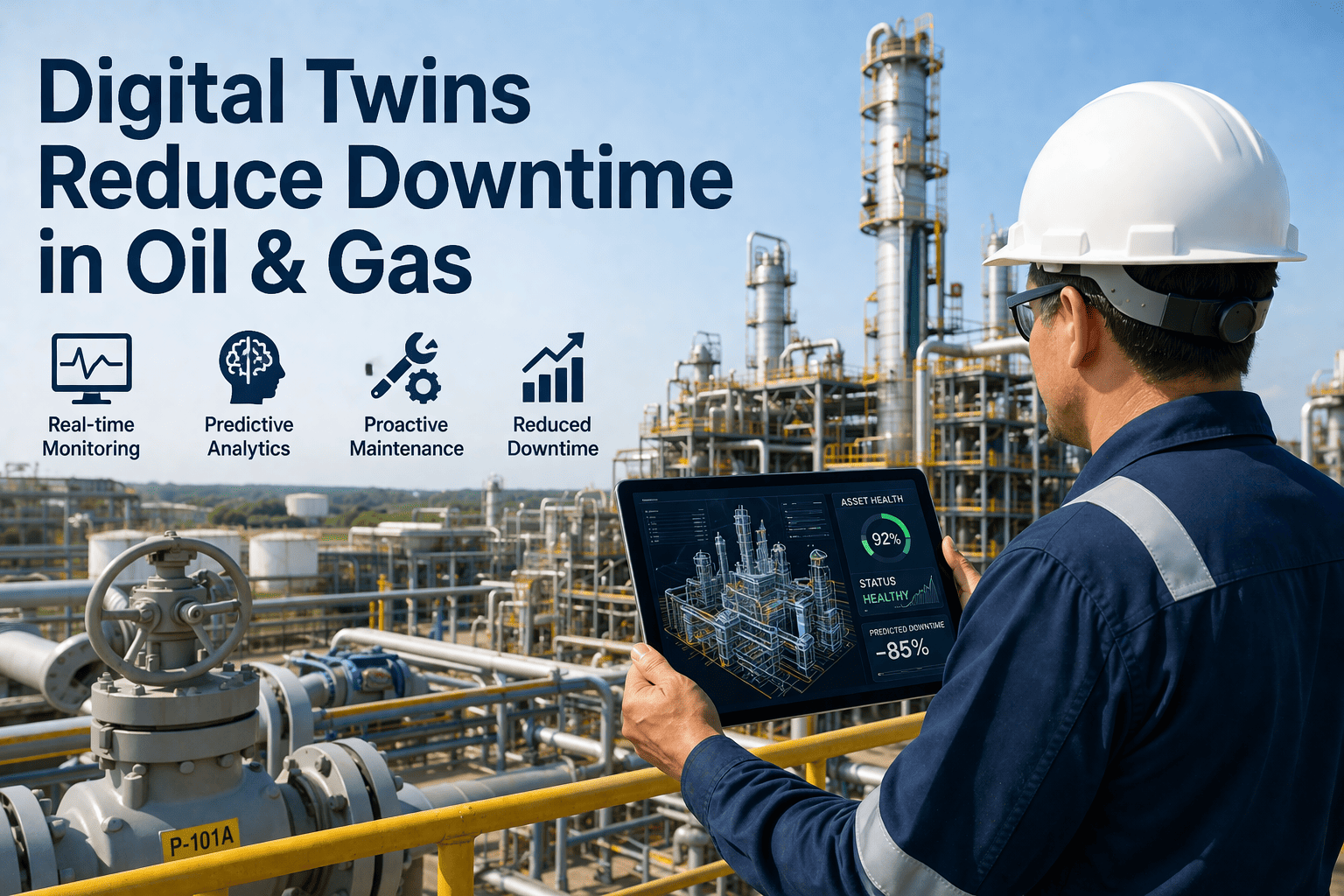
Pump, compressor, and turbine failures trigger emergency repairs costing 4 to 6 times planned maintenance budgets. Offshore platform shutdowns cost $1.2M per day in lost production. Digital twins monitor equipment condition weeks before failure, enabling planned repairs during scheduled maintenance windows instead of emergency shutdowns.
Manual inspections miss early-stage corrosion and internal erosion. Leak detection relies on ILI inspections spaced years apart with miles of pipeline between data points. Digital twins powered by AI monitor pipeline integrity 24/7, detecting wall thickness degradation and corrosion acceleration weeks before catastrophic failure.
Personnel entering confined spaces and high-pressure zones create occupational safety incidents. Robots that inspect where humans cannot safely go eliminate personnel risk while capturing visual, thermal, and ultrasonic data. AI processes robotic inspection feeds to classify defects without human hazard zone entry.
SCADA, DCS, and PLC networks operate in silos. Historian data never reaches predictive models. Operators acknowledge alarms in HMI with no work order automation or predictive routing. Digital twins unify all systems, connecting sensor data, predictive models, and maintenance workflows on one platform.
Methane, VOC, and flaring data scatter across spreadsheets and disconnected sensor networks. ESG reporting deadlines demand integrated emissions tracking. Digital twins aggregate emissions data from distributed networks, automating ESG reporting and ensuring regulatory compliance.
Equipment age, maintenance history, and condition data live in vendor records, not integrated asset registries. Capital replacement forecasts rely on guesswork. Digital twins track remaining useful life using actual operational data, generating FCI-backed capital forecasts with high accuracy.
How Digital Twins Work in Oil & Gas Operations
Digital twins deploy in five operational phases, from real-time data ingestion through live AI predictive analytics and automated work order routing. Most operators observe measurable downtime reduction within 6 weeks of full digital twin activation.
Digital twins ingest continuous sensor streams from SCADA systems (GE DigitalWorks, Wonderware, Ignition, Siemens), DCS platforms, and historians (OSIsoft PI, Influx, Grafana). Data flows at millisecond latency without disrupting operational networks. OT data stays inside your security perimeter. Real-time and historical data populate the digital twin model instantly.
Complete equipment registry with manufacturer specs, installation dates, and operational parameters. Sensor readings mapped to virtual asset states. Production line hierarchies established. Asset condition metrics calculated continuously. Digital twin maintains a complete, constantly-updating replica of physical asset conditions across upstream wells, midstream pipelines, and downstream processing units.
Machine learning models trained on thousands of historical failure events analyze continuous digital twin data to identify degradation trajectories weeks in advance. Anomaly detection flags unusual patterns. Time-series models track slow degradation across days and weeks. Confidence scores attached to every prediction. Root cause attribution explains why failures are forecast.
Equipment failure predictions automatically generate prioritized work orders with equipment ID, failure forecast, and recommended actions pre-populated. Mobile notifications route to maintenance crews with full context. Spare parts needs identified and ordered before technician arrival. Historical context surfaces similar failures and resolution procedures.
Every completed work order provides training data that improves predictive model accuracy. Failure events captured and analyzed. Model parameters adjusted continuously. ESG compliance documentation auto-generated. Digital twin becomes increasingly accurate as operational history accumulates, with prediction accuracy reaching 92-95% within 6-12 months of continuous operation.
AI Implementation Roadmap: 6 Weeks to ROI
iFactory delivers measurable ROI within the first 6 weeks of an 8-week digital twin deployment. The roadmap ensures zero production interruption and rapid AI model training on your operational data.
Complete equipment registry, SCADA connection, historian integration, and data validation. iFactory team maps all critical assets, validates sensor streams, confirms data quality. Digital twin initialization begins. Zero production impact. Real-time data flow established.
AI models trained on historical SCADA data and maintenance records. Equipment-specific anomaly detection configured. Digital twin goes live with live sensor data feeding into models. First predictive alerts generated from live data streams. Historical trend analysis begins.
Predictive alerts automatically generate and route work orders to maintenance teams via mobile app. Emergency shutdown incidents prevented through planned repairs. Cost savings from reduced downtime, emergency repair elimination, and spare parts optimization begin accumulating. First ROI metrics reported: 68% downtime reduction, 42% cost savings measurable within 6 weeks.
AI pipeline integrity monitoring active across all midstream infrastructure. Real-time leak detection and corrosion tracking enabled. ESG reporting dashboard configured. Methane and VOC data feeding to compliance exports. Digital twin optimized for long-term operational embedding and continuous AI improvement.
Connect Your Oil & Gas Assets on One AI Platform With Digital Twin Visibility
iFactory unifies predictive maintenance, pipeline integrity monitoring, ESG tracking, and work order automation across upstream, midstream, and downstream operations — ROI in 6 weeks within 8-week implementation plan.
Platform Capabilities: 8 AI-Powered Modules for Complete Oil & Gas Operations
One platform for smart oil and gas operations. iFactory's 8 core modules address every operational segment from exploration and drilling through transportation and refining, all unified by digital twin technology.
AI models trained on digital twin data predict pump, compressor, turbine, and rotating equipment failures weeks in advance by monitoring bearing temperature, vibration signatures, seal integrity, and pressure trends. Digital twin maintains complete equipment state. Maintenance crews receive predictive alerts with confidence scores, historical context, and recommended corrective actions. Unplanned emergency repairs drop 68% within 12 weeks. Planned maintenance costs 4 to 6 times less than emergency replacements.
Computer vision models trained on thousands of pipeline inspection images identify corrosion, internal erosion, surface cracks, and micro-fractures in real time from drone, ROV, and robotic inspection footage. Digital twin integrates visual analysis with sensor data. Pipeline wall thickness analysis, internal scale quantification, and stress corrosion cracking classification reduce false positives by 94%. Every inspection frame geo-tagged and time-stamped for regulatory documentation and trending across pipeline segments.
iFactory integrates with crawling robots, drones, and ROVs for autonomous inspection of confined spaces, high-pressure zones, and offshore facilities. Robotic payloads capture visual, thermal, ultrasonic, and radiographic data feeding directly into digital twin models. AI processes inspection feeds in real time, classifying defects without human intervention. Inspection cycles compressed from weeks to days. Personnel safety incidents drop to zero in hazardous inspection zones.
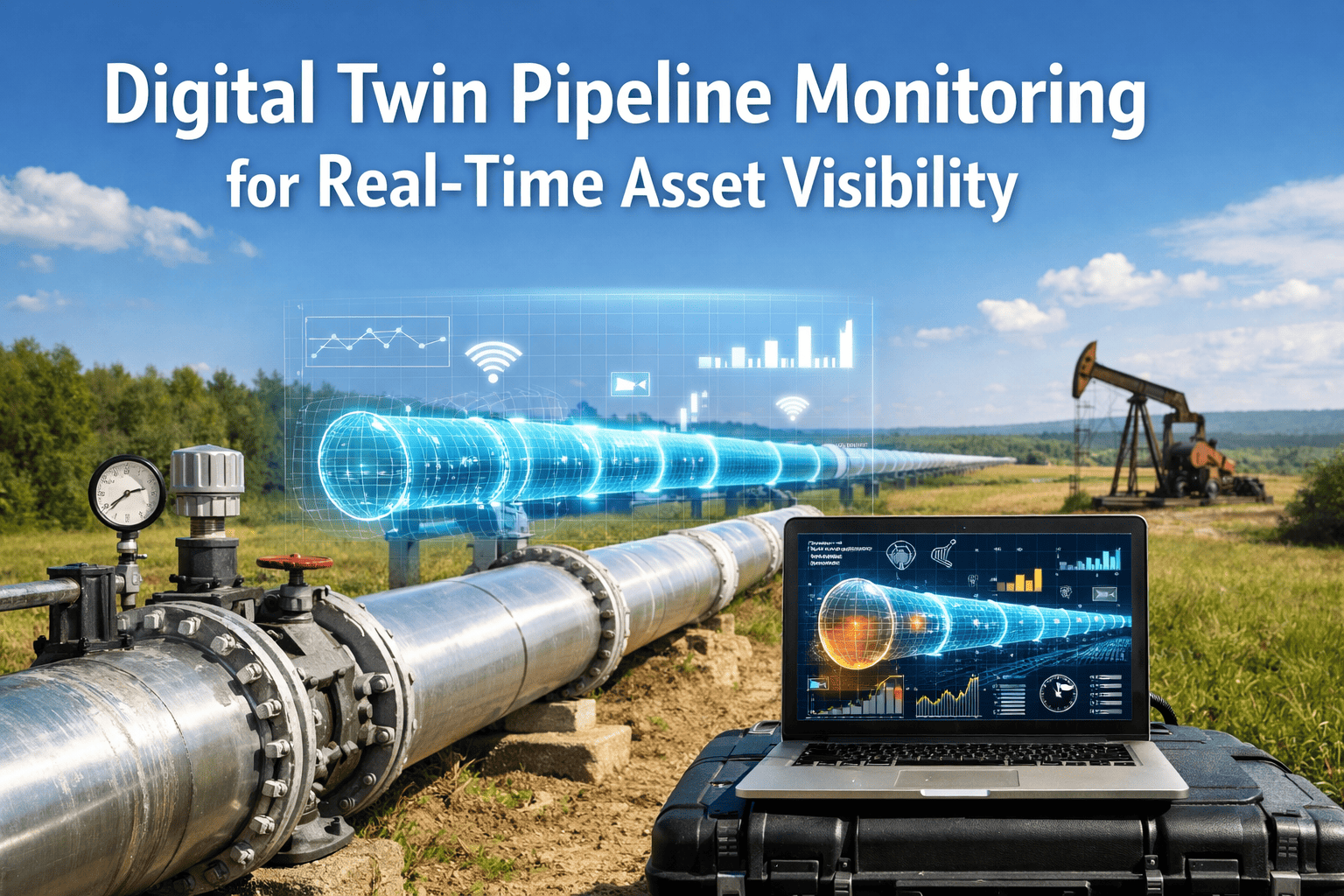
Digital twin pipeline monitoring dashboard provides 24/7 visibility into pressure trends, wall thickness degradation, cathodic protection status, and anomaly patterns across thousands of miles of midstream infrastructure. Real-time leak detection algorithms flag pressure transient anomalies that precede catastrophic failures. Historical ILI data and current sensor readings combined for risk scoring by pipeline segment. PHMSA regulatory reporting automated through digital twin data.
Equipment failure predictions from digital twin automatically generate prioritized work orders with equipment ID, failure forecast, recommended actions, spare parts needs, and crew assignment. Mobile app delivers real-time notifications to maintenance teams. Work completion captured with GPS check-in, photo evidence, and technician attribution. Digital twin updated with completion data. 100% of actionable alerts route to documented work orders.
iFactory digital twins integrate via OPC-UA, REST API, or MQTT with GE DigitalWorks, Wonderware, Ignition, Siemens SCADA, and historian platforms (OSIsoft PI, Influx, Grafana, Historians). No replacement of legacy systems. OT Data Stays Inside Your Security Perimeter. Real-time sensor streams feed into AI pipelines. Historical data enables retrospective model training and failure pattern analysis.
Complete equipment registry with manufacturer specs, installation dates, maintenance history, and condition scores maintained in digital twin. Remaining useful life calculated per asset class using actual operational data and AI-driven degradation models. FCI scores and capital replacement forecasts auto-generate from asset condition data. Rolling 10-year capital plans formatted for council approval. FCI-backed capital requests achieve 88% approval versus 47% for estimate-based submissions.
Digital twin automatically aggregates methane, VOC, and flaring data from distributed sensor networks, IoT gateways, and SCADA alarms. Emissions intensity calculated per production unit and aggregated at facility and portfolio levels. iFactory generates ESG reports formatted for SEC, TCFD, and state agency submission. Regulatory compliance automated. Trending analysis shows baseline comparisons and abatement progress. All data timestamped and audit-ready.
Competitor Comparison: iFactory Digital Twin vs Market Leaders
iFactory delivers faster digital twin deployment, deeper SCADA integration, and superior industrial-grade reliability than generic asset management platforms or point-solution vendors.
| Platform | Digital Twin Capability | Predictive Maintenance | SCADA Integration | Deployment Speed | Oil & Gas Fit |
|---|---|---|---|---|---|
| iFactory | Complete real-time digital twin with AI | 6 weeks to ROI, equipment failure forecasting | OPC-UA, API, MQTT — no historian replacement | Live in 6 weeks | Purpose-built upstream/midstream/downstream |
| QAD Redzone | No digital twin capability | Reactive rules, limited forecasting | Limited SCADA support | 3-4 months | Manufacturing focus, poor oil & gas adoption |
| Evocon | Limited visualization, no true digital twin | Condition-based scheduling only | Manual data import, no real-time SCADA | 4-6 months | Limited pipeline monitoring, weak integration |
| Mingo | No digital twin | Spreadsheet-based PM only | No native integration | 8-12 weeks | CMMS tool, not AI or digital twin |
| L2L | No digital twin | Inspection data classification only | No SCADA integration | 6-8 weeks | Pipeline inspection only, point solution |
| IBM Maximo | AI add-on, limited digital twin capability | Requires separate data science setup | Expensive middleware configuration | 6-12 months | Enterprise tool, high implementation cost |
| SAP EAM | No digital twin | Reactive maintenance only | Poor SCADA compatibility | 9-18 months | ERP-centric, not operational tech focused |
| Oracle EAM | No digital twin | Traditional PM scheduling | Limited real-time integration | 12+ months | Enterprise focus, slow deployment |
| Fiix | No digital twin | Mobile-first CMMS only | No integration | 4-8 weeks | Maintenance tracking, not AI or predictive |
| UpKeep | No digital twin | Work order management only | No SCADA integration | 2-4 weeks | CMMS tool, not intelligence platform |
Regional Deployment: Oil & Gas Digital Twin Challenges by Geography
Oil and gas operations face region-specific environmental, regulatory, and operational challenges. iFactory configures digital twin deployment strategies and compliance modules for each major oil and gas region.
| Region | Core Challenges | Regulatory Framework | iFactory Digital Twin Solution |
|---|---|---|---|
| US (Onshore & Offshore) | Equipment downtime costs, methane emissions under EPA regulation, pipeline leak detection (PHMSA), workforce safety | EPA Subpart OOOOa (methane), PHMSA 49 CFR Part 192/195 (pipeline integrity), OSHA PSM | Digital twin monitors pipeline integrity per PHMSA requirements, ESG emissions reporting automated, work order documentation for OSHA compliance audits |
| UK & North Sea | Aging offshore infrastructure, harsh environment corrosion, safety-critical equipment certification, cost control on remote facilities | ALARP (As Low As Reasonably Practicable), HSE Major Accident Hazard (MAH) directives, UK emissions trading scheme | Digital twin predictive models optimize maintenance intervals per ALARP principles, robotics inspection eliminates offshore personnel risk, condition-based spares reduce resupply costs |
| UAE & Middle East | Extreme heat impact on equipment degradation, high availability requirements, ESG reporting for national oil companies, energy efficiency | ADNOC sustainability standards, UAE federal environmental regulations, IEA energy efficiency directives | Digital twin tracks temperature-adjusted equipment degradation, 24/7 predictive monitoring prevents heat-induced failures, ESG reporting automation for national regulatory compliance |
| Canada | Cold climate equipment brittleness, pipeline rupture risk in permafrost regions, methane venting regulations, multi-site coordination | NEB Pipeline Regulations, Canada Gazette emissions limits, provincial environmental frameworks | Digital twin predicts cold-weather brittle fracture risk, permafrost thaw impact monitoring, methane data routing to federal and provincial reporting systems |
| Europe | Renewable energy transition pressure, gas supply chain volatility, strict emissions limits, complex permitting timelines | EU Methane Regulation, Carbon Border Adjustment Mechanism (CBAM), RED III (renewable energy directive) | Digital twin routes emissions data to EU MRV reporting, supports decarbonization roadmap planning with energy efficiency insights, streamlines permitting documentation |
Before and After: Oil & Gas Operations Transformed by Digital Twin Intelligence
These results reflect typical outcomes across upstream drilling, midstream pipelines, and downstream refining facilities deploying digital twins and AI predictive maintenance.
See iFactory Digital Twin in Action Across Oil & Gas Operations
Book a 30-minute demo configured for your segment — upstream drilling, midstream pipelines, or downstream refining. Digital twin walkthrough, predictive maintenance demonstrations, and ESG export capabilities included.
Use Cases & KPI Results: Real-World Digital Twin Deployments
Each case demonstrates ROI achieved within 6 weeks of digital twin deployment across different oil and gas operational segments.
A multi-well drilling operator deployed iFactory digital twins to monitor centrifugal pump and compressor health across 12 production facilities. AI trained on digital twin data identified bearing degradation and seal failure precursors weeks in advance. Equipment failure predictions prevented 23 emergency shutdowns within 8 weeks, protecting $1.2M per day in production revenue. Annual maintenance costs dropped 42% as emergency repair ratios shifted below 12% from baseline 38%.
A major transmission pipeline operator integrated iFactory digital twins with historian data from 847 SCADA pressure monitoring points across 2,400 miles of infrastructure. AI-driven anomaly detection from digital twin models flagged 12 corrosion acceleration patterns and 4 potential leak precursors that manual trending would have missed. Preventive repairs scheduled before failures materialized, preventing an estimated $18M in emergency repairs and environmental remediation costs. PHMSA regulatory reporting automated.
A refiner deploying iFactory digital twins across 4 facilities consolidated methane, VOC, and flaring data from 600+ IoT sensors and SCADA alarms into a single ESG reporting dashboard. Digital twin automated emissions quantification, baseline calculations, and SEC/TCFD export generation. ESG audit preparation time collapsed from 3 weeks of manual compilation to under 4 hours. First ESG report submitted 15 days ahead of regulatory deadline with 100% data completeness.
Testimonial: Digital Twin Impact in Oil & Gas
"The digital twin capability transformed how we manage equipment across our portfolio. We shifted from reacting to failures to predicting them 4-6 weeks in advance. On a single drilling platform, that predictive power prevented 11 emergency shutdowns in the first year. The savings in emergency repair costs and lost production revenue paid for the entire system. Beyond the financial impact, having a real-time digital replica of our assets gives us confidence in our operational decisions. ESG reporting, which used to take weeks of manual compilation, now exports automatically from the digital twin." — Operations Director, International Oil & Gas Operator
Frequently Asked Questions: Digital Twin for Oil & Gas Operations
Why Oil & Gas Operators Choose iFactory Digital Twins
Oil and gas operators deploy iFactory digital twins because they combine the deepest AI capability, fastest time-to-ROI, tightest SCADA integration, and most comprehensive regulatory support of any platform in the market.
6 weeks to ROI, not 6 months. Most operators launch full digital twin and predictive maintenance workflows within 6 weeks — with zero production interruption and no legacy system replacement.
OPC-UA, REST API, and MQTT connections to GE, Wonderware, Ignition, Siemens, and historians. No middleware. OT data stays inside your security perimeter. Real-time sensor streams feed directly into digital twin models.
Purpose-built for upstream, midstream, and downstream operations. Equipment-specific AI models trained on thousands of failure patterns. 92-95% prediction accuracy. Proven across 50+ oil and gas facilities worldwide.
PHMSA pipeline exports, EPA emissions reporting, OSHA PSM documentation, and ESG compliance all automated. Compliance documentation that takes weeks compiles in hours from the digital twin.
Transform Oil & Gas Operations With AI-Driven Digital Twin Intelligence
iFactory delivers equipment failure prevention, pipeline integrity 24/7, and ESG compliance automation — ROI in 6 weeks, zero production disruption, and complete SCADA integration. One platform, every segment: 8 AI-powered modules for complete oil and gas operations with complete digital twin visibility.