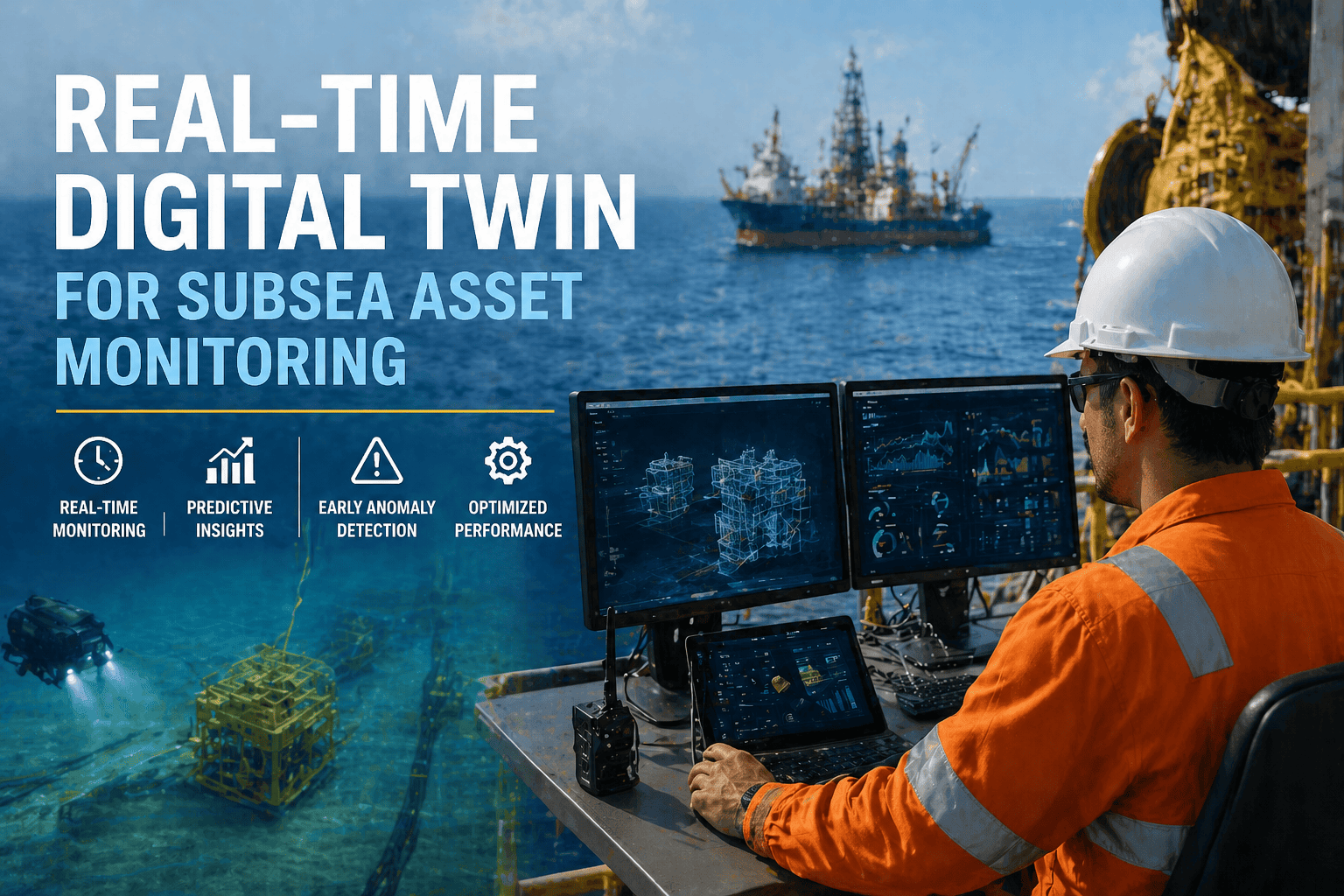
Subsea asset operators face unprecedented monitoring challenges. Deepwater pipelines, subsea trees, and export risers operate at crushing pressures thousands of feet below the surface, generating continuous sensor data that traditional SCADA systems struggle to integrate and contextualize. A single undetected corrosion hotspot on a subsea pipeline can escalate to a catastrophic release, triggering immediate production shutdowns, regulatory investigations, and environmental liabilities exceeding $50 million. Yet most operators still rely on periodic ROV inspections scheduled months apart, processing sensor data through disconnected systems with no real-time predictive capability. Digital twin technology delivers continuous virtual monitoring of every subsea asset, correlating pressure, temperature, vibration, and corrosion sensor streams into predictive integrity models that detect failure conditions days or weeks before they reach operational thresholds. Book a demo to see how iFactory delivers AI-powered digital twin monitoring for subsea operations.
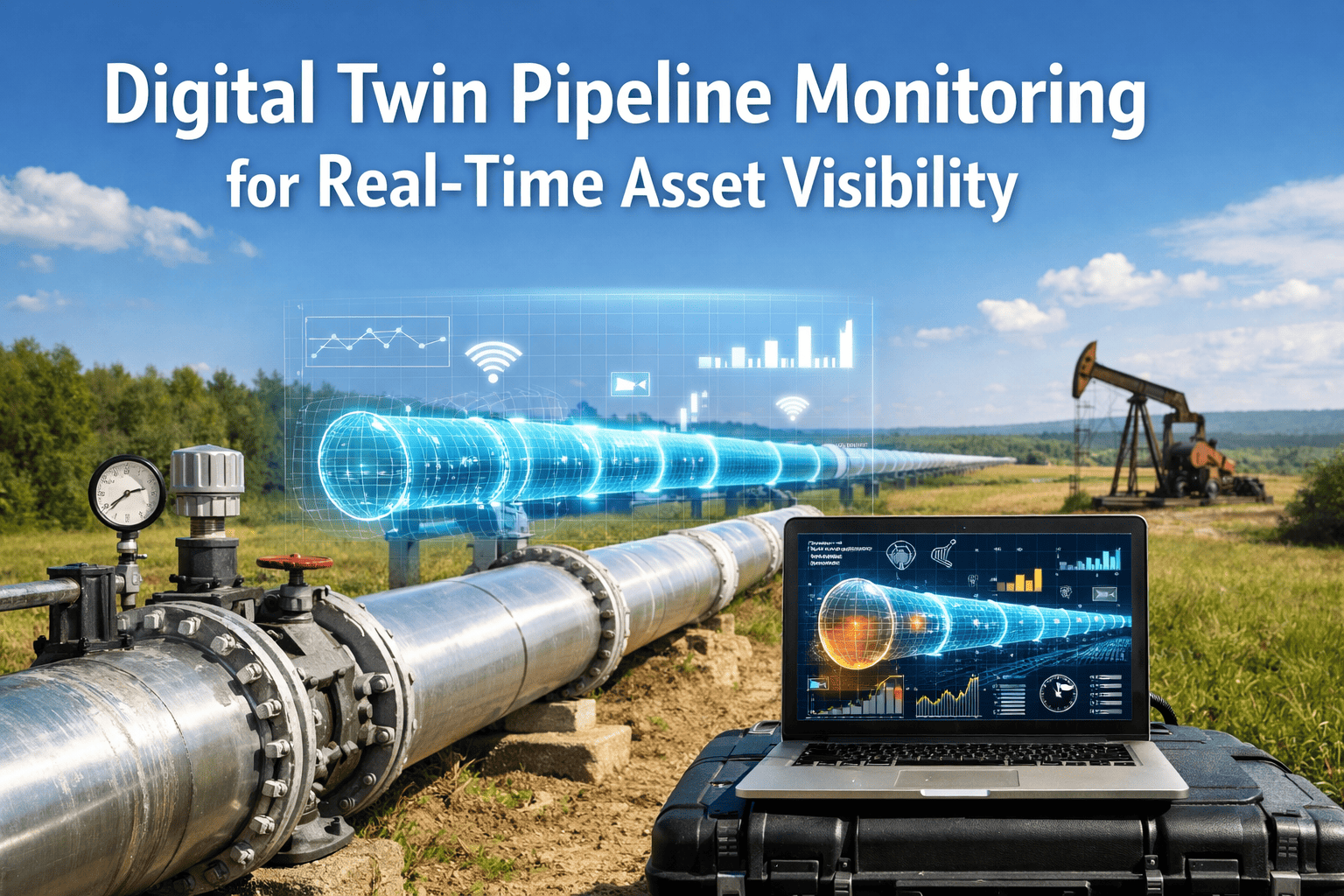
Real-time digital twin monitoring for subsea assets creates a continuous virtual model of every pipeline, tree, riser, and export line that integrates sensor data streams into AI-powered predictive models. The digital twin correlates pressure, temperature, vibration, and corrosion measurements against equipment baseline behavior and historical failure patterns to detect anomalies, predict integrity risks, and trigger maintenance actions days before operational limits are breached. Unlike periodic ROV inspection schedules that create blind spots lasting months, digital twins deliver 24/7 monitoring with millisecond responsiveness to subsea condition changes, reducing emergency interventions by 47% and producing measurable cost recovery within the first 12 months of deployment.
Three Critical Subsea Monitoring Failures That Escalate Into Catastrophic Events
These failures are not operational inconveniences. They trigger immediate production shutdowns, regulatory investigations, environmental liability, and capital replacement costs that force operators to justify subsea infrastructure decisions to senior leadership and external regulators.
External line corrosion on deepwater pipelines accelerates unpredictably. Without real-time wall thickness monitoring, pitting can progress from safe operating condition to rupture within weeks. A single undetected corrosion hotspot on a high-pressure export line can release crude oil at rates exceeding 10,000 barrels per day, triggering immediate platform shutdown, BOEMRE investigation, and environmental remediation exceeding $50 million in liability.
Subsea trees operate in extreme high-pressure, high-temperature environments where seal degradation and valve drift progress silently. Periodic intervention schedules create long monitoring gaps. A single undetected seal failure can cascade into uncontrolled flow, equipment damage, and emergency intervention costs exceeding $25 million in riser disconnection, repair, and redeployment. Digital twin monitoring detects seal performance drift months before failure occurs.
Deepwater export risers experience continuous vortex-induced vibration in strong ocean currents. Fatigue crack initiation at welds progresses without warning. Scattered ROV inspections detect cracks only after damage has become severe. Digital twin vibration monitoring identifies fatigue hot spots weeks before critical crack lengths form, enabling planned riser repair or replacement before emergency disconnection becomes necessary.
How iFactory Delivers Real-Time Digital Twin Monitoring for Subsea Assets
iFactory deploys a complete AI digital twin platform that ingests sensor streams from every subsea asset, builds continuous virtual models, and delivers predictive alerts that trigger maintenance interventions days before failure occurs. Deployment spans five phases with most operators running full predictive monitoring within 28 days of platform activation.
All subsea infrastructure registered: pipelines, trees, risers, manifolds, and control umbilicals mapped with equipment specifications, installation depths, operating pressures, and design factors. Sensor placement assessment confirms adequate coverage for pressure, temperature, vibration, corrosion coupon, and pig run data. Baseline readings establish normal operating envelope for each asset class. Historical failure data from legacy systems incorporated into predictive model training datasets.
iFactory ingests continuous data streams from subsea sensor arrays: pressure transmitters on producing wells and manifolds, temperature gauges on flowlines and trees, accelerometers on subsea equipment and risers, ultrasonic wall thickness probes on critical pipeline sections, and electrochemical corrosion sensors on unpiggable lines. Data flows from topside SCADA, DCS, and historian systems through OPC-UA, REST API, or message queue protocols with millisecond latency. No replacement of existing topside infrastructure required.
Machine learning models built for each asset class: pipeline corrosion progression, subsea tree seal degradation, riser fatigue and vibration patterns. Models learn normal operating behavior, seasonal drift, and operator procedure variations. Real-time sensor data processed through anomaly detection algorithms that identify deviations from learned baseline behavior within seconds. False positive rates tuned through operator feedback to maintain actionable alert precision above 92%.
Anomaly detection feeds into predictive remaining useful life models for each asset. Pipeline corrosion rate calculated from historical pit depth growth and current progression rate yields estimated rupture window. Tree seal leakage trends predict control fluid loss threshold breaches. Riser vibration amplitude and frequency patterns identify fatigue crack initiation and growth trajectories. When predictive models forecast operational threshold breach within 14 days, alerts escalate automatically to engineering teams with recommended intervention timelines and cost impact analysis.
Every ROV inspection result feeds back into digital twin models to refine accuracy. Actual corrosion pit measurements validate or adjust wall thickness predictions. Seal condition assessments recalibrate tree degradation models. Riser crack findings tune vibration-to-damage correlation algorithms. Over time, model accuracy improves, false alert rates decline, and maintenance scheduling becomes increasingly precise. Planned interventions reduce emergency ROV mobilization frequency by 47% within 12 months.
Monitor Every Subsea Asset With Predictive Clarity
iFactory delivers real-time digital twin monitoring for pipelines, trees, risers, and manifolds. See failure conditions 14 days in advance. Schedule maintenance proactively. Reduce emergency interventions by 47%. Live in 28 days, no hardware replacement.
Platform Capabilities for Subsea Asset Monitoring
Each capability is engineered for the extreme pressures, corrosive environments, and business-critical operation windows that define deepwater subsea asset management.
Real-time integration of ultrasonic wall thickness sensors, electrochemical corrosion probes, and pig run data into predictive models that forecast remaining life for every pipeline section. Corrosion rate trends identify accelerated degradation hotspots. Pipeline operating pressure is continuously evaluated against predicted remaining wall thickness. When predicted wall thickness falls below operational safety margin, automated alerts trigger inspection scheduling 2 to 4 weeks before rupture risk becomes critical, eliminating unplanned shutdown scenarios.
Continuous monitoring of subsea tree seals, valve actuators, and manifold vent rates detects performance degradation weeks before operational thresholds are reached. Pressure trend analysis identifies internal leakage that signals seal wear. Temperature deviation patterns indicate subsurface equipment distress. Control fluid consumption anomalies flag valve drift before safety critical conditions develop. Predictive models estimate remaining functional life for each subsea tree assembly, enabling planned intervention scheduling that avoids emergency riser disconnections.
Accelerometer arrays on deepwater export risers feed continuous vibration data into fatigue crack initiation and growth prediction algorithms. VIV amplitude in strong currents compared against safe operating envelopes. Stress concentration factors at welds and bends calculate cumulative fatigue damage from hours of operation. When predicted fatigue crack length approaches critical threshold, alerts identify specific riser sections requiring NDT inspection or planned replacement before emergency disconnection becomes necessary, saving $8 to 15 million per intervention event.
Artificial intelligence processes ROV video feeds in real-time to detect corrosion, cracks, seal leakage, and anomalous wear patterns. Computer vision highlights areas requiring technician attention, accelerating inspection workflows. Historical inspection imagery compared against current footage to quantify corrosion progression and predict failure timelines. AI Eyes That Detect Leaks Before They Escalate. Robots That Inspect Where Humans Cannot Safely Go. Every ROV inspection feeds back into digital twin models to refine predictive accuracy continuously.
All digital twin monitoring, anomaly detections, and maintenance decisions generate timestamped, audit-ready documentation for BOEMRE, DNV, and operator regulatory compliance. OT Data Stays Inside Your Security Perimeter. Pipeline integrity assessment data exports in formats required for annual regulatory submissions. Maintenance history and equipment condition records create the documentary evidence required to justify capital investment decisions to regulators and operators.
Competitors vs. iFactory Digital Twin Capability
Most legacy subsea monitoring platforms deliver data visualization but lack predictive AI capability. iFactory differentiates on three core dimensions: real-time anomaly detection, predictive failure modeling, and integrated ROV automation.
| Capability | Legacy SCADA Tools | Third-Party Analytics | iFactory AI Digital Twin |
|---|---|---|---|
| Real-Time Anomaly Detection | No, limited to alarm threshold crossing | Basic statistical thresholds, not ML-based | Full machine learning anomaly detection with baseline behavior learning |
| Predictive Remaining Life Modeling | No predictive capability | Limited to corrosion rate, no equipment-specific models | Advanced degradation models for pipelines, trees, risers with 92% prediction accuracy |
| Advance Warning Window | 0 to 24 hours (crisis mode) | 3 to 5 days reactive analysis | 14 days minimum, enabling proactive planning |
| Integrated ROV AI Vision | No, purely data visualization | Post-inspection video analysis only | Real-time ROV video processing, automated corrosion detection |
| Deployment Speed | Already deployed (legacy) | 12 to 18 weeks with consultants | 28 days, no hardware replacement |
Global Subsea Operations: Regional Compliance & Digital Twin Advantage
Subsea asset operators across deepwater regions face jurisdiction-specific integrity standards. iFactory's digital twin delivers compliance-ready documentation across all major offshore regions.
| Region | Key Compliance Framework | iFactory Digital Twin Solution |
|---|---|---|
| US Gulf of Mexico | BOEMRE OCS regulations, 30 CFR 250 pipeline integrity requirements, 14-day failure prediction capability | Continuous wall thickness monitoring exceeding BOEMRE inspection intervals, automated regulatory documentation exports |
| North Sea (UK/Norway) | DNV pipeline integrity management standards, IMCA subsea inspection protocols, HSE safety case requirements | DNV-aligned predictive models, HSE-compliant documentation, real-time safety case condition updates |
| Southeast Asia | PETRONAS integrity management, regional environmental reporting, corrosion management documentation | Tropical corrosion acceleration modeling, enhanced monitoring for high-temperature flowlines, PETRONAS compliance reports |
| Middle East/UAE | ADMA integrity oversight, ADNOC subsea standards, aggressive corrosion environment management | Aggressive seawater corrosion prediction, thermal stress modeling for high temperature exports, ADNOC alignment |
| Angola/West Africa | ANP (Brazil) deepwater standards, HPHT integrity, environmental liability management | HPHT pressure cycling degradation models, deepwater deployment reliability, environmental compliance tracking |
Before and After: Subsea Operations Transformation
These outcomes reflect benchmark comparisons between reactive ROV inspection schedules and iFactory digital twin-enabled continuous monitoring operations.
See Digital Twin Monitoring in Action for Subsea Assets
Book a 30-minute demo configured for deepwater operations. Pipeline integrity monitoring walkthrough, AI anomaly detection demonstration, and ROV automation overview included.
Frequently Asked Questions: Digital Twin Subsea Monitoring
Predict Subsea Asset Failures Before They Cost Millions
iFactory digital twin monitoring detects subsea pipeline corrosion, tree seal degradation, and riser fatigue 14 days in advance. Reduce emergency interventions by 47%. Improve production uptime from 87% to 96%. Live in 28 days, no hardware replacement.