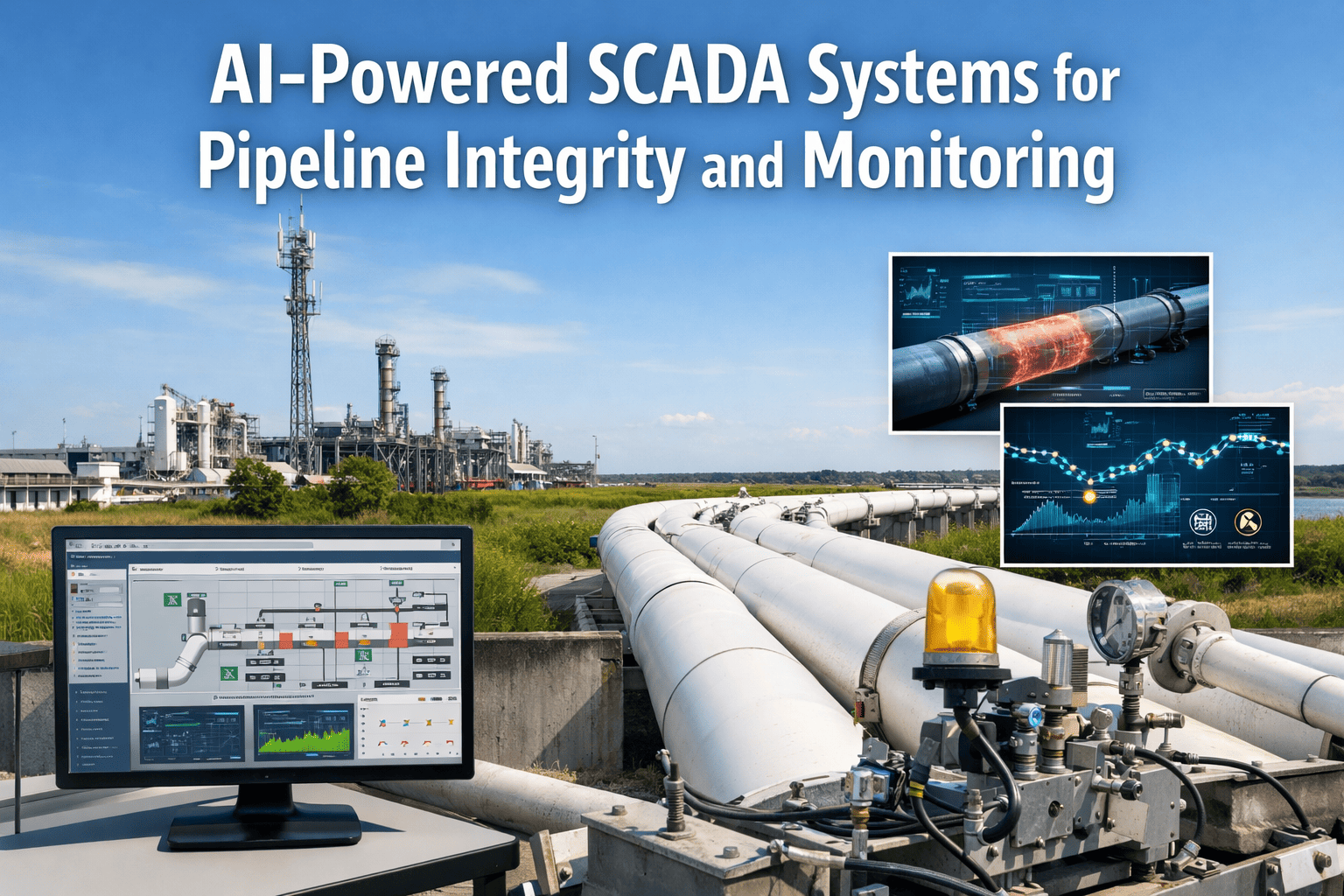
A pressure vessel that fails inspection two years early, a corroded flowline that ruptures before its next scheduled survey, a safety critical valve that hasn't been proof-tested on time — these are not rare events in oil and gas operations, they are the predictable result of integrity programs built on spreadsheets and paper inspection logs. API RP 580/581, ISO 55001, and API RP 754 all point to the same conclusion: integrity management only works when it is systematic, data-driven, and continuously monitored rather than reviewed once a year. See how iFactory turns your inspection data into a live AIM framework — book a demo.
Asset Integrity Management
Stop Managing Integrity By Spreadsheet. Start Managing It By Framework.
iFactory structures your inspection, corrosion, and SCE performance data into a live AIM framework aligned to API RP 580/581 and ISO 55001 — so risk decisions are backed by data, not guesswork.
Why Integrity Programs Fail Before They Fail Loudly
40%+
of unplanned shutdowns in process facilities trace back to an integrity issue that was already flagged in inspection data but never escalated in time.
Weeks
lost reconciling inspection reports, corrosion logs, and SCE test records that live in three different systems instead of one integrity record.
Overdue
inspection and proof-test backlogs are the single most common finding in third-party integrity audits across upstream and midstream facilities.
The Four-Stage AIM Framework iFactory Runs On
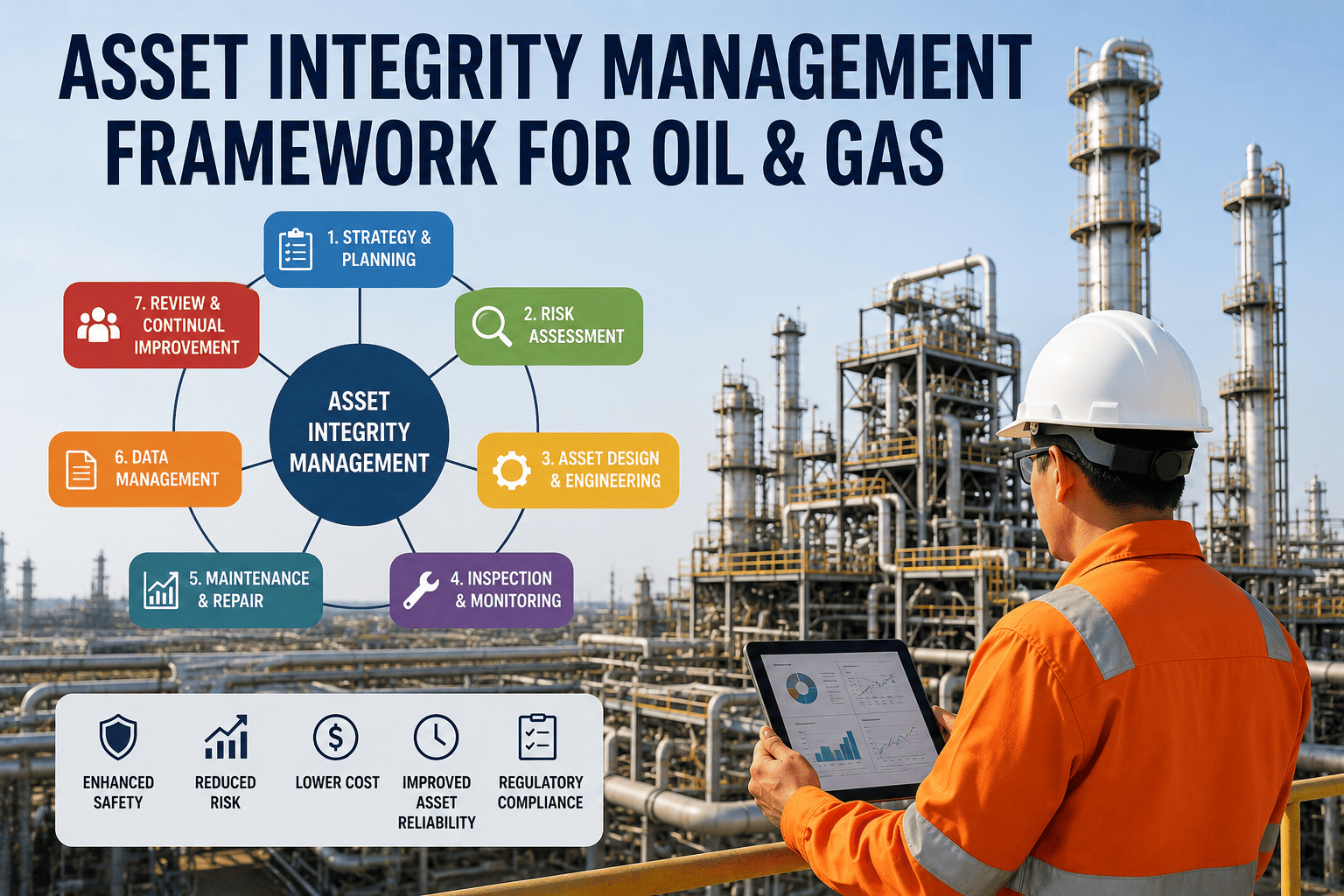
A defensible asset integrity management framework follows a Plan–Do–Check–Act structure, the same discipline behind ISO 55001. iFactory automates every stage so the framework runs continuously instead of resetting to zero at the next audit cycle.
01
Plan — Criticality & Strategy
Safety critical elements are identified through HAZOP and LOPA outputs, then ranked by probability and consequence of failure per API RP 580/581, setting the inspection strategy for every asset class.
02
Do — Inspection & Monitoring Execution
RBI schedules, corrosion probe readings, and SCE proof tests are executed and logged automatically, closing the gap between what the strategy calls for and what actually gets inspected on time.
03
Check — Anomaly & Performance Review
Every finding is compared against the integrity operating window in real time, so a wall-thickness reading trending toward the limit triggers a review long before it becomes a violation.
04
Act — Anomaly Management & Plan Refresh
Confirmed anomalies flow into a fitness-for-service and repair workflow, and the outcome feeds back into next year's inspection strategy instead of disappearing into a closed work order.
Bring your last RBI assessment and your open anomaly list. iFactory will show you exactly where a live AIM framework would have caught the gap before your last audit did.
Core Pillars Every Framework Needs
Risk-Based Inspection
Inspection intervals set by actual degradation risk under API RP 580/581, not a fixed calendar date that treats a low-risk tank the same as a high-risk pressure vessel.
Safety Critical Element Testing
Proof-test schedules and performance standards for every SCE identified in the safety case, tracked so a missed test is visible weeks before it becomes an audit finding.
Integrity Operating Windows
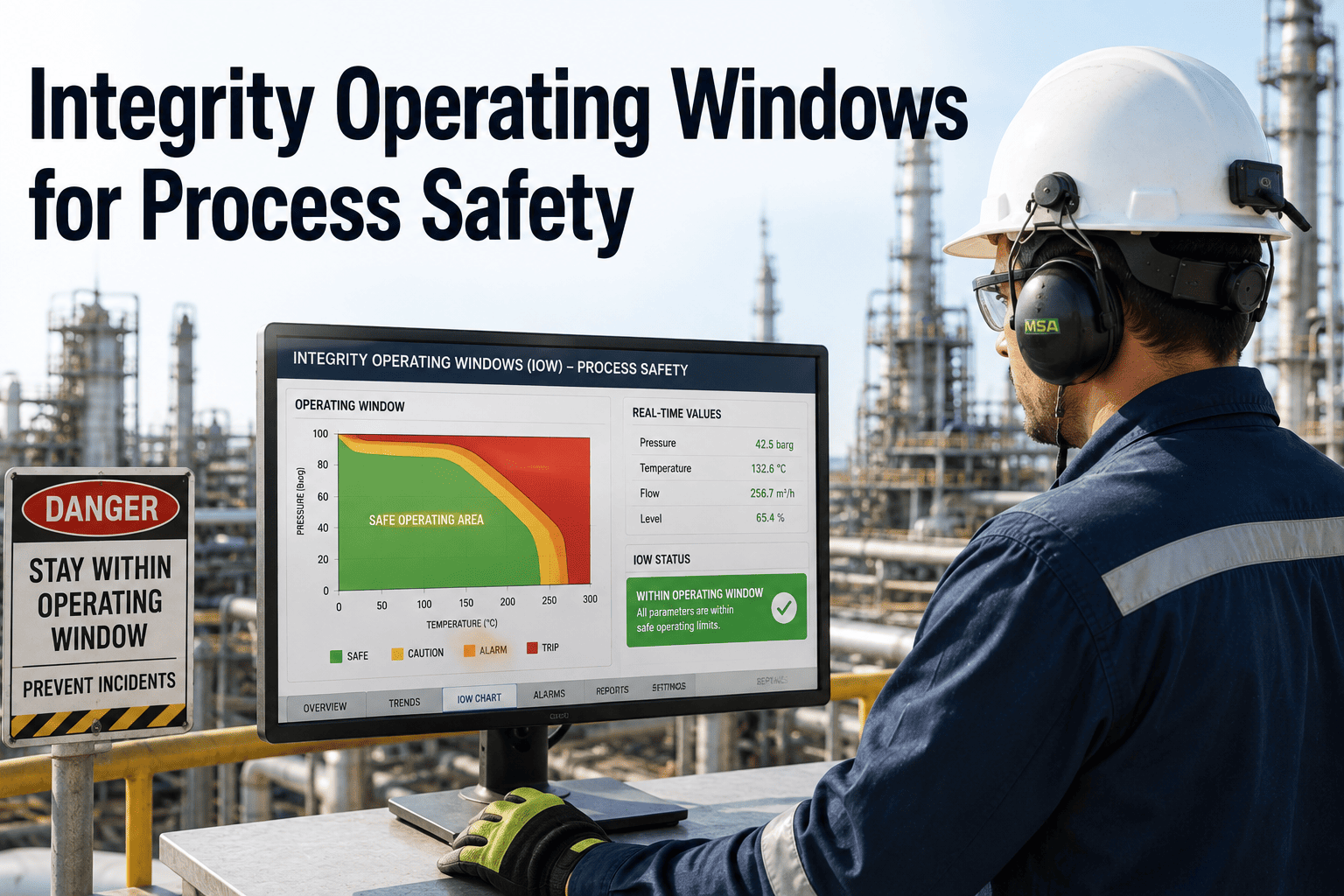
Process parameters tied to mechanical integrity limits, so an operator running slightly outside the corrosion-safe envelope gets flagged in the moment, not the following quarter.
Anomaly & Barrier Management
Every open anomaly linked to the barrier it degrades, so leadership sees cumulative risk across the asset instead of a disconnected list of individual defects.
The KPIs a Defensible Integrity Program Tracks
Leading
IOW Compliance
Target ≥ 95% of operating time within window
Leading
Inspection Overdue %
Tracked against RBI due dates in real time
Lagging
Loss of Primary Containment
Incidents per year, by equipment type
Lagging
Mean Time Between Failures
Reliability trend across critical asset classes
Spreadsheet-Based Tracking vs. iFactory AIM Dashboards
| Integrity Activity | Spreadsheet-Based Tracking | iFactory AIM Framework |
| RBI schedule visibility |
Manually updated, often stale |
Live, auto-updated against actual inspections |
| IOW deviations |
Found during quarterly review |
Flagged the moment a parameter drifts |
| SCE proof-test tracking |
Tracked in separate maintenance system |
Linked directly to the safety case |
| Anomaly-to-repair loop |
Closed in work order, insight lost |
Feeds back into next inspection strategy |
| Audit preparation |
Weeks of manual data pulling |
Dashboard exportable on demand |
Where This Framework Applies Across Your Assets
Pressure Vessels & Piping
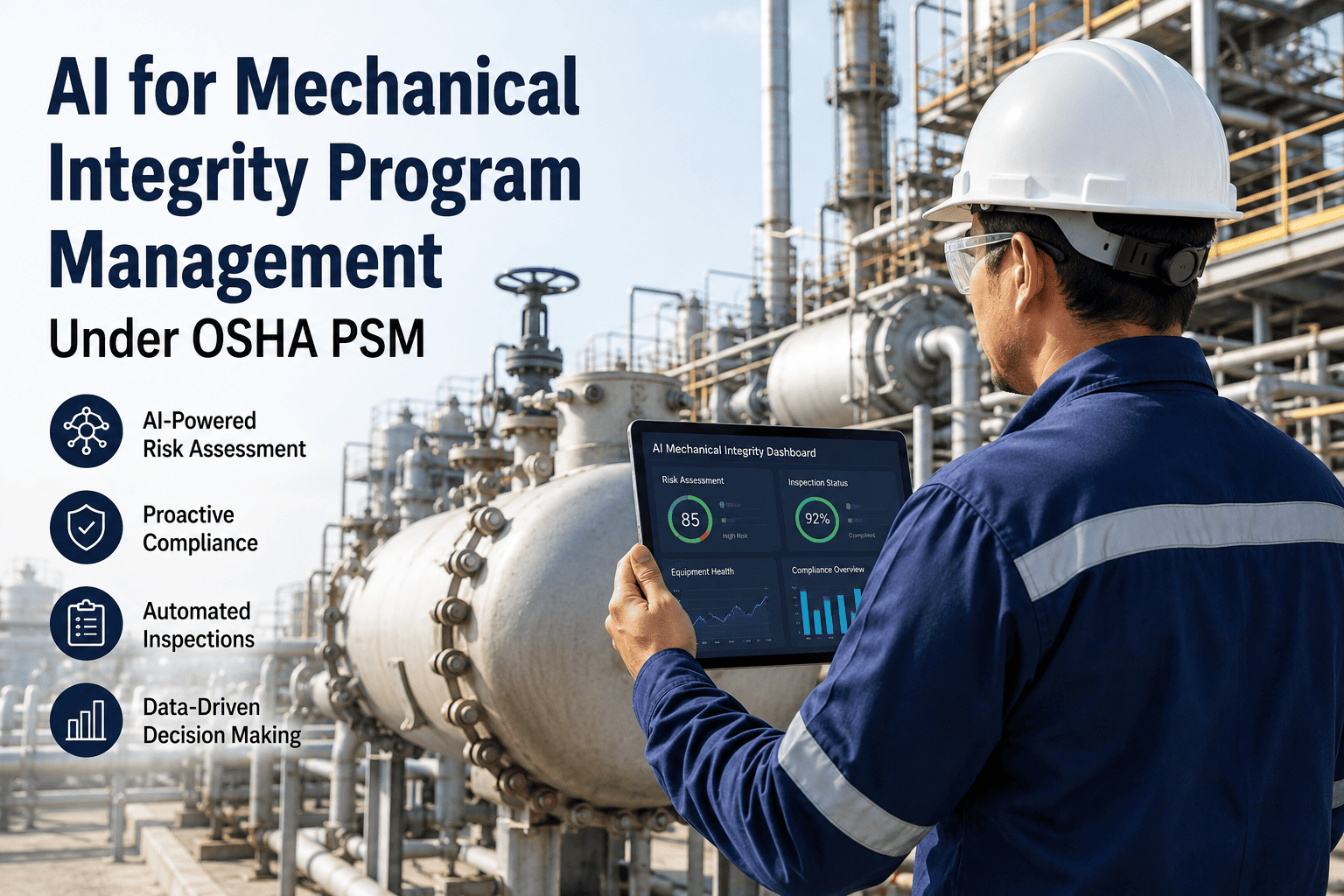
API 510 and API 570 inspection intervals calculated from real degradation data instead of a fixed default cycle.
Storage Tanks
API 653 floor and shell inspection scheduling tied to corrosion rate trends rather than a static calendar reminder.
Pipelines & Flowlines
Wall-thickness and cathodic protection data streamed into the same integrity record as every other asset class.
Safety Critical Systems
ESD valves, fire and gas detection, and relief systems tracked against their performance standards continuously.
Common Barriers That Stall an AIM Program
01
Inspection data trapped in PDFs and paper reports — findings exist, but nobody can query them against risk criteria in time to act.
02
Criticality rankings set once and never revisited — an asset that degraded faster than expected keeps the inspection interval assigned to it years earlier.
03
SCE performance testing tracked separately from the safety case — a missed proof test doesn't visibly connect back to the barrier it was protecting.
04
Anomalies closed in the CMMS without feeding the next RBI cycle — the same failure mode resurfaces because the lesson never reached the inspection strategy.
Building the Business Case for a Live Framework
Integrity teams rarely struggle to justify the framework on safety grounds alone — the harder conversation is cost. A live AIM framework pays for itself in three ways: avoided unplanned downtime from anomalies caught before failure, inspection budget redirected away from low-risk assets toward the ones that actually carry probability and consequence of failure, and audit preparation time that drops from weeks of manual reconstruction to an exportable dashboard. Facilities that move from time-based to risk-based inspection typically don't reduce total inspection spend so much as reallocate it, putting more scrutiny on the equipment where a failure would be catastrophic and less on equipment where it would barely register. That reallocation, tracked consistently over several inspection cycles, is usually the single clearest ROI argument for moving off spreadsheets.
FAQ: Asset Integrity Management Frameworks
What is the difference between asset integrity management and routine maintenance?
Routine maintenance keeps equipment running; asset integrity management specifically manages the risk of loss of containment or structural failure across the asset's lifecycle. It combines inspection strategy, corrosion control, safety critical element testing, and anomaly management into one system rather than treating each as an independent task. A maintenance program can be fully executed on schedule and an asset can still fail if the underlying integrity risk was never assessed. iFactory ties both together so maintenance actions are informed by the same risk data driving the inspection strategy.
Does an AIM framework require replacing our existing inspection and CMMS systems?
No. iFactory is built to pull data from the inspection, corrosion monitoring, and CMMS systems your team already uses, structuring it into a single integrity framework rather than asking you to re-enter records into a new platform. This keeps historical inspection data intact while adding the risk-based logic and real-time alerting that spreadsheets cannot provide.
Ask our team which systems integrate directly.
How does risk-based inspection actually reduce cost compared to time-based inspection?
Time-based inspection applies the same interval to every asset regardless of actual risk, which means low-risk equipment gets over-inspected while high-risk equipment may not get inspected often enough. Risk-based inspection under API RP 580/581 directs inspection resources toward the equipment where probability and consequence of failure are both meaningful, freeing up budget from low-risk assets and redirecting it where it prevents the costliest failures. Facilities that shift to RBI typically see inspection spend redirected rather than simply reduced, with the highest-risk equipment receiving materially more attention.
What happens when an integrity operating window is exceeded?
An IOW exceedance means a process parameter — temperature, pressure, pH, or a corrosive constituent level — has moved outside the range the asset's material of construction was designed to tolerate safely. Left unaddressed, this accelerates degradation mechanisms like corrosion or cracking well beyond the rate the inspection schedule assumed. A properly built framework flags the deviation immediately, logs its duration, and triggers a review of whether the current inspection interval is still valid given the exposure. Without real-time tracking, this kind of exceedance is often only discovered during the next scheduled inspection, months after the damage began.
How long does it take to stand up a working AIM framework on an existing facility?
For a facility with existing inspection history and a defined safety case, a working framework covering criticality ranking, RBI scheduling, and SCE tracking can typically be operational within four to six weeks. The first cycle focuses on consolidating existing data and setting the integrity operating windows; live dashboards and automated alerting follow shortly after.
Book a demo to scope the timeline for your facility.
Asset Integrity + iFactory
Turn Inspection Data Into a Framework You Can Defend in Any Audit.
iFactory structures your RBI, SCE, and corrosion data into one live AIM framework aligned to API RP 580/581 and ISO 55001 — so integrity decisions are backed by data every day, not just at audit time.

-rollout.png)