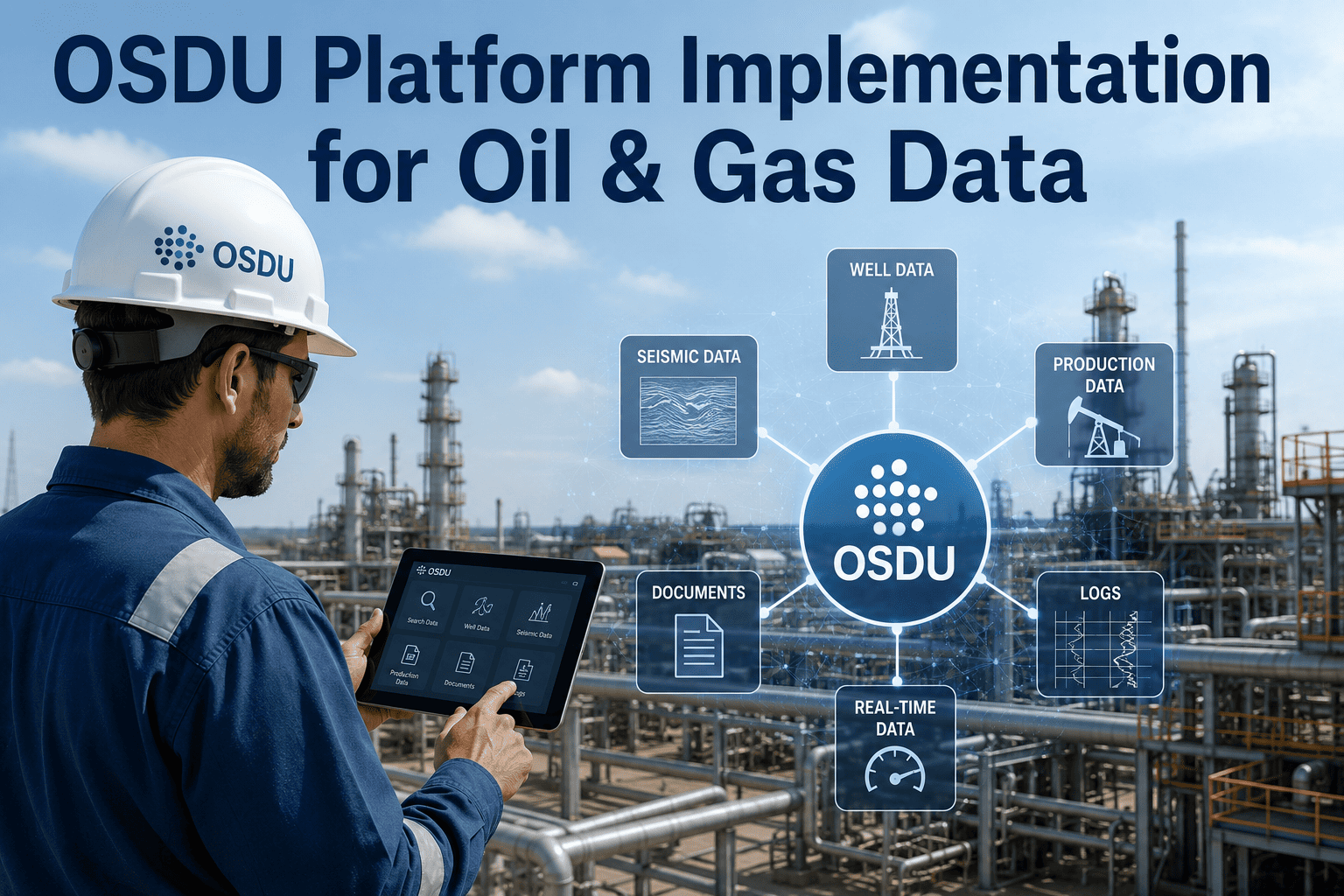
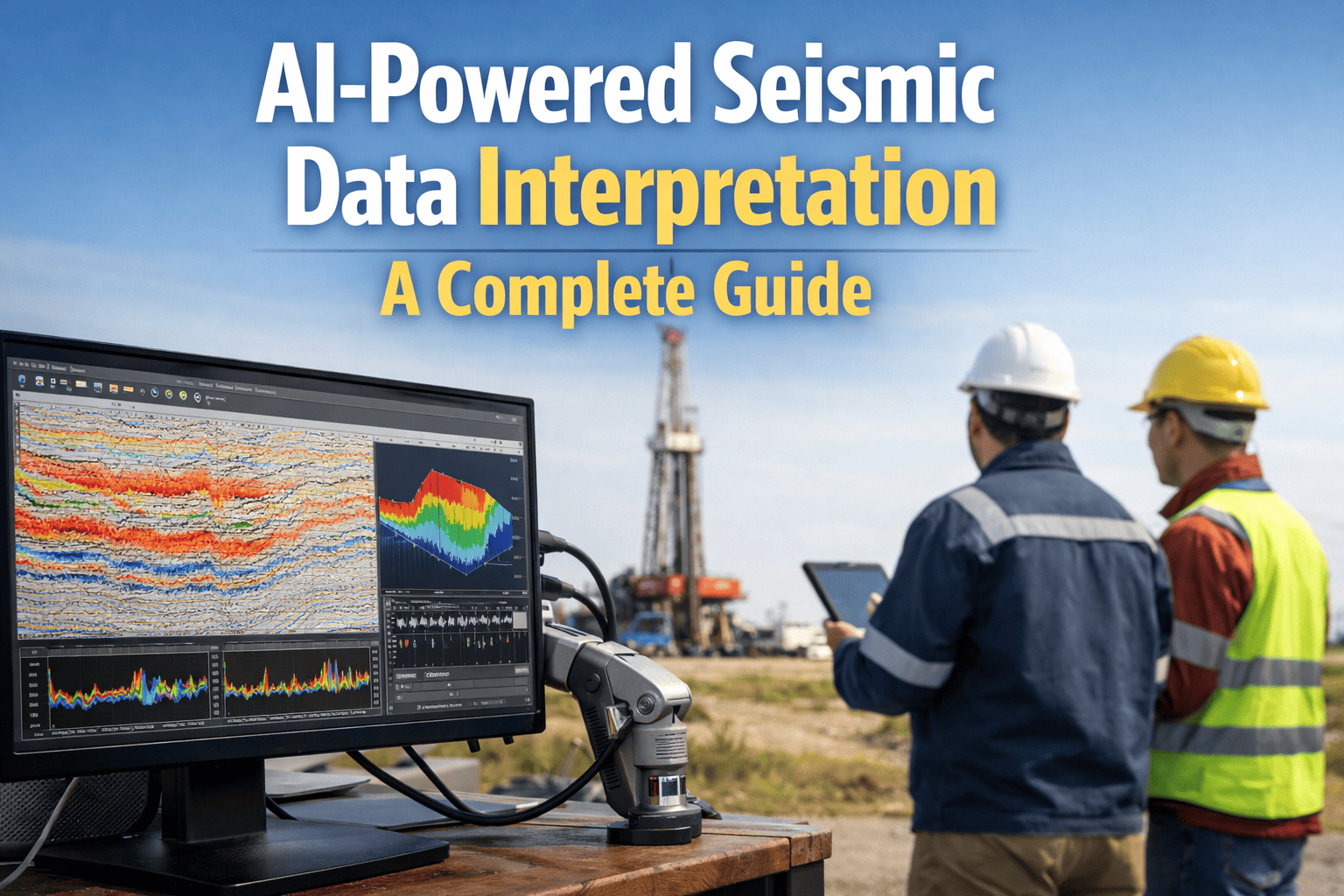
The oil and gas industry is sitting on one of the most complex, data-intensive operational environments in the world — and legacy infrastructure is no longer keeping up. From upstream exploration to downstream refining, companies are generating petabytes of sensor data, seismic records, production logs, and maintenance histories that on-premises systems simply cannot process at the speed modern operations demand. Cloud migration in oil and gas, powered by AI-driven data management, is no longer a future initiative — it's the infrastructure transformation happening right now across the sector. Book a Demo to see how iFactory's AI platform accelerates your cloud migration journey across oil and gas operations.
68%
Of oil & gas companies accelerating cloud adoption in 2025 to enable AI workloads
$4.2B
Projected global oil & gas cloud market value by 2027 driven by AI data integration
40%
Reduction in unplanned downtime reported by AI-cloud integrated upstream operations
8 wks
iFactory AI deployment timeline from data integration to live cloud optimization
Cloud Migration Without AI Is Just Storage. AI Without Cloud Is Just Potential. Together, They Transform Operations.
iFactory's AI-powered platform integrates with your cloud environment to unify operational data from wellheads, pipelines, refineries, and field assets — enabling real-time decisions, predictive maintenance, and regulatory compliance across your entire oil and gas value chain.
Why Cloud Migration Is Now Critical for Oil & Gas Data Management
Oil and gas operations generate data from thousands of sensors, PLCs, SCADA systems, and field instruments simultaneously. Traditional on-premises data infrastructure was designed for storage and retrieval — not for the real-time analysis, machine learning inference, and cross-site data correlation that modern AI applications require. The gap between data volume and actionable insight has become a direct operational liability.
Cloud platforms provide the elastic compute, managed storage, and global connectivity that AI workloads in oil and gas demand. When paired with purpose-built AI data management layers, cloud migration enables upstream operators to run predictive reservoir models, midstream companies to optimize pipeline throughput, and downstream refiners to reduce energy consumption through continuous process optimization. The shift from reactive to predictive operations is only possible when data pipelines are cloud-native and AI-ready. Book a Demo to evaluate your current data architecture against cloud-AI readiness benchmarks.
Scalable Data Infrastructure
Cloud eliminates the hardware ceiling that constrains on-premises systems. Petabyte-scale seismic, production, and IoT data can be stored, indexed, and queried in real time without infrastructure bottlenecks.
Real-Time AI Inference
Machine learning models deployed in cloud environments process streaming sensor data from field assets in milliseconds — enabling predictive maintenance alerts, anomaly detection, and automated process adjustments before failures occur.
Cross-Asset Data Unification
Cloud platforms integrate data from geographically dispersed wells, platforms, pipelines, and refineries into a single data fabric — eliminating silos that prevent AI models from understanding operational context across the full value chain.
Regulatory Compliance Automation
Cloud-native AI platforms auto-generate audit trails, emissions reporting, and compliance documentation meeting EPA, OSHA, and international regulatory requirements — eliminating manual reporting workloads and reducing compliance risk.
Key AI Applications Unlocked by Cloud Migration in Oil & Gas
Cloud migration is the enabler, but AI is the value driver. Once operational data flows into a cloud environment with the right data governance and integration architecture, a range of AI applications become deployable across upstream, midstream, and downstream segments. iFactory's platform is purpose-built to activate these capabilities within weeks of data integration.
Predictive Reservoir Modeling
AI analyzes seismic data, well logs, and production history to predict reservoir depletion rates, optimal drilling locations, and enhanced recovery strategies — improving EUR accuracy and capital allocation efficiency across exploration programs.
Drilling Performance Optimization
Machine learning models process real-time drilling parameters — WOB, RPM, mud flow, and torque — to recommend optimal drilling programs, detect stick-slip events, and prevent costly drilling incidents before they escalate.
Production Anomaly Detection
AI continuously monitors wellbore pressure, temperature, and flow rates detecting production anomalies — including sand influx, wax deposition, and ESP degradation — 3-5 weeks before unplanned shutdowns would occur with traditional monitoring.
Pipeline Integrity Management
AI integrates ILI data, cathodic protection readings, and operational pressure history to predict corrosion progression and prioritize integrity interventions — reducing pipeline failure risk and extending asset service life.
Throughput Optimization
Machine learning models optimize compressor scheduling, batch sequencing, and flow rate allocation across pipeline networks — maximizing throughput while minimizing energy consumption and maintaining operating pressure within safe limits.
Leak Detection and Response
AI-powered acoustic and pressure-transient analysis detects pipeline leaks within minutes of initiation — far faster than traditional SCADA threshold monitoring — enabling rapid response that minimizes environmental impact and regulatory exposure.
Refinery Process Optimization
AI continuously adjusts crude distillation, catalytic cracking, and hydrotreatment parameters to maximize yield of high-value products from each crude slate — improving margin realization without additional capital investment.
Energy Consumption Reduction
Machine learning identifies energy optimization opportunities across furnaces, heat exchangers, and rotating equipment — typically delivering 8-14% reduction in refinery energy intensity within 90 days of AI deployment.
Turnaround Planning Intelligence
AI analyzes equipment condition data to optimize turnaround scope, sequence, and timing — reducing unnecessary maintenance while ensuring critical interventions are never missed, cutting average turnaround duration by 15-20%.
Cloud Migration Strategy: A Phased Approach for Oil & Gas Operations
Successful cloud migration in oil and gas is not a lift-and-shift exercise. The complexity of OT/IT integration, data governance requirements, and regulatory compliance demands a structured, phased approach that minimizes operational risk while delivering value at each stage. iFactory's 8-week deployment methodology is purpose-designed for industrial environments where uptime and data integrity are non-negotiable.
Data Inventory and Architecture Assessment
Catalog all data sources across SCADA, historian, ERP, and field systems. Identify data quality issues, integration gaps, and compliance requirements. Define cloud architecture blueprint aligned to AI workload requirements and regulatory data residency obligations.
Weeks 1–2
OT/IT Integration and Data Pipeline Construction
Connect operational technology sources — PLCs, DCS, SCADA, IoT sensors — to cloud data pipelines. Implement edge compute where latency constraints require local processing. Validate data fidelity and streaming continuity before proceeding.
Weeks 2–4
AI Model Training and Validation
Train machine learning models on historical operational data including equipment performance, production records, and maintenance history. Validate model accuracy against known outcomes before deploying to live operational environment.
Weeks 3–5
Pilot Deployment and Performance Verification
Deploy AI applications on a defined subset of assets or operational units. Measure prediction accuracy, alert relevance, and integration reliability. Quantify early value realization before full-scale rollout.
Weeks 5–6
Enterprise Rollout and Continuous Optimization
Expand AI deployment across full asset base. Activate automated reporting, compliance documentation, and executive dashboards. Establish MLOps processes for continuous model retraining as operational conditions evolve.
Weeks 7–8
Manual Data Management vs. AI-Powered Cloud Data Management
The operational and financial gap between traditional data management approaches and AI-powered cloud platforms is substantial — and it compounds annually as data volumes increase and AI capabilities mature. This comparison reflects documented outcomes from operating oil and gas facilities.
| Capability |
Traditional / On-Premises Approach |
iFactory AI Cloud Platform |
| Data Integration Latency |
24-72 hour data lag from field to analysis. Manual data extraction from historian systems. Siloed data across business units preventing cross-asset analysis. |
Real-time streaming data ingestion from all field sources. Unified data fabric across upstream, midstream, and downstream assets. Sub-second availability for AI inference workloads. |
| Predictive Maintenance |
Scheduled maintenance based on calendar intervals. Equipment failures discovered after unplanned shutdown. Emergency maintenance costs 3-5x planned maintenance rates. |
AI detects equipment degradation 3-6 weeks before failure. Maintenance planned and resourced proactively. Unplanned downtime reduced 40% within first operating year. |
| Production Optimization |
Manual operator adjustments based on experience and periodic reports. Optimization opportunities missed between reporting cycles. Sub-optimal production rates accepted as operational baseline. |
AI continuously optimizes production parameters in real time. Every well, compressor, and process unit operating at AI-determined optimal conditions. Production throughput improvements of 6-12% typical. |
| Regulatory Reporting |
Manual emissions calculations and reporting consuming 200-400 engineer-hours per quarter. Data reconciliation errors creating compliance risk. Late submissions and regulatory penalties common. |
Automated emissions monitoring and regulatory report generation. Full audit trail for all compliance submissions. Reporting time reduced 85% with zero manual reconciliation required. |
| Scalability |
Infrastructure investment required for every new asset or data source. IT bottlenecks delay new project data integration by 6-18 months. Legacy systems incompatible with modern AI workloads. |
Cloud-native scalability adds new data sources in days. AI models automatically incorporate new asset data. No infrastructure investment required for operational expansion. |
| Cybersecurity and Data Governance |
Point-in-time security assessments. Manual access control management. Data lineage tracking nonexistent in most implementations. |
Continuous security monitoring with automated threat detection. Role-based access control with full data lineage tracking. Cloud-native encryption at rest and in transit. |
Real-World Outcomes: AI Cloud Migration in Oil & Gas Operations
These use cases reflect operational outcomes from AI-powered cloud deployments at oil and gas facilities. Each represents 9-12 month post-deployment performance data. Book a Demo to discuss outcomes relevant to your specific operational segment and asset base.
A mid-size upstream operator managing 340 producing wells across multiple basins was operating on siloed historian systems with 48-hour data lag, preventing real-time production optimization and limiting predictive maintenance to calendar-based schedules. Cloud migration and AI integration enabled unified real-time monitoring across the full well inventory. AI identified downhole pump degradation patterns 4 weeks before failure across 18 wells, enabling planned interventions that avoided $3.6M in emergency workover costs. Production optimization algorithms continuously adjusted ESP operating parameters, recovering 7.4% average production uplift across the artificial lift fleet. Regulatory emissions reporting time reduced from 320 engineer-hours per quarter to 22 hours through automated monitoring and report generation.
7.4%
Production uplift from AI-optimized artificial lift operations
$3.6M
Emergency workover cost avoidance through predictive maintenance
93%
Reduction in compliance reporting effort through automated documentation
A natural gas transmission operator managing 2,800 miles of pipeline was relying on scheduled ILI runs and manual corrosion assessments to manage pipeline integrity — a reactive approach that left significant risk undetected between inspection cycles. AI-powered cloud integration processed continuous pressure, temperature, and flow data alongside historical ILI results to build dynamic corrosion progression models for each pipe segment. The system identified 6 high-risk anomalies requiring immediate intervention that would not have been flagged until the next scheduled ILI cycle, preventing two potential reportable incidents. Compressor optimization reduced fuel gas consumption 11% across the pipeline network, recovering $1.9M annually in operating cost. Real-time leak detection sensitivity improved from 1.2% of throughput to 0.18%, exceeding PHMSA regulatory requirements by a significant margin.
6
High-risk integrity anomalies identified between inspection cycles
$1.9M
Annual fuel gas savings from AI compressor optimization
0.18%
Leak detection sensitivity vs 1.2% industry-standard threshold
iFactory Deploys AI-Powered Cloud Data Management for Oil & Gas in 8 Weeks.
From SCADA integration to live AI optimization — iFactory's fixed-scope deployment eliminates months of consulting and delivers measurable operational improvement beginning in week four. Purpose-built for upstream, midstream, and downstream environments with full regulatory compliance documentation included.
Expert Review: What Industry Leaders Are Saying About AI Cloud Migration
Our on-premises historian could store data but couldn't analyze it at the speed operations required. Moving to a cloud-native AI platform gave us real-time visibility across 340 wells for the first time. Predictive maintenance alone paid for the migration in under five months.
VP Operations Technology
Mid-Size Upstream Operator, Permian Basin
Pipeline integrity was managed through scheduled inspections and gut instinct between cycles. AI cloud integration changed that completely — we now have continuous risk scoring for every segment and can direct resources to where risk is actually accumulating, not where it's assumed.
Director of Integrity Management
Natural Gas Transmission Company, U.S. Gulf Coast
Regulatory reporting was consuming hundreds of engineer-hours every quarter. After cloud AI deployment, automated monitoring generates our EPA and state compliance submissions with full audit trails. Our engineers are now focused on optimization, not paperwork.
Environmental and Compliance Manager
Integrated E&P Operator, Rocky Mountain Region
The OT/IT integration was our biggest concern going in. iFactory connected our DCS and SCADA systems to the cloud data pipeline without any production disruption. The integration team understood industrial protocols and cybersecurity requirements from day one.
Chief Information Officer
Downstream Refining Operations, U.S. Midwest
Frequently Asked Questions: Cloud Migration AI in Oil & Gas
How does AI cloud migration handle the cybersecurity requirements of OT environments in oil and gas?
iFactory implements a secure edge-to-cloud architecture with encrypted data tunnels, network segmentation between OT and cloud layers, and continuous threat monitoring — maintaining full ISA/IEC 62443 compliance without disrupting operational technology availability.
Can AI cloud platforms integrate with legacy historian systems like OSIsoft PI and Honeywell PHD?
Yes. iFactory's connectors support OSIsoft PI, Honeywell PHD, AspenTech IP.21, and all major OPC-UA and OPC-DA data sources — enabling cloud integration without replacing existing historian infrastructure.
How does data residency and sovereignty compliance work for international oil and gas operators?
iFactory supports multi-region cloud deployments with configurable data residency policies, ensuring operational data remains within required geographic boundaries while enabling global AI model coordination where regulations permit.
What is the typical ROI timeline for AI cloud migration in an upstream oil and gas operation?
Most upstream operators achieve full ROI within 4-6 months, driven by predictive maintenance cost avoidance and production optimization gains — with compliance reporting efficiency gains delivering additional measurable savings from week eight onward.
Does AI cloud migration require replacing existing SCADA or DCS systems?
No. iFactory integrates alongside existing SCADA, DCS, and control infrastructure — reading operational data without modifying control logic or creating any dependency on cloud connectivity for real-time control functions.
Conclusion: Cloud Migration as the Foundation for AI-Driven Oil & Gas Operations
Cloud migration in oil and gas is not a technology project — it is an operational transformation that determines whether AI can deliver its full potential value across your asset base. Companies that have successfully executed cloud migration with proper AI data management architecture are realizing sustainable competitive advantages: lower production costs, fewer unplanned outages, faster regulatory compliance, and the ability to optimize operations at a scale and speed that manual approaches cannot match.
The path forward is not about choosing between cloud and AI — it is about deploying them together through an architecture purpose-built for industrial operations. iFactory's platform provides oil and gas operators with the integration depth, AI capability, and deployment speed to transform operational data into measurable production and cost outcomes — in 8 weeks, not 18 months. Book a Demo to begin your cloud-AI readiness assessment with iFactory's industrial data specialists.
Transform Your Oil & Gas Operations with AI-Powered Cloud Data Management.
iFactory gives oil and gas operators real-time AI visibility across upstream, midstream, and downstream assets — fully integrated with existing SCADA, historian, and ERP systems in 8 weeks, with measurable production and cost improvements beginning in week four.
Real-time AI across all field assets from well to refinery
40% reduction in unplanned downtime through predictive maintenance
Automated regulatory compliance and emissions reporting
8-week deployment with live AI optimization by week 8