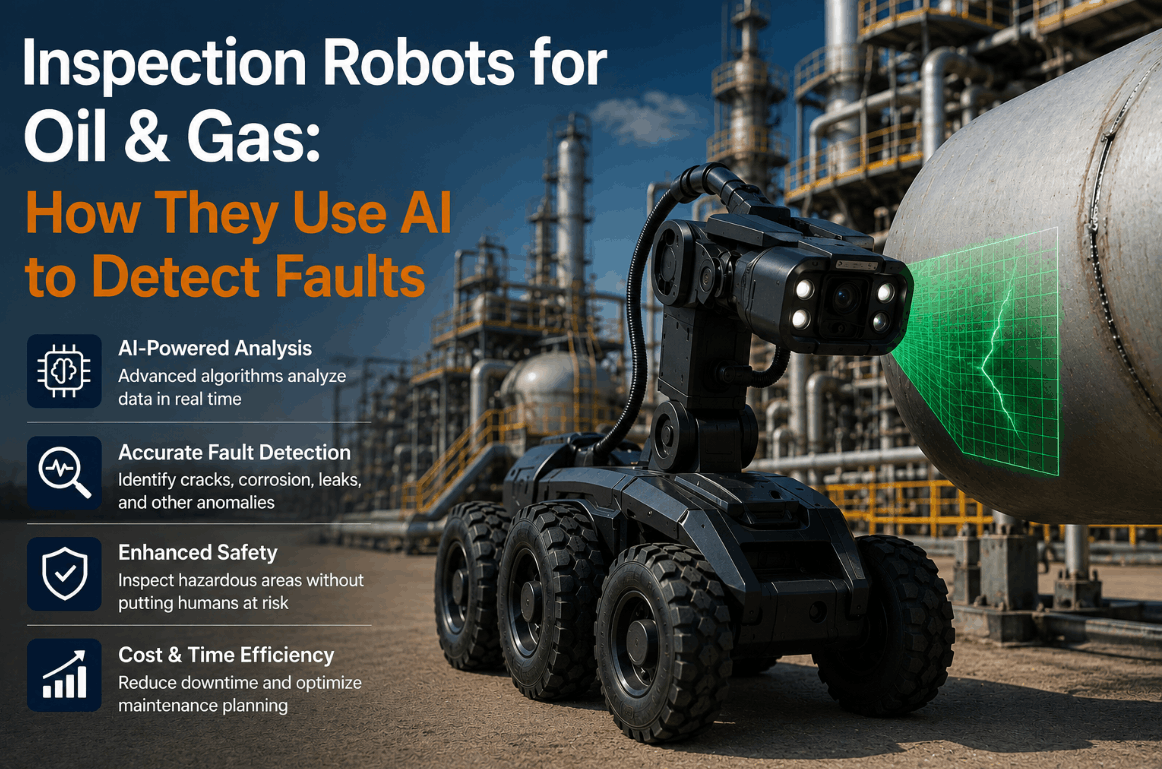
The oil and gas industry operates at the intersection of extreme hazard and operational precision. Confined spaces, flammable atmospheres, high-pressure vessels, and toxic gas exposure make routine infrastructure inspection one of the most dangerous job categories in U.S. energy production — with OSHA recording over 4,800 oil and gas worker fatalities in the last decade attributable to confined space entry, falls, and exposure incidents. AI robotics for oil and gas hazardous inspections eliminates the human-in-hazard model entirely, deploying autonomous ground robots, aerial drones, and computer-vision platforms to execute inspection rounds that previously required PPE-equipped crews, shutdown windows, and scaffolding erection. Book a Demo to see how iFactory AI deploys autonomous inspection capabilities across your refinery, pipeline, or offshore facility within weeks.
97%
Defect detection accuracy using AI visual inspection models in oil & gas environments
$1.3B
Global robotic inspection market for oil & gas, projected by 2032 (CAGR 6.81%)
65%
Energy companies increasing AI and robotics investment for O&M in 2024–2025 (Deloitte)
60%
Reduction in inspection-related worker safety incidents with autonomous robotic deployment
What AI Robotics for Hazardous Inspections Actually Covers in 2025
AI robotics in oil and gas hazardous inspections spans three interconnected technology layers: autonomous mobile platforms (ground robots and aerial drones), intelligent sensor payloads (thermal, LiDAR, gas detection, ultrasonic), and AI analytics software that converts raw multi-modal sensor data into actionable integrity intelligence. Each layer compounds the capability of the others — a drone collecting thermal imagery of a heat exchanger has limited value without the computer vision model that identifies wall thinning patterns and flags them against historical baselines.
Modern deployments replace manual inspection workflows across refineries, pipelines, tank farms, offshore platforms, and compressor stations. The environments that previously forced inspection shutdowns — ATEX-classified explosive zones, elevated flare structures, cryogenic storage vessels, subsea risers — are now primary deployment targets for autonomous systems. iFactory AI's inspection platform integrates directly with these robotic hardware systems, processing field data into digital twin models and predictive maintenance outputs that feed directly into maintenance management systems.
Autonomous Ground Robots
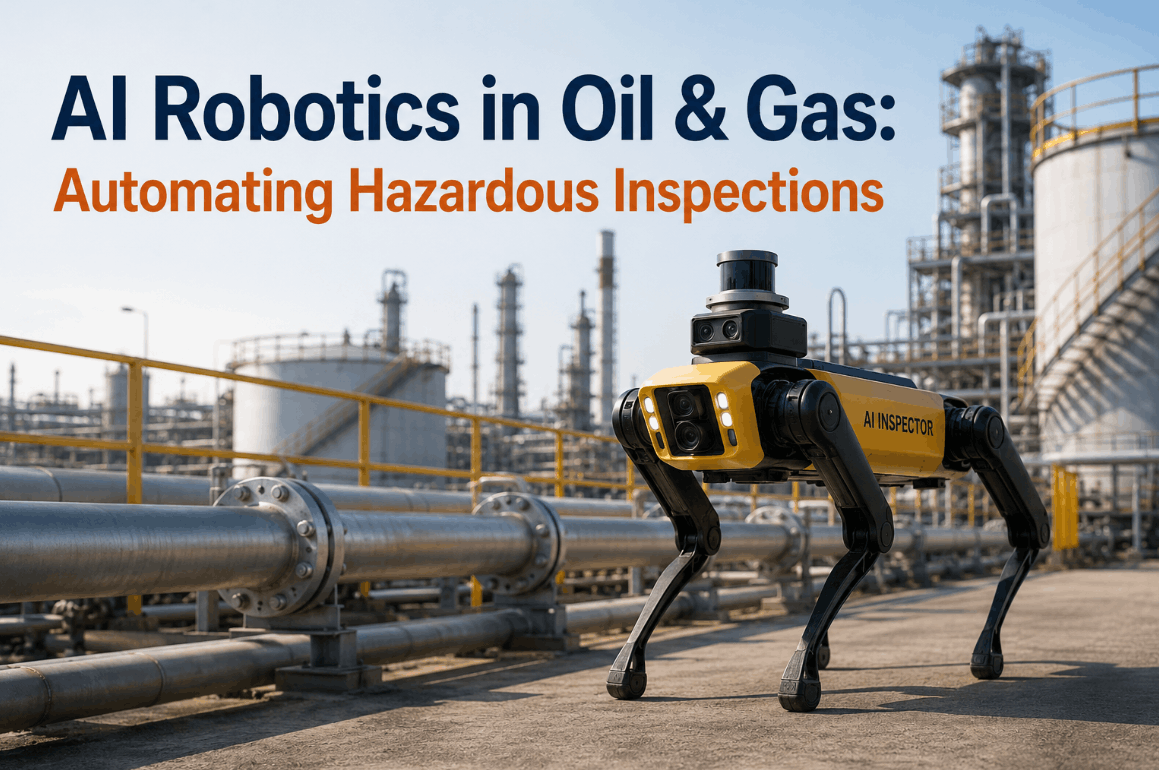
Legged and wheeled robots navigate refinery floors, compressor stations, and offshore decks autonomously — reading gauges, detecting gas leaks, and capturing thermal images without human entry into hazardous zones.
AI-Guided Drone Inspection
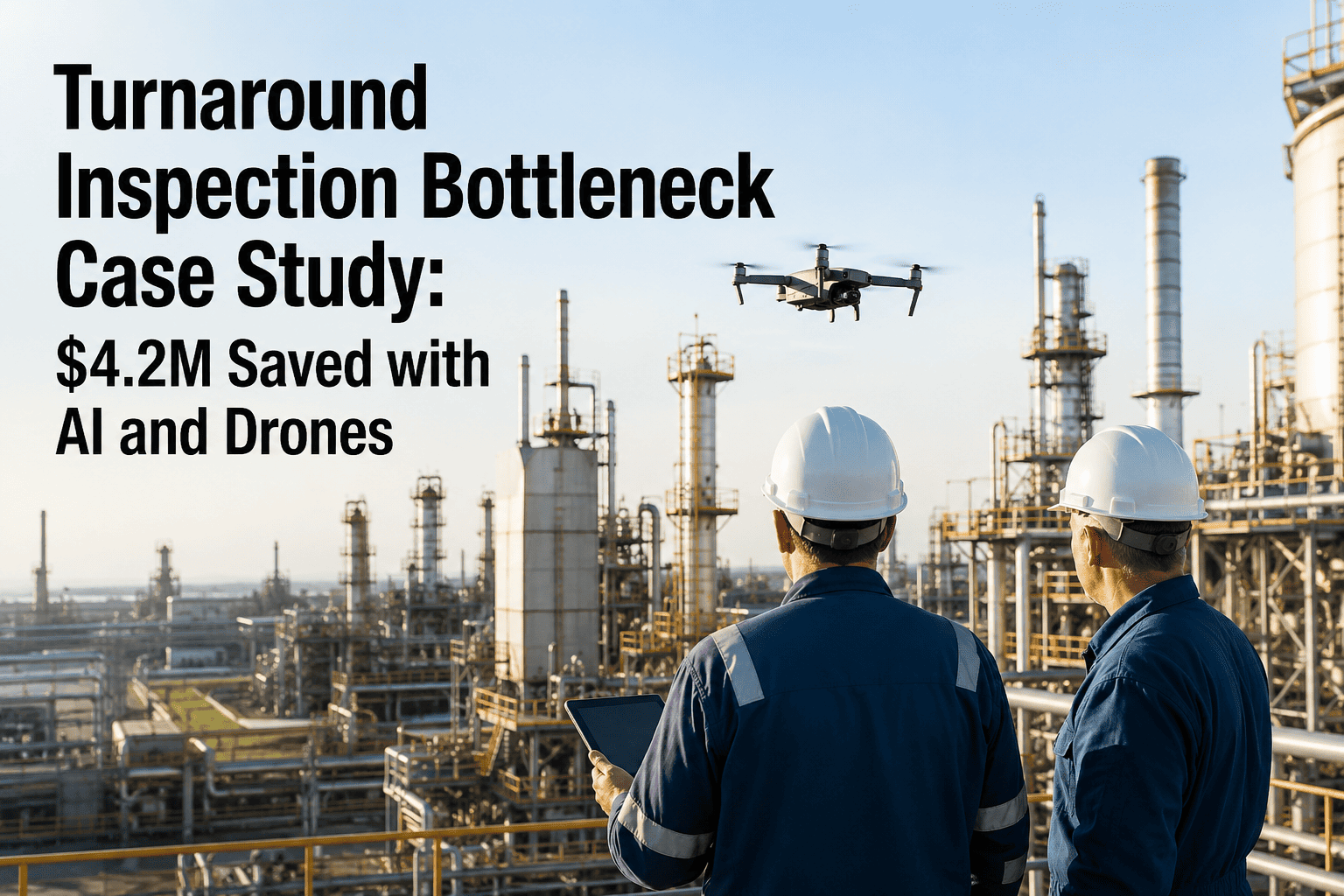
Autonomous aerial drones equipped with RGB, thermal, and LiDAR sensors inspect flare stacks, storage tanks, elevated pipework, and subsea infrastructure — transmitting high-resolution data for AI-powered defect analysis.
AI Visual Inspection Platform
Computer vision models trained on oil and gas defect libraries detect corrosion, cracks, coating failures, and weld anomalies from robot or drone imagery — with accuracy exceeding 97% in controlled deployment studies.
Gas Leak Detection and Mapping
Robots equipped with electrochemical and optical gas sensors perform continuous leak detection rounds, generating precise gas concentration maps that pinpoint emission sources before they reach reportable thresholds.
Digital Twin Integration
Every robotic inspection mission updates a live digital twin of the facility, building a continuously evolving spatial record of asset condition that supports predictive maintenance scheduling and regulatory documentation.
Predictive Maintenance Outputs
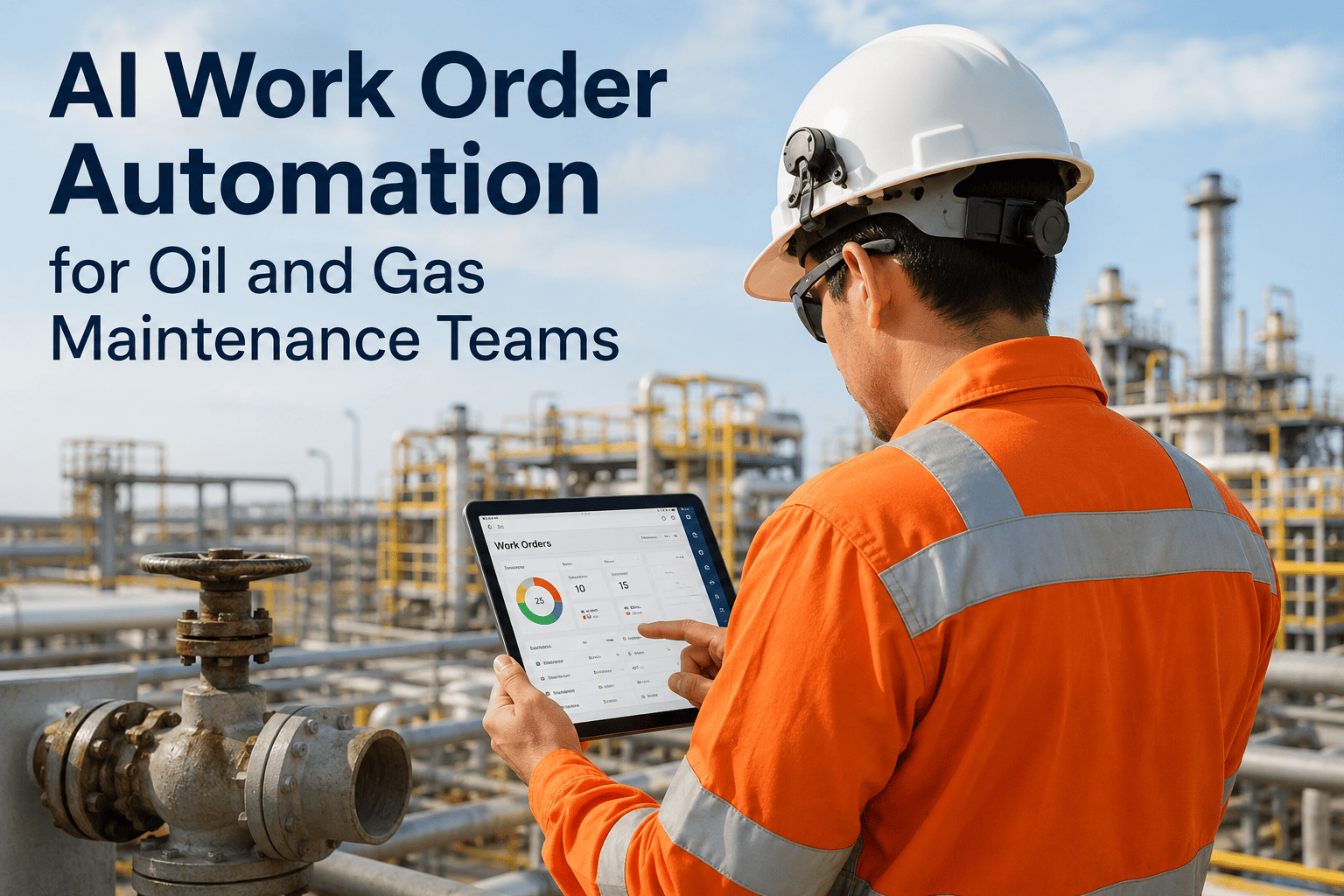
AI analyzes inspection data trends across robot missions to generate remaining-life assessments and maintenance priority rankings — feeding directly into CMMS platforms and operator dashboards for work order generation.
Why Traditional Hazardous Inspection Methods Fall Short
Manual inspection of oil and gas infrastructure requires teams to enter classified hazardous zones, erect scaffolding on elevated structures, conduct confined space entry on storage vessels, and perform hot work in flammable environments. Each entry event carries safety risk, requires permit systems, and demands support personnel — creating inspection costs that routinely reach $15,000–$40,000 per confined space entry event for a large refinery or offshore platform. Beyond cost, the bigger problem is frequency: when inspection is expensive and dangerous, it happens quarterly or annually at best. AI robotics removes that constraint entirely.
| Inspection Parameter |
Traditional Manual Inspection |
iFactory AI Robotics Platform |
| Inspection Frequency |
Quarterly or annual — driven by permit costs, crew availability, and shutdown windows. Defects accumulate between cycles. |
Continuous or daily autonomous rounds. Robots and drones operate during normal production without shutdown requirements. |
| Worker Safety Exposure |
Every inspection entry creates gas exposure, fall, and confined-space risk. OSHA citations common in high-frequency inspection programs. |
Zero personnel entry for routine inspection cycles. Humans engage only for confirmed remediation — eliminating routine hazard exposure entirely. |
| Defect Detection Sensitivity |
Visual inspection accuracy dependent on inspector fatigue, lighting, and access angle. Sub-surface flaws require separate NDE deployment. |
AI models process thermal, ultrasonic, and RGB data simultaneously — detecting sub-millimeter anomalies invisible to unaided visual inspection. |
| Data Continuity |
Inspection records in PDF reports and spreadsheets. No spatial mapping. Trend analysis requires manual cross-referencing across inspection cycles. |
Every mission updates a persistent digital twin. Current and historical condition visible in a single spatial interface — trends auto-calculated by AI. |
| ATEX / Hazardous Zone Access |
Requires full ATEX-rated PPE, hot work permits, gas monitors, and standby rescue teams. Execution time 4–8× longer than standard inspection. |
ATEX-certified robots and drones operate in Zone 1 and Zone 2 classified areas without permit overhead or rescue standby requirements. |
| Regulatory Documentation |
Manual report compilation for API 510, API 570, and OSHA PSM compliance. Documentation gaps common in high-volume programs. |
AI generates structured inspection records aligned with API 510, 570, and 653 requirements — export-ready for PSM compliance and insurance audits. |
Every Day of Manual Inspection in a Hazardous Zone Is a Preventable Risk.
iFactory AI deploys autonomous ground robots, AI drone inspection, and computer-vision defect detection across refineries, pipelines, and offshore platforms — integrated with your existing CMMS and digital twin infrastructure within 8 weeks.
Book a Demo to benchmark autonomous inspection against your current program costs.
Key Applications: Where AI Robotics Replaces Hazardous Human Inspection
AI robotic inspection systems are not limited to a single asset type or inspection task. The following use cases represent the highest-impact deployment targets identified across U.S. midstream and downstream operations, where inspection risk is highest and automation ROI is most immediate.
Legged and wheeled ground robots conduct continuous autonomous patrols across refinery process units — reading pressure gauges, valve positions, and flow meters; detecting gas concentrations with onboard electrochemical sensors; and capturing thermal images of rotating equipment for hot-spot identification. Robot deployment at a Gulf Coast refinery using ATEX-rated platforms eliminated 4,200 annual confined space and ATEX entry events, reducing inspection-related recordable incidents by 73% while increasing inspection frequency from quarterly to daily. iFactory's AI analytics layer processes patrol data in real time, alerting control room operators to anomalies within minutes of detection.
Book a Demo to assess autonomous patrol deployment for your facility.
4,200
Annual hazardous zone entries eliminated by autonomous robot patrol
73%
Reduction in inspection-related recordable safety incidents
Daily
Inspection frequency upgraded from quarterly — without shutdown or permit overhead
Storage tank roofs, floating roof seals, flare stacks, and heat exchanger bundles require elevated access inspection that previously demanded scaffolding erection, rope access teams, or helicopter deployment — each carrying significant cost and schedule overhead. Autonomous drones equipped with RGB, thermal, and LiDAR payloads complete the equivalent inspection in 20–40 minutes with zero scaffolding cost and zero worker exposure to fall risk. AI visual inspection models process imagery post-flight, detecting weld cracks, coating degradation, seal failures, and corrosion pitting against a baseline model updated from prior inspection cycles. iFactory's platform stores all mission imagery spatially against the facility digital twin, enabling inspectors to compare current condition against prior missions in a single interface.
85%
Reduction in elevated-access inspection cost vs. scaffolding and rope access
20 min
Drone inspection cycle vs. 3–5 days for traditional scaffolding-based survey
Zero
Fall-risk exposures during tank and flare stack inspection cycles
Pipeline right-of-way inspection across remote or environmentally sensitive corridors traditionally required helicopter patrols or foot surveys — expensive, weather-dependent, and limited in detection resolution. Autonomous fixed-wing and multi-rotor drones equipped with hyperspectral, thermal, and LiDAR sensors survey hundreds of miles of pipeline corridor per day, detecting hydrocarbon vegetation stress signatures, ground settlement, third-party encroachments, and coating holiday indicators above buried pipe. AI models trained on pipeline anomaly datasets classify each detected feature by severity and regulatory reportability — feeding prioritized work orders into field crew scheduling systems within hours of flight completion.
300+ mi
Daily pipeline ROW coverage achievable by autonomous fixed-wing drone deployment
60%
Reduction in ROW inspection cost vs. helicopter patrol programs
<4 hrs
From flight completion to prioritized anomaly work orders in field crew systems
iFactory AI Robotics Deployment: From Baseline to Live Inspection in 8 Weeks
iFactory's structured deployment program delivers measurable inspection automation within the first two weeks and full robotic inspection integration by week eight. Each phase has defined deliverables — operators see operational output, not consulting hours.
Weeks 1–2
Facility Inspection Baseline and Risk Zone Mapping
Existing inspection records, P&IDs, asset registers, and prior NDT data ingested. AI classifies inspection zones by risk level and identifies primary targets for immediate robotic deployment. ATEX zone maps reviewed to select robot and drone platforms appropriate for each classified area. CMMS and SCADA integration initiated.
Weeks 3–4
Robot and Drone Commissioning and First Inspection Missions
Ground robots and aerial drones commissioned at high-priority inspection zones. First autonomous patrol routes programmed and executed. AI visual inspection model baseline established from initial mission imagery. First anomaly detections reviewed with site integrity engineers to validate model performance against known defect history.
Weeks 5–6
Digital Twin Activation and Predictive Analytics Deployment
Facility digital twin populated with georeferenced inspection data from robot and drone missions. Predictive maintenance models activated using inspection trend data, process history, and asset age records. Anomaly priority rankings and remaining-life assessments begin feeding into CMMS work order workflows automatically.
Weeks 7–8
Full Deployment, Compliance Reporting, and Continuous Monitoring Live
Network-wide autonomous inspection operational across all commissioned zones. Automated inspection reporting aligned with API 510, 570, 653, and OSHA PSM documentation requirements. Monthly integrity dashboards and regulatory export packages generated automatically from mission data. Operator training completed for mission management and anomaly review workflows.
MEASURABLE SAFETY AND COST OUTCOMES FROM WEEK 3: FIRST AUTONOMOUS INSPECTIONS LIVE
Oil and gas operators completing iFactory's 8-week robotics deployment report immediate elimination of hazardous inspection entries, anomaly detection in week 3, and $800K–$2.1M in first-year inspection cost reduction from scaffold elimination, permit reduction, and personnel reallocation — with full predictive maintenance value reaching $3.5–6.0M annually by week 8.
$800K–$2.1M
First-year inspection cost reduction from scaffold and permit elimination
40–70%
Reduction in inspection-related safety incidents within first 90 days
10×
Increase in inspection frequency vs. manual programs — at lower total cost
Expert Perspective: What the Industry Gets Wrong About Robotic Inspection ROI
Industry Review — Downstream Inspection Engineering Perspective
"Most operators evaluate robotic inspection against the direct cost of the inspection crew they're replacing. That's the wrong comparison. The real ROI is in what you find earlier — a coating failure detected at month 3 by a daily robot patrol versus month 18 on the next manual survey cycle. That 15-month detection gap is where catastrophic failures live. AI robotics changes inspection from a compliance exercise into a continuous integrity management input, and the value of that shift dwarfs any scaffolding cost calculation."
Asset Integrity Director — Major U.S. Downstream Refining Operator (provided via iFactory deployment reference)
This framing reflects a consistent finding across iFactory's oil and gas deployments: the largest measurable value from AI robotics comes not from inspection cost reduction alone, but from the detection window compression that continuous autonomous inspection enables. Defects found 12–18 months earlier translate directly into avoided repairs, prevented releases, and eliminated regulatory penalties that multiply the direct cost savings by three to five times. Book a Demo to discuss how iFactory's autonomous inspection platform would perform against your current defect detection history.
Autonomous Inspection. Zero Hazardous Entries. Live in 8 Weeks.
iFactory AI deploys ground robots, AI drone inspection, computer vision defect detection, and live digital twin integration across your refinery, pipeline, or offshore facility — replacing hazardous manual inspection with continuous autonomous monitoring. Results measurable within 30 days of first mission.
Conclusion: AI Robotics Is Now the Operational Standard for Hazardous Inspection
The transition from manual to autonomous inspection in oil and gas operations has moved from pilot programs to standard practice. With the global robotic inspection market for oil and gas projected to reach $1.3 billion by 2032, and 65% of energy companies already increasing AI and robotics investment for operations and maintenance, operators still relying on permit-dependent manual inspection programs are accepting safety risk, cost burden, and regulatory exposure that AI robotics directly eliminates.
iFactory AI's platform delivers the specific capabilities oil and gas inspection programs require: ATEX-rated autonomous ground and aerial robots, AI visual inspection models trained on industry defect libraries, real-time gas detection and emissions mapping, live digital twin updates from every mission, and automated compliance documentation aligned with API 510, 570, 653, and OSHA PSM requirements. The 8-week deployment program means measurable inspection automation — and elimination of hazardous entries — begins within weeks, not quarters. Book a Demo to receive an autonomous inspection assessment specific to your facility type and current inspection program.
Frequently Asked Questions: AI Robotics in Oil & Gas Hazardous Inspections
Can AI inspection robots operate in ATEX-classified explosive atmospheres found in refineries?
Yes. ATEX Zone 1 and Zone 2-certified ground robots and intrinsically safe drones are specifically designed for classified explosive atmospheres, enabling routine inspection of process units and storage areas without hot work permits or ignition risk.
How accurate is AI visual inspection compared to trained human inspectors in oil and gas environments?
Published AI-ML inspection studies demonstrate defect detection accuracy up to 97%, consistently outperforming manual visual inspection on sub-surface anomalies, early-stage corrosion, and fine weld discontinuities where human fatigue and access limitations reduce reliability.
Does robotic inspection data satisfy API 510, API 570, and OSHA PSM documentation requirements?
Yes. iFactory's platform generates structured inspection records formatted for API 510, 570, and 653 compliance, with audit-ready export packages supporting OSHA PSM documentation and insurer technical review requirements.
What existing systems does iFactory's AI robotics platform integrate with?
iFactory integrates directly with leading CMMS platforms (SAP PM, Maximo, Infor EAM), SCADA historians (Honeywell, Emerson, ABB), and asset management systems — enabling inspection findings to feed maintenance workflows without manual data entry.
How long does it take to deploy AI robotic inspection at an operating oil and gas facility?
iFactory's 8-week deployment program delivers first autonomous inspection missions by week 3 and full digital twin integration by week 8 — without production shutdown or disruption to active operating schedules.
Stop Sending Workers Into Hazardous Zones for Routine Inspection. Deploy AI Robotics in 8 Weeks.
iFactory gives oil and gas operators autonomous ground robots, AI drone inspection, computer vision defect detection, and full regulatory documentation — integrated with your SCADA, CMMS, and digital twin infrastructure in 8 weeks.
97% AI defect detection accuracy in oil & gas environments
ATEX Zone 1 and Zone 2 certified robot deployment
10× inspection frequency increase at lower total cost
8-week deployment with live inspection missions from week 3


-in-oil-&-gas-back-office.png)