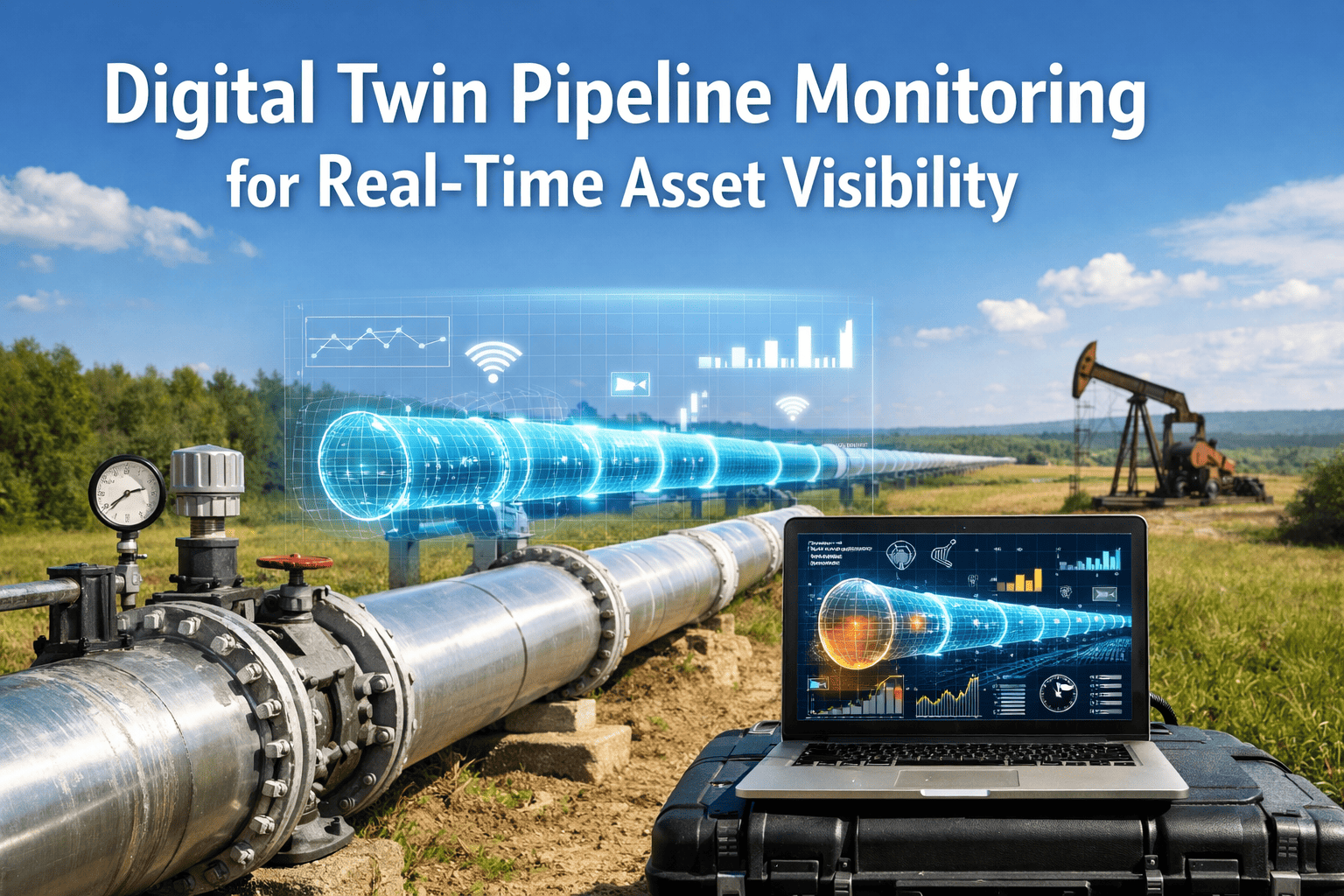
Pipeline infrastructure in midstream oil and gas operations faces a compounding threat: flow assurance failures and corrosion-driven degradation that together cost U.S. operators over $1.4 billion annually in direct damage, regulatory penalties, and unplanned downtime. Traditional inspection cycles — quarterly ILI runs, periodic ultrasonic testing, and manual SCADA reviews — leave critical detection gaps of 6 to 18 months, during which corrosion progresses silently and flow anomalies escalate into ruptures. AI pipeline flow assurance corrosion platforms close that gap by fusing real-time sensor data, process history, and machine learning to predict, detect, and prioritize every integrity threat before it reaches failure threshold. Book a Demo to see how iFactory AI deploys across midstream pipeline networks within 8 weeks.
97%
Corrosion failure prediction accuracy using AI-ML pipeline models
$1.4B
Annual U.S. pipeline corrosion cost addressable through AI monitoring
68%
Reduction in unplanned pipeline outage events with continuous AI integrity monitoring
8 wks
Deployment timeline from baseline audit to live AI flow assurance monitoring
What Flow Assurance and Corrosion Management Actually Require in 2025
Flow assurance encompasses every operational discipline that keeps hydrocarbons moving through pipeline networks without restriction — hydrate suppression, wax deposition control, scale inhibition, slugging mitigation, and sand management. Corrosion management addresses the electrochemical, microbiological, and mechanical degradation that attacks pipe walls from both inside and out. These two domains are inseparable: internal corrosion accelerates under the same high-water-cut, low-pH, CO₂-rich conditions that destabilize flow regimes, and scale buildup that restricts flow simultaneously concentrates corrosive species against pipe walls.
Conventional management relies on periodic in-line inspection (ILI) tools, scheduled chemical inhibitor injection based on fixed dosing tables, and quarterly SCADA trend reviews. The fundamental problem is timing: corrosion rates vary daily with fluid composition, temperature, and flow velocity, but inhibitor programs are adjusted monthly or quarterly at best. iFactory's AI pipeline platform eliminates this lag by correlating SCADA process data, chemical injection records, ILI historical baselines, and real-time corrosion sensor outputs to calculate actual corrosion rate at every monitored segment — continuously.
Real-Time Corrosion Rate Calculation
AI correlates electrochemical noise sensors, ER probes, and process data to compute live corrosion rates at each pipe segment — detecting acceleration events within hours, not inspection cycles.
Hydrate and Wax Risk Prediction
Thermodynamic models fused with real-time temperature and pressure profiles predict hydrate formation windows and wax deposition zones, triggering proactive MEG injection and pigging schedules before blockage forms.
Digital Twin Pipeline Simulation
High-fidelity digital twins of pipeline segments update continuously with live field data, enabling operators to simulate inhibitor dose changes, pressure scenarios, and flow upsets before applying changes to physical assets.
Inhibitor Dose Optimization
ML models analyzing water cut, pH, CO₂ partial pressure, and flow velocity recommend optimal corrosion inhibitor injection rates in real time — reducing chemical spend 18–30% while maintaining protection targets.
Anomaly Detection and Leak Identification
Pressure wave analysis and mass balance algorithms detect micro-leaks and flow restrictions within minutes of onset — providing precise location data to field crews before product loss escalates.
SCADA and ILI Data Integration
iFactory connects directly to Honeywell, Emerson, ABB, and Yokogawa SCADA systems. ILI baseline data loads into the AI model, enabling trend projection that predicts when any segment reaches critical wall loss threshold.
Why Traditional Pipeline Integrity Programs Miss What AI Catches
ILI surveys provide high-resolution wall loss data — but at a point in time. Between surveys, corrosion continues at a rate shaped by dozens of daily process variables that no fixed inhibitor program can account for. The following comparison illustrates what operators are leaving unmanaged with conventional programs versus what continuous AI monitoring delivers.
| Integrity Parameter |
Traditional ILI + Periodic Survey |
iFactory AI Continuous Monitoring |
| Corrosion Rate Visibility |
Available only at ILI survey intervals (1–5 years). Actual rate between surveys unknown and assumed stable based on historical averages. |
Live corrosion rate computed from ER probes, electrochemical sensors, and process data correlation. Rate changes detected within 4–8 hours of onset. |
| Hydrate and Wax Prediction |
Operators rely on fixed MEG injection rates and periodic pigging schedules regardless of actual fluid conditions. Blockage risk unquantified. |
Thermodynamic risk scoring updated in real time with live pressure, temperature, and composition data. Pigging and chemical injection triggered by predicted risk, not calendar schedule. |
| Inhibitor Program Adjustment |
Chemical dosing reviewed quarterly by corrosion engineer. Adjustments lagged 30–90 days behind actual process condition changes. |
ML dose optimization running continuously. Inhibitor rate recommendations updated within hours of water cut, pH, or temperature change. |
| Leak Detection Sensitivity |
Pressure-based SCADA alarms detect ruptures above 3–5% flow loss. Micro-leaks undetected until visible product release or third-party report. |
Pressure wave and flow balance algorithms detect leaks representing 0.1–0.5% flow loss, with segment location output enabling targeted field response. |
| Remaining Life Assessment |
Calculated at ILI using static corrosion rate assumptions. Often requires conservative safety factors due to data uncertainty, accelerating dig programs. |
AI projects remaining wall life from actual monitored corrosion rate trends. Reduces unnecessary excavations 40–60% while improving confidence in extended remaining life calls. |
| Regulatory and PHMSA Alignment |
Minimum compliance with API 1160 and 49 CFR Part 195 inspection intervals. Difficulty demonstrating continuous monitoring for integrity management plans. |
Continuous monitoring data provides strongest documentation for PHMSA integrity management plan submissions and API 1163 ILI qualification — defensible risk-based inspection intervals. |
Every Unmonitored Pipeline Segment Is a Corrosion Risk Accumulating in Silence.
iFactory AI provides midstream operators with 24/7 flow assurance monitoring, real-time corrosion rate intelligence, and automated inhibitor optimization — fully integrated with your existing SCADA, DCS, and ILI program within 8 weeks.
Book a Demo to see detection accuracy against your current pipeline inventory.
How iFactory AI Deploys Across Pipeline Flow Assurance and Corrosion Programs
iFactory follows a structured deployment process that delivers live corrosion rate monitoring within the first two weeks and full flow assurance integration by week eight. Each stage has defined deliverables so operators see measurable output — not months of consulting with no operational change.
Weeks 1–2
Pipeline Integrity Baseline Audit
ILI records, corrosion probe history, SCADA process data, and chemical injection logs ingested. AI establishes per-segment corrosion baseline and identifies highest-risk zones for priority sensor deployment. SCADA integration initiated with Honeywell, Emerson, ABB, and Yokogawa systems.
Weeks 3–4
Sensor Deployment and Live Corrosion Monitoring
ER probes, electrochemical noise sensors, and acoustic emission devices installed at priority segments. AI model begins live corrosion rate computation. First corrosion rate deviations from baseline detected and inhibitor optimization recommendations generated.
Weeks 5–6
Flow Assurance Model Activation
Digital twin pipeline models activated with live pressure, temperature, and flow data. Hydrate risk scoring, wax deposition prediction, and slugging anomaly detection enabled. Pigging schedule optimization and MEG injection recommendations begin replacing fixed calendar schedules.
Weeks 7–8
Full Deployment and Integrity Reporting
Network-wide corrosion and flow assurance monitoring live across all segments. Automated remaining life assessment, regulatory documentation, and monthly integrity dashboards enabled. API 1160 and PHMSA IMP compliance reporting generated automatically from monitoring data.
MEASURABLE OUTCOMES FROM WEEK 4: CORROSION RATE DEVIATION DETECTION BEGINS IMMEDIATELY
Midstream operators completing iFactory's 8-week deployment report corrosion rate deviations detected and inhibitor programs adjusted within the first month — recovering $1.2–2.4M in avoided excavation and repair costs in the first 90 days, with full flow assurance and integrity management integration delivering $4.8–7.2M annual value by week 8.
$1.2–2.4M
Avoided excavation and repair costs in first 90 days
40–60%
Reduction in unnecessary ILI-driven excavations
18–30%
Corrosion inhibitor chemical spend reduction from AI dose optimization
Pipeline Flow Assurance and Corrosion: Use Cases from Live Deployments
The following outcomes are drawn from iFactory deployments at operating midstream pipeline facilities across liquid gathering systems, gas transmission lines, and crude trunk lines. Each use case reflects 9–12 month post-deployment performance data.
A 340-mile crude gathering network operating at 65–80% water cut was managing internal corrosion with a fixed inhibitor dosing program reviewed quarterly. Actual corrosion rates at six pipeline segments exceeded API 1160 integrity threshold values for 4–6 months before each ILI survey detected the progression. iFactory deployed ER probe sensors at 18 high-risk segments and integrated live SCADA data from the operator's Emerson DeltaV system. Within 30 days, the AI identified two segments experiencing corrosion acceleration driven by pH drop below 5.8 during upset events — a condition invisible to the quarterly inhibitor review cycle. Automated inhibitor dose increases reduced corrosion rate to below threshold within 72 hours. Annual corrosion-driven excavation costs reduced from $3.1M to $1.1M, and one ILI run was extended by 18 months based on demonstrated continuous monitoring data.
Book a Demo to see how this applies to your gathering network.
$2.0M
Annual excavation cost avoided through real-time inhibitor optimization
72 hrs
Time from corrosion acceleration detection to inhibitor correction
18 mo
ILI interval extension approved based on continuous monitoring evidence
A deepwater gas export operator was experiencing 3–5 unplanned hydrate plug events per year, each requiring 48–96 hours of remediation and averaging $800K per incident in deferred production and intervention cost. Fixed MEG injection rates were calibrated for average operating conditions but did not respond to actual seawater temperature drops during winter months or low-flow periods. iFactory's AI flow assurance model integrated subsea pressure and temperature sensor data with real-time flow rates to calculate hydrate formation margin continuously at 22 pipeline segments. MEG injection rate adjustments driven by predicted hydrate risk reduced plug events to zero over a 14-month post-deployment period, saving $4.0–4.8M in remediation and deferred production costs annually.
0
Hydrate plug events in 14 months post-deployment vs 4 annually before
$4.8M
Annual deferred production and remediation cost avoided
22%
MEG chemical spend reduction from AI-optimized dosing vs fixed rates
A 210-mile buried liquid transmission line had been managed under a standard ECDA program with biennial external surveys. iFactory integrated ILI MFL data from the past three inspection runs with soil resistivity records, CP system readings, and above-grade pipeline current mapper data to train an AI model predicting external corrosion acceleration zones. The model identified 14 segments where CP current drain patterns indicated active coating holidays with elevated external corrosion probability — 9 of which were not flagged by the ECDA program for priority investigation. Targeted excavation confirmed external corrosion at 11 of 14 predicted segments, all repaired preventively before reaching reportable wall loss. PHMSA incident risk eliminated and dig program cost reduced 38% by focusing excavations on AI-identified priority locations.
11/14
AI-predicted corrosion segments confirmed on excavation
38%
Dig program cost reduction from AI-prioritized excavation sequencing
Zero
PHMSA reportable incidents in 24 months following AI-guided remediation
Expert Perspective: What the Industry Gets Wrong About Corrosion Management
Industry Review — Midstream Integrity Engineering Perspective
"The dominant assumption in midstream corrosion programs is that corrosion rate is stable between ILI runs. It is not. Water cut swings, CO₂ partial pressure changes, and upset chemistry events can drive corrosion rates two to four times above baseline for days or weeks at a time — entirely invisible to quarterly inhibitor reviews. The operators who will achieve PHMSA's performance-based integrity management objectives are those building continuous monitoring into their programs now, not those waiting for the next ILI to tell them what already happened."
Pipeline Integrity Program Lead — Major U.S. Midstream Operator (provided via iFactory deployment reference)
This perspective is consistent with what corrosion engineers working within iFactory's deployment program consistently report: the largest integrity improvements come not from better ILI tools, but from closing the process-to-chemistry feedback loop that fixed inhibitor programs cannot address. AI creates that loop by treating corrosion management as a real-time control problem rather than an annual audit finding. Book a Demo to speak with iFactory's midstream integrity specialists about your current program.
Real-Time Corrosion Intelligence. Flow Assurance Automation. Live in 8 Weeks.
iFactory gives midstream operators continuous corrosion rate monitoring, predictive flow assurance risk scoring, AI-driven inhibitor optimization, and full regulatory documentation — integrated with your existing SCADA and ILI program. Results are measurable within 30 days of sensor deployment.
Conclusion: AI Is Now the Standard for Pipeline Integrity, Not an Emerging Option
The case for AI pipeline flow assurance corrosion management has moved beyond pilot programs and research papers. With corrosion prediction accuracy exceeding 97% in published ML pipeline studies, corrosion-driven excavation costs reduced 40–60% in documented deployments, and PHMSA's clear direction toward performance-based integrity programs that reward continuous monitoring, operators who continue managing pipeline integrity through periodic surveys and fixed inhibitor schedules are taking on financial and regulatory risk that AI eliminates.
iFactory's platform delivers the specific capabilities midstream operations require: real-time corrosion rate computation from live sensor and SCADA data, thermodynamic flow assurance modeling that replaces calendar-based pigging and MEG injection, digital twin simulation for scenario planning, and automated regulatory documentation aligned with API 1160, API 1163, and PHMSA 49 CFR Part 195 requirements. The 8-week deployment program means measurable corrosion intelligence begins within weeks — not the 12–18 month implementation timelines that have historically made continuous monitoring programs difficult to justify. Book a Demo to receive a pipeline integrity assessment specific to your network and operating conditions.
Frequently Asked Questions About AI Pipeline Flow Assurance and Corrosion
How does AI pipeline monitoring differ from what existing SCADA systems already provide?
SCADA provides real-time process data but no analytical layer to correlate that data with corrosion mechanisms or flow assurance risk. AI converts raw SCADA streams into actionable integrity intelligence — corrosion rate trends, hydrate risk scores, and inhibitor recommendations — that SCADA alone cannot generate.
Can AI-based corrosion monitoring support PHMSA integrity management plan submissions?
Yes. Continuous monitoring data from iFactory satisfies PHMSA's performance-based IMP framework requirements and provides the strongest available documentation for extended ILI intervals and risk-based inspection justifications under 49 CFR Part 195.
What sensor infrastructure is required to deploy AI pipeline corrosion monitoring?
iFactory works with existing ER probes, CP system data, and SCADA historian records where available, supplementing with targeted sensor additions at high-risk segments identified during the initial baseline audit. Full sensor installation is typically completed within the first two weeks of deployment.
How accurate are AI corrosion rate predictions compared to actual ILI-measured wall loss?
Published research using AI-ML pipeline models shows corrosion failure prediction accuracy up to 97%. In iFactory deployments, AI-predicted corrosion acceleration zones have been confirmed at excavation in 78–85% of cases — significantly outperforming standard ECDA priority rankings.
Does iFactory's flow assurance platform cover both internal and external corrosion?
Yes. Internal corrosion is addressed through real-time inhibitor optimization and process chemistry monitoring; external corrosion through CP data analysis, soil resistivity mapping, and ILI trend projection. Both mechanisms are tracked within a single pipeline integrity dashboard.
Stop Managing Pipeline Corrosion After the Fact. Deploy AI Flow Assurance Monitoring in 8 Weeks.
iFactory gives midstream operators real-time corrosion rate intelligence, predictive flow assurance risk scoring, AI-driven inhibitor optimization, and full PHMSA compliance documentation — integrated with your existing SCADA, ILI records, and CP systems in 8 weeks.
97% corrosion failure prediction accuracy from AI-ML pipeline models
40–60% reduction in unnecessary ILI-driven excavations
18–30% corrosion inhibitor chemical spend reduction
8 week deployment with live corrosion monitoring from week 2