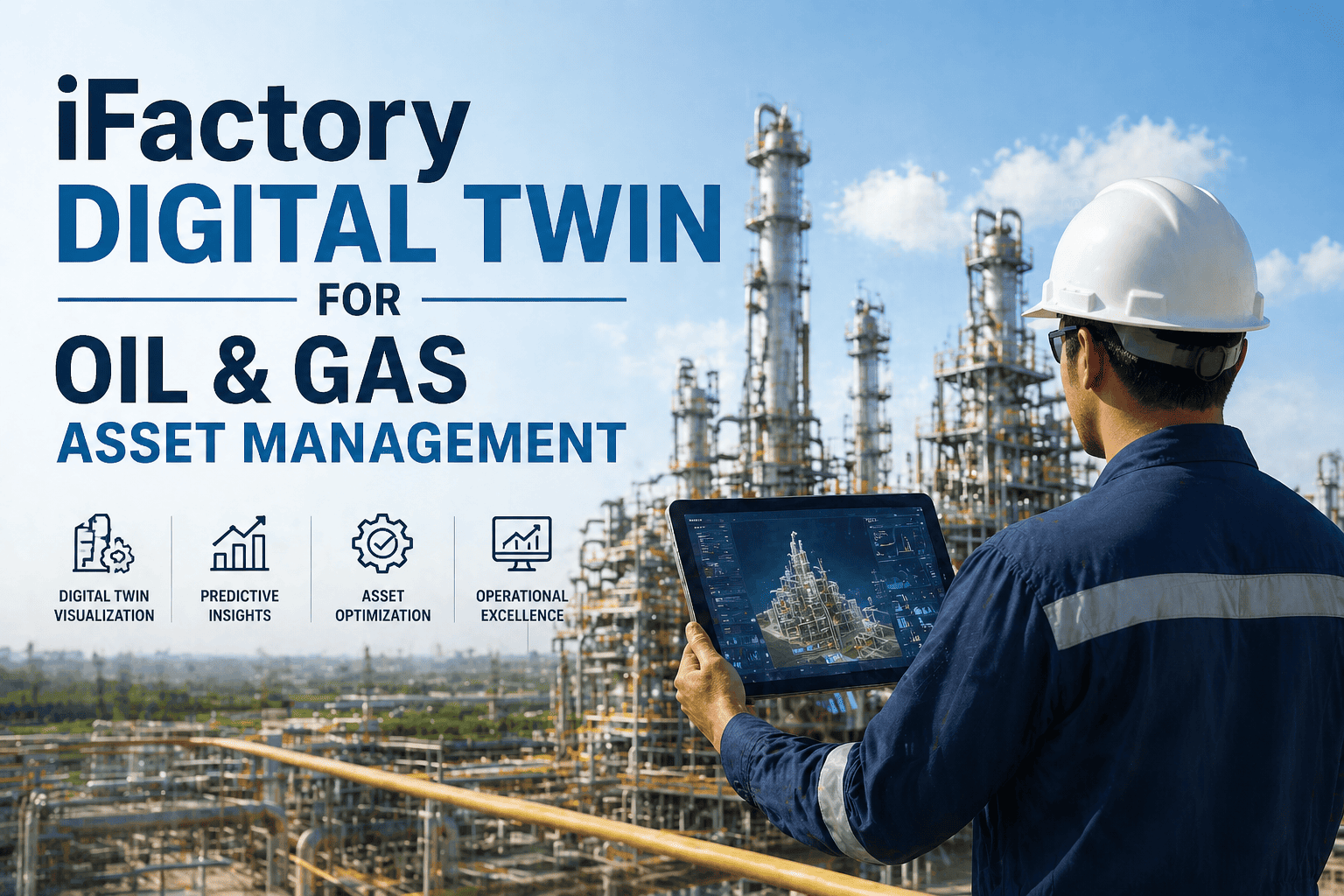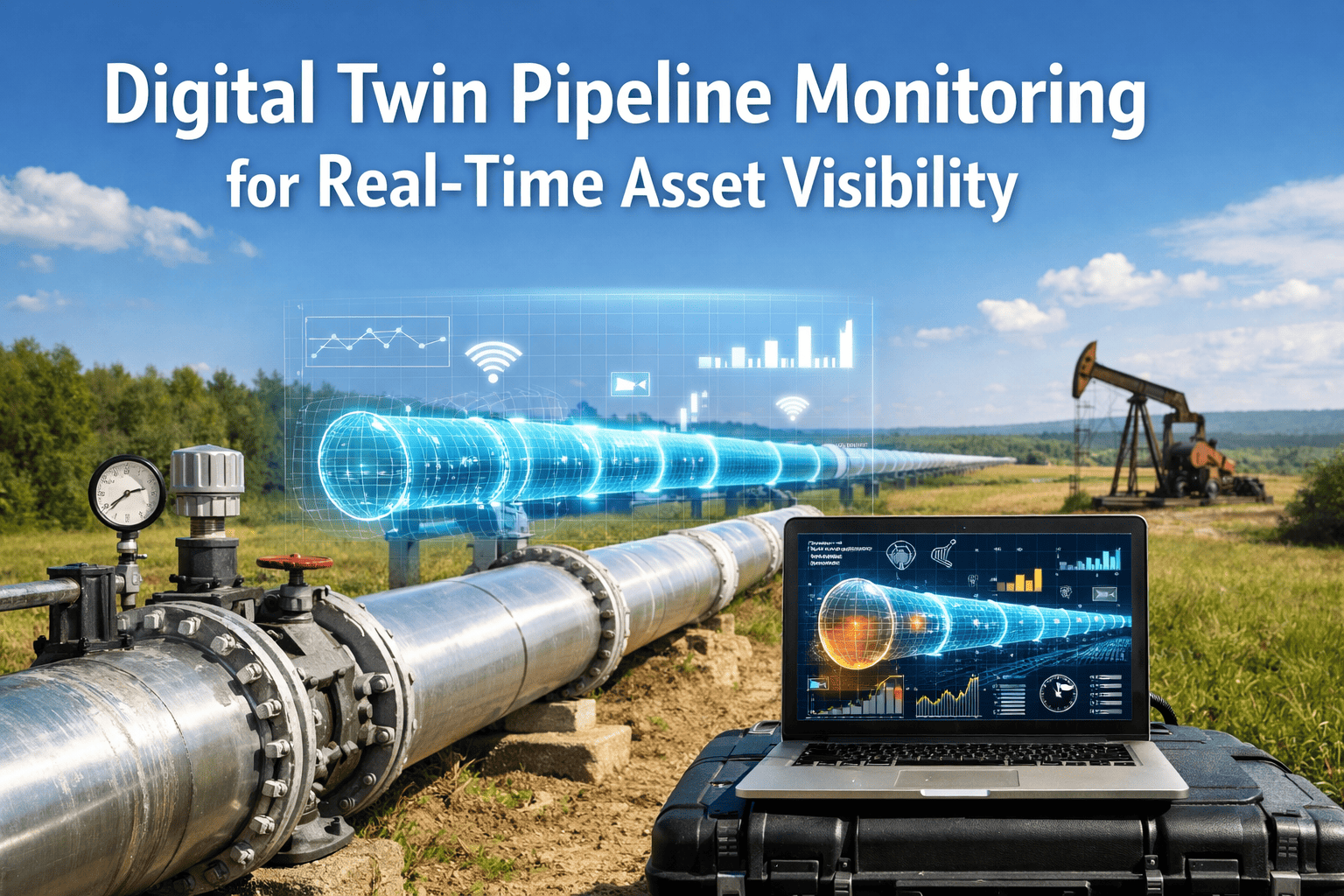
Terminal operations in oil and gas midstream have long relied on manual workflows, paper-based inventory records, and disconnected SCADA feeds that leave operators reacting to problems hours after they begin. Smart terminal management with AI and IoT integration changes this equation entirely — creating a live, predictive view of every tank, pipeline connection, loading bay, and inventory position across your entire terminal network. This article explains how AI and IoT technologies are reshaping terminal operations, where the biggest efficiency gains come from, and how iFactory's platform delivers measurable results within weeks. Book a Demo to see the platform in action.
What Smart Terminal Management Actually Means in 2025
A terminal — whether handling crude oil, LNG, refined products, or petrochemicals — is one of the most operationally complex nodes in the midstream supply chain. Dozens of tanks, multiple pipeline receipts and deliveries, truck and rail loading racks, custody transfer metering, and continuous product quality monitoring all run simultaneously. Without a unified data layer connecting these systems, visibility breaks down at every handoff.
Smart terminal management means integrating IoT sensors, SCADA historians, ERP inventory records, and AI analytics into a single operational picture. It enables real-time inventory tracking, automated anomaly detection, predictive equipment maintenance, and AI-driven demand forecasting — replacing reactive, spreadsheet-dependent workflows with proactive, data-driven decisions. Operators who have deployed these platforms report that terminal throughput improves 15–22% not from new infrastructure, but from eliminating the blind spots in existing infrastructure.
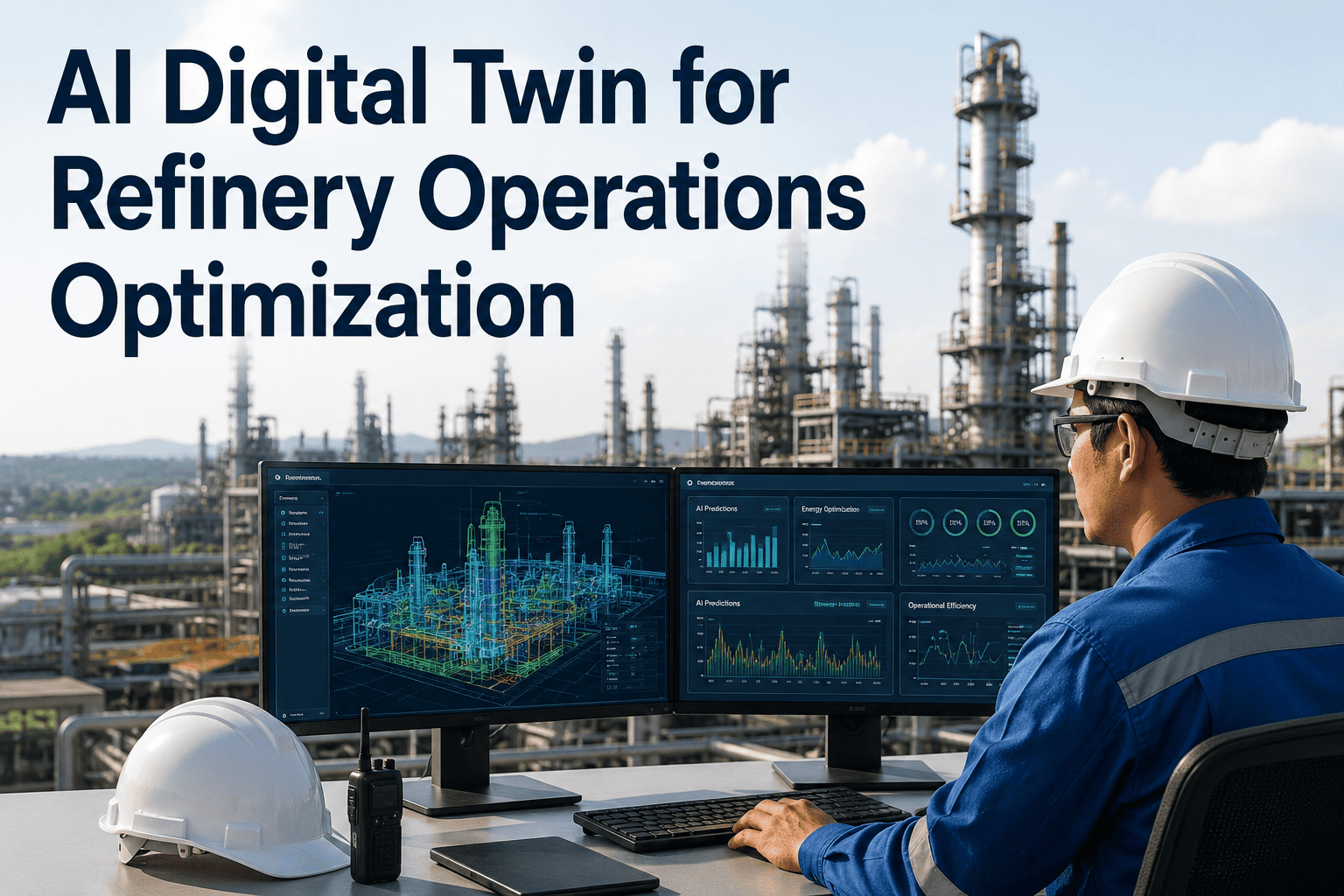
iFactory's digital twin platform is purpose-built for exactly this environment — connecting your existing SCADA, DCS, and historian data into a real-time terminal model that flags issues before they become incidents. Book a Demo to see how iFactory maps your terminal operations live.
Core AI and IoT Capabilities Transforming Terminal Operations
IoT level sensors, flow meters, and custody transfer instrumentation stream continuous inventory data into a unified AI model that tracks product volumes, quality parameters, and tank fill rates across every storage asset simultaneously. Discrepancies between metered receipts and tank gauges are flagged within minutes — not discovered during end-of-day reconciliation. AI models correlate flow rates with downstream demand signals to optimize tank allocation and minimize unnecessary product movements.
Terminal pumps, compressors, loading arms, and metering skids generate continuous vibration, temperature, and pressure signatures that AI analyzes to predict failures 30–45 days in advance. Rather than scheduling maintenance by calendar intervals — which either over-maintains healthy equipment or misses imminent failures — the platform recommends maintenance precisely when equipment degradation patterns indicate intervention is needed. Emergency repair costs drop 60–70% when failures are caught early. Book a Demo to see predictive maintenance in your terminal environment.
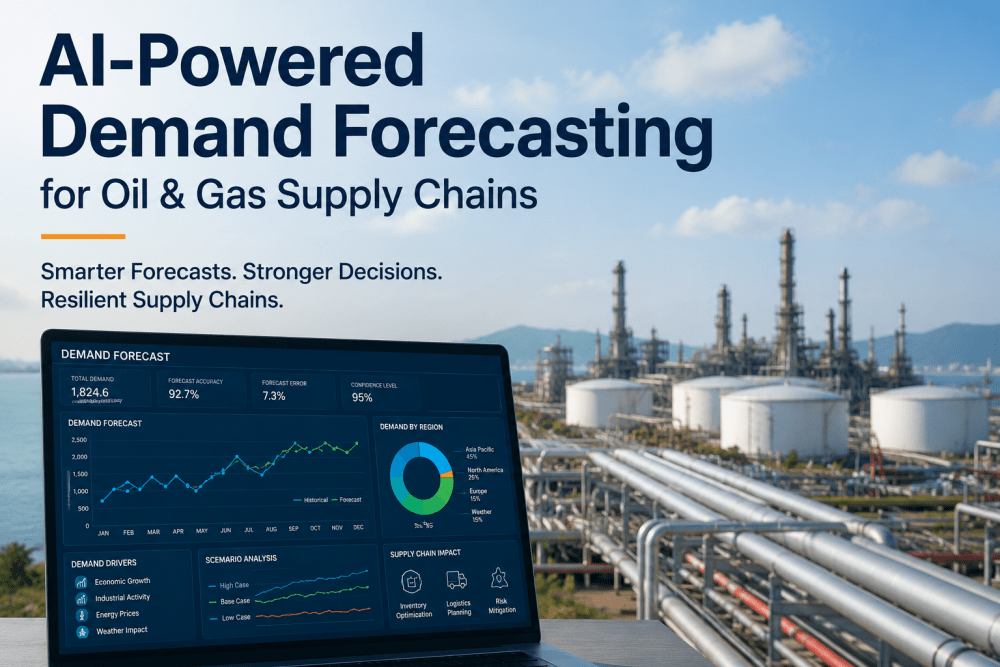
AI models integrate pipeline nomination data, historical throughput patterns, seasonal demand cycles, and downstream refinery requirements to forecast terminal throughput 7–30 days ahead. Scheduling optimization reduces truck and rail loading conflicts, minimizes demurrage charges, and aligns pipeline batch arrivals with available tank capacity. Terminals using AI forecasting report 18–25% reductions in scheduling-related demurrage exposure annually — Book a Demo to see forecasting calibrated to your operations.
Terminal receipt and delivery pipelines operate within pressure and flow rate windows that shift continuously based on upstream and downstream conditions. AI continuously analyzes pressure profiles, flow velocity, and batch interfaces to optimize pipeline utilization, detect line pack opportunities, and identify early signs of integrity degradation. Undetected pipeline anomalies that develop over days are surfaced within hours, enabling intervention before operational impact.
Custody transfer measurement errors — even fractions of a percentage — accumulate into significant financial exposure across millions of barrels. AI-powered meter health monitoring tracks measurement drift patterns, flags calibration deviations, and correlates meter readings against independent tank gauge measurements to identify discrepancies before they affect billing or regulatory reporting. Automated audit trails simplify compliance documentation for API MPMS and state regulatory requirements.
Fixed IoT sensors and AI analysis monitor volatile organic compound (VOC) emissions, vapor recovery unit performance, and tank breathing losses against regulatory thresholds in real time. Equipment degradation that increases emissions — such as floating roof seal wear or vapor recovery compressor inefficiency — is detected early, enabling repair before emission violations occur. Automated ESG reporting quantifies emission reductions from maintenance-driven operational improvements.
How IoT Architecture Enables Smart Terminal Integration
The intelligence of any smart terminal platform is only as good as the data flowing into it. A well-designed IoT architecture for terminal management layers connectivity, data processing, and analytics in a way that delivers real-time insights without disrupting existing control systems. Book a Demo to walk through how iFactory's architecture connects to your existing infrastructure.
Connect Your Terminal Data Into One Predictive Platform
iFactory integrates with your existing SCADA, historians, and ERP systems — no custom development required. Live terminal digital twin in 6 weeks with measurable results by week 4. Book a Demo to see terminal configuration for your operations.
Terminal Management Challenges AI and IoT Directly Solve
Real-World Results: Smart Terminal Management in Practice
Comparing Smart Terminal Management Platforms
| Capability | Legacy TMS | Basic SCADA Add-Ons | iFactory Digital Twin |
|---|---|---|---|
| Real-Time Inventory Visibility | Batch updates, manual gauging required | Real-time data but no reconciliation intelligence | Continuous AI-reconciled inventory with automatic discrepancy flagging |
| Predictive Maintenance | Calendar-based schedules only | Basic alarm thresholds, no degradation prediction | 30–45 day advance failure prediction across all rotating equipment |
| Demand Forecasting | Manual spreadsheet planning | None | AI-driven 7–30 day throughput forecasting with scheduling optimization |
| Custody Transfer Accuracy | Manual meter audit intervals | Real-time reads without drift detection | Continuous meter health monitoring with automated calibration alerts |
| Environmental Compliance | Separate manual reporting system | Basic threshold alerts | Automated ESG and emissions reporting from operational data |
| Deployment Timeline | 6–18 months, significant customization | 4–8 weeks but limited analytical depth | 6 weeks fixed, pre-built terminal templates, no custom development |
Expert Perspective: What Separates Effective Smart Terminal Platforms
Terminal operators consistently report the same implementation failure: connecting IoT sensors and surfacing real-time data without building the analytical layer that makes data actionable. Real-time dashboards showing tank levels and equipment status are necessary but insufficient — the differentiating value is the AI layer that correlates equipment condition to financial impact, predicts failures before they affect throughput, and optimizes scheduling decisions against live operational constraints.
Platforms that succeed operationally share three characteristics: deep SCADA integration that eliminates data silos, AI models trained on facility-specific operational history rather than generic industry templates, and alert systems calibrated tightly enough to drive action without creating alert fatigue. The deployments delivering the strongest ROI treat the digital twin not as a monitoring tool but as an operational decision support system that terminal schedulers, operations supervisors, and maintenance planners all depend on daily.
iFactory's architecture reflects these priorities — connecting existing SCADA and historian data without infrastructure replacement, training AI models on 60–90 days of facility-specific history before going live, and calibrating alert thresholds iteratively against actual operations. Book a Demo to see how this approach applies to your terminal configuration.
Full Smart Terminal Platform. Live in 6 Weeks. Results From Week 4.
iFactory connects your existing terminal data — SCADA, historians, ERP, and IoT sensors — into a unified digital twin with predictive maintenance, AI demand forecasting, and automated inventory intelligence. No custom development. No operational disruption.
Frequently Asked Questions: Smart Terminal Management AI IoT
Transform Terminal Operations With AI and IoT Intelligence
iFactory's smart terminal management platform delivers real-time digital twin visibility, 30–45 day predictive maintenance alerts, AI demand forecasting, and automated inventory reconciliation across crude, LNG, and refined product terminals. Live in 6 weeks. No custom development required. Book a Demo to explore digital twin configuration for your terminal operations.