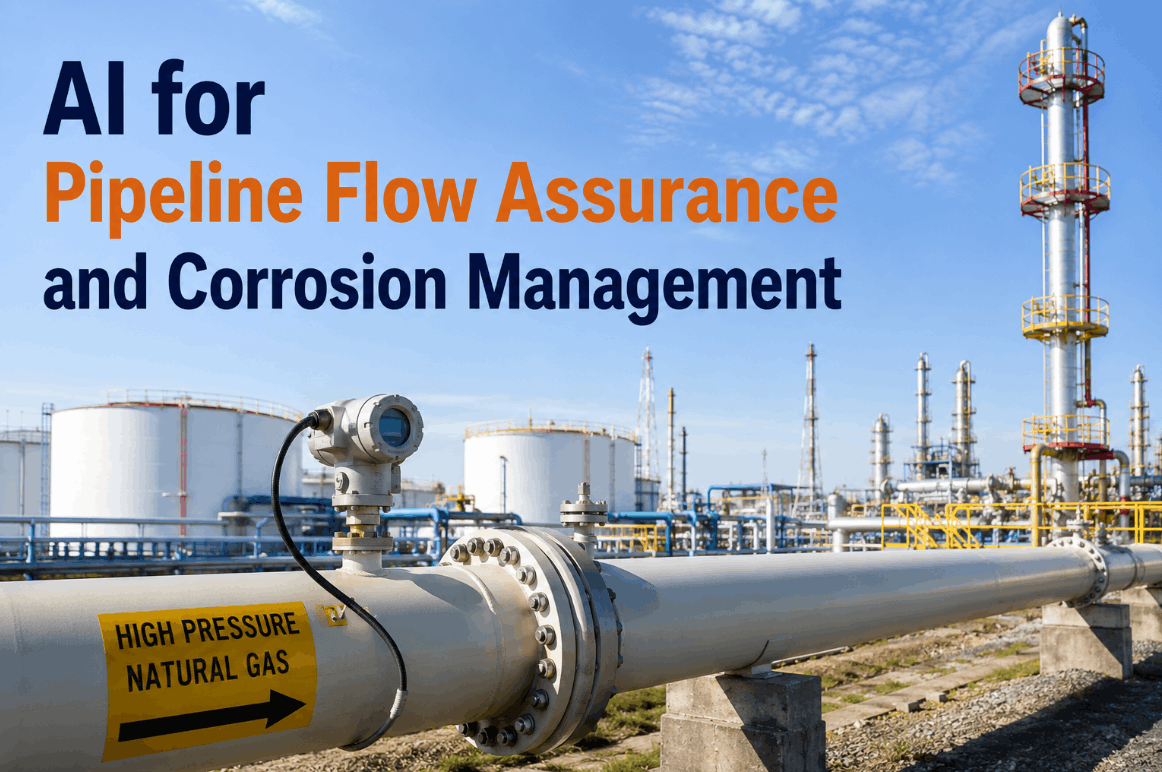
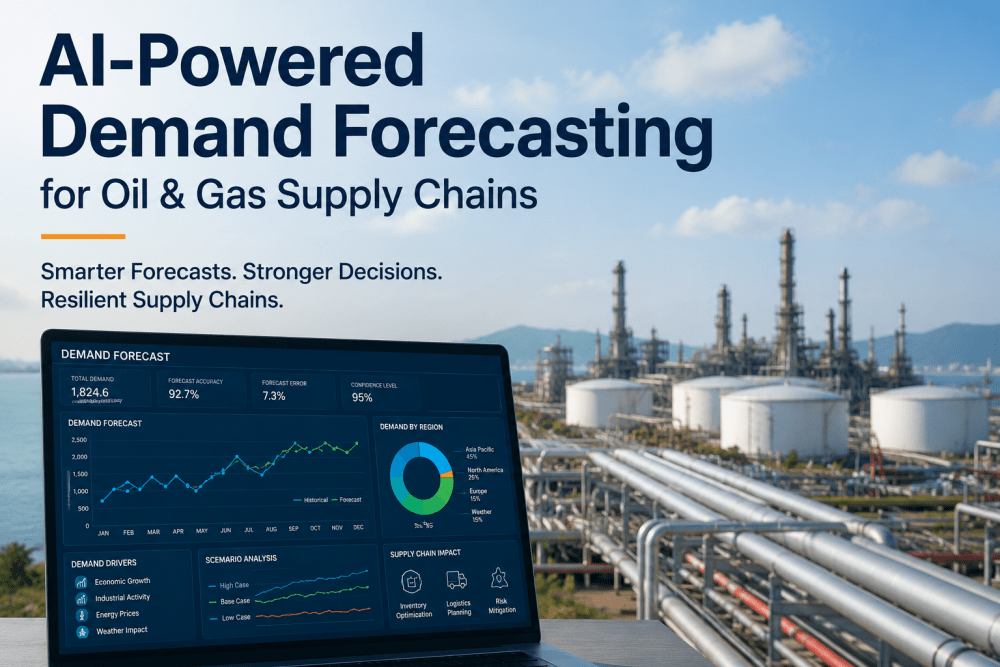
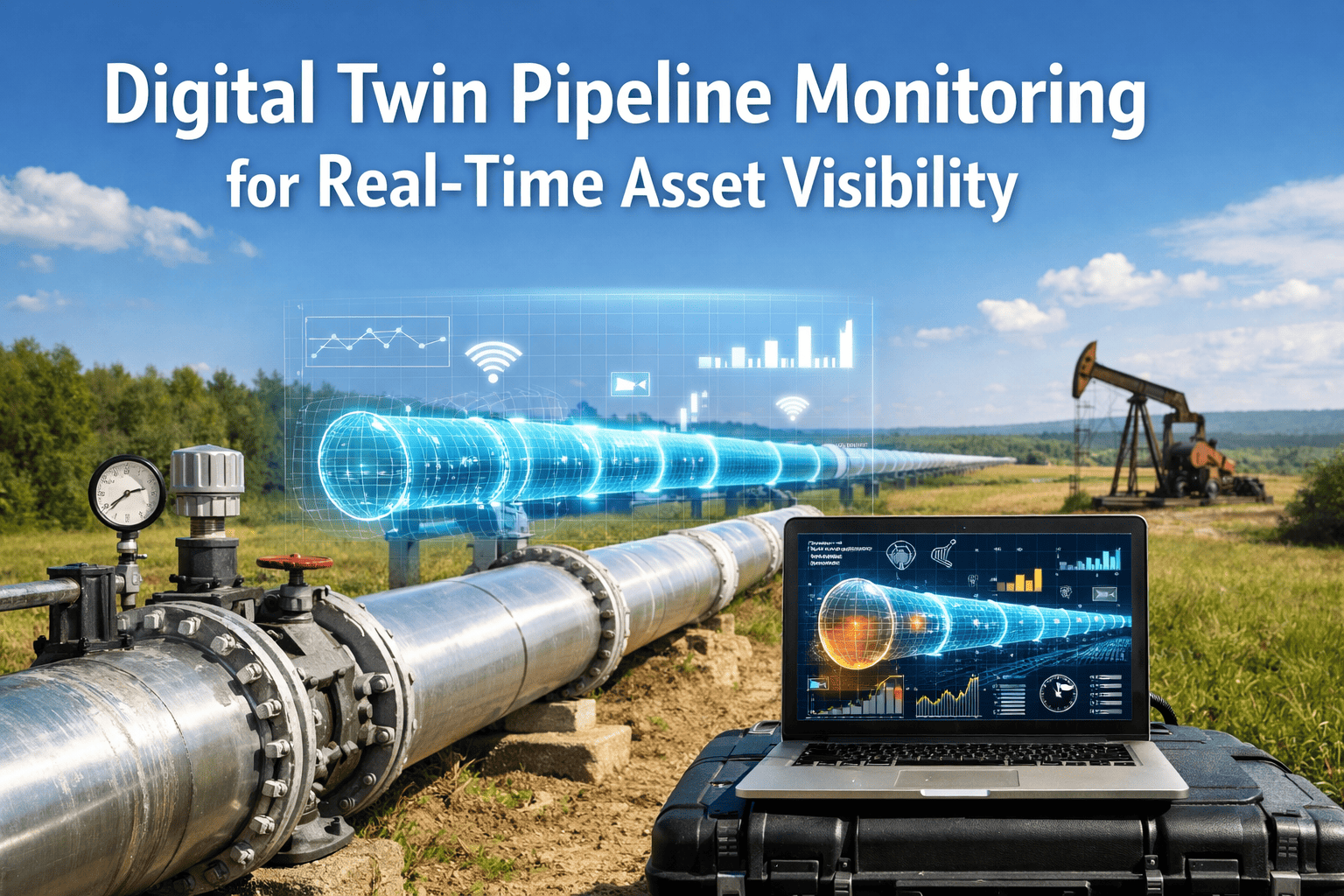
Underground gas storage facilities — salt caverns, depleted reservoirs, aquifer formations, and lined rock caverns — are the pressure regulation backbone of North American natural gas supply. Operating at injection rates of 1–4 Bcf per day across hundreds of wells, these facilities depend on accurate inventory forecasting, real-time pressure surveillance, and withdrawal scheduling that must align with pipeline commitments, grid demand events, and seasonal price spreads. Conventional SCADA-based management and static reservoir models cannot keep pace with intraday demand volatility, compressor degradation patterns, or cushion gas migration events. iFactory's AI platform — Book a Demo with our storage specialists — delivers continuous inventory optimization, predictive compressor management, real-time wellhead anomaly detection, and AI-driven withdrawal scheduling, integrated directly into your existing SCADA and DCS environment without control system replacement.
38%
Average improvement in injection and withdrawal scheduling efficiency across monitored cavern fields
$2.4M
Average annual operational cost reduction per integrated underground storage facility
94%
Inventory accuracy achieved vs. 71% with conventional static reservoir modeling
6 wks
Full AI deployment from historical data ingestion to live optimization monitoring
The Hidden Complexity of Underground Gas Storage Operations
Underground gas storage sits at the intersection of reservoir engineering, pipeline logistics, power grid demand, and commodity market timing — and most facilities are still managed with tools designed for a simpler era. The operational gaps are significant and measurable.
Delayed Inventory Visibility
Static volumetric models updated daily or weekly cannot reflect real-time cushion gas behavior, migration patterns, or wellbore skin damage accumulation — creating inventory reporting errors of 3–8% that compound into scheduling mismatches with pipeline commitments.
Compressor Reliability Gaps
Reciprocating and centrifugal compressors on injection strings fail without early warning under conventional vibration monitoring, creating unplanned withdrawal capacity shortfalls during peak demand windows — the exact moments when storage value is highest.
Wellhead Anomaly Blind Spots
Casing pressure excursions, tubing integrity events, and formation water breakthrough across multi-well storage fields are identified through periodic manual well tests — typically 14–30 days between checks — while SCADA threshold alarms only trigger after deviation is severe.
Static Demand Forecasting
Pipeline nomination and withdrawal scheduling based on seasonal historical patterns consistently underperforms against weather-driven demand spikes, power generation switching events, and LDC sendout variability — leaving storage value unrealized or injection targets unmet.
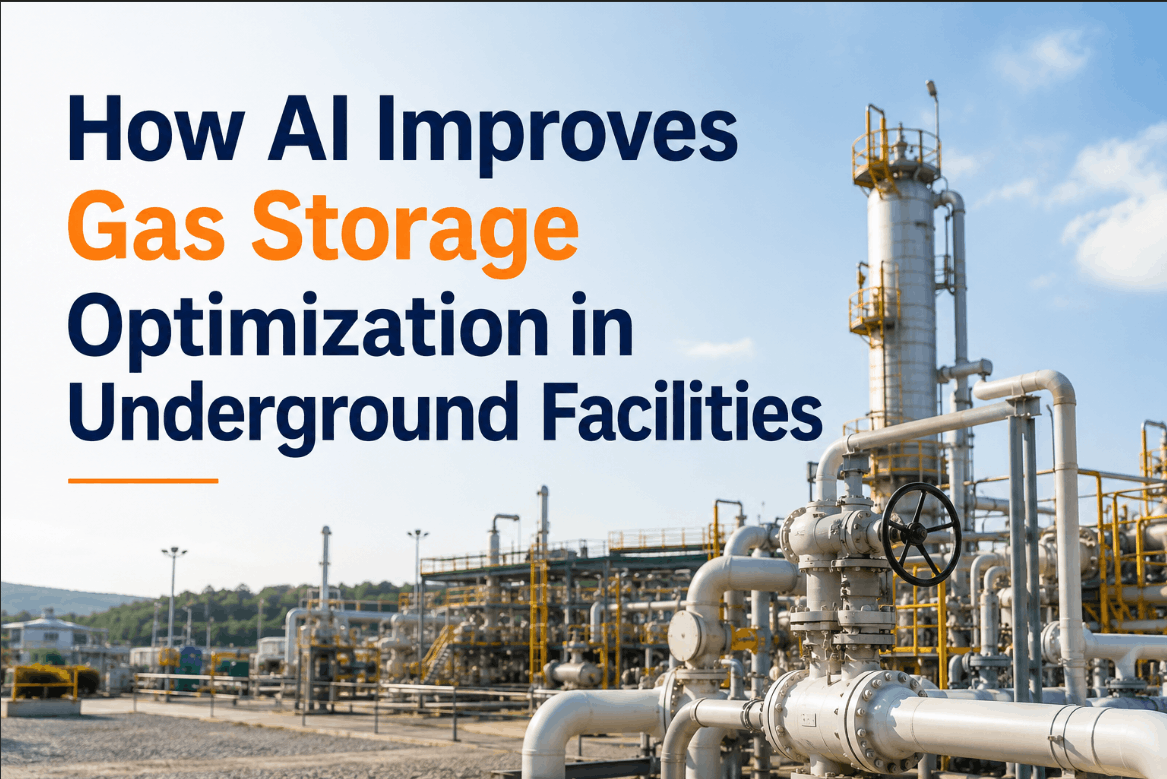
How AI Improves Gas Storage Optimization in Underground Facilities
AI gas storage optimization underground works by replacing static reservoir models and threshold-based SCADA monitoring with continuous, multi-variable intelligence that learns your facility's specific geology, equipment behavior, and demand patterns. iFactory deploys six interconnected AI capabilities across underground storage operations.
01
Real-Time Reservoir Inventory Modeling
iFactory's reservoir AI ingests wellhead pressure, temperature, flow rate, and formation response data in real time — continuously updating volumetric inventory estimates with 94% accuracy versus the 71% typical of static daily models. Injection/withdrawal balance is tracked at the well level, not just the field level.
02
Compressor Predictive Maintenance
LSTM-based failure forecasting monitors valve dynamics, rod load patterns, discharge temperature trends, and vibration spectra across injection compressor trains — predicting maintenance requirements 7–45 days before unplanned failure events and scheduling maintenance windows outside peak injection periods.
03
AI Demand Forecasting and Withdrawal Scheduling
Multi-variable demand AI integrates weather forecast data, power grid dispatch signals, pipeline nomination patterns, and regional LDC sendout history — generating 24–72 hour withdrawal schedules that maximize storage value capture and maintain pipeline delivery commitments simultaneously.
04
Wellhead Anomaly Detection
Continuous multi-well surveillance AI classifies wellhead pressure deviations, tubing integrity signatures, and formation water indicators in real time — replacing 14–30 day manual well test cycles with AI-graded alerts that prioritize by risk severity and estimated production impact.
05
Pipeline Interface Optimization
iFactory's pipeline AI monitors interconnect pressures, nomination vs. actual flow variances, and compressor station operating points — identifying operational efficiency losses and nomination errors before they result in imbalance penalties or gas-in-kind charges at interconnection points.
06
SCADA and DCS Integration
Native OPC-UA, MQTT, and Modbus connectors integrate with Emerson, Honeywell, Yokogawa, and Siemens control environments plus leading historian platforms — pulling process data into AI optimization models without modifying control logic or interrupting SCADA operations. OT data remains inside your security perimeter.
AI Gas Storage Optimization That Pays Back in Week 4. Not Month 18.
iFactory's fixed-scope deployment program delivers measurable inventory accuracy improvements, compressor failure predictions, and withdrawal schedule optimization within 6 weeks — without replacing your existing SCADA infrastructure or control systems.
AI vs. Conventional Underground Storage Management: A Direct Comparison
The performance gap between AI-driven optimization and conventional SCADA-based management widens at precisely the moments that matter most — peak demand events, weather-driven withdrawal spikes, and compressor reliability windows. The following comparison reflects operational outcomes across iFactory deployments at U.S. underground storage fields.
| Operational Area |
Conventional SCADA Management |
iFactory AI Optimization |
| Inventory Accuracy |
Static daily model updates. 71% average inventory accuracy. Errors compound over injection season. |
Real-time multi-well AI modeling. 94% inventory accuracy. Well-level balance tracking updated continuously. |
| Compressor Management |
Threshold vibration alarms. Unplanned failures average 2–4 per injection season. Mean repair time 48–96 hours. |
Predictive failure forecasting 7–45 days ahead. Unplanned failures reduced by 78%. Maintenance windows scheduled during low-demand periods. |
| Withdrawal Scheduling |
Historical seasonal patterns with manual adjustments. Demand forecast error of 12–22% on 48-hour horizon. |
AI demand forecasting integrating weather, grid signals, and LDC patterns. 48-hour forecast error reduced to under 6%. |
| Wellhead Surveillance |
Manual well tests every 14–30 days. Anomalies detected after 15–30 days of progressive deviation. |
Continuous AI wellhead monitoring. Tubing integrity, casing pressure, and water breakthrough classified in real time with graded severity alerts. |
| Pipeline Imbalance |
Nomination errors identified post-cycle. Imbalance penalties average $180K–$420K per year per interconnect. |
Real-time nomination vs. actual flow AI comparison. Imbalance exposure reduced by 71% within first operating month. |
| Compliance Reporting |
Manual data compilation for FERC Form 2, DOT, and state regulatory submissions. High labor input, error exposure. |
Auto-generated compliance reports for FERC, DOT Pipeline Safety, EPA Subpart W, and state storage regulations. No manual compilation required. |
| Deployment Timeline |
SCADA upgrade projects: 12–24 months. High contractor cost. Operational risk during cutover. |
6-week fixed deployment. No SCADA replacement. Pilot results on historical injection data by week 3. Full optimization live by week 6. |
iFactory AI Deployment Workflow for Underground Gas Storage
iFactory follows a structured 5-stage deployment — Book a Demo to review the full scope for your facility — designed specifically for underground storage operations, delivering measurable optimization results within a fixed 6-week program with no open-ended professional services engagements.
01
Data Integration
SCADA historian extraction, well test data ingestion, compressor maintenance records, and pipeline nomination history loaded into iFactory AI environment
02
SCADA Connection
OPC-UA and Modbus live connections to wellhead RTUs, compressor stations, metering points, and pipeline interconnects — no control logic modification
03
AI Model Training
Reservoir inventory, compressor failure, demand forecasting, and wellhead anomaly AI models trained on your facility's historical data and operating patterns
04
Pilot Validation
AI predictions validated against last injection/withdrawal season — inventory accuracy, compressor event prediction, and demand forecast performance confirmed before go-live
05
Live Optimization
Full AI storage optimization active across all wells, compressors, and pipeline interfaces — 24/7 monitoring, automated scheduling recommendations, and compliance reporting enabled
ROI EVIDENCE BEGINS AT WEEK 3 PILOT VALIDATION
Storage operators completing iFactory's 6-week deployment report an average of $1.2M in first-season operational value through avoided compressor failures, imbalance penalty reduction, and improved injection/withdrawal scheduling — with inventory accuracy gains measurable from week 3 of pilot validation.
$1.2M
Average first-season operational value per facility
78%
Reduction in unplanned compressor downtime events
71%
Reduction in pipeline imbalance penalty exposure
Use Cases and KPI Results from Live Underground Storage Deployments
These outcomes reflect iFactory deployments — Book a Demo to see live platform results applied to your storage type — at operating underground gas storage facilities across three optimization scenarios, with performance data representing 12-month post-deployment results.
A Gulf Coast operator managing 14 salt cavern storage cells with 42 Bcf total working gas capacity was operating with daily manual inventory reconciliation producing 6–9% volumetric errors on peak withdrawal days — creating pipeline nomination shortfalls averaging $340K per event. iFactory deployed real-time cavern pressure-temperature modeling across all 14 cells, with AI inventory estimates updated every 15 minutes from wellhead instrumentation. Inventory accuracy improved from 69% to 96% within 18 days of go-live. Pipeline nomination alignment improved by 41% over the first withdrawal season.
96%
Inventory accuracy achieved — up from 69% with manual daily reconciliation
$2.1M
Annual nomination shortfall penalty cost eliminated
41%
Improvement in pipeline nomination alignment over first withdrawal season
A Midcontinent storage operator running 8 reciprocating compressor units on a depleted reservoir injection field experienced 3 unplanned compressor failures per injection season — each costing $280K–$460K in emergency repair, lost injection capacity, and gas purchase substitution. Conventional vibration monitoring provided 2–4 hours advance warning, insufficient for planned response. iFactory's compressor AI identified valve condition degradation, rod load trend deviation, and discharge temperature anomalies 12–31 days before each failure event, enabling all maintenance to be completed during scheduled low-pressure windows.
0
Unplanned compressor failures in 12-month post-deployment period
$1.4M
Annual emergency repair and gas substitution cost eliminated
22 days
Average advance warning time before compressor intervention required
A Northeast aquifer storage operator supplying 6 LDC customers faced chronic under-delivery during cold snap events — demand spikes not captured by seasonal forecasting models created sendout shortfalls with contractual penalty exposure of $190K–$380K per event. iFactory's AI demand forecasting integrated NOAA weather grid data, power grid marginal heat rate signals, and LDC sendout pattern history into 48-hour withdrawal schedules with rolling updates. Demand forecast error on 48-hour horizon dropped from 18% to 5.4% over the first heating season.
5.4%
48-hour demand forecast error — down from 18% with conventional seasonal models
$870K
Annual LDC contractual penalty exposure eliminated
100%
LDC delivery commitment met through heating season — first time in 4 years
These Results Are Repeatable. Your Storage Facility Is Next.
Every iFactory deployment is scoped to your specific storage type, reservoir geometry, compressor configuration, and pipeline interconnect structure — so optimization results reflect your operations, not a benchmark average.
Expert Review: AI in Underground Gas Storage Operations
"Underground gas storage optimization has traditionally been constrained by the resolution of reservoir models and the latency of SCADA data — you're always managing against a picture that's hours or days old. What AI platforms like iFactory introduce is continuous reservoir state estimation that responds to actual wellhead behavior in near-real time. For salt cavern operations in particular, where pressure-volume behavior is tightly predictable, the AI inventory accuracy gains are immediately monetizable through tighter nomination management and reduced balancing exposure. The compressor predictive maintenance application is equally compelling for depleted reservoir operators running reciprocating equipment in variable-load injection service — these machines accumulate damage faster than annual inspection intervals capture."
Key AI Technologies Driving Underground Storage Performance
AI gas storage optimization underground is not a single algorithm — it is a stack of purpose-built models that address distinct operational challenges across the storage facility lifecycle. Understanding which AI capability addresses which operational gap helps prioritize deployment sequencing for maximum early ROI.
| AI Technology |
Storage Application |
Primary Operational Benefit |
Typical ROI Horizon |
| LSTM Sequence Models |
Compressor valve degradation, rod load trending, discharge temperature escalation prediction |
78% reduction in unplanned compressor failures; maintenance scheduled in low-demand windows |
First compressor event prevented — typically within 30–60 days of go-live |
| Physics-Informed Neural Networks |
Reservoir pressure-volume-temperature state estimation; cushion gas tracking; wellbore skin modeling |
94% inventory accuracy; real-time balance at well level; improved nomination management |
First injection or withdrawal season; nomination alignment improves within 2–4 weeks |
| Ensemble Demand Forecasting |
48–72 hour withdrawal schedule optimization integrating weather, grid signals, and LDC sendout history |
Demand forecast error reduced from 12–22% to under 6%; contractual delivery performance improved |
First heating season or peak demand window following deployment |
| Anomaly Detection (Isolation Forest + Autoencoder) |
Wellhead casing pressure, tubing integrity, formation water breakthrough, and flow rate anomaly classification |
Replaces 14–30 day manual well test cycles with real-time graded severity alerts per well |
Active from go-live; early anomaly catches within first 30 days common |
| Reinforcement Learning Optimization |
Multi-well injection/withdrawal sequencing and compressor loading optimization against pipeline nominations |
3–7% fuel gas savings across compressor trains; pipeline imbalance exposure reduced by 71% |
Measurable fuel gas improvement within first full injection or withdrawal cycle |
Conclusion: AI Is Now the Competitive Standard for Underground Gas Storage
Underground gas storage facilities that continue operating on static reservoir models, threshold-based SCADA alarms, and seasonal demand forecasting are leaving measurable value on the table every injection and withdrawal season — in the form of nomination penalties, compressor emergency repairs, and inventory management errors that accumulate to millions of dollars annually across a multi-facility storage portfolio.
AI gas storage optimization underground is not an emerging concept — it is a deployed, validated operational improvement that U.S. storage operators are using right now to improve inventory accuracy, prevent compressor failures, and reduce pipeline imbalance exposure. iFactory's purpose-built AI platform — Book a Demo to see it applied to your facility — brings this capability within a 6-week fixed deployment program, with measurable results beginning in week 3 and full optimization live by week 6.
94%
Inventory accuracy with AI vs. 71% conventional
78%
Reduction in unplanned compressor failures
6 wks
Fixed deployment timeline to full optimization
$2.4M
Average annual operational cost reduction
Frequently Asked Questions
Does iFactory's AI work for all underground storage types — salt caverns, depleted reservoirs, and aquifer formations?
Yes. iFactory deploys —
Book a Demo to confirm compatibility with your formation — separate sub-models per storage type, each calibrated to your specific geology and well configuration during the Week 1–2 data integration phase.
Which SCADA and control systems does iFactory integrate with for underground storage operations?
iFactory connects natively via OPC-UA and Modbus to Emerson DeltaV, Honeywell Experion, Yokogawa CENTUM, Siemens PCS 7, and ABB System 800xA — integration completed within 2 weeks without SCADA logic modification, with OT data remaining inside your security perimeter.
How long before iFactory's AI produces reliable inventory accuracy and demand forecasting results?
Baseline model training takes 5–8 days using 2–4 years of historical data; first results are validated during the Week 3–4 pilot phase, with full calibration — inventory accuracy above 90% and demand forecast error below 8% — achieved within 5–6 weeks.
What compliance reporting does iFactory generate for underground storage operations?
iFactory auto-generates compliance reports for FERC Form 2, DOT PHMSA, EPA Subpart W, and applicable state storage regulations — produced automatically at period close with no manual data compilation required.
Can iFactory optimize injection and withdrawal scheduling across a multi-facility storage portfolio?
Yes. iFactory supports multi-facility portfolio optimization —
Book a Demo to review the full scope — within a single deployment, coordinating injection/withdrawal scheduling across distributed storage fields based on pipeline interconnect constraints and aggregate demand forecasts.
Optimize Your Underground Gas Storage Operations with AI. Live in 6 Weeks.
iFactory gives underground storage operators real-time AI inventory modeling, predictive compressor maintenance, AI-driven withdrawal scheduling, and continuous wellhead anomaly detection — fully integrated with your existing SCADA and control systems in 6 weeks, with measurable optimization results beginning in week 3.
94% inventory accuracy with AI reservoir modeling
78% reduction in unplanned compressor failures
SCADA integration in under 2 weeks — no control logic changes
Auto-generated FERC, DOT, and EPA compliance reports