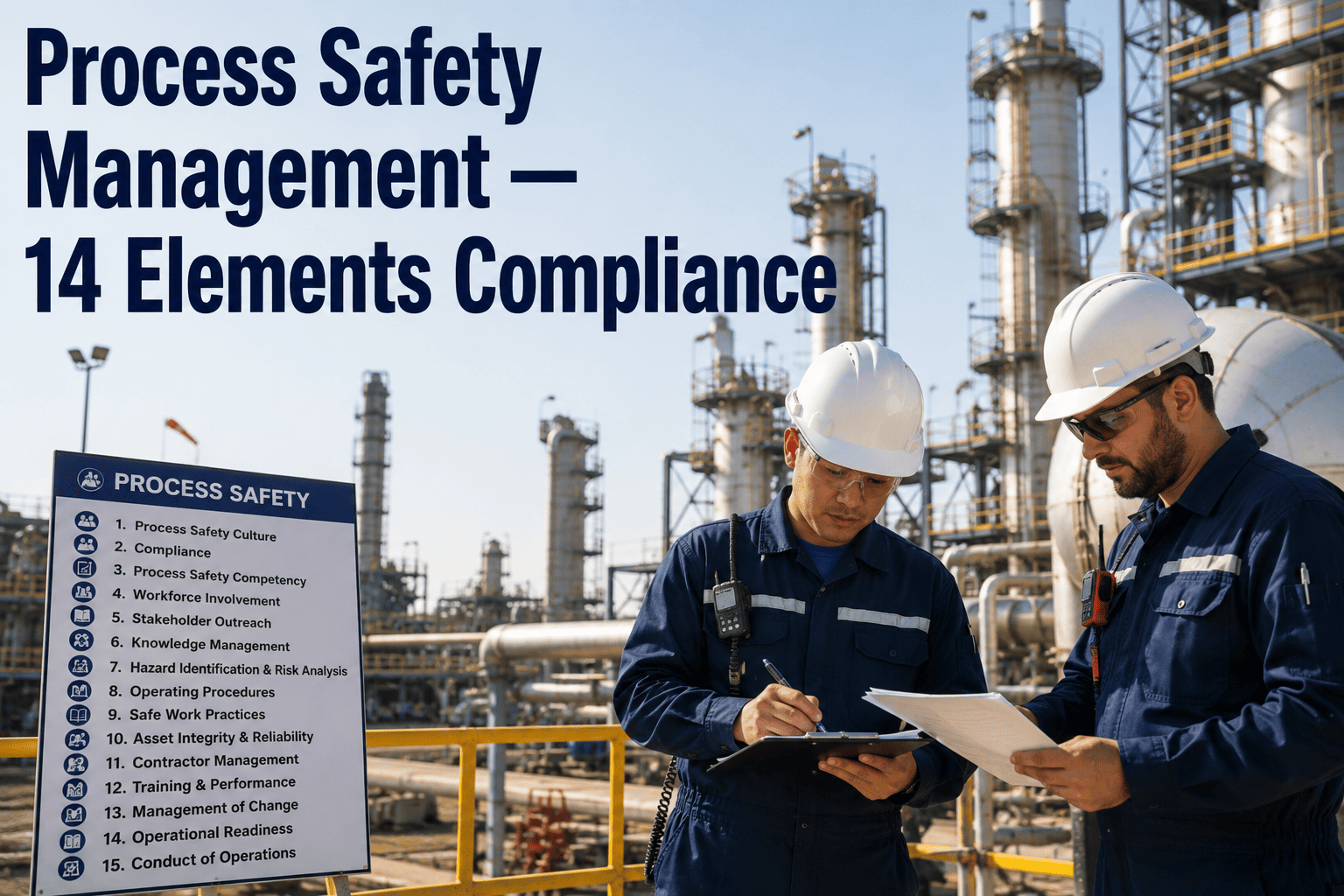
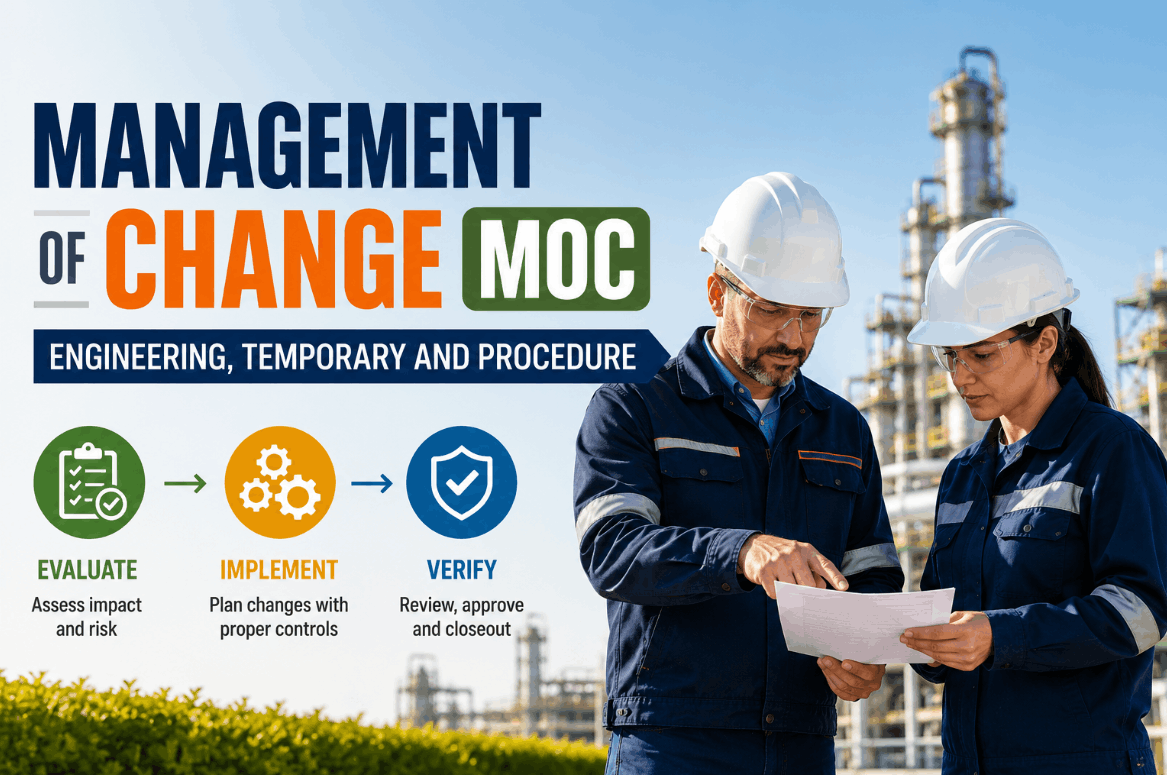
A temporary bypass valve installed during a turnaround, never formally reviewed, still open eight months later. A "like-for-like" pump replacement that quietly used a higher-capacity motor. Under OSHA's Process Safety Management standard, 29 CFR 1910.119(l), every one of these is a management of change failure waiting to surface — and MOC remains one of the most frequently cited PSM elements precisely because changes happen constantly while formal review often doesn't keep pace. See how iFactory keeps every change on the record — book a demo.
Management of Change
Every Uncontrolled Change Is a Citation Waiting to Be Found.
iFactory structures your MOC workflow — categorization, risk assessment, approval, and pre-startup safety review — so no change to process, equipment, or procedure slips through uncontrolled.
Why MOC Keeps Showing Up in Audit Findings
Most-Cited
MOC is consistently among the most frequently cited PSM elements in OSHA inspections of covered facilities.
Continuous
Changes to chemicals, technology, equipment, and procedures happen daily, while formal review often lags behind.
Multi-Element
A single unmanaged change can invalidate process safety information, training records, and procedures at once.
The MOC Workflow, Step by Step
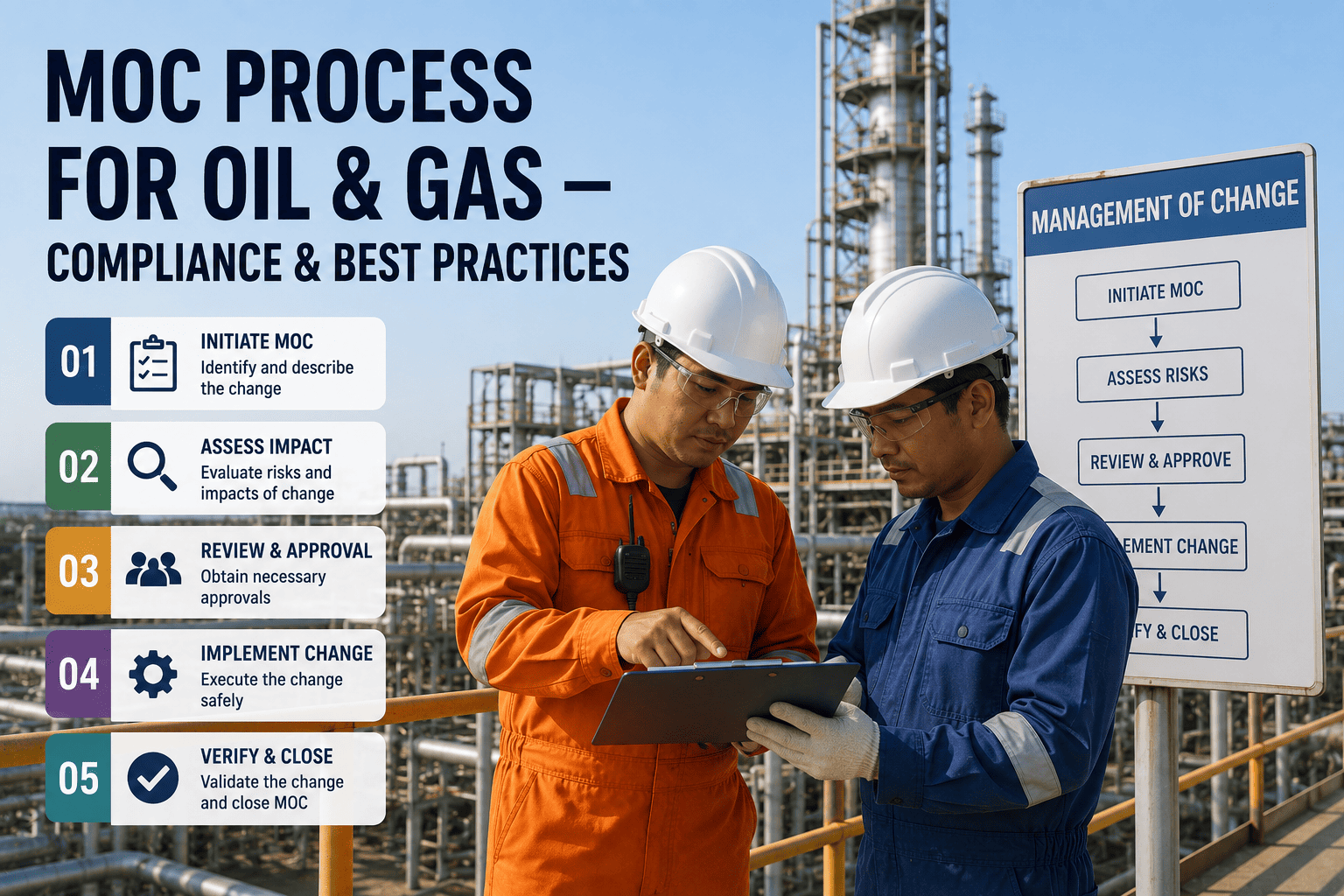
A defensible MOC process under 29 CFR 1910.119(l) isn't a single form — it's a sequence of gates, each one verifying the previous step was actually completed before the change moves forward, ending with the process safety information itself being updated to reflect reality.
1
Change Identification & Categorization
The proposed change is logged and classified — is it a true change, or a replacement in kind that doesn't trigger the full MOC process?
2
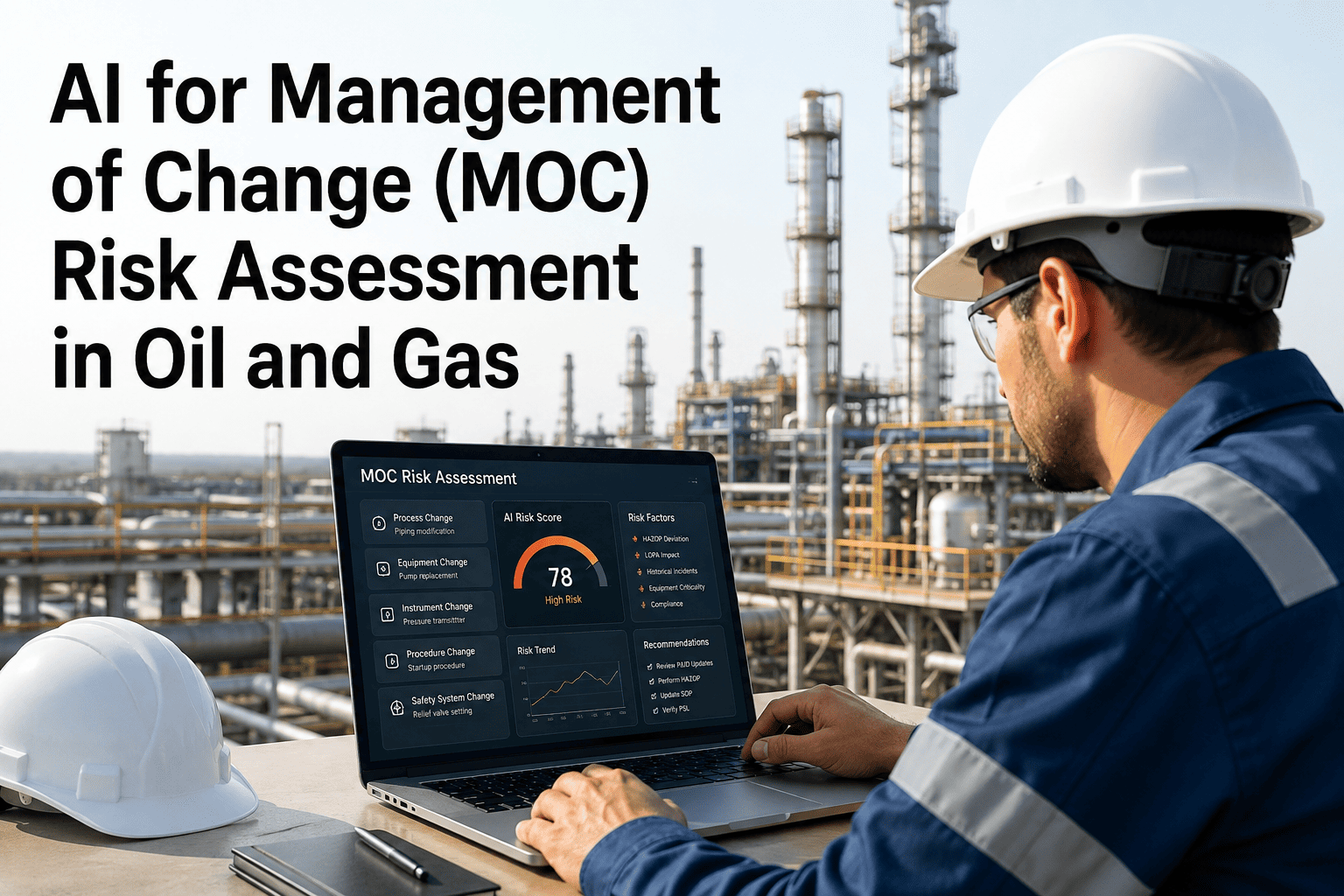
Technical & Risk Basis Review
Engineers and safety personnel assess how the change affects process chemistry, equipment ratings, or existing safeguards.
3
Approval by Qualified Personnel
The change is formally authorized only after the risk basis has been reviewed by people qualified to evaluate it.
4
Documentation Update
P&IDs, operating procedures, training materials, and process safety information are updated to reflect the change.
5
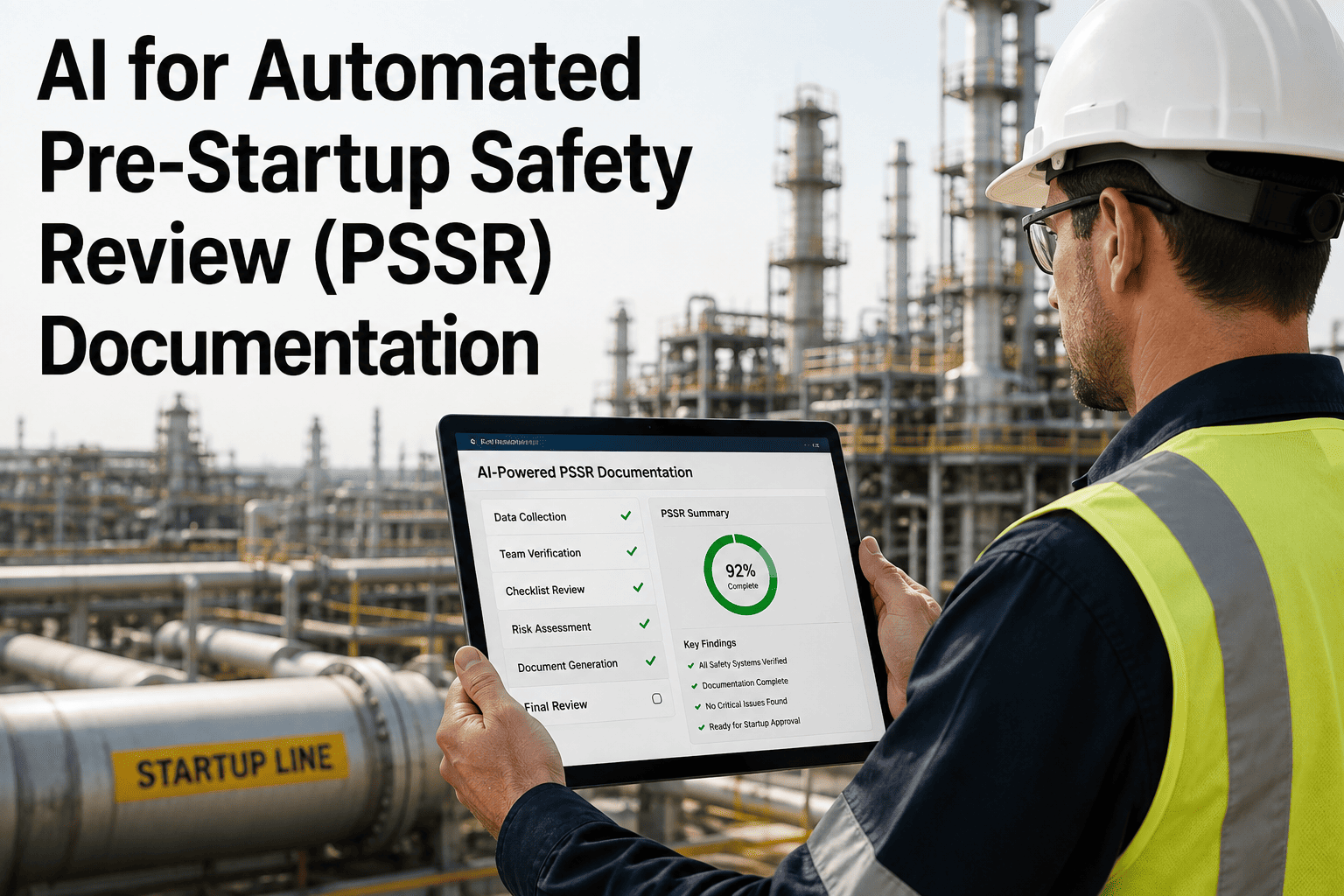
Pre-Startup Safety Review
Before startup, a PSSR confirms construction matches design, procedures are in place, and training is complete.
Bring your last audit findings on MOC. iFactory will show you exactly where the workflow gate should have caught it.
MOC vs. PSSR: Two Gates, Not One
Management of Change
Evaluates whether a change should be made at all, and what new safeguards, procedures, or training it requires before implementation begins.
Pre-Startup Safety Review
Verifies those safeguards are physically and procedurally in place before the modified process is actually started up.
What Triggers an MOC Review
Process Chemistry Changes
New feedstock, catalyst, or chemical additive that alters reaction conditions or corrosivity.
Equipment Modifications
Any change beyond a strict replacement in kind, including capacity, material, or design changes.
Procedure Changes
Operating, maintenance, or emergency procedure revisions that affect how the process is run.
Organizational Changes
Staffing or role changes that affect who is responsible for safety-critical decisions.
Manual MOC Tracking vs. an Integrated Workflow
| MOC Activity | Manual / Paper-Based | iFactory MOC Workflow |
| Change categorization |
Inconsistent, reviewer-dependent |
Standardized decision workflow |
| Approval routing |
Emails and signatures, easy to lose track of |
Sequential, auditable approval chain |
| PSI & procedure updates |
Manually reconciled after the fact |
Linked directly to the MOC record |
| PSSR completion |
Tracked in a separate checklist |
Integrated into the same change record |
| Audit trail |
Reconstructed from scattered files |
Complete record exportable on demand |
Where MOC Failures Cause the Most Damage
Refineries & Petrochemical Plants
High change frequency across process units makes tracking category and approval status manually a losing battle.
Gas Processing Facilities
Equipment substitutions during maintenance are a common source of undocumented, unreviewed change.
Offshore Platforms
Remote locations make it especially easy for a temporary fix to become permanent without formal review.
Pipeline Facilities
Station and valve modifications need the same rigor as process unit changes, and are often overlooked.
Where MOC Programs Quietly Break Down
01
Temporary changes never get a formal expiry or closure step — a bypass installed for a turnaround is still in place a year later with no record of why.
02
"Replacement in kind" is applied inconsistently across shifts — one reviewer's routine swap is another's undocumented equipment change.
03
Approved changes don't automatically trigger a procedure or training update — the MOC record closes while the operating procedure still describes the old configuration.
04
PSSR checklist is completed from memory, not against the actual MOC scope — items outside the reviewer's habitual checklist go unverified.
Why Digitizing MOC Pays Off Beyond the Next Audit
The immediate motivation for tightening an MOC process is usually an audit finding, but the ongoing value is operational: every change captured in a structured workflow becomes searchable history the next engineer can reference instead of relying on institutional memory that walks out the door with retirements and turnover. A facility that can pull up every modification made to a specific vessel over the last decade, along with the risk basis for each one, resolves troubleshooting and future MOC reviews faster than one reconstructing that history from filing cabinets. That compounding value is usually what turns MOC digitization from a compliance project into a permanent operational asset.
FAQ: Management of Change Process
What counts as a "replacement in kind" that doesn't require full MOC review?
A replacement in kind means the new component matches the original in specification, material, capacity, and function closely enough that it doesn't introduce new risk — for example, replacing a worn gasket with an identical part from the same manufacturer. The distinction matters because it determines whether the full MOC workflow is required or whether the replacement can proceed under routine maintenance procedures. Facilities that define this boundary loosely often end up with equipment substitutions that technically required review but were processed as routine work, which is a common root cause behind MOC-related citations.
Is a PSSR required for every change that goes through MOC?
Not every MOC requires a PSSR — minor or administrative changes that don't affect process safety information typically don't trigger one. OSHA requires a PSSR under 29 CFR 1910.119(i) for new facilities and for modifications significant enough to change process safety information, but best practice is to define clear criteria in advance and err toward conducting the review when there's any doubt about significance.
Ask our team how PSSR trigger criteria are configured.
Who should be involved in approving an MOC before a change is implemented?
OSHA does not mandate a specific approval team composition, but a defensible process typically includes the change originator, a process or reliability engineer who can assess the technical risk, and an operations or safety representative who understands how the change affects day-to-day work. For higher-risk changes, this often expands to include a process hazard analysis review to confirm existing safeguards still apply under the new configuration. The key requirement is that approval comes from personnel actually qualified to evaluate the specific risk the change introduces, not simply a supervisor sign-off.
What happens if a change is implemented without going through MOC first?
An unmanaged change creates a gap between what the process safety information describes and what's actually installed and operating, which is exactly the condition that both OSHA citations and real incidents tend to trace back to. Retroactively documenting a change after the fact through an MOC review is possible and often necessary to close the gap, but it doesn't replace the risk assessment that should have happened before implementation, and repeated after-the-fact MOCs are themselves treated as a program deficiency during audits.
How long does it take to implement a structured MOC workflow across an existing facility?
For a facility with an existing MOC procedure on paper, digitizing the workflow with categorization logic, approval routing, and PSSR integration typically takes three to four weeks to configure and roll out to the first process units. Full facility-wide adoption, including training reviewers on the new workflow, usually follows within one additional month.
Book a demo to scope your rollout.
MOC Compliance + iFactory
Stop Discovering Uncontrolled Changes During an Audit.
iFactory structures your MOC and PSSR workflow into one auditable record — so every change to your process is reviewed, approved, and documented before it goes live.