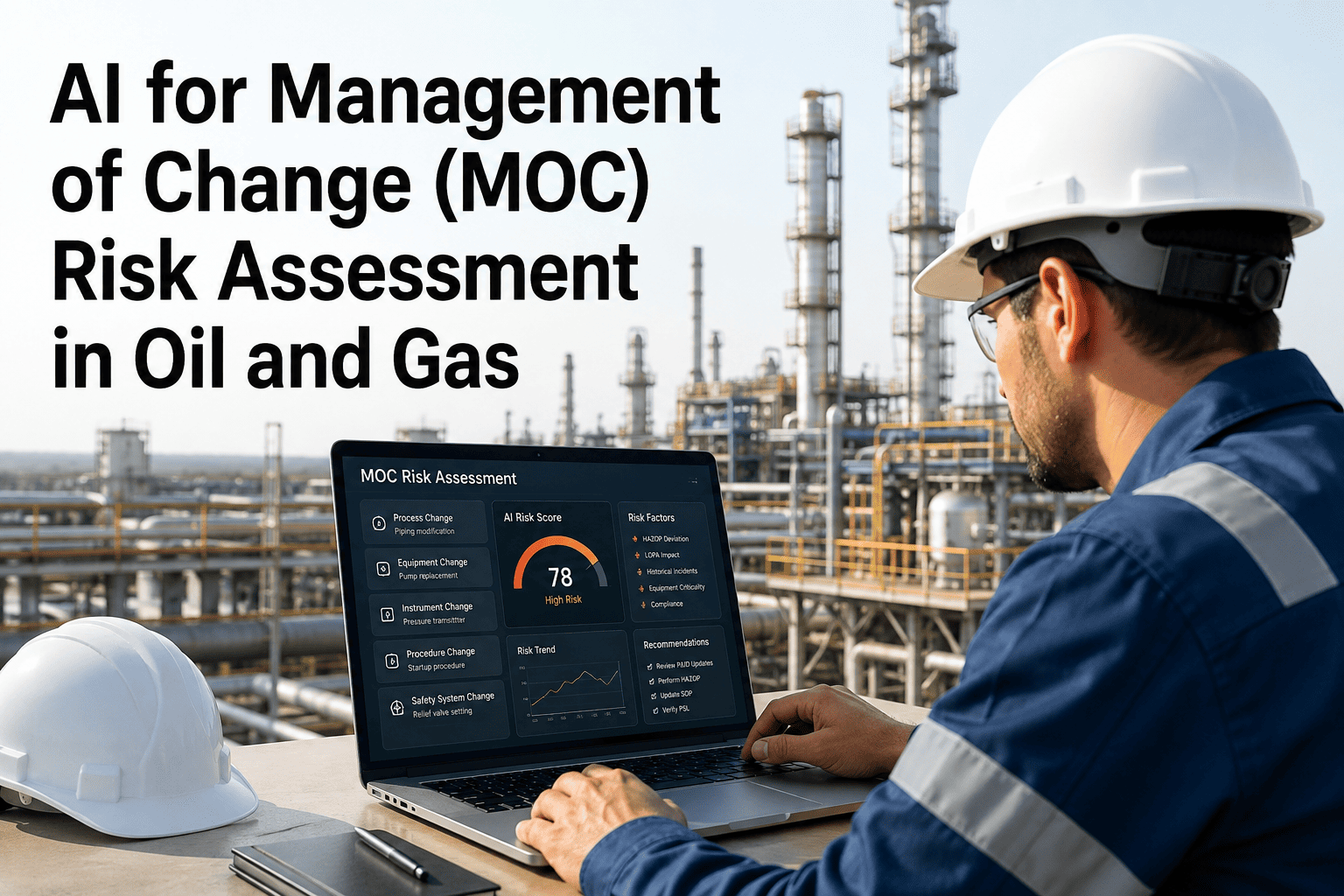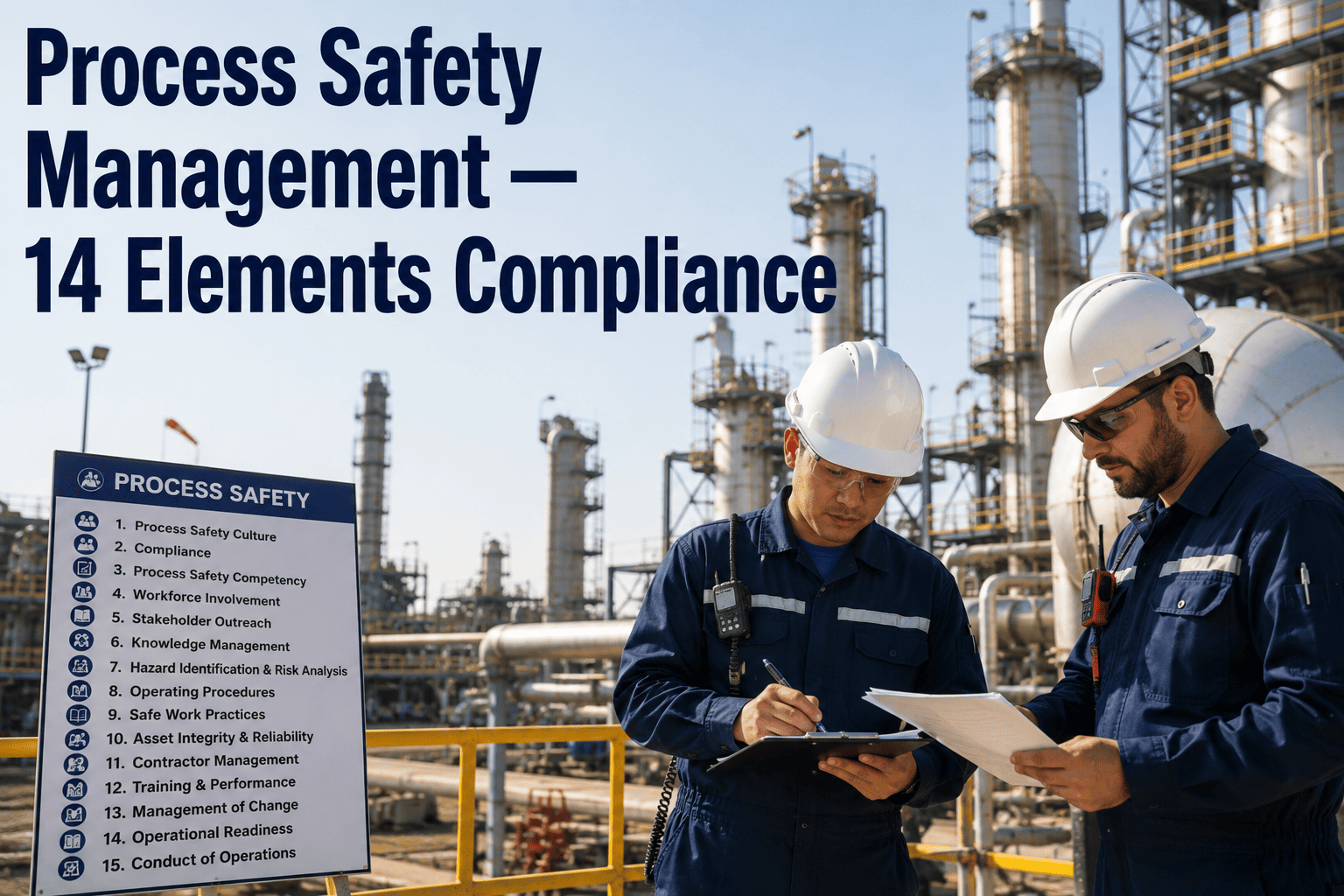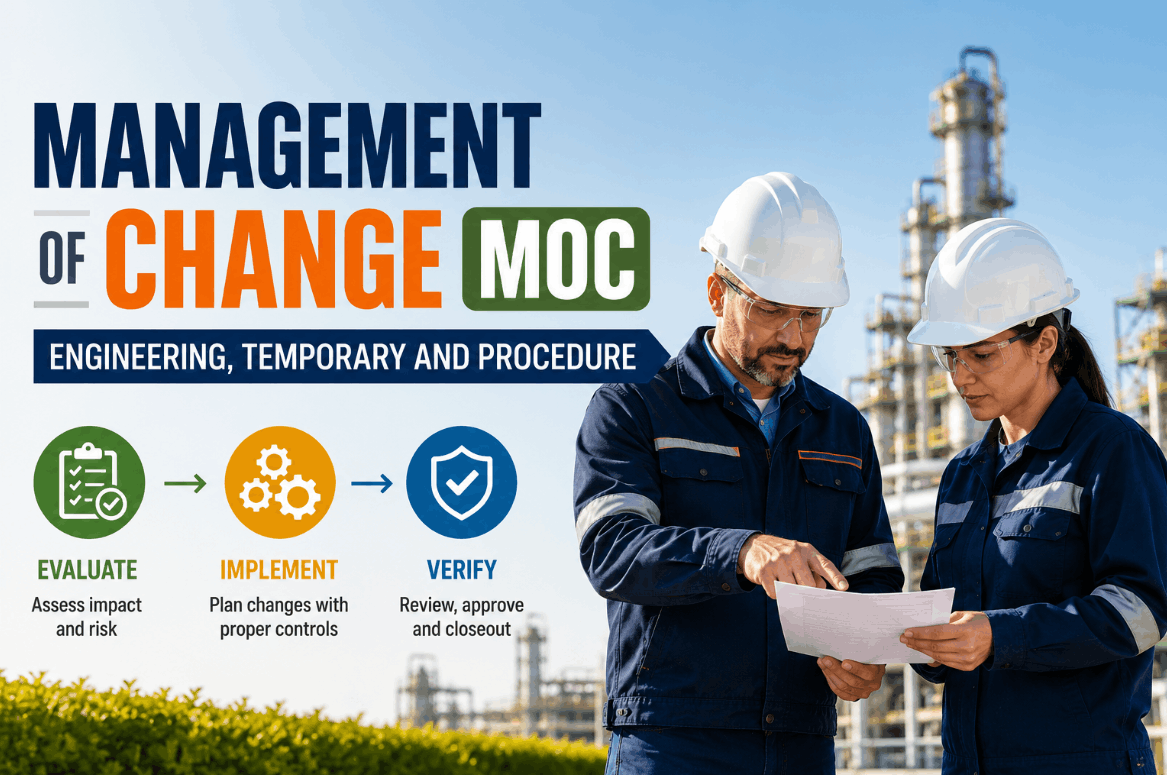
Most catastrophic process safety incidents do not trace back to a single bad decision. They trace back to an uncontrolled change — a temporary bypass that never got reversed, a procedure tweak that skipped review, or an equipment substitution that nobody screened against the original design basis. Under 29 CFR 1910.119(l), every PSM-covered facility must run process chemicals, technology, equipment, procedures, and facility changes through a documented Management of Change procedure before that change ever reaches the plant floor. iFactory's Mobile AI-driven App gives engineering and operations teams a connected MOC workflow — from initial screening through pre-startup safety review closeout — so a temporary fix never quietly becomes a permanent, undocumented risk. Book a Demo.
Close the Gaps Where MOC Procedures Usually Fail
iFactory's connected MOC workflow links screening, technical review, training triggers, and PSSR closeout into one auditable record — built for plants where a missed step is the difference between a documented change and an incident investigation.
The Five Trigger Categories That Require an MOC Review
29 CFR 1910.119(l) does not leave much room for interpretation about scope: any contemplated change to process chemicals, technology, equipment, procedures, or facilities that affects a covered process requires a documented MOC, with Replacement-In-Kind as the narrow exception. The standard is broad on purpose, because plants rarely fail from one dramatic decision — they fail from a series of small, individually reasonable substitutions that nobody screened against the original safety basis. Engineering teams that Book a Demo to map their change triggers against this list typically find more in-scope activity than their existing MOC log reflects.
Process Chemicals
A new feedstock, additive, or catalyst introduced to a covered process, even at trial quantities, changes the hazard basis the original PHA was built on.
Technology
Control logic updates, new software revisions, or instrumentation upgrades that alter how the process is monitored or controlled.
Equipment
Substituted valves, gaskets, pumps, or piping that differ from the original specification, even when the change looks minor on paper.
Procedures & Facilities
Revised operating steps, new staffing patterns, or facility layout changes that shift how a process is run or accessed day to day.
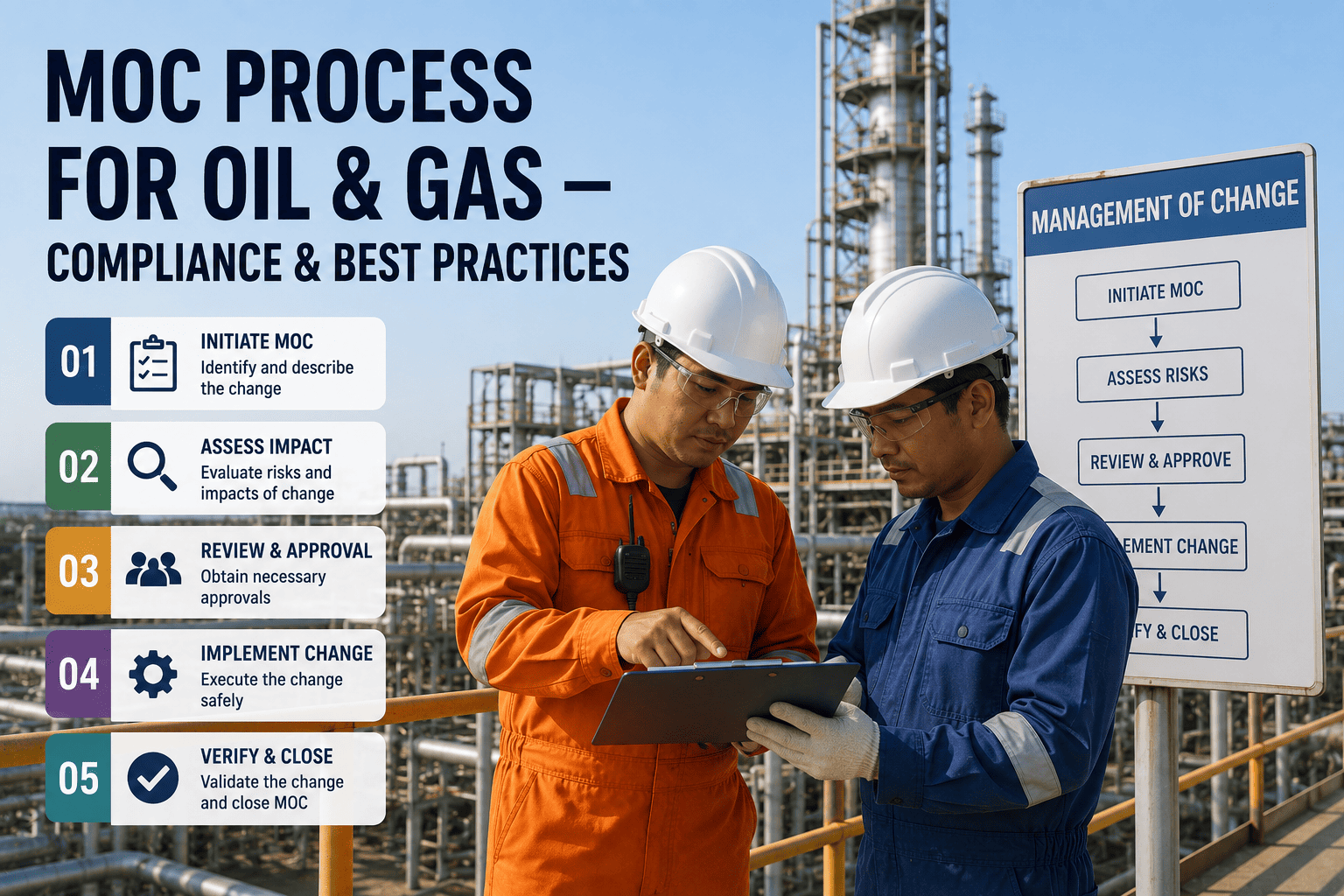
What a Compliant MOC Workflow Must Capture, Stage by Stage
An MOC procedure that exists only as a one-page approval form misses most of what OSHA expects to see during an audit. The standard calls for a documented technical basis, an assessment of safety and health impacts, any required procedure updates, an authorization timeframe, and verification that affected employees are trained before the change goes live. Teams rebuilding their MOC process around these requirements often Book a Demo to see how each stage below maps to a structured digital workflow.
Stage 1 — Initial Screening and Trigger Classification
Every proposed change is screened against the five trigger categories to determine whether it qualifies as Replacement-In-Kind or requires a full MOC. This stage also flags whether the change is intended to be temporary or permanent, since temporary changes carry their own documentation and expiration requirements.
Stage 2 — Technical Review and Risk Assessment
A qualified reviewer evaluates the technical basis for the change, assesses its safety and health impact against existing process safety information, and determines whether the change invalidates any prior PHA assumption or safeguard. This is where a change that looked simple at the request stage often reveals a dependency nobody anticipated.
Stage 3 — Training Trigger and Documentation Updates
If the change affects how operators or maintenance technicians interact with the process, training must be scheduled and completed — not just promised — before startup. P&IDs, operating procedures, and other process safety information are updated in parallel so the documentation never lags behind the physical change.
Why Temporary Changes Carry the Highest Hidden Risk
A temporary MOC is supposed to be just that — temporary. In practice, temporary bypasses, jumpers, and workarounds are often treated with less rigor than permanent changes precisely because they're labeled "temporary," and that label can quietly extend for months or years without anyone formally re-evaluating it. A defensible MOC procedure sets a maximum authorized duration up front and requires the same technical review and authorization as a permanent change, not an abbreviated version of it.
| Change Attribute | Temporary MOC | Permanent MOC |
|---|---|---|
| Authorization Basis | Same technical review standard, plus a defined expiry date | Full technical review with no expiration |
| Resolution Path at Expiry | Extend with re-approval, convert to permanent, or reverse | Not applicable — change remains in effect |
| Common Failure Mode | Left in place indefinitely without re-evaluation | Documentation updates lag behind physical change |
| PSSR Requirement | Required if the change is significant enough to affect PSI | Required when modification affects process safety information |
| Audit Exposure | High — frequently cited when expiry tracking is absent | Moderate — typically cited for incomplete documentation |
PSSR: The Verification Step That Confirms the MOC Actually Worked
MOC and Pre-Startup Safety Review are closely related but distinct. MOC evaluates whether a change should be made and what safeguards it requires; PSSR verifies, under 29 CFR 1910.119(i), that those safeguards are physically in place before the modified process returns to service. A PSSR checklist confirms that construction matches design specifications, that updated procedures and emergency plans are in place, that any PHA recommendations tied to the change have been resolved, and that training records exist for every affected employee — not a verbal assurance that training "will happen." Reliability teams building this closeout discipline often Book a Demo to see how PSSR checklists link directly back to the originating MOC record.
"We used to discover our biggest MOC gaps during incident investigations, not during reviews. The pattern was always the same — a temporary change that nobody circled back to, or a procedure update that never made it into the operator's binder. Once we moved MOC into a single connected workflow with expiry tracking and training verification built in, those gaps stopped showing up as surprises and started showing up as routine line items."
Management of Change Procedure — Frequently Asked Questions
What qualifies as Replacement-In-Kind versus a true MOC?
Replacement-In-Kind means the new component matches the original specification exactly. Any deviation in material, capacity, or design requires a full MOC review.
How long can a temporary change stay in place before it must be resolved?
The facility's MOC procedure should set a maximum authorized duration up front, after which the change must be extended with re-approval, made permanent, or reversed.
Does every MOC require a Pre-Startup Safety Review?
Not every MOC requires a PSSR, but a PSSR is required when the modification is significant enough to affect process safety information.
Who should be involved in reviewing a proposed change?
A qualified technical reviewer evaluates safety and health impact, while PSSR teams typically include operations, maintenance or engineering, and safety personnel.
What's the most common reason MOC procedures fail an OSHA audit?
Inconsistent application — particularly skipping the same rigor for temporary changes and procedure modifications that's applied to equipment changes.
A Good MOC Procedure Is the Cheapest Insurance a Plant Can Buy
Most MOC failures are not dramatic. They're a screening step skipped because a change seemed minor, a temporary bypass that outlived its authorized duration, or a training requirement marked complete before anyone actually verified it. None of these gaps look serious in isolation, which is exactly why they accumulate into the kind of uncontrolled change that turns a routine modification into an incident investigation. A connected MOC workflow — one that screens consistently, routes technical review without delay, tracks temporary change expiry automatically, and ties PSSR closeout directly back to the original request — keeps that accumulation from happening in the first place.
Build an MOC Workflow That Catches Risk Before Changes Go Live
iFactory's Mobile AI-driven App connects every stage of your Management of Change process — built for manufacturers who can't afford a change that slips through undocumented.