Physical AI is no longer a research concept in the oil and gas sector — it is a procurement category. In 2026, the convergence of foundation models like NVIDIA Isaac GR00T, Gemini Robotics ER, and agentic AI platforms like ADNOC's ENERGYai is fundamentally reshaping how upstream, midstream, and downstream operators deploy autonomous robotic systems across well sites, refineries, and pipeline corridors. The transition from scripted automation to embodied AI — where robots perceive, reason, and act without task-specific programming — compresses inspection cycles, eliminates confined-space fatalities, and delivers the kind of continuous operational intelligence that legacy SCADA and DCS platforms were never designed to provide. Oil and gas operators exploring this shift are beginning with a session to Book a Demo to assess how iFactory's AI-driven platform can serve as the operational data layer above their physical AI fleet.
From GR00T to ENERGYai: Operationalizing Physical AI Across the Energy Value Chain
iFactory's AI-driven platform bridges foundation model outputs — VLA policies, agentic dispatchers, and world model inference — with audit-ready operational records for upstream, midstream, and downstream facilities.
Why 2026 Marks a Structural Shift in Oil & Gas Robotics
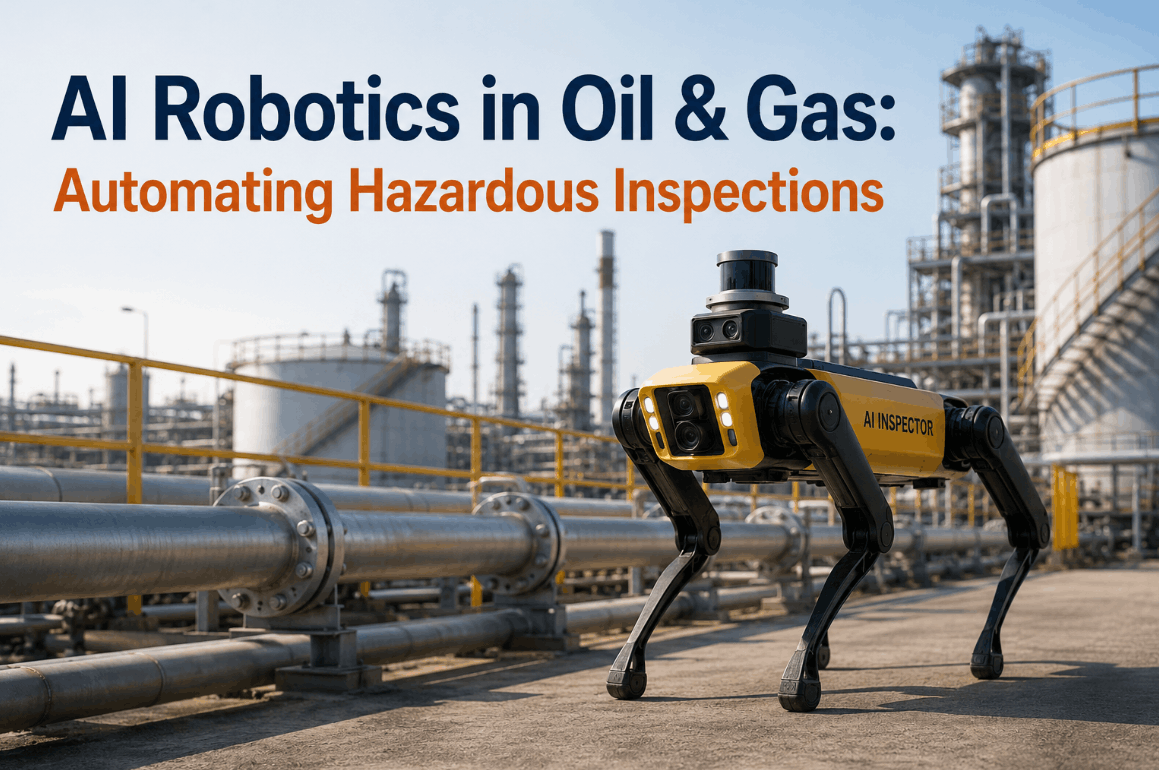
The oil and gas industry has deployed robots for over two decades — pipeline crawlers, offshore inspection ROVs, and fixed-arm manipulators in refineries. What is categorically different in 2026 is the arrival of generalist robotic intelligence: foundation models trained on billions of visual and motion examples that allow a single robot to execute novel inspection, valve-operation, or emergency-response tasks without being explicitly programmed for each one. NVIDIA's GR00T N1.7, released in April 2026 as a 3-billion-parameter open Vision-Language-Action model, and Google DeepMind's Gemini Robotics ER represent the first generation of these generalist "brains" that can be fine-tuned for energy-sector-specific tasks with a fraction of the training data previously required. Operators building physical AI programs often start by scheduling a session to Book a Demo with iFactory to understand how platform data integration supports foundation model deployment at scale.
The financial stakes are unambiguous. Bernstein Research projects that digital strategies — including autonomous robotics — could save the oil and gas industry more than $320 billion between 2026 and 2030, with the largest contributions coming from drilling optimization, predictive maintenance, and autonomous field inspection. The ADNOC ENERGYai program, a $340 million three-year agentic AI deployment contract signed with AIQ and SLB, is the reference benchmark for what operationalizing physical AI at scale looks like in a national oil company environment.
Foundation Model Gap
Generic VLA models are not trained on energy-sector environments. Fine-tuning GR00T or Gemini Robotics for hazardous area classification, H2S sensor response, and API 653 coverage patterns requires a curated operational data layer.
Agentic Orchestration
Multi-robot deployments require an LLM dispatcher that routes tasks — inspection, leak response, valve actuation — across quadruped, drone, and crawler fleets in real time without human micromanagement at each step.
World Model Simulation
NVIDIA Cosmos generates photorealistic synthetic training environments for oil and gas scenarios — refinery pipe racks, offshore deck equipment, wellhead areas — dramatically reducing the real-world data collection burden for robot policy training.
Compliance Data Continuity
Physical AI generates high-frequency sensor and action data that must be converted into audit-ready inspection records, work orders, and regulatory citations — the operational intelligence layer that iFactory provides above any robotic platform.
GR00T, Gemini Robotics, and ENERGYai: The Three Layers of Physical AI for Oil & Gas
Building a production-grade physical AI program in oil and gas requires assembling three distinct technology layers: a robot foundation model (the perception-to-action brain), a world model for simulation and synthetic training data (the virtual training environment), and an agentic AI dispatcher (the operational orchestration layer). Understanding how GR00T, Gemini Robotics ER, and ENERGYai fit into each layer — and where iFactory's platform connects them to compliance workflows — is the critical architectural decision operators face in 2026. Reliability and operations leads exploring this architecture frequently Book a Demo to map their existing asset data against physical AI readiness requirements.
Layer 1 — Robot Foundation Models: GR00T N1.7 and Gemini Robotics ER
NVIDIA's GR00T N1.7 is a 3-billion-parameter, Apache 2.0-licensed Vision-Language-Action model pretrained on 20,854 hours of human egocentric video across 20-plus task categories. Its dual-system Action Cascade architecture handles both high-level reasoning and low-level motor control, enabling a robot to interpret a natural language instruction — "inspect the pressure gauge on Compressor 4" — and execute the physical task. For oil and gas applications, this means a robot that was never explicitly programmed for a refinery environment can be fine-tuned on a modest dataset of facility-specific demonstrations and deployed for valve reading, leak detection, or PPE compliance checks within weeks rather than months. Google DeepMind's Gemini Robotics ER applies the Gemini 2.0 multimodal reasoning model to dexterous manipulation and 3D spatial understanding, with particular strength in novel instruction following — critical when robots encounter equipment configurations that differ from their training distribution.
Layer 2 — World Models: NVIDIA Cosmos and Isaac Sim for Energy Environments
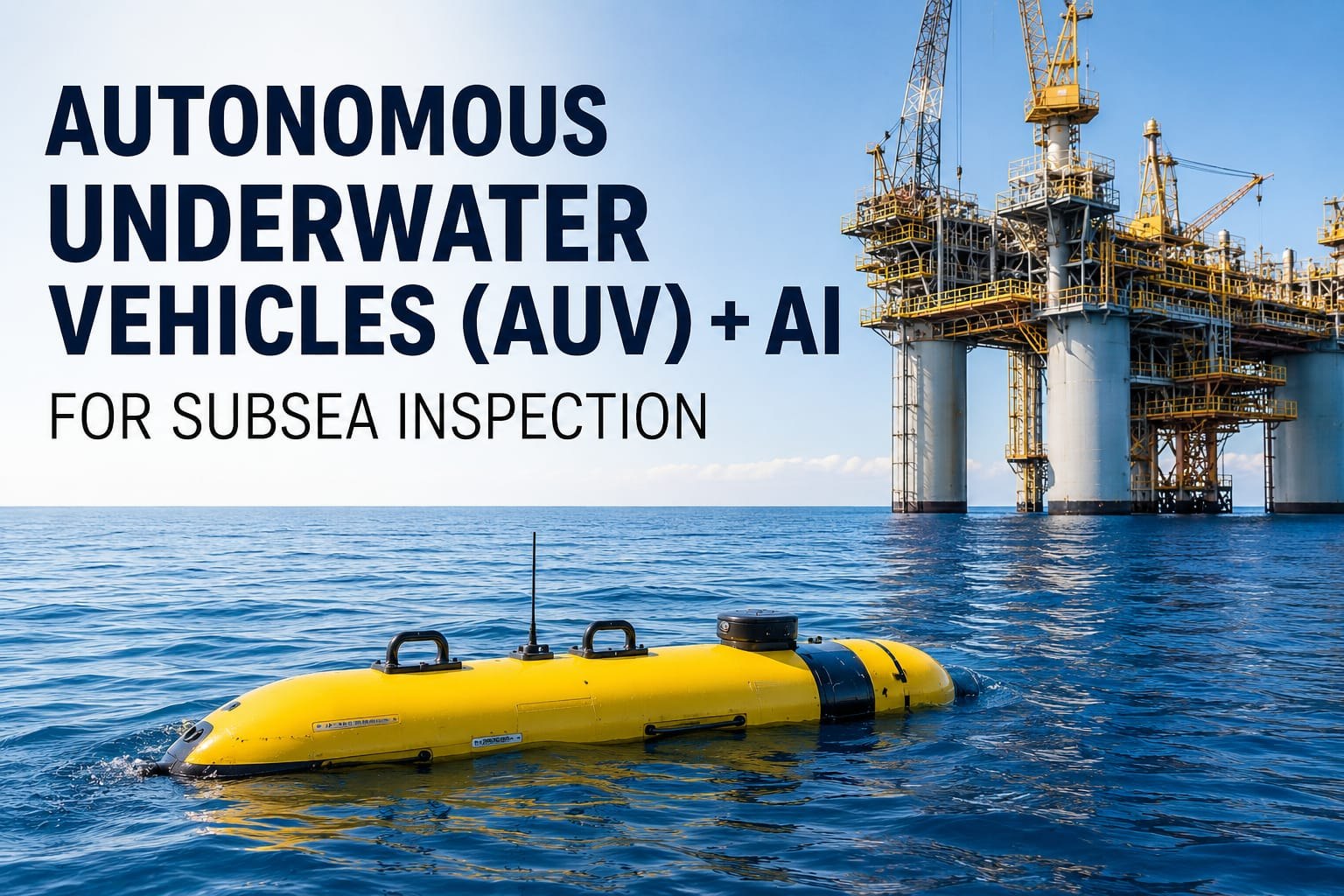
The most significant bottleneck in deploying physical AI in oil and gas is not the robot or the model — it is the scarcity of high-quality training data in hazardous environments where operating robot fleets for data collection is itself a risk. NVIDIA Cosmos resolves this by generating photorealistic synthetic training videos from text or image prompts, allowing operators to create thousands of simulated inspection scenarios — turbine compartments, floating deck environments, pipeline manifold areas — without deploying a single physical robot. NVIDIA Isaac Sim 4.5 provides the underlying physics-accurate simulation environment, running parallel training episodes at GPU scale to collect trajectory data that foundation models require for reliable real-world generalization.
Layer 3 — Agentic AI Orchestration: ENERGYai and the LLM Dispatcher Model
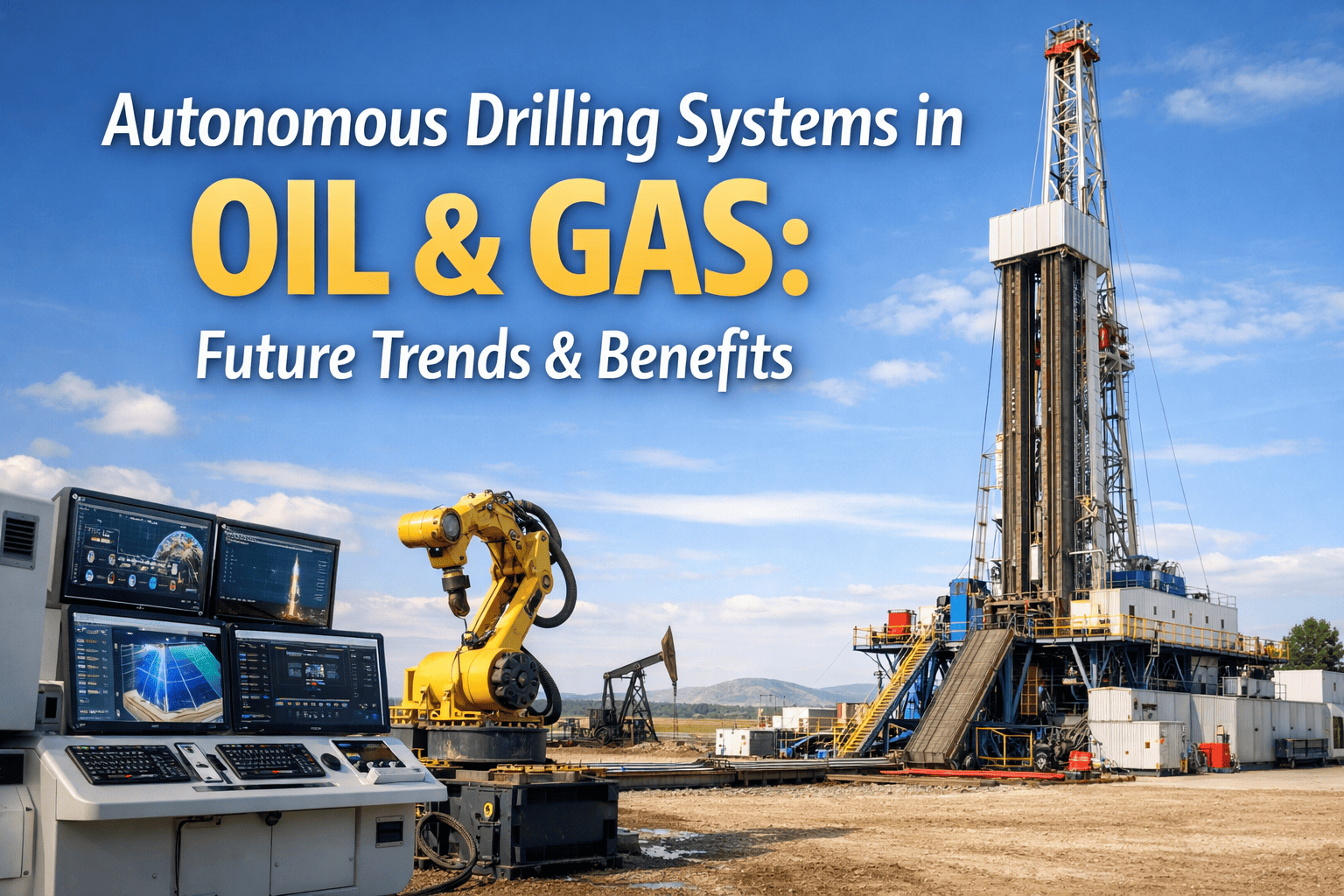
ADNOC's ENERGYai, built by AIQ on a foundation of 70 years of proprietary subsurface and operational data, represents the most commercially advanced deployment of agentic AI in the upstream oil and gas sector. The platform combines LLM reasoning with domain-specific agents covering geology, seismic interpretation, reservoir modeling, and — increasingly — field robotic task dispatch. In early pilot deployments, a seismic interpretation agent achieved a 10x increase in interpretation speed and a 70% gain in precision. The agentic dispatcher model — where an LLM understands operational context, routes tasks to specialized robot agents, and maintains a human override layer — is now the architecture benchmark that progressive oil majors are building toward by 2030.
How Physical AI Operationalizes Across Upstream, Midstream, and Downstream
Physical AI is not a single-application technology in oil and gas — it maps differently to the operational requirements of each segment of the value chain. The table below outlines how foundation model capabilities translate into specific field applications, and how iFactory's platform captures the resulting data for compliance and maintenance workflows.
| Value Chain Segment | Physical AI Application | Foundation Model / Tool | iFactory Module | Operational Outcome |
|---|---|---|---|---|
| Upstream — Well Site | Autonomous wellhead inspection and gauge reading | GR00T N1.7 (VLA) + Quadruped | AI Vision + Digital Work Orders | Zero manual gauge rounds; auto-generated work orders |
| Upstream — Subsurface | Agentic seismic interpretation and reservoir modeling | ENERGYai (LLM + domain agents) | Real-Time OEE + Preventive EAM | 10× faster interpretation; faster prospect maturation |
| Midstream — Pipeline ROW | Methane leak detection and ROW corridor survey | Gemini Robotics ER + BVLOS Drone | AI Vision + Smart Forms | Automated EPA Subpart W LDAR records |
| Midstream — Compressor Station | Autonomous patrol, thermal anomaly detection | GR00T N1.7 + Quadruped + Isaac Sim | Preventive EAM + Digital Work Orders | Reduced unplanned shutdowns; predictive repair triggers |
| Downstream — Refinery | Process unit inspection, PPE compliance monitoring | Cosmos (synthetic data) + GR00T VLA | AI Vision + Smart Forms / Checklists | OSHA compliance audit trail; reduced confined-space entries |
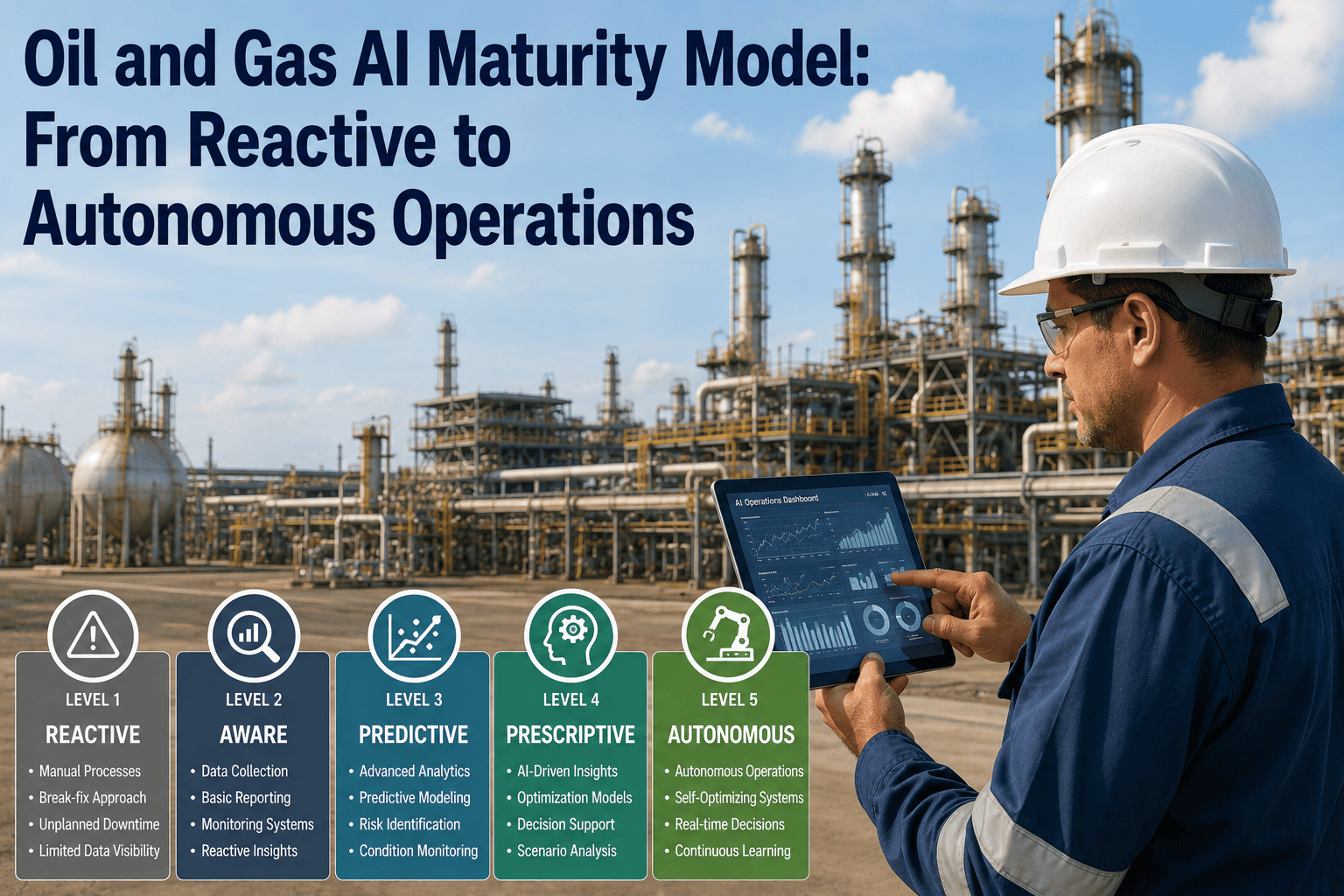
The Oil & Gas Physical AI Maturity Roadmap: From Pilot to Autonomous Operations
Deploying physical AI in oil and gas follows a structured maturity progression — from foundational data readiness to fully autonomous multi-agent field operations. Organizations building these programs frequently Book a Demo to align their asset data maturity with the platform capabilities required at each stage.
Data Readiness & Pilot Deployment
For: Asset Integrity Teams
- Asset registry and inspection baseline in iFactory EAM
- Pilot VLA model fine-tuning on facility-specific demo data
- Isaac Sim synthetic environment build for site scenarios
- First quadruped or drone patrol with AI Vision integration
Agentic Dispatcher & Multi-Robot Fleet
For: Reliability & Operations Directors
- LLM dispatcher routing tasks across drone, quadruped, crawler fleet
- ENERGYai-style agentic workflow for subsurface and field operations
- Automated work order generation from robotic anomaly detections
- Compliance citation mapping to API 653, 49 CFR 195, EPA LDAR
Fully Autonomous Operations
For: C-Suite & Asset VPs
- Continuous world model updates from live field robot data
- Generalist robots executing valve actuation and emergency response
- Multi-site physical AI benchmarking and cross-asset learning
- Board-ready autonomous operations ROI reporting via iFactory
Measurable Outcomes from Physical AI Deployments in Energy Operations
Oil and gas operators that have moved beyond physical AI pilots to governed production deployments are reporting material performance improvements across safety, efficiency, and compliance metrics. The results below reflect outcomes from leading energy sector physical AI programs, including ADNOC's ENERGYai deployment and broader industry benchmarks from 2025–2026 field programs.
"Artificial and Physical Intelligence are core to ADNOC's long-term energy strategy, transforming how we operate across the value chain. The deployment of autonomous inspection robots and agentic AI workflows is not a pilot program — it is our operating model. The question for every major operator in 2026 is not whether to deploy physical AI, but how quickly to build the data infrastructure that makes it reliable and auditable."
Physical AI for Oil & Gas — Frequently Asked Questions
What is ENERGYai and how does it differ from a standard AI analytics platform?
ENERGYai is an agentic AI platform built by AIQ on 70 years of ADNOC's proprietary energy data, combining LLM reasoning with domain-specific autonomous agents for upstream workflows — it acts, not just analyzes.
Can NVIDIA GR00T N1.7 be fine-tuned for oil and gas inspection tasks without large datasets?
Yes — GR00T N1.7's EgoScale pretraining on 20,854 hours of egocentric video enables effective fine-tuning for energy-sector tasks with a relatively small number of facility-specific demonstrations.
How does iFactory integrate with physical AI robotic platforms and foundation model outputs?
iFactory acts as the operational intelligence layer above any robotic fleet, ingesting VLA action logs, sensor data, and anomaly detections via standard APIs and converting them into compliance-ready work orders and inspection records.
What role does NVIDIA Cosmos play in oil and gas physical AI deployment?
Cosmos generates photorealistic synthetic training environments for hazardous energy facilities, allowing operators to train robot policies on realistic refinery and well-site scenarios without requiring physical data collection in those environments.
What is the expected timeline for oil and gas operators to reach autonomous multi-robot operations?
Based on current deployment trajectories — including ADNOC's 2026 program and Bernstein's 2030 projection — leading operators are targeting governed multi-agent field autonomy between 2028 and 2030.
Building the Data Infrastructure That Physical AI Requires to Deliver
Physical AI in oil and gas is arriving on a faster timeline than most operators anticipated — not because the technology moved faster, but because the business case became undeniable. ADNOC's $340 million ENERGYai contract, NVIDIA's GR00T N1.7 commercial release, and Bernstein's $320 billion savings projection have converted physical AI from a forward-looking technology discussion into a current capital allocation decision. The operators that will capture the most value from this transition are not necessarily the ones with the largest robot fleets — they are the ones with the operational data infrastructure that converts robotic sensor outputs into auditable compliance records, predictive maintenance triggers, and board-level ROI metrics. iFactory is purpose-built to be that infrastructure layer: connecting ILI crawlers, quadruped patrol robots, methane drones, and agentic AI dispatchers to a single source of operational truth that satisfies regulatory requirements and demonstrates measurable return on every robotic asset deployed. Operators ready to close the gap between physical AI capability and operational value are invited to Book a Demo with iFactory's engineering team.
Operationalize Physical AI Across Your Oil & Gas Assets
iFactory connects GR00T, Gemini Robotics, and ENERGYai-style agentic dispatchers to audit-ready compliance workflows — delivering measurable ROI from every robot deployed in your upstream, midstream, or downstream facilities.