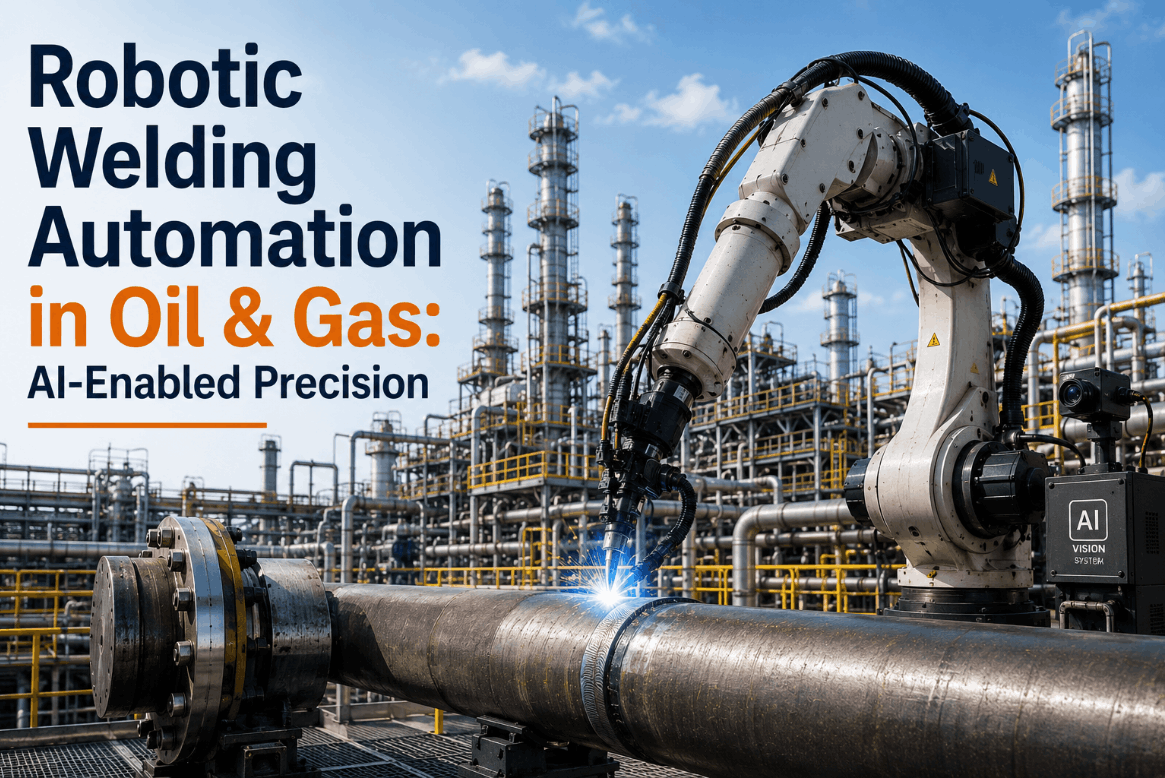
Robotic welding AI oil gas applications are no longer experimental — they are defining competitive advantage in a sector where a single weld failure can trigger a catastrophic blowback, costly shutdown, or regulatory penalty worth millions. Across refineries, offshore platforms, and pipeline networks, AI-enabled robotic welding systems are replacing manual torch operations with micron-level precision, real-time defect detection, and autonomous path correction. This article examines how leading energy producers are deploying intelligent welding automation in 2025 and how platforms like iFactory AI are accelerating that transition from reactive repair to proactive, data-driven weld quality governance. Book a Demo to see how precision welding intelligence is deployed in real oil & gas environments.
Is Your Welding Process Precision-Driven or Risk-Driven?
Unify AI weld inspection, robotic path control, and real-time defect analytics into one intelligent platform built for high-stakes oil & gas environments.
Why AI-Enabled Robotic Welding Is Reshaping Oil & Gas Operations
The oil and gas industry operates under some of the most demanding weld quality standards in the world — from API 1104 pipeline codes to ASME Section IX pressure vessel requirements. Historically, achieving consistent compliance meant highly skilled manual welders working in hazardous, confined, or extreme-temperature environments. That model is breaking down. Workforce shortages, rising error rates, and tighter inspection windows are forcing operators to rethink how welds are planned, executed, and verified. AI-enabled robotic welding systems address this gap by combining adaptive motion control, computer vision defect detection, and machine learning process optimization into a single, programmable workflow. Plants that Book a Demo with iFactory consistently report that digitizing weld data is their fastest path to reducing rework rates and accelerating audit readiness.
Adaptive Weld Path Control
AI vision systems continuously adjust torch angle, travel speed, and wire feed in real time, compensating for joint gaps, thermal distortion, and surface irregularities common in aged pipeline steel.
Real-Time Defect Detection
Inline AI inspection cameras detect porosity, undercut, lack of fusion, and cracking during the weld pass — eliminating costly post-weld NDT delays and enabling immediate corrective action.
Autonomous Inspection & Reporting
Robotic crawlers and drone inspection AI capture post-weld imagery, map defect locations to weld ID numbers, and auto-generate compliance reports formatted for API or ASME audit submissions.
Digital Twin Weld Records
Every robotic weld is logged in a digital twin environment — capturing parameters, heat input, operator ID, and inspection outcomes — creating a tamper-proof maintenance and compliance history.
Manual vs. Robotic Welding AI: A Performance Benchmark for Oil & Gas
Understanding where robotic welding automation delivers measurable ROI is critical before committing to a deployment roadmap. The table below compares manual welding practices against AI-enabled robotic systems across the dimensions that matter most to refinery and pipeline operators in 2025.
| Performance Dimension | Manual Welding | Robotic Welding + AI | Operational Impact | Priority Level |
|---|---|---|---|---|
| Weld Consistency (Pass Rate) | 72–85% | 96–99% | Dramatic rework cost reduction | Critical |
| Defect Detection Speed | Post-weld NDT (hours) | In-process, real-time | Eliminates inspection lag | Critical |
| Hazardous Environment Access | Human exposure risk | Fully robotic entry | Zero personnel risk | Critical |
| Compliance Documentation | Manual log entry | Auto-generated digital records | Audit-ready in real time | High |
| Heat Input Control | Operator-variable | AI-regulated within ±2% | Prevents HAZ microstructure damage | High |
| Productivity (Welds/Shift) | Baseline | 2.4× average increase | Faster project timelines | Standard |
How iFactory AI Deploys Robotic Welding Intelligence in 5 Structured Phases
A successful robotic welding AI rollout in oil and gas is never plug-and-play. It requires systematic integration of hardware, software, and process data. iFactory's five-phase deployment model is purpose-built for energy facilities — from small pipeline maintenance yards to large-scale refinery turnarounds. Operators that follow this roadmap typically achieve measurable weld quality improvement within the first 60 days. Book a Demo to map your facility to the right deployment phase.
Weld Process Audit & Digitization
Map all existing weld procedures (WPS/PQR), joint types, material grades, and inspection records into a centralized digital registry. Identify high-frequency manual weld operations as robotic automation candidates.
Robotic Cell Integration & AI Vision Calibration
Install and calibrate robotic welding arms or pipe-welding crawlers with integrated AI vision sensors. Configure seam tracking, real-time bead monitoring, and process parameter logging aligned to API 1104 or ASME IX standards.
Inline Defect Detection Activation
Activate AI-powered inline inspection — using thermal imaging, laser profilometry, or high-speed cameras — to detect porosity, undercut, and incomplete fusion in real time. Flag anomalies instantly on the operations dashboard.
Digital Twin Weld Log & RCA Engine
Link every completed weld to a digital record in iFactory's digital twin environment. Use AI-driven root cause analysis to identify recurring defect patterns by joint type, material heat, or operator shift — and prescribe corrective parameter adjustments.
Predictive Maintenance & Autonomous Compliance Reporting
Use historical weld and inspection data to predict equipment wear in the welding cell. Auto-generate OSHA, API, and ASME-formatted compliance reports — ensuring 100% audit readiness without manual file compilation.
Critical Gaps in Traditional Welding Programs Across Oil & Gas Facilities
Relying on manual radiographic or ultrasonic testing after weld completion creates multi-day inspection queues that delay tie-ins and project milestones.
Human welders operating under fatigue or environmental stress produce heat input variance that degrades heat-affected zone integrity — especially critical in sour service pipelines.
Paper-based WPS logs and manual traveler sheets create audit gaps that expose operators to regulatory penalties during API or PHMSA inspections.
Sending welders into confined spaces, elevated platforms, or H2S-risk environments for routine maintenance work creates unacceptable injury exposure that robotic systems eliminate.
Without historical weld data aggregation, safety and quality teams cannot identify recurring defect trends, leaving root causes unaddressed and rework rates elevated.
The U.S. faces a projected shortage of over 360,000 qualified welders by 2027, making full reliance on manual welding programs a strategic liability for oil & gas operators.
What iFactory AI Delivers for Robotic Welding Automation in Oil & Gas
iFactory AI is built as a next-generation industrial software platform that connects AI vision, digital twin technology, and robotics control into a unified operational intelligence layer. For oil and gas welding operations, this means every automated weld is tracked, verified, analyzed, and archived — all within a single platform that integrates with existing ERP, CMMS, and QMS systems. Below are the core capabilities that drive measurable outcomes for energy operators. Book a Demo and see these capabilities demonstrated live in a refinery or pipeline simulation environment.
iFactory's computer vision module analyzes bead geometry, surface anomalies, and thermal signatures against trained defect models calibrated for carbon steel, stainless, and duplex alloys used across oil and gas infrastructure.
Voltage, amperage, travel speed, and shielding gas flow are streamed live to the iFactory dashboard — with instant alerts when parameters drift outside WPS-defined tolerance windows.
Each weld joint is linked to a persistent digital record in the iFactory Digital Twin — storing geometry, inspection results, repair history, and certification data accessible for the full asset lifecycle.
AI models track robotic arm wear cycles, wire liner degradation, and contact tip consumption — triggering maintenance orders before equipment failure disrupts production schedules.
The Future of Weld Integrity in Oil & Gas Is Autonomous, Intelligent, and Real-Time
Robotic welding AI in oil and gas is not a future investment — it is an operational necessity for facilities that must meet tightening regulatory standards, shrinking maintenance windows, and expanding asset inspection requirements without proportionally growing their skilled workforce. The case for deploying AI-enabled welding automation is built on three pillars: safety, quality, and compliance speed. Operators who consolidate weld process data, inline inspection results, and digital compliance records into a single intelligent platform like iFactory AI do not just reduce rework — they transform welding from a bottleneck into a strategic advantage. From pipeline girth welds to pressure vessel fabrication, the organizations adopting this model today will carry significantly lower integrity risk and operational cost into the next decade.
Modernize Your Oil & Gas Welding Program with AI-Driven Precision
Deploy a unified robotic welding intelligence platform that integrates real-time inspection, digital twin records, and predictive maintenance — engineered for energy operations.
Robotic Welding AI in Oil & Gas — Frequently Asked Questions
What types of welds can robotic AI systems perform in oil and gas?
AI-enabled robotic systems handle girth welds on pipelines, pressure vessel seam welds, structural fillet welds, and maintenance repair welds across carbon steel, stainless, and duplex alloy materials.
How does AI detect weld defects in real time without shutting down production?
Inline AI cameras and thermal sensors analyze the weld pool and solidified bead continuously during the weld pass, flagging anomalies to the dashboard instantly without interrupting the welding arc.
Is iFactory AI compatible with existing robotic welding hardware brands?
Yes — iFactory uses a vendor-neutral API layer to integrate with major OEM robotic platforms including Lincoln Electric, Miller, Fronius, and Lincoln FANUC cell configurations.
How does robotic welding AI reduce compliance documentation burden?
Every weld is automatically logged with parameters, inspection results, and welder/robot ID, and reports are auto-formatted to API 1104, ASME IX, or PHMSA standards — eliminating manual traveler sheet compilation.
What is the typical ROI timeline for robotic welding AI deployment in oil and gas?
Most operators achieve measurable rework reduction within 60 days and recover full deployment investment within 12–18 months through reduced NDT delays, rework labor savings, and lower regulatory penalty risk.


-in-oil-&-gas-back-office.png)