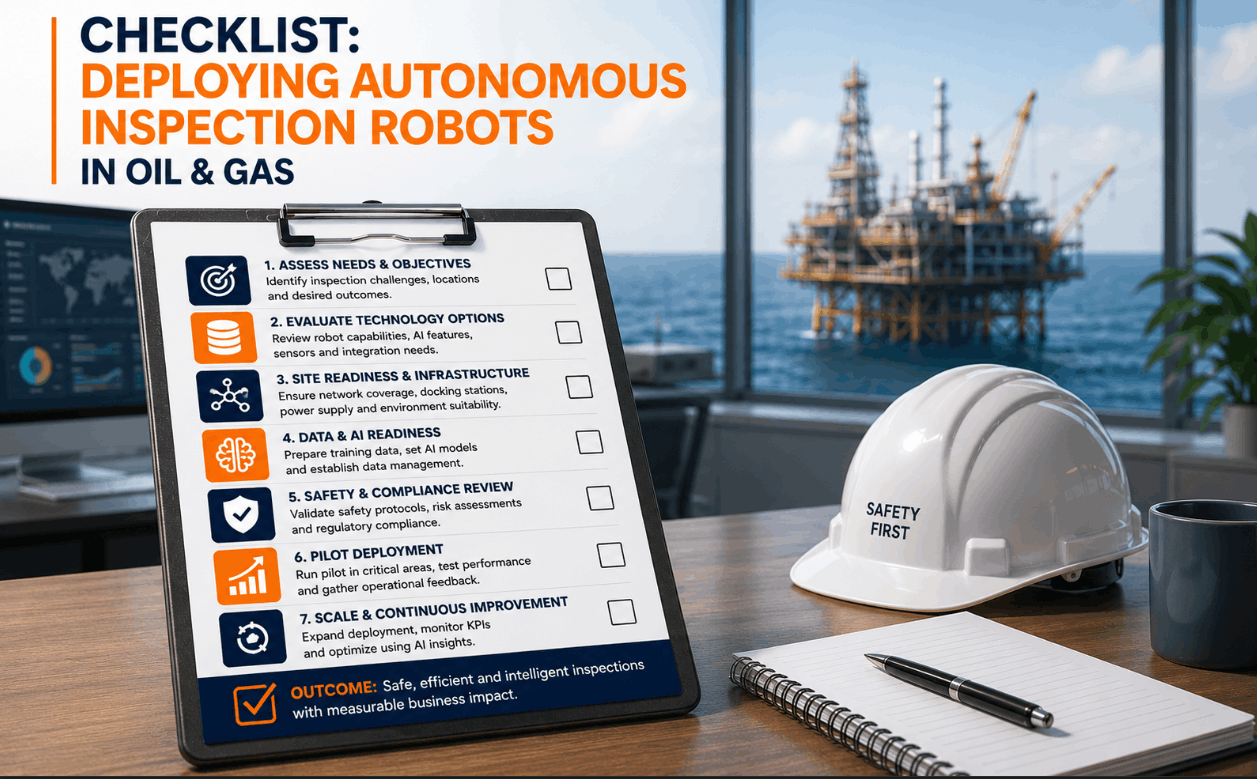
How AI-Powered Robots Replace Manual Tank Inspection in Oil & Gas
By Henry Green on May 23, 2026
In oil & gas facilities, manual tank inspection is one of the most dangerous and operationally expensive tasks a workforce can perform. Confined-space entry, toxic gas exposure, and structural collapse risk make it a leading cause of industrial fatalities — while traditional inspection cycles leave critical infrastructure blind for months at a time. In 2025, leading refineries and upstream operators are replacing human entry with AI robots for tank inspection in oil & gas, deploying autonomous crawlers, drones, and computer-vision systems that deliver faster, safer, and more comprehensive results with zero personnel exposure. This is not incremental automation — it is a complete reimagining of how asset integrity is managed at scale. To see how iFactory's AI-powered robotics platform transforms your inspection program, Book a Demo with our team today.
AI ROBOTICS · TANK INSPECTION · ASSET INTEGRITY
Is Your Tank Inspection Program Built for 2025 — or 1995?
iFactory's autonomous inspection platform connects robotic crawlers, AI visual analysis, and digital twin technology to deliver real-time structural health data — without putting a single worker inside a confined space.
Reduction in confined-space entry incidents when AI robotic inspection replaces manual crews
3×
Faster inspection cycle completion compared to traditional scaffolded, manual entry programs
60%
Lower total inspection cost per tank through elimination of scaffolding, purging, and crew logistics
100%
Surface coverage through autonomous crawler path-planning versus spot-check manual sampling
Why Manual Tank Inspection Is a Liability in Modern Oil & Gas Operations
Traditional tank inspection requires operators to drain, purge, ventilate, and enter vessels that can hold residual hydrocarbon vapor, hydrogen sulfide, or pyrophoric scale. OSHA's confined space entry standard (29 CFR 1910.146) imposes extensive permit requirements, atmospheric monitoring, and standby rescue protocols — all of which translate directly into schedule delays and labor overhead. A single API 653 internal inspection of a large aboveground storage tank (AST) can take 7–14 days of preparation and 3–5 days of active inspection, with total costs frequently exceeding $200,000 per event. Beyond cost, the human risk is measurable: the Bureau of Safety and Environmental Enforcement (BSEE) consistently identifies inspection-related confined-space incidents as a top-five cause of oil & gas fatalities. AI robots for tank inspection in oil & gas eliminate the need for human entry entirely, operating in live or recently isolated vessels with no atmospheric preparation requirements. For operators managing fleets of dozens or hundreds of tanks, this is not a marginal efficiency gain — it is a structural change in how asset integrity programs are designed and budgeted. Book a Demo to see iFactory's autonomous inspection capabilities in action.
The Four Technologies Powering AI Robotic Tank Inspection
Modern autonomous inspection in oil & gas is not a single technology — it is a layered system of robotic hardware, AI software, and digital infrastructure working in concert. Understanding each component is essential for operators evaluating deployment strategies.
Magnetic Crawler Robots
Hull & Floor Inspection
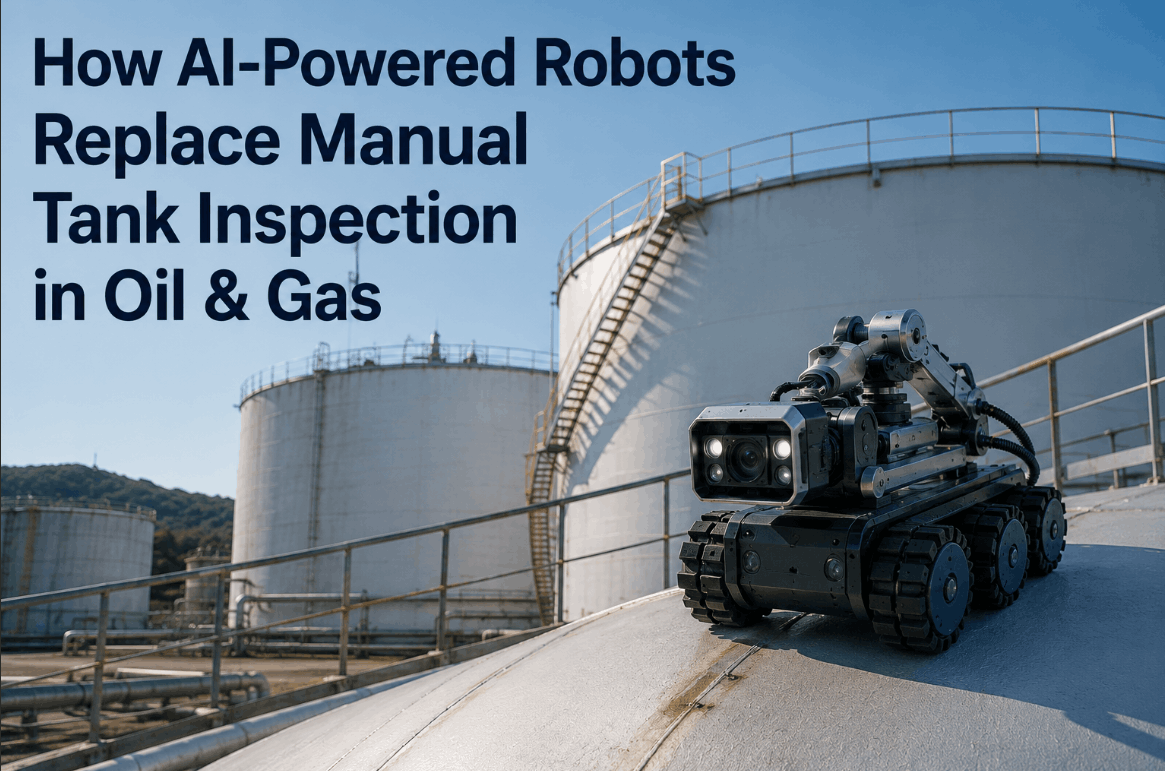
Magnetic-wheeled crawlers adhere to ferromagnetic tank walls and floors, carrying ultrasonic testing (UT) arrays and high-resolution cameras. They map wall thickness in real time, flagging corrosion pits, weld anomalies, and laminar defects against API 653 acceptance criteria — without human entry. Coverage rates exceed 500 square meters per hour on smooth tank surfaces.
iFactory Integration: Crawler data streams directly into the digital twin, updating the asset health model in real time during the inspection run.
Autonomous Inspection Drones
Aerial & Internal Survey
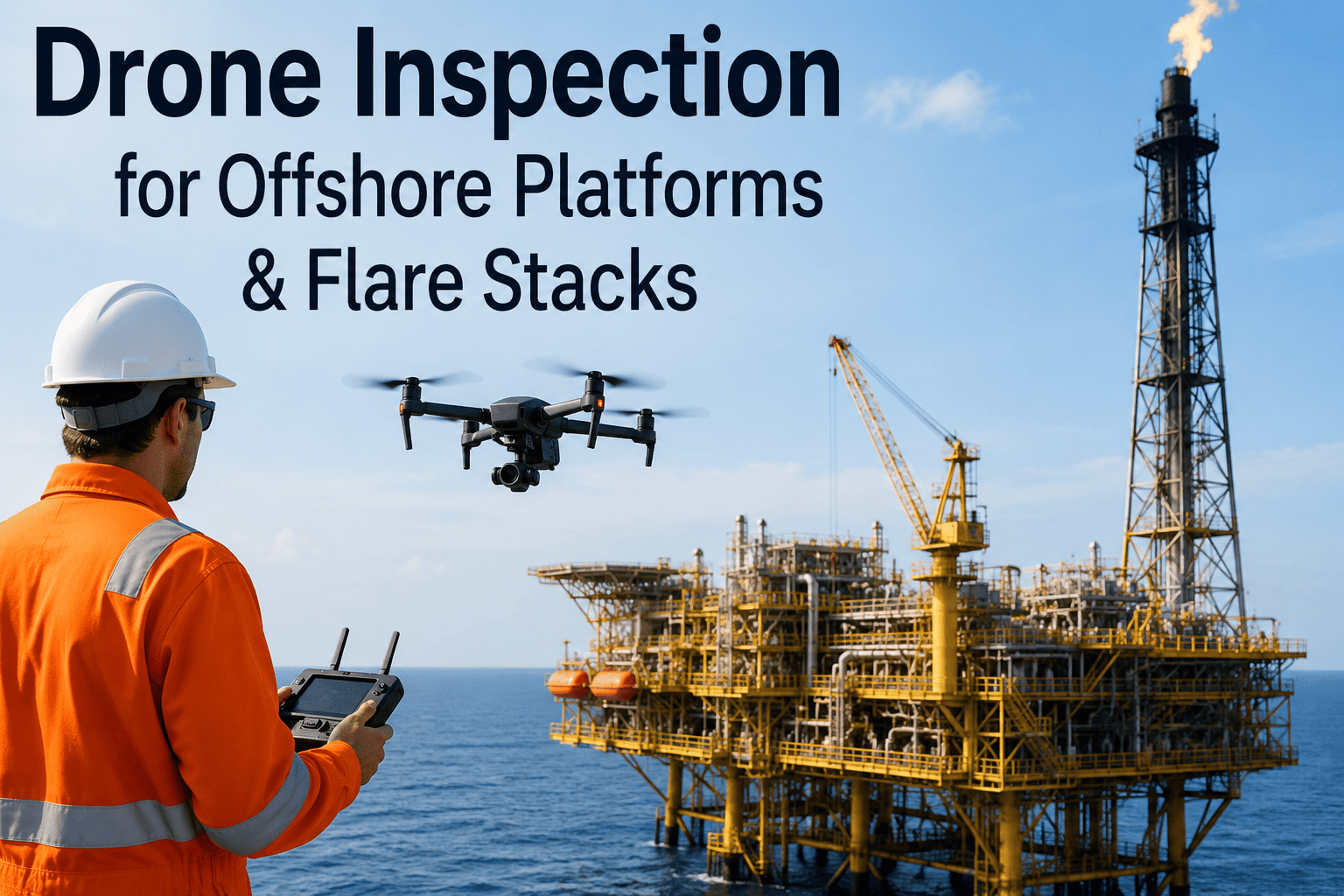
ATEX-certified, explosion-proof drones perform internal roof inspections, floating roof seal assessments, and structural surveys of tanks that are too large or complex for crawler-only approaches. GPS-denied navigation systems allow precise positioning inside metal vessels, while LiDAR sensors build 3D point-cloud maps of internal geometries for deformation analysis.
iFactory Integration: Drone flight paths are auto-planned from the facility's digital twin layout, ensuring complete coverage with no manual waypoint programming.
AI Computer Vision Analysis
Defect Detection & Grading
Machine learning models trained on millions of corrosion, crack, and coating-failure images classify visual defects with greater consistency than human inspectors working in low-light confined environments. AI vision systems grade defects per API, NACE, and ISO standards, assign severity scores, and automatically generate maintenance work orders prioritized by risk.
iFactory Integration: Vision outputs are cross-referenced with historical inspection records to identify accelerating degradation trends before they reach critical thresholds.
Digital Twin & Predictive Analytics
Lifecycle Modeling & RBI
Inspection data feeds directly into a digital twin of each tank, creating a living model that tracks degradation over time and projects remaining useful life. Risk-based inspection (RBI) algorithms — aligned with API 580/581 — calculate the probability and consequence of failure for each component, allowing operators to optimize inspection intervals and defer low-risk entries without compromising safety.
iFactory Integration: The digital twin automatically adjusts next inspection due dates based on real-time condition data, replacing fixed-calendar schedules with risk-driven intervals.
Manual vs. AI Robotic Inspection: A Direct Operational Comparison
The case for AI robots in tank inspection is most clearly visible when comparing the two approaches across the dimensions that matter most to oil & gas operations managers: safety, cost, speed, data quality, and regulatory defensibility.
Manual Inspection vs. AI Robotic Inspection — Operational Comparison
Dimension
Manual Inspection
AI Robotic Inspection
Personnel Safety
High risk — confined space entry, H₂S exposure, pyrophoric scale hazard
Zero entry risk — robots operate in environments unsuitable for human presence
Tank Downtime
7–21 days for draining, purging, ventilating, inspecting, and recommissioning
In-service or minimal isolation — many inspections completed in under 24 hours
Surface Coverage
Spot-check sampling — typically 5–15% of total surface area inspected
100% wall and floor coverage via automated path-planning and UT scanning
Data Consistency
Inspector-dependent — varies by experience, fatigue, lighting conditions
AI-graded, standardized output — same classification criteria applied every scan
Cost Per Inspection
$150K–$400K per large AST including scaffolding, crew, logistics, and lost production
40–60% lower total cost — no scaffolding, no confined space permits, no crew standby
Audit Documentation
Paper or PDF reports — manual compilation, prone to gaps and inconsistencies
Automated digital records — timestamped, geo-referenced, API/ISO-compliant reports
Predictive Capability
Point-in-time snapshot — no trending or failure projection between inspection cycles
Continuous degradation modeling — RBI-aligned remaining-life calculations updated after every run
The AI Robotic Inspection Workflow: From Deployment to Digital Report
Understanding how a robotic inspection actually unfolds from start to finish helps operations teams evaluate integration complexity and resource requirements. iFactory's end-to-end workflow is designed to minimize operator burden while maximizing data completeness. Book a Demo to walk through a live inspection scenario with our engineering team.
AI Robotic Tank Inspection — End-to-End Workflow
01
Digital Twin Pre-Load
iFactory ingests existing tank drawings, previous inspection reports, and process history. The digital twin is initialized with baseline geometry and known defect locations, giving the AI context before the first robot enters the field.
02
Automated Path Planning
The platform auto-generates optimal crawler and drone routes based on tank geometry, previous high-activity zones, and API 653 coverage requirements. No manual waypoint programming is needed — the system prioritizes areas flagged in prior inspections.
03
Autonomous Data Acquisition
Crawlers and drones execute inspection runs, collecting UT wall-thickness readings, high-resolution visual imagery, and LiDAR geometry data. Sensor fusion algorithms combine modalities in real time, flagging anomalies for immediate human review via the control dashboard.
04
AI Defect Classification
Computer vision models classify all identified anomalies — internal corrosion, external pitting, coating breakdown, weld discontinuities — per API, NACE, and ISO standards. Each defect receives a severity score and a recommended action: monitor, schedule repair, or immediate remediation.
05
Digital Twin Update & RBI Recalculation
Inspection results update the tank's digital twin, recalculating remaining useful life and adjusting the RBI risk matrix. Next inspection interval is automatically revised based on current condition, replacing fixed schedules with dynamic, risk-driven cadences.
06
Automated Compliance Report & Work Orders
The platform generates a fully formatted, API 653-compliant inspection report with all defect records, UT data tables, and photographic evidence. Maintenance work orders are auto-created in the CMMS for every actionable finding, with priority scores and due dates aligned to risk.
iFactory AI · Digital Twin · Autonomous Inspection
Replace Manual Entry With Autonomous Intelligence
iFactory integrates robotic crawlers, AI vision, and digital twin technology into a single platform — delivering 100% surface coverage, automated compliance documentation, and risk-based inspection intervals without confined-space entry.
Regulatory Compliance: How AI Inspection Satisfies API 653, OSHA, and EPA Requirements
A common concern among operations managers evaluating AI robotic inspection is whether autonomous systems generate documentation that satisfies regulatory and insurance requirements. The answer — for platforms built to industrial inspection standards — is definitively yes.
API 653
Aboveground Storage Tank Inspection
AI robotic inspections generate the full suite of API 653-required data: shell thickness readings at required grid spacing, floor scan coverage, roof condition assessments, and calculated minimum allowable shell thickness (MAST) values. Reports are formatted for direct submission to the facility's authorized inspection authority (AIA).
OSHA 1910.146
Confined Space Entry Elimination
By performing inspection without human entry, operators eliminate the permit-required confined space (PRCS) process entirely for inspection events. This removes the legal exposure, atmospheric monitoring requirements, and rescue standby obligations that contribute significantly to inspection overhead and incident risk.
EPA SPCC / Tier II
Spill Prevention & Secondary Containment
AI inspection data supports SPCC plan updates by providing accurate current-condition assessments of tank integrity. Real-time corrosion data helps operators demonstrate that tanks meet fitness-for-service criteria, supporting both SPCC certification and Tier II chemical inventory reporting for EPA compliance.
API 580 / 581
Risk-Based Inspection Framework
iFactory's RBI engine aligns directly with API 580/581 methodology — calculating probability of failure (POF) and consequence of failure (COF) for each inspected component. The platform generates RBI risk matrices and inspection planning documentation that satisfy PSM, RMP, and insurance underwriter requirements at major oil & gas facilities.
Expert Review: What Industry Engineers Say About AI Robotic Inspection
Expert Review — Industry Practitioner Perspectives
The shift to robotic inspection in upstream storage isn't just about safety — it's about data quality. A magnetic crawler running systematic UT grids gives you a corrosion map that a human inspector with a handheld probe physically cannot replicate in the same timeframe. We cut our per-tank inspection cost by 52% in the first deployment year while increasing actual surface coverage from roughly 8% to full floor and shell.
Senior Integrity Engineer
Major Midstream Pipeline & Storage Operator, U.S. Gulf Coast
The regulatory documentation piece was my biggest concern before we deployed. What I found was the opposite of what I expected — the AI-generated reports were more complete and more consistently formatted than anything we had produced manually. Our AIA accepted the robotic inspection data without objection, and the RBI integration meant our next scheduled interval was extended by 18 months based on actual condition, not calendar date.
Reliability & Inspection Manager
Downstream Refining Complex, U.S. Mid-Continent Region
Ready to modernize your tank inspection program? Book a Demo with iFactory's inspection engineering team.
Conclusion: The Shift From Reactive Entry to Proactive Intelligence
The question facing oil & gas operators in 2025 is no longer whether AI robotic inspection is technically capable — it clearly is, at API 653 standards and above. The real question is how much longer facilities can justify the cost, risk, and data limitations of manual confined-space inspection when autonomous alternatives exist. The facilities that are moving first are not doing so out of obligation. They are moving because the operational math is unambiguous: lower cost per inspection, zero confined-space fatality risk, better data, and compliance documentation that satisfies every regulatory body that matters. iFactory's AI-powered platform brings robotic crawlers, autonomous drones, computer vision, and digital twin technology under one operational roof — giving your integrity and maintenance teams a single source of truth for every tank in your fleet. The transition from paper-based, human-entry inspection to intelligent autonomous inspection is the most consequential improvement available to oil & gas asset integrity programs today. Book a Demo to see exactly how iFactory fits your facility's inspection architecture.
Full AI Inspection Automation · Digital Twin · API 653 Compliance
Every Tank. Every Surface. Every Inspection Record — Automatically.
iFactory builds your entire tank inspection program into an autonomous, AI-driven workflow — from robotic deployment and defect detection to RBI scheduling, compliance reporting, and CMMS work order generation.
Can AI robotic inspection fully replace a traditional API 653 internal inspection?
Yes — for most inspection events. AI robotic platforms using UT crawlers and drone surveys generate all data points required by API 653 for shell, floor, and roof assessments, and many authorized inspection authorities (AIAs) now accept robotic inspection reports as equivalent to or superior to manual entry reports.
Do robotic inspections work on tanks that are still in service?
Yes — many crawler and drone systems are designed for in-service or minimally isolated conditions, eliminating the need for full drainage and purging and dramatically reducing downtime per inspection event.
How does iFactory integrate with our existing CMMS or EAM system?
iFactory connects to major CMMS and EAM platforms via API, automatically pushing inspection-generated work orders, defect records, and next-due dates directly into your existing maintenance workflow without manual data entry.
What types of tanks and vessels can be inspected using AI robotics?
The platform supports aboveground storage tanks (ASTs), floating roof tanks, fixed roof tanks, pressure vessels, and large-diameter pipeline segments — covering the full range of oil & gas storage and process infrastructure.
How long does it take to generate a compliance-ready inspection report after a robotic run?
iFactory auto-generates a fully formatted, API 653-compliant inspection report within hours of inspection completion — compared to the days or weeks typically required to compile manual inspection records into a deliverable format.