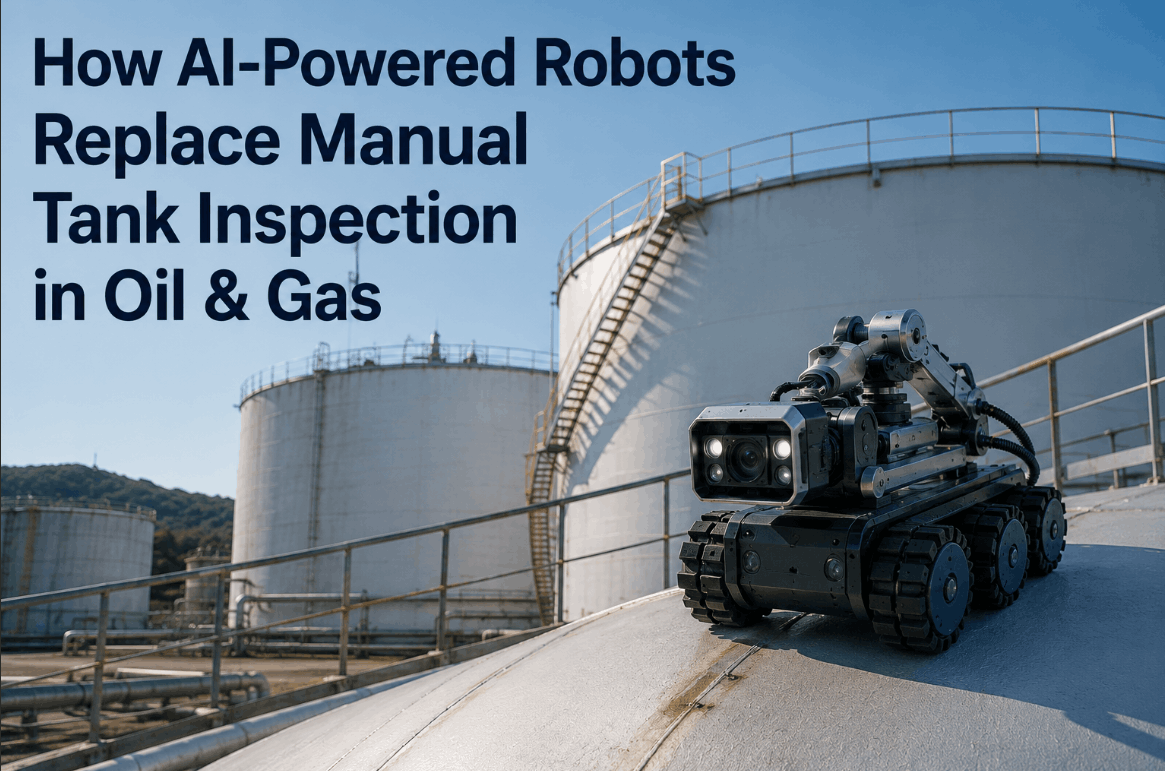
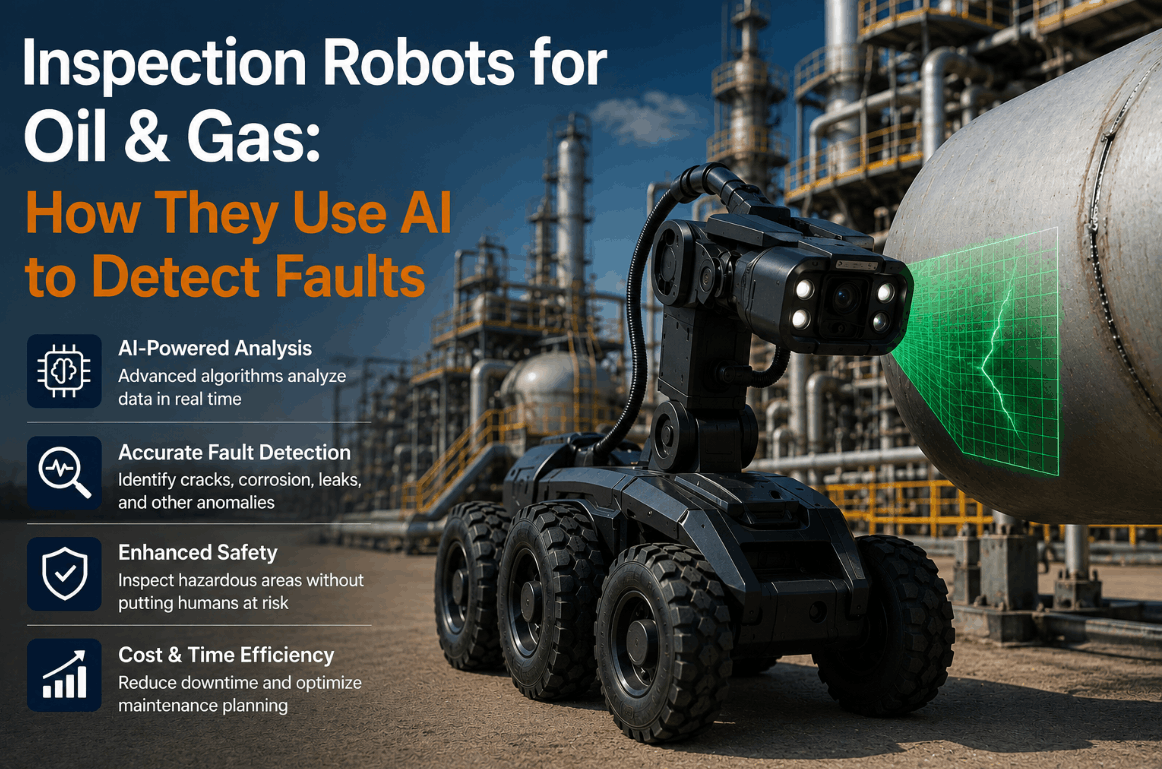
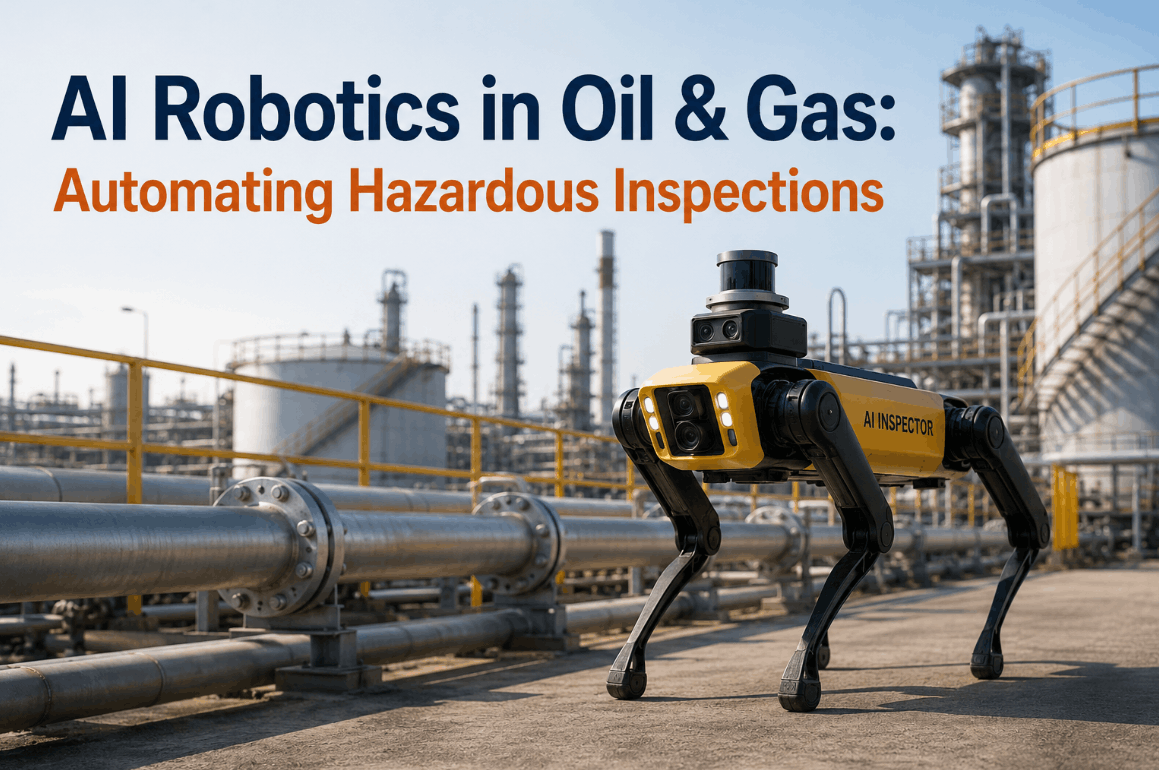
Flare stack inspection is among the most hazardous routine tasks in any refinery, upstream platform, or petrochemical facility — and for most of the industry's operational history, it has been executed by rope access technicians suspended at heights exceeding 100 meters in live process environments, exposed to radiant heat, toxic gas, and structural unpredictability that no permit-to-work system fully eliminates. The emergence of rope access robots augmented by AI vision intelligence is changing that calculus entirely. Where a traditional rope access campaign requires 4 to 7 technicians, extensive permit coordination, and 2 to 5 days of production schedule impact, a robot-assisted AI inspection campaign achieves comparable — and in most defect categories, superior — coverage in under 8 hours with zero personnel at height. Book a Demo to see how iFactory AI's inspection robotics platform deploys across flare stack assets in U.S. oil and gas operations.
70–90%
Reduction in high-risk manual tasks when robotic inspection replaces rope access at height
25–50%
Inspection cost savings: UAV and crawler vs. rope access and scaffold mobilization
1–5 days
Turnaround time recovered from critical path when flare inspections run online without shutdown
0.85–0.95
Corrosion probability of detection with robotic PAUT mapping vs. 0.6–0.8 for manual methods
Why Traditional Rope Access Inspection Is No Longer Sufficient for Flare Stacks
Flare stacks present a combination of hazards that make them uniquely unsuitable for human-entry inspection at any frequency approaching operational adequacy. A typical flare stack inspection under rope access protocol requires weather windows of less than 15 mph wind, confirmed pilot flame shutdown coordination, atmospheric monitoring throughout the ascent, and a standby rescue team on the ground for the full duration of every climb. The administrative and logistical overhead of assembling those conditions on a U.S. refinery or offshore platform routinely delays inspections by 4 to 8 weeks beyond their scheduled interval — meaning the asset is operating at unknown integrity for a period that rarely appears on any risk register.
Beyond the scheduling friction, the data quality from manual rope access inspection is fundamentally constrained by what a technician can physically access, observe, and record while managing their own positioning and safety equipment simultaneously. Inspectors working at height produce less consistent thickness readings, less complete surface coverage, and less reproducible anomaly records than sensor-equipped robotic platforms operating from a fixed teleoperation station. The limitation is not technician skill — it is the physics of the work environment. Rope access robots with AI-processed sensor data close that gap, and the operational and safety case for the transition has been established clearly enough that operators from ExxonMobil to TotalEnergies have formalized AI-augmented robotics as their standard flare inspection protocol. Book a Demo to understand how iFactory's platform maps to your specific flare stack configuration.
Personnel Exposure at Extreme Heights
Rope access technicians working above 30 meters on live flare infrastructure face fall, heat exposure, and toxic atmosphere risks that cannot be engineered out of the task — only eliminated by removing personnel from the work envelope entirely.
HIGH RISK
Weather and Permit Scheduling Delays
Wind, precipitation, and permit-to-work coordination routinely push rope access inspection campaigns 4–8 weeks beyond their scheduled interval, leaving assets operating at unknown integrity during the delay period.
HIGH RISK
Incomplete Surface Coverage
A technician managing positioning and safety equipment simultaneously cannot maintain the sensor contact consistency required for reliable PAUT thickness mapping — producing coverage gaps that accumulate into undetected corrosion over successive inspection intervals.
HIGH RISK
Non-Reproducible Inspection Records
Manual records from rope access campaigns vary in position accuracy, sensor contact quality, and reporting completeness across inspectors and campaigns — making trend analysis across intervals unreliable for remaining life estimation.
MODERATE RISK
High Mobilization Cost Per Campaign
A full rope access flare stack campaign — crew mobilization, standby rescue team, scaffold or boom lift for lower sections, equipment transport — typically costs 2 to 3 times the equivalent robotic inspection deployment for the same asset scope.
MODERATE RISK
Production Schedule Disruption
Flare tip and upper stack inspections under traditional protocols require pilot flame coordination and often partial production restriction — a 1 to 5 day critical path impact that robotic inspection methods eliminate through online inspection capability.
MODERATE RISK
How Rope Access Robots and AI Work Together on Flare Stack Assets
The term "rope access robot" describes a class of tethered or semi-autonomous climbing robots that traverse vertical steel structures using magnetic wheel systems, suction-based adhesion, or mechanical clamping — maintaining contact with the stack shell independently of wind load or surface geometry while carrying a sensor payload that a human technician could not hold steady at equivalent height. The AI layer operates on top of that sensor data stream, classifying anomalies in real time, correlating visual observations with ultrasonic thickness data, and generating structured inspection records that feed directly into the facility's asset management system without manual transcription.
01
Pre-Mission Digital Twin Initialization
Before the robot is deployed, the iFactory platform builds or updates a 3D digital twin of the flare stack from existing inspection records, P&ID data, and a rapid drone survey of the external geometry. The robot's patrol route is planned against this model — defining the measurement grid for UT thickness mapping, the camera angles for visual anomaly detection, and the GPS-correlated position tags that make every data point retrievable against a specific location on the asset for the life of the structure.
02
Robotic Ascent with Multi-Sensor Data Capture
The rope access or magnetic crawler robot ascends the stack shell on the planned route, simultaneously capturing high-resolution visual imagery, infrared thermography for hot spot and CUI (corrosion under insulation) detection, and phased-array ultrasonic (PAUT) thickness readings at each grid point. The sensor suite operates continuously throughout the ascent — producing 2 to 5 times the data density of a comparable manual campaign and maintaining contact consistency that human inspectors physically cannot replicate at elevation.
03
Real-Time AI Anomaly Classification
The iFactory AI vision model processes the live data stream from the robot during the inspection mission — classifying visual observations as surface corrosion, coating failure, weld anomaly, or mechanical damage, and flagging PAUT readings that fall below the minimum remaining wall thickness thresholds defined in the asset's inspection basis. Critical findings trigger an immediate alert to the inspection engineer at the teleoperation station, allowing the robot to be repositioned for a close-up scan of the flagged location without requiring a second campaign.
04
Automated Inspection Report and Remaining Life Estimation
On mission completion, the iFactory platform generates a structured inspection report from the machine-recorded data — including a corrosion map of the full stack surface, remaining wall thickness distribution, flagged anomalies with image evidence and GPS location tags, and a remaining life estimate calculated from the measured corrosion rate against the minimum acceptable wall thickness. The report is audit-ready under API 510 and API 570 requirements without manual record assembly — and the full dataset is retained in the digital twin for trend comparison at the next inspection interval.
05
Continuous Condition Monitoring Between Campaigns
Between scheduled inspection campaigns, the iFactory platform monitors condition signals from fixed sensors at the base of the flare stack — vibration, temperature, and acoustic emission data that feed the asset's condition model and flag anomalous trends requiring an unscheduled robotic inspection mission before the next planned interval. This shift from campaign-based to continuous condition-based monitoring is the practice that closes the integrity gap that exists between rope access campaigns and has historically been invisible to the asset management system.
100%
Flare stack surface coverage achieved with robotic PAUT mapping vs. sample-based manual UT
<8 hrs
Typical robot inspection campaign duration for a full flare stack vs. 2–5 days for rope access
30%
Reduction in unplanned shutdowns documented at facilities running AI-augmented robotic inspection
AI Vision Capabilities Specific to Flare Stack Inspection
Not all AI vision inspection platforms are configured for flare stack environments — the operating conditions present calibration and sensor selection challenges that generic computer vision models do not address. The iFactory platform is trained on flare stack-specific defect taxonomies, accounting for the thermal gradient environment, the surface coating systems common in U.S. refinery flare infrastructure, and the structural geometry of cone, cylindrical, and tapered stack configurations. The inspection capabilities the AI layer adds to the robotic sensor data stream include the following.
AI-Augmented Detection Capabilities at Flare Stack Assets
Surface corrosion classification by severity: pitting, general thinning, and weld-line corrosion identified and graded against API 579 fitness-for-service criteria from visual and UT data combined.
Coating failure detection — holiday, delamination, blistering, and chalking — mapped to GPS-tagged surface coordinates for targeted repair scoping without full recoating mobilization.
Thermal anomaly identification from infrared thermography: hot spots indicating refractory degradation, external heat tracing faults, or insulation voids detected and quantified against operating temperature limits.
Weld anomaly detection: surface-breaking cracks, undercut, and erosion at structural welds flagged for MPI or PAUT follow-up, with location coordinates provided for targeted NDE mobilization.
Flare tip condition assessment from UAV imaging: pilot burner nozzle erosion, tip cone deformation, and steam injection ring degradation identified without requiring a flare shutdown or rope access to the tip elevation.
Change detection between inspection intervals: the AI model compares the current campaign's surface map against the stored prior-campaign baseline, automatically flagging areas where corrosion rate has accelerated or new anomalies have appeared.
Deploy AI-Augmented Robotic Inspection Across Your Flare Stack Assets
iFactory AI's inspection platform integrates rope access robots, UAV visual inspection, AI anomaly classification, and digital twin condition monitoring into a single managed system — eliminating rope access personnel risk and delivering API-compliant inspection records from every campaign.
Operational and Compliance Benefits for U.S. Refineries and Upstream Operators
The business case for transitioning from rope access to AI-augmented robotic flare stack inspection is built on four compounding benefit streams that operate simultaneously from the same platform investment. Understanding all four — not just the safety benefit that typically leads the internal justification — is what determines whether the project is approved as an operational efficiency investment or treated as a maintenance line-item upgrade with a narrow ROI.
Safety
Zero Personnel at Height
Rope access robots and UAVs complete flare inspections with no technicians above ground level — eliminating the fall, gas exposure, and rescue-required scenarios that generate the majority of recordable and lost-time incidents in stack inspection programs.
Cost
25–50% Inspection Cost Reduction
Robotic inspection campaigns eliminate crew mobilization, standby rescue team, scaffold or boom lift hire, and weather delay costs that make rope access flare campaigns 2 to 3 times more expensive per data point than equivalent robotic deployments.
Data
2–5× Coverage Density
Robotic PAUT mapping produces corrosion probability of detection of 0.85 to 0.95 versus 0.6 to 0.8 for manual rope access UT — meaning fewer corrosion features are missed per campaign and remaining life estimates are grounded in denser, more reproducible data.
Schedule
1–5 Days Recovered
Online robotic inspection capability eliminates the production restriction window required for rope access campaigns — recovering 1 to 5 days from the critical path of every turnaround where flare inspection was previously a schedule-driving constraint.
Compliance
API 510 / 570 Audit Readiness
Machine-generated, GPS-tagged, timestamped inspection records from every robotic campaign satisfy API inspection documentation requirements without manual record assembly — reducing audit preparation time from days to hours.
Reliability
30% Fewer Unplanned Shutdowns
Facilities running AI-augmented robotic inspection with continuous condition monitoring between campaigns document a 30% reduction in unplanned shutdowns driven by undetected flare stack degradation — the compounding benefit of higher inspection frequency at lower per-campaign cost.
The combination of these five return streams is what produces the compelling payback profile for robotic inspection platform investment: the safety benefit eliminates a recordable incident exposure that typically carries $180,000 to $450,000 in direct and indirect cost per event, the cost reduction compounds across every campaign in the inspection schedule, and the data quality improvement extends the average interval between maintenance interventions on the asset. Book a Demo to model the specific ROI against your facility's flare stack inventory, current inspection cost baseline, and turnaround schedule.
Expert Perspective: What the Transition from Rope Access to Robotic Inspection Changes in Practice
The argument against robotic flare inspection we heard most often in 2022 was that robots couldn't match the judgment of an experienced rope access inspector who knew what to look for. By 2024, that argument had inverted. The AI classification model doesn't get fatigued at 80 meters, doesn't miss the back side of a nozzle because it's awkward to reach, and doesn't produce a report that varies depending on who wrote it. We ran a parallel campaign — rope access team and robotic platform, same stack, same day — and the robot identified 14 anomalies against the rope access team's 9. Of the 5 the team missed, 3 were in areas that required the robot to traverse around the full circumference, which the team had done only on accessible sections. That data closed the internal debate.
Integrity Manager, U.S. Gulf Coast Refinery
3-Flare Stack Asset Base — Robotic Inspection Program Transition 2023–2024
What changed operationally when we moved to AI-augmented robotic inspection was not just the safety record — it was the scheduling freedom. Our flare stacks used to dictate when we could close out a turnaround because of the permit and weather window coordination required. Now the robotic campaign runs before the turnaround unit comes down, the report is in the system before the rope access team would have even started rigging, and the maintenance scope is defined from data rather than from what the inspector could reach. We recovered 3 days from our last major turnaround critical path from flare inspection alone. At our facility's day rate, that is more than the annual cost of the robotic inspection platform.
Magnetic crawler and UAV platforms rated for ATEX Zone 1 environments can inspect the stack shell and lower sections in active service; flare tip close inspection typically requires pilot flame reduction coordination but not full production shutdown.
iFactory's platform generates machine-recorded, GPS-tagged, timestamped inspection reports that include thickness measurements, anomaly classifications, and inspector qualification references — satisfying API documentation requirements without manual record assembly.
The iFactory platform is hardware-agnostic, integrating with magnetic crawler robots, UAV inspection drones, and tethered climbing systems — selecting the platform based on stack geometry, operating environment, and inspection scope requirements.
The iFactory AI model is calibrated on a site-specific basis during the first campaign, building a baseline from the actual coating system and surface condition of each asset so that subsequent anomaly detection is tuned to the specific inspection environment.
For a standard U.S. refinery or upstream facility with existing network infrastructure, iFactory deploys the platform and completes the first robotic inspection campaign within 6 to 10 weeks from contract execution.
AI-Augmented Rope Access Robots for Flare Stack Inspection — Safer, Faster, More Complete
iFactory AI's inspection robotics platform eliminates rope access personnel exposure, delivers 2–5× inspection data density, and produces API-compliant records from every campaign — at 25–50% of the cost of traditional rope access mobilization.
Conclusion: The Case for Retiring Rope Access as the Default Flare Inspection Method
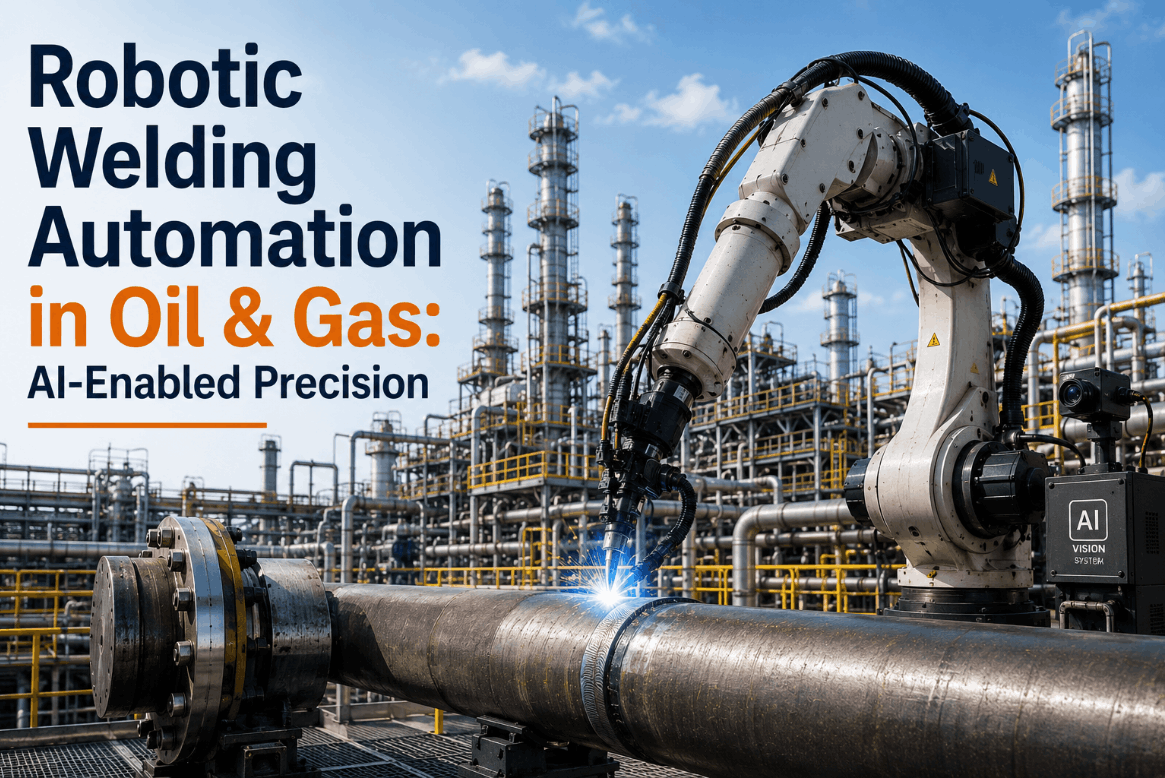
Rope access will remain a required capability for intervention tasks — weld repair, hardware replacement, surface preparation for recoating — that robotic platforms cannot yet execute with the dexterity of a skilled technician. But rope access as the primary inspection data collection method for flare stacks is no longer defensible on safety, cost, data quality, or schedule grounds at any U.S. facility that has evaluated the robotic alternative. The inspection data from AI-augmented robotic platforms is more complete, more reproducible, and more actionable than manual campaign data. The cost is lower. The scheduling flexibility is substantially higher. And the risk profile — zero personnel at elevation — eliminates the incident exposure that makes flare stack inspection one of the highest-consequence routine maintenance activities in the industry.
The operations that have made the transition report a consistent outcome: the robotic inspection program pays for itself within the first two to three campaigns through inspection cost reduction and turnaround schedule recovery alone, and the compounding benefit of condition-based monitoring between campaigns adds a maintenance efficiency return that manual inspection programs cannot structurally deliver. iFactory AI's platform is deployed at U.S. and international oil and gas facilities today — and the infrastructure readiness assessment is available at no cost before any capital commitment is required. Book a Demo to begin the readiness assessment for your flare stack asset base.



-in-oil-&-gas-back-office.png)