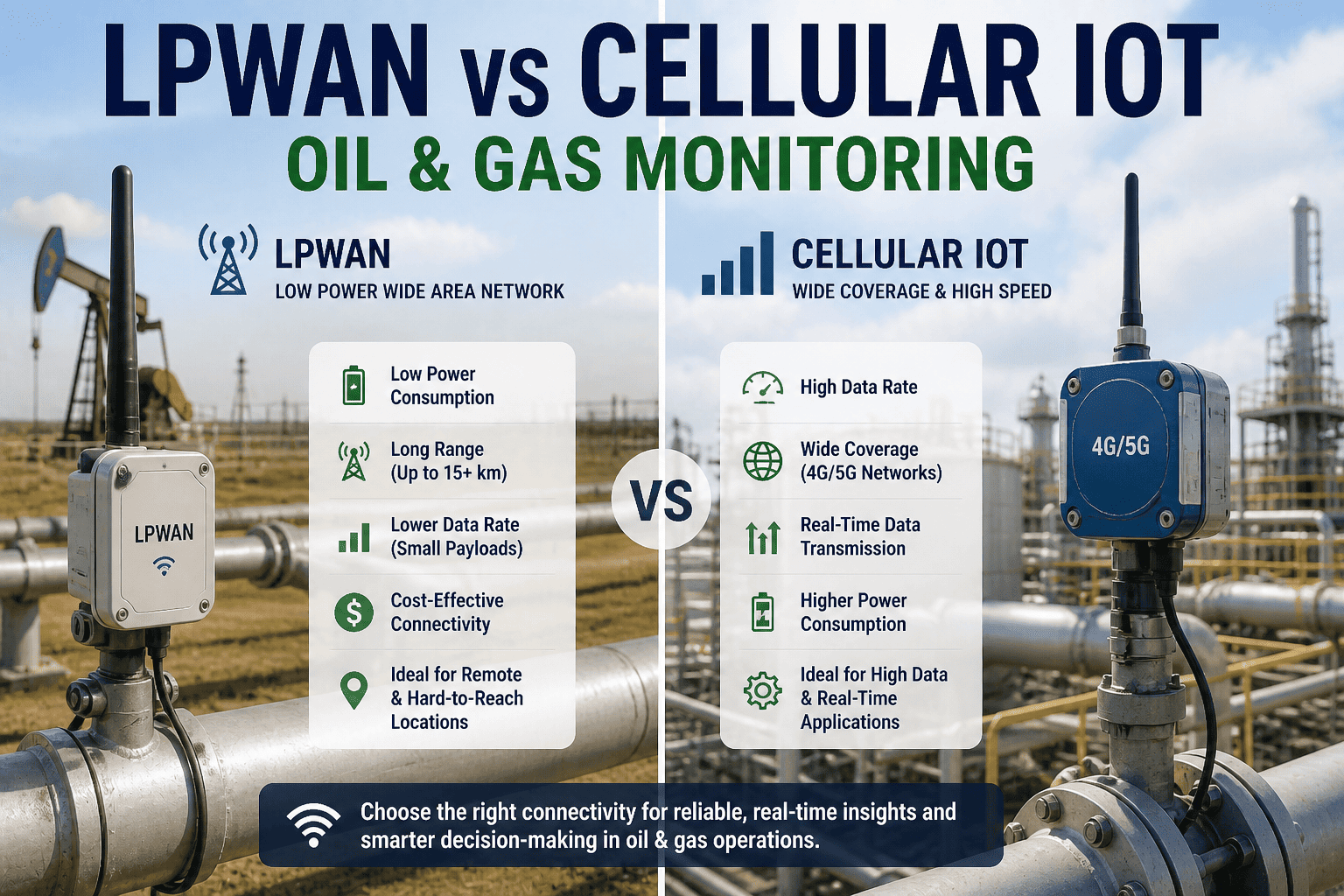
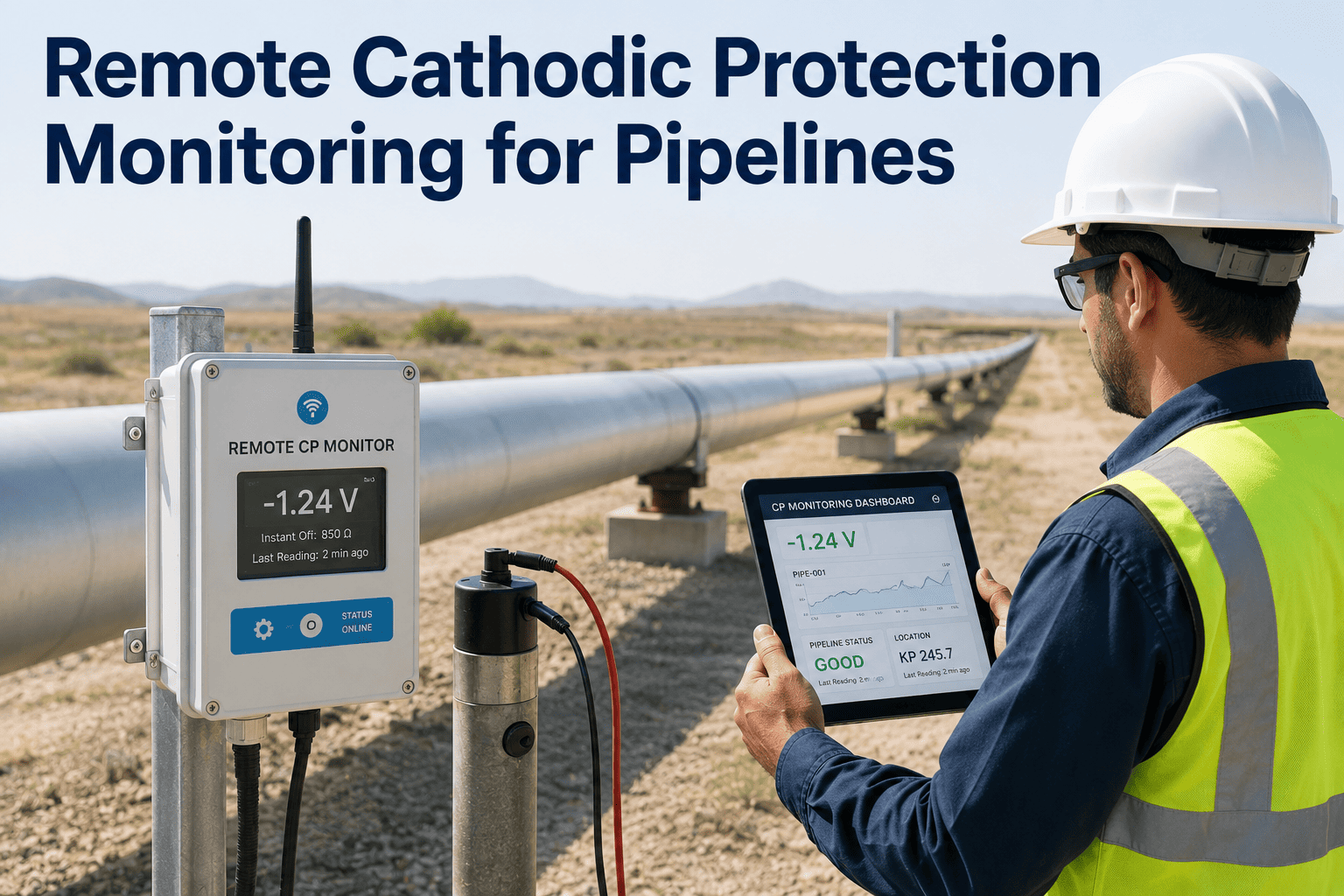
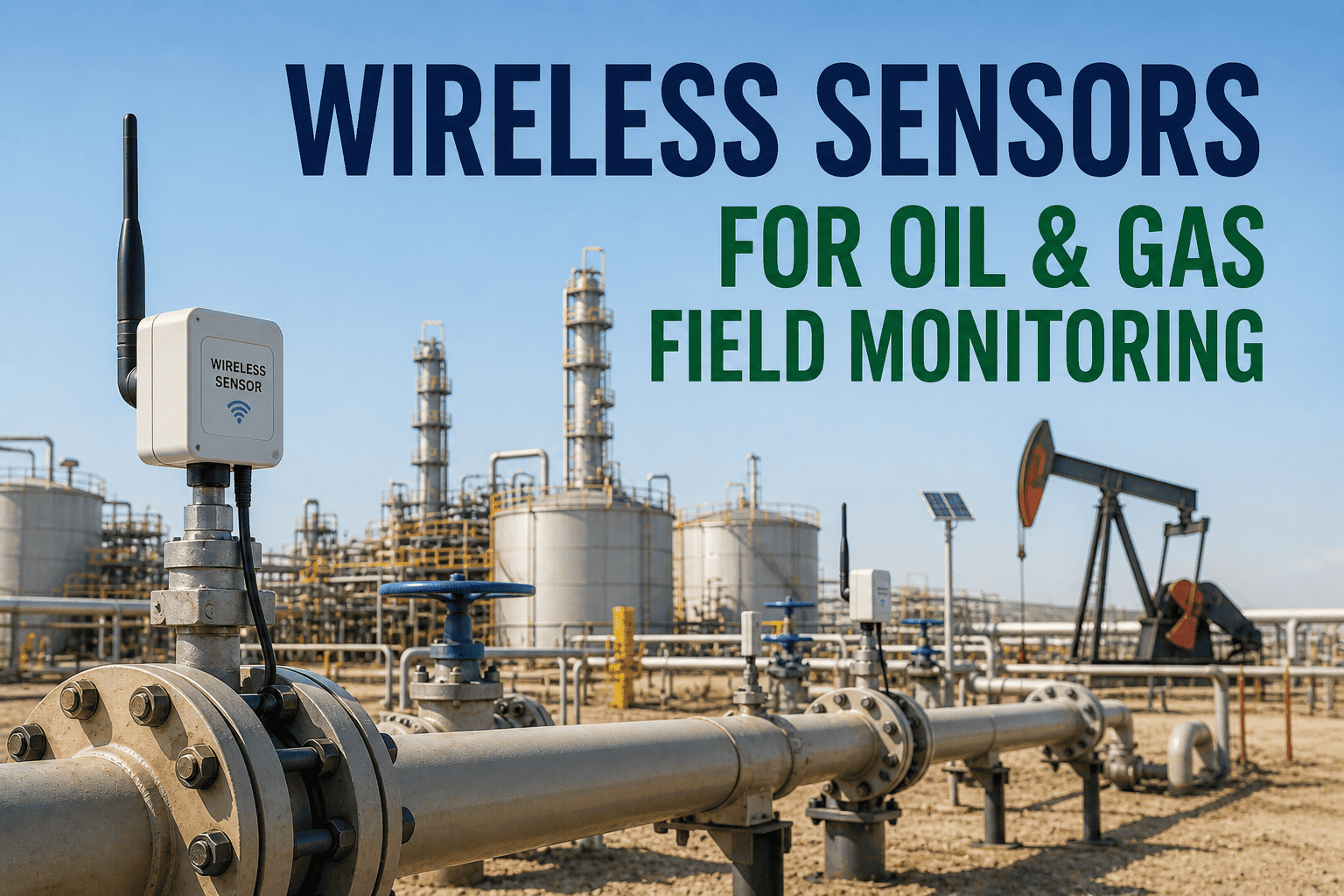
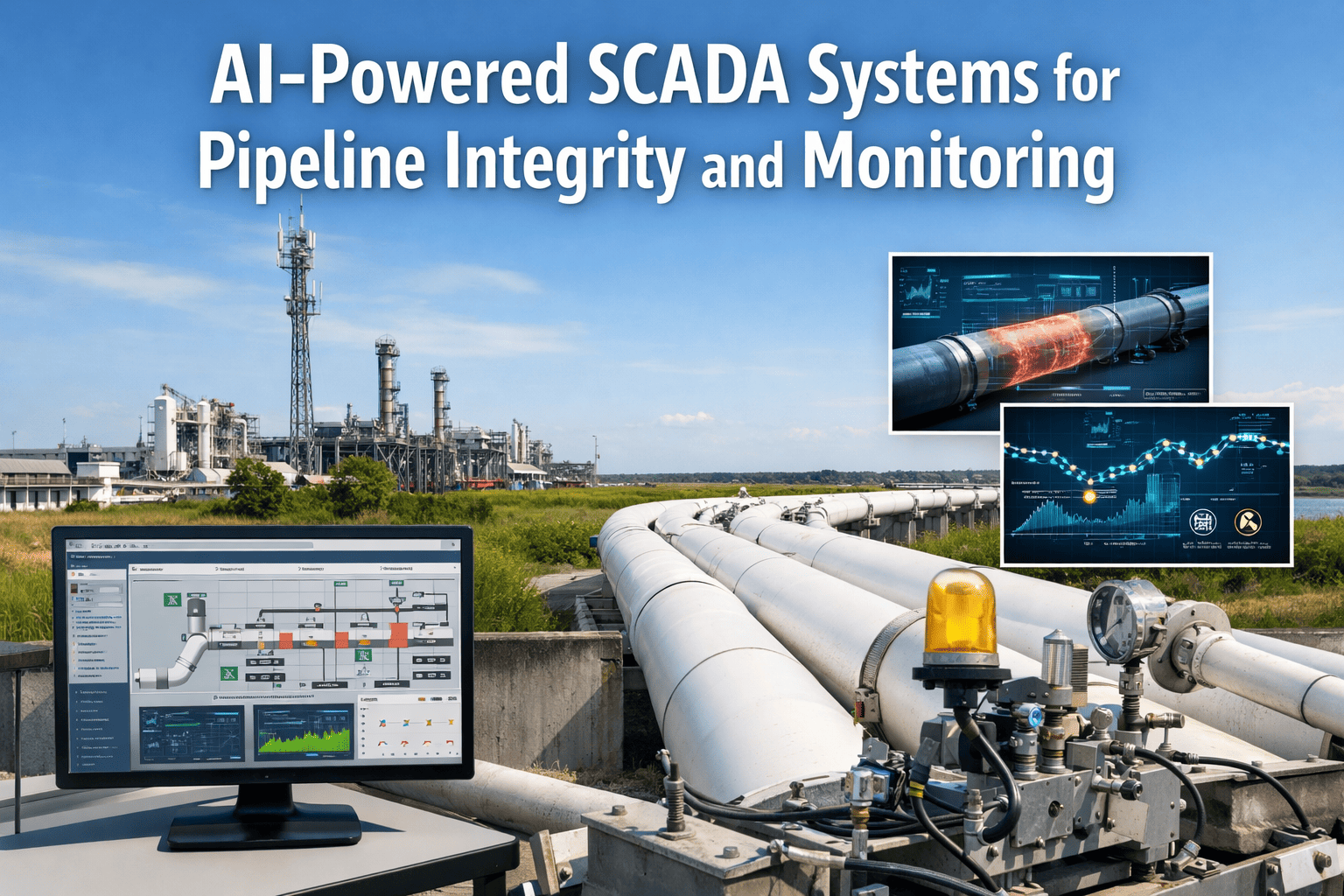
Oil and gas operations face mounting pressure to monitor remote assets across thousands of square miles where wellheads, pipelines, and production equipment operate in isolated locations 50-200 miles from central facilities. Traditional hardline communication infrastructure costs $2,000-$8,000 per mile limiting connectivity to high-value assets while remote equipment remains blind to real-time conditions until scheduled inspections discover problems days or weeks after equipment degradation begins. Connectivity technology selection determines whether operators gain continuous visibility across complete asset portfolios or maintain fragmented monitoring limited to connected facilities. iFactory's hybrid IoT architecture supports both LPWAN and cellular connectivity enabling operators to deploy optimal communication per asset class and geographic context preventing overinvestment in expensive cellular networks for simple sensors while preserving cellular bandwidth for critical applications requiring real-time responsiveness. Book a Demo to see how iFactory deploys hybrid LPWAN/cellular monitoring across your oil and gas asset portfolio.
Midstream & Upstream Operations
LPWAN vs Cellular IoT: Connectivity Architecture for Remote Oil & Gas Operations
12-14 min read
$2K-8K
Per-mile hardline infrastructure cost limiting traditional connectivity expansion
50-200
Miles typical separation between remote wells and central monitoring facility
30-40x
Battery life extension with LPWAN vs cellular continuous connectivity
8 weeks
Full hybrid LPWAN/cellular deployment including network engineering and asset activation
Oil & Gas Connectivity Challenges: Why Technology Choice Matters
Remote oil and gas assets spanning 2,000-4,000 square mile operating areas face fundamental connectivity constraints where traditional hardline infrastructure becomes economically prohibitive while wireless options introduce tradeoffs between battery life, coverage, bandwidth, latency, and cost. Wellheads, pipeline monitoring stations, and production equipment require continuous data transmission yet operate in environments where power availability, network infrastructure, and environmental extremes challenge standard connectivity approaches. Understanding LPWAN and cellular IoT capabilities enables operators to design connectivity architecture optimized for actual operational requirements preventing wasteful overbuilding of expensive infrastructure while maintaining necessary visibility across asset portfolios.
LPWAN Technology Strengths
Extended battery life (5-10 years), low power consumption, wide geographic coverage, cost-effective infrastructure, favorable terrain penetration enabling operation through obstacles and underground.
Cellular IoT Technology Strengths
High bandwidth enabling video and complex data, predictable latency supporting real-time control, ubiquitous coverage in developed regions, mature ecosystem with extensive device availability.
Hybrid Approach Optimization
Deploy LPWAN for distributed sensor networks optimizing battery life and cost, preserve cellular for command/control and video inspection enabling bidirectional workflows without overprovisioning bandwidth.
LPWAN Technologies: LoRaWAN, Sigfox, NB-IoT Deep Comparison
Low-Power Wide-Area Networks enable distributed sensor deployment across vast geographic areas with battery life measured in years rather than months. Three primary LPWAN standards compete in oil and gas applications each with distinct deployment economics and technical characteristics.
LoRaWAN
Long-Range RF Standard
Coverage Range
5-15 km urban / 15-40 km rural line-of-sight
Battery Life
5-10 years at 15-min transmission intervals
Bandwidth
50 bytes typical / 250 bytes maximum per message
Latency
5-30 seconds typical due to transmission scheduling
Infrastructure Cost
$30K-$80K per gateway covering 2,000-3,000 sq mi
Typical Monthly Cost per Device
$1-3 for connectivity service
Optimal for: Distributed pressure/temperature sensors, wellhead status monitoring, pipeline leak detection, flow rate measurements where battery life matters more than real-time responsiveness.
NB-IoT
3GPP Mobile Standard
Coverage Range
1-40 km depending on network operator deployment
Battery Life
3-7 years at hourly transmission intervals
Bandwidth
250 bytes typical / 1,600 bytes maximum per message
Latency
1-10 seconds typical for mobile network
Infrastructure Cost
$0 (uses existing mobile infrastructure)
Typical Monthly Cost per Device
$10-25 through mobile carriers
Optimal for: Moderate bandwidth applications where cellular infrastructure already exists, monitoring requiring 1-10 second latency, applications supporting mixed connectivity across multiple technologies.
Sigfox
Ultra-Narrowband Global Network
Coverage Range
10-50 km rural / 5-10 km urban (geography dependent)
Battery Life
10-20 years at 2-message daily transmission
Bandwidth
12 bytes uplink / 8 bytes downlink per message
Latency
10-600 seconds (asynchronous protocol)
Infrastructure Cost
$0 (uses global network infrastructure)
Typical Monthly Cost per Device
$5-15 for global connectivity service
Optimal for: Extremely remote locations lacking cellular coverage, simple status sensors (on/off), alarm conditions, heartbeat transmissions where latency is not critical.
Cellular IoT: LTE-M & Cat-M Technology Deep Comparison
Cellular IoT technologies (LTE-M, Cat-M) operate within existing mobile network infrastructure providing higher bandwidth, lower latency, and more mature device ecosystems compared to LPWAN while consuming significantly more power requiring hardened batteries or permanent power sources.
LTE-M (Cat-M1)
Reduced LTE Standard
Coverage Range
Dependent on carrier infrastructure / 1-5 km typical
Battery Life
1-3 years at continuous transmission (requires hardened battery)
Bandwidth
1-10 Mbps supporting video and complex streaming data
Latency
50-500 milliseconds enabling near-real-time bidirectional control
Infrastructure Cost
$0 (uses existing carrier infrastructure)
Typical Monthly Cost per Device
$25-50 depending on data consumption and carrier
Optimal for: Emergency shut-down command transmission, video inspection data, complex bidirectional control workflows, applications requiring <500ms latency for safety-critical operations.
4G LTE (Full Standard)
Standard Mobile Connectivity
Coverage Range
Carrier dependent / typically 0.5-3 km in remote areas
Battery Life
Days to weeks at continuous transmission (requires continuous power)
Bandwidth
50-300 Mbps supporting HD video streaming and large data transfers
Latency
50-100 milliseconds supporting real-time interactive applications
Infrastructure Cost
$0 for coverage areas; $1-5M+ for remote tower deployment
Typical Monthly Cost per Device
$50-150 for unlimited data plans
Optimal for: Control center connectivity, HD video surveillance, interactive dashboards, high-bandwidth monitoring applications where continuous power is available.
Cost Comparison: LPWAN vs Cellular Over 5-Year Asset Lifecycle
Financial viability of connectivity technology depends on deployment scale, bandwidth requirements, and power availability. A single remote wellhead shows different economics than fleet-wide deployment across hundreds of assets.
Single Remote Pressure Sensor (1 Device)
LoRaWAN
Device: $200
5-year service: $60 ($1/mo avg)
Gateway (amortized): $15
Total: $275
LTE-M
Device: $250
5-year service: $1,500 ($25/mo)
Infrastructure: $0
Total: $1,750
LPWAN advantage: 6.4x lower cost
100 Wellhead Pressure Network
LoRaWAN
Devices (100): $20K
5-year service: $6K ($1/mo)
Gateways (4): $32K
Total: $58K
LTE-M
Devices (100): $25K
5-year service: $150K ($25/mo)
Infrastructure: $0
Total: $175K
LPWAN advantage: 3x lower cost
Real-Time Control & Video (Remote Area Without Cellular)
LoRaWAN
Devices: Not suitable for video
Bandwidth: 50B messages only
Latency: 5-30 seconds
Cannot fulfill requirements
4G LTE Tower
Tower: $1-5M deployment
Annual backhaul: $60K-120K
Devices: $20K annual
Total first year: $1.08-5.14M
Only cellular viable option despite cost
Hybrid Connectivity Architecture: Optimizing Technology by Use Case
The highest-performing oil and gas operations deploy hybrid connectivity using LPWAN for cost-effective sensor networks while preserving cellular for bandwidth-intensive and latency-critical applications. iFactory's platform supports simultaneous LPWAN and cellular deployment enabling each asset class to utilize optimal technology. Book a demo to see hybrid LPWAN/cellular architecture design for your asset portfolio.
Technology Selection Decision Matrix: LPWAN vs Cellular by Application
Connectivity technology selection depends on specific application requirements. This decision matrix guides optimal technology choice for common oil and gas monitoring scenarios.
| Application |
Data Size |
Frequency |
Latency Need |
Optimal Technology |
Rationale |
| Wellhead Pressure/Temperature |
10-50 bytes |
Every 15-60 min |
Minutes acceptable |
LoRaWAN |
Low bandwidth, infrequent, battery-critical, can scale to 100+ sensors cost-effectively |
| Pipeline Leak Detection |
20-100 bytes |
Every 5-15 min |
Minutes acceptable |
LoRaWAN |
Distributed sensors, high device count, latency not safety-critical, extended battery life preferred |
| Remote Wellhead Shutdown Command |
100-500 bytes |
On-demand |
<500ms required |
Cellular (LTE-M) |
Safety-critical application, low frequency justifies cellular cost, guaranteed latency required |
| Production Equipment Video Inspection |
10-500 MB |
On-demand |
Minutes acceptable |
Cellular (4G LTE) |
Bandwidth-intensive, LPWAN cannot support, requires continuous power or robust battery |
| Compressor Performance Monitoring |
1-5 KB |
Every 30-60 sec |
Seconds acceptable |
LTE-M/Cellular |
Moderate bandwidth, frequent sampling, latency not safety-critical, continuous power available |
| Pipeline Cathodic Protection Voltage |
50-200 bytes |
Hourly |
Hours acceptable |
Sigfox/LPWAN |
Ultra-simple status, minimal bandwidth, can operate in GPS-denied underground locations |
| Remote Emergency Flare Detection |
100-500 bytes |
On-demand |
Seconds required |
Cellular (LTE-M+) |
Safety-critical alert, low frequency justifies cellular infrastructure, latency-sensitive |
| Meter Calibration Data Transmission |
500 bytes-1 MB |
Weekly |
Minutes-hours acceptable |
NB-IoT/LTE-M |
Infrequent, moderate bandwidth, standard mobile network sufficient, low device count |
Regional Deployment Considerations: Connectivity Availability by Geography
| Region |
Cellular Coverage |
LPWAN Availability |
Recommended Approach |
Implementation Challenges |
| North America (Lower 48) |
Excellent coverage in most areas; remote areas require tower augmentation |
LoRaWAN widely available; NB-IoT growing; Sigfox limited |
Hybrid approach: LPWAN for sensors, cellular for control/video. Cellular supplemented in remote areas. |
Legacy infrastructure compatibility; multiple carrier coordination |
| Canadian Remote/Arctic |
Sparse in remote regions; satellite fallback required for far north |
LoRaWAN deployable; coverage gaps in far north |
LPWAN primary with satellite backup for critical assets; cellular for accessible facilities |
Extreme temperature sensor reliability; satellite latency; permit complexity |
| Middle East/Gulf |
Excellent in populated areas; desert remote fields require infrastructure |
LoRaWAN emerging; NB-IoT carrier availability variable |
Cellular primary in developed areas; hybrid with LPWAN in remote deserts |
Infrastructure provider coordination; government approval; spectrum licensing |
| Sub-Saharan Africa |
Sparse except in developed corridors; remote exploration areas limited |
LoRaWAN available in limited areas; Sigfox offers continent coverage |
LPWAN primary (LoRaWAN or Sigfox); cellular only in developed areas; satellite bridge |
Limited local ecosystem; long procurement timelines; power reliability |
| Southeast Asia/Offshore |
Good in coastal areas; offshore platforms dependent on cellular augmentation |
LoRaWAN emerging; coverage gaps common |
Cellular for offshore platforms via submarine/satellite; hybrid onshore |
Maritime regulations; typhoon hardening; salt spray corrosion mitigation |
Implementation Roadmap: 8-Week Hybrid Connectivity Deployment
01
Application Audit & Technology Assessment
Inventory all remote monitoring assets documenting: data requirements, transmission frequency, latency tolerance, power availability, geographic location, and current connectivity gaps. Assess existing cellular and LPWAN coverage through carrier and network provider analysis. Evaluate environmental constraints affecting signal propagation.
Completed in week 1
02
Connectivity Architecture Design
Recommend optimal technology per application category: LPWAN for distributed sensors, cellular for bandwidth-intensive applications. Identify infrastructure deployment requirements: LoRaWAN gateway locations, carrier coverage gaps requiring supplementation, backbone network design. Create cost model comparing LPWAN, cellular, and hybrid approaches.
Completed in weeks 1-2
03
Pilot Network Deployment
Deploy sensors using recommended technology on 10-20% of highest-value assets. Install LPWAN gateways or activate cellular connections. Validate coverage, latency, power consumption, and data reliability in actual operating environment. Collect performance baselines for scaling decisions.
Pilot complete by week 4
04
Gateway/Infrastructure Optimization
Fine-tune LPWAN gateway placement based on pilot results. Negotiate cellular service agreements for identified coverage areas. Optimize antenna placement and power systems. Validate redundancy and failover mechanisms. Test integration with backend analytics platforms.
Infrastructure ready by week 5
05
Full Fleet Deployment
Roll out hybrid connectivity to all monitored assets. Activate LPWAN devices on optimized gateway network. Provision cellular connections for bandwidth-intensive applications. Configure routing and failover between technology layers. Test mixed-technology data flow.
Full deployment by week 6
06
Operations Handoff & Optimization
Complete operations team training on hybrid network management. Implement monitoring dashboard showing connectivity status per technology. Establish maintenance procedures for LPWAN infrastructure. Validate analytics pipeline receiving data from both technology layers. Begin continuous optimization based on operational experience.
Live operations by week 8
Use Cases: LPWAN vs Cellular in Real Deployments
An upstream operator managing 85 producing wells across 3,000 square miles deployed pressure and temperature sensors at each wellhead for decline curve analysis and equipment condition tracking. Cellular coverage existed only at central facility 50-150 miles from remote wellheads making coverage-wide 4G deployment economically prohibitive. iFactory recommended LoRaWAN architecture deploying 4 gateways across field providing coverage for all 85 wellheads. Sensors transmit pressure and temperature every 30 minutes requiring 5-year battery life. LPWAN solution cost $58K for 85 devices, infrastructure, and 5-year service versus $175K cellular equivalent. Operators achieved 95% data delivery rate with latency acceptable for decline analysis. Gateway maintenance minimal, no fiber backhaul infrastructure needed, battery replacements on 4-year cycle per wellhead.
$117K
Savings vs cellular approach over 5 years
95%
Message delivery rate in remote field environment
4 years
Average sensor battery life at 30-minute transmission
A midstream compression station operator required real-time compressor performance data for dynamic throttling and safety shutdown command capability ensuring response within 500 milliseconds for surge protection. LPWAN latency (5-30 seconds) insufficient for safety application requiring guaranteed responsiveness. iFactory recommended LTE-M cellular for command/control layer while LPWAN remained viable for non-critical sensor data. Cellular connectivity deployed at compression stations (20 sites) with 6-12 month implementation. LTE-M devices provided 300-500ms latency sufficient for safety systems. Command transmission latency validated at 480ms average enabling safe compressor surge protection. Operator maintained quarterly device testing protocol confirming responsiveness. Annual cellular service cost $8,000 (20 devices × $33/month) justified by safety capability unavailable through LPWAN.
480ms
Average command transmission latency meeting safety requirements
Zero
Compressor surge incidents post-LTE-M safety system activation
$8K
Annual cellular service cost for safety-critical application
A pipeline operator managing 800 miles of transmission pipeline required continuous pressure monitoring at 160 valve stations plus periodic HD video inspection of critical infrastructure. Pressure sensors transmitted once hourly at 50-byte messages. Video inspection (500MB per location) occurred quarterly on demand. iFactory recommended hybrid approach: LoRaWAN for 160 pressure sensors reducing battery cost and infrastructure, LTE-M for video transmission during inspection events. 8 LoRaWAN gateways deployed providing coverage for all 160 sensors. LTE-M connectivity enabled at high-value inspection locations (20 sites). Hybrid approach cost 40% less than cellular-only while supporting both continuous monitoring and intermittent video. Pressure data quality improved from weekly manual logs to hourly real-time trending enabling earlier degradation detection.
40%
Cost reduction vs cellular-only approach
Hourly
Pressure trending frequency vs weekly manual readings
500 MB
Per-location video transmission enabled by cellular layer
Frequently Asked Questions: LPWAN vs Cellular for Oil & Gas
QCan LPWAN gateways be installed on wellhead structures or require separate infrastructure?
LPWAN gateways can be installed on existing wellhead structures, pipeline markers, or communication towers minimizing infrastructure cost. Antenna placement optimized for line-of-sight within 5-15km radius enables coverage area planning avoiding duplicative gateways. iFactory performs radio propagation modeling during site assessment determining optimal gateway locations.
QDoes LPWAN work through pipe casings and underground installation?
LPWAN signal penetration depends on technology: LoRaWAN penetrates light piping materials but attenuates significantly through heavy steel. Underground subsurface deployment requires surface-mounted antennas extending above ground. Sigfox offers slightly better penetration than LoRaWAN through dense materials. Cellular LTE-M similarly requires surface antenna installation for underground sensing.
QWhat is the most cost-effective hybrid approach for a 200-well field?
Deploy LoRaWAN for all 200 pressure/temperature sensors (cost ~$80K initial + $6K annually), preserve LTE-M cellular for 5-10 highest-value locations requiring real-time control or video. Total hybrid cost approximately $130K initial (LPWAN infrastructure + LTE-M devices) + $3K annual service is typically 30-40% less than cellular-only while supporting both continuous monitoring and bandwidth-intensive applications.
QHow is data routed when LPWAN coverage fails or cellular network degrades?
iFactory platform implements automatic failover: if LPWAN gateway signal loses, devices buffer data locally and retransmit when connectivity restores. Dual-mode devices supporting both LPWAN and cellular can automatically switch to cellular backup during LPWAN outage. Critical control commands always route through cellular ensuring guaranteed delivery despite LPWAN degradation.
QCan LPWAN gateways be powered by solar or battery for remote locations?
Yes. LPWAN gateways consume 5-15W continuously and are deployed with solar panels + battery backup enabling multi-day operation during cloudy periods. Solar-powered gateway enables remote location deployment without generator or power line infrastructure. iFactory designs gateway power systems per geographic location accounting for seasonal solar availability.
QIs there interference between LPWAN and cellular networks at same location?
LPWAN and cellular operate in different frequency bands with minimal interference: LoRaWAN (915 MHz or 868 MHz regional), LTE-M (600-2100 MHz depending on carrier). Antenna separation and proper installation prevent cross-interference. iFactory performs radio frequency assessment during deployment ensuring frequency coordination across multiple technologies.
Deploy Optimal Connectivity Architecture. Choose LPWAN, Cellular, or Hybrid. Made Simple in 8 Weeks.
The Complete AI Platform for Oil & Gas Operations connects your asset portfolio through optimal connectivity architecture: LPWAN for cost-effective distributed sensors, cellular for bandwidth-intensive and safety-critical applications, hybrid deployment for mixed requirements. iFactory hybrid connectivity platform enables maximum flexibility deploying appropriate technology per asset class and geographic context. Book a 30-minute demo to explore connectivity architecture optimization for your specific asset portfolio and operating regions.