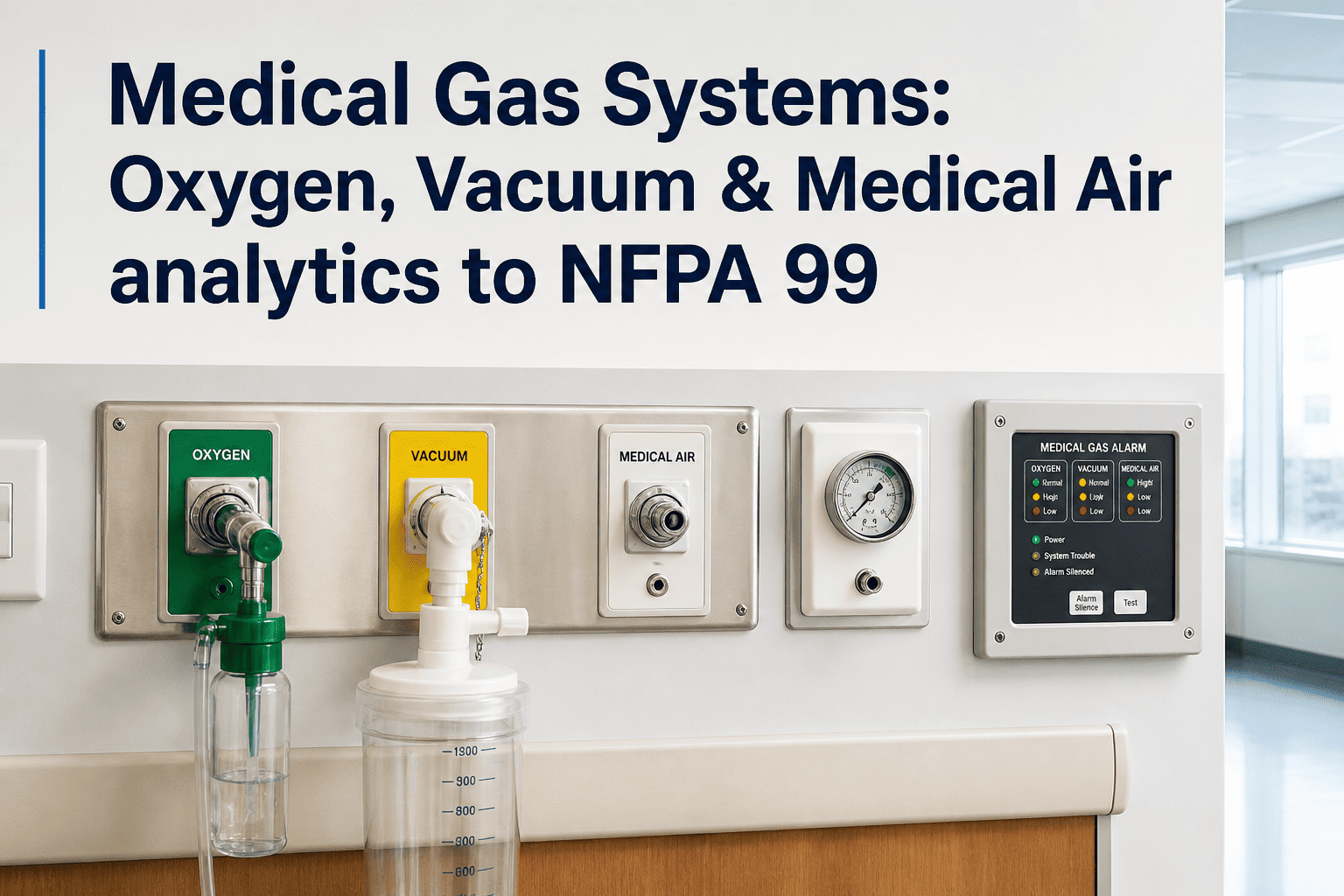
Every hour a medical gas zone valve goes uninspected, a hospital is one slow pressure drop away from a ventilator failure, a surgical suite evacuation, or a NFPA 99 citation that freezes Joint Commission accreditation. The cost is not hypothetical — it is a silent operational hemorrhage bleeding through every missed maintenance cycle, every paper-based checklist, and every compliance gap your team cannot see in real time.
Is Your Medical Gas Compliance Audit-Ready — Right Now?
Digitize oxygen, vacuum, and medical air inspections into a single compliance dashboard. Eliminate paper trails. Eliminate risk.
The Hidden Cost of Manual Medical Gas Compliance
NFPA 99 mandates rigorous, documented inspection cycles for every piped medical gas system in your facility. When that compliance lives on paper clipboards and shared spreadsheets, the operational and financial exposure compounds silently.
A single NFPA 99 deficiency finding during a CMS survey can trigger Condition of Participation citations — placing your entire Medicare and Medicaid revenue stream at risk.
Oxygen and medical air cross-contamination events remain one of the most lethal and preventable hospital engineering failures — driven almost exclusively by inspection gaps.
Deferred alarm and zone valve maintenance leads to emergency shutdowns that cost 4–7× more than proactive inspection cycles — while disrupting active patient care areas.
What NFPA 99 Requires — And Where Facilities Break Down
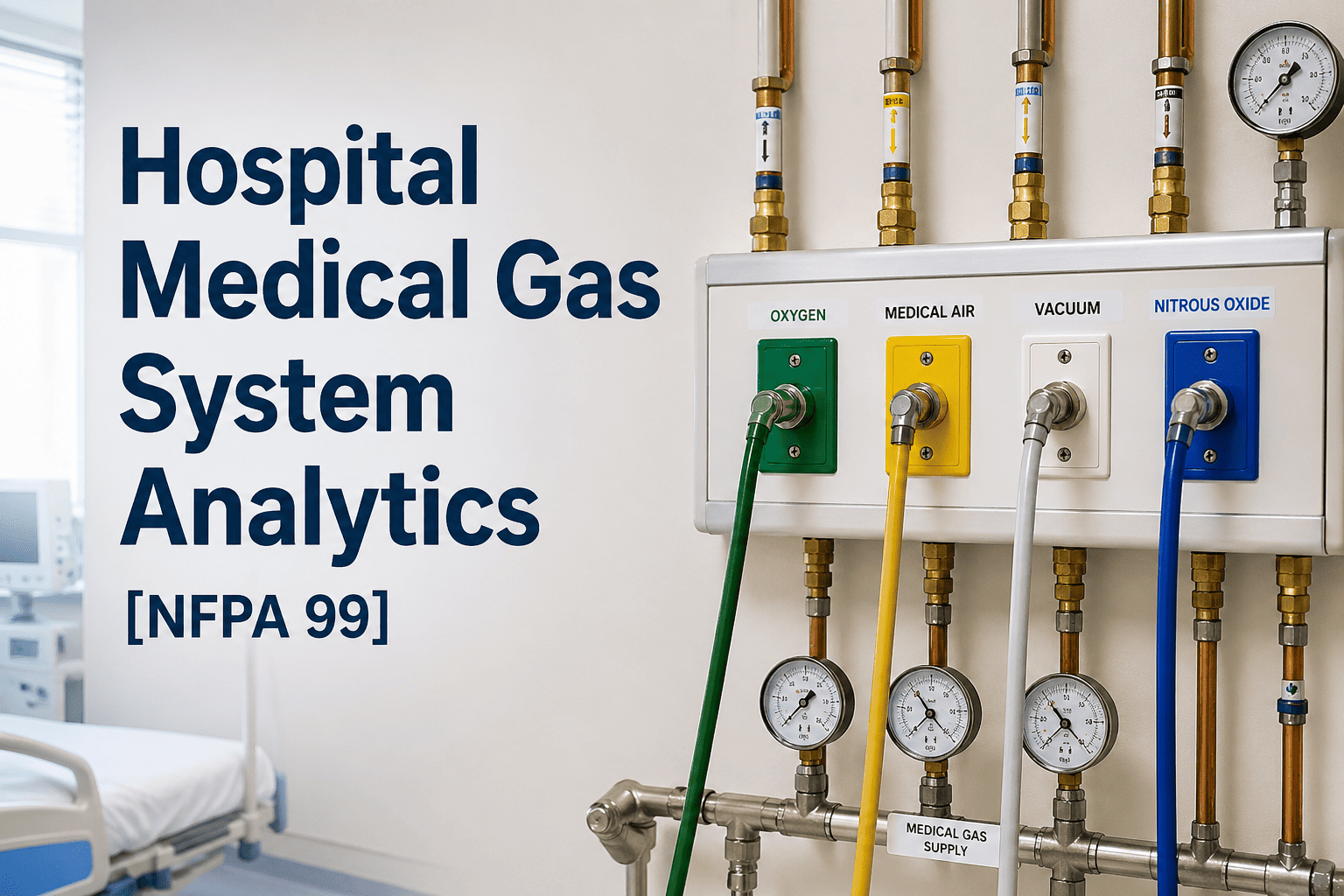
NFPA 99 Chapter 5 defines performance, testing, and maintenance requirements for Health Care Facilities Gas and Vacuum Systems. Compliance is not optional — it is a condition of hospital licensure and accreditation. Key regulated subsystems include:
Bulk Oxygen Systems
- Pressure regulator inspection cycles
- Manifold header valve testing
- Automatic switchover verification
- Purity and flow rate documentation
Medical Vacuum Systems
- Receiver tank inspection logs
- Pump alternation sequence checks
- Exhaust discharge point compliance
- Suction line pressure monitoring
Medical Air Compressors
- Dew point and CO alarm verification
- Intake filter replacement records
- Intercooler and aftercooler checks
- Desiccant dryer performance logs
Zone Valve Boxes
- Quarterly operational verification
- Labeling accuracy and legibility
- Pressure gauge calibration records
- Emergency shutoff response testing
Master Alarm Panels
- Area and master alarm activation tests
- Visual and audible signal verification
- Source alarm condition response logs
- Annual third-party validation records
Outlet & Inlet Stations
- DISS and NIST indexing verification
- Flow rate and pressure testing cycles
- Outlet retention force compliance
- Gas identity labeling inspections
Legacy Friction vs. iFactory Optimized Excellence
The operational gap between paper-based compliance and a digitized inspection platform is not incremental — it is transformational. The table below quantifies where your current process is generating hidden liability.
| Compliance Function | Legacy Friction | iFactory Optimized | Clinical Impact |
|---|---|---|---|
| Inspection Scheduling | Manual calendar reminders, missed cycles | Automated triggers with escalation alerts | Zero missed cycles |
| Zone Valve Documentation | Paper forms, illegible or lost | Digital timestamps, geo-tagged technician logs | Audit-ready instantly |
| Alarm Panel Testing | Quarterly sign-off on shared binders | Structured digital checklists with photo capture | Accreditation confidence |
| Defect Escalation | Verbal handoffs, delayed work orders | Automated work order generation on defect flag | 4× faster resolution |
| Compliance Reporting | Weeks of manual report assembly | One-click NFPA 99 compliance report export | Survey-ready in minutes |
| Cross-System Visibility | Siloed data across departments | Unified gas system dashboard, all locations | System-wide risk view |
How iFactory Solves the Three Biggest Medical Gas Pain Points
Staff Burnout Reduction
- Eliminates redundant paper-based data entry for HTM staff
- Mobile-first checklists reduce inspection time by up to 60%
- Automated reminders replace manual follow-up coordination
- Clear technician accountability without micromanagement
Accreditation Readiness
- Continuous NFPA 99 compliance scoring across all gas systems
- Immutable audit trail for Joint Commission and DNV surveys
- Proactive gap alerts before deficiencies become citations
- Exportable compliance packages formatted for surveyors
Patient Throughput Protection
- Prevents unplanned OR and ICU shutdowns from gas failures
- Predictive maintenance flags aging equipment before failure
- Rapid incident response with digital zone valve mapping
- Continuous uptime visibility across all clinical areas
Five Steps to Full NFPA 99 Digital Compliance
Asset Inventory & System Mapping
Digitize every medical gas source, distribution line, zone valve, and alarm panel into the iFactory asset registry. Establish baseline condition records for all NFPA 99-regulated equipment.
Compliance Schedule Configuration
Map inspection frequencies to NFPA 99 requirements — daily, monthly, quarterly, and annual cycles — with automatic escalation paths for each system type and risk category.
Mobile Checklist Deployment
Equip HTM technicians with structured digital inspection forms on mobile devices. Capture photo evidence, test results, and technician signatures at the point of inspection.
Defect-to-Work Order Automation
Any flagged deficiency automatically generates a prioritized work order routed to the appropriate team — eliminating the verbal handoff gap that delays critical gas system repairs.
Continuous Compliance Reporting
Access a live NFPA 99 compliance dashboard and generate survey-ready reports on demand. Benchmark your gas system compliance score across departments, floors, and campuses.
Stop Managing Medical Gas Compliance on Paper. Start Managing Risk.
iFactory transforms your NFPA 99 inspection process into a defensible, digital compliance engine — protecting patients, staff, and accreditation status simultaneously.
Medical Gas Compliance — Frequently Asked Questions
Does iFactory cover all gas types required under NFPA 99?
Yes. The platform supports inspection workflows for oxygen, medical air, nitrous oxide, nitrogen, carbon dioxide, medical vacuum, and WAGD (waste anesthetic gas disposal) systems — all mapped to NFPA 99 Chapter 5 requirements.
Can the platform generate reports formatted for Joint Commission surveys?
Absolutely. iFactory produces compliance documentation aligned with Joint Commission EC.02.05.07 and NFPA 99 testing intervals, ready for surveyor review without manual assembly.
How does iFactory handle multi-campus health systems?
The platform provides a unified compliance dashboard across all campuses, with role-based access for facility directors, HTM managers, and individual technicians at each location.
What is the typical implementation timeline for a hospital?
Most hospitals complete asset onboarding and go-live within 4–6 weeks. Our implementation team provides dedicated support through asset mapping, checklist configuration, and staff training. Book a Demo to review your facility's specific roadmap.
Book Your Medical Gas Compliance Demo Today
See how iFactory digitizes NFPA 99 inspections across oxygen, vacuum, and medical air systems — and delivers accreditation confidence at every survey.


.png)