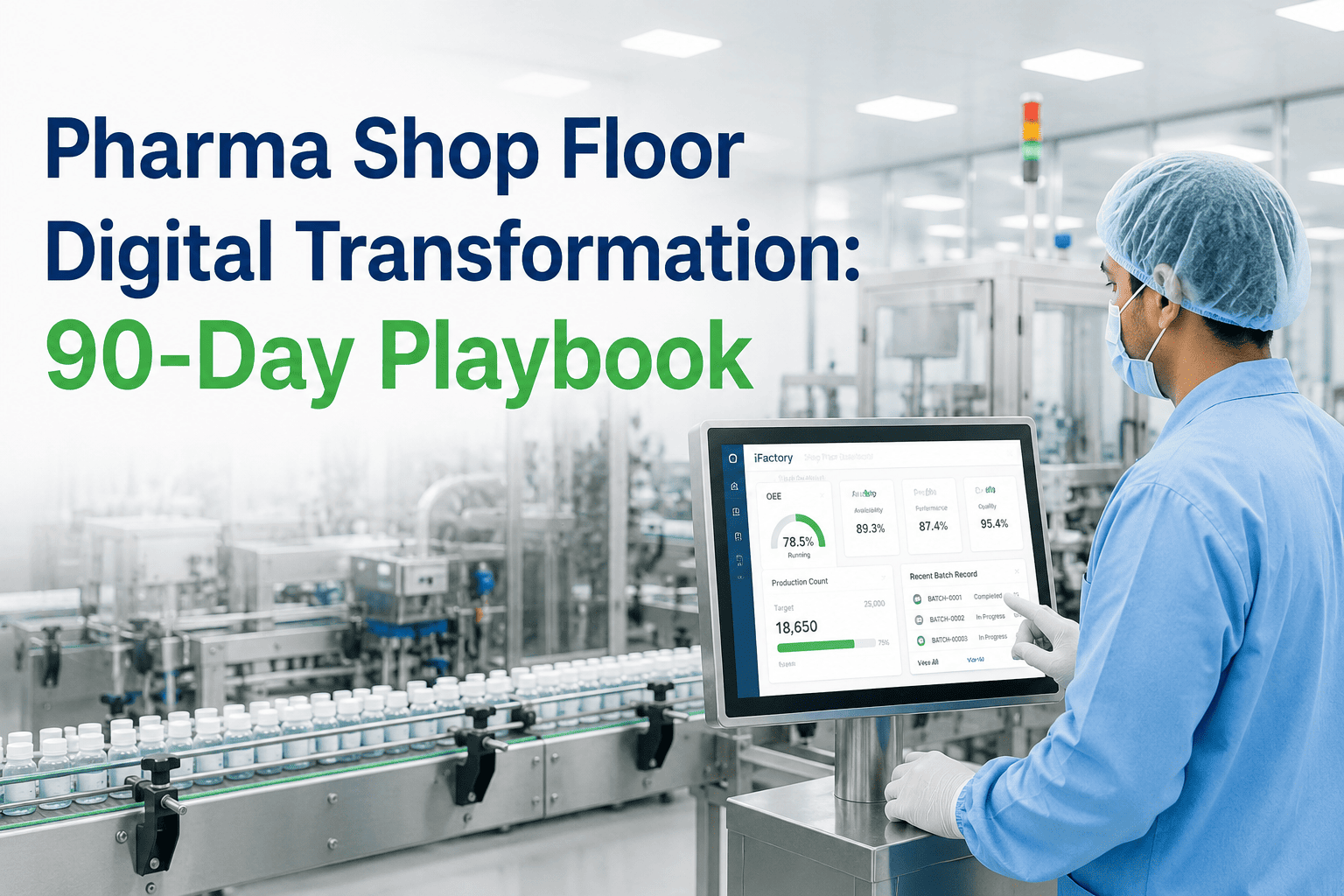
Every hour a pharmaceutical batch sits in manual review limbo costs an average of $18,000 in carrying cost, compliance exposure, and delayed revenue — and most pharma operations are running 40+ hours of avoidable delay every single week. Legacy paper-based or siloed MES environments are not a technology inconvenience; they are an ongoing operational hemorrhage that compounds silently until an FDA 483 observation or a catastrophic batch failure makes the cost undeniable.
iFactory MES Intelligence
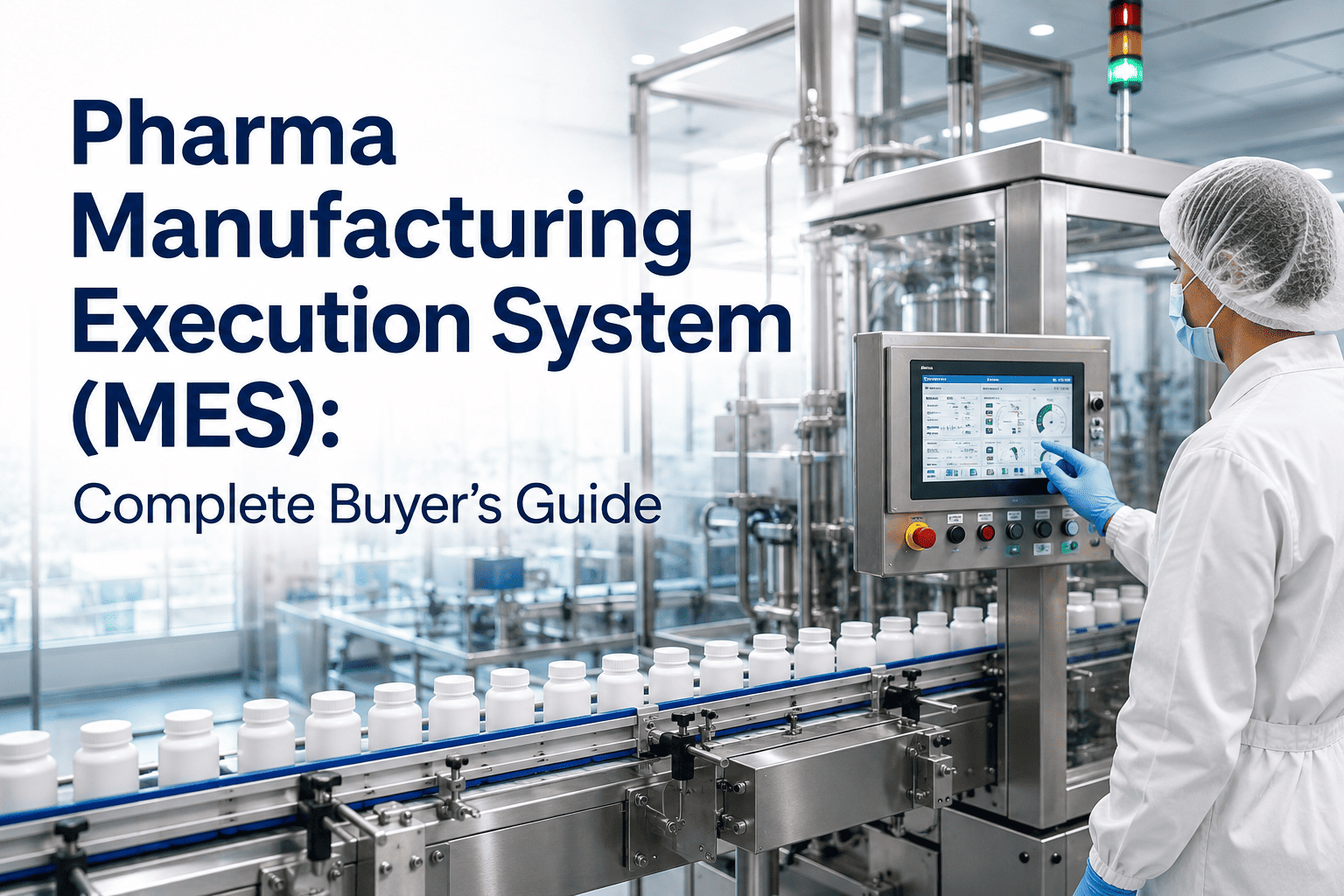
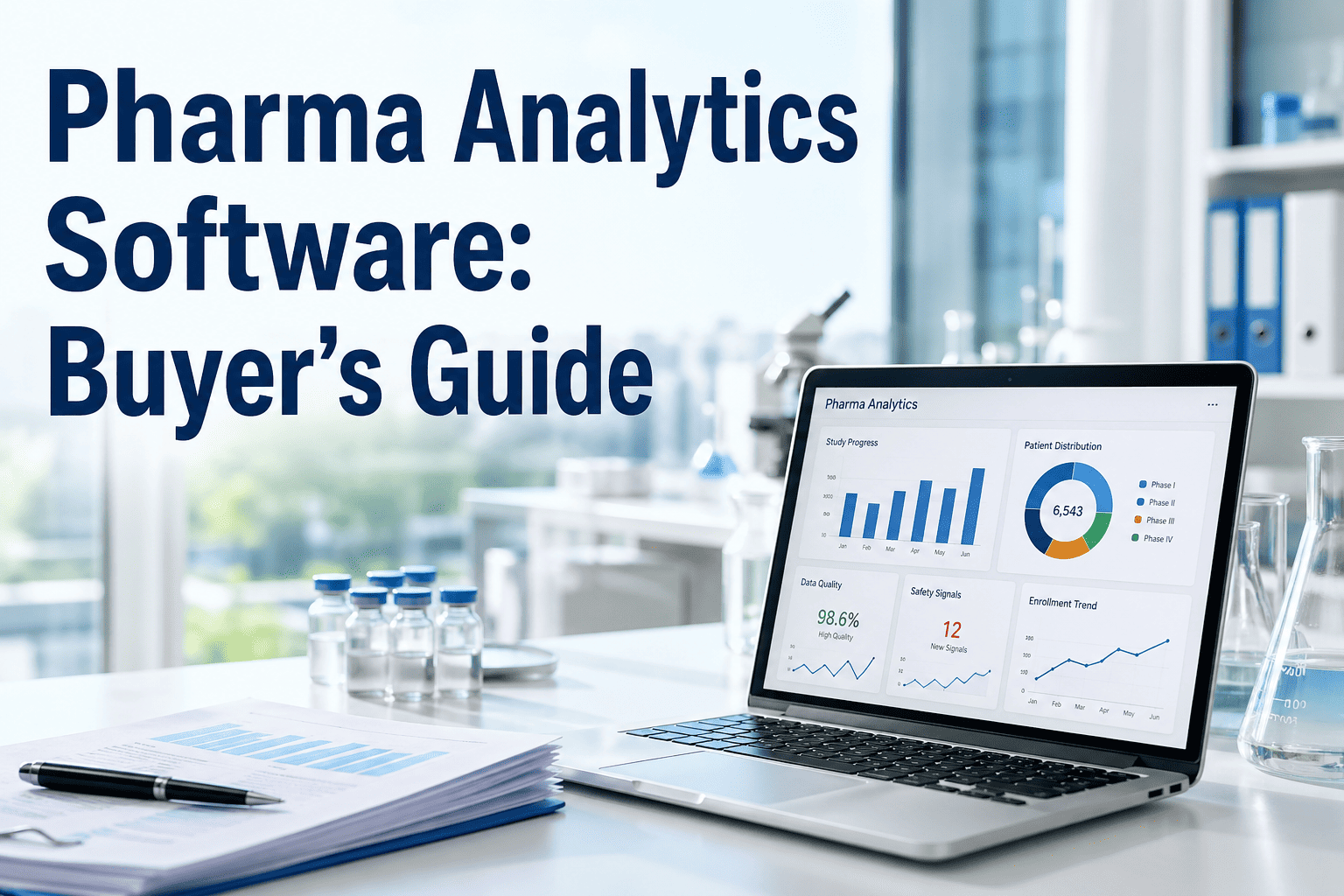
Pharma Manufacturing Execution System (MES): Complete Buyer's Guide
The definitive guide to evaluating, selecting, and deploying a pharmaceutical MES — covering EBR, OEE, genealogy, and integration — with a clear-eyed view of TCO, deployment speed, and compliance readiness.
63%
Reduction in batch release cycle time
$2.1M
Average annual savings from OEE gains
99.4%
EBR data integrity compliance rate
8 wk
Time to first validated production batch
What Is a Pharmaceutical MES — and Why Does Selection Matter?
A Manufacturing Execution System bridges the gap between enterprise ERP planning and shop-floor execution. In pharma, the stakes are uniquely high: every transaction, deviation, and parameter entry carries regulatory weight. The wrong MES creates compliance debt. The right one becomes your most powerful instrument for speed, quality, and audit readiness.
Electronic Batch Records (EBR)
· Replaces paper batch records with validated digital workflows
· Enforces step sequences and limits transcription errors
· Auto-populates from instrument and process data streams
· Supports 21 CFR Part 11 and EU Annex 11 compliance
Overall Equipment Effectiveness (OEE)
· Real-time availability, performance, and quality tracking
· Root-cause drill-down on downtime and micro-stops
· Benchmarks across lines, shifts, and facilities
· Surfaces hidden capacity without capital expenditure
Material Genealogy & Traceability
· Full forward and backward lot traceability in seconds
· Links raw material, in-process, and finished goods records
· Accelerates recall scope analysis from days to minutes
· DSCSA and serialisation compliance built-in
ERP & QMS Integration
· Bi-directional SAP, Oracle, and JDE integration
· Real-time inventory consumption and yield posting
· LIMS, DMS, and QMS event bridging via REST/HL7
· Eliminates dual-entry and reconciliation backlogs
The Cost of Inaction: Legacy MES vs. Optimised Operations
The table below is not theoretical. It reflects operational benchmarks from pharma facilities that delayed MES modernisation — and the outcome gaps once iFactory was deployed.
| Operational Dimension |
Legacy Friction |
iFactory Optimised |
| Batch Release Cycle |
12–18 days (manual review, paper QA reconciliation) |
4–6 days (automated EBR review, e-signature workflows) |
| Deviation Detection |
Identified post-batch during QA review |
In-process alerts within seconds of parameter breach |
| Audit Preparation |
4–6 weeks of manual record compilation |
On-demand audit package generated in under 2 hours |
| OEE Visibility |
Monthly spreadsheet reports, 3–4 week lag |
Live OEE dashboard updated every 30 seconds |
| Batch Rejection Rate |
Industry average: 4.2% (hidden rework costs) |
Typically reduced to below 1.1% within 6 months |
| Recall Scope Analysis |
3–5 days manual genealogy tracing |
Full lot trace completed in under 8 minutes |
| Operator Training Time |
6–8 weeks for new line operators |
2–3 weeks with guided digital work instructions |
| Regulatory Observations |
High 483 risk from data integrity gaps |
Validated system with continuous ALCOA+ alignment |
Clinical & Operational Impact: Where MES Pays for Itself
Leadership teams evaluating MES platforms often focus on licensing cost. The real financial story lives in three operational levers that compound over time.
· Eliminates manual batch record transcription — typically 3–5 hours per batch per operator
· Guided digital workflows reduce cognitive load on high-complexity lines
· Automated exception escalation removes shift-end fire-fighting
· Role-based dashboards surface only what each user needs — no information overload
· Operators report 38% reduction in end-of-shift documentation stress
· OEE improvements of 8–14 percentage points within first 90 days
· Changeover time reduced 22–35% via digital work instruction enforcement
· Yield variance identification prevents batches from completing with recoverable defects
· Scheduling integration with ERP eliminates material staging delays
· Multi-product facilities gain 15–20% additional output without new equipment
· In-process parameter enforcement prevents out-of-spec batches from advancing
· Full ingredient genealogy available for every unit released to market
· Automated CAPA linkage from deviation to corrective action to closure
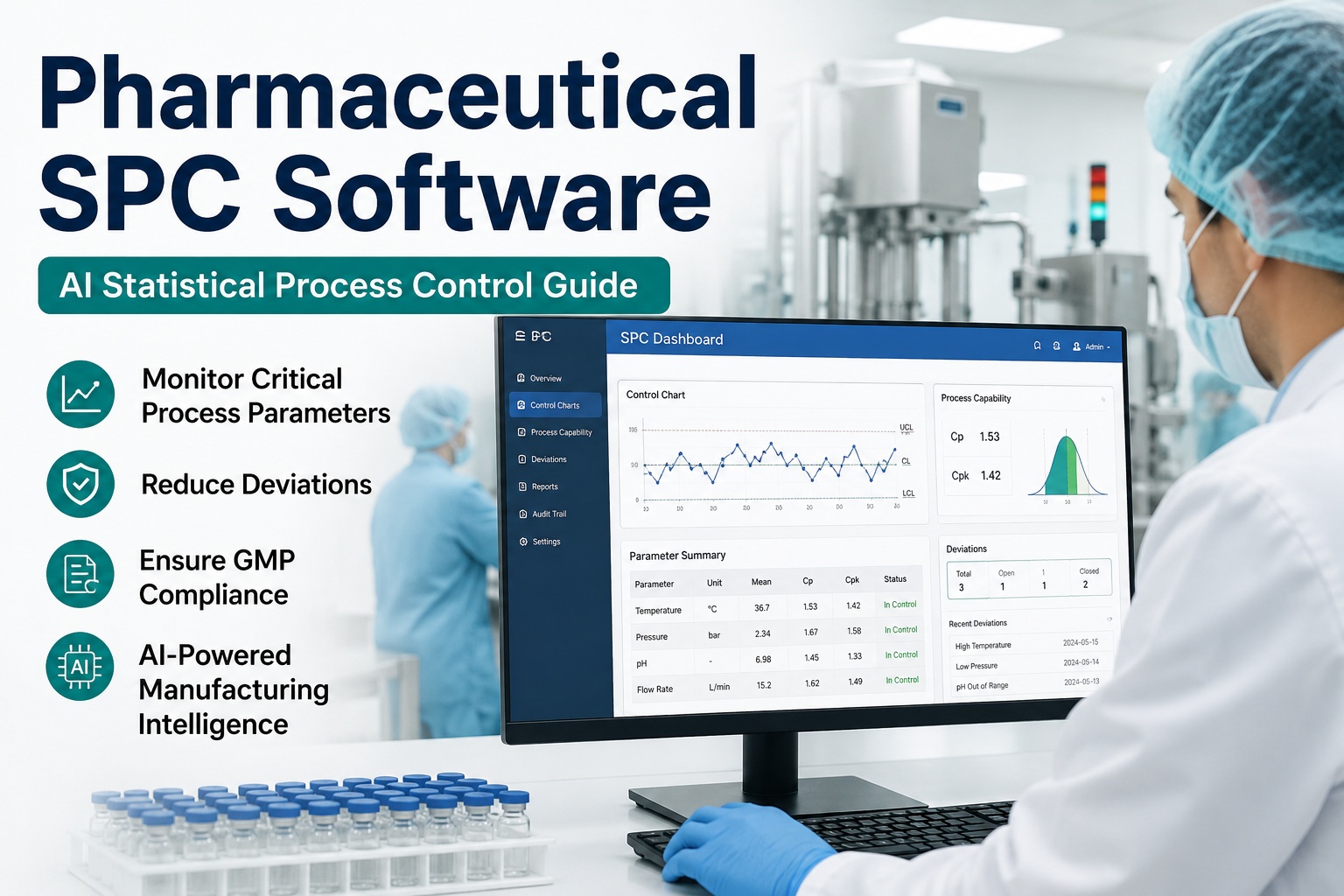
· Statistical Process Control (SPC) charts flag drift before failures occur
· Supports FDA, EMA, TGA, and Health Canada submission readiness
MES Buyer's Checklist: 8 Non-Negotiables
Before shortlisting vendors, validate each platform against these criteria. A system missing even two of these will create implementation debt that costs more than the licence savings.
01
21 CFR Part 11 / EU Annex 11 Validated Out-of-Box
Vendor must supply IQ/OQ/PQ documentation packages. Avoid platforms requiring custom validation scripts for every upgrade cycle.
02
EBR Configurability Without Custom Code
Master batch record templates should be configurable by validated users — not IT tickets. Time-to-change matters in multi-SKU environments.
03
Real-Time OEE With Shift-Level Drill-Down
OEE must update in near real-time and expose micro-stop categorisation, not just aggregate availability figures.
04
Bidirectional ERP Integration — Not One-Way Posting
Material movements, yield postings, and work order confirmations must flow both directions. One-way posting creates reconciliation backlogs.
05
Complete Material Genealogy in Under 10 Minutes
Recall scenario testing is the benchmark. If lot trace takes more than 10 minutes in a live demo, it will take days in a crisis.
06
Deployment Timeline Under 16 Weeks to First Batch
Enterprise MES deployments averaging 18–24 months are a red flag. Phased go-live with validated pilot batches in 8–12 weeks is achievable and should be contractually committed.
07
Role-Based Access With Full Audit Trail
Every record access, edit, and e-signature must be time-stamped and user-attributed. ALCOA+ compliance is non-negotiable for regulatory submissions.
08
Vendor Pharma Reference Customers — Same Segment
Request three reference customers in your product category (biologics, solid dose, sterile fill-finish). A generalist MES vendor without pharma depth creates compliance risk at every upgrade.
Why iFactory MES Wins on Deployment Speed and TCO
Most pharmaceutical MES platforms were architected for waterfall deployment cycles and require 6–18 months before a single validated batch is produced. iFactory was built differently — a phased activation model that delivers compliance-ready production capability in 8 weeks while preserving full scalability to enterprise multi-site operations.
Deployment Speed
· Pre-validated EBR templates for 14 common pharma processes
· Configurable without code — validated users build master records
· First production batch in 8 weeks from contract signature
Total Cost of Ownership
· No per-module licensing — full EBR, OEE, genealogy, and analytics included
· Upgrade validation packages supplied by iFactory — not client cost
· SaaS or on-premise deployment with identical compliance posture
Compliance Architecture
· 21 CFR Part 11, EU Annex 11, and GAMP 5 Category 4 validated
· Built-in data integrity monitoring with ALCOA+ event logging
· Audit-ready package generation in under 2 hours
Integration Ecosystem
· Pre-built connectors for SAP, Oracle, Veeva, LabVantage, and 40+ systems
· OPC-UA and MQTT for direct equipment data ingestion
· REST API framework for custom integration without vendor dependency
iFactory MES Platform — Built for Pharma Compliance and Speed
Your First Validated Batch in 8 Weeks. Full ROI in 12 Months.
iFactory MES delivers EBR, OEE, genealogy, and enterprise integration in a phased deployment model purpose-built for pharmaceutical manufacturing. No multi-year implementation. No per-module pricing. No compliance surprises.
· 21 CFR Part 11 and EU Annex 11 validated from day one
· Pre-built ERP, LIMS, and QMS integration connectors
· Dedicated pharma validation team included in deployment
· Reference customers in biologics, solid dose, and sterile fill-finish
8 wk
To first validated batch
10-30x
Return on investment
99.4%
Data integrity compliance