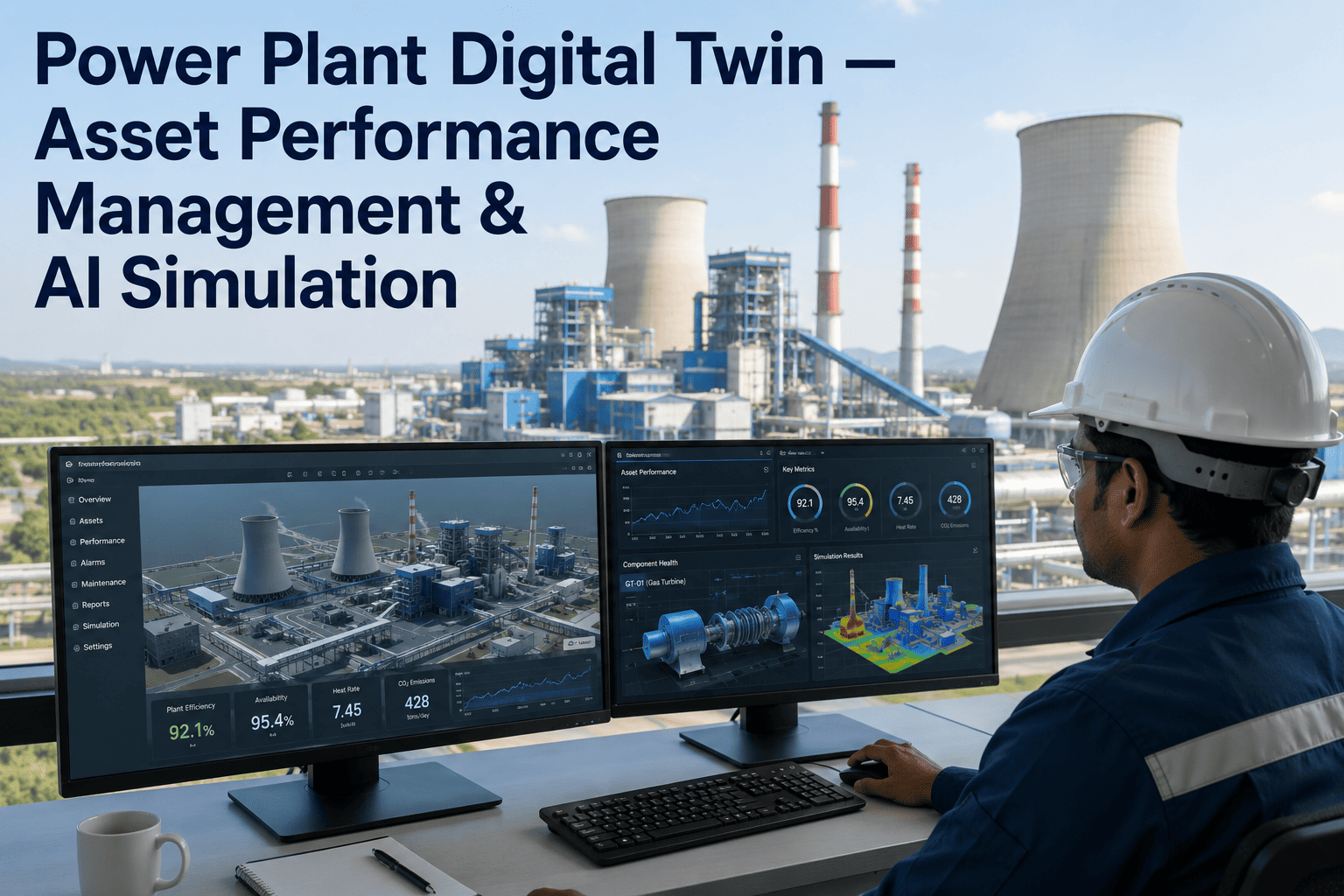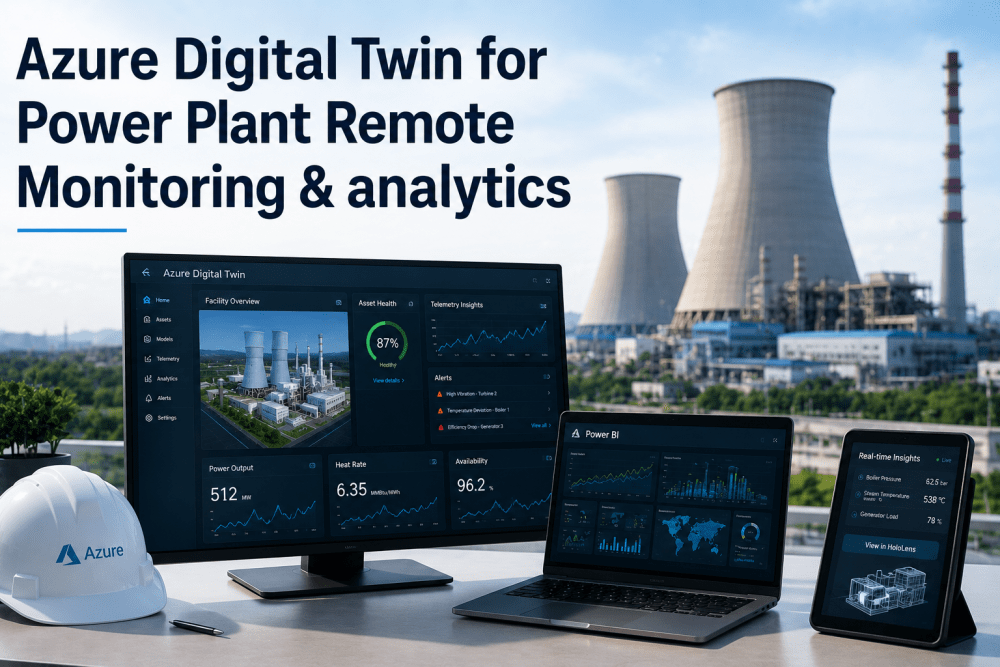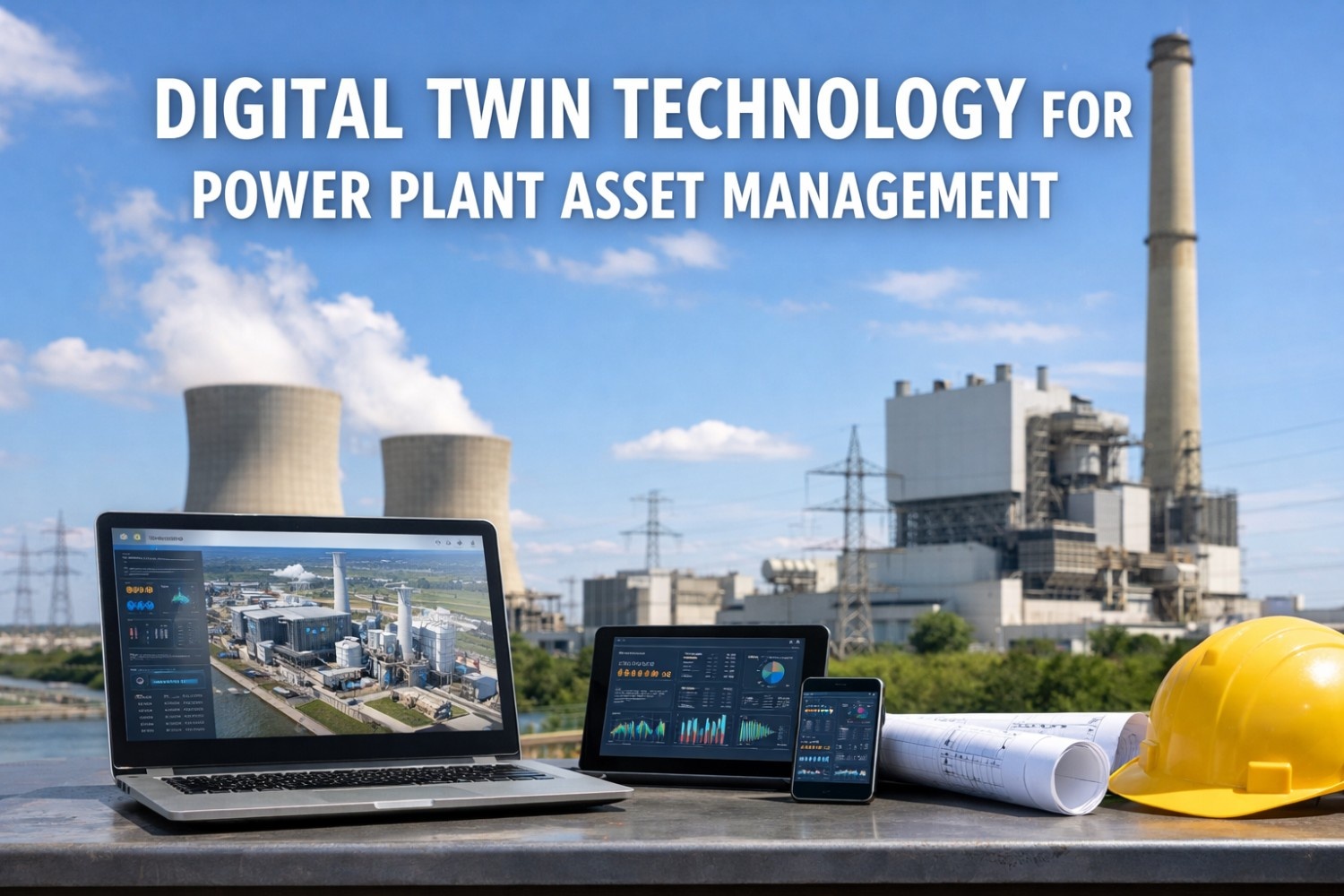
Power plants operating without digital twins are managing $500M+ asset portfolios with spreadsheets, siloed data, and guesswork. A single turbine misdiagnosis can trigger a $2.4 million forced outage — yet 68% of plant managers still lack real-time visibility into their most critical equipment. Digital twin technology changes the equation entirely: a continuously updated virtual replica of every physical asset, fed by live sensor data, that predicts failures, optimizes maintenance windows, and extends asset life by 20–35%. This is not simulation software sitting on a shelf — it is the operational backbone of every plant that will still be competitive in 2030. Sign up free to connect your first asset twin today and see the difference between guessing and knowing.
The Blind Spots That Cost Millions
Traditional asset management relies on time-based schedules, manufacturer recommendations, and operator experience. None of these account for the actual condition of your specific equipment running your specific fuel mix at your specific load profile. The result is a maintenance program that simultaneously over-services healthy equipment and misses early-stage degradation on assets that are quietly heading toward failure. Every undetected anomaly is a ticking clock on a forced outage.
Continuous Intelligence on Every Asset
Digital twins replace assumptions with physics. Every connected asset has a living computational model that knows what normal looks like — for that specific unit, under those specific operating conditions, at that specific point in its lifecycle. When sensor data deviates from the model, maintenance teams receive actionable alerts weeks before failure. Work orders are generated with root cause context, not just alarm codes. Outage planning shifts from calendar-based to condition-based, and every dollar spent on maintenance goes exactly where it is needed.
How a Power Plant Digital Twin Actually Works
Every digital twin follows the same fundamental loop — sense, model, compare, act. The difference between platforms is how accurately each step executes and how seamlessly the loop feeds into your maintenance workflows.
Which Power Plant Assets Benefit Most from Digital Twins?
Not every asset needs a twin on day one. The highest-ROI deployments target the equipment where unplanned failure costs the most — and where physics-based modeling delivers the clearest early-warning signals.
Digital twins monitor blade path temperature spreads, exhaust temperature deviations, vibration signatures, and compressor efficiency degradation. Creep, fouling, and hot-gas-path erosion are detected weeks before they reach intervention thresholds — converting emergency turbine trips into planned maintenance events.
Boiler tube failures are the single largest cause of forced outages in thermal plants. Digital twins track wall thickness thinning rates, thermal stress cycling, slagging and fouling patterns, and water chemistry impacts to predict tube leaks before they rupture. HRSG twins monitor attemperator spray dynamics, drum level stability, and duct burner performance.
Generator twins monitor stator winding temperatures, partial discharge activity, hydrogen cooling system pressure and purity, and rotor vibration patterns. Insulation degradation, rotor thermal sensitivity, and brush/seal wear are flagged months before they would trigger protective relay trips or require emergency de-energization.
Digital Twin vs. Traditional Monitoring: Performance Benchmarks
Side-by-side data from power plants that transitioned from conventional condition monitoring to digital twin-integrated maintenance programs over a 24-month period.
| Capability | Traditional Monitoring | Digital Twin Platform | Improvement |
|---|---|---|---|
| Failure Prediction Lead Time | 0–7 days (alarm-based) | 30–90 days (model-based) | 10x earlier detection |
| False Alarm Rate | 30–50% of all alerts | Under 5% with physics validation | 90% reduction |
| Root Cause Identification | Post-failure forensic analysis | Automated at time of anomaly detection | Weeks faster |
| Maintenance Cost per MW | Baseline (100%) | 65–75% of baseline | 25–35% lower |
| Forced Outage Rate | Industry average EFOR | 30–45% below industry average | Major reliability gain |
| Heat Rate Optimization | Periodic tuning only | Continuous adaptive optimization | 10–20% improvement |
| Outage Planning Accuracy | Based on OEM intervals | Based on actual asset condition | Right-sized outages |
| Data Integration | Siloed by system/vendor | Unified asset health view | Single source of truth |
Documented ROI from Digital Twin Deployments
These results represent published outcomes from power generation operators who deployed digital twin platforms across their fleet and tracked financial performance over 12–24 months.
5 High-Value Use Cases for Power Plant Digital Twins
Predictive maintenance is the entry point. The operational advantages compound as twins are applied across the full plant lifecycle — from daily dispatch decisions to multi-year capital planning.
Implementation Roadmap: From Zero to Twin in 90 Days
You do not need to twin every asset on day one. The fastest ROI comes from a focused deployment on your highest-impact equipment, expanding as early wins build organizational confidence.
iFactory Digital Twin Platform — Every Asset, One View, Zero Blind Spots
iFactory connects to your existing DCS, SCADA, and historian systems to build physics-based digital twins of your most critical equipment. Detect degradation 30–90 days before failure, automate work order generation, optimize heat rate continuously, and give your engineering team the condition intelligence they need to make every maintenance dollar count. No rip-and-replace. No 18-month implementation. First twins delivering value within 90 days.