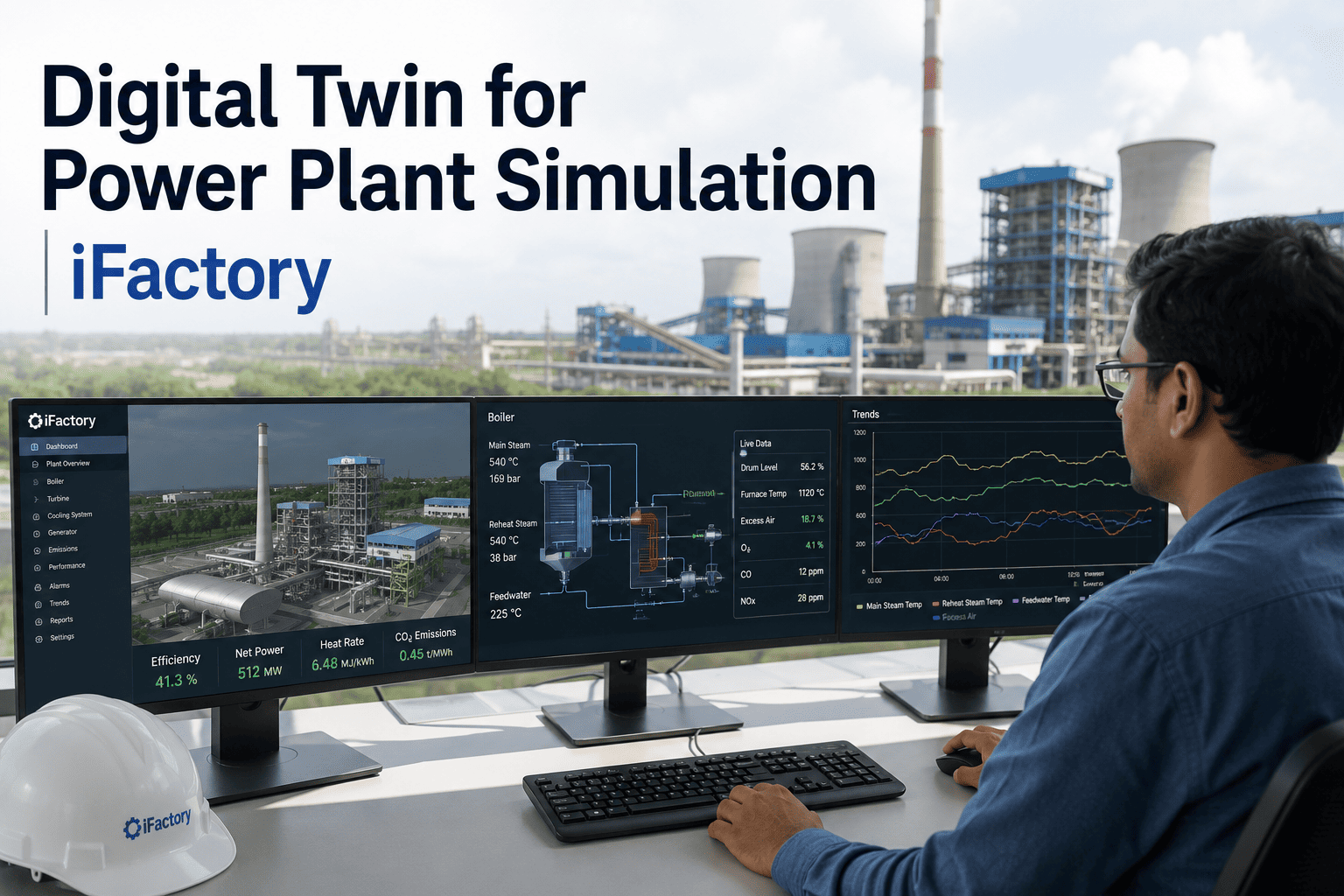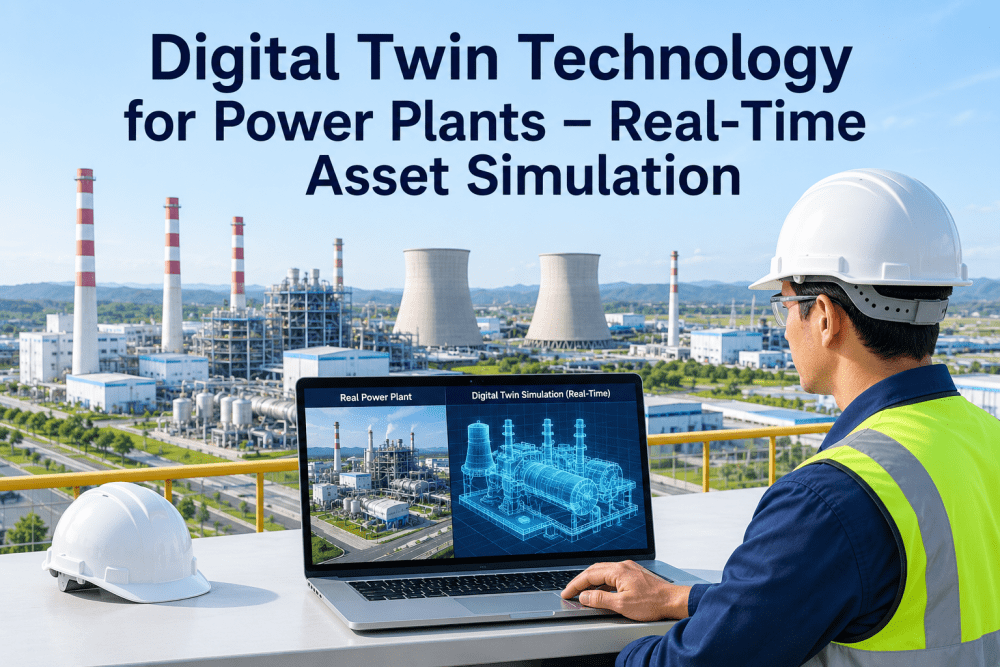
Unplanned outages at power generation assets rarely happen without warning — bearings loosen, insulation degrades, and vibration signatures shift for weeks before a turbine, transformer, or feedwater pump actually trips offline. The problem is that most control rooms are watching raw sensor tags rather than a living model of the asset itself, so the early signs get buried in noise until the failure is already underway. A digital twin changes that equation by mirroring every rotating and stationary asset in a virtual environment that ages, degrades, and responds exactly like its physical counterpart. iFactory AI builds that mirror directly from your existing DCS, SCADA, and historian data, giving Operations Directors a live, testable model of the plant rather than a static reference drawing — Book a Demo to see it running on your own asset data.
Why Static Monitoring Isn't Enough for Modern Power Assets
Traditional condition monitoring tells you what a sensor is reading right now. It does not tell you whether that reading is drifting toward a failure mode, how the asset would respond to a load change, or what the cascading effect of a delayed maintenance action would be three weeks from now. Power generation assets — gas and steam turbines, generators, boiler feed pumps, transformers, condensers — are physically complex enough that their degradation behavior cannot be captured by threshold alarms alone. A digital twin closes that gap by continuously running a physics-informed model of the asset alongside the real one, comparing predicted behavior to actual sensor data in real time, and flagging the moment the two start to diverge.
For an Operations Director, this shifts the entire maintenance conversation from reactive and calendar-based to predictive and evidence-based. Instead of waiting for a vibration alarm or a scheduled overhaul window, the digital twin surfaces the specific asset, the specific failure mode, and the specific timeframe in which action is needed — while also letting engineering teams simulate the outcome of different interventions before committing plant time and labor to any one of them.
Live Asset Data
Vibration, temperature, pressure, flow, and electrical signals streamed directly from DCS, SCADA, and historian systems without adding new field instrumentation.
Physics-Informed Twin
A virtual replica of each asset that calculates expected behavior under current operating conditions, built from equipment specifications and historical performance data.
Deviation Detection
Continuous comparison of predicted versus actual asset behavior, isolating deviations that indicate early-stage degradation rather than normal operating variance.
Simulation & Action
A sandbox where engineers can test load changes, maintenance timing, and operating strategies against the twin before applying them to the physical asset.
How Early Can a Digital Twin Actually Catch Degradation
The value of a digital twin is measured almost entirely by how much lead time it buys the maintenance team. A bearing that is beginning to wear, a generator winding that is thermally stressed, or a heat exchanger that is fouling all leave a trail of small deviations long before any single reading crosses a hard alarm threshold. The chart below reflects the typical progression iFactory AI's platform tracks from first detectable deviation to the point a conventional threshold alarm would finally trigger.
By the time a conventional threshold alarm fires, iFactory AI's digital twin has typically already flagged the asset 45 to 75 days earlier — enough lead time to plan a repair during a scheduled outage window instead of an unplanned one.
The Monitor–Simulate–Predict–Optimize Loop
A digital twin is only useful if it drives a repeatable operating loop rather than sitting as a one-time modeling exercise. iFactory AI structures asset performance management around four continuous stages that feed back into each other, so every simulation run improves the accuracy of the next prediction.
Monitor
Continuous ingestion of live asset data compared against the twin's predicted baseline for every operating condition the asset encounters.
Simulate
Engineers run what-if scenarios — load increases, extended run cycles, delayed maintenance — against the twin before applying them to physical equipment.
Predict
Remaining useful life and failure probability estimates are generated per asset, ranked by risk to production and safety.
Optimize
Maintenance schedules, spare parts staging, and outage planning are adjusted based on simulation results and updated risk rankings.
Digital Twin Coverage Across Core Power Plant Assets
Not every asset class degrades the same way or needs the same modeling depth. iFactory AI tailors twin fidelity to the failure modes and risk profile of each equipment type, prioritizing the assets where unplanned downtime carries the highest production and safety cost.
| Asset Class | Primary Failure Modes Modeled | Typical Detection Lead Time | Simulation Use Case |
|---|---|---|---|
| Gas / Steam Turbines | Blade fouling, bearing wear, thermal stress cracking | 45–90 days | Load profile testing, combustion tuning impact analysis |
| Generators | Winding insulation breakdown, rotor imbalance | 30–60 days | Excitation system change validation before live deployment |
| Boiler Feed Pumps | Cavitation, seal degradation, bearing fatigue | 20–45 days | Flow rate and pressure scenario testing |
| Power Transformers | Dissolved gas trends, thermal aging, tap changer wear | 60–120 days | Loading scenario testing during peak demand periods |
| Condensers / Heat Exchangers | Fouling, tube leaks, thermal efficiency loss | 15–30 days | Cleaning cycle timing and efficiency recovery modeling |
What Operations Directors Are Reporting
We had treated digital twins as something for greenfield projects with unlimited budget, not something you retrofit onto a 30-year-old fleet. iFactory AI proved that assumption wrong within the first quarter. The twin flagged an insulation trend on a generator winding that our threshold alarms would not have caught for another two months, and we were able to schedule the rewind during a planned outage instead of losing four days of unplanned downtime. The simulation layer has also changed how we approach load changes — we test them against the twin first and only push them to the floor once the model confirms the asset can handle it without accelerated wear.