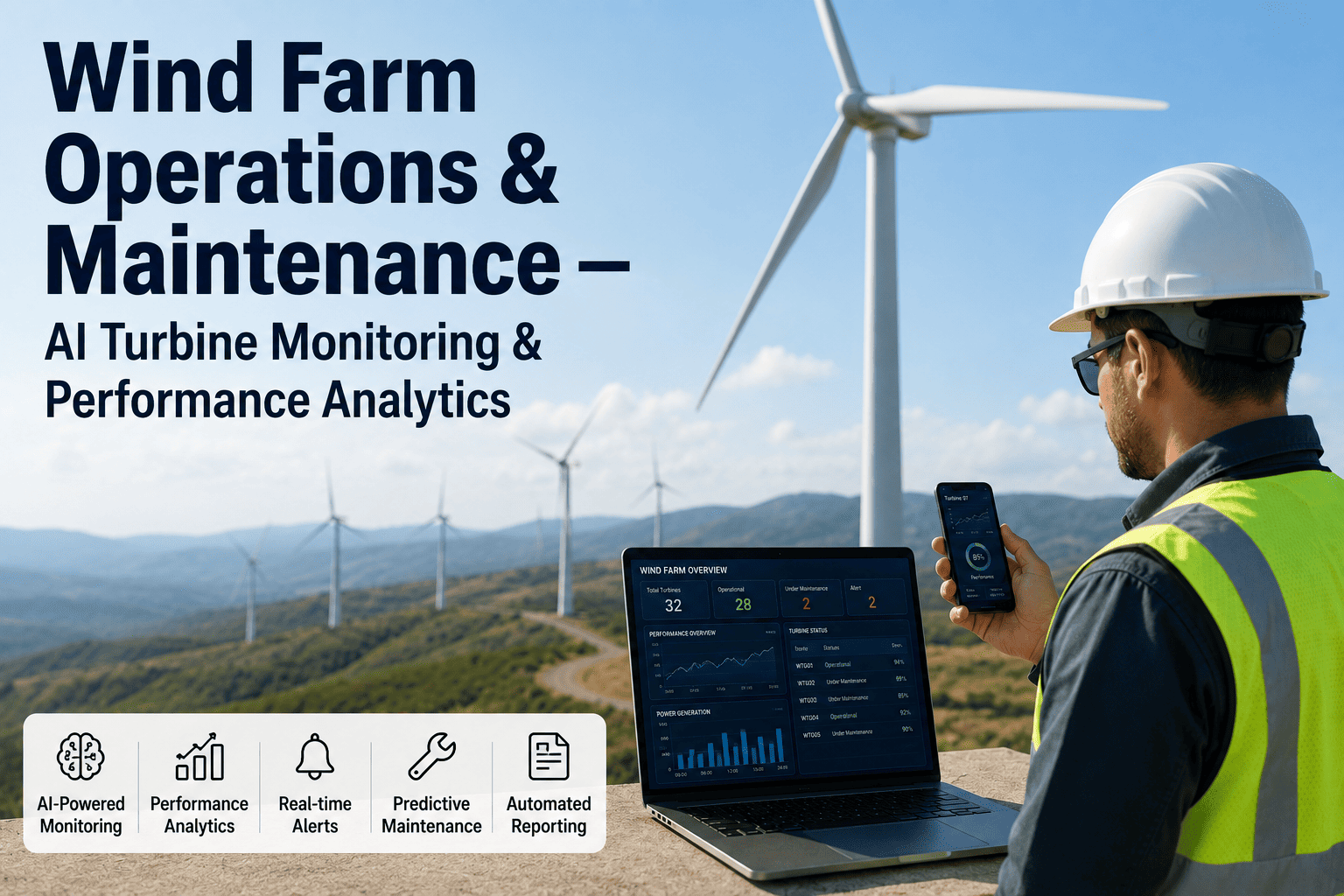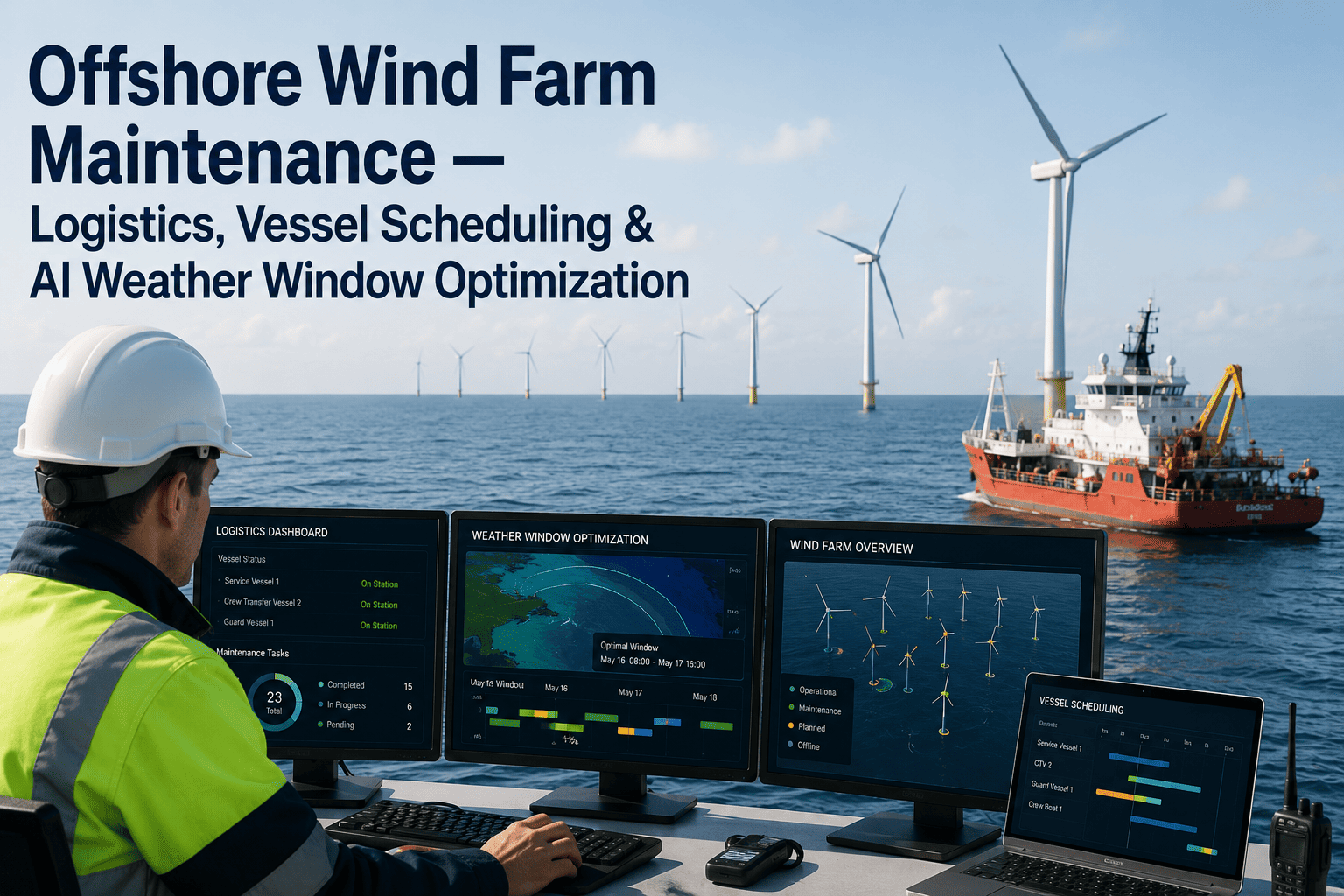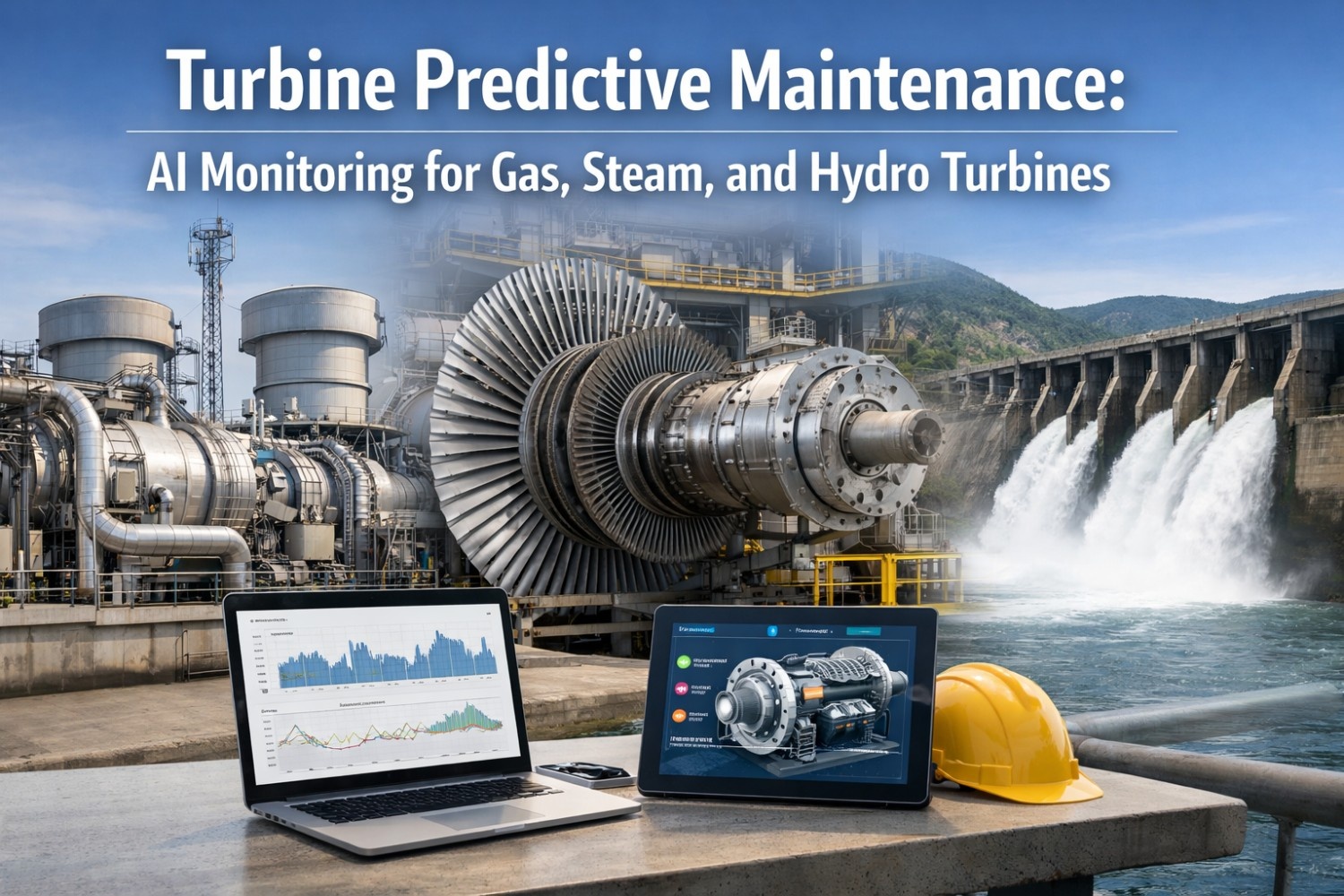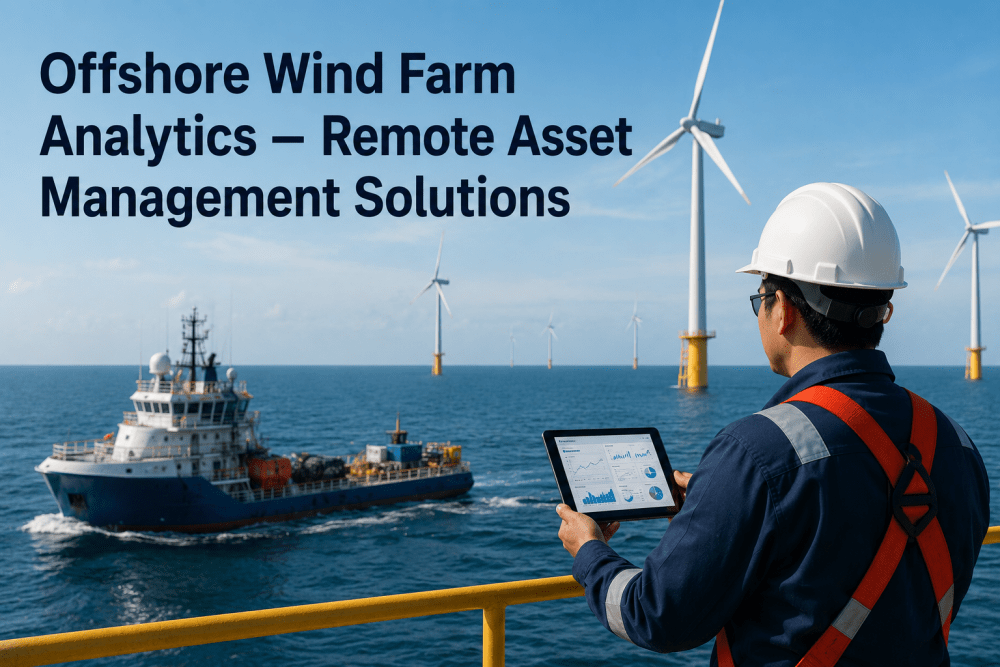
Offshore wind farms operate in the most demanding environment in the renewable energy industry — salt-laden atmosphere, wave loading, foundation scour, leading-edge erosion from sea spray, lightning strike risk across exposed blades, and access windows constrained by weather that can close for days or weeks at a time.. As offshore wind operators transition from fixed-interval maintenance to data-driven remote asset management, reliability teams that book a demo with iFactory are discovering that they can reduce vessel transfers by 35 to 50 percent, extend major component replacement intervals by 12 to 18 months, and maintain turbine availability above 94 percent through AI-powered offshore wind analytics that fuses vibration, SCADA, weather, and vessel logistics data simultaneously.
Transform Your Offshore Wind Operations with AI-Driven Remote Asset Management
iFactory AI connects offshore turbine SCADA, condition monitoring, weather forecasting, and vessel logistics into a single real-time intelligence layer — reducing unplanned offshore trips, extending component life, and improving fleet-wide availability without increasing offshore headcount.
Why Offshore Wind Analytics Demands a Fundamentally Different Approach from Onshore Monitoring
The analytical framework that works for onshore wind farms collapses under the operational constraints of offshore environments. An onshore turbine with a developing bearing fault can be accessed within hours by a technician driving a service van. An offshore turbine in the same condition may wait two weeks for a weather window that allows a crew transfer vessel to safely land personnel — by which time a repairable bearing degradation event has progressed to a gearbox replacement requiring a $400,000 crane vessel mobilisation.
Book a Demo to explore offshore-specific analytics in detail.
The Four Pillars of Offshore Wind Remote Asset Management
An effective offshore wind analytics program requires simultaneous capability across four interconnected domains: turbine condition monitoring at the component level, subsea cable and foundation structural health, vessel scheduling and offshore logistics optimisation, and weather-adaptive maintenance planning. iFactory's offshore platform integrates all four pillars into a unified operational intelligence layer. Offshore operators evaluating the platform can book a demo to review how the four-pillar architecture maps to their specific farm configuration and operational constraints.
Turbine Condition Monitoring for Offshore Environments
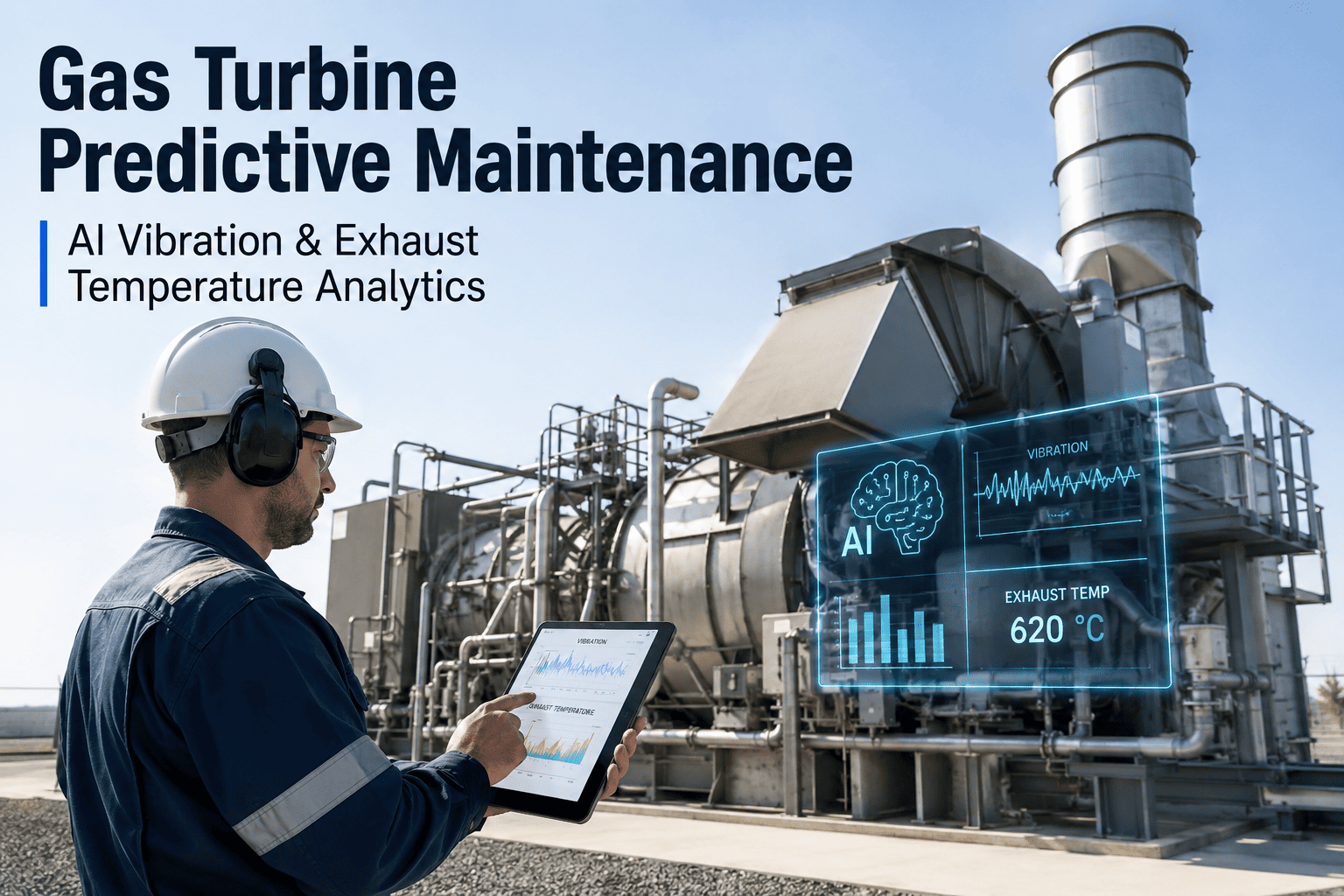
Offshore turbine condition monitoring must contend with environmental noise signatures that onshore systems never encounter — tower acceleration from wave loading, main bearing load reversal during idling in high winds, and blade vibration modes excited by salt spray accumulation rather than structural damage. iFactory's offshore CM module applies adaptive baseline models that separate environmental response from degradation signatures, ensuring that wave-induced tower motion is not misclassified as foundation damage and that blade mass imbalance from ice or salt buildup is distinguished from structural fatigue. Multi-parameter correlation across vibration, oil debris, temperature, and power curve data achieves 94% failure prediction accuracy with less than 4% false positive rate in offshore deployments.
Subsea Cable & Foundation Structural Health Analytics
Subsea cables and foundation structures represent some of the highest-cost and most difficult-to-inspect assets in any offshore wind installation. A single array cable failure can take 6 to 12 weeks to diagnose and repair, with costs ranging from $2 million to $8 million depending on water depth, cable burial depth, and vessel availability. iFactory's subsea cable analytics monitors partial discharge trends, conductor temperature profiles, and dynamic cable loading from hydrodynamic models — detecting insulation degradation, free-spanning vibration, and connector overheating 4 to 8 weeks before cable failure.
Vessel Scheduling & Offshore Logistics Optimisation
Vessel logistics is the single largest operational cost driver in offshore wind — and the area where analytics delivers the most concentrated financial impact. iFactory's logistics optimisation module ingests turbine condition alerts, component lead times, technician availability, vessel locations, and weather forecasts simultaneously to generate an optimised offshore campaign schedule that minimises vessel transits and maximises technician productive hours per offshore deployment. The platform sequences turbine interventions by geographic cluster — grouping nearby turbines with developing faults into a single vessel campaign rather than triggering separate trips for each alert — and recommends the appropriate vessel type based on task duration, required equipment, and forecast sea state conditions. Operators using iFactory logistics analytics report 35 to 50 percent reduction in total vessel transfers and 28 percent increase in technician productive time offshore.
Weather-Adaptive Maintenance Planning
Weather is the single largest source of uncertainty in offshore wind operations. A 48-hour weather window predicted five days in advance may close within 12 hours of the planned crew transfer, stranding technicians offshore or wasting a fully crewed vessel day. iFactory's weather-adaptive maintenance planning module ingests multiple forecast models — wave height, wind speed, lightning probability, and visibility — and integrates them with the turbine condition database and vessel schedule to recommend intervention timing with quantified confidence levels.
Comparing Offshore Wind Monitoring Approaches: SCADA-Only vs Condition Monitoring vs iFactory AI Platform
Offshore wind operators are faced with a range of monitoring technology options, from basic SCADA alarm systems through standalone condition monitoring platforms to integrated AI-driven analytics. The comparison below highlights where each approach delivers value and where its limitations become critical in offshore operations.
| Capability | SCADA-Only Monitoring | Standalone CMS | iFactory AI Platform |
|---|---|---|---|
| Failure Prediction Accuracy | 31% (threshold-based) | 55–65% (vibration only) | 94% multi-parameter |
| False Positive Rate | High — alert fatigue common | 12–18% | Under 4% |
| Vessel Logistics Integration | None — manual scheduling | None — standalone | AI-optimised campaign planning |
| Weather Window Forecasting | None | None | Probabilistic multi-model fusion |
| Subsea Cable Monitoring | None | Not supported | Partial discharge + thermal analytics |
| Remaining Useful Life Estimation | Not supported | Linear extrapolation only | AI-based with confidence intervals |
| Campaign Cost Optimisation | Not supported | Not supported | Integrated vessel cost modelling |
How Real-Time Data Flows Across the Offshore Wind Intelligence Stack
An effective offshore wind analytics platform is defined not just by the sensors it connects to, but by how it orchestrates data across turbine-level, farm-level, and fleet-level layers simultaneously — while incorporating the external data streams — weather, vessel tracking, market pricing — that determine when and how offshore interventions are executed.
Offshore Turbine Data Ingestion & Edge Processing
SCADA, vibration, oil debris, and blade acceleration data collected at each turbine is processed through iFactory edge agents that perform signal quality validation, environmental noise filtering, and anomaly detection locally — transmitting only exception events and trend summaries to shore to minimise satellite bandwidth costs.
Subsea Array & Export Cable Monitoring Integration
Partial discharge monitors, distributed temperature sensing (DTS), and dynamic cable load models feed into the same analytics pipeline — correlating cable anomalies with turbine operating conditions and metocean data to distinguish electrical stress from hydrodynamic loading effects.
AI Degradation Forecasting & Risk Prioritisation
Machine learning models analyse the unified data stream from all turbines and subsea assets in the farm — generating component-level remaining useful life estimates, failure probability scores, and intervention urgency tiers that are updated with each new SCADA scan cycle and each completed weather forecast refresh.
Vessel Campaign Optimisation & Dispatch Execution
iFactory's logistics engine combines prioritised turbine alerts, probabilistic weather windows, vessel availability, and technician skill sets to generate optimised campaign schedules — sequencing interventions by geographic cluster, matching task duration to forecast weather windows, and automatically updating the schedule when conditions change.
The Operational & Financial Impact of AI-Driven Offshore Wind Analytics
The business case for integrated offshore wind analytics extends beyond maintenance cost reduction — it directly protects generation revenue in an environment where every day of turbine downtime represents $50,000 to $150,000 in lost power production, and every vessel mobilisation carries a six-figure price tag regardless of whether the intervention is successful. The table below summarizes the typical impact areas observed across iFactory offshore deployments.
| Impact Area | Before iFactory | With iFactory AI | Typical Benefit |
|---|---|---|---|
| Vessel Transfer Frequency | Monthly scheduled + reactive trips | Optimised campaign-based schedule | 35–50% fewer trips |
| Turbine Availability | 86–91% | 93–96% | $800K–$1.8M/yr per 500 MW farm |
| Major Component Replacement Cost | $400K–$1.2M per event | 12–18 month life extension | $2.1M+/yr per farm |
| False Positive Alerts | 15–20% false alarm rate | Under 4% false positive rate | Eliminated wasted vessel days |
| Weather Window Utilisation | 60–70% of available windows used | 90%+ window utilisation | 28% more productive technician hours |
| Campaign Planning Time | 2–3 days per campaign | Auto-generated in under 1 hour | 85% planning time reduction |
For a typical 500 MW offshore wind farm, iFactory customers consistently report total platform ROI of 6–11 months driven by vessel cost reduction, availability improvement, and major component life extension.
Expert Review: What Offshore Wind Operators Should Prioritise in Remote Asset Management
Reviewed by offshore wind reliability engineers and marine operations managers with extensive experience deploying condition monitoring, logistics optimisation, and remote asset management systems across North Sea, Baltic Sea, and U.S. East Coast offshore wind farms. The following observations reflect current best practice based on operational data from utility-scale offshore installations.
First, offshore wind analytics must prioritise false positive avoidance above all other performance metrics. An onshore analytics platform with a 10 percent false positive rate generates nuisance alarms that technicians ignore. An offshore platform with the same false positive rate triggers unnecessary vessel mobilisations that cost $50,000 to $150,000 per false alarm. iFactory's multi-parameter cross-validation architecture — requiring correlated confirmation across vibration, oil, temperature, and power curve data before any alert fires — is designed to maintain false positive rates below 4 percent specifically for the offshore use case, where the cost of a false alarm is measured in vessel days rather than technician hours.
Second, weather integration is not a nice-to-have; it is the core differentiating capability for offshore analytics. Onshore analytics platforms that add a weather widget as an afterthought do not solve the fundamental problem — which is that turbine condition alerts and weather windows exist on different timescales (degradation develops over weeks, weather windows open and close over hours) and must be integrated at the decision layer, not displayed side by side. iFactory's probabilistic weather window forecasting algorithm is trained on historical forecast accuracy data for the specific offshore zone — accounting for the fact that 72-hour wave height forecasts in the North Sea have different confidence distributions than 72-hour forecasts in the U.S. Mid-Atlantic Bight, and adjusting intervention recommendations accordingly. Book a Demo to review offshore-specific weather integration architecture.
Third, the highest-value analytics ROI in offshore wind comes from integrating turbine condition data with vessel logistics — not from either domain in isolation. A standalone condition monitoring system that predicts gearbox failure with 94 percent accuracy but cannot optimise the vessel campaign produces less net value than an integrated platform with 85 percent prediction accuracy that sequences the gearbox intervention within an existing scheduled campaign, shares the vessel cost across multiple turbine tasks, and avoids a dedicated jack-up mobilisation. The financial leverage is in the integration.
Deploying AI-Driven Offshore Wind Analytics: The Phased Roadmap to Remote Asset Management
Offshore wind operators cannot shut down turbines or delay critical vessel campaigns to deploy new analytics systems. Successful offshore analytics deployment follows a phased approach that prioritises highest-value asset classes first, validates value at each stage, and expands the analytics footprint without disrupting ongoing offshore operations.
Data Audit & Connectivity Assessment
Comprehensive review of existing SCADA, CMS, and subsea monitoring infrastructure. Data quality assessment, communication link bandwidth analysis, edge agent deployment planning, and integration architecture design for each offshore asset class.
Turbine CM Pilot & Validation
Deploy iFactory edge agents to highest-priority turbines. Train turbine-specific ML models on historical SCADA and CMS data. Validate failure prediction accuracy, false positive rate, and remaining useful life estimation against known maintenance event records. Calibrate adaptive baseline models for offshore environmental conditions.
Weather & Logistics Integration
Connect multi-model weather forecast ingestion, vessel tracking data, and technician availability schedules. Deploy probabilistic weather window forecasting model calibrated to the offshore zone. Activate campaign optimisation engine and validate against historical vessel scheduling data.
Fleet Rollout & Continuous Optimisation
Expand analytics coverage to remaining turbines and subsea cable monitoring. Activate automated campaign scheduling and dispatch recommendation workflows. Establish continuous model retraining pipeline and ROI tracking dashboard. Full remote asset management capability live and operational.
Frequently Asked Questions: Offshore Wind Remote Asset Management
How does iFactory handle the limited bandwidth and intermittent connectivity typical of offshore wind farms?
iFactory's edge architecture is purpose-built for offshore connectivity constraints. Edge agents deployed at each turbine perform signal processing, anomaly detection, and model inference locally — transmitting only exception events, trend summaries, and model health metrics to shore. Typical bandwidth consumption is under 50 MB per turbine per day, compatible with satellite, microwave, and 4G/5G offshore communication links. When connectivity is temporarily lost, edge agents buffer data locally and synchronise automatically when the link is restored, with no data loss or timestamp gaps.
Can iFactory integrate with existing condition monitoring systems already deployed on offshore turbines?
Yes. iFactory's integration layer supports ingestion from all major CMS platforms — including Brüel & Kjær Vibro, SKF, Emerson, Gram & Juhl, and Mita-Teknik — via OPC-UA, Modbus TCP, and REST APIs. Rather than replacing existing CMS hardware, iFactory adds the AI analytics and logistics optimisation layer on top of your current sensor infrastructure. The platform correlates vibration data from existing sensors with SCADA, oil debris, and weather data to achieve the multi-parameter prediction accuracy that standalone CMS cannot deliver, while preserving your existing sensor investment.
How does iFactory's weather window forecasting differ from standard marine weather services?
Standard marine weather services provide raw forecast data — wave height, wind speed, visibility — that operators must interpret and apply to their specific transfer vessel and turbine access constraints. iFactory's weather module adds two layers of intelligence on top of raw forecasts. First, a probabilistic calibration layer that learns the historical accuracy of each forecast model at your specific offshore location — adjusting confidence intervals based on actual forecast performance rather than theoretical model specifications. Second, an access constraint engine that translates forecast parameters into specific intervention windows for each turbine and vessel combination — accounting for crew transfer limits, crane operating envelopes, and helicopter hoist capabilities. The output is a quantified probability of safe access for each planned intervention, updated with each forecast refresh cycle.
What is the minimum number of offshore turbines required to justify the iFactory analytics platform investment?
iFactory's platform delivers measurable ROI starting at single-farm deployments of 20 to 30 turbines — schedule a no-cost assessment when you book a demo, with the financial case driven primarily by vessel cost reduction and availability improvement. For a 30-turbine offshore wind farm with typical 88 percent availability and $100,000 per day vessel costs, improving availability to 93 percent and reducing vessel transfers by 40 percent generates annual savings of $1.2 million to $2.4 million — delivering full platform cost recovery within 6 to 9 months.
How does iFactory handle the transition from fixed-interval offshore campaigns to condition-based dynamic scheduling?
The transition follows a structured three-stage approach. In Stage 1, iFactory runs in parallel with existing fixed-interval campaigns — monitoring turbine condition, validating prediction accuracy, and building the data foundation without disrupting current operations. In Stage 2, the platform begins recommending modifications to the fixed campaign schedule — adding turbines with developing faults to upcoming scheduled trips and deferring turbines that the analytics shows do not yet require intervention. In Stage 3, the operator transitions to fully condition-based dynamic scheduling, where iFactory's campaign optimisation engine determines the optimal offshore intervention schedule based on turbine condition, weather windows, and vessel availability — typically reducing total vessel transfers by 35 to 50 percent compared to the fixed-interval baseline. Operators control the pace of transition, with each stage validated against measurable KPIs before advancing.
Conclusion: Remote Asset Management Is the Competitive Advantage in Offshore Wind
The offshore wind farms achieving the highest availability, lowest operating cost, and longest component life are not necessarily the ones with the newest turbine technology or the largest vessels. They are the ones with the most intelligent integration of turbine data, weather intelligence, and logistics optimisation. Disconnected monitoring systems generate disconnected decisions — and in an industry where every offshore trip costs $100,000 and every day of turbine downtime represents five-figure revenue losses, the cost of fragmented asset management is measured directly in financial performance.
iFactory AI delivers this integration through turbine-specific ML models trained on your offshore fleet's unique SCADA and CMS data, subsea cable and foundation health analytics, probabilistic weather window forecasting, and AI-optimised vessel campaign scheduling — deployed across offshore wind farms without disrupting ongoing operations or requiring dedicated offshore IT infrastructure. Whether you are managing a 30-turbine nearshore farm or a 200-turbine far-shore installation, the platform provides the intelligence layer required to transition from reactive offshore operations to truly remote, predictive, and optimised asset management.
Connect Turbine Data, Weather Intelligence & Vessel Logistics into One Remote Management Platform
iFactory AI is already enabling remote asset management at offshore wind farms across the North Sea, Baltic Sea, and U.S. East Coast. Schedule a live walkthrough of the offshore analytics platform and see how unified data unlocks measurable vessel cost reduction and availability improvement — no obligation.