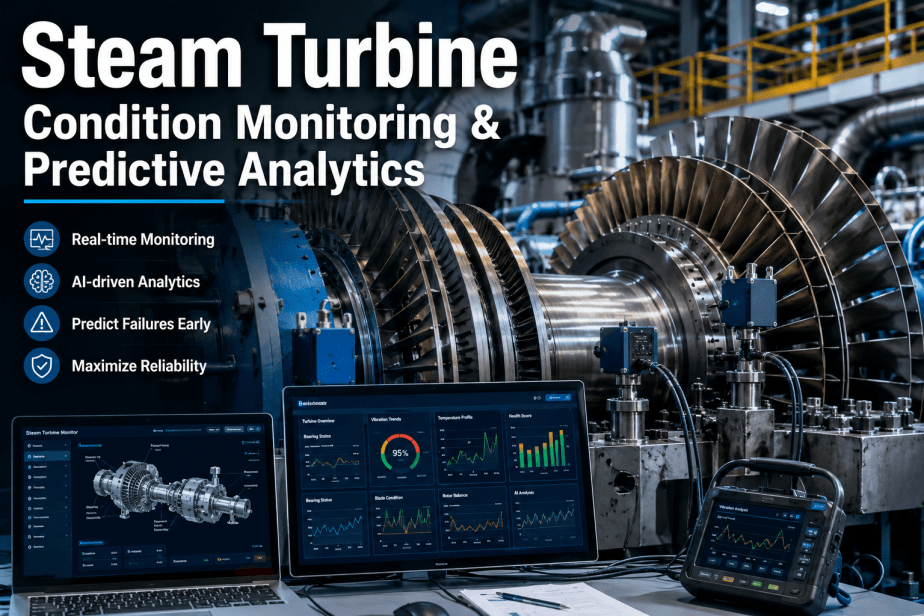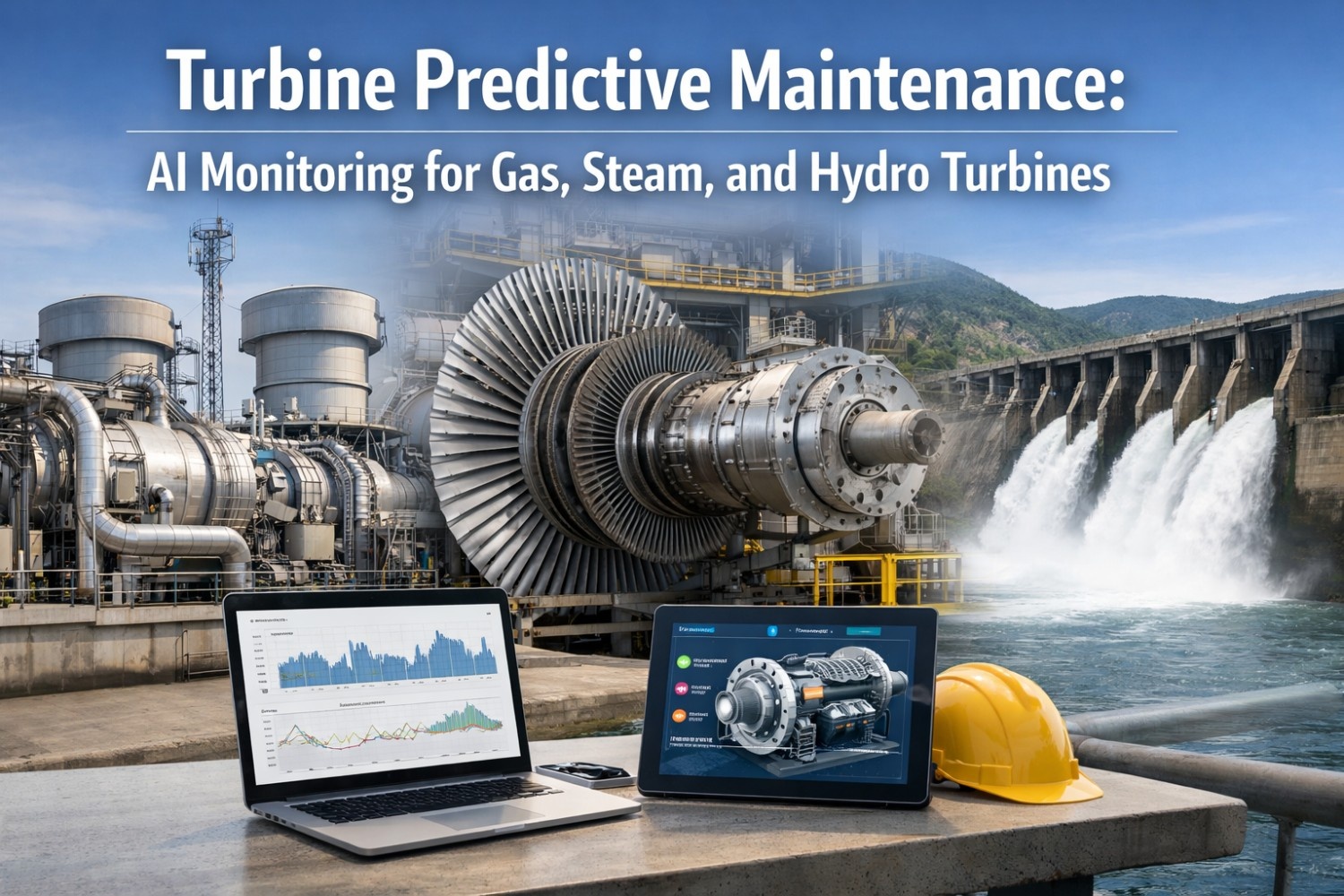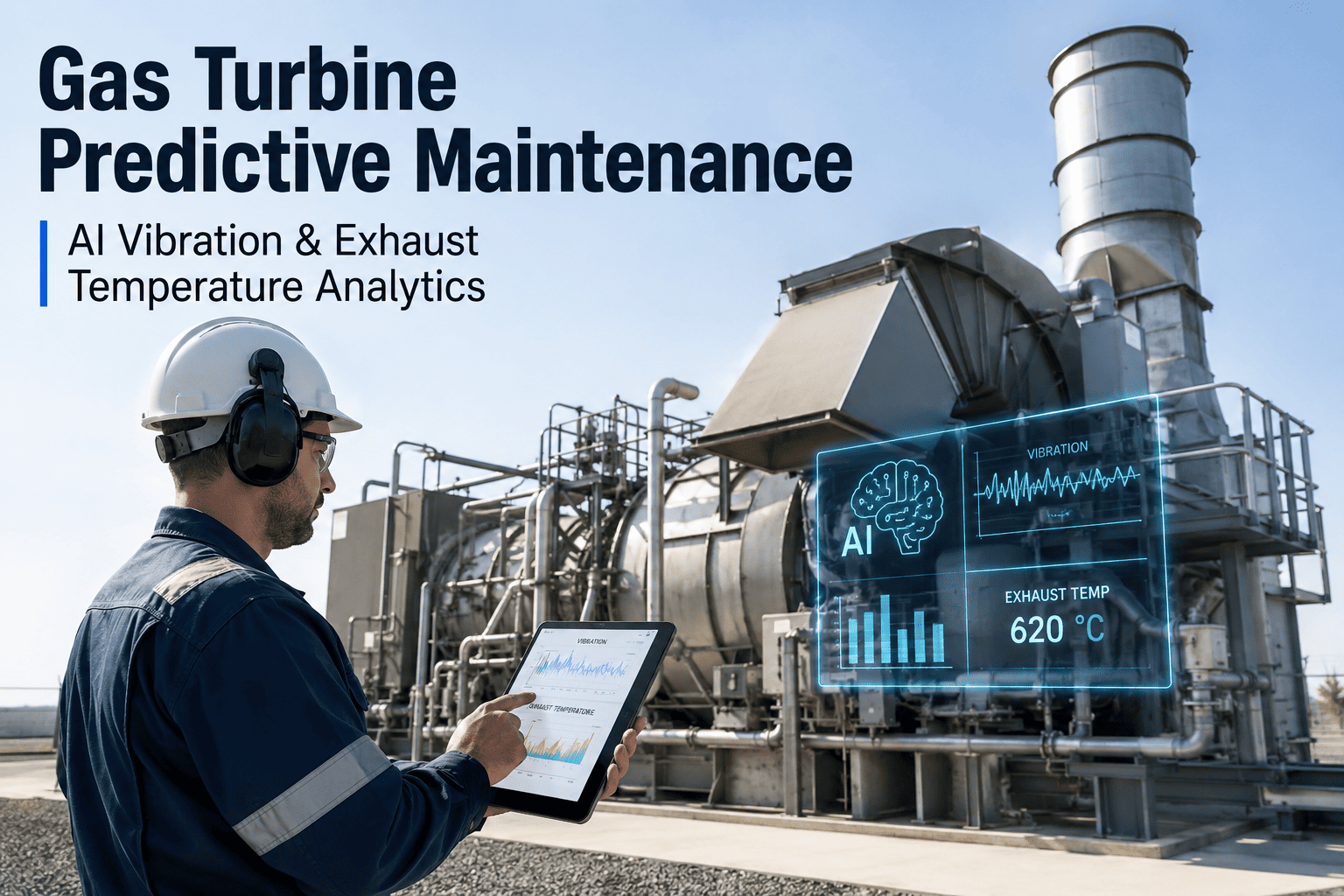
Gas turbines rarely fail without warning — they fail without anyone watching the right numbers. A bearing runs half a degree warmer each week. An exhaust thermocouple spread widens by a few degrees a month. A compressor stage sheds a fraction of a percentage point of efficiency at a time. None of these trip an alarm on their own, so operators log them as normal variation and move on. By the time the control system finally trips the unit on high vibration or exhaust spread, the underlying damage — a cracking transition piece, a fouled compressor stage, a coking fuel nozzle — has usually been building for weeks, and the plant is now looking at a forced outage instead of a planned one. Plant managers running simple-cycle and combined-cycle units are increasingly turning to AI-driven analytics that read these slow drifts as early warnings, and many start by choosing to book a demo to see what their own turbine data would have flagged weeks before the last forced outage.
Catch Blade Erosion and Combustion Faults 30–90 Days Before They Force an Outage
iFactory reads vibration signatures, exhaust temperature spread, compressor efficiency trends, and bearing metal temperature together — turning scattered DCS data into a single early-warning picture of turbine health.
Why a Healthy-Looking Turbine Can Still Be 30 Days from a Forced Outage
Most plants still schedule turbine overhauls on OEM-recommended equivalent operating hour intervals, built for a worst-case operating profile that protects the warranty, not your specific unit. In between those overhauls, the turbine is left to run on whatever an operator happens to notice on a control room screen during a routine round. The problem is that the four failure modes responsible for the overwhelming majority of gas turbine forced outages — blade erosion, combustor degradation, compressor fouling, and bearing distress — all announce themselves through slow, gradual sensor drift long before they announce themselves through an alarm.
A single blade failure alone can force a 10 to 21 day outage while replacement hardware is sourced and installed. The data needed to see that failure coming — vibration spectra, exhaust gas temperature spread, pressure ratio trends, bearing metal temperature — is already streaming out of the DCS every second. What is missing in most plants is not the sensor data; it is a system built to correlate it, trend it, and turn a quiet drift into a work order before the drift becomes a trip.
The Four Monitoring Zones That Catch Most Gas Turbine Failures Early
Not every turbine component needs the same monitoring intensity. Four zones — hot section, compressor, combustion system, and bearings — carry the overwhelming share of forced-outage risk, and each one gives off a distinct, trackable signature long before it fails outright.
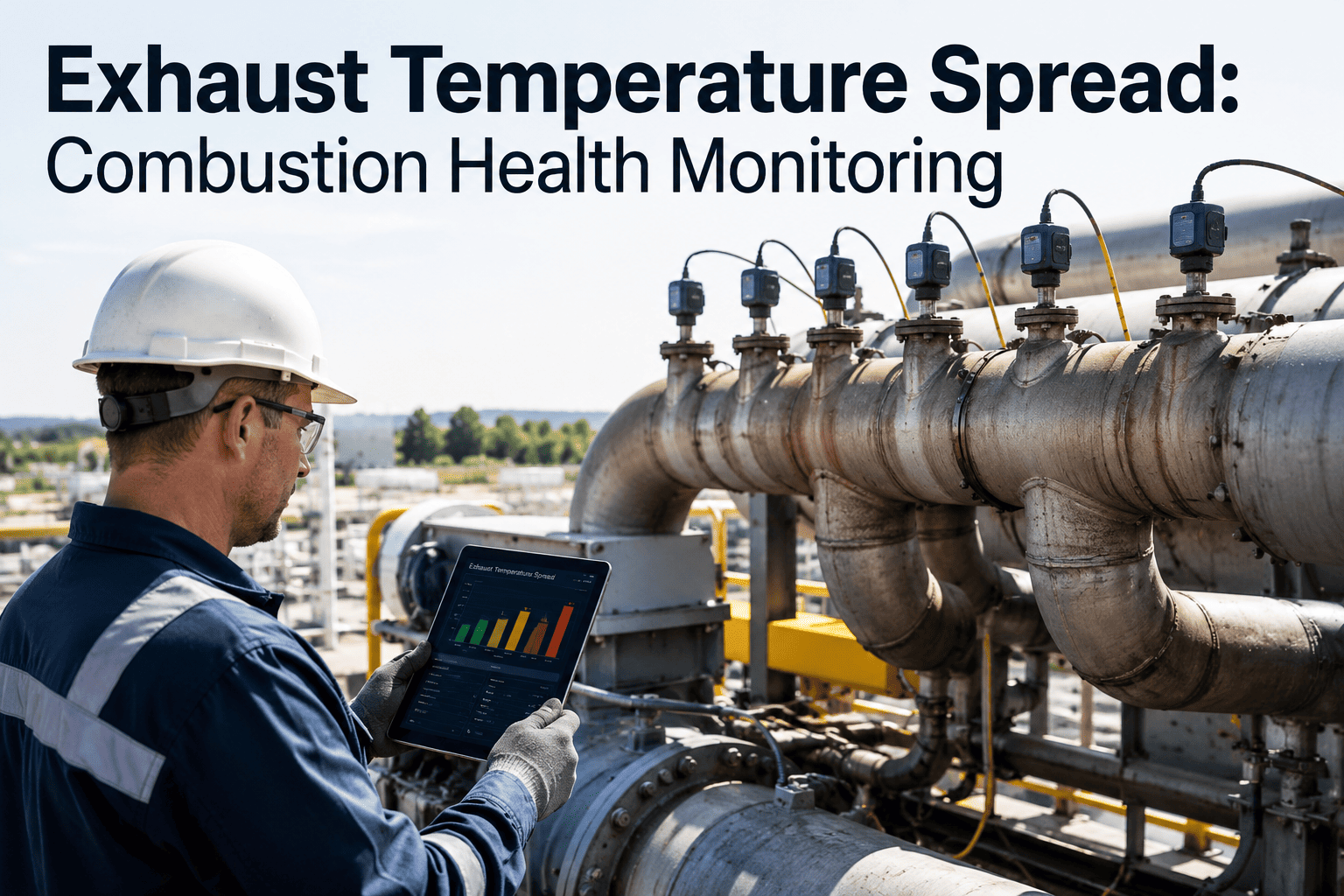
Blades and vanes operate at metal temperatures above 1,400 degrees Celsius, and thermal barrier coating breakdown, creep elongation, and oxidation erosion all show up first as a widening exhaust temperature spread between thermocouple channels. A spread that was 30 degrees Fahrenheit at commissioning can grow to 80 degrees over 8,000 operating hours without anyone noticing, because each individual reading still looks reasonable on its own. iFactory trends every channel against its baseline and flags exhaust gas temperature spread anomalies four to twelve weeks before blade damage typically forces an outage.
- Per-channel thermocouple trending against unit-specific baselines
- Blade path temperature spread and tip clearance correlation
- Borescope image analysis to quantify coating loss and crack progression between inspections
- Remaining useful life estimates with confidence intervals for blade replacement planning
Inlet guide vane actuator drift, blade fouling, and eroding surge margin cost three to eight percent in compressor efficiency before most plants notice the loss on a heat rate report. In dusty or coastal environments, fine particles that bypass standard filtration accelerate blade erosion at rates that generic OEM inspection intervals were never designed to account for. iFactory tracks pressure ratio degradation, inlet filter differential pressure trends, and stall precursor signatures continuously, distinguishing a sudden filter failure that needs an immediate alarm from a gradual fouling trend that can be scheduled into the next planned wash.
- Pressure ratio and polytropic efficiency trending in real time
- Inlet filter differential pressure rate-of-change alerting
- Stall precursor and surge margin erosion detection
- Compressor wash scheduling triggered by measured efficiency loss, not a fixed calendar date
Flame instability, crossfire tube cracking, combustor liner distortion, and fuel nozzle coking all begin as small shifts in combustion dynamics frequency, typically in the 100 to 500 Hz range, well before amplitude reaches an alarm threshold. Left undetected, these shifts progress into transition piece wear or a full combustion hardware replacement. iFactory's continuous frequency analysis catches amplitude increases in known instability modes days before they would otherwise reach alarm level, giving operators time to reduce load or adjust tuning instead of forcing a shutdown.
- Continuous acoustic and vibration frequency analysis on combustion dynamics
- Fuel nozzle coking trend detection through fuel flow split monitoring
- Crossfire tube and transition piece wear correlation with dynamics signatures
- Early alerts that allow load reduction or tuning instead of an emergency trip
A bearing-related forced outage averages well over $800,000 once lost generation and emergency repair costs are counted, and yet bearing distress is one of the most trackable failure modes in the entire turbine — journal and thrust bearing metal temperatures, lube oil contamination, and vibration signature shifts all move together as a bearing degrades. iFactory correlates these channels to separate genuine bearing wear from sensor drift, which also cuts down on the false trips and unwarranted shutdowns that erode operator trust in the alarm system itself.
- Journal and thrust bearing metal temperature trending against load and ambient conditions
- Lube oil particle count and moisture contamination tracking
- Vibration signature correlation to distinguish true bearing wear from sensor drift
- False-trip reduction through cross-parameter validation before alarm escalation
How Far in Advance Each Failure Mode Actually Shows Up
Different turbine failure modes give different amounts of lead time, and knowing which window applies to which component changes how a plant plans its outages. The table below reflects typical detection windows observed across gas turbine fleets once continuous analytics replace periodic manual checks.
| Failure Mode | Primary Signal | Typical Detection Window | Unplanned Outage Cost Range |
|---|---|---|---|
| Blade coating loss / erosion | Exhaust temperature spread, borescope trend | 4–12 weeks ahead | $500K–$2.5M |
| Combustion dynamics instability | Acoustic / vibration frequency shift | 2–8 weeks ahead | $500K–$1.5M |
| Compressor fouling / stall margin loss | Pressure ratio, efficiency trend | Weeks to months ahead | $2,000–$8,000/day in fuel |
| Bearing distress | Metal temperature, lube oil condition | Days to weeks ahead | $800K+ average |
| Exhaust system / HRSG interface cracking | Thermal stress temperature profiling | 6–18 months ahead | Varies with extent of damage |
Run Your Last 12 Months of Sensor History Through the Same Models
Most plants already have the vibration, temperature, and pressure data needed to answer one question: would iFactory have caught your last forced outage weeks before it happened?
For years our compressor wash schedule was a date on a calendar, not a reflection of what the machine actually needed. We were either washing too early and wasting an outage window, or too late and eating the fuel penalty from fouling nobody had flagged. Once we had continuous pressure ratio and efficiency trending in front of us, the wash schedule finally matched the equipment instead of the calendar, and the exhaust spread alerts caught a developing hot streak on unit two well before it reached anywhere near trip level.
From Reactive Trips to Planned Interventions
The practical shift most plants describe after deploying continuous turbine analytics is not a single dramatic save — it is dozens of small decisions that move from reactive to planned. A wash gets scheduled because efficiency data says it is needed, not because a date arrived. A borescope inspection gets moved up two weeks because exhaust spread crossed a threshold, not because the calendar said so. A load reduction gets ordered because combustion dynamics amplitude ticked up, instead of the unit tripping on its own.
Gas Turbine Predictive Maintenance — Frequently Asked Questions
Stop Finding Out About Turbine Damage From a Trip Alarm
iFactory turns the vibration, temperature, and efficiency data your turbines already produce into an early-warning system — so the next hot section or bearing issue shows up as a scheduled work order, not a forced outage.