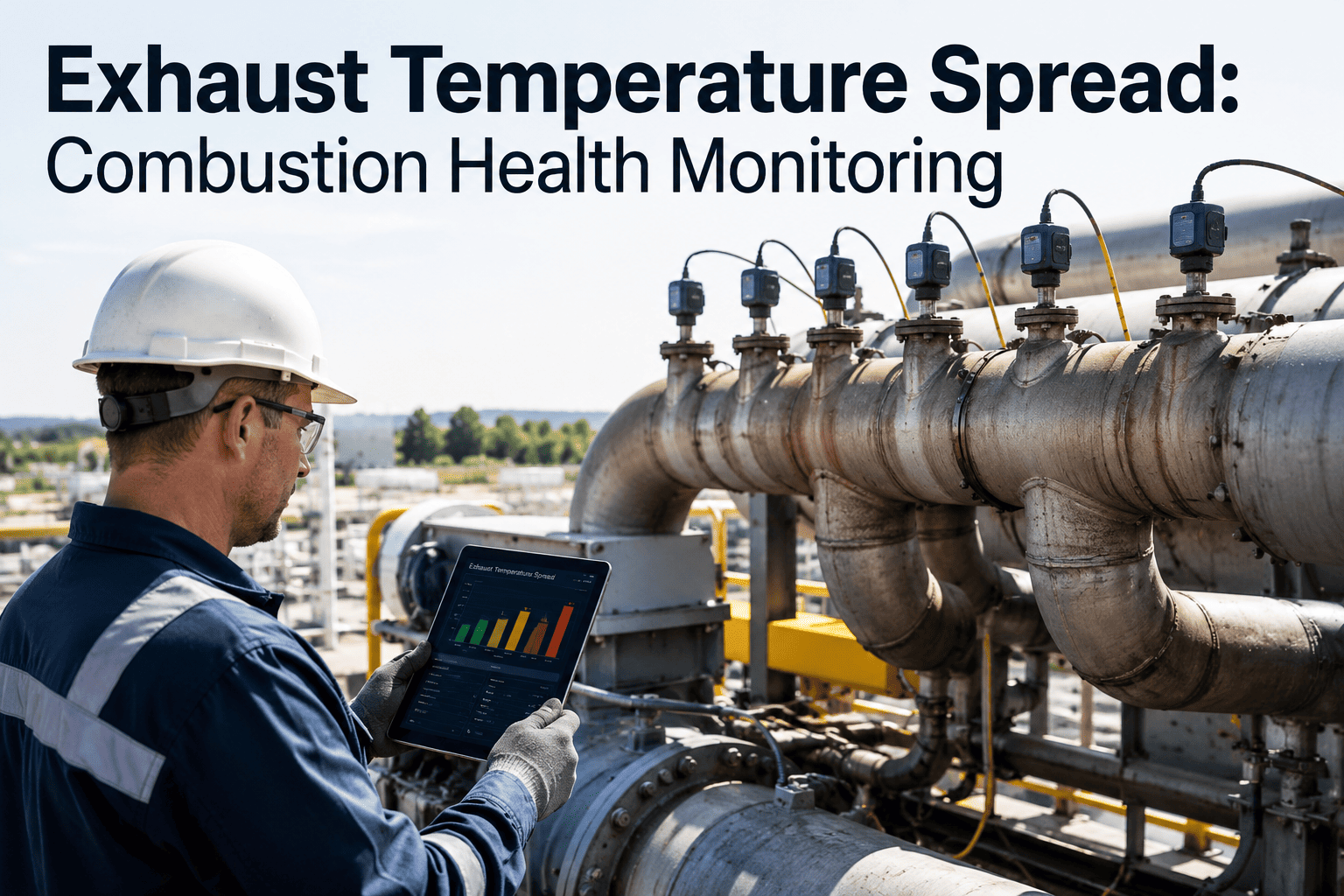
Every time a gas turbine's rotor completes one revolution, each blade sweeps past every combustor in the machine, and at full speed that happens sixty times a second. When one combustor runs even slightly hotter or colder than the rest, every blade passing through that uneven gas stream absorbs a small dose of extra thermal stress, hundreds of thousands of times in a single hour of operation. Exhaust temperature spread is the control room's window into that imbalance, but most sites only react once the spread crosses a fixed alarm threshold — by which point meaningful blade life has often already been consumed. This page covers what drives exhaust temperature spread, how it is monitored, and where iFactory support fits into catching it earlier.
Power Generation · Combustion Monitoring
By the Time the Spread Alarm Fires, the Damage Is Already Done
Most exhaust temperature spread problems begin as fifteen to twenty degree deviations that get dismissed as normal noise, long before they reach trip-level magnitude.
Average Exhaust Temp1,102°F
Current Spread34°F
Baseline Spread18°F
Adjacent TCsYes — Cans 6 & 7
15–20°F
Typical early-stage deviation that operators dismiss as normal variation before it escalates
150–160°F
Approximate spread magnitude at which most units trip on high exhaust temperature spread
4–12 wks
Advance warning possible when spread is tracked against each turbine's own learned profile
60/sec
Times every blade passes each combustor at full operating speed, amplifying any hot streak
Progression of a Spread Event
How a Combustion Problem Escalates From Noise to Trip
Exhaust temperature spread rarely appears suddenly. It typically moves through recognizable stages, and catching it in the earliest stage is what separates a scheduled repair from an unplanned trip.
Stage 1 — Early Drift
Spread rises fifteen to twenty degrees above baseline. Easy to dismiss as normal variation, but this is the highest-value point to catch a developing fault.
Stage 2 — Established Deviation
Spread holds consistently above baseline across load changes, pointing to a specific combustor rather than transient noise.
Stage 3 — Adjacent Hot/Cold Pair
Highest and lowest readings cluster in adjacent thermocouples, the classic signature of a genuine combustion fault rather than instrumentation drift.
Stage 4 — Trip Threshold
Magnitude and adjacency conditions are both met and the unit trips. By this point, significant blade thermal fatigue has typically already occurred.
Root Causes
What Actually Produces an Uneven Exhaust Profile
Fuel-Side Causes
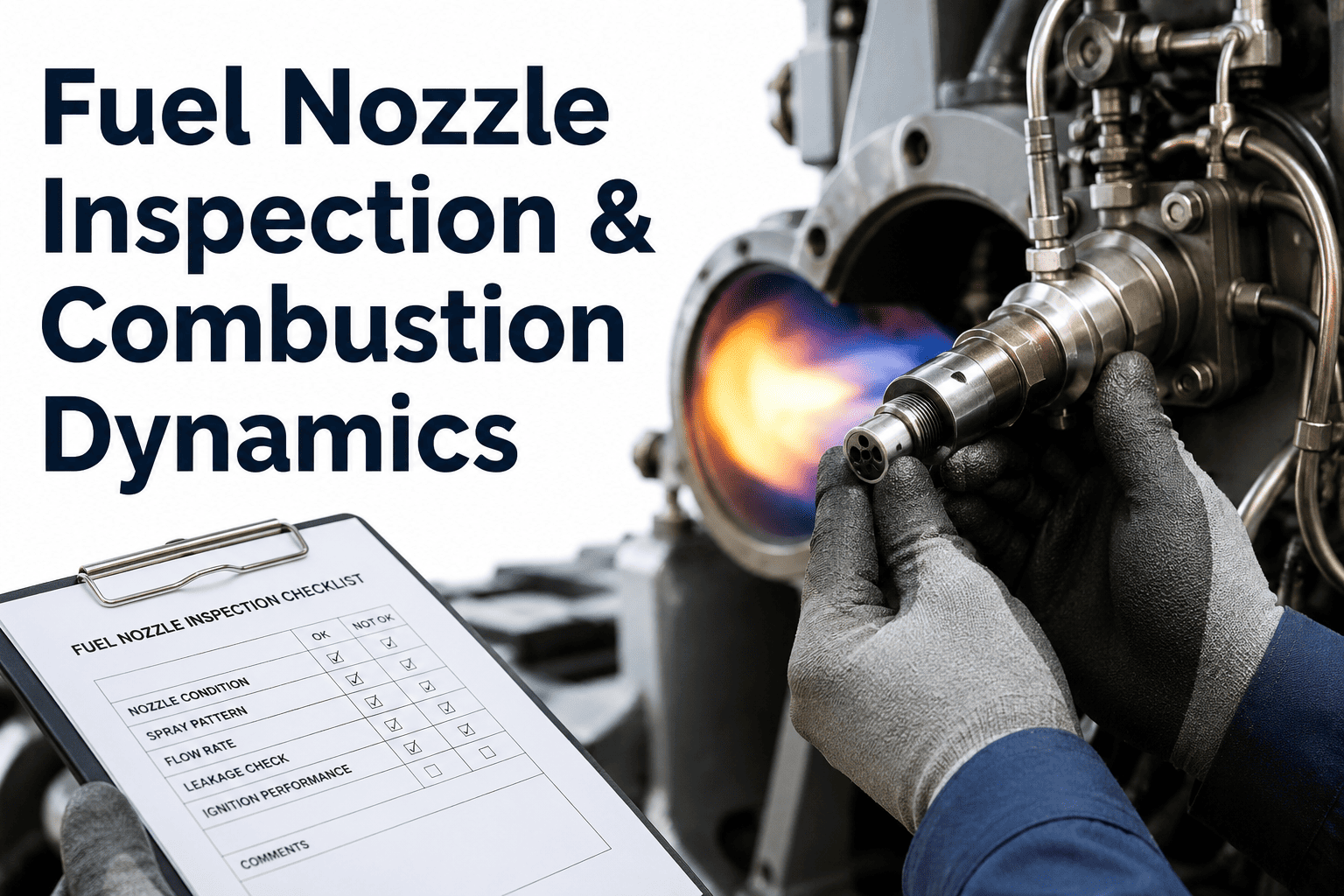
Clogged or worn fuel nozzles restricting flow to one or more cans
Liquid fuel flow divider issues causing unequal fuel distribution
Failed liquid fuel purge air check valves affecting combustion completeness
Mechanical Causes
Cracked or broken combustion liners and transition pieces
Hula seal wear or leaking transition piece side seals
Partial loss of flame in one or more combustor cans
Catch the Fifteen-Degree Drift, Not Just the Trip.
iFactory compares every thermocouple against each turbine's own learned profile and flags a developing fault weeks before it reaches alarm level.
Instrumentation Basics
What Every Exhaust Thermocouple Array Actually Needs to Get Right
Spread monitoring is only as good as the thermocouples feeding it. Most false alarms and missed detections trace back to one of these four instrumentation issues rather than an actual combustion fault.
Sensor Health
Thermal aging drifts a thermocouple's reading low over time, understating the real spread
Deposit buildup on the probe tip slows response time to genuine temperature changes
A failed thermocouple should be excluded from the spread calculation, not left generating false trips
Calculation Logic
Outlier rejection before averaging prevents one bad channel from skewing the mean exhaust temperature
Adjacency logic must be checked alongside magnitude, not magnitude alone
Jumpered thermocouples need to preserve the radial profile, not just fill a gap in the count
Fixed Threshold vs. Learned Baseline
Why Absolute Alarm Limits Miss the Earliest Warning
Monitoring Approach
Fixed Threshold
Learned-Baseline Monitoring
Trigger logic
Alarm only when spread exceeds a single absolute value for all units
Flags deviation from each turbine's own established temperature footprint
Detection point
Often near trip level, after the fault is well established
Weeks earlier, while spread is still within the fixed alarm band
False alarms
High on units with naturally higher baseline spread
Lower, since the comparison is unit-specific rather than fleet-wide
Failed thermocouple handling
Can misclassify a bad thermocouple as a real combustion fault
Distinguishes instrumentation failure from an actual combustion event
From the Control Room
What Changed Once Spread Was Tracked Against Baseline
Our DCS only alarmed once spread crossed a fixed number, and by the time that happened the operators had usually been watching a slow drift for weeks without a formal trigger to act on it. Once we started comparing each unit's spread against its own learned baseline instead of one fleet-wide number, we caught a developing fuel nozzle issue almost a month before it would have tripped the unit, and scheduled the repair during a planned outage instead of an emergency shutdown.
— Combustion Systems Engineer, Gas-Fired Generating Station
Frequently Asked Questions
Exhaust Temperature Spread — Common Questions
What exactly triggers a high exhaust temperature spread trip?
Most control systems require two conditions at once — the spread between the hottest and coldest thermocouple readings must exceed a magnitude threshold, and the highest and lowest readings must come from thermocouples that are physically adjacent to each other. Meeting only one condition typically triggers an alarm rather than a trip, giving operators a window to investigate before the unit shuts down on its own.
Book a demo to see how spread trending flags this earlier.
Does a high exhaust temperature spread always mean a combustion fault?
Not always. A failed or drifting thermocouple can produce a reading that looks like a genuine spread event, which is why distinguishing an instrumentation fault from an actual combustion problem matters before dispatching a repair crew to the wrong system. Sites running with known failed thermocouples should treat every subsequent spread reading with added caution.
How early can exhaust temperature spread problems realistically be caught?
Continuous comparison against a turbine's own historical temperature footprint, rather than a single fleet-wide threshold, can surface a developing combustion fault four to twelve weeks before the spread would reach trip-level magnitude on a fixed-threshold system. That window is usually enough to plan a repair during a scheduled outage.
What is the difference between exhaust temperature spread and can-to-can variation?
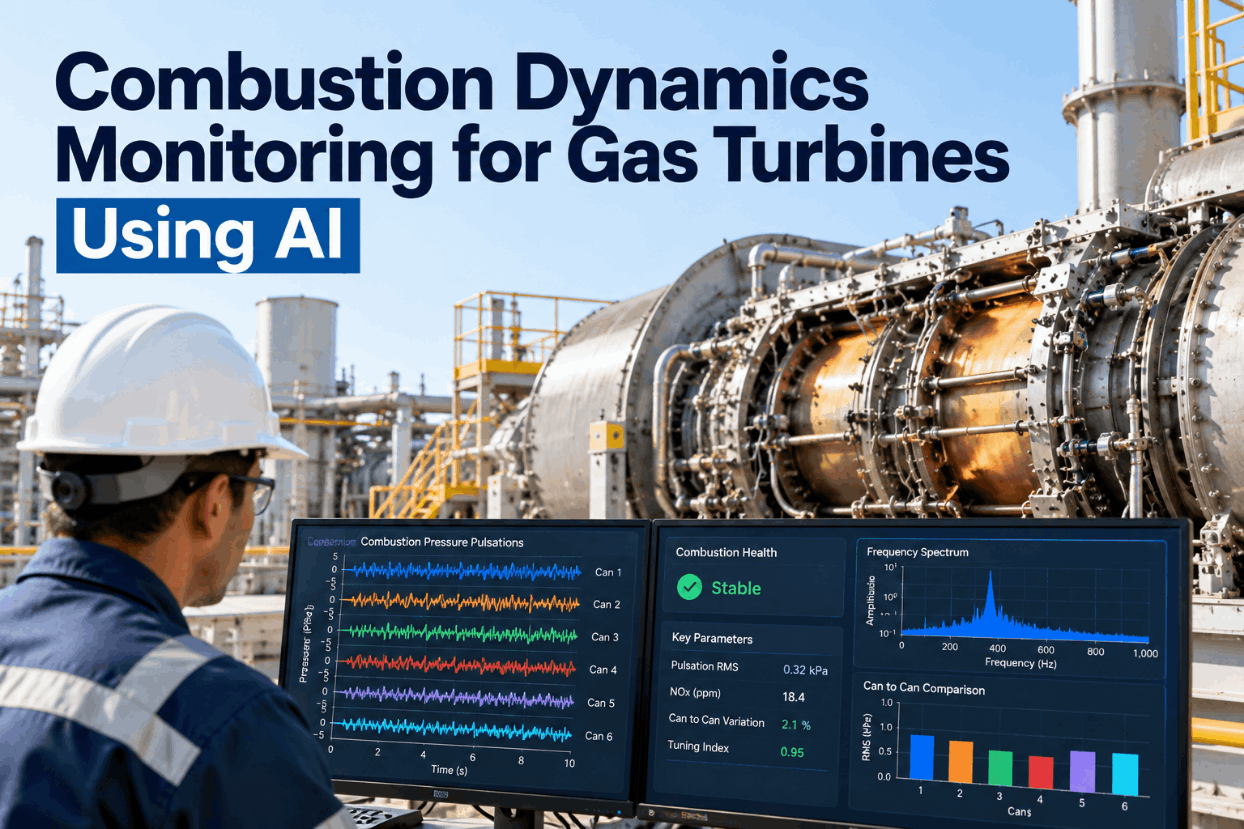
Exhaust temperature spread measures the difference between the hottest and coldest of the exhaust thermocouples after gases from all combustors have already mixed and rotated through the turbine section, while can-to-can variation refers to the actual temperature difference at each individual combustor before that mixing occurs. Spread is a downstream proxy and can understate a real can-to-can imbalance depending on swirl and mixing effects.
Why do liquid-fuel-fired turbines see more exhaust spread issues than gas-fired units?
Liquid fuel systems depend on flow dividers and atomizing air to distribute fuel evenly across all combustor cans, and any wear or blockage in those components tends to create uneven combustion faster than the simpler distribution path used in gas firing.
Contact support to review monitoring setup for dual-fuel units.
Catch the Fifteen-Degree Drift Before It Becomes a Trip
Real-time thermocouple monitoring, learned-baseline deviation alerts, and instrumentation-vs-combustion fault separation for every unit in your fleet.