At 2:47 AM on a Tuesday, the lead operator at a 500 MW combined-cycle plant notices the No. 2 steam turbine's #4 bearing metal temperature creeping past 205°F — three degrees above the morning trend. He logs it, assumes it's a sensor drift, and moves on. Six weeks later, the turbine trips on high vibration. The root cause: a cracked bearing pad that had been propagating since that first thermal anomaly. The repair: 14 days of forced outage $2.7 million in lost generation, and a replacement bearing that took eight weeks to fabricate. That scenario repeats across hundreds of plants every year, because conventional condition monitoring only alerts you after the damage is done.
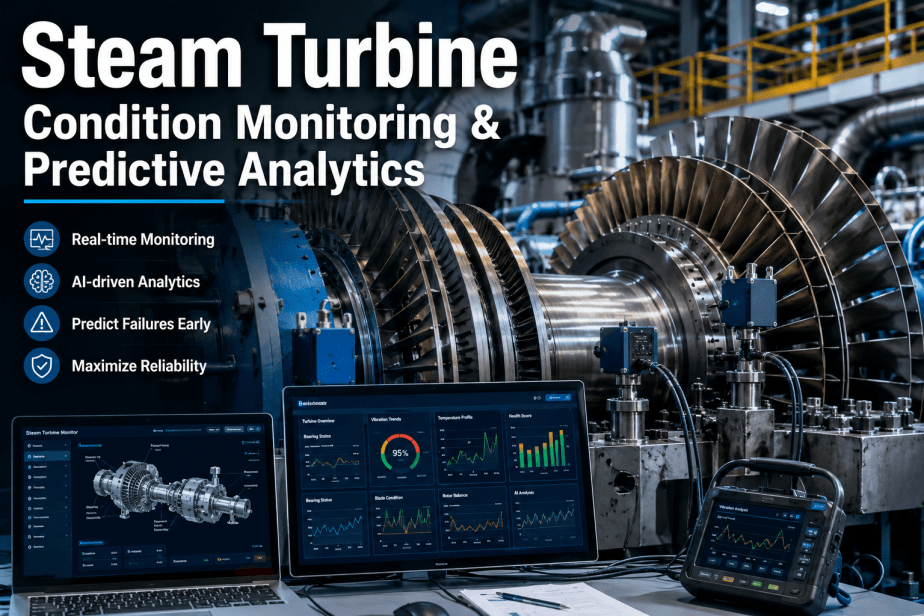
Stop reacting to turbine failures. Predict blade erosion, bearing wear, and rotor imbalance before they cost you a forced outage.
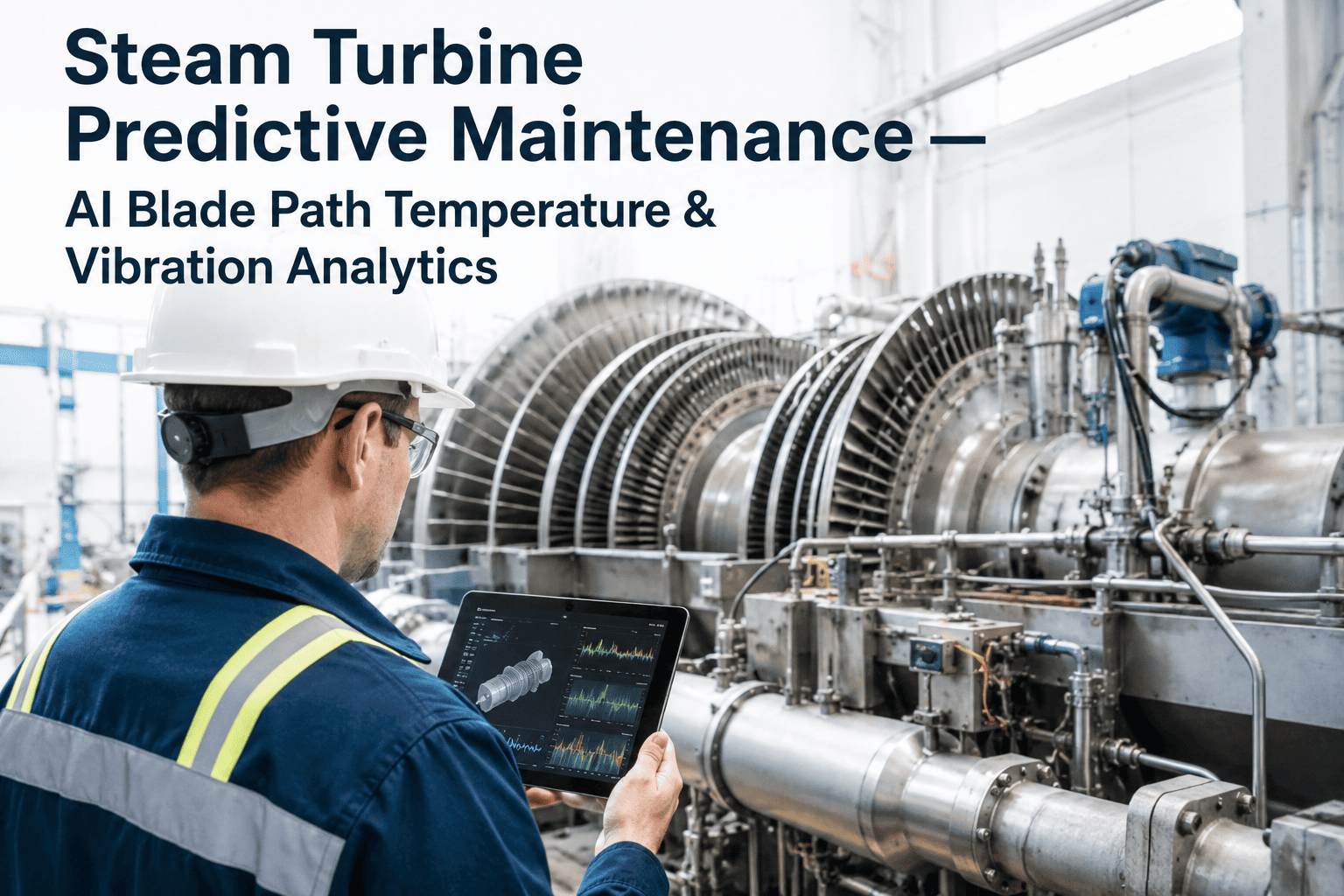
iFactory ingests your existing vibration, temperature, and performance data — no new sensors — and delivers blade-by-blade degradation forecasts 4–8 weeks before your current alarm thresholds trigger. On-premise, turnkey, live in 6–12 weeks.
Without iFactory vs. With iFactory
Every day your steam turbine runs without predictive analytics, you're gambling on bearing life, blade integrity, and rotor balance. Here's what that gamble looks like on both sides of the equation.
Without iFactory
- Bearing temperature alarms trigger only after damage has begun — you're already losing material
- Vibration monitoring catches rotor imbalance at 8 mils, when corrective action requires a full rotor pull
- Blade erosion is invisible until a scheduled borescope — or until a blade releases mid-run
- Performance degradation (heat rate drift) is lumped into "normal seasonal variation" until it's too late
- Forced outage costs average $3,200 per hour for a 300 MW unit — and you find out about failures at 2 AM
With iFactory
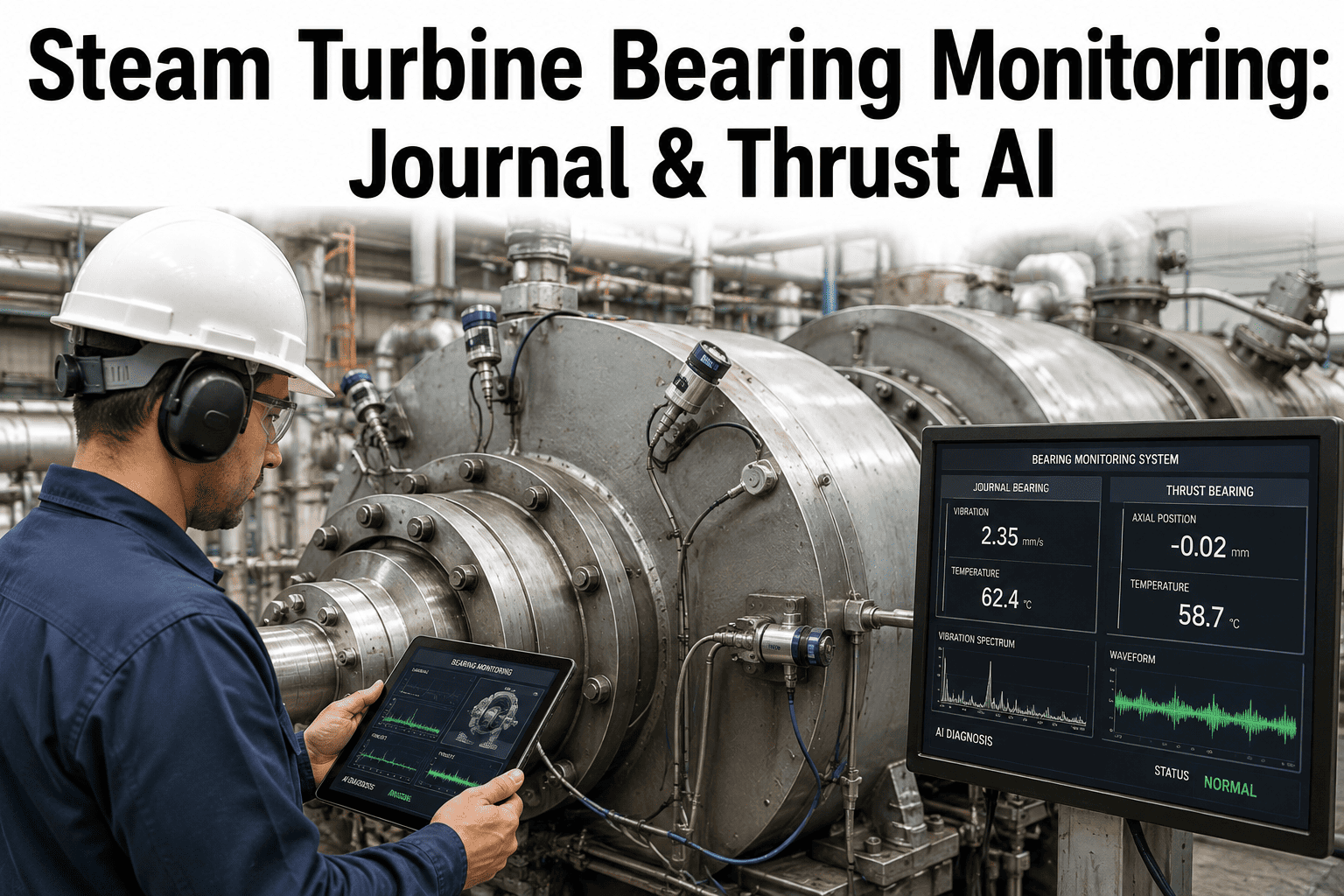
- Bearing wear progression is tracked hourly — you schedule replacements during planned outages, not emergencies
- Rotor imbalance is detected at 2 mils with 95% confidence — balance shots are done online, during low-load windows
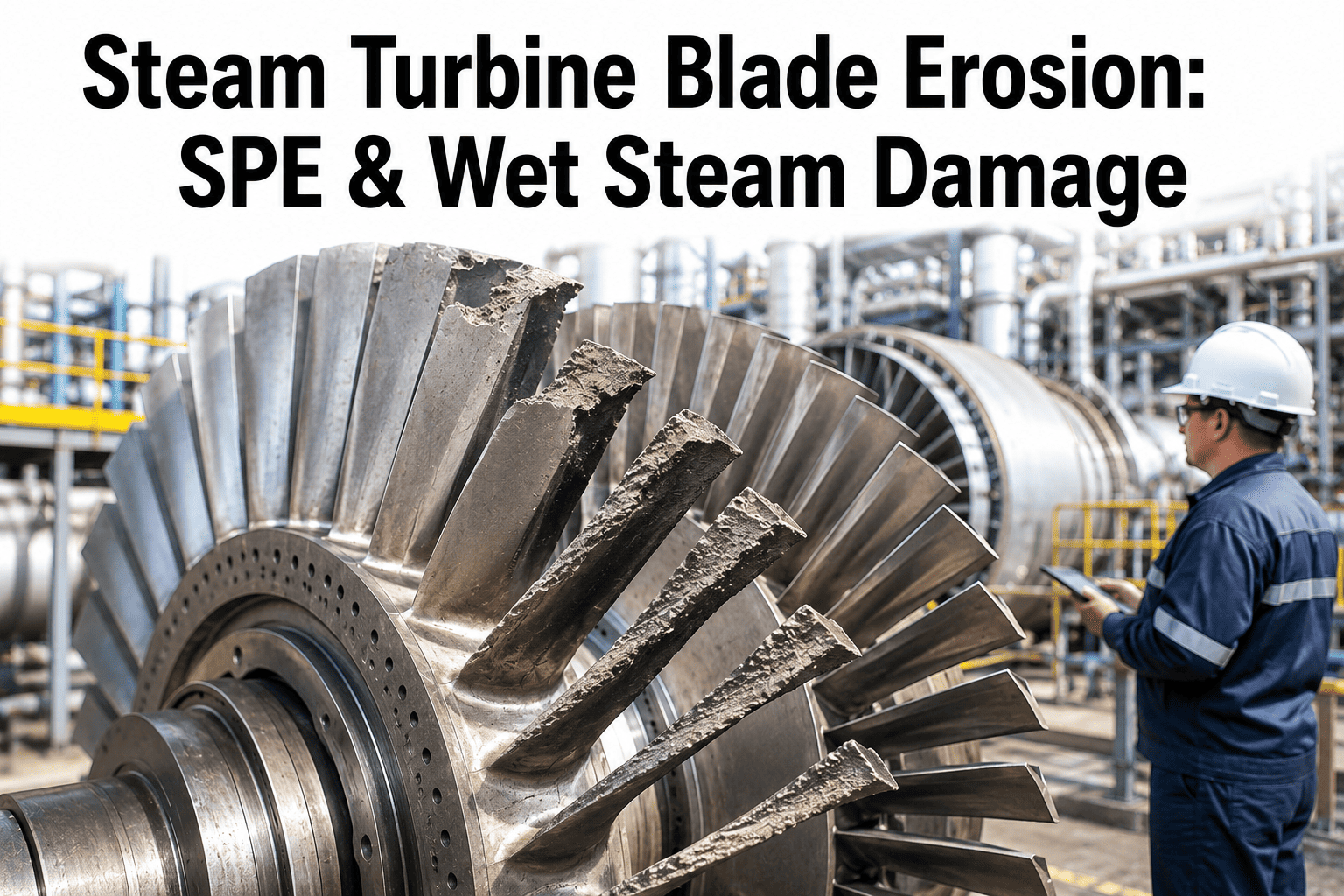
- Blade erosion is forecast blade-by-blade using acoustic and performance signatures — you plan replacements two outages ahead
- Heat rate degradation is decomposed by stage — you know exactly which row of blades is costing you 0.3% efficiency
- Unplanned trip rate drops from 2.1 per year to 0.17 — you save $1.8M per unit annually in avoided outage costs
Every 0.1% heat rate drift is $150K in fuel — here's where it's hiding
Steam turbine degradation doesn't announce itself. It shows up as a fraction of a percent in condenser backpressure, a 0.5°F rise in bearing oil temperature, a 0.2 mil change in shaft vibration. These micro-signals are invisible to your DCS alarms but perfectly visible to iFactory's AI models. Here's what they cost you every month they go undetected.
Blade erosion — efficiency loss per stage
Eroded steam path blades increase stage losses by 1.2–2.5%, compounding across 10+ stages. A 1.5% efficiency loss on a 300 MW unit costs $540K annually in additional fuel at $4/MMBtu gas.
Bearing wear — forced outage replacement
A failed journal bearing on a large steam turbine requires a 10–14 day forced outage. Replacement bearing cost: $85K. Lost generation at $45/MWh: $2.4M for a 300 MW unit. Total: $2.5M per event.
Rotor imbalance — vibration-induced trip
A rotor imbalance that reaches trip threshold (typically 8–10 mils) causes an emergency shutdown. Restart sequence takes 6–8 hours. At full load value of $13,500/hr, that's $108K per trip — plus the rotor repair cost.
Condenser degradation — backpressure penalty
Tube fouling or air in-leakage raises condenser backpressure by 0.5–1.5 inHg, reducing turbine output by 2–4%. On a 300 MW unit, that's 6–12 MW of lost capacity at $45/MWh — $2.4M–$4.7M annually.
Seal degradation — gland steam leakage
Worn shaft seals increase gland steam leakage by 3–5%, reducing cycle efficiency by 0.4–0.7%. At $4/MMBtu and 7,000 operating hours, that's $210K–$370K in wasted fuel per year per unit.
From raw data to actionable blade-by-blade forecasts in 4 steps
iFactory doesn't ask you to install new sensors, change your DCS configuration, or send data to the cloud. We connect to your existing vibration monitoring system, performance historian, and DCS — and within 6–12 weeks, you have a live turbine health dashboard with forecasts that give you 4–8 weeks of advance warning.
Connect — no new hardware
We deploy our NVIDIA-powered appliance on your plant network and connect to your existing Bently Nevada, GE, or Siemens vibration monitoring systems, DCS, and performance historian — typically 3–5 data streams per turbine stage.
Train — on your turbine's unique fingerprint
Our AI ingests 6–12 months of historical data to learn your turbine's baseline vibration signatures, thermal behavior, and performance curves — accounting for load changes, ambient conditions, and seasonal effects.
Detect — micro-signals invisible to conventional alarms
iFactory identifies blade erosion patterns at 0.1% per week, bearing wear trends at 0.3°F per day, and rotor imbalance growth at 0.05 mils per week — all far below your DCS alarm thresholds.
Forecast — 4–8 week actionable warnings
You receive blade-by-blade degradation forecasts, recommended outage windows, and specific corrective actions — "replace row 3 blades during next planned outage" vs. "balance rotor within 3 weeks" — with confidence intervals.
Four turbine failure modes — one platform to catch them all
iFactory's AI models are purpose-built for the five most common steam turbine failure mechanisms. Each model is trained on your turbine's specific geometry, operating profile, and degradation history — not generic industry averages.
Blade-by-blade erosion tracking
iFactory analyzes acoustic emission signatures and stage-by-stage performance data to detect blade erosion at 0.05% per week — before it affects efficiency or risks a release. You get a ranked list of blades requiring replacement, with recommended outage timing and cost projections.
Bearing degradation forecasting
Our models track bearing metal temperature, oil film thickness, and vibration signatures to forecast remaining useful life with ±5% accuracy at 8 weeks out. You schedule bearing replacements during planned outages instead of emergency shutdowns.
Rotor imbalance early detection
iFactory detects rotor imbalance at 2 mils — 75% below conventional alarm thresholds — using harmonic analysis of shaft vibration data. You can schedule online balancing during low-load windows instead of waiting for a trip at 10 mils.
Seal and condenser degradation
Gland steam leakage and condenser backpressure deterioration are detected through heat rate decomposition. iFactory isolates the specific stage or tube bundle causing the penalty and estimates the fuel cost — so you prioritize repairs by ROI.
Your turbine is already generating the data you need to predict its own failures. Book a 30-min walkthrough and we'll show you what your existing vibration and performance data is trying to tell you.
Turnkey turbine condition monitoring — from data source to decision dashboard
You hand us access to your data sources. We deliver a working pilot in 6–12 weeks. No cloud, no data leaving your network, no new sensors to install. Here's exactly what's included.
On-premise NVIDIA appliance
Fully air-gapped, zero cloud dependency. All turbine data stays on your plant network. No data egress, no cybersecurity review delays, no latency to your DCS.
6–12 week pilot to production
From data source connection to live predictive dashboard. We handle the data engineering, model training, and validation against your historical outage records.
Blade-by-blade degradation forecasts
Ranked list of blades with erosion rates, recommended replacement windows, and cost projections. Updated daily with each new operating cycle.
Bearing RUL with ±5% accuracy
Remaining useful life forecasts for each bearing, with confidence intervals. Alerts trigger when degradation rate exceeds your specified threshold.
Rotor imbalance trending
Daily imbalance magnitude and phase angle trends. Automatic recommendations for online balancing vs. planned rotor pull, with cost comparison.
24x7 managed service
Our operations team monitors your turbine models continuously. You get weekly health reports and immediate alerts when degradation accelerates beyond expected rates.
What plant operators ask about AI-driven turbine condition monitoring
Your turbine's next failure is already visible in its data. Let us show you where to look.
Book a 30-minute walkthrough. We'll connect to your plant's vibration and performance data — live or historical — and show you exactly what iFactory can detect that your current system is missing. No sales pitch. Just a technical demo with your data.