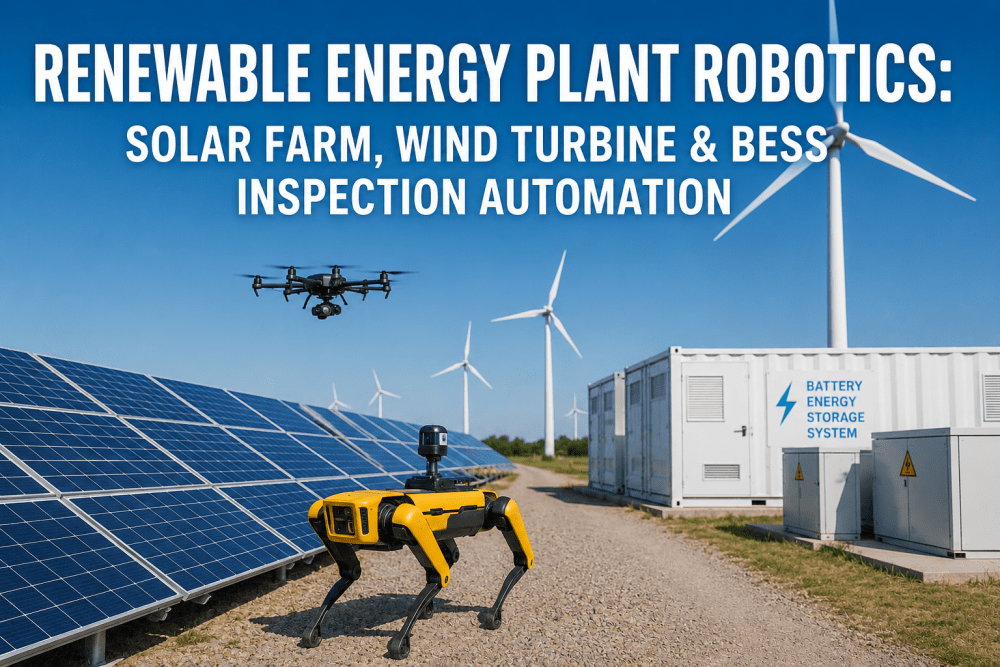
At the 450 MW solar-plus-storage site in West Texas, the morning shift's SCADA screen lit up with a string inverter alarm on row 17, a BESS module thermal deviation on rack 4, and a drone image showing a hairline crack on a wind turbine blade three miles away — all within the same 20-minute window. The site manager had three different vendors, two dashboards, and one Excel spreadsheet to decide what to act on first. Renewable energy plants are no longer single-technology sites. They are multi-asset, multi-vendor, multi-signal environments where a solar farm robot, a wind turbine robot, and a BESS robot must work in concert — and most operations teams are flying blind on at least two of those three domains.
One platform for every renewable asset — solar IR inspection, wind blade drone, BESS thermal monitoring, and hydrogen plant robot operations
iFactory unifies robotic inspection, real-time sensor fusion, and predictive maintenance across solar farms, wind turbines, battery storage, hydrogen plants, and geothermal sites — on a single on-premise appliance that delivers a working pilot in 6–12 weeks.
From solar farm robot to hydrogen plant robot — one control plane
Renewable energy plants have become heterogeneous asset clusters. A single 500 MW site might combine bifacial PV arrays, Type III wind turbines, lithium-ion BESS containers, and a green hydrogen electrolyzer. Each asset class has its own inspection robot, its own thermal imaging protocol, its own PdM logic — and its own data silo. iFactory is the first AI-native platform that ingests data from every robotic inspector on site — whether it's a solar farm robot doing IR scans, a wind turbine robot climbing the tower, a BESS robot checking cell-level temperature, a drone inspecting blades, or a hydrogen plant robot monitoring electrolyzer stacks — and fuses it into a single predictive maintenance model. No cloud. No data leaving the plant network. One appliance, one view, one operations team.
Every renewable robot, every inspection modality, unified
iFactory connects to and orchestrates the full spectrum of robotic inspection systems used in renewable energy today. Each capability card below represents a live integration that ships with the platform — no custom development required.
Solar Farm Robot — IR & Visual Inspection
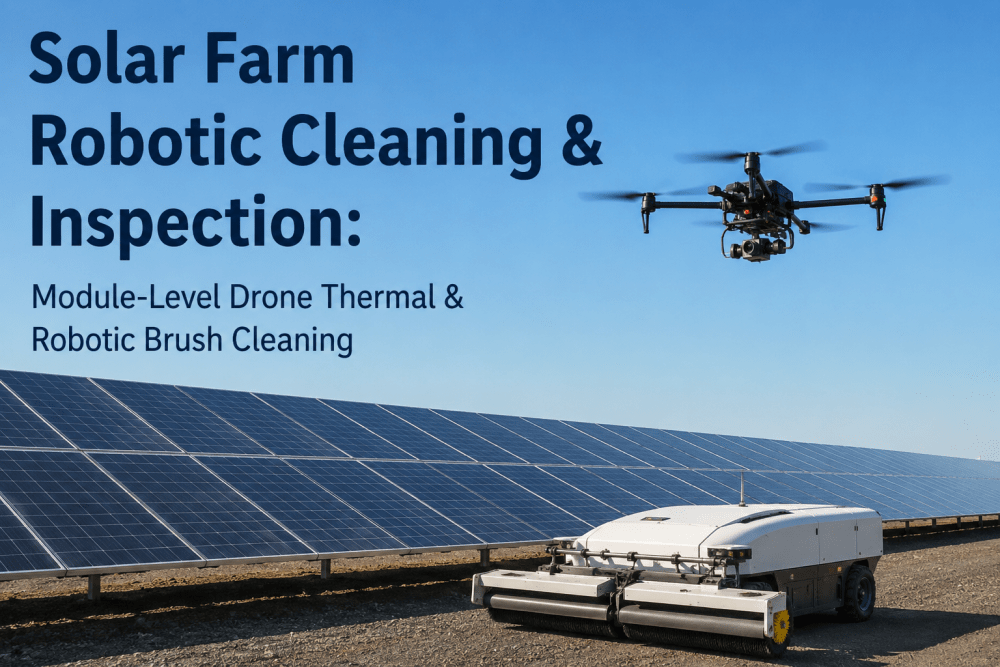
Ingests feeds from ground-based solar farm robots performing automated IR thermography and visual panel inspection. iFactory fuses thermal anomaly data with string-level I-V curves to classify hot spots, bypass diode failures, and soiling patterns — and triggers cleaning or repair dispatch from the same interface.
Wind Turbine Robot & Blade Drone
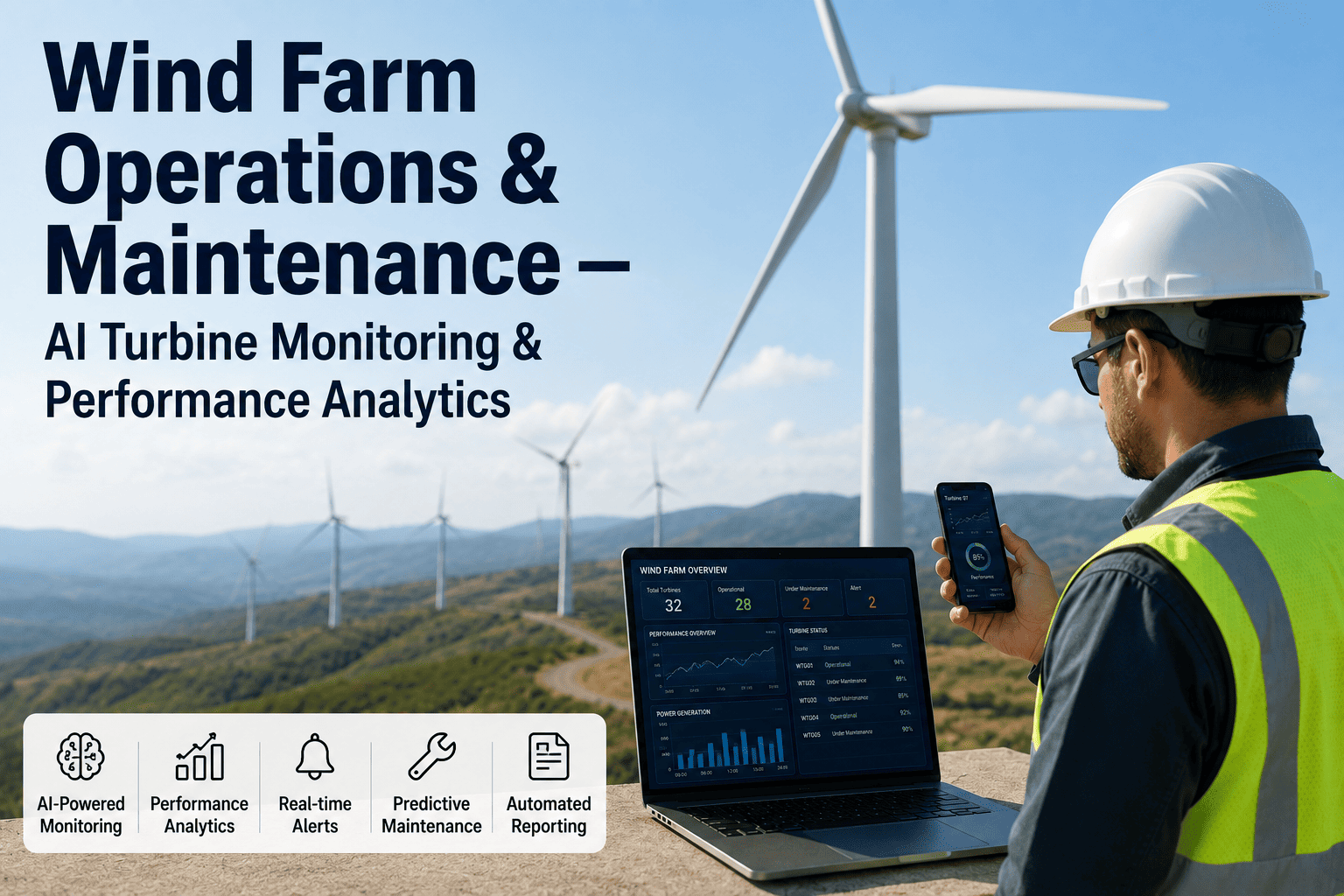
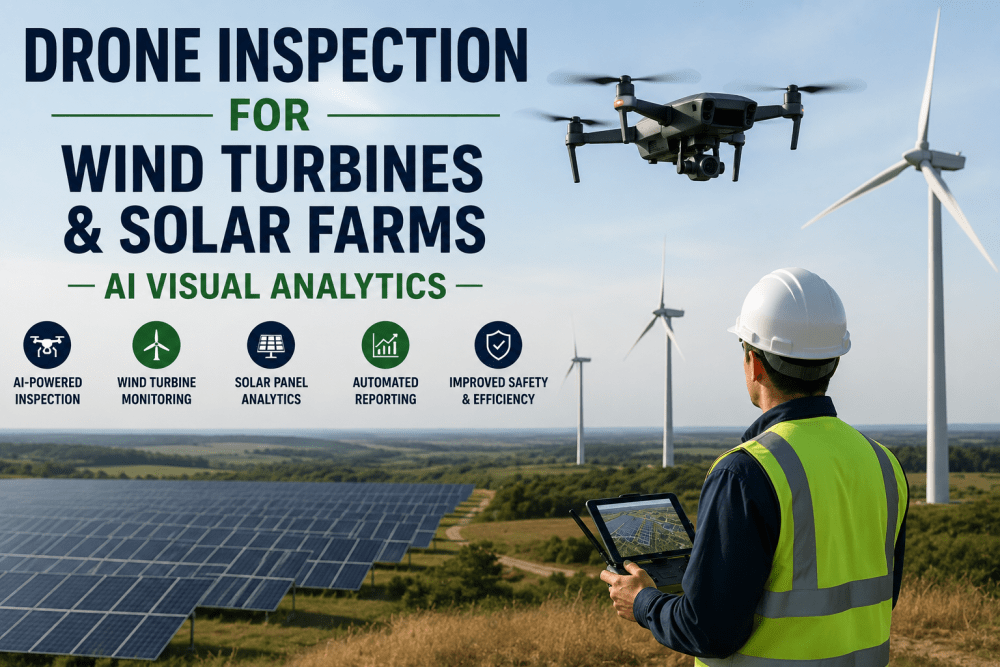
Receives data from climbing wind turbine robots (internal tower and blade inspection) and autonomous blade drones. iFactory stitches multi-angle imagery into 3D blade models, detects leading-edge erosion, lightning damage, and delamination, and predicts remaining useful life per blade — all on-plant, no cloud upload.
BESS Robot — Battery Storage Thermal Monitoring
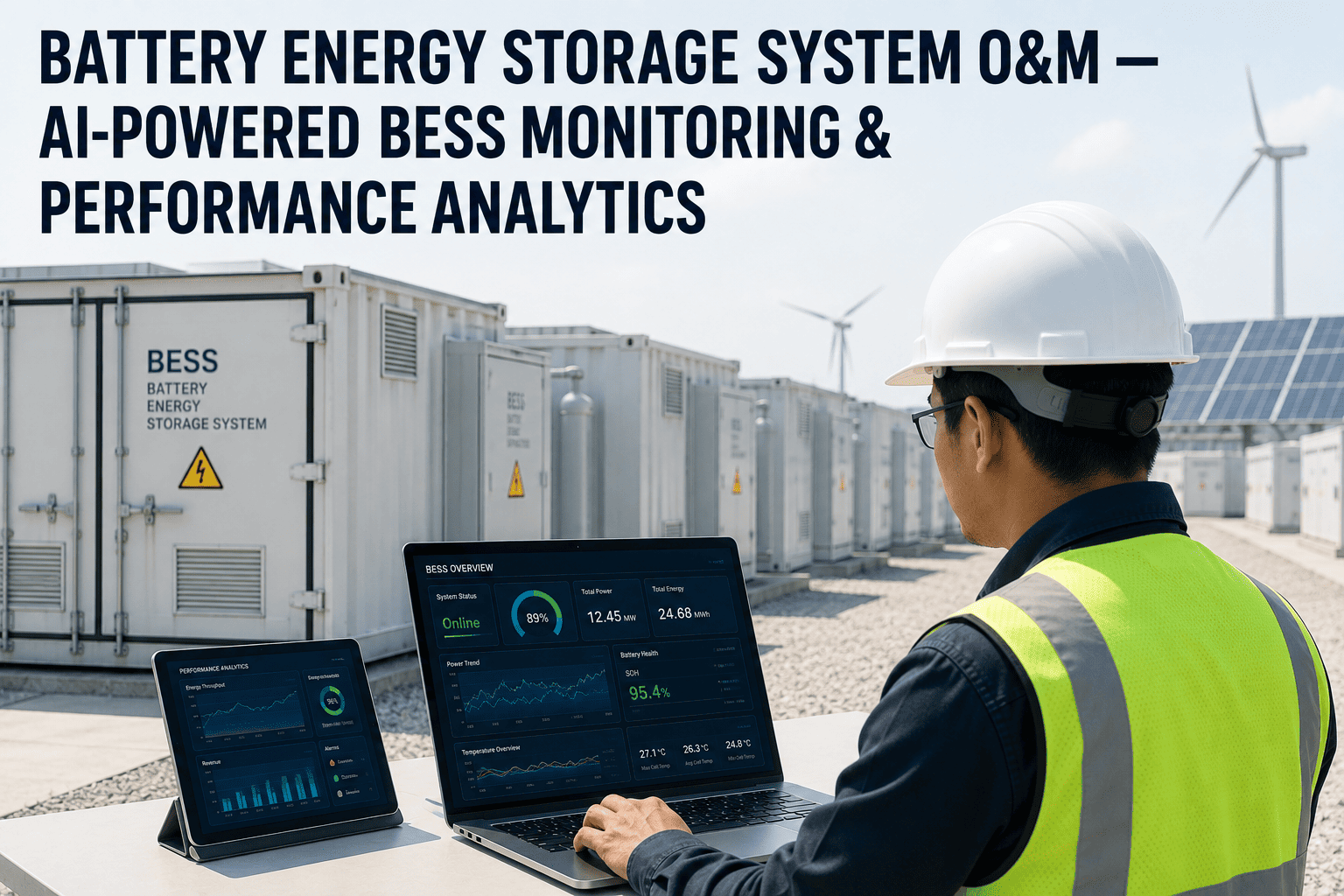
Connects to BESS robots that patrol battery storage racks with IR cameras and gas sensors. iFactory correlates cell-level temperature gradients with charge/discharge cycles, identifies thermal runaway precursors, and generates automated shutdown recommendations before a module reaches critical threshold.
Hydrogen Plant Robot — Electrolyzer & Stack Monitoring
Ingests sensor and visual data from hydrogen plant robots inspecting electrolyzer stacks, compressor seals, and storage vessels. iFactory applies anomaly detection to pressure, temperature, and vibration streams to predict membrane degradation and hydrogen leakage risk — critical for green hydrogen plant safety.
Geothermal Robot — Wellhead & Steam Field Inspection
Processes data from geothermal robots inspecting wellhead equipment, steam pipelines, and cooling towers. iFactory detects scaling, corrosion, and steam loss patterns that drive binary cycle efficiency — extending maintenance intervals from calendar-based to condition-based.
Unified PdM — All Robots, One Model
Every robot feed — from solar farm robot to BESS robot to wind turbine robot — feeds into a single predictive maintenance engine. iFactory cross-correlates anomalies across asset types (e.g., BESS thermal event triggered by solar curtailment pattern) and presents a single prioritized action list to the operations team.
From robot deployment to predictive insight in four steps
iFactory is designed for operations teams who cannot wait for a six-month cloud migration. The platform deploys on your plant network, connects to your existing robotic fleet, and starts delivering actionable PdM insights within weeks — not quarters.
Connect robotic data sources
iFactory's on-premise appliance ingests data from any robot or drone via API, MQTT, or file drop — solar farm robots, wind turbine robots, BESS robots, hydrogen plant robots, and blade drones — all simultaneously, no integration project required.
Fuse sensor & vision streams
The platform fuses IR thermography, visual imagery, vibration, gas, and electrical data into a unified asset model per site. Each robot's output becomes part of a single digital twin that lives entirely on the plant LAN.
Apply AI models per asset type
Pre-trained models for solar IR inspection, wind blade crack detection, BESS thermal runaway prediction, hydrogen leak detection, and geothermal corrosion analysis run locally — no cloud round-trip, no data egress, no latency.
Deliver prioritized actions
iFactory surfaces a single operations dashboard with ranked anomaly severity, recommended interventions, and predicted failure timelines — so the team knows whether to dispatch the solar farm robot again, schedule a blade repair, or isolate a BESS module.
What disconnected robot data costs a renewable plant every year
When each robot feed lives in its own vendor portal, the operations team misses cross-asset patterns and loses hours stitching data together. Here is the real cost of operating without a unified robotic inspection platform.
Missed BESS thermal events from solar curtailment data
A solar farm robot detects a string fault causing curtailment, but the BESS robot data sits in a separate system. The battery storage team does not see the overcharge risk until a module vents — costing $120K in replacement and 72 hours of downtime.
Uncoordinated wind blade drone and turbine robot inspections
The blade drone finds a crack, but the climbing wind turbine robot is not dispatched for follow-up internal inspection for three weeks. The crack propagates, turning a $15K repair into a $90K blade replacement and 11 days of lost generation.
Duplicate hydrogen plant robot patrols due to schedule misalignment
The hydrogen plant robot runs on a fixed weekly schedule. A geothermal robot discovers a steam leak near the electrolyzer building, but the hydrogen robot is not re-tasked — the leak goes undetected for 48 hours, costing $60K in hydrogen loss and safety risk.
What unified robotic inspection delivers in measurable terms
Operators using iFactory across solar, wind, BESS, and hydrogen assets report consistent improvements in detection speed, maintenance cost, and generation uptime. These figures are drawn from live deployments at plants ranging from 100 MW to 1.2 GW.
iFactory runs every robot feed — solar farm robot, wind turbine robot, BESS robot, hydrogen plant robot, geothermal robot — on one appliance, on your plant network, with zero cloud dependency. Book a 30-min walkthrough and see a live multi-asset deployment.
Questions operations teams ask about unified robotic inspection
Your solar farm robot, wind turbine robot, BESS robot, and hydrogen plant robot — one platform, one team, one predictive model
iFactory delivers a unified robotic inspection and PdM platform that runs on your plant network with zero cloud dependency. Pilot in 6–12 weeks. No data leaves the plant. Book a 30-minute walkthrough and we'll show you a live multi-asset deployment.

.png)
