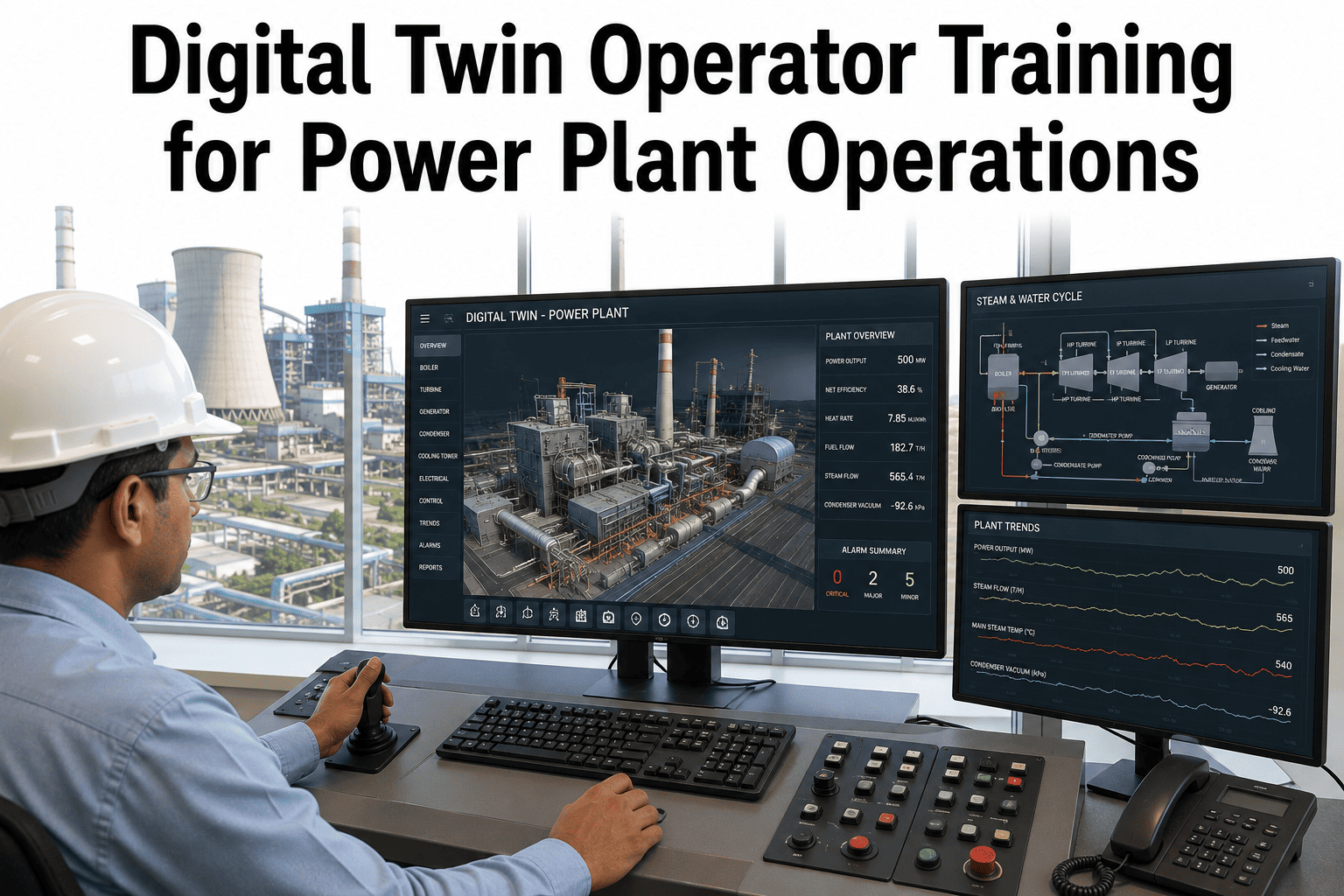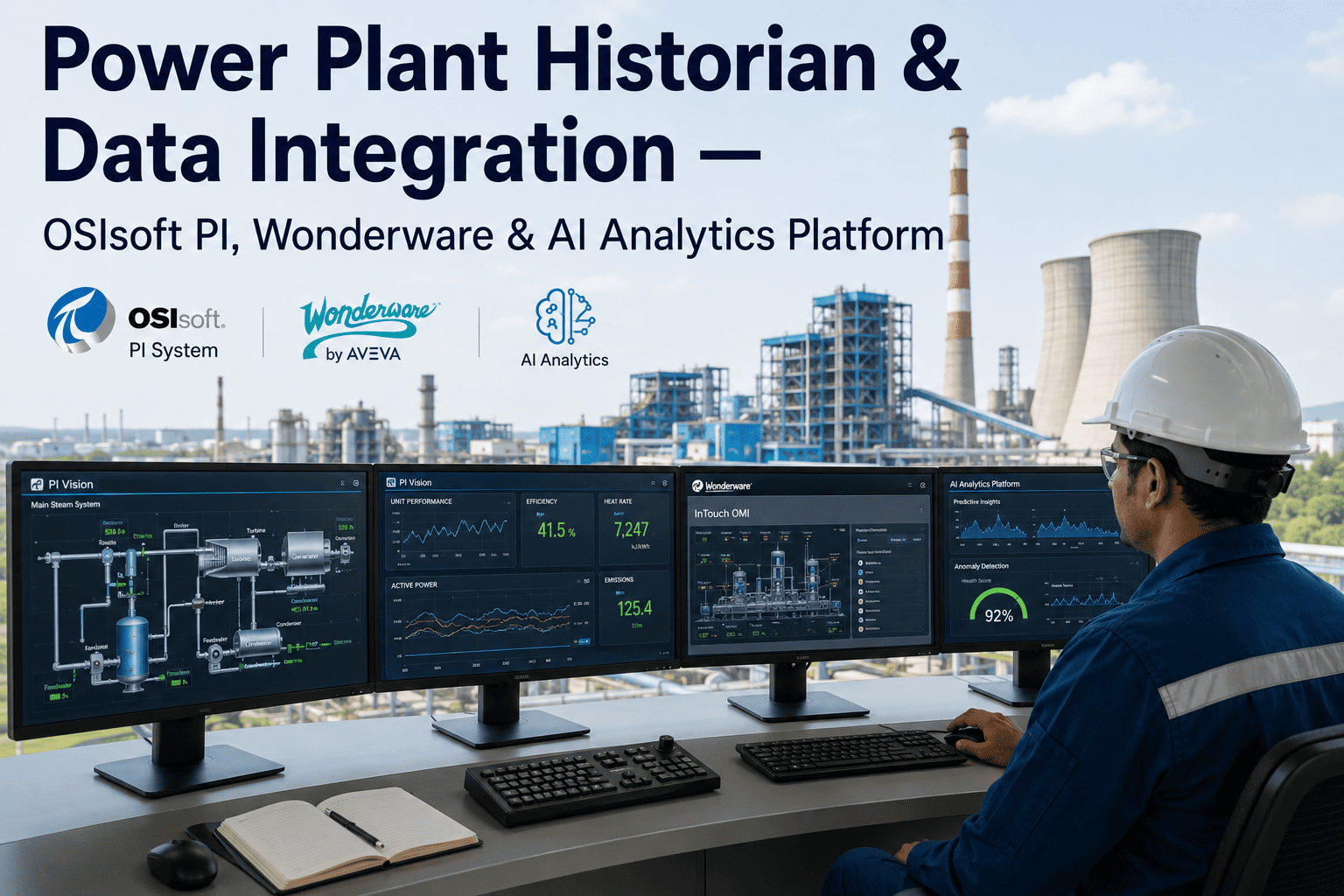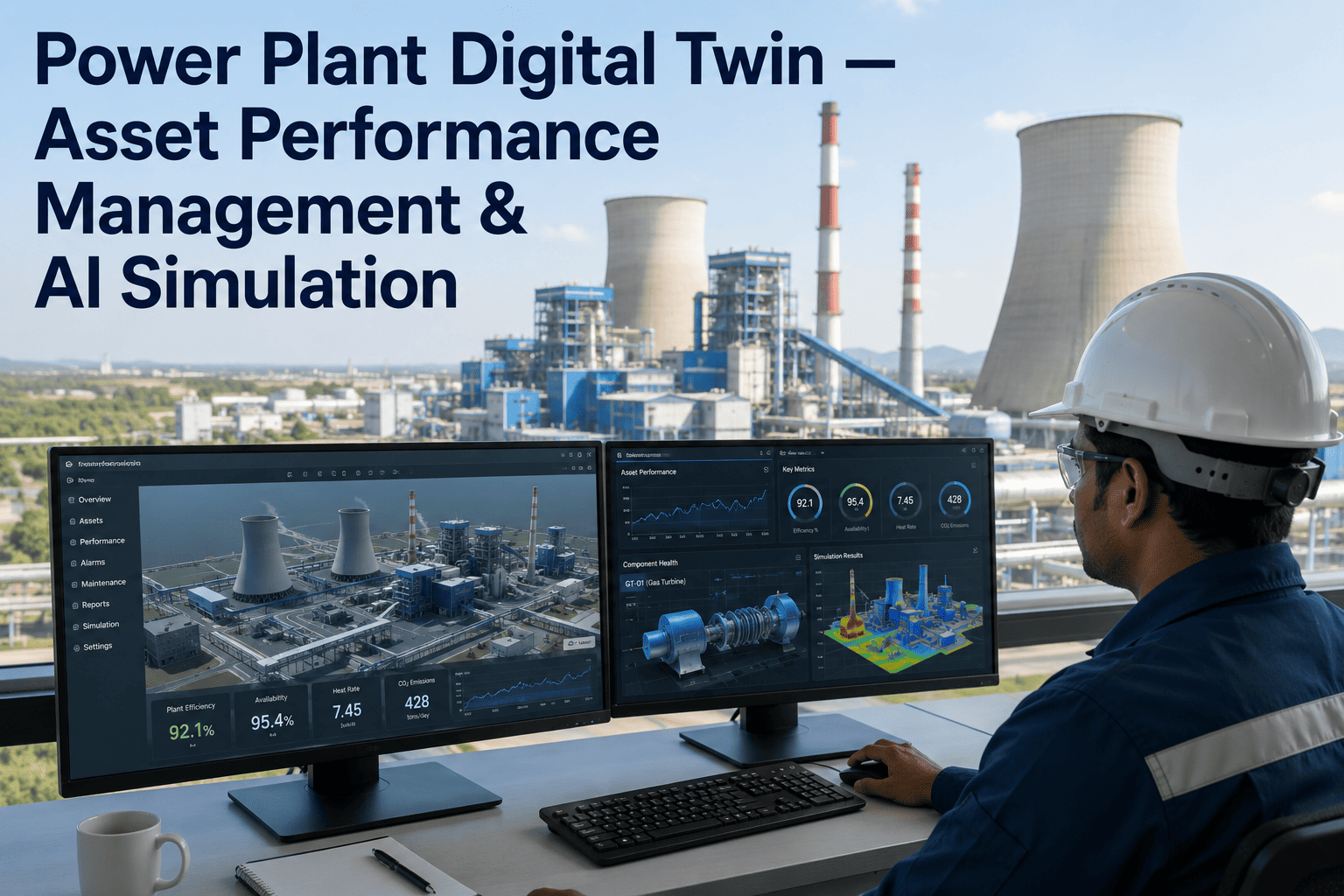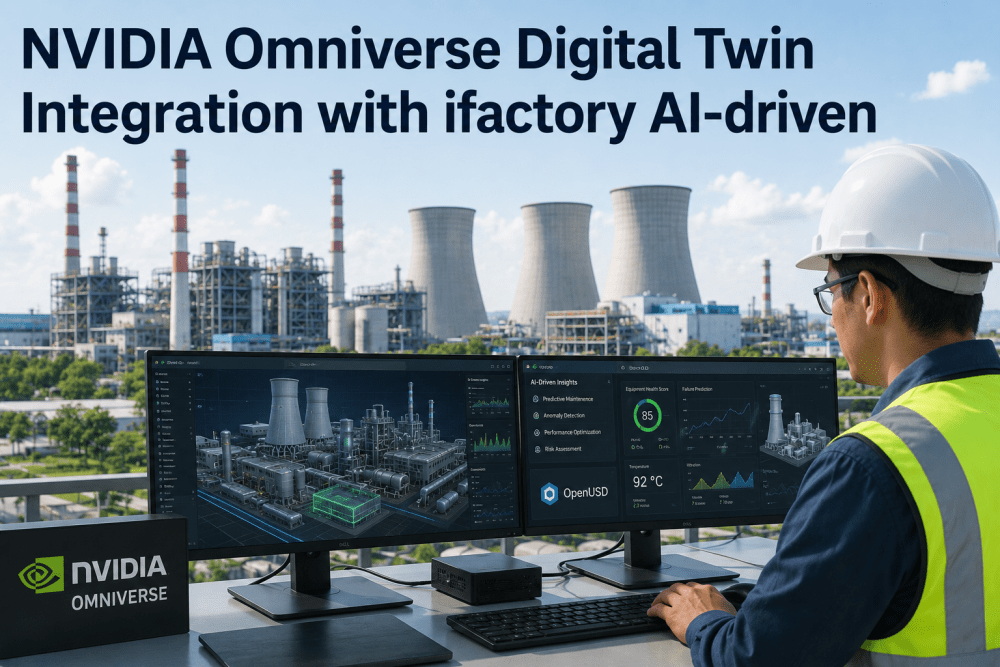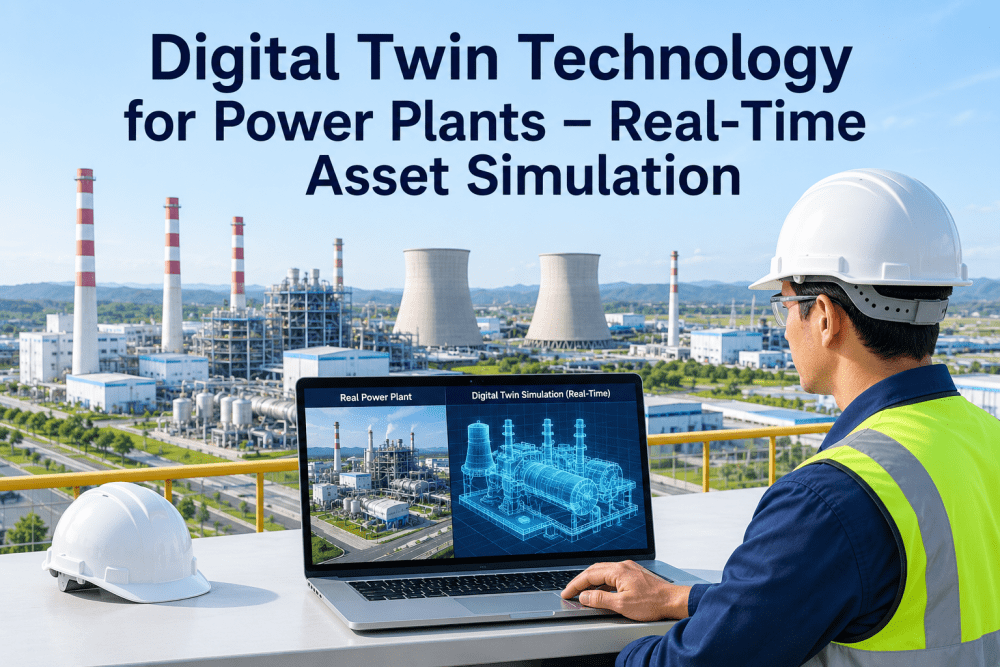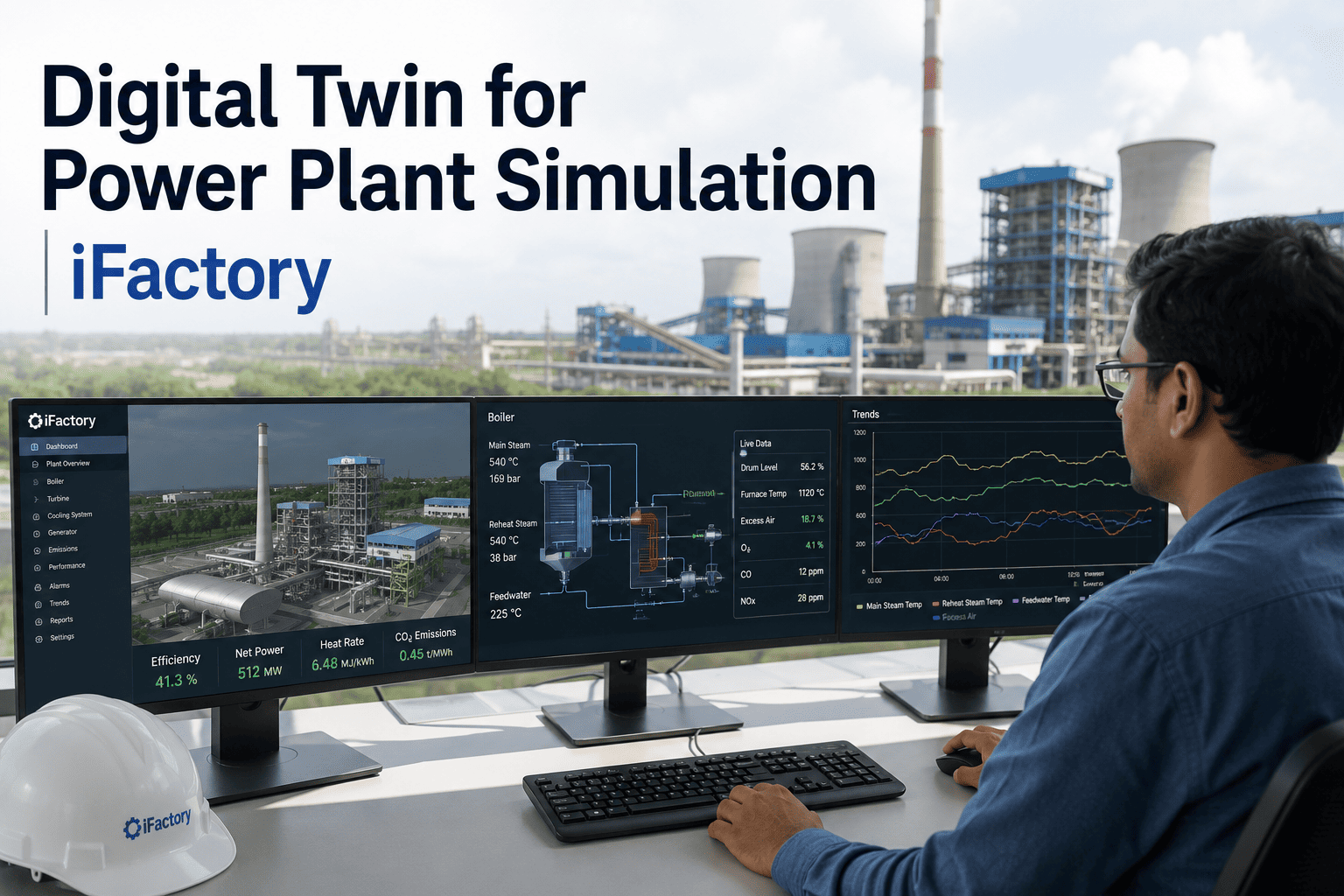
Power plants generate enormous volumes of operational data every minute — control system setpoints from the DCS, equipment health records from the CMMS, process measurements from the historian, and performance calculations from monitoring systems — yet most of these data streams exist in separate platforms that plant engineers cannot easily query together. A digital twin for process simulation breaks these silos by creating a unified, model-driven representation of the plant that pulls from all these sources simultaneously, enabling operators and engineers to run what-if scenarios, evaluate operating point changes, and test optimization strategies against a live replica of their actual unit before making changes in the field. You can book a demo to see how this integration works against live power plant data systems.
Why Separate Data Systems Prevent Operating Optimization
A typical power plant operates with three to five major software platforms running in parallel, each serving a distinct function and each maintaining its own copy of plant reality. The distributed control system manages real-time process variables and control loops. The process historian logs time-series measurements at intervals ranging from one second to one minute. The computerized maintenance management system tracks equipment work orders, failure histories, and spare parts inventories. Performance monitoring systems calculate heat rate, efficiency, and emission metrics. Each of these systems contains a piece of the picture, but none of them contains the whole picture — and the interfaces between them are typically limited to periodic manual data exports, scheduled report distributions, or ad-hoc queries that engineers run when a specific question arises.
The practical consequence of this fragmentation is that optimization questions that should take minutes to answer instead take days or weeks. An engineer who wants to understand how a proposed change in main steam temperature setpoint would affect heat rate, reheat spray flow, and tube metal temperatures cannot simply run a query — they need to pull data from the historian for baseline conditions, reference equipment limits from the CMMS, consult design parameters from the original engineering documents, and then attempt to correlate all of these sources manually. If the question involves evaluating multiple scenarios or optimizing across several variables simultaneously, the manual approach becomes practically impossible within any useful timeframe, and the optimization opportunity passes while the analysis is still being assembled.
This is not a problem that can be solved by simply building better reporting interfaces between existing systems. The fundamental issue is that none of these individual platforms was designed to execute process simulation or what-if analysis — they were designed to record, control, or track. A digital twin is not a reporting layer on top of existing systems. It is a separate modeling environment that ingests data from all of these sources to maintain a real-time mathematical representation of the plant's thermodynamic and mechanical behavior, and it is this model — not the raw data — that enables the simulation and optimization capabilities that siloed systems cannot provide.
What a Process Digital Twin Actually Is — and Is Not
The term digital twin has become sufficiently broad in marketing usage that it now covers everything from simple 3D CAD models to full-scale dynamic simulators. In the context of power plant process simulation and optimization, a digital twin refers specifically to a physics-based or hybrid physics-and-data-driven mathematical model of the plant's thermodynamic processes that is continuously updated with real-time operational data to maintain fidelity with the actual unit's current operating state. This definition is important because it distinguishes a process twin from other digital representations that may be valuable for visualization or documentation but do not support the simulation and optimization functions that drive the return on investment.
A useful way to think about the distinction is that a 3D model tells you where things are, a data dashboard tells you what is happening right now, and a process digital twin tells you what would happen if conditions changed. The 3D model is geometric, the dashboard is observational, and the twin is predictive. For operating optimization — which is where the economic value of a power plant digital twin is concentrated — it is the predictive capability that matters, and that capability requires a model that represents the physics of the process, not just a visual representation of the equipment layout or a historical summary of operating data.
The model fidelity required depends on the application. A model built for high-level heat rate benchmarking against design conditions can use relatively simplified representations of major equipment. A model built for evaluating subtle changes in feedwater heater extraction levels or optimizing spray attemperation strategies needs significantly more detailed representations of the affected equipment and the interconnections between them. The key principle is that the model should be detailed enough to produce answers that are accurate enough to support the decisions being made — adding model complexity beyond what the application requires increases computation time and maintenance burden without improving the quality of the decision the model supports.
It is also important to distinguish between a process twin and a machine-learning prediction model. A machine-learning model trained on historical operating data can predict outcomes within the range of conditions it has seen during training, but it cannot reliably extrapolate to operating conditions outside that training range. A physics-based process twin, by contrast, can simulate conditions the plant has never actually experienced — different fuel compositions, different ambient conditions, different load profiles, different equipment configurations — because its predictions are grounded in thermodynamic principles rather than statistical correlation. This extrapolation capability is what makes a physics-based twin suitable for what-if analysis, which is inherently about exploring conditions that may not exist in the historical record.
Connecting DCS, Historian, and CMMS Into a Live Simulation
Building a digital twin that maintains real-time fidelity with the operating plant requires establishing continuous data flows from each of the plant's primary data systems into the simulation model. The specific integration architecture varies by plant depending on the control system vendor, historian platform, and CMMS software in use, but the general pattern follows a consistent structure: each source system provides data at its native update rate, the integration layer normalizes and time-aligns these streams, and the simulation engine consumes the unified data feed to update the model state at a frequency sufficient for the intended applications.
The integration layer performs several critical functions beyond simple data transfer. It handles time synchronization between systems that may have different clock references and update rates. It performs data quality checks, flagging or replacing measurements that fail reasonableness validation — a frozen sensor, a communication dropout, or a clearly erroneous reading — so that bad data does not corrupt the model state. It also maps tags between the source systems and the model inputs, which is often one of the more labor-intensive aspects of initial twin deployment because the same process variable may have different tag names, different scaling, or different engineering units across the DCS, historian, and any legacy systems the plant still operates.
A practical consideration that often gets underestimated during planning is the ongoing maintenance of these integrations. Control system modifications during outages, historian configuration changes, CMMS upgrades, and instrumentation replacements all have the potential to break existing data mappings if they are not managed systematically. A digital twin platform that treats data integration as a one-time setup task rather than an ongoing operational requirement will gradually lose fidelity as the plant evolves around it. Book a demo to see how iFactory manages ongoing data integration health monitoring.
Simulation Scenarios That Drive Measurable Operating Decisions
The primary operational value of a process digital twin is the ability to simulate changes before implementing them — answering questions that would otherwise require trial-and-error experimentation on the actual plant or rely entirely on engineering judgment unsupported by quantitative analysis. The following scenario categories represent the most common and highest-value what-if applications that power plant engineering teams run after deploying a process twin. Each scenario type uses the same underlying model but applies different boundary conditions and constraints to answer a different class of operating question.
What distinguishes these simulations from the kind of analysis engineers have always done with spreadsheets and steady-state heat balance software is the integration of real-time operating data. A traditional heat balance model is typically built from design data and updated occasionally with test results. A digital twin is continuously validated against actual operating measurements, which means the model's baseline reflects the plant's current degraded state — not its as-designed state — and the what-if predictions start from where the plant actually is today rather than from an idealized design condition that may be several percentage points away from current reality.
From Simulation to Actionable Operating Point Changes
Running what-if scenarios answers specific questions about proposed changes. Operating point optimization goes further by systematically searching the feasible operating space to find the combination of setpoints and configurations that produces the best overall performance against defined objectives — typically minimizing heat rate, maximizing generation output, or minimizing operating cost per megawatt-hour subject to equipment constraints, environmental limits, and dispatch requirements. The digital twin provides the simulation engine that evaluates each candidate operating point, and the optimization algorithm directs the search across the multi-dimensional operating space.
The optimization does not need to find the single mathematically optimal point to deliver significant value. In practice, the most useful output is often a set of near-optimal operating points that represent different trade-offs — for example, one point that minimizes heat rate at the current load, another that maximizes generation within equipment limits, and a third that minimizes NOx emissions at a small efficiency penalty. Giving operators a menu of optimized operating points with clear characterization of the trade-offs between them is usually more actionable than a single recommended setpoint vector, because real-world operating decisions almost always involve balancing multiple competing objectives rather than optimizing a single metric in isolation.
The feedback loop between the twin's predictions and actual plant response after implementing recommended changes is critical for building operator trust in the optimization outputs. If the twin predicts a 0.3 percent heat rate improvement from a set of changes and the actual measured improvement is 0.28 percent, that close agreement builds confidence. If the prediction is off by a wide margin, it triggers model investigation and recalibration rather than blind implementation of future recommendations. This disciplined approach to validation — treating the twin's predictions as hypotheses to be tested rather than instructions to be followed — is what separates a genuinely useful optimization tool from a system that generates recommendations nobody acts on because the predictions have not earned credibility through repeated validation.
Real-Time Twin vs. Offline Simulation — When Each Approach Fits
Not every simulation question requires a model that runs continuously against live data. Some analyses — such as evaluating a proposed equipment modification for a future outage, or simulating plant performance with a different fuel contract — are inherently offline exercises that do not need real-time data feeds. Understanding the distinction between real-time and offline simulation use cases helps plant teams deploy their modeling investment where it delivers the most value rather than maintaining a continuously running model for applications that would work equally well with periodic snapshots.
Most plants that derive significant value from digital twin technology eventually operate both modes: a real-time twin that runs continuously for monitoring and optimization, and the same model available in offline mode for planning and evaluation exercises that do not require live data. The investment in building the model once serves both applications, which is one of the economic arguments for pursuing a twin platform rather than maintaining separate offline simulation tools and online monitoring dashboards that cannot share a common model.