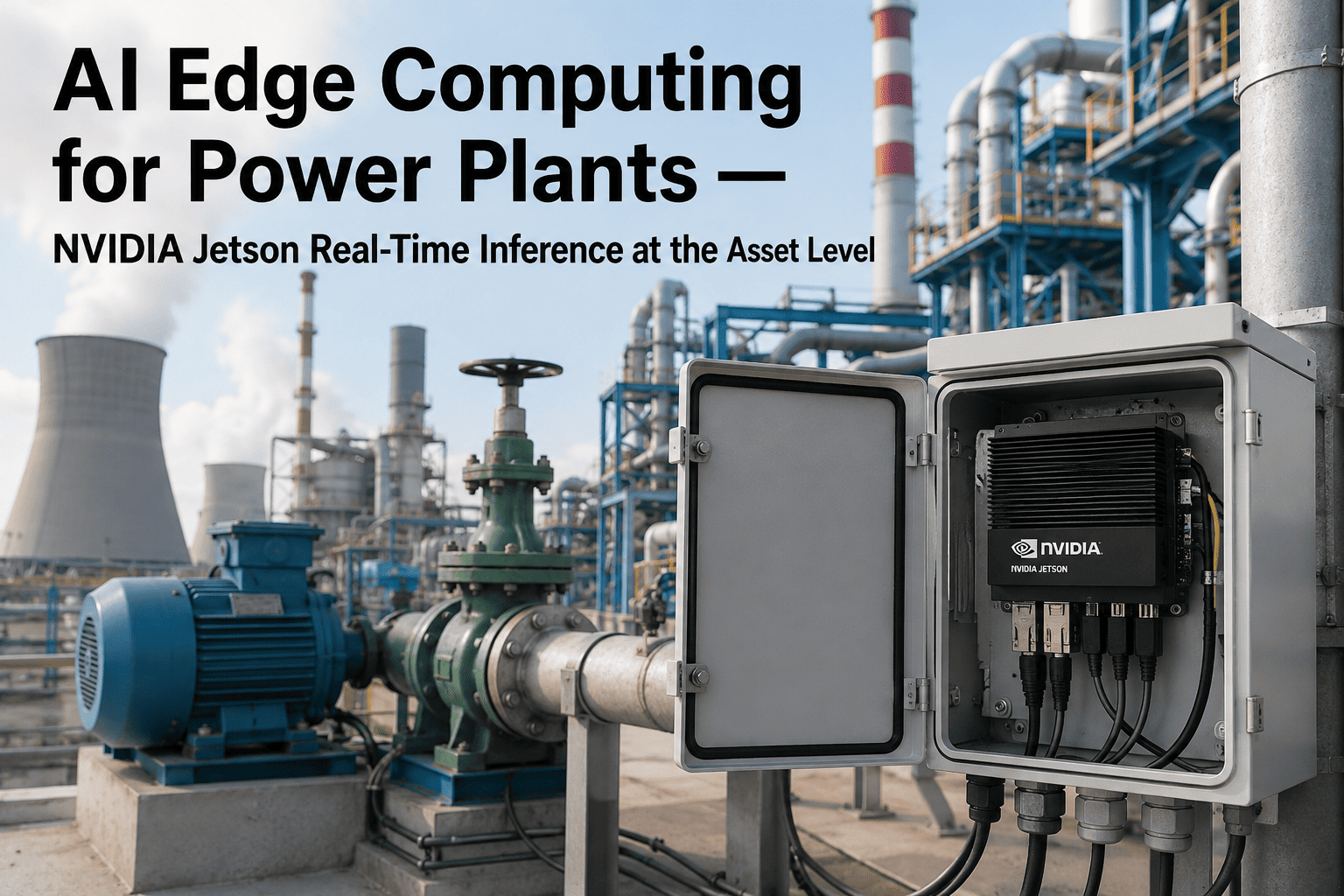
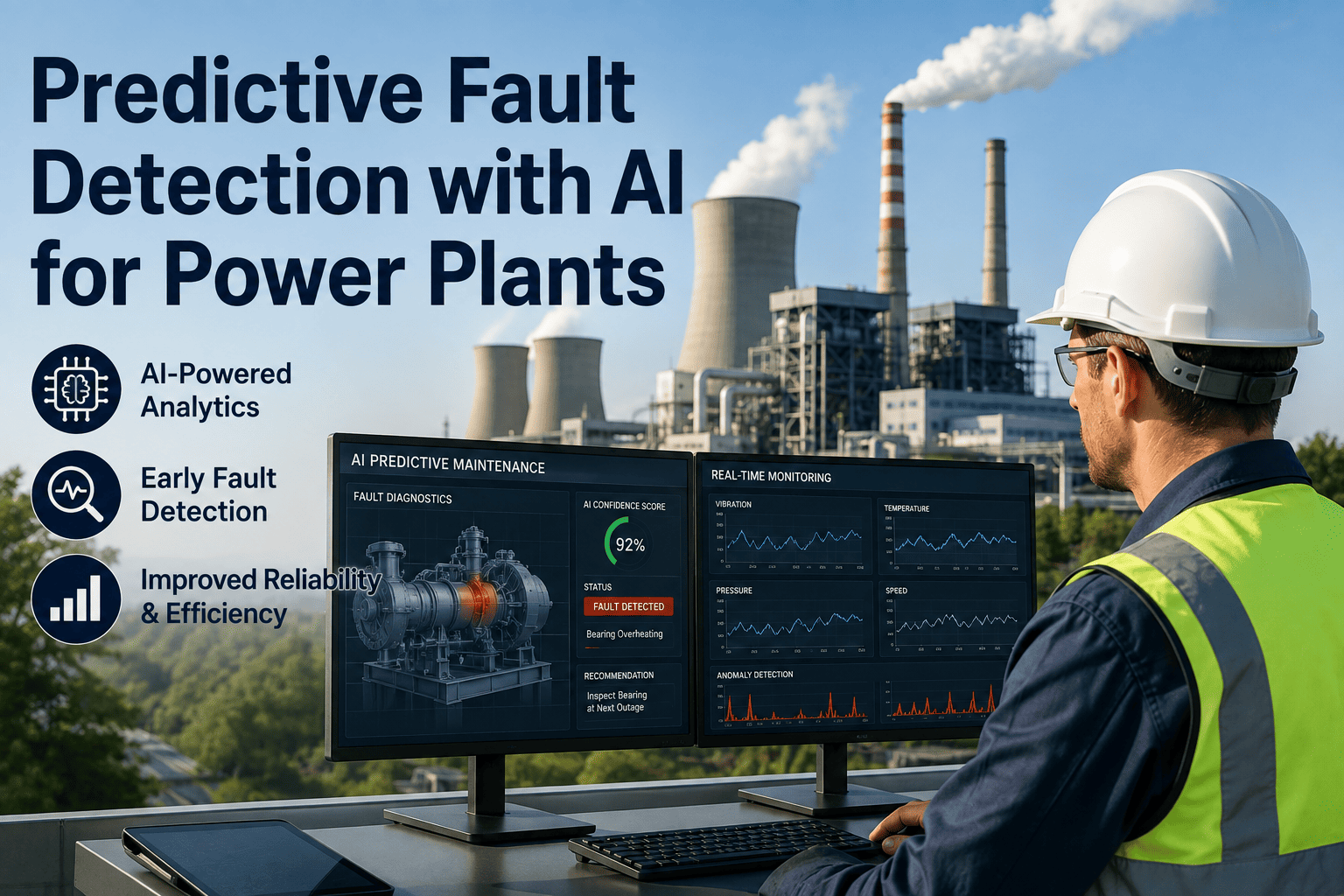
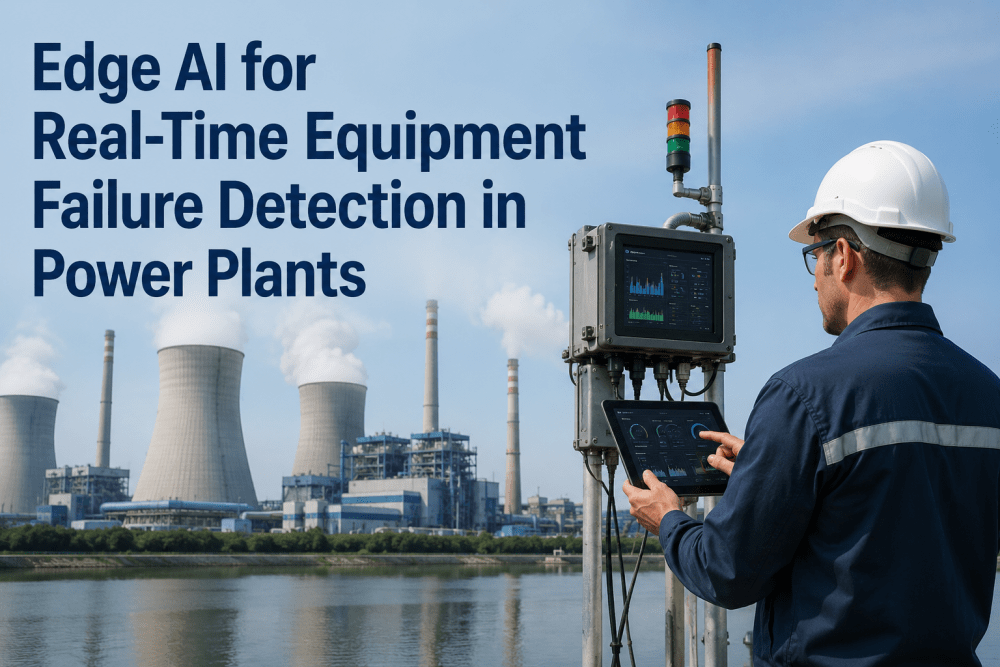
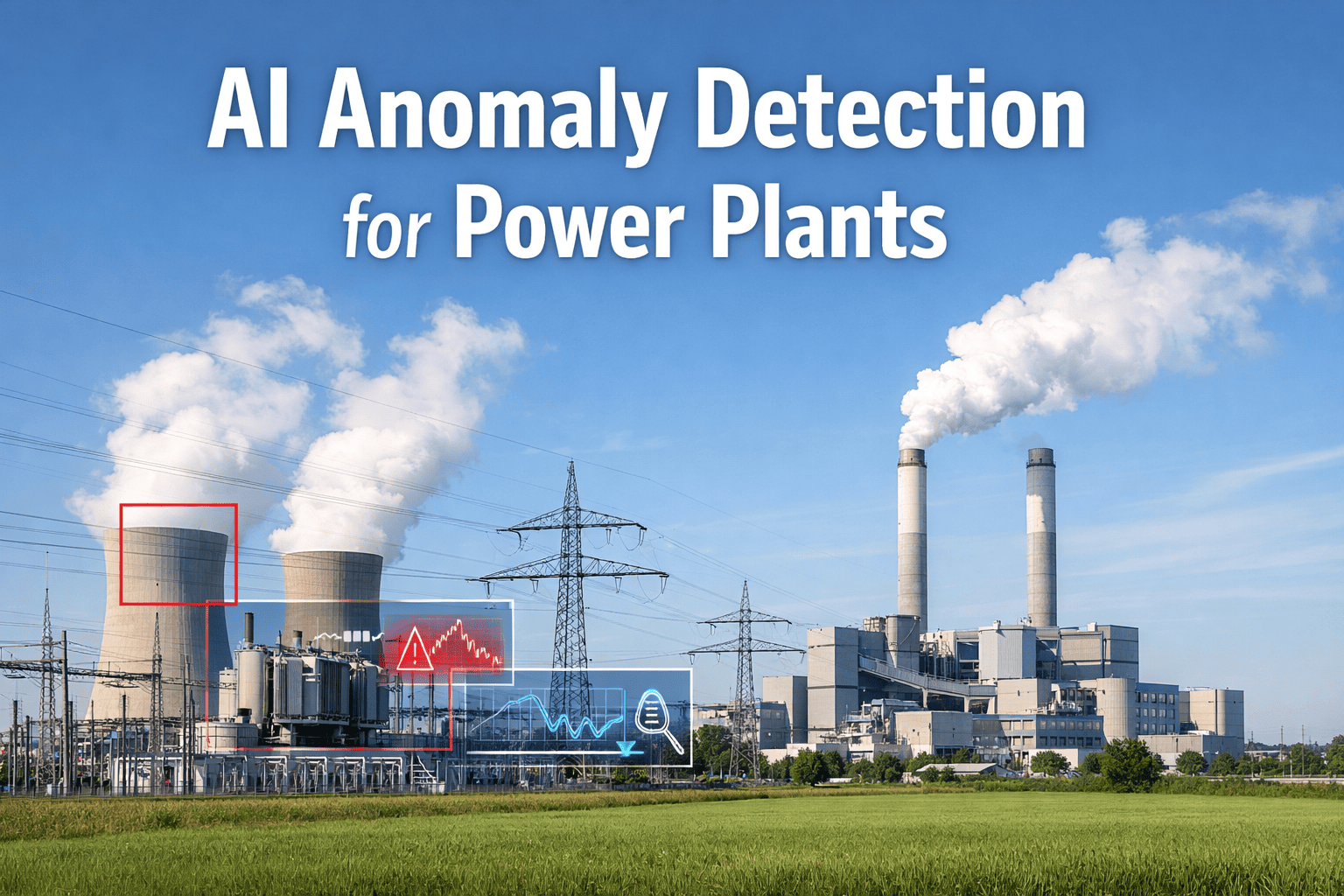
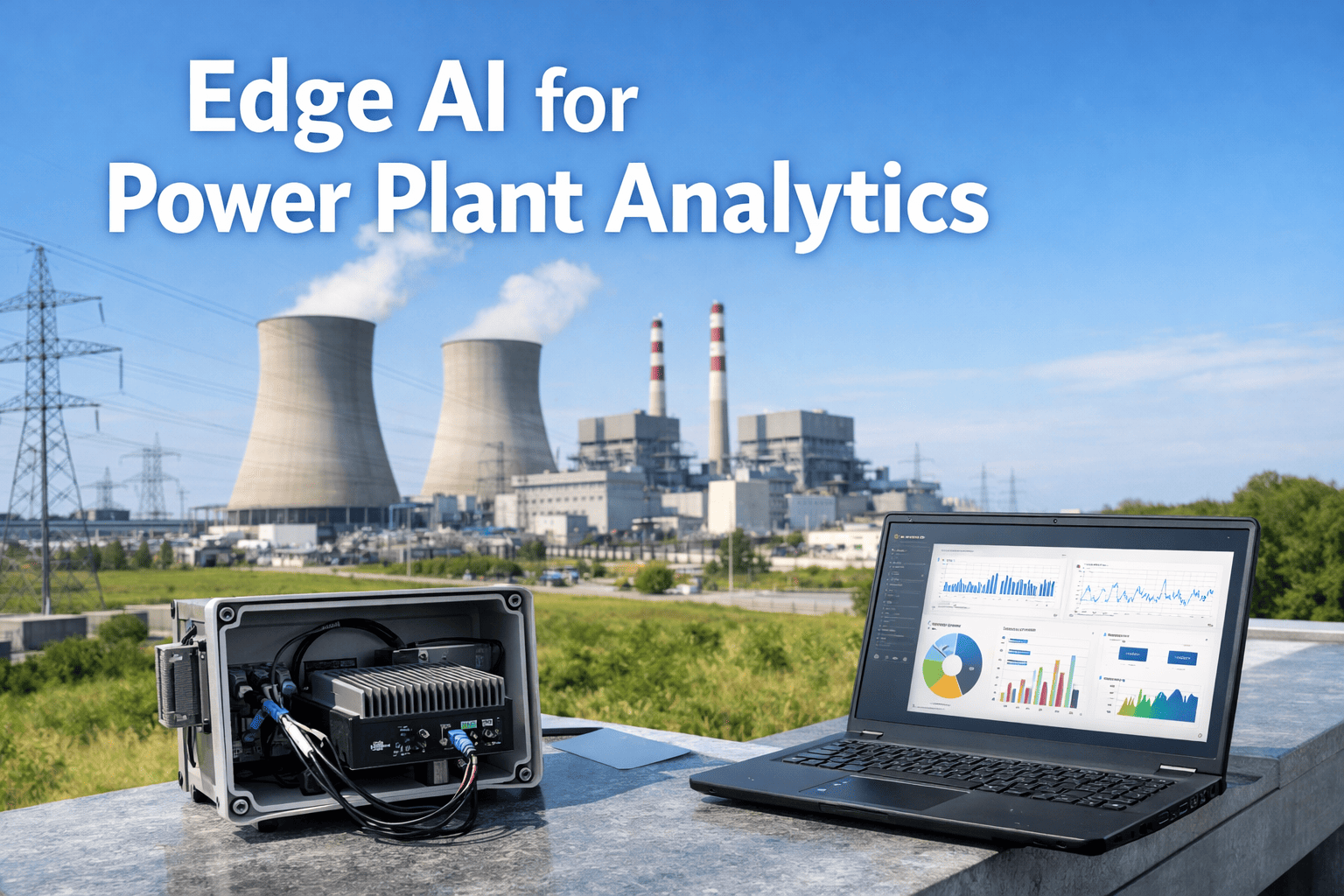
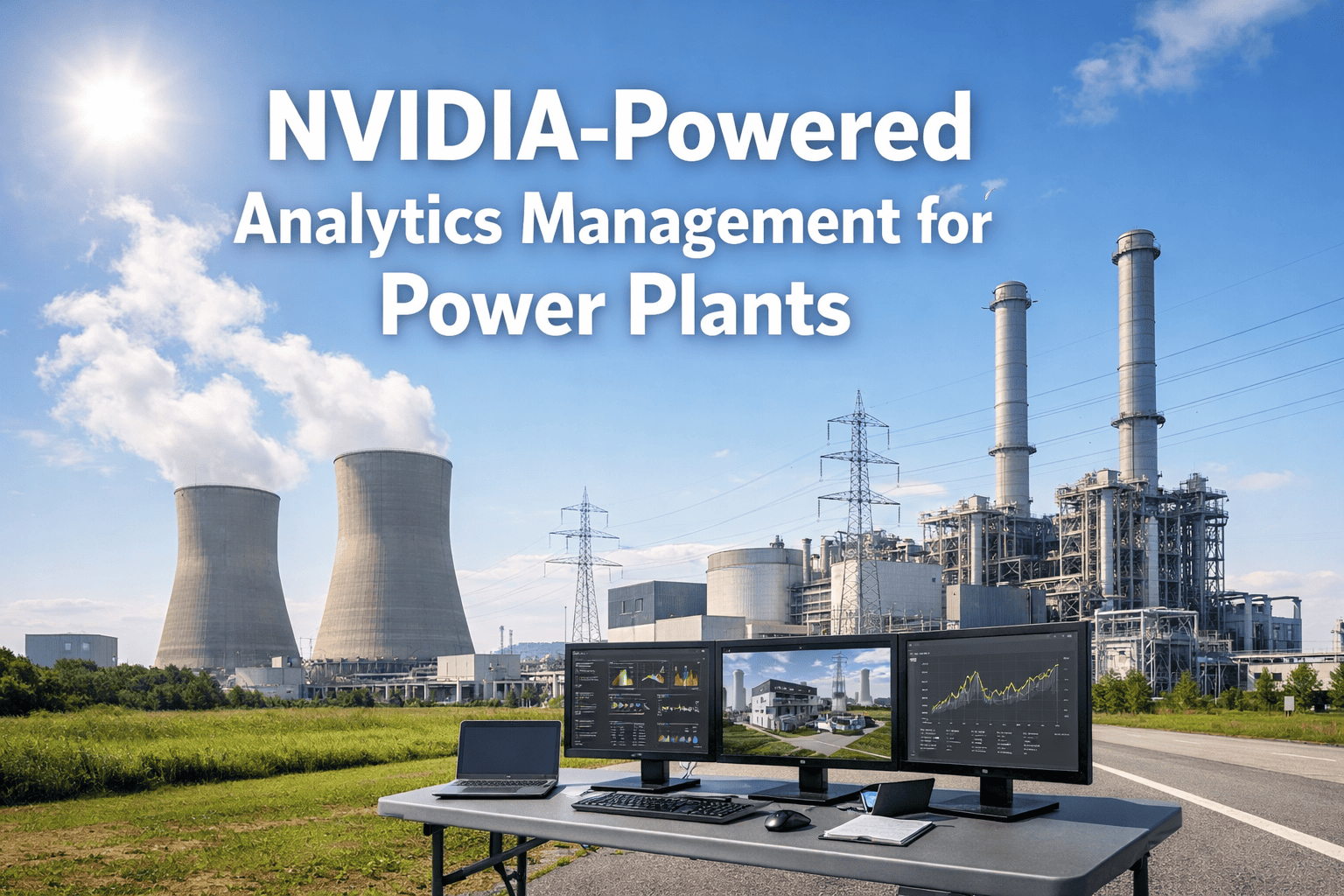
A bearing spinning at 50,000 RPM gives a vibration sensor only milliseconds of warning before a harmonic shift turns into a catastrophic failure — and a cloud round trip of 800 milliseconds to 2 seconds is already too slow to act on that warning. Process engineers evaluating AI for turbines, generators, and rotating auxiliaries are learning that where a model runs matters as much as how accurate it is. NVIDIA Jetson edge modules move inference directly onto or next to the asset, cutting that response window from seconds to single-digit milliseconds and removing network dependency from the fault-detection loop entirely. The plants adopting this architecture fastest are the ones protecting equipment where a missed half-second is the difference between an alert and an outage. Book a demo to see how asset-level edge inference fits into your plant's existing SCADA and historian architecture.
PROCESS ENGINEER GUIDE · EDGE AI · NVIDIA JETSON DEPLOYMENT
Cloud AI Takes Up to 2 Seconds to Respond. Your Turbine Doesn't Have That Long.
iFactory deploys NVIDIA Jetson edge modules directly at the asset level across power plants, running TensorRT-optimized inference locally so fault detection happens in single-digit milliseconds — independent of network connectivity, cloud latency, or data leaving your perimeter.
<15ms
Jetson Edge Inference Response Time
VS
800ms-2s
Typical Cloud Round-Trip Latency
WHY MILLISECONDS MATTER
The Physics Problem Cloud-Only AI Can't Solve
You cannot beat the speed of light on a data center round trip when a rotating asset gives you milliseconds of warning before failure. Cloud-only architectures were built for workloads with loose latency tolerance — dashboards, reports, monthly analytics — not for a vibration harmonic that needs an interlock triggered before the next rotation. Edge inference on Jetson hardware changes the physics by moving the model to the data instead of moving the data to the model. It also removes a second, less obvious risk: continuous dependency on an external network connection for a safety-relevant decision. A plant that pipes raw vibration or thermal data to the cloud for every inference call is betting equipment protection on network uptime, firewall configuration, and internet service continuity — variables that have nothing to do with the condition of the asset itself.
Cloud-Only Inference
Response time800ms - 2s round trip
Network dependencyFails without connectivity
Data exposureRaw sensor data leaves the plant
Best suited forFleet analytics, trend review
Jetson Edge Inference
Response timeSub-15ms on-asset
Network dependencyRuns air-gapped if required
Data exposureOnly insights leave the device
Best suited forReal-time interlocks, fault detection
THE DEPLOYMENT ARCHITECTURE
Four Layers That Take a Sensor Reading From Raw Signal to Actionable Insight
A production edge AI deployment is not a single Jetson module bolted to a control panel. It's a stack, and each layer has a specific job — skip one and the deployment either stalls at the pilot stage or fails to hold up in a real plant environment. This is the architecture iFactory builds around every Jetson deployment.
01
Field & Sensor Layer
Vibration, acoustic, thermal, and current sensors mounted directly on turbines, generators, pumps, and switchgear, sampling continuously at rates cloud architectures were never designed to stream in real time.
02
Edge Inference Layer — NVIDIA Jetson
A ruggedized Jetson module runs TensorRT-optimized models on-site, rated for -40°C to 85°C operation and built to IEC 62443 cybersecurity requirements for deployment inside turbine enclosures and switchgear rooms.
03
Plant Network Layer
A deterministic industrial network with protocol conversion normalizes Modbus, EtherNet/IP, and PROFINET traffic into OPC UA, keeping vision and control traffic in separate, bounded queues so AI inference never stalls a control-loop heartbeat.
04
Cloud Aggregation Layer
Only processed insights — not raw vibration or video streams — sync to a central platform for fleet-wide analytics, model retraining, and cross-plant benchmarking, cutting bandwidth cost while keeping the real-time decision local.
Your Historian Doesn't Need to Change. Your Response Time Does.
iFactory's edge AI deployments integrate with your existing SCADA, historian, and control network rather than replacing them — adding a millisecond-scale inference layer at the asset without disrupting the systems your team already relies on.
HARDWARE SELECTION
Matching the Right Jetson Module to Your Plant's Inference Workload
Not every asset needs the same edge compute. A single-camera flame monitor and a multi-sensor turbine vibration array have very different memory, throughput, and power requirements, and picking an oversized or undersized module is one of the most common reasons edge AI pilots stall before reaching production. The table below maps the current NVIDIA Jetson lineup to the workloads process engineers most commonly deploy in power generation.
| Jetson Module |
AI Performance |
Typical Power Draw |
Best-Fit Plant Workload |
| Jetson Orin Nano |
20-40 TOPS |
7-15 W |
Single-camera inspection, PPE compliance vision |
| Jetson Orin NX |
Up to 100 TOPS |
10-25 W |
Multi-sensor vibration analysis, motor anomaly scoring |
| Jetson AGX Orin |
Up to 275 TOPS |
40-60 W |
Multi-camera thermal imaging, partial discharge analytics |
| Jetson AGX Thor |
Frontier-class compute |
Higher-power envelope |
Fleet-wide multi-modal inference, combined vision and acoustic models |
ASSET-LEVEL USE CASES
Where Edge Inference Delivers a Measurable Advantage Over Cloud AI
The use cases that benefit most from edge deployment share one trait — the cost of a delayed decision is high, and the value of the raw data drops off sharply once it leaves the moment it was captured. These are the workloads where iFactory's Jetson deployments consistently outperform cloud-only architectures.
Turbine & Generator Vibration Fault Detection
On-asset FFT analysis and anomaly scoring run continuously against high-frequency vibration streams, triggering an interlock signal before a developing imbalance reaches a damaging harmonic.
Partial Discharge & Insulation Monitoring
Edge models classify acoustic and electrical signatures associated with partial discharge in real time, catching insulation degradation in generators and switchgear long before a cloud-batch review would.
Combustion & Flame Vision Analytics
Multi-camera vision models running on-site analyze flame stability and combustion quality frame by frame, feeding tuning adjustments back to the control system without a round trip to the cloud.
Transformer & Switchgear Thermal Imaging
Continuous thermal inference flags hot-spot formation on bus bars and connections in real time, rather than waiting for a scheduled thermographic survey to catch the same fault days later.
THE HYBRID EDGE-CLOUD MODEL
Edge and Cloud Aren't Competing Architectures — Together They Cover More Failure Modes
The plants getting the most value from edge AI are not running edge-only or cloud-only — they're running both, deliberately split by function. Edge handles the sub-second decisions; cloud handles the fleet-wide learning that only comes from aggregating data across many assets and many plants. Treating edge and cloud as a single split-function pipeline, rather than an either-or hardware decision, is the architectural choice that separates deployments that scale past the pilot stage from the ones that stay stuck running a single demonstration asset indefinitely.
92-98%
Failure Detection Coverage
Hybrid edge-cloud architectures reach this coverage range by catching both rapid-onset and gradual degradation modes.
40%
Faster Response Times
Reported by plants running hybrid architectures compared to cloud-only inference pipelines.
30-50%
Lower Cloud Data Costs
Achieved by transmitting only processed insights instead of continuous raw sensor and video streams.
80%
Of Industrial AI Inference Running Locally
The share of industrial AI workloads projected to run at the edge rather than the cloud by year-end 2026.
FREQUENTLY ASKED QUESTIONS
Questions Process Engineers Ask About Edge AI and NVIDIA Jetson Deployment
Does deploying Jetson edge inference mean replacing our existing SCADA and historian systems?
No. Jetson edge modules are designed to sit alongside your existing SCADA and historian infrastructure, not replace it. A protocol-conversion layer normalizes Modbus, EtherNet/IP, or PROFINET data into OPC UA before it reaches the Jetson module, and processed insights flow back into your historian the same way any other tag would. Your control system architecture stays intact — the edge layer simply adds a faster decision path for the specific signals that need millisecond-scale response.
Book a demo to see how edge inference integrates with your specific SCADA and historian setup.
What happens to fault detection if network connectivity to the edge module is lost?
This is the core advantage of edge over cloud-only architectures — Jetson modules run inference locally and can operate fully air-gapped if your security posture requires it. A lost connection to the plant network or the cloud does not interrupt fault detection at the asset, because the model and the decision logic both live on the device itself. Only the transmission of insights to central analytics is affected, and that data queues locally until connectivity is restored.
Contact our support team to review network resilience requirements for your specific deployment.
How do we determine which Jetson module is right for a specific asset or use case?
Module selection depends on three factors — how many sensor or camera streams need to be processed simultaneously, how complex the inference model is, and the power and thermal envelope available at the installation point. A single-camera inspection point rarely needs the same compute as a multi-sensor turbine vibration array running several models concurrently. iFactory's pre-deployment assessment evaluates your specific asset and workload requirements against the current Jetson lineup to recommend the right-sized module rather than defaulting to the most powerful option.
Book a demo to get a hardware recommendation specific to your plant's assets.
How is an edge device deployed inside our plant perimeter secured against cyber threats?
Edge modules deployed inside a plant environment are built to IEC 62443 industrial cybersecurity requirements, with hardware-level security features, encrypted communication to the plant network, and no requirement for outbound internet access if your security policy calls for air-gapped operation. Because raw sensor and video data never has to leave the device by default, the attack surface for data exfiltration is substantially smaller than a cloud-dependent architecture streaming continuous raw data off-site.
Contact our support team to review the cybersecurity architecture in detail before deployment.
Can the AI models running on edge devices be retrained as plant operating conditions change?
Yes. Edge models are not static once deployed — the hybrid architecture is specifically designed so that insights and performance data flow back to a central platform for model retraining, and updated models are then pushed back down to the edge device. This keeps inference accurate as fuel sources shift, equipment is replaced, or load profiles change, without requiring a technician to physically reprogram every Jetson module in the field.
Book a demo to see how the model lifecycle and retraining pipeline works across a distributed edge fleet.
Put the Model Where the Failure Actually Happens
iFactory deploys NVIDIA Jetson edge inference across power plant assets worldwide, cutting fault-detection response time from seconds to single-digit milliseconds without disrupting your existing control architecture. Book a session to map your plant's edge AI deployment.