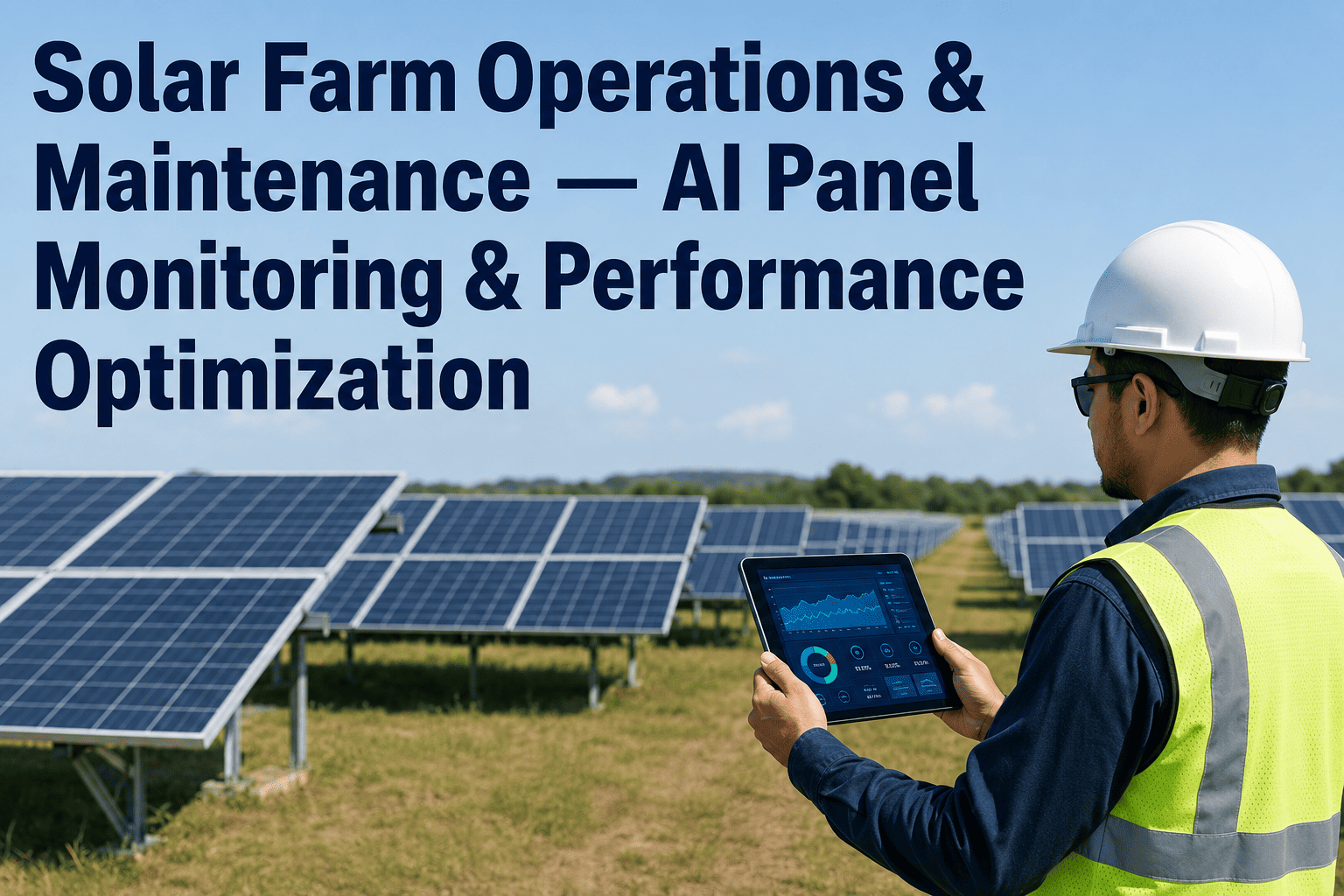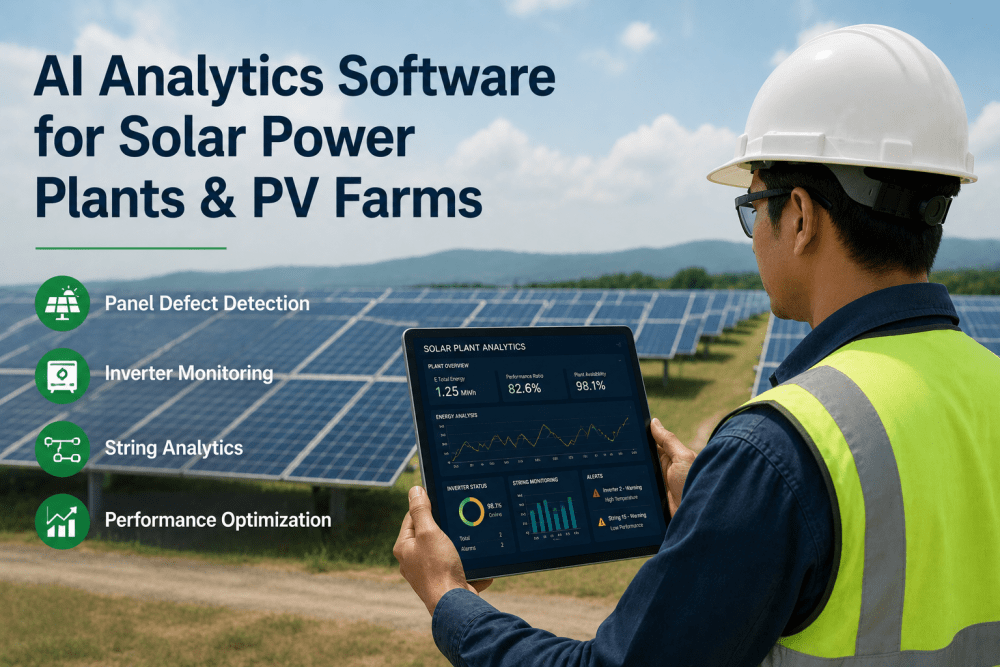
As utility-scale solar photovoltaic (PV) generation expands across the United States — with total installed capacity projected to exceed 330 GWdc by 2027 — the operational challenge has shifted from panel installation to portfolio-wide performance optimization. iFactory's AI-powered solar analytics platform delivers continuous panel-level defect detection, string-level performance monitoring, inverter health tracking, and weather-adjusted production forecasting — transforming PV asset management from a calendar-based inspection cycle into a real-time, condition-based intelligence operation. Solar asset managers who book a demo with iFactory are discovering that AI-driven PV analytics does not just reduce O&M costs — it fundamentally recovers yield that conventional monitoring systems leave on the table.
Solar Performance Intelligence: Maximizing PV Farm Energy Yield
A comprehensive technical framework for deploying AI-driven diagnostics to protect solar PV assets against module degradation, string faults, inverter failure, and soiling losses while optimizing LCOE across the generation portfolio.
Six Failure Modes That Rob Solar Farms of Their Rated Capacity
Modern PV farms face a complex array of failure modes that erode energy production at every level of the generation chain — from individual cell micro-cracks to utility-scale inverter station outages. Each failure mode has a distinct signature in the operational data, and each requires a specific detection and response strategy. Traditional O&M approaches that treat all underperformance as "panel cleaning needed" miss the structural diversity of PV losses. iFactory's multi-layered analytics platform applies AI models specific to each failure class, enabling solar asset managers to triage issues by financial impact rather than responding to the loudest alarm. Book a demo to see how continuous AI monitoring transforms your solar asset management.
Module Micro-Cracks & Hotspots
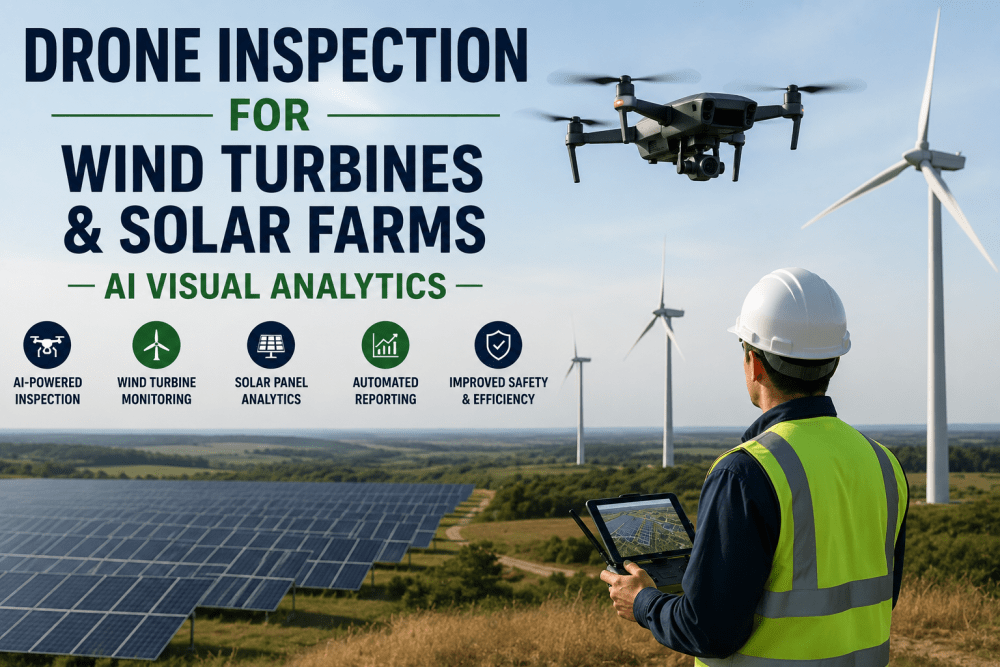
Cell-level micro-cracks from thermal cycling, hail impact, and handling stress cause localized heating that accelerates degradation. iFactory combines drone-based electroluminescence (EL) imaging with AI defect classification, identifying cracks as small as 2mm that reduce module output by 8–15% before they become visible hotspots.
String-Level Mismatch & Diode Failure
A single failed bypass diode or mismatched module within a string can reduce the entire string's output by 30–50%. iFactory's string-level current and voltage analytics detects mismatch events within minutes, correlating them with inverter MPPT channel data to isolate the faulty module without requiring manual string tracing.
Inverter Cooling System Failure
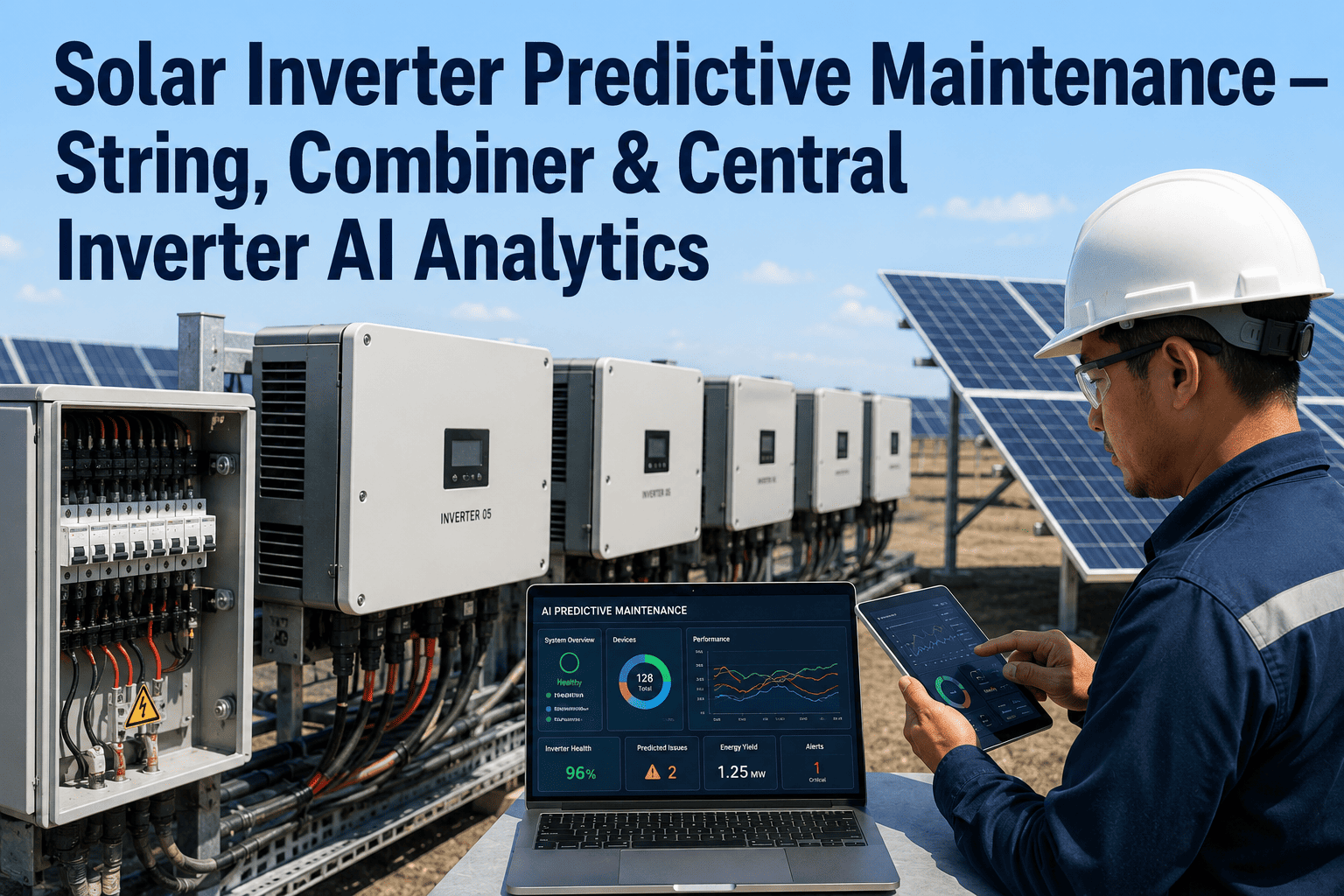
Inverter efficiency drops sharply above 45°C internal temperature. Cooling fan bearing wear, heat exchanger fouling, and coolant pump degradation cause gradual thermal buildup that goes undetected until the inverter derates or trips. iFactory tracks fan current signatures and thermal delta across the heat sink, predicting cooling failures 2–4 weeks before derating occurs.
Soiling & Particulate Accumulation
Dust, bird deposits, and industrial particulate accumulation reduce module transmissivity at geographically variable rates. iFactory's weather-normalized soiling ratio algorithm compares actual vs. expected output for each inverter zone, triggering cleaning dispatch only when the soiling loss exceeds the cost of cleaning — optimizing the cleaning schedule across the entire portfolio.
Tracker & Mounting System Drift
Single-axis tracker systems with misaligned stow angles, failed actuators, or communication dropouts can lose 8–15% of daily insolation capture. iFactory's tracker analytics correlates wind speed data, stow command logs, and actual panel tilt from inclinometer feedback to identify trackers that are not following the commanded position curve.
DC Arc Fault & Ground Fault Detection
Undetected DC arc faults are the leading cause of PV farm fire incidents. iFactory's high-frequency current signature analysis identifies series and parallel arc fault signatures that conventional AFCI circuitry misses, triggering automated inverter shutdown and maintenance dispatch before the arc escalates to a fire event.
Maintenance Evolution: Reactive vs. Predictive PV Benchmarks
Quantifying the impact of iFactory AI across the four most critical solar PV performance KPIs. Moving to a condition-based model preserves capital and optimizes energy yield across the generation portfolio.
Strategic Architecture: Four Deployment Tiers for Solar PV Digitization
Utility-scale solar operators can scale their digital journey from basic SCADA enhancement to fully autonomous portfolio optimization using iFactory's phased framework. Each tier builds on the previous, ensuring that every analytics investment has a direct, measurable impact on energy yield and O&M cost reduction. Asset managers evaluating this transition typically begin by scheduling a session to book a demo to assess how their current monitoring infrastructure maps against the tiered deployment model.
Performance Foundation
Deployment of AI-enhanced analytics on top of existing SCADA data streams — inverter AC/DC power, string current, irradiance sensors, and weather station data. Focuses on establishing baseline performance models for every inverter zone and detecting deviations that indicate module degradation, string faults, or tracker misalignment.
Predictive Inverter Health
Integration of inverter-level thermal, electrical, and environmental sensor data with AI-driven failure prediction models. Covers IGBT module degradation, capacitor bank aging, cooling system health, and transformer winding temperature tracking for central and string inverter fleets.
Soiling & Environmental Optimization
Deployment of soiling ratio algorithms, satellite-derived irradiance data fusion, and weather-forecast-integrated cleaning scheduling. Enables condition-based cleaning dispatch that maximizes cleaning ROI by targeting only zones where soiling loss exceeds the cost of intervention.
Autonomous Portfolio Intelligence
Full cross-site analytics integration with automated dispatch, warranty claim documentation, and PPA compliance reporting. AI models continuously optimize inverter reactive power dispatch for grid voltage support, battery storage integration, and real-time production forecasting for energy trading.
Regulatory Frameworks & PPA Compliance
Utility-scale solar farms operate under increasingly stringent performance reporting requirements. Power Purchase Agreements (PPAs) impose guaranteed production thresholds, while tax equity investors require verifiable performance data for Investment Tax Credit (ITC) and Production Tax Credit (PTC) compliance. iFactory provides the auditable data infrastructure required for these frameworks Book a demo .
| Framework | Data Requirement | iFactory AI Value |
|---|---|---|
| PPA Performance Guarantees | Weather-normalized P50/P90 production verification | Real-time availability and performance factor tracking per PPA clause with automated curtailment documentation. |
| IRS ITC/PTC Compliance | Verifiable commercial operation date and energy production records | Immutable production logs with NERC-traceable timestamp and inverter-level energy accounting. |
| NERC MOD-025 / PRC-024 | Generator performance and frequency ride-through documentation | Automated event detection and regulatory report generation for inverter ride-through and reactive power capability verification. |
| ESG & Sustainability Reporting | Verified renewable energy generation and avoided emissions data | Automated REC (Renewable Energy Certificate) generation tracking with fully auditable production chain-of-custody. |
"Before iFactory, we were managing a 320 MW solar portfolio across four sites with a team of three O&M engineers relying on inverter SCADA alarms and quarterly drone thermography flights. We were catching module failures 3 to 6 months after they occurred — and the cumulative energy loss across the portfolio was costing us over $1.2 million per year in unrecovered production. iFactory's AI platform detected 47 string-level faults and 12 inverter cooling degradation events in the first 60 days that our existing SCADA had completely missed. The platform paid for itself in under five months. We have now standardized on iFactory across our entire 1.2 GW development pipeline. Book a demo "
AI Solar Analytics: Frequently Asked Questions
Q: How does iFactory detect panel-level defects without installing sensors on every module?
iFactory uses a combination of inverter MPPT-level performance analytics, string-level current monitoring (where string combiners are instrumented), and periodic drone-based electroluminescence (EL) and thermography imaging. The AI performance models establish an expected output baseline for each inverter zone based on irradiance, temperature, and soiling conditions. When a zone's output deviates from the model by more than the statistical threshold, the platform flags it for targeted inspection — eliminating the need for per-module sensors while still achieving panel-level defect detection resolution.
Q: Can the platform integrate with existing inverter SCADA and monitoring systems from different OEMs?
Yes. iFactory is OEM-agnostic and supports integration with all major inverter manufacturers including SMA, Sungrow, Huawei, ABB, Power Electronics, TMEIC, and Yaskawa Solectria. The platform ingests data via Modbus TCP, SunSpec protocol, OPC-UA, and direct API connections. For sites with existing monitoring platforms, iFactory can ingest data through standard export formats (CSV, JSON, Parquet) or direct database connections to the site historian, enabling AI overlay on existing monitoring infrastructure without requiring sensor retrofits.
Q: How does the soiling analytics module determine when to dispatch a cleaning crew?
iFactory's soiling ratio algorithm calculates the ratio of actual measured AC output to expected clear-sky output for each inverter zone, normalized for irradiance, temperature, and inverter efficiency. When the soiling ratio drops below a configurable threshold — typically 0.96 to 0.97 (representing 3–4% soiling loss) — the platform generates a cleaning dispatch recommendation. The threshold is dynamically adjusted based on the cost of cleaning per MWdc, the current PPA price, and the forecasted insolation for the next 14 days, ensuring that cleaning resources are deployed only when the recovered energy value exceeds the cleaning cost.
Q: Does the platform support bifacial module and tracking system performance analytics?
Yes. iFactory includes specific analytics models for bifacial modules, accounting for rear-side irradiance gain based on albedo measurements and mounting height. For single-axis tracking systems, the platform ingests tracker position feedback, wind speed data, and stow command logs to validate that each tracker is following the correct backtracking profile and that stow events occur only when wind speed thresholds are exceeded. The combined bifacial + tracker analytics model provides a comprehensive performance assessment that accounts for the complex interaction between rear-side gain, tracker angle, and diffuse/direct irradiance ratio.< Book a demo /p>
Q: What is the typical ROI timeline for deploying iFactory's solar analytics platform across a utility-scale PV portfolio?
Most utility-scale solar operators achieve full platform ROI within 6 to 12 months. The primary ROI drivers are: recovered energy production from early defect detection (typically 2–5% of annual generation), reduced O&M labor costs through condition-based rather than calendar-based inspection dispatch, avoided inverter replacement costs from predictive cooling failure detection, and optimized cleaning spend. For a 200 MW farm with an average PPA price of $35/MWh, each 1% reduction in unplanned energy loss represents approximately $61,000 per year in recovered revenue. iFactory provides a detailed ROI model during live demo sessions tailored to your specific portfolio configuration, local irradiance conditions, and PPA structure.
Unlock the Full Yield Potential of Your Solar PV Portfolio
Speak with an iFactory solar analytics specialist today about deploying AI-driven performance monitoring, predictive inverter health, and automated soiling optimization across your PV generation fleet.