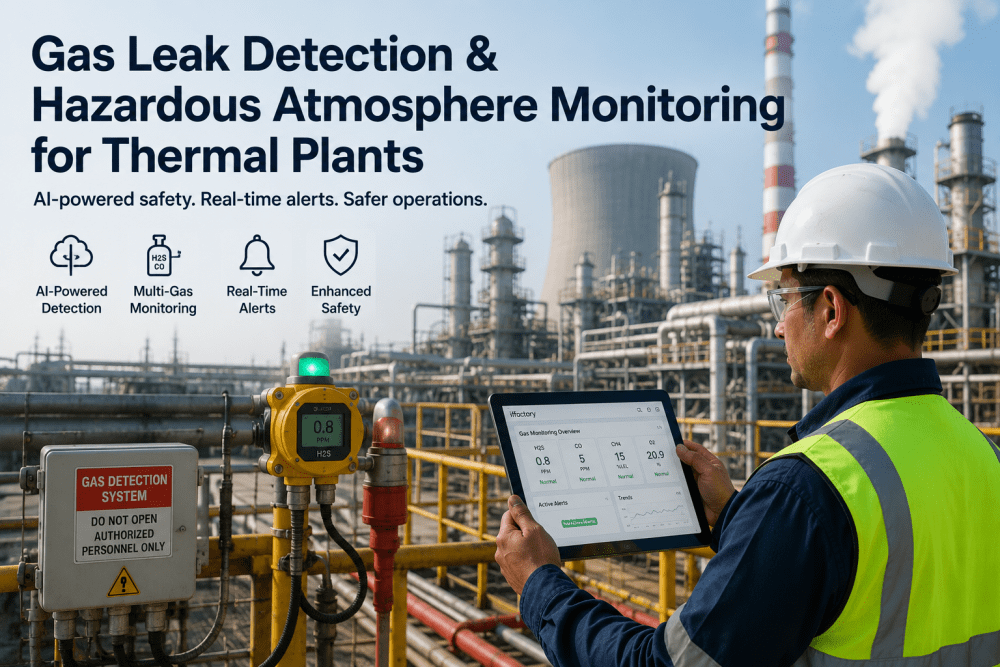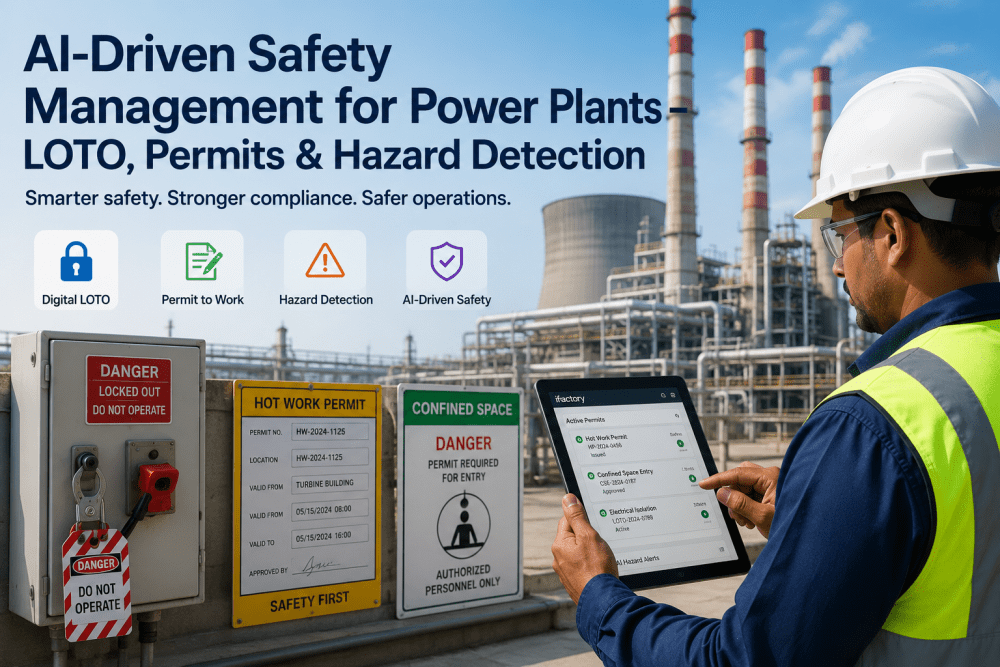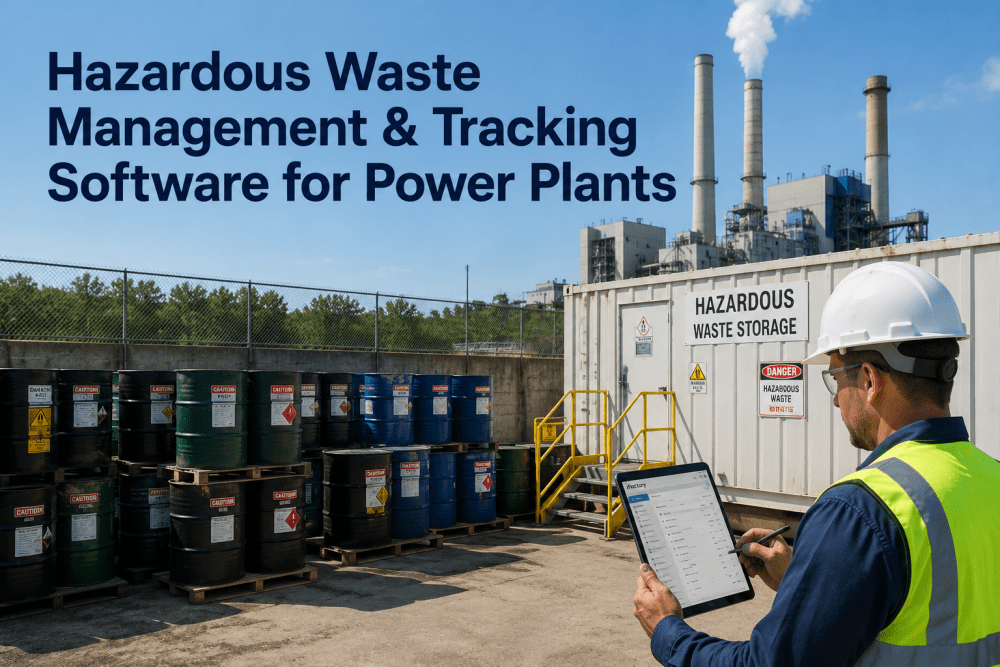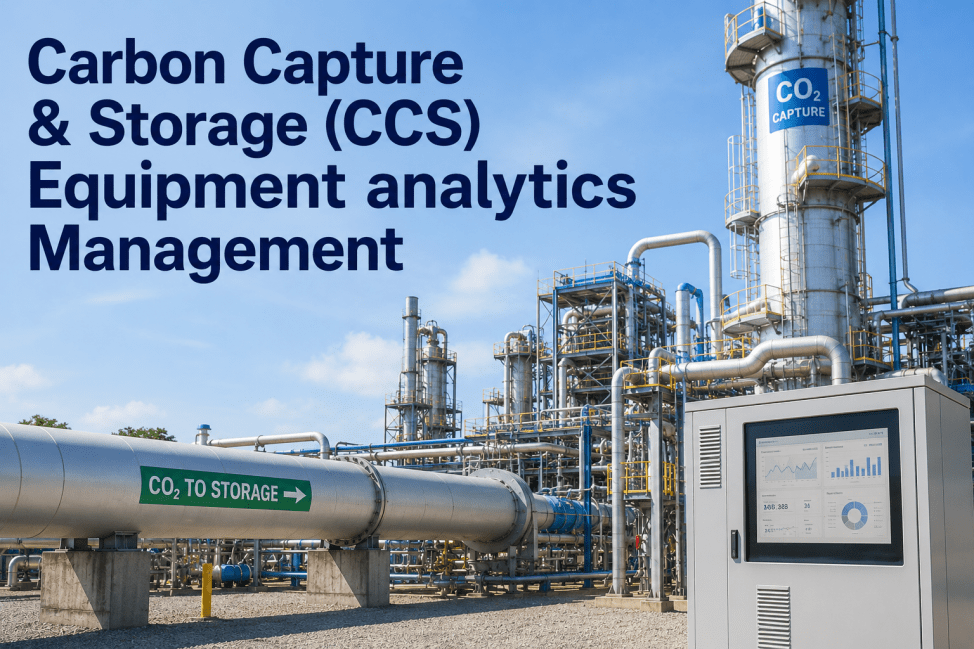
As the nuclear power generation industry extends plant life beyond 60 years and navigates the regulatory rigor of license renewal, the management of radiation exposure — both for workers and the surrounding environment — has become the defining operational priority for plant operators and safety engineers. Every nuclear plant operates under the ALARA (As Low As Reasonably Achievable) principle, a regulatory mandate from 10 CFR 20 that requires continuous optimization of radiation protection. Book a free demo to digitize your radiation safety program and strengthen your ALARA compliance posture.
Radiation Safety Intelligence: Protecting Workers Through Data-Driven ALARA
A comprehensive technical framework for deploying AI-driven radiation monitoring, real-time dose tracking, and automated NRC compliance reporting across commercial nuclear power generation facilities.
Nuclear Plant Radiation Safety Challenges AI Must Address
Modern nuclear plants face six intersecting radiation protection challenges that span area monitoring, personnel dosimetry, contamination control, and regulatory reporting. Each failure mode carries not only worker safety implications but also NRC enforcement action risk, with civil penalties reaching $345,000 per violation per day. Schedule a system audit to assess your program against these risk categories.
Area Gamma & Neutron Monitoring Gaps
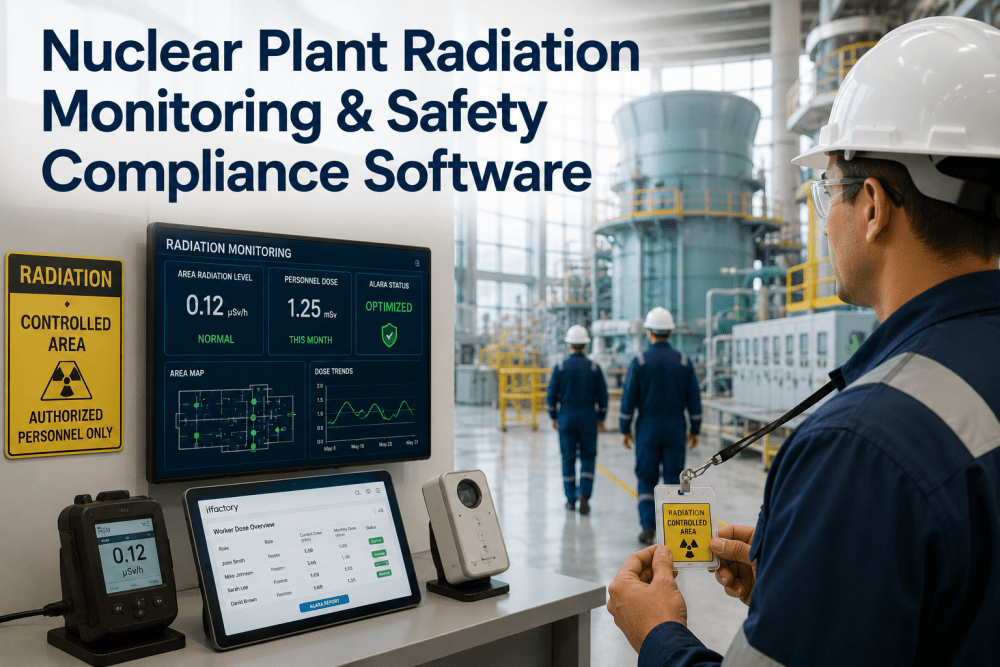
Fixed radiation monitors in containment, auxiliary buildings, and the spent fuel pool area generate continuous data streams that are frequently manually logged. iFactory integrates area monitor readings into a unified radiation map, detecting anomalous dose rate trends and automatically alerting the RP team when readings approach 25% of administrative limits.
Electronic Personal Dosimetry Compliance
Each worker entering a restricted area requires an assigned electronic personal dosimeter (EPD) with real-time dose accumulation tracking. iFactory's EPD docking station integration automates pre-entry dose checks and post-exposure data ingestion, eliminating the manual download and record reconciliation that creates compliance gaps in personnel dose records.
Airborne Radioactivity & Contamination Spread
Continuous air monitors (CAMs) in ventilation exhaust paths and work zones must detect airborne alpha, beta, and gamma activity below regulatory action levels. iFactory's AI analyzes CAM channel data for trend deviations that precede alarm conditions, enabling preemptive ventilation adjustments before airborne concentrations reach the threshold requiring work area evacuation and respiratory protection escalation.
ALARA Work Planning & Pre-Job Briefing
Every maintenance task in a radiation area requires an ALARA work plan specifying estimated dose, shielding requirements, stay-time limits, and RP hold points. iFactory digitizes the ALARA planning workflow with automated dose estimates based on historical job data, current source term conditions, and worker dose history — replacing the manual spreadsheet estimates that consistently underestimate actual dose.
Radwaste Characterization & Disposal Compliance
Low-level radioactive waste (LLRW) must be characterized by isotope, activity concentration, and disposal pathway before shipment. iFactory's radwaste module links each waste container to its generating work order, dose rate measurement data, and isotopic analysis results, generating the disposal shipping documentation required by NRC and state compact agreements automatically.book a demo
NRC Inspection Readiness & Reporting
The NRC conducts triennial baseline inspections that review radiation protection program records spanning dosimetry, area monitoring, ALARA plans, and radwaste disposal. iFactory's compliance dashboard provides real-time visibility into every RP record category, flagging documentation gaps and overdue program elements before an NRC inspector does.
Benchmark Your RP Program Against Industry-Leading Digital Radiation Safety Metrics
Schedule a no-obligation assessment of your current radiation monitoring, dose tracking, and ALARA compliance workflows against iFactory's nuclear reference architecture.
Strategic Architecture: Four Deployment Tiers for Nuclear Radiation Safety
Nuclear plants can scale their radiation protection digitization from basic dose data unification to fully autonomous ALARA optimization using iFactory's phased framework. This ensures every sensor integration and workflow digitization effort has a direct path to measurable safety improvement and regulatory benefit. RP managers and plant safety engineers often choose to book a demo to align their digital RP roadmap with these deployment stages.
Unified Dose Data Foundation
Integration of EPD docking stations, area radiation monitor data streams, and CAM systems into a single RP data platform. Establishes the real-time dose visibility layer that eliminates manual data reconciliation between dosimetry, RP surveys, and the plant's RAD database.
ALARA Work Plan Intelligence
Deployment of AI-driven ALARA planning tools that generate dose estimates from historical job data, current source term conditions, and worker dose history. Automates pre-job briefing documentation and real-time stay-time tracking for workers in restricted areas.
Contamination & Radwaste Analytics
Integration of contamination survey instruments, portal monitor data, and radwaste characterization results into the unified platform. AI-driven trend analysis identifies contamination spread patterns and optimizes radwaste segregation by disposal pathway.
Autonomous NRC Compliance & Reporting
Full cross-platform integration with the plant's corrective action program, nonconformance reporting system, and NRC event notification processes. AI automatically compiles RP inspection findings responses and tracks corrective actions through closure with verifiable effectiveness reviews.book a demo
Regulatory Frameworks & NRC Compliance Integration
Every nuclear plant must maintain compliance with NRC regulations governing radiation protection, ALARA, and radwaste management. iFactory provides the auditable data infrastructure required for the six core regulatory frameworks that radiation protection programs must satisfy.
| Regulatory Framework | Compliance Requirement | iFactory AI Value |
|---|---|---|
| 10 CFR 20 | Radiation dose limits for workers and members of the public; ALARA program requirements | Real-time dose tracking against administrative limits; automated ALARA plan generation with historical dose data integration |
| 10 CFR 50.65 | Maintenance rule monitoring of safety-related equipment performance including RP instrumentation | Predictive health scoring for area monitors, CAMs, and EPD docking stations with automated maintenance rule documentation |
| 10 CFR 20.1406 | Radiation protection program records and documentation retention | Immutable audit trails for all RP records; automated report generation in NRC-required formats; instant retrieval for inspections |
| 10 CFR 61 | Licensing requirements for LLRW disposal and waste classification | Automated waste characterization data linking generation source to disposal pathway; isotope-specific activity tracking for each waste container |
| NRC Reg Guide 8.8 | ALARA program implementation for nuclear power plant operations | Full ALARA planning workflow digitization; automated dose estimates; real-time stay-time tracking and administrative limit notifications |
| NEI 08-08A | Industry-sponsored NRC RP inspection protocol and self-assessment guidelines | Automated self-assessment dashboards aligned with NEI 08-08A inspection modules; real-time corrective action tracking through closure |
"Before iFactory, our RP team spent 30 hours per month manually downloading EPD data from six docking stations, reconciling dose records against paper access control logs, and compiling the monthly NRC dose report. Now the dose data flows into the platform automatically from every EPD docking event, area monitor, and CAM channel in the plant. When NRC arrived for our triennial RP inspection, our RP manager opened the iFactory compliance dashboard and showed the inspector every dose record, every ALARA plan, and every area monitor calibration certificate for the current operating cycle in under 10 minutes. The inspection team noted our RP recordkeeping as an industry best practice.book a demo"
Nuclear Plant Radiation Monitoring: Frequently Asked Questions
Q: How does iFactory integrate with existing plant electronic personal dosimetry (EPD) systems?
iFactory provides pre-built integration connectors for the major nuclear plant EPD platforms — including Mirion DMC 3000 and DMC 2000, Thermo Fisher EPD, and Fuji NDs — through both wired docking station interfaces and wireless RFID reads. Each EPD checkout and return event automatically logs the dose accumulation data, worker ID, issue time, and return time into the platform's dose record without any manual data entry. The platform also supports real-time wireless EPD dose streaming for plants with active dosimeter telemetry infrastructure.
Q: Can the platform support real-time area radiation mapping across containment, auxiliary, and turbine buildings simultaneously?
Yes. iFactory's radiation mapping module ingests data from fixed area monitors — including gamma ion chambers, neutron detectors, and continuous air monitors — deployed across all plant areas. The platform generates a live radiation heat map that displays dose rate trends at each monitor location, with color-coded status indicating readings relative to administrative limits. Historical trending identifies areas where dose rates are increasing over time due to crud deposition, activated corrosion product accumulation, or spent fuel pool activity changes — enabling preemptive source term management before area dose rates require extended work restrictions.
Q: Does the platform automate NRC report generation for annual dose, radwaste disposal, and ALARA program performance?
Yes. iFactory's compliance reporting engine generates NRC-mandated reports in the format required for submission, including the annual radiation exposure report (NRC Form 4 and Form 5 equivalent), the annual ALARA program performance report, radwaste disposal manifests meeting NRC and state compact requirements, and the annual 10 CFR 20.2206 occupational dose report.
Q: How does the platform handle ALARA work planning for routine maintenance versus refueling outage work scopes?
iFactory maintains separate ALARA planning modules for routine maintenance and outage work. For routine maintenance, the platform uses historical job-specific dose data and current area dose rate readings to generate dose estimates. For outage work, the platform integrates with the outage scheduling system to sequence high-dose work activities — such as reactor head removal, steam generator tube inspection, and nozzle dam installation — to optimize the collective dose impact. The ALARA pre-job briefing is generated automatically from the plan data and is accessible to the work crew on mobile devices at the job site, eliminating the paper briefing packets that frequently go missing before the work window opens.book a demo
Q: What is the typical deployment timeline and ROI for iFactory's radiation safety platform at a nuclear power plant?
Phase 1 deployment (unified dose data foundation) is typically completed within 6 to 8 weeks for a single-unit nuclear plant, with the full four-tier platform reaching operational status within 8 to 10 months. The return on investment is delivered through three primary channels: RP team labor reduction (50 to 70% reduction in manual dose data management and report preparation), ALARA-driven collective dose reduction (35 to 45% reduction in person-rem per operating cycle through AI-optimized work planning), and radwaste disposal cost optimization (25 to 35% reduction through automated characterization and pathway analysis). Most plants achieve full platform cost recovery within 8 to 14 months of deployment, with the ALARA dose benefits alone typically covering the platform investment in the first refueling outage cycle.
Ready to Strengthen Your Radiation Safety Intelligence Program?
Speak with an iFactory nuclear industry specialist today about deploying AI-driven radiation monitoring, dose tracking, and ALARA compliance across your facility.