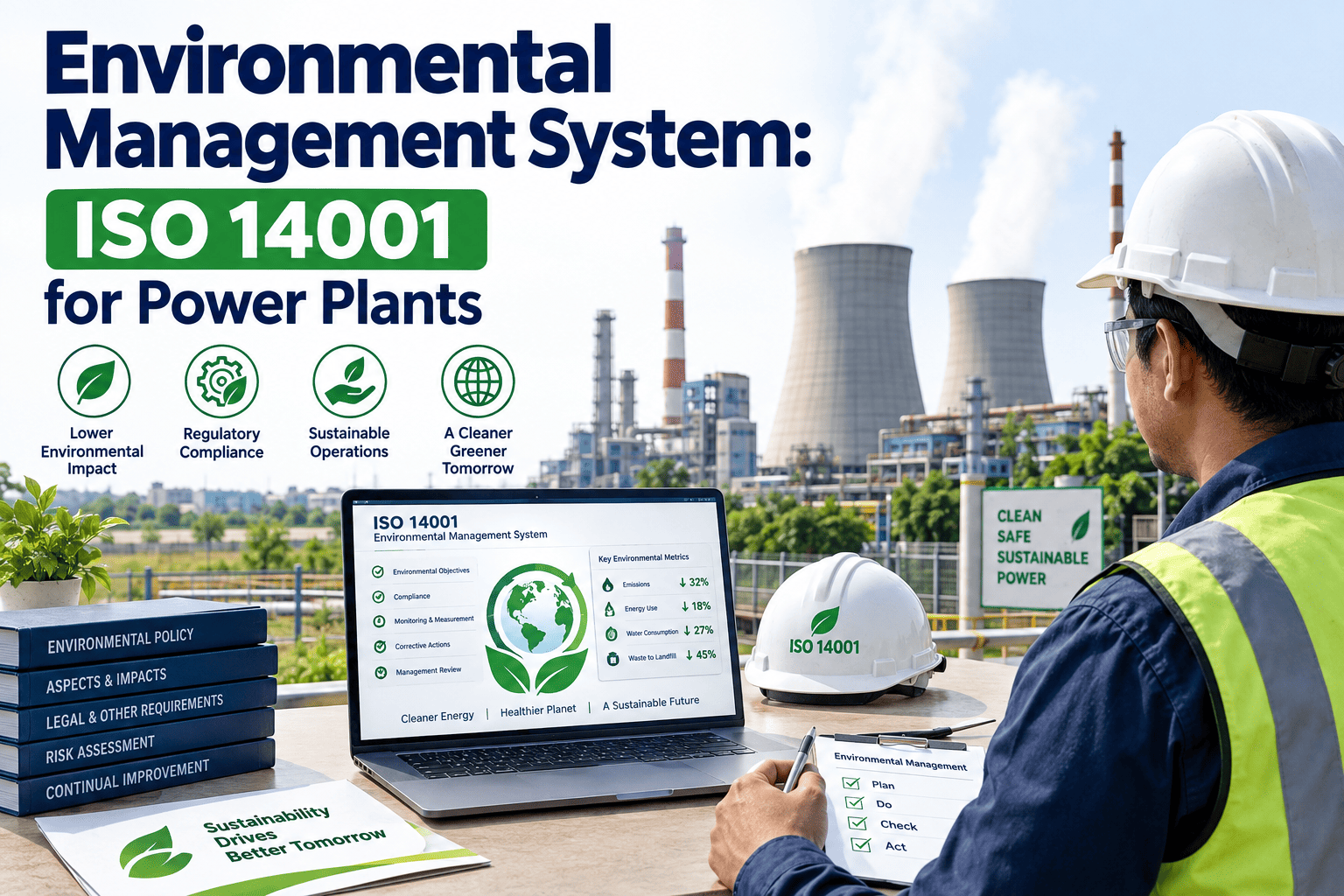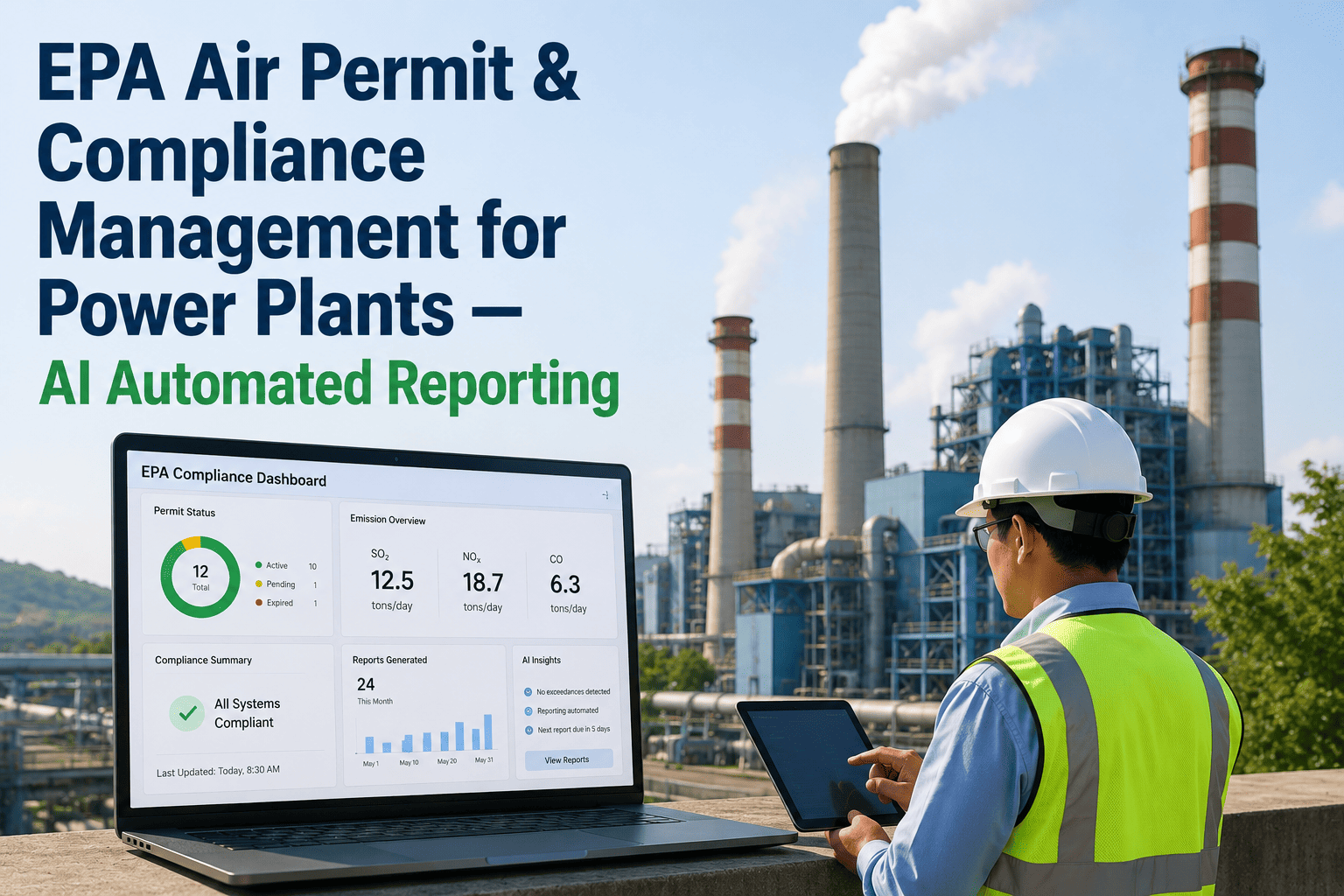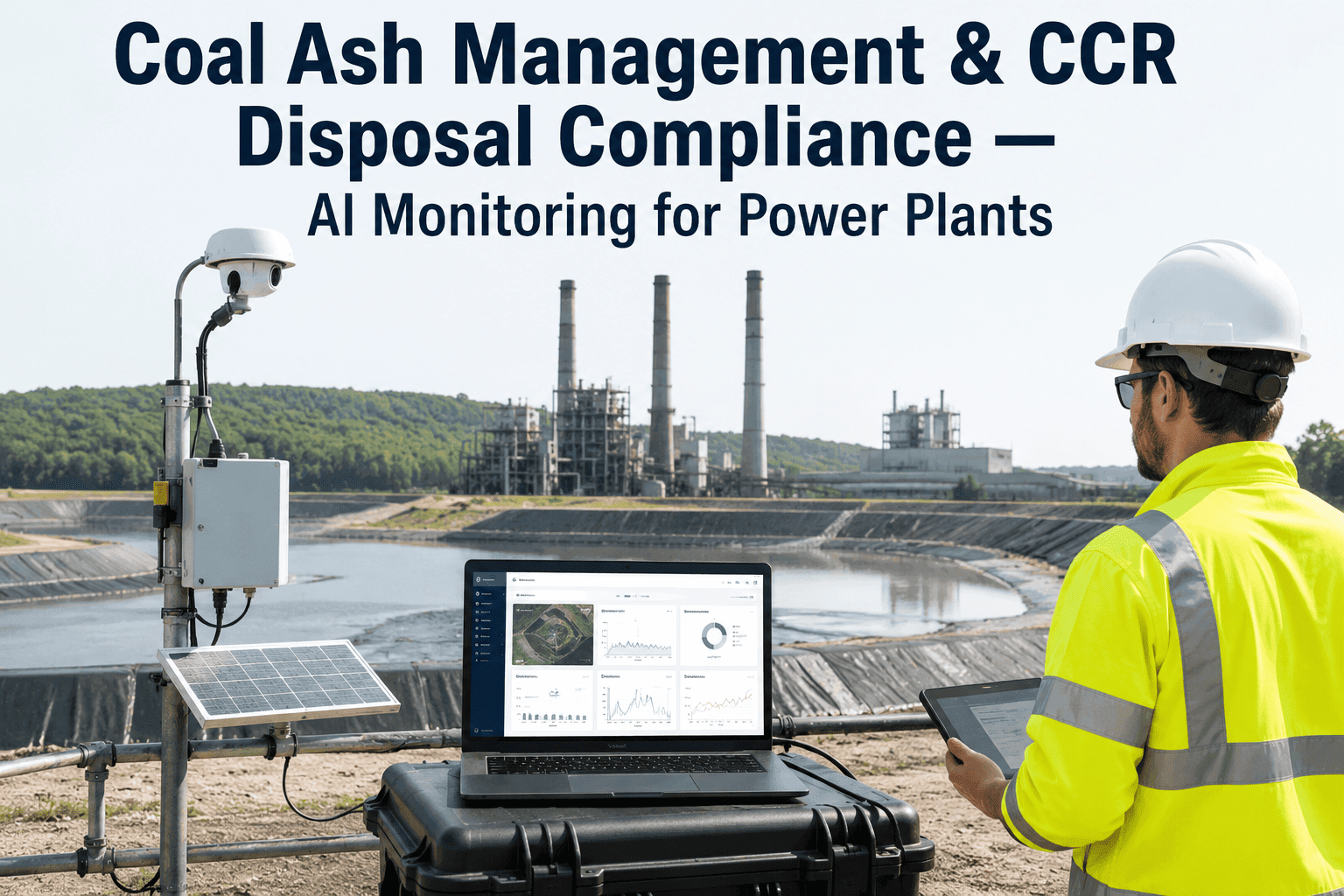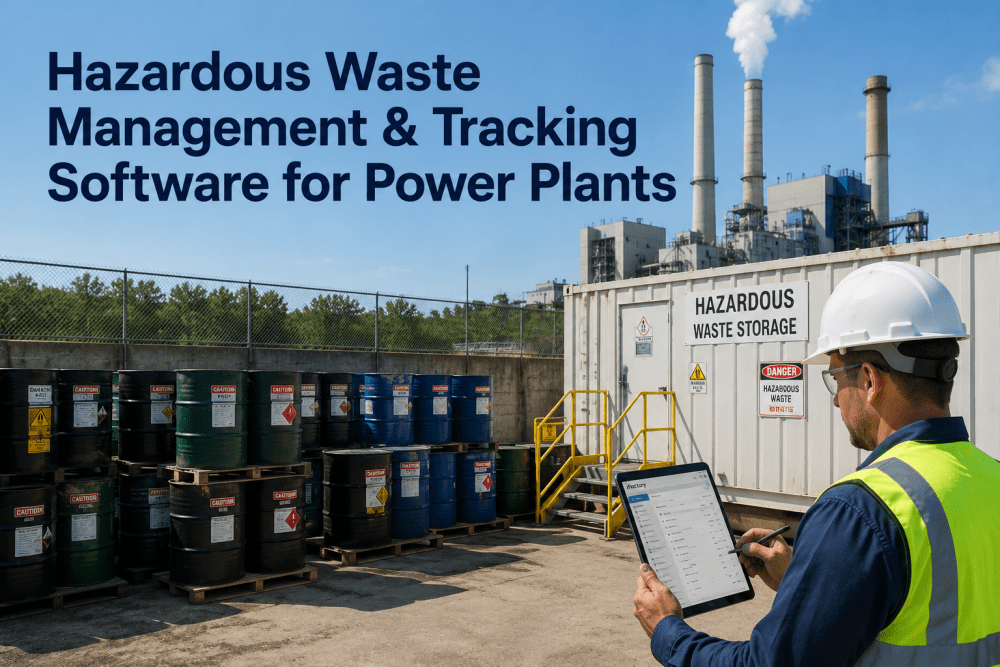
Every coal-fired and combined-cycle power plant generates hazardous and non-hazardous waste streams that must be tracked from the moment of generation through storage, transportation, treatment, and final disposal.This guide covers the complete methodology for hazardous waste management and tracking at power plants and how iFactory AI's compliance reporting platform delivers continuous, automated waste stream visibility that eliminates manual manifesting errors, ensures RCRA compliance, and identifies waste minimization opportunities that reduce disposal costs and environmental liability simultaneously.
Why Power Plants Need Dedicated Hazardous Waste Management Software
The waste management challenge at a power generation facility is structurally different from most industrial operations. Power plants generate high-volume, continuous waste streams — fly ash, bottom ash, and FGD gypsum from coal combustion — alongside lower-volume but higher-hazard streams including spent lubricating oils, transformer fluids, chemical cleaning wastes, and laboratory reagents. Managing these streams without dedicated tracking software means reconciling weigh tickets, Bill of Lading documents, uniform hazardous waste manifests, and laboratory analysis reports across dozens of waste streams, multiple storage areas, and several disposal or recycling vendors — a data management burden that inevitably produces gaps in the compliance record. Book a demo to see how iFactory automates power plant waste tracking.
- Waste manifests completed manually — transcription errors in waste codes and generator ID numbers are common
- Storage accumulation time tracked on paper logs — RCRA 90-day limit violations discovered during EPA audits
- Disposal costs allocated to plant overhead — no visibility into cost per waste stream or per generating unit
- CCR groundwater monitoring data managed separately from waste production data — compliance reports require manual reconciliation
- Vendor disposal performance tracked through phone calls and email — no systematic carrier rating or diversion rate tracking
- Waste minimization opportunities invisible — no correlation between process changes and waste generation volume trends
- Uniform hazardous waste manifests generated automatically from generation records — zero manual transcription, 100% EPA format compliance
- Storage accumulation timer tracked per waste stream per satellite accumulation area — automated alerts at 75% of the RCRA time limit
- Disposal cost allocated to waste stream, generating unit, and cost center — real-time cost-per-ton visibility for every waste category
- CCR production, disposal, and groundwater monitoring data unified in a single compliance dashboard — monthly CCR reports generated in minutes
- Vendor diversion rate, on-time pickup, and exception rate tracked automatically — carrier scorecards updated after each disposal event
- Waste generation trends correlated with fuel sourcing, plant load factor, and process chemical usage — minimization opportunities identified by the AI engine
Coal Ash and CCR Tracking: From Generation to Beneficial Use or Disposal
Coal combustion residuals represent the largest volume waste stream at any coal-fired power plant — and the regulatory requirements for CCR management under RCRA Subtitle D are among the most detailed environmental compliance obligations in the power generation industry. The CCR rule requires that each facility maintain operating records for the CCR unit, including the quantity of CCR generated, the quantity placed in the CCR unit, the quantity sent off-site for beneficial use or disposal, and the source of the CCR by generating unit.
RCRA Compliance Automation: Hazardous Waste Manifesting, Accumulation Time Tracking, and Regulatory Reporting
For power plants that generate hazardous waste — used oil, spent solvents, chemical cleaning wastes, transformer fluids, and laboratory wastes — RCRA Subtitle C compliance requires a level of documentation precision that is extremely difficult to maintain with manual systems.
| Waste Stream Category | Typical Power Plant Sources | RCRA Classification | iFactory Tracking Method | Compliance Report Generated |
|---|---|---|---|---|
| Coal Combustion Residuals | Fly ash, bottom ash, FGD gypsum, boiler slag, economizer ash | RCRA Subtitle D (CCR rule) — hazardous if exhibiting toxicity characteristic | Weigh ticket integration + generation record per unit — tonnage tracked daily with disposal destination confirmation | Monthly CCR production/disposal report; Annual CCR report |
| Used Oil and Lubricants | Turbine lube oil, transformer oil, hydraulic oil, compressor oil, gearbox oil | 40 CFR Part 279 — managed under used oil rule; hazardous if mixed with listed hazardous waste | Container barcode tracking — generation date, accumulation start, container count, shipment manifest | Used oil management report; Biennial hazardous waste report |
| Chemical Cleaning Wastes | Boiler chemical cleaning solutions, cooling tower blowdown treatment chemicals, membrane cleaning wastes | RCRA Subtitle C — characteristic hazardous (corrosivity, reactivity, toxicity) depending on chemical composition | Batch-specific waste profile — laboratory analysis linked to each cleaning event; manifest generated from profile data | Hazardous waste manifest; Biennial report; State annual report |
| Laboratory and Universal Waste | Laboratory reagents, spent batteries, spent lamps, mercury-containing devices, pesticides | RCRA Subtitle C — listed hazardous (F, P, U lists) and universal waste (40 CFR Part 273) | Universal waste tracking — handler accumulation time, labeling compliance, shipment record with destination EPA ID | Universal waste handler report; Biennial hazardous waste report |
| Scrubber and Wastewater Treatment Sludges | FGD scrubber sludge, wastewater treatment sludge, pond sediment, cooling tower sludge | RCRA Subtitle C or D depending on characteristics — TCLP testing required for hazardous determination | Generation-linked waste profile — TCLP results attached to each sludge batch; manifest populated from profile and analytical data | Hazardous waste determination record; Biennial report; NPDES sludge report |
| Asbestos-Containing Materials | Boiler insulation, pipe lagging, gaskets, floor tile, roofing materials | NESHAP (40 CFR 61, Subpart M) — not RCRA hazardous but regulated under Clean Air Act for removal and disposal | Project-specific waste tracking — generation volume, containment method, transport manifest, disposal site NESHAP approval | NESHAP demolition/renovation record; Waste shipment record; Disposal site approval documentation |
Waste Minimization Analytics: Identifying Reduction Opportunities Across the Waste Portfolio
Beyond compliance tracking, the most strategic value of a waste management data platform is the ability to identify waste minimization opportunities that reduce disposal costs, lower environmental liability, and support corporate sustainability targets. Power plants generate waste as a function of fuel composition, combustion conditions, pollution control equipment performance, and maintenance practices — and changes in any of these variables affect waste generation rates.
Expert Perspective: What Automated Waste Tracking Changes in Power Plant Environmental Compliance
We were managing 37 separate waste streams across three generating units using a combination of spreadsheets, paper manifests, and a legacy environmental database that nobody trusted. When the state environmental agency announced a focused RCRA inspection initiative for power plants, we knew we had gaps. The iFactory deployment revealed that we had 14 open manifests that had never been closed by the disposal facility, three satellite accumulation areas where the 90-day clock had expired on containers we had lost track of, and approximately $240,000 per year in disposal costs that we were overpaying because we had never systematically reviewed vendor pricing against waste stream volume data. The platform paid for itself in the first five months through disposal cost optimization alone — and when the inspection team arrived, we had a complete, audit-ready compliance record for every waste stream, every manifest, and every storage area on the property.
Frequently Asked Questions: Hazardous Waste Management and Tracking for Power Plants
At minimum, iFactory requires the facility's EPA ID number, the list of approved waste codes for each waste stream (from the site's waste analysis plan), transporter and TSD facility EPA IDs and contact information, and the site's generator category (LQG, SQG, or CESQG). This data is typically available from the facility's existing waste profiles and manifests. iFactory also ingests the site's current waste profiles — including applicable waste codes, characteristic testing results, and storage and disposal instructions — to pre-populate manifest generation and ensure that every manifest reflects the site's most current waste determination.
iFactory maintains separate tracking modules for CCR and hazardous waste, each configured with the specific regulatory requirements and reporting formats applicable to that waste category. CCR tracking records tonnage by generating unit, disposal location, and beneficial use destination — generating monthly and annual CCR reports in the format required by the CCR rule. Hazardous waste tracking includes EPA uniform manifest generation, accumulation time monitoring per waste stream, and biennial report compilation. The two modules share a common waste profile database and vendor master data, so a single waste stream that transitions between categories — for example, fly ash that exhibits a toxicity characteristic — is tracked seamlessly across both regulatory frameworks without duplicate data entry.
Yes. iFactory provides pre-built integration connectors for common power plant weighbridge systems (METTLER TOLEDO, Rice Lake, Cardinal), ERP platforms (SAP EHS, Oracle EBS, Microsoft Dynamics), and environmental management databases. Weigh tickets are ingested automatically and matched to generation records. For plants without digital scale integration, iFactory provides a mobile entry interface that allows operators to record waste generation and shipment data from a tablet or smartphone — including barcode scanning for container tracking and photo attachment for waste profile documentation. A data integration assessment is available to determine the fastest data capture approach for your specific facility configuration.
iFactory provides a fleet-wide waste management dashboard that aggregates waste generation, disposal, and compliance data across all sites in the fleet — with each site maintaining its own waste profiles, EPA IDs, and state-specific regulatory configurations. Corporate environmental managers can view fleet-wide disposal costs, waste minimization progress, and compliance exception status from a single screen. Individual site compliance reports are generated in the format required by each site's state regulatory authority, while fleet-wide sustainability reports consolidate data across all sites for corporate ESG reporting. The platform supports role-based access so that site environmental coordinators manage their own waste streams while corporate EHS leadership maintains visibility across the full portfolio without administrative overhead.Book a demo to see how iFactory automates power plant waste tracking.
iFactory's waste management platform can be deployed and generating compliance data within 30 to 60 days for a single-site power plant, with multi-site fleet deployments typically completing within 90 days. The fastest ROI cases occur when the platform identifies disposal cost optimization opportunities — vendor rate reduction, waste stream consolidation, diversion rate improvement — that reduce annual waste management expenditure by 8 to 15%. For a typical 1,000 MW coal-fired plant spending $1.2 to $2.8 million annually on waste disposal, this represents $100,000 to $420,000 in annual savings, delivering full platform cost recovery within 4 to 9 months.
Conclusion: The Compliance and Cost Case for Automated Waste Tracking at Power Plants
The waste management function at a power plant has historically been an operational afterthought — managed by environmental compliance staff with spreadsheets, paper manifests, and institutional knowledge that walks out the door when senior environmental coordinators retire. The regulatory environment has evolved, the waste stream complexity has increased with new pollution control technologies, and the penalties for compliance gaps have escalated to the point where a single inspection finding can cost more than the waste management software that would have prevented it.
For power plant environmental managers facing increasing regulatory scrutiny and pressure to reduce operational costs, automated waste tracking is not an optional technology investment — it is the minimum viable compliance infrastructure for the current enforcement environment. Book a demo to see the platform live with your waste stream data.