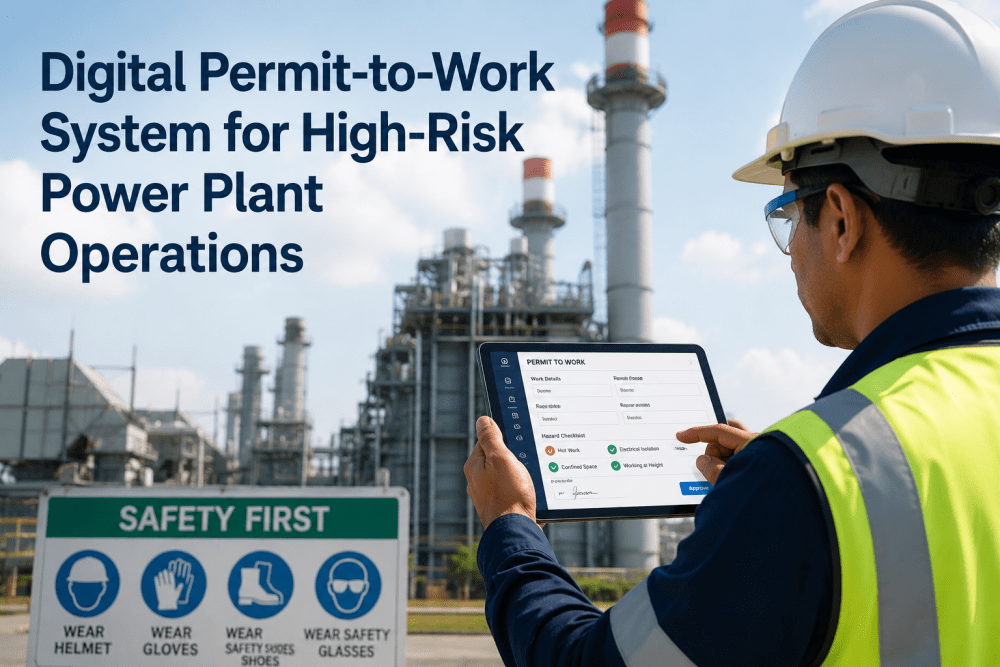
In the high-risk environment of power plant operations—where thermal stress, electrical arcs, and confined atmospheric hazards converge—a paper-based permit-to-work (PTW) system is not just inefficient; it is a liability. This guide explores how industrial operators are moving beyond paper PTW to AI-driven safety management, and how iFactory's unified platform enables this transition at scale. Organizations that book a discovery session with iFactory are finding that the platform doesn't just digitize permits—it automates the risk assessment, isolation verification, and compliance logic required to protect both personnel and critical generation assets.
Modernize Your Power Plant Safety Workflows
iFactory's AI-powered safety management platform digitizes, automates, and enforces permit-to-work processes across hot work, electrical isolation, confined space, and height work operations — purpose-built for high-risk power generation environments.
Why Paper Permits Fail in Modern Power Generation
The fundamental problem with paper-based PTW systems is latency. A shift supervisor issues a paper permit at 07:00, but by 09:00 the isolation point has changed, the atmospheric condition has shifted, and the permit is already outdated. In coal-fired, gas turbine, and nuclear facilities, the risk profile of an asset can change in minutes. For plant managers looking to close this gap, scheduling a platform walkthrough is the first step toward digital safety transformation.
Hot Work Permits
Core Focus: Ignition Risk Control. Digital hot work permits enforce fire watch assignments, gas testing validation, and time-bound authorization windows. Every welding or grinding task is logged with exact location and duration limits.
Electrical Isolation Permits
Core Focus: LOTO Verification. Electronic permits integrate with isolation schedules, requiring electronic sign-off on each lock and tag point. No permit is issued until every isolation step is digitally verified at the device level.
Confined Space Permits
Core Focus: Atmospheric Safety. Digital confined space permits mandate continuous gas monitoring with automated alarms. Entry and exit times are logged via mobile geolocation, ensuring no worker is unaccounted for during shift changes.
Working at Height Permits
Core Focus: Fall Prevention. Digital height work permits require harness inspection records, anchor point certification verification, and rescue plan confirmation before any elevated task begins. All documentation is attached and archived automatically.
"We were drowning in paperwork—literally thousands of permits per month across three generating units. Our biggest risk wasn't the equipment; it was the gap between what a paper permit said and what was actually happening in the field. iFactory digitized the entire PTW lifecycle in eight weeks. Now our gas turbine outage permits are issued, validated, and closed in real-time with full isolation verification. The audit trail alone saved us six figures in potential regulatory finesBook a Demo."
Paper vs. Digital Permit-to-Work: A Capability Matrix
The matrix below compares how paper systems and iFactory's digital platform stack up across the dimensions that matter most in high-risk power plant operations. Reliability managers who schedule a technical review consistently find that the digital advantage in isolation verification alone justifies the transition.
| Capability Dimension | Paper PTW System | Digital PTW (iFactory) | Safety Impact |
|---|---|---|---|
| Isolation Verification | Manual sign-off, no validation | Electronic LOTO chain verification | Eliminates isolation errors |
| Atmospheric Monitoring | Spot check on paper log | Continuous IoT gas sensor integration | Real-time hazard alerts |
| Permit Conflict Detection | Relies on human memory | Automatic zone overlap detection | Prevents multi-permit collisions |
| Audit Trail | Filing cabinets & scanned PDFs | Immutable digital chain of custody | Instant regulatory response |
| Time-to-Issue | 25–40 minutes per permit | Under 5 minutes with pre-built templates | 3x faster maintenance execution |
| Mobile Capability | None — must return to office | Full creation, sign-off & closure on mobile | Field‑worker empowerment |
| Regulatory Compliance Rate | 68–75% at best | 99.7% with enforced workflows | Reduces citation risk |
What Makes iFactory's Digital PTW an AI-First Safety Platform
Most "digital permit" solutions are simply PDF generators with a database—they digitize the form but not the intelligence behind it. iFactory's platform is fundamentally different. We embed permit logic directly into the operational workflow. Beyond enforcement, iFactory provides predictive permit analytics—identifying which zones, shifts, and task types produce the most permit revisions, near-misses, and delays. This is the level of intelligence that plant safety leaders see when they book a live demonstration.
Phased Digital PTW Rollout: From Pilot to Plant-Wide Adoption
Migrating from paper to digital permits requires more than a software install—it demands a change management strategy that respects the existing safety culture while introducing new technical capabilities. iFactory's deployment team follows a proven 3-phase roadmap designed to build confidence, demonstrate ROI, and scale across the entire generation fleet. If you are unsure where your plant sits on the digital maturity curve, booking a strategic audit can provide the clarity needed to begin the transition.
Digitization & Pilot Deployment
Replace paper forms with mobile-optimized digital permit templates for a single high-risk zone (e.g., boiler maintenance or turbine deck). Train a pilot team and establish baseline metrics for permit cycle time, compliance rate, and incident near-misses. Timeline: 6–8 weeks.Book a Demo
Integration & Enforcement Automation
Connect the digital PTW system with existing IoT sensors, isolation schedules, and asset hierarchy. Automate permit-to-field validation—no permit activates unless all isolation conditions are met. Expand to cover all permit types (hot work, electrical, confined space, height). Timeline: 8–12 weeks.
Fleet-Wide Scaling & Predictive Analytics
Roll out to all generating units and plants. Activate cross-site permit visibility, predictive risk heatmaps, and automated regulatory reporting. Achieve paperless audit readiness across the entire fleet. Timeline: Ongoing.
Digital Permit-to-Work Systems — Frequently Asked Questions
What types of permits does a digital PTW system support for power plants?
A comprehensive digital PTW platform supports all high-risk permit categories including hot work permits (welding, grinding, cutting), electrical isolation permits (LOTO, switching orders), confined space entry permits(vessels, tanks, ducts), and working at height permits (scaffolding, crane platforms, turbine deck access).
How does digital PTW improve regulatory compliance for power generators?
Digital PTW systems enforce mandatory fields, approval chains, and validation steps that paper systems cannot guarantee. Every permit action is time-stamped, geolocated, and stored in an immutable audit trail. iFactory's platform specifically pre-builds compliance mappings for OSHA 1910, NERC PRC-005, and NFPA 70E, reducing the burden on safety teams during regulatory inspections.Book a Demo
Can digital permits integrate with existing plant isolation schedules and IoT sensors?
Yes. iFactory's digital PTW platform features bidirectional communication with DCS, SCADA, and plant isolation management systems. The platform automatically cross-references permit requests against live equipment status and sensor data—for example, preventing a confined space entry permit from issuing if the oxygen sensor in that zone reads below the safe threshold, regardless of what the paper log says.
How long does it take to transition a power plant from paper to digital permits?
A phased approach typically takes 6 to 8 weeks for a pilot deployment in a single high-risk zone, with plant-wide rollout completed within 12 to 16 weeks depending on the number of generating units and permit complexity. iFactory's implementation team provides on-site workflow mapping and workforce training to ensure a smooth transition without disrupting ongoing maintenance outages.
What is the ROI of replacing paper permits with a digital PTW system?
The primary ROI drivers are threefold: reduced permit cycle time (72% reduction translates to more productive maintenance hours), eliminated regulatory fines (achieving 99.7% compliance eliminates six-figure citation exposure), and incident avoidance (automated isolation validation prevents the human errors that cause arc flashes, gas exposures, and falls). iFactory provides a detailed ROI model during live demo sessions tailored to your plant's specific permit volume and risk profile.
Replace Paper Permits with AI-Driven Safety Intelligence
iFactory's digital permit-to-work platform delivers the real-time isolation verification, mobile enforcement, and predictive analytics needed to protect your workforce and your generation assets — built for the rigor of high-risk power plant operations.