Underground gas storage sits at the center of energy security for every major economy — yet for decades, the operational decisions that govern injection scheduling pressure management, compressor dispatch, and inventory positioning have run on static engineering models and weekly review cycles that cannot keep pace with modern market volatility. AI gas storage optimization underground is fundamentally changing this reality. Operators who have integrated machine learning forecasting, digital twin simulation, and continuous anomaly detection into their underground storage workflows are reporting measurable gains in working gas utilization, compressor uptime, and commercial response speed that were not achievable with legacy SCADA-plus-engineering approaches.
Is Your Underground Storage Facility Running at Peak AI-Optimized Efficiency?
iFactory's Digital Twin AI and Predictive Maintenance platform gives midstream operators live visibility into reservoir performance, compressor health, and injection/withdrawal optimization — so leadership acts before capacity is lost.
Understanding AI Gas Storage Optimization in Underground Facilities
Underground natural gas storage — whether in depleted reservoirs, aquifer formations, or salt caverns — involves managing a set of interdependent variables that no human team can track simultaneously: reservoir pressure gradients, wellhead deliverability curves, pipeline interconnect nominations, weather-driven demand signals, and spot market pricing windows. Traditional SCADA systems capture data but do not interpret it. Traditional reservoir simulation models provide insight but on timescales incompatible with real-time operational decisions.
Five AI Capabilities Transforming Underground Gas Storage Operations
Effective AI deployment in underground storage is not a single technology — it is a layered capability stack. Each layer addresses a distinct operational challenge, and the combination produces compounding returns across reservoir performance, equipment reliability, and commercial positioning.
Demand Forecasting & Nomination Optimization
AI models trained on historical demand patterns, weather variables, pipeline nominations, and spot pricing generate 72-hour and 14-day withdrawal demand forecasts with significantly higher accuracy than linear regression models. This enables operators to pre-position working gas inventory ahead of weather events without over-drawing deliverability capacity.
Reservoir Pressure & Deliverability Modeling
Machine learning continuously updates reservoir performance models using real-time well test data, pressure transient analysis, and production history. This produces dynamic deliverability curves that reflect actual reservoir condition — not the static assumptions embedded in initial field development plans that may be years out of date.
Compressor Station Predictive Maintenance
Injection and withdrawal compressors are the critical throughput constraint in any underground storage facility. AI anomaly detection applied to vibration, temperature, suction/discharge pressure differentials, and lube oil analysis predicts mechanical degradation 2–6 weeks before failure — enabling planned maintenance that does not interrupt seasonal injection or peak withdrawal operations.
Digital Twin Simulation for Injection/Withdrawal Scheduling
Digital twin models of the formation and surface facility simulate the impact of proposed injection or withdrawal schedules before committing to operational changes. Operators can test scenarios — aggressive early-season injection, emergency peak-day withdrawal events, maintenance windows — and evaluate reservoir pressure responses and surface constraint violations without risk to the physical asset.
Leak Detection & Integrity Monitoring
AI-powered pressure balance analysis and acoustic sensor fusion detect micro-leaks and casing integrity anomalies that conventional monitoring misses. Continuous machine learning surveillance reduces the risk of reportable incidents, regulator escalations, and operational shutdowns — protecting both asset value and license to operate.
Legacy Operations vs. AI-Optimized Storage: The Performance Gap
The performance differential between facilities operating on traditional SCADA-plus-engineering-judgment models and those with integrated AI optimization is not marginal — it is structural. The comparison below documents the operational reality across each dimension of underground storage management.
- Injection schedules set weekly by engineering review, not adjusted to real-time reservoir response
- Compressor maintenance triggered by breakdown or fixed calendar intervals regardless of condition
- Demand forecasting based on trailing 30-day averages and weather bureau forecasts
- Reservoir deliverability modeled from static simulation runs updated annually or less
- Leak detection relying on manual pressure surveys and regulatory inspection cycles
- Working gas inventory positioned by rule-of-thumb safety margins, not optimized probability distributions
- Injection scheduling adjusted daily from AI reservoir models reflecting actual formation response
- Predictive maintenance alerts fired 2–6 weeks before compressor failure, enabling planned intervention
- 72-hour demand forecasts from AI models integrating weather, nominations, and spot market signals
- Dynamic deliverability curves updated continuously from streaming well performance data
- Continuous acoustic and pressure-balance leak surveillance operating 24/7 between inspection cycles
- Working gas inventory optimized against probabilistic demand distributions, not fixed safety margins
The Six Biggest Efficiency Losses in Underground Gas Storage Operations
Before deploying AI, operators need a clear picture of where efficiency is actually being lost. In underground storage facilities, losses concentrate in predictable categories — most of which are invisible without real-time data infrastructure. The table below maps each loss driver against its operational impact and the AI capability required to close the gap.
| Loss Category | Operational Component | Typical Impact | Root Cause Pattern | AI Capability Required |
|---|---|---|---|---|
| Suboptimal Injection Scheduling | Working Gas Utilization | 10–18% capacity loss | Static schedules not responsive to real-time reservoir feedback | Digital Twin + Reservoir AI |
| Compressor Unplanned Downtime | Throughput Availability | 8–14% injection/withdrawal loss | Reactive maintenance on high-cycle reciprocating compressors | Predictive Maintenance AI |
| Demand Forecast Error | Inventory Positioning | 6–12% inventory shortfall risk | Weather-naive or linear demand models unable to capture volatility | ML Demand Forecasting |
| Fuel Gas Overconsumption | Operating Cost | 15–22% excess fuel cost | Fixed compressor operating points not optimized for actual throughput | Compressor Efficiency AI |
| Deliverability Model Staleness | Peak-Day Reliability | 5–9% peak-day shortfall exposure | Annual simulation updates miss within-season reservoir behavior change | Continuous Reservoir Modeling |
| Integrity Event Response Lag | Regulatory Compliance | 2–5% operating restriction risk | Manual inspection cycles leave anomalies undetected between surveys | AI Integrity Surveillance |
A 90-Day AI Deployment Roadmap for Underground Gas Storage Facilities
Achieving measurable AI optimization returns in underground storage does not require a multi-year technology transformation. Facilities following a structured phased deployment sequence deliver quantifiable improvements in compressor availability and inventory positioning within the first operating quarter.
Days 1–21: Data Infrastructure & Baseline Integration
Connect iFactory's platform to existing SCADA historians, PI servers, and DCS systems through standard OPC-UA and MQTT protocols. Establish baseline KPIs for compressor availability, injection rate achievement, and working gas utilization. No existing automation infrastructure replacement is required — iFactory overlays intelligence on operational data already being generated. Typical integration to live dashboards is complete within the first two weeks.
Days 22–45: Compressor Predictive Maintenance Activation
Deploy machine learning anomaly detection on the facility's highest-criticality compressor trains — typically reciprocating injection compressors and centrifugal withdrawal units. Alert thresholds are calibrated against the specific operating signature of each machine, not generic failure models. This phase typically identifies 2–4 incipient failure conditions not visible through existing monitoring within the first 30 days of model operation.
Days 46–70: Demand Forecasting & Injection Schedule Optimization
Activate AI demand forecasting models and connect forecast outputs to the injection scheduling workflow. Operators receive daily AI-recommended injection rate adjustments alongside confidence intervals and the specific variables driving the recommendation. This phase produces measurable improvement in working gas utilization as injection schedules begin responding to reservoir condition rather than following static seasonal curves.
Days 71–90: Digital Twin Commissioning & Continuous Improvement Framework
Commission the digital twin of the storage formation and surface facility, enabling scenario simulation before operational commitment. Establish monthly performance benchmark reviews that compare facility KPIs against pre-AI baselines and industry targets — creating the accountability infrastructure for continued optimization beyond Day 90.
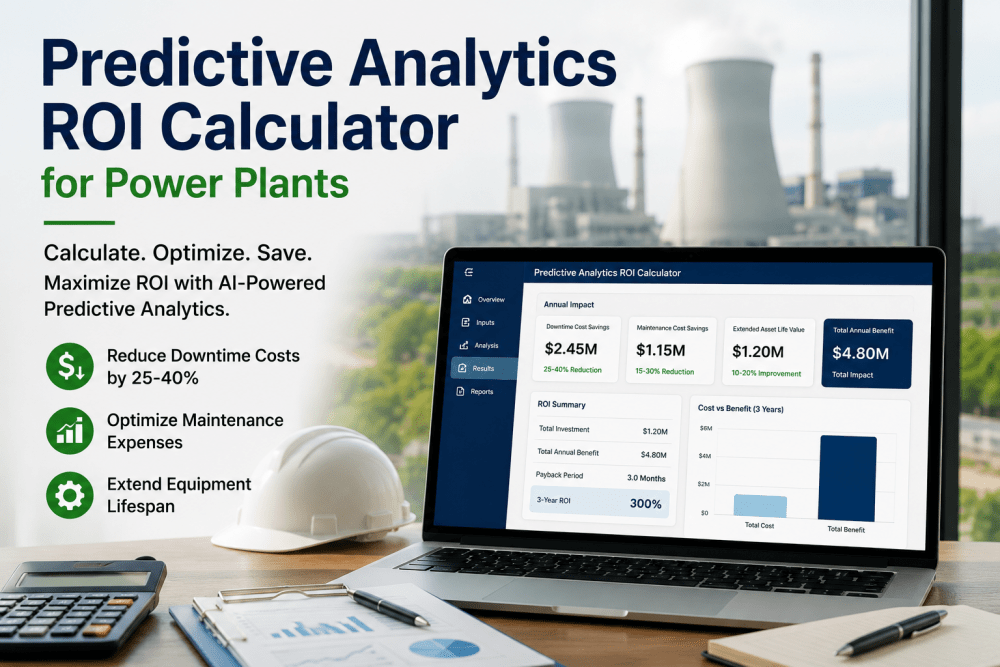
The ROI trajectory is direct: for a facility managing 10–30 Bcf of working gas capacity, a 10% utilization improvement represents $5M–$20M in annual revenue capacity recovery, against platform investment that delivers positive ROI within the first operating season. Book a Demo to build your facility-specific AI deployment roadmap with iFactory's midstream intelligence team.
Deploy AI Across Every Compressor, Every Well, Every Formation — In One Platform
iFactory's integrated AI platform connects reservoir intelligence, compressor health monitoring, and demand forecasting into a single operational view — giving underground storage operators the tools to move from reactive to predictive, from average to world-class.
How AI Optimization Delivers Compounding Returns Across Storage Operations
AI deployment in underground gas storage creates returns across three simultaneous dimensions — operational reliability, cost reduction, and commercial performance. The grid below maps the specific impacts iFactory's platform delivers in each dimension for midstream operators.
Operational Reliability
- Compressor availability increases by 35–45% through predictive maintenance
- Peak-day deliverability commitments met with dynamic reservoir modeling
- Integrity event response time reduced from days to hours
- Injection rate achievement improves through real-time schedule optimization
Cost Reduction
- Fuel gas consumption per MMBtu reduced 15–22% through compressor efficiency AI
- Unplanned maintenance cost reduced 40–60% versus reactive maintenance baseline
- Manual reporting and analysis labor reduced 8–15 hours per week per facility
- Emergency procurement and expedited repair costs eliminated through advance planning
Commercial Performance
- Working gas utilization improves 18–27% through AI-optimized injection scheduling
- Faster demand response enables capture of intraday price spread opportunities
- Higher delivery reliability strengthens contract performance and customer retention
- AI forecasting enables earlier seasonal positioning ahead of weather-driven demand
Expert Perspective: What AI Actually Changes in Underground Storage Management
The fundamental challenge in underground gas storage has never been a lack of data — SCADA systems have been generating enormous volumes of operational data for decades. The challenge has been the absence of a system capable of interpreting that data in real time and translating it into actionable operational decisions at the timescale that markets now demand. Static reservoir simulation, weekly engineering reviews, and reactive maintenance programs were designed for a market environment that no longer exists. Today's storage operators are managing assets in markets where demand volatility, weather uncertainty, and price spreads can change within a 4-hour nomination cycle. AI optimization is the only operational framework capable of keeping pace with that environment.
This perspective is consistent with the operational pattern iFactory observes across midstream deployments: the first major value unlock from AI in underground storage is not a new technology capability — it is the ability to act on operational knowledge that was already being generated but never converted into real-time decisions. Book a Demo to discuss your specific facility's data and operational architecture with iFactory's midstream team.
AI Gas Storage Optimization Is No Longer Optional for Competitive Midstream Operations
Underground natural gas storage has always been operationally complex. AI optimization does not simplify that complexity — it gives operators the tools to manage it at the speed and precision the modern energy market demands. Facilities that deploy machine learning demand forecasting, predictive maintenance on compressor trains, digital twin simulation, and continuous integrity surveillance are building a structural performance advantage that compounds over time: higher working gas utilization, lower operating costs, stronger peak-day reliability, and faster commercial response to market opportunities.
The facilities that delay AI deployment are not just missing an optimization opportunity — they are accepting a structural cost disadvantage and reliability risk relative to peers who have already moved. The 90-day deployment roadmap described in this article is a proven path to measurable returns, and the ROI case at current operating economics is unambiguous. Book a Demo with iFactory's midstream intelligence team to model the specific value case for your underground storage facility.
Deploy AI Across Your Underground Storage Operations — Start Seeing Returns in 90 Days
iFactory gives midstream operators AI-powered reservoir intelligence, compressor predictive maintenance, digital twin simulation, and demand forecasting — all in one platform built for the operational demands of underground gas storage.
AI Gas Storage Optimization Underground — Frequently Asked Questions
What types of underground gas storage facilities benefit most from AI optimization?
All three primary underground storage formation types — depleted oil and gas reservoirs, aquifer formations, and salt caverns — benefit from AI optimization, though the specific value drivers differ. Salt cavern facilities, with their high deliverability rates and fast cycle times, see the greatest returns from AI injection/withdrawal scheduling and compressor efficiency optimization. Depleted reservoir facilities typically see the largest gains from AI reservoir modeling and deliverability prediction. Aquifer formations benefit most from AI integrity surveillance and pressure management. iFactory's platform is designed to address the operational characteristics of all three formation types.
How does AI gas storage optimization integrate with existing SCADA and DCS infrastructure?
iFactory connects to existing SCADA historians, PI servers, and distributed control systems through standard industrial communication protocols — OPC-UA and MQTT — without requiring replacement of existing automation infrastructure. The platform operates as an intelligence overlay on the operational data already being generated, delivering AI-powered insights through dashboards and alerts rather than requiring control system replacement.
What is the ROI timeline for AI deployment in an underground storage facility?
For a facility managing 10–30 Bcf of working gas capacity, a 10% improvement in working gas utilization combined with a 35–40% reduction in compressor unplanned downtime typically delivers positive ROI within the first operating season — often within 6–9 months of full deployment. The compressor predictive maintenance module frequently delivers the fastest payback, with a single avoided unplanned compressor failure often recovering the full annual platform cost. Book a Demo with iFactory's midstream team to model your specific facility's ROI scenario.
How does AI demand forecasting improve underground storage inventory positioning?
Traditional storage demand forecasting relies on trailing historical averages and coarse weather forecasts, producing significant inventory positioning errors during volatile weather events and demand spikes. AI forecasting models trained on high-resolution weather data, pipeline nomination histories, regional demand patterns, and market price signals produce 72-hour forecasts with materially lower error rates — enabling operators to pre-position working gas inventory 2–3 days ahead of demand events rather than responding reactively after nominations have already been filed.
Can AI detect underground storage integrity anomalies that conventional monitoring misses?
Yes — and this is one of the most operationally significant capabilities of AI deployment in underground storage. Conventional monitoring relies on periodic manual pressure surveys, visual wellhead inspections, and regulatory inspection cycles that may occur quarterly or annually. AI integrity surveillance operates continuously, applying machine learning to streaming pressure balance data, acoustic sensor arrays, and wellhead performance signals to detect anomalies within hours of their emergence — well before they progress to reportable incidents or require operational shutdown.