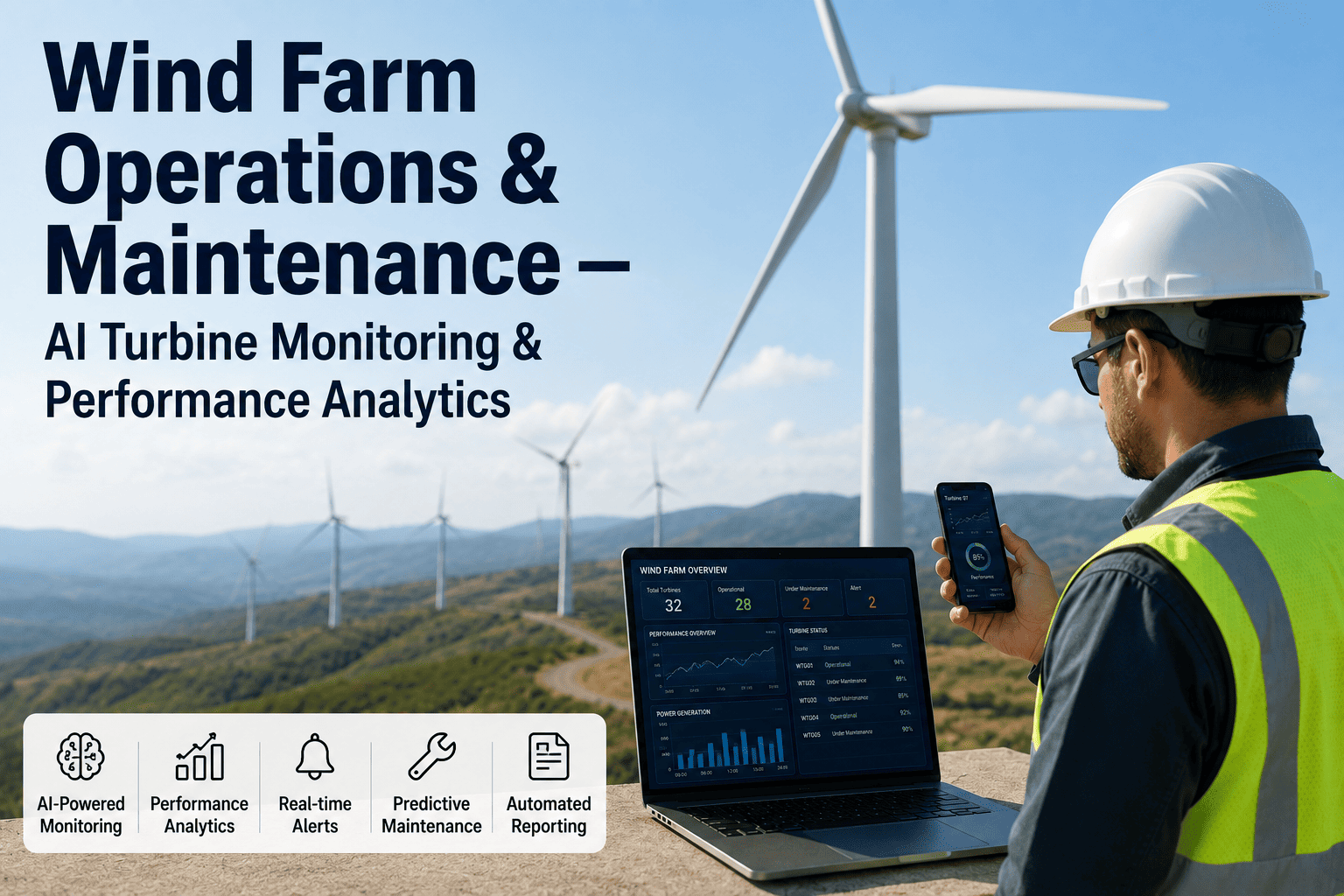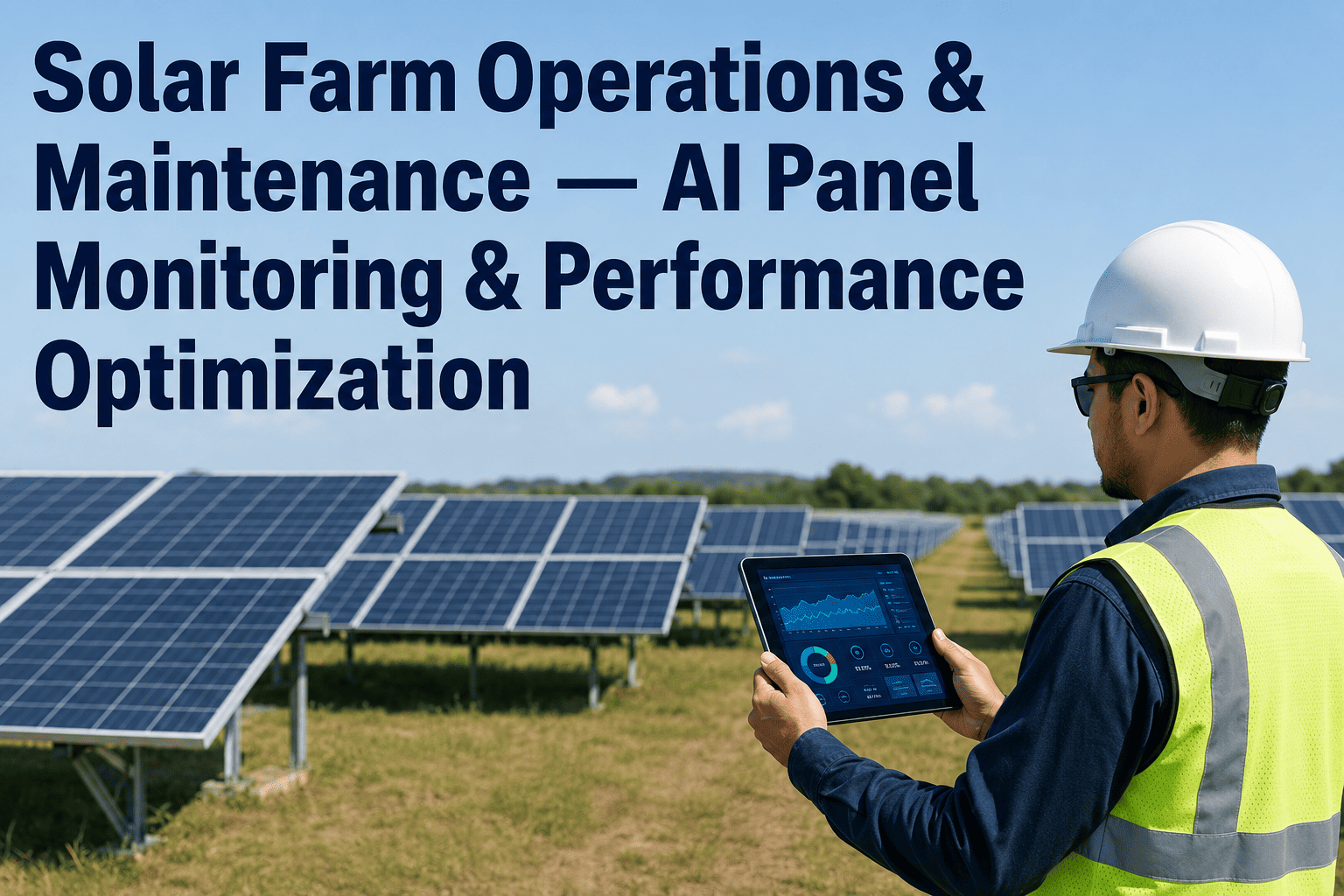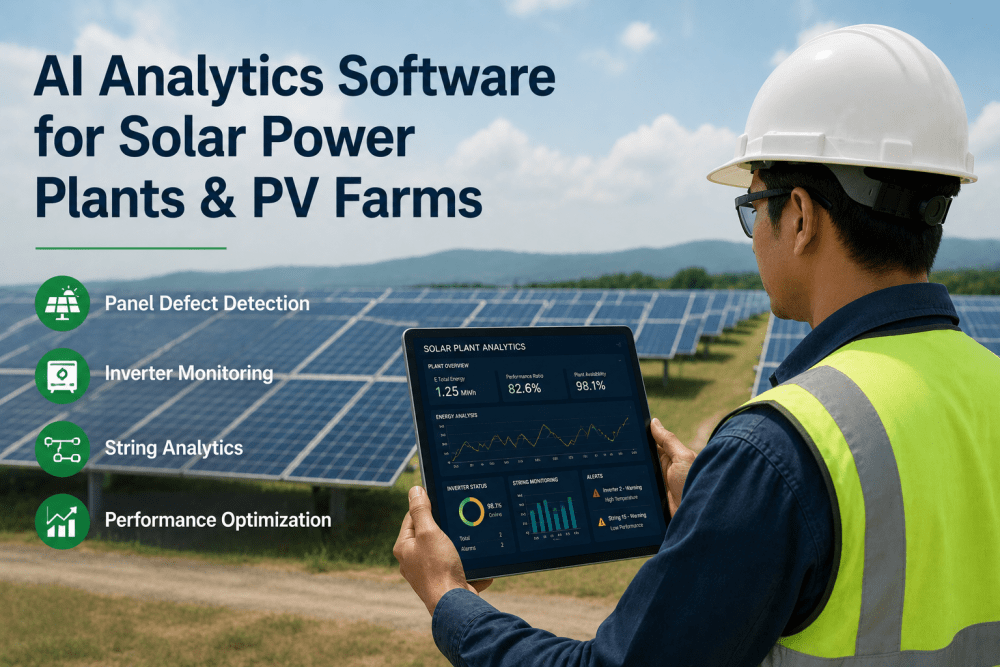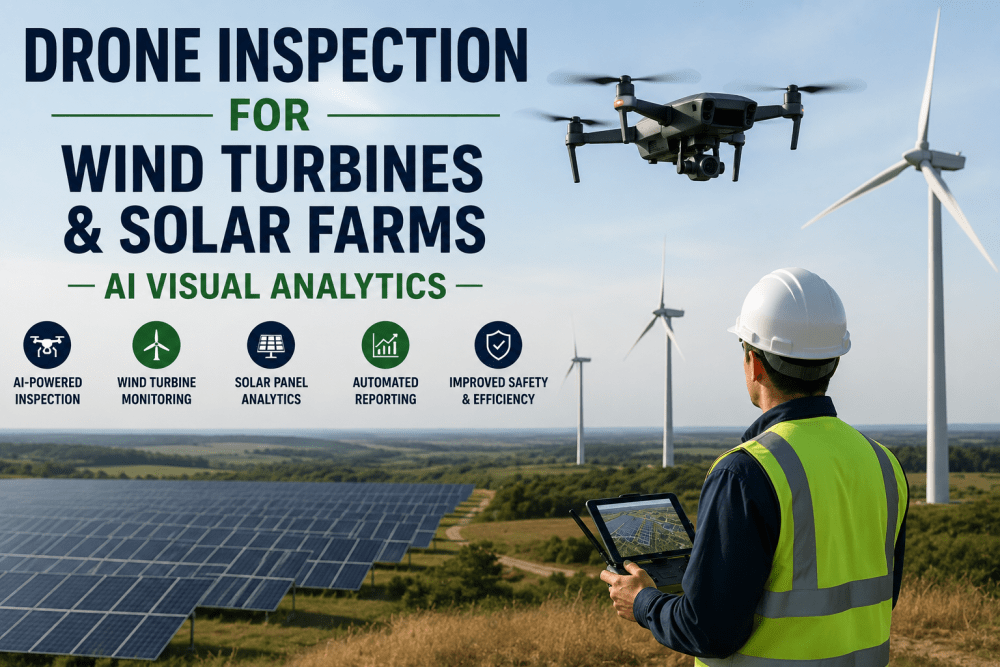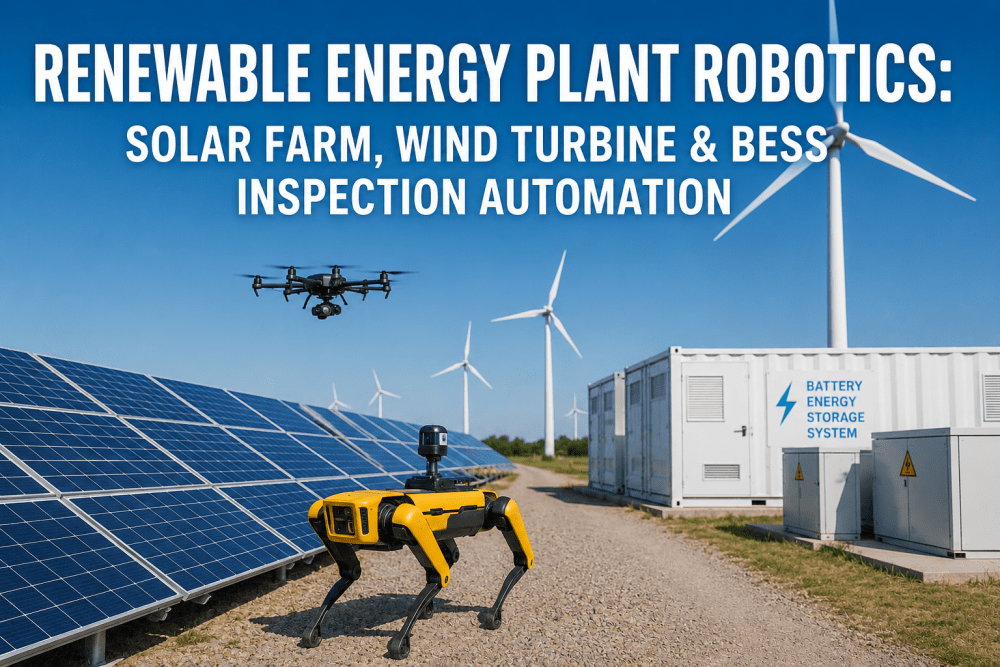
Renewable energy operators are sitting on a goldmine of machine data—but most of it never gets turned into decisions. Wind farms generate terabytes of SCADA data per turbine per day. Solar arrays produce continuous telemetry on irradiance, cell temperature, and inverter performance. Hydro plants track water flow, gate position, generator output around the clock. Without AI-driven analytics software, that data becomes noise With it operators can cut costs by 20–40% maximize generation uptime, predict failures before they happen, and satisfy increasingly demanding green compliance standards. This guide breaks down exactly how AI-powered analytics transforms renewable energy operations in 2026.
AI-Driven Analytics for Renewable Energy Plants
Solar · Wind · Hydro · O&M Optimization · Green Compliance · Predictive Intelligence
Why Renewable Energy Plants Need AI Analytics Now
The renewable energy sector has crossed a critical threshold: plants are no longer just generation assets—they're data-generating machines. A single 2MW wind turbine produces over 400 sensor readings per second. A 50MW solar farm generates millions of data points daily across inverters, stringsandcombiner boxes, and weather stations. The problem isn't data scarcity—it's data overwhelm.
Traditional SCADA dashboards were designed to display values, not derive intelligence. AI-driven analytics platforms change this equation entirely. By applying machine learning to historical and real-time data streams, operators can detect developing faults up to 30 days before failure, optimize output relative to weather conditions, benchmark asset performance against fleet-wide baselines, and generate compliance reports automatically. The competitive advantage is no longer in building more capacity—it's in operating existing capacity smarter.
Traditional SCADA vs. AI-Driven Analytics: What Changes
AI analytics platforms aren't one-size-fits-all. Each generation technology has distinct physics, failure modes, and optimization levers. Here's how intelligent software addresses each asset class.
String-Level Performance Monitoring
AI continuously compares each string's actual output against expected yield based on real-time irradiance, ambient temperature, and module degradation curves. Underperforming strings are flagged automatically with loss quantification in MWh and $.
Inverter Fault Classification
ML models trained on thousands of inverter fault signatures can classify error codes, distinguish nuisance trips from genuine failures, and route work orders to the right technician with parts requirements pre-identified—reducing truck rolls by up to 35%.
Soiling & Shading Loss Analysis
Computer vision integrated with drone imagery and AI analytics quantifies soiling losses per panel zone, optimizes cleaning schedules based on loss curves and cleaning costs, and projects ROI of robotic cleaning investments.
Performance Ratio Benchmarking
Automated daily Performance Ratio (PR) calculations compared against fleet averages and site-specific weather-adjusted benchmarks surface degradation trends months before they reach contractual thresholds—protecting PPA compliance and asset value.
Drivetrain & Bearing Health Monitoring
Vibration signature analysis via high-frequency accelerometers detects early-stage bearing wear, gear tooth damage, and shaft misalignment. AI models correlate vibration patterns with wind speed, load, and temperature to separate operational noise from genuine fault signatures.
Power Curve Optimization
AI-fitted power curves benchmark each turbine's actual output against its theoretical optimal curve. Turbines with consistent underperformance trigger automated investigations into blade pitch calibration, yaw alignment, and control system tuning—recovering 2–5% AEP annually.
Wake Effect & Curtailment Management
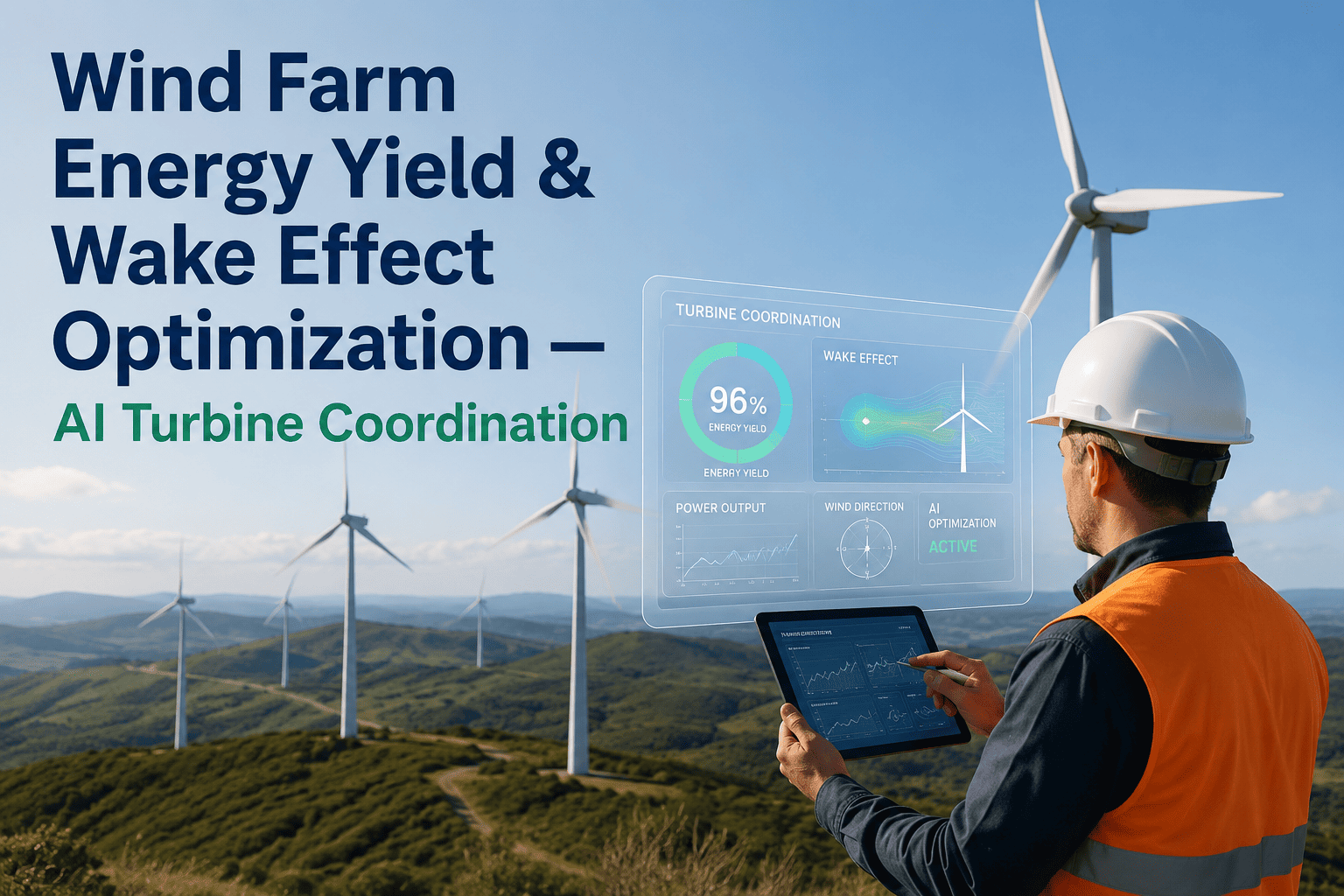
Dynamic wake modeling adjusts individual turbine yaw offsets in real time to reduce wake losses across the array. Intelligent curtailment protocols minimize generation loss during grid congestion while protecting turbine mechanical loads.
Ice Detection & Cold-Climate Management
ML-based ice detection algorithms using SCADA power deviation signatures trigger blade heating systems before production losses exceed threshold values—critical for northern-tier U.S. and Canadian wind assets operating through winter months.
Turbine Efficiency & Cavitation Detection
AI analytics correlates head, flow, and generation data against manufacturer hill charts to identify operating points at risk of cavitation. Automated load adjustments protect runner integrity while maximizing energy extraction at any given inflow condition.
Inflow Forecasting & Dispatch Optimization
Integration of upstream hydrological data, snowpack modeling, and precipitation forecasts into AI dispatch models allows hydro operators to optimize reservoir management across day-ahead and real-time energy markets—improving revenue by 8–15% over rule-based strategies.
Gate & Valve Condition Monitoring
Acoustic emission sensors and position feedback analytics detect seal degradation, actuator wear, and hydraulic system faults in penstock gates and draft tube valves before they create forced outages during high-value generation periods.
Environmental Flow Compliance
Automated monitoring of minimum ecological flow releases with real-time regulatory reporting ensures FERC license compliance and avoids curtailment penalties—eliminating the manual logging burden that consumes significant operator hours at run-of-river plants.
The AI Analytics Implementation Workflow
Deploying AI-driven analytics is not a software installation—it's an operational transformation. Plants that see the strongest results follow a structured implementation sequence that prioritizes data quality, model training, and operator adoption equally.
Data Infrastructure Audit
Map all existing sensor points, SCADA historian tags, and data gaps. Identify communication protocol mismatches (Modbus, DNP3, IEC 61850) and latency issues. Establish data quality baselines—most plants discover 15–25% of critical tags have quality flags or calibration drift before this step.
Historian Integration & Data Pipeline
Establish secure, real-time data pipelines from plant historians to the analytics cloud or on-premise server. Configure edge computing nodes for low-latency fault detection where round-trip cloud latency is unacceptable. Implement data normalization and timestamp alignment across disparate systems.
Baseline Model Training
Train physics-informed ML models on 12–24 months of historical SCADA data. Validate model accuracy against known fault events. Establish normal operating envelopes for each asset under all operating regimes. Calibrate alert thresholds to minimize false positives while maintaining fault detection sensitivity above 95%.
Alert Logic & Work Order Integration
Configure alert routing rules connecting analytics platform outputs to CMMS work order generation. Define escalation paths from automated notifications to field technician dispatch. Integrate with asset registers to pre-populate work orders with equipment history, required parts, and safety procedures.
Operator Training & KPI Dashboard Deployment
Deploy role-based dashboards for plant managers, field technicians, and asset managers. Train operators on alert interpretation, false positive feedback loops, and model refinement processes. Establish weekly performance review cadences using AI-generated insights reports.
Continuous Model Improvement
Implement feedback loops where confirmed faults improve model accuracy and false positives refine alert thresholds. Schedule quarterly model retraining cycles. Track KPI improvements—availability factor, MTBF, cost per MWh—against pre-deployment baselines to quantify and communicate ROI.
Green Compliance & Reporting Automation
Regulatory compliance is no longer a once-a-year reporting exercise—it's a continuous operational requirement. FERC license conditions, state RPS program reporting, carbon registry verification, and PPA performance guarantees all demand accurate, auditable data that traditional operations teams struggle to produce at speed and scale.
REC Generation Tracking
Automated metering data aggregation generates WREGIS and NEPOOL GIS-compliant REC creation records. Real-time generation visibility eliminates month-end reconciliation delays and reduces certificate invalidation risk.
FERC License Compliance
Automated minimum flow release logging, water quality parameter recording, and fish passage monitoring data aggregation reduce compliance officer time by up to 70% while creating defensible audit trails for relicensing proceedings.
Carbon Registry Verification
ISO 14064-compliant generation data packages with complete chain-of-custody documentation streamline third-party verifier audits. AI cross-checks generation records against metered export data to flag discrepancies before they become material misstatements.
PPA Performance Reporting
Automated monthly PPA reports with weather-normalized availability calculations, curtailment attribution, and force majeure documentation give asset managers real-time visibility into contractual performance thresholds—preventing surprise shortfall penalties.
Cost-Benefit Benchmarks: What U.S. Operators Are Actually Seeing
Vendor ROI claims are easy to generate; operational reality is harder to find. The figures below are drawn from independent industry studies and operator-disclosed performance data across utility-scale renewable portfolios in the U.S. market as of 2025–2026.
Expert Review: What Industry Leaders Are Saying
The most consistent finding across independent research is that AI analytics delivers the highest returns not through exotic algorithms but through comprehensive data visibility at the asset level. Operators who can see every string, every bearing, every gate—with automated anomaly flagging—consistently outperform those running fleet-level dashboards by 15–25% on availability metrics.
A second persistent finding: the operators seeing the worst results are not those with poor AI models—they're those with poor data infrastructure and undertrained field teams. The platforms that lead the market in customer satisfaction share one trait: they invest as heavily in change management and operator onboarding as they do in algorithm development.
On compliance automation, the shift from manual spreadsheet reporting to AI-generated audit trails is proving to be a significant risk reduction event independent of any generation improvement. Regulatory scrutiny on REC accuracy and FERC license compliance is increasing—and the cost of a single material misstatement now routinely exceeds the annual cost of a comprehensive analytics platform subscription.
Frequently Asked Questions
Conclusion
Renewable energy is no longer a growth story defined purely by megawatts installed—it's increasingly defined by how intelligently those megawatts are operated. AI-driven analytics gives U.S. renewable operators the tools to squeeze maximum value from every asset, protect compliance standing, reduce O&M costs without reducing reliability, and scale portfolios without proportionally scaling headcount. The operators who move earliest on analytics infrastructure will hold structural cost and compliance advantages that compound over the 20–30 year life of their assets. The question in 2026 is not whether to adopt AI analytics—it's whether your data infrastructure is ready to support it, and which platform partner will move fast enough with you.
Ready to Transform Your Plant's Analytics Performance?
From solar string monitoring to wind turbine health and hydro dispatch optimization, iFactory's AI-powered platform gives your operations team the intelligence to reduce costs, maximize uptime, and stay ahead of compliance requirements.