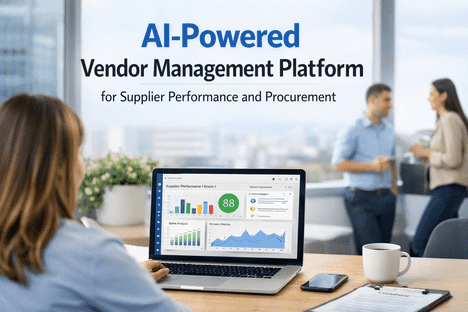
The average mid-market manufacturer works with 800 to 2,400 active suppliers. Half are managed through a rolodex of email chains, shared folders named "vendors_2023_FINAL_v4," and institutional memory locked inside a few long-tenured procurement managers. When those managers retire, the intelligence leaves with them. When a single supplier fails an audit, triggers a recall, or quietly becomes 40% more expensive than the market, nobody notices until it's on the P&L. AI-powered vendor management software is rebuilding procurement from a relationship sport into a data discipline — automating onboarding, scoring performance in real time, flagging risk before it costs money, and turning your supplier base into a measurable, optimizable asset.
12-18%
Procurement Cost Reduction
75%
Faster Supplier Onboarding
90%
Contract Compliance Visibility
3.5x
ROI Within 24 Months
Why Traditional Vendor Management Is Quietly Bleeding Margin
Procurement leaders are not asking for another software license. They are asking for visibility they haven't had in a decade: which suppliers are actually performing, which are silently decaying, which are introducing risk, and where the real spend leaks are hiding. Traditional vendor management — built on spreadsheets, ERP line items, and tribal knowledge — cannot produce that picture. AI-powered platforms can. The gap between the two is now measured in millions of dollars per site, per year.
AP
Apex Precision Components
Tier 1 · Castings · 14 Active POs
A-
Price Competitiveness
78%
Price drift: +6% vs market benchmark Q3
ISO 9001 renewed Feb 2026
What an AI Scorecard Actually Shows
Real-time performance across delivery, quality, cost, and responsiveness — computed automatically from every PO, GRN, and quality event.
Benchmarking against comparable suppliers and market data — surfacing price drift, service decay, and hidden outperformers.
Risk signals from financial health, cyber exposure, geopolitical events, ESG ratings, and certification expiry — flagged before they become problems.
Action recommendations — renegotiate, consolidate, develop alternate sources, or escalate — based on learned patterns from thousands of supplier relationships.
Want to see this scorecard running on your own top 20 suppliers? Book a 30-minute demo and we'll show live supplier performance analytics on data patterns from your industry — not generic vendor profiles.
The Vendor Lifecycle, End to End
Vendor management is not an event — it is a continuous lifecycle that starts the moment a supplier is considered and ends only when the relationship is intentionally closed out. AI platforms orchestrate every phase with data, workflows, and learning loops that compound in value over time.
Phase 1
Source
AI scans category spend, recommends supplier candidates from global databases, and benchmarks capabilities against current roster.
Qualified supplier shortlists in hours, not weeks
Phase 2
Onboard
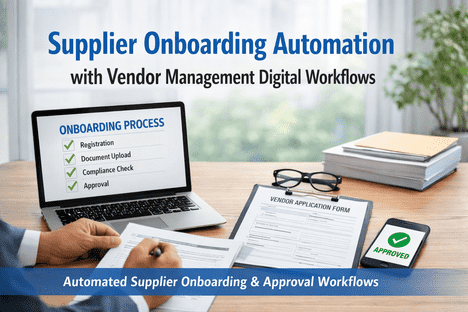
Digital intake forms, automated document collection, ISO and compliance verification, banking setup, and tax validation — all in one flow.
75% faster time-to-first-PO
Phase 3
Perform
Every transaction, delivery, and quality event feeds a live scorecard. AI surfaces declining performers and silent stars automatically.
Continuous scoring, no quarterly guesswork
Phase 4
Optimize
Spend analytics identify consolidation, renegotiation, and maverick-spend opportunities. AI recommends exact action plans with ROI projections.
12 to 18% category cost reduction
Phase 5
Renew / Exit
Contract expirations flagged 90 days ahead with renewal recommendations, alternate sources, and negotiation leverage data ready for review.
Zero contract lapses, maximum negotiation leverage
Where the AI Actually Adds Intelligence
"AI-powered" is a phrase thrown around loosely in procurement software. Here is where machine learning and data science actually change outcomes in vendor management — the six distinct intelligence layers that separate a spreadsheet replacement from a true analytics platform.
01 · Supplier Intelligence
Predictive Performance Scoring
Machine learning models analyze transaction history, quality events, delivery patterns, and external signals to predict which suppliers will decline — before metrics show it.
~90 daysAdvance warning on at-risk suppliers
02 · Spend Intelligence
Automated Category Analysis
NLP classifies every line of spend, detects maverick buying, identifies split POs, and maps consolidation opportunities across fragmented vendor relationships.
15-22%Spend leaks typically uncovered
03 · Risk Intelligence
Multi-Signal Risk Monitoring
Continuous scanning of financial health scores, cyber incidents, geopolitical events, sanctions lists, and ESG ratings across your entire supplier base — not just Tier 1.
24/7Risk posture monitored per supplier
04 · Price Intelligence
Market Benchmark Detection
AI compares your paid prices against industry benchmarks and peer data, surfacing silent inflation, outlier pricing, and suppliers priced above their own published catalogs.
4-9%Hidden price drift per category
05 · Compliance Intelligence
Document & Certification Tracking
OCR and document AI extract expiry dates, scope, and terms from uploaded certificates and contracts — auto-flagging lapses before they become audit findings.
0Expired certificates found at audit
06 · Action Intelligence
Prescriptive Recommendations
Beyond reporting what happened, the AI recommends what to do — renegotiate, consolidate, develop, or replace — with ROI estimates and negotiation leverage data.
3.5xFaster procurement decision cycles
Turn Your Supplier Base Into a Measurable Asset
Stop Managing Vendors on Memory. Start Managing Them on Data.
iFactory gives procurement and operations leaders the AI-powered vendor management platform they've been asking for — complete supplier visibility, automated performance scoring, proactive risk detection, and spend optimization built in. One platform, every supplier, always on.
The Supplier Risk Heatmap Procurement Leaders Actually Need
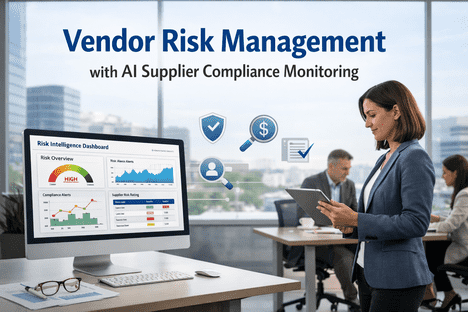
Supplier risk is not a single number. It is a mosaic of financial, operational, compliance, geopolitical, and ESG dimensions — each moving at different speeds, each with its own warning signs. An AI platform maintains a live heatmap across every supplier and every risk category, so escalations surface the moment any cell turns red.
Supplier Tier
Financial
Operational
Compliance
Cyber
ESG
Geopolitical
Tier 1 · Strategic
Low
Low
Med
Low
Low
Med
Tier 2 · Preferred
Med
Low
Low
Med
Low
Low
Tier 3 · Transactional
High
Med
High
High
Med
Med
Tier 4 · Long Tail
High
High
High
High
Med
High
Low Risk · Actively monitored
Medium · Review recommended
High · Immediate action
Most plants have never seen a live risk heatmap across their full supplier base — because no one has the time to build it manually. Book a demo and we'll show you a working heatmap in under 20 minutes, based on real supplier data patterns from your category mix.
Where the 12-18% Savings Actually Come From
Procurement savings are not magic. They come from specific, identifiable, measurable leaks — each one invisible until you have a platform that surfaces it. Here is the typical savings cascade that AI vendor management platforms deliver in the first 24 months, broken down by source.
Consolidation of fragmented suppliers
4.5%
Renegotiation of drifted contracts
3.8%
Elimination of maverick spend
2.4%
Price benchmark correction
2.2%
Avoided risk events & disruptions
2.1%
Process automation & FTE redeployment
1.8%
Typical 24-Month Total Savings
16.8% of addressable spend
What a Full-Featured Vendor Management Platform Must Include
Not every vendor management tool earns its license fee. Here is the capability checklist procurement leaders should use when evaluating platforms — the non-negotiables for a system that will actually move the needle, not just store vendor records.
Self-Service Supplier Portal
Suppliers manage their own data, documents, certifications, and banking details — eliminating 60% of internal data-entry burden on procurement teams.
Automated Onboarding Workflow
Digital intake, compliance checks, tax validation, banking setup, and approvals run in parallel — time-to-first-PO drops from weeks to days.
Native ERP & CMMS Integration
Transactions, POs, GRNs, and work orders flow bidirectionally with SAP, Oracle, NetSuite, and major CMMS platforms — no data silos.
Configurable Scorecards
KPIs, weightings, and scoring logic tailored by category, region, or strategic importance — procurement defines the rules, the platform enforces them.
Contract Lifecycle Management
Central contract repository with clause-level search, renewal alerts, obligation tracking, and redline collaboration — no more missed renegotiation windows.
Executive & Audit Dashboards
Role-based dashboards for procurement, finance, operations, and audit — each with the views, exports, and drill-downs that team actually needs.
4 to 8 Week Deployment
Your Top 20 Suppliers Have a Story. Let's Read It Together.
Bring your last 12 months of spend data to the demo. We'll run it through iFactory's vendor intelligence engine and show you exactly what consolidation, renegotiation, and risk actions your data is already pointing to — before you commit to anything.
Frequently Asked Questions
What is AI-powered vendor management software?
AI-powered vendor management software is a procurement platform that automates supplier onboarding, continuously scores supplier performance, detects risk and compliance issues, and recommends specific cost-saving actions — using machine learning on transactional and external data. It replaces spreadsheets, ERP reports, and institutional memory with a live, data-driven view of the entire supplier base.
How is this different from the vendor module in our ERP?
ERP systems record vendor transactions. AI vendor management platforms analyze them — scoring performance, benchmarking prices, monitoring risk, and recommending actions. ERPs tell you what happened last month. AI platforms tell you which suppliers will decline in the next 90 days, which contracts to renegotiate now, and where your spend leaks are hiding today.
How much savings can we realistically expect?
Most manufacturing and industrial deployments document 12 to 18% reduction in addressable spend within 24 months. Savings come from supplier consolidation, contract renegotiation, maverick-spend elimination, benchmark correction, and process automation. In categories with high fragmentation or long neglect, initial wins can be larger.
How long does implementation take?
Typical deployments run 4 to 8 weeks, covering supplier data migration, scorecard configuration, ERP or CMMS integration, and user training. The platform becomes useful the moment your top 20 suppliers are loaded — additional suppliers can be added progressively. Most teams see measurable insights within the first 30 days.
Will our suppliers have to learn a new system?
Suppliers use a simple self-service portal to manage their own data, documents, and certifications — reducing your internal workload dramatically. Onboarding for suppliers is typically a 15-minute guided setup, and the portal supports multi-language use for global supplier bases.
How does AI detect risk we can't see in our ERP?
AI continuously pulls data your ERP never sees — supplier financial health scores, cyber incident feeds, sanctions lists, ESG ratings, geopolitical event data, certification expirations, and market price benchmarks. It correlates these external signals with your internal transaction data to surface risks weeks or months before they show up as delivery, quality, or cost problems.