Supply chain disruptions cost businesses an estimated $184 billion annually, and 94% of companies report their revenue was negatively affected by supply chain disruptions in the past year. Disruption notifications jumped 38% year-over-year in 2025, with human-health disruptions surging 143%, regulatory changes rising 92%, cyber events climbing 64%, and geopolitical instability increasing 54%. Major disruptions lasting longer than one month now occur on average every 3.7 years, while 78% of supply chain leaders anticipate disruptions to intensify over the next two years — yet only 25% feel prepared. The 2026 landscape demands a fundamentally different approach: 65% of companies face at least one bottleneck in their supply chain, 50% of firms are now shifting to balanced multi-shoring sourcing strategies, and geopolitical fragmentation rates at a 97% threat level according to risk analysts. iFactory's AI-powered supplier risk management platform monitors financial health, geopolitical signals, lead time drift, quality trends, and logistics disruptions across your entire supply base — predicting disruptions before they hit your production line and activating contingency playbooks automatically. Schedule a demo to see AI-driven supply chain risk intelligence in action.
The True Cost of Supply Chain Disruptions in Manufacturing
Supply chain disruptions in manufacturing don't just delay deliveries — they cascade through production schedules, inflate costs, erode customer trust, and create compliance exposure that compounds for months after the initial event. The financial impact extends far beyond the immediate disruption.
Production Line Stops
Missing materials halt production. Downstream lines starve. OEE drops immediately.
Emergency Procurement
Expedited freight at 5-10x standard rates. Spot market purchases at premium prices. Overtime labor to recover schedule.
Customer Impact
Delivery commitments missed. Customer penalties triggered. Competitors receive diversion orders.
Strategic Damage
Customer trust eroded. Contract renegotiations forced. Market share lost to competitors who maintained supply.
What's your current exposure to supply chain disruption risk? Schedule a risk assessment — our team maps your supplier dependencies, identifies single-source exposures, and quantifies the financial impact of your top 5 disruption scenarios.
AI-Powered Supplier Risk Heat Map
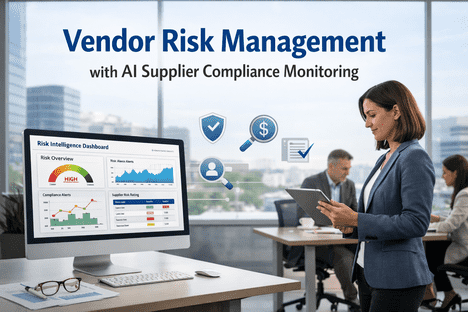
iFactory's risk heat map provides a single-screen view of your entire supply base risk posture — color-coded by risk severity, filterable by category, geography, spend level, and risk dimension. AI continuously updates risk scores as new signals emerge, so your heat map always reflects current conditions rather than last quarter's assessment.
Financial Health & Credit Risk Monitoring
AI predicts supplier financial failures 6-12 months in advance with 80% accuracy by monitoring credit rating changes, payment pattern shifts, legal filings, revenue trends, and industry news. When a critical supplier's financial health deteriorates, you need to know before they default — not when their delivery trucks stop arriving.
Credit Rating Changes
Real-time alerts when Dun & Bradstreet, Moody's, or S&P downgrade your supplier. AI correlates rating changes with historical failure patterns to quantify default probability.
Payment Pattern Anomalies
Suppliers paying their own vendors later signals cash flow stress. AI detects when your supplier's payment days outstanding (DPO) increases — a leading indicator of financial distress invisible in credit reports.
Legal & Regulatory Filings
Bankruptcy filings, tax liens, lawsuits, and regulatory actions monitored across jurisdictions. AI alerts procurement teams to legal events that indicate financial instability or compliance problems.
Revenue & Workforce Signals
AI monitors news, job postings, layoff announcements, facility closures, and M&A activity for signs that supplier operations are contracting or being restructured in ways that will affect your supply.
Know which of your suppliers are financially distressed before they tell you? Book a financial risk monitoring demo — iFactory screens your entire supply base for credit deterioration, payment anomalies, and legal red flags.
Geopolitical & Logistics Risk Signals
Geopolitical fragmentation is the top supply chain threat of 2026 at a 97% risk level. Tariffs, export controls, sanctions, armed conflicts, and trade corridor disruptions can reshape your supply network overnight. iFactory monitors geopolitical signals and maps their impact to your specific supplier locations, shipping routes, and material dependencies.
Trade Policy & Tariffs
AI monitors tariff changes, export controls, sanctions updates, and trade agreement shifts across all supplier jurisdictions. Impact automatically calculated against your BOM cost structure and sourcing alternatives identified from approved vendor list.
Armed Conflict & Instability
Regional conflicts, civil unrest, and political instability monitored near supplier facilities and logistics corridors. AI maps blast radius of geopolitical events to your specific sub-tier supply chains — not just Tier 1 suppliers.
Climate & Infrastructure
Extreme weather events, port congestion, shipping route disruptions (Red Sea, Panama Canal), and infrastructure failures tracked in real time. AI predicts logistics delays before they show up in your carrier tracking systems.
Cyber Attacks on Logistics
Cyber attacks on logistics providers surged 965% between 2021-2025. AI monitors the cybersecurity posture of your critical logistics partners and alerts to incidents affecting your supply routes and warehousing networks.
Lead Time Drift & Delivery Pattern Analysis
A supplier whose 4-week lead time quietly creeps to 5.5 weeks is broadcasting a problem — capacity constraints, quality rework, sub-tier supply issues, or financial stress forcing them to prioritize other customers. iFactory AI detects lead time drift patterns weeks before they cause your stockout.
How many of your suppliers have lead times silently drifting upward right now? Schedule a lead time analysis demo — we'll show AI drift detection running against your actual PO delivery data.
Single-Source Dependency Alerts & Diversification Planning
Single-source dependencies are the hidden time bombs of manufacturing supply chains. When your only qualified supplier for a critical component fails, there is no backup — production stops until an alternative is qualified, which can take weeks or months. iFactory's AI identifies every single-source dependency in your supply base and helps build diversification plans before the disruption forces one.
Identification
AI scans your entire BOM and vendor master to identify every material, component, and service sourced from a single qualified vendor — including indirect dependencies where multiple part numbers trace back to the same manufacturer.
Risk Quantification
Each single-source dependency scored by disruption impact: revenue at risk, lead time for alternative qualification, production lines affected, and customer contracts exposed. Financial impact quantified in dollars to prioritize diversification investment.
Diversification Planning
AI recommends alternative supplier candidates from your approved vendor list or qualified vendor databases. Dual-source qualification timelines, estimated transition costs, and risk reduction impact calculated for each diversification option.
Disruption Scenario Modeling & Contingency Playbooks
The shift from reacting to disruption to planning for volatility as standard. iFactory's scenario modeling engine lets procurement teams simulate "what-if" disruptions before they happen — testing contingency plans, pre-positioning alternative suppliers, and building playbooks that activate automatically when risk thresholds are crossed.
Supplier Bankruptcy
Simulate loss of your top 3 suppliers by revenue. AI maps affected production lines, calculates safety stock runway, identifies qualified alternatives, and estimates time-to-recovery for each scenario.
Trade Corridor Disruption
Model a Red Sea closure, port strike, or tariff spike on specific trade lanes. AI recalculates landed costs, identifies alternative routes, and recommends pre-positioning inventory for affected materials.
Natural Disaster at Supplier Site
Simulate earthquake, flood, or fire at critical supplier facilities. AI activates pre-built playbooks: alternative supplier contact, safety stock release, customer communication templates, and recovery timeline estimates.
Tariff & Regulatory Shock
Model 25-50% tariff increases on specific material categories or supplier countries. AI recalculates total cost of ownership across your supply base and recommends sourcing shifts to minimize cost impact.
Ready to move from reactive firefighting to proactive contingency planning? Book a scenario modeling demo — simulate your top 5 disruption scenarios and see how iFactory builds contingency playbooks that activate automatically.
Frequently Asked Questions
Disruption Is Inevitable. Surprise Doesn't Have to Be.
iFactory's AI-powered supplier risk management monitors financial health, geopolitical signals, lead time drift, quality trends, and logistics disruptions across your entire supply base — predicting disruptions weeks before they hit and activating contingency playbooks automatically.